




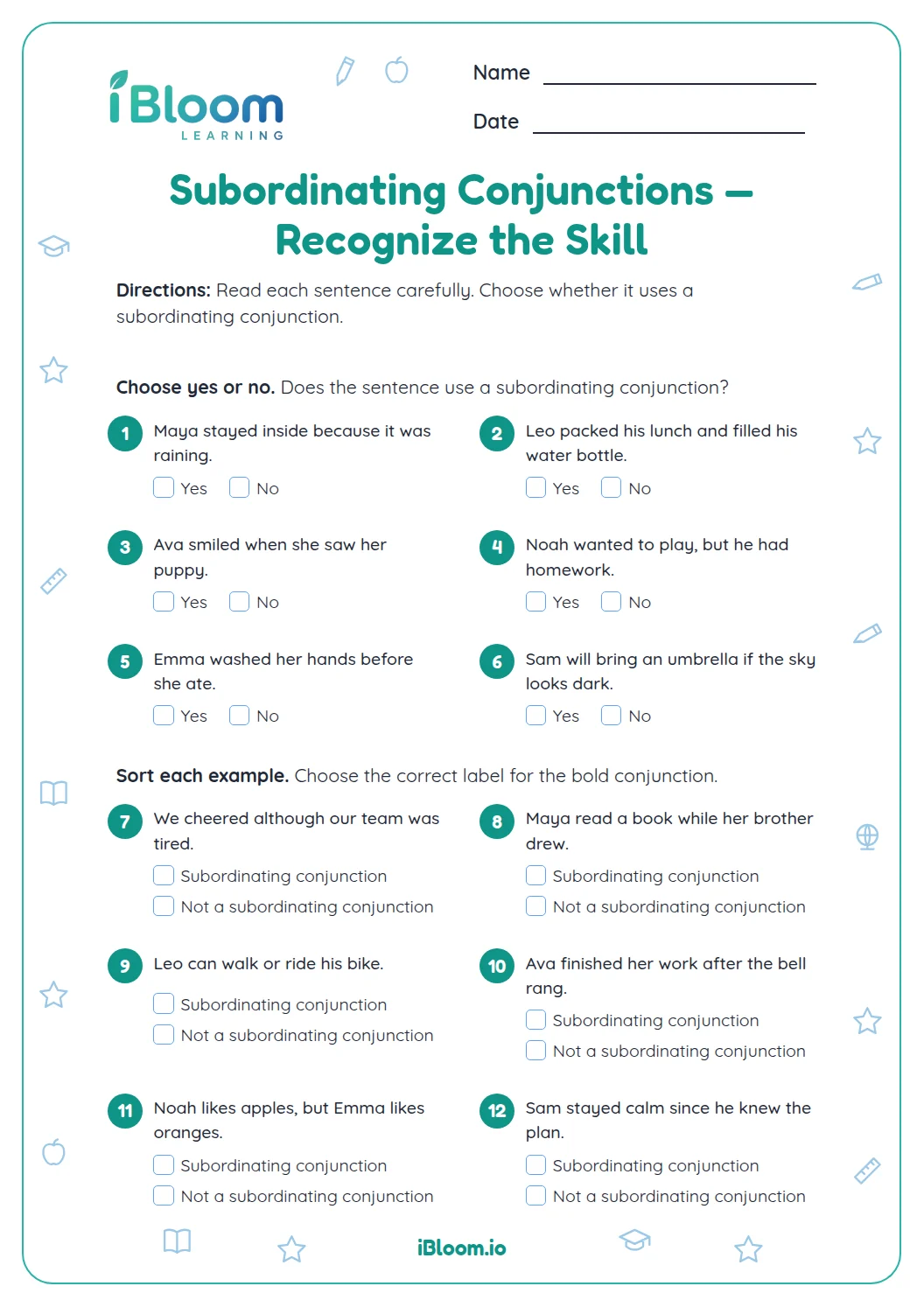
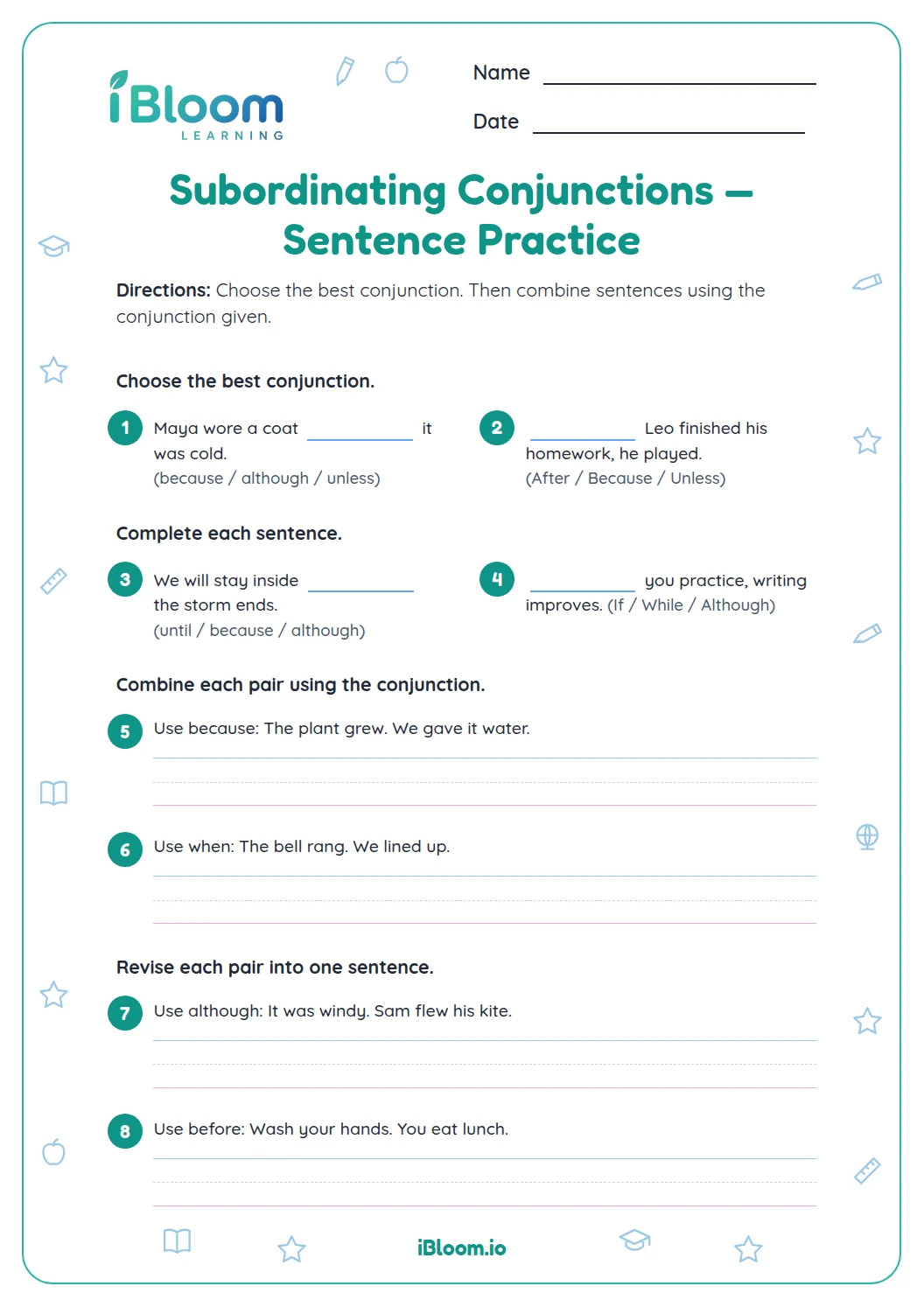
About this worksheet
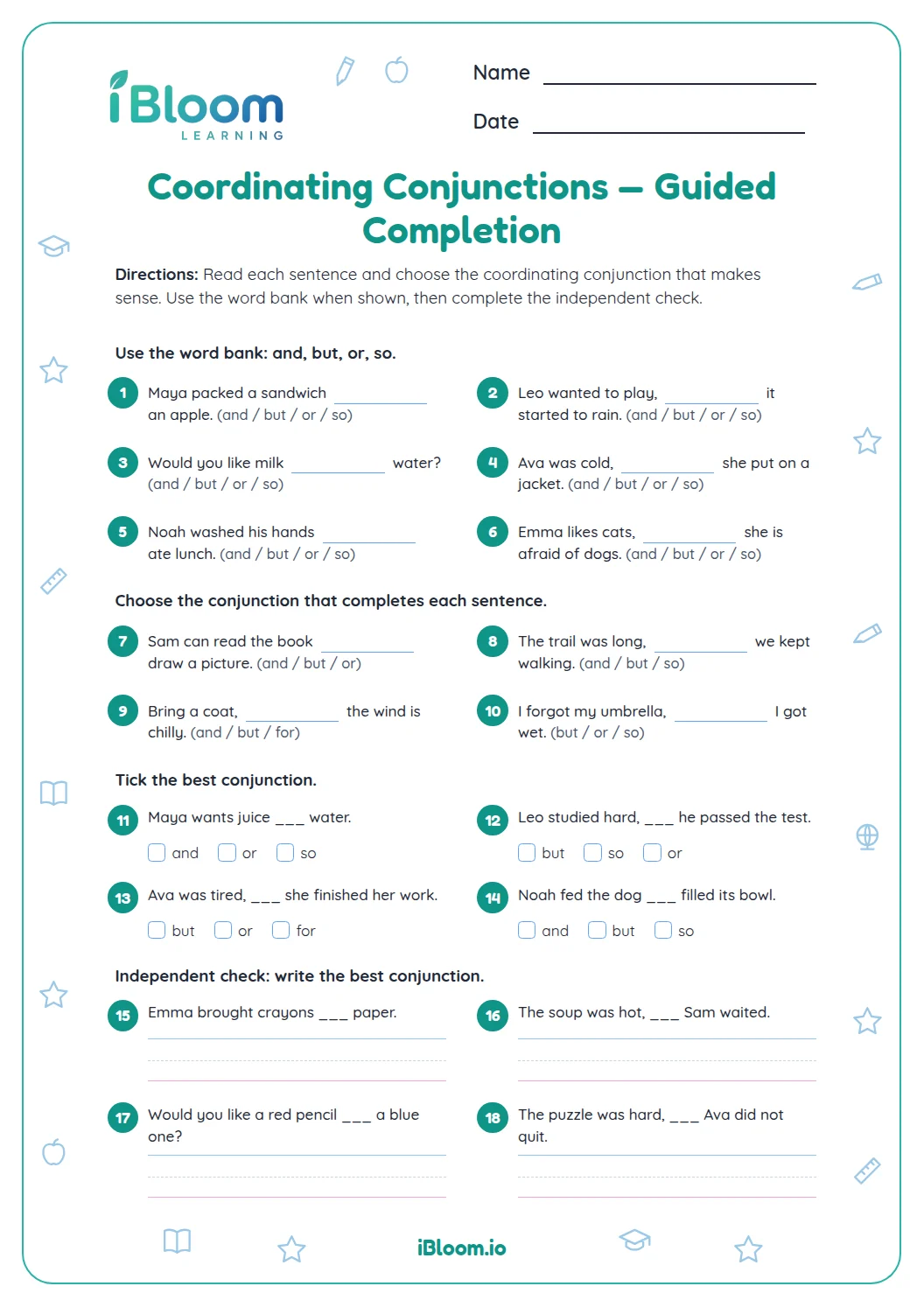
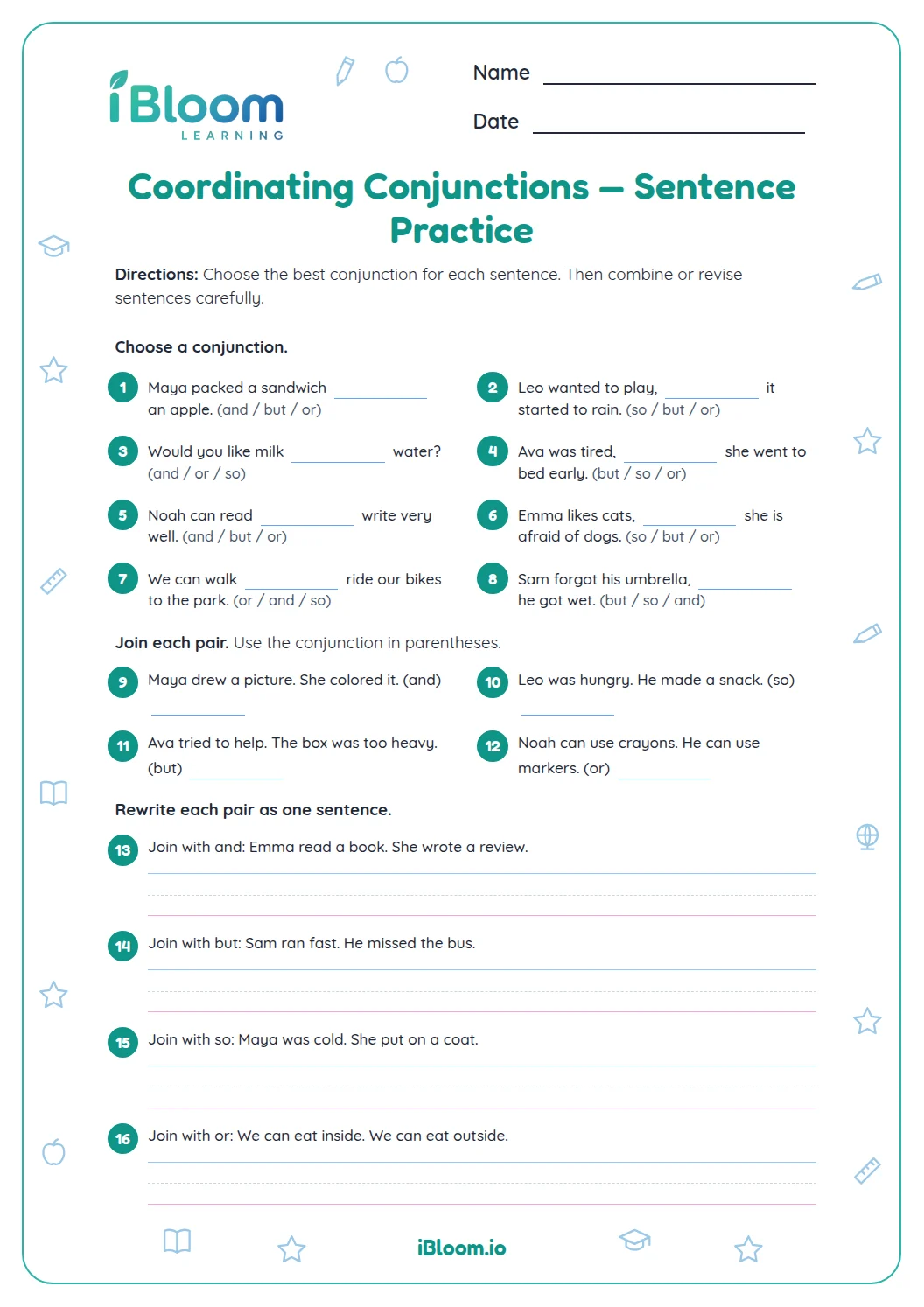
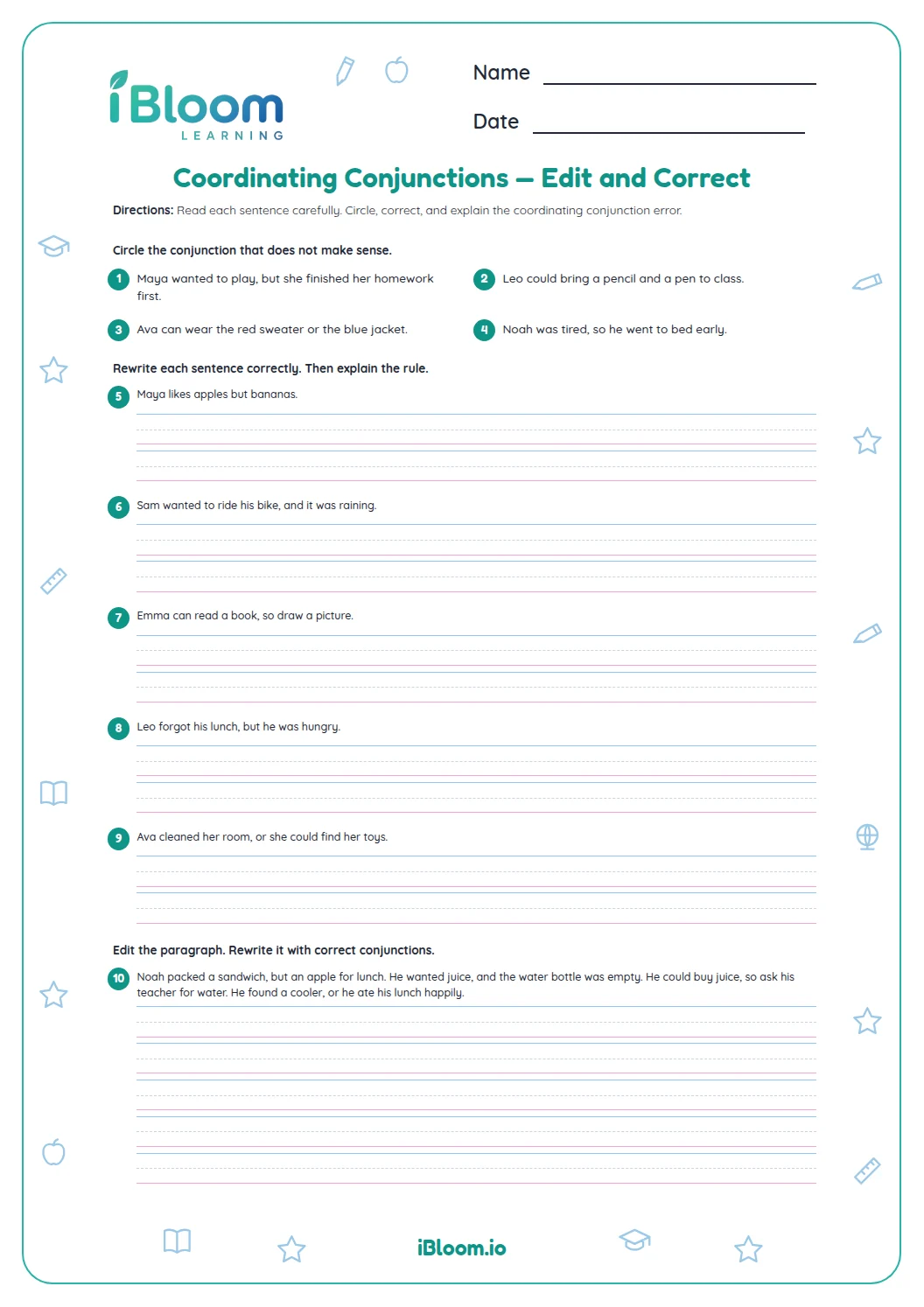
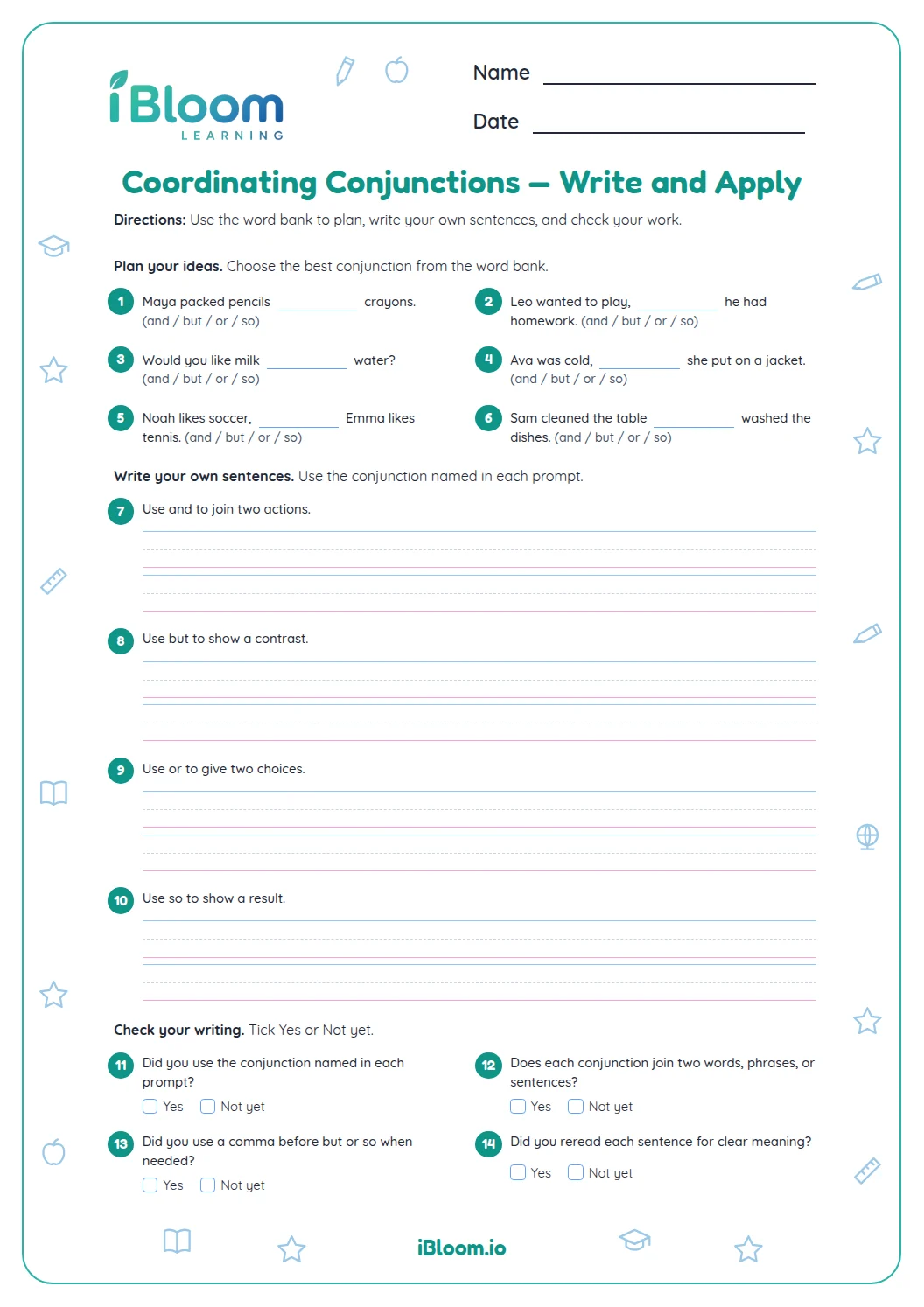
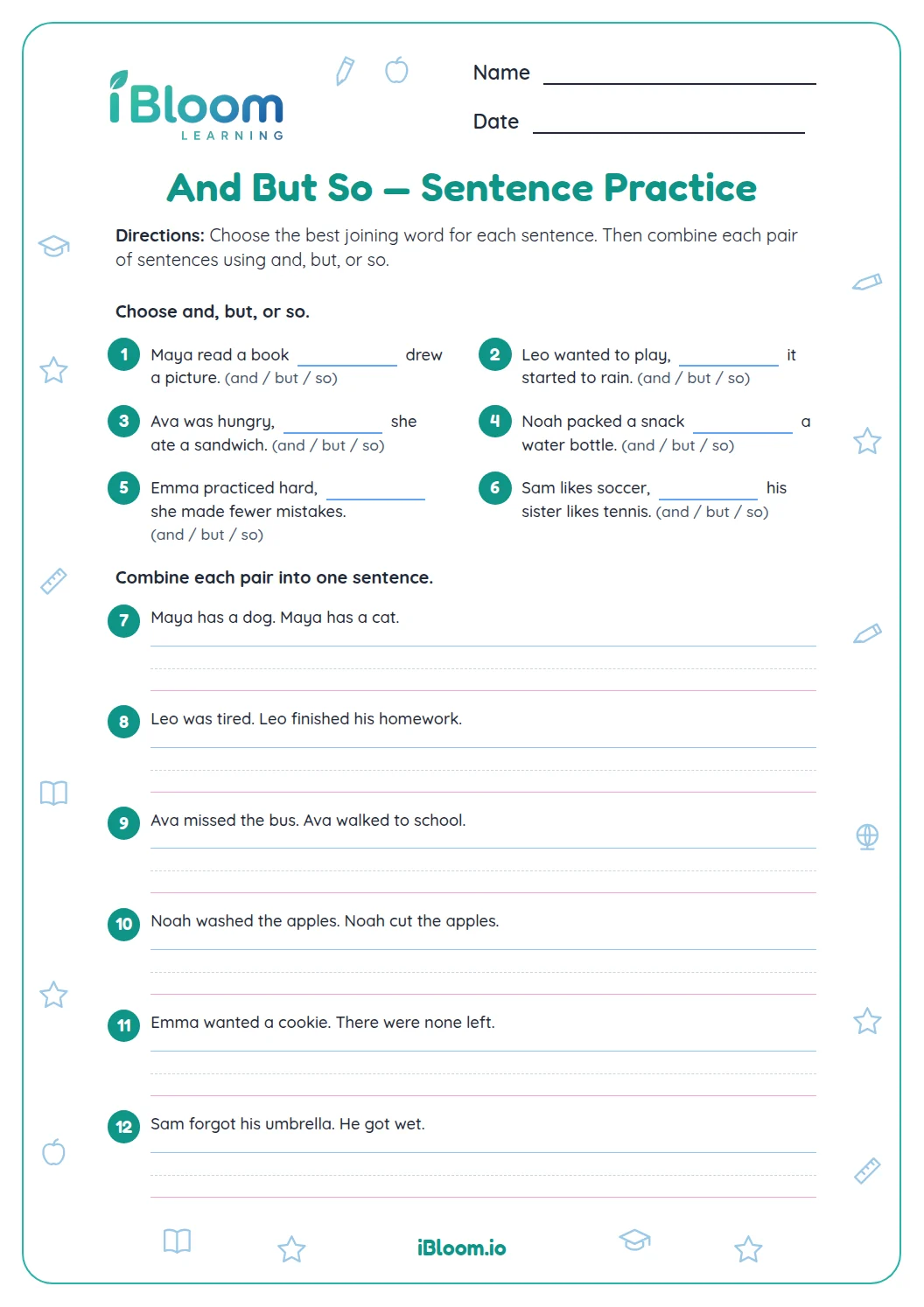
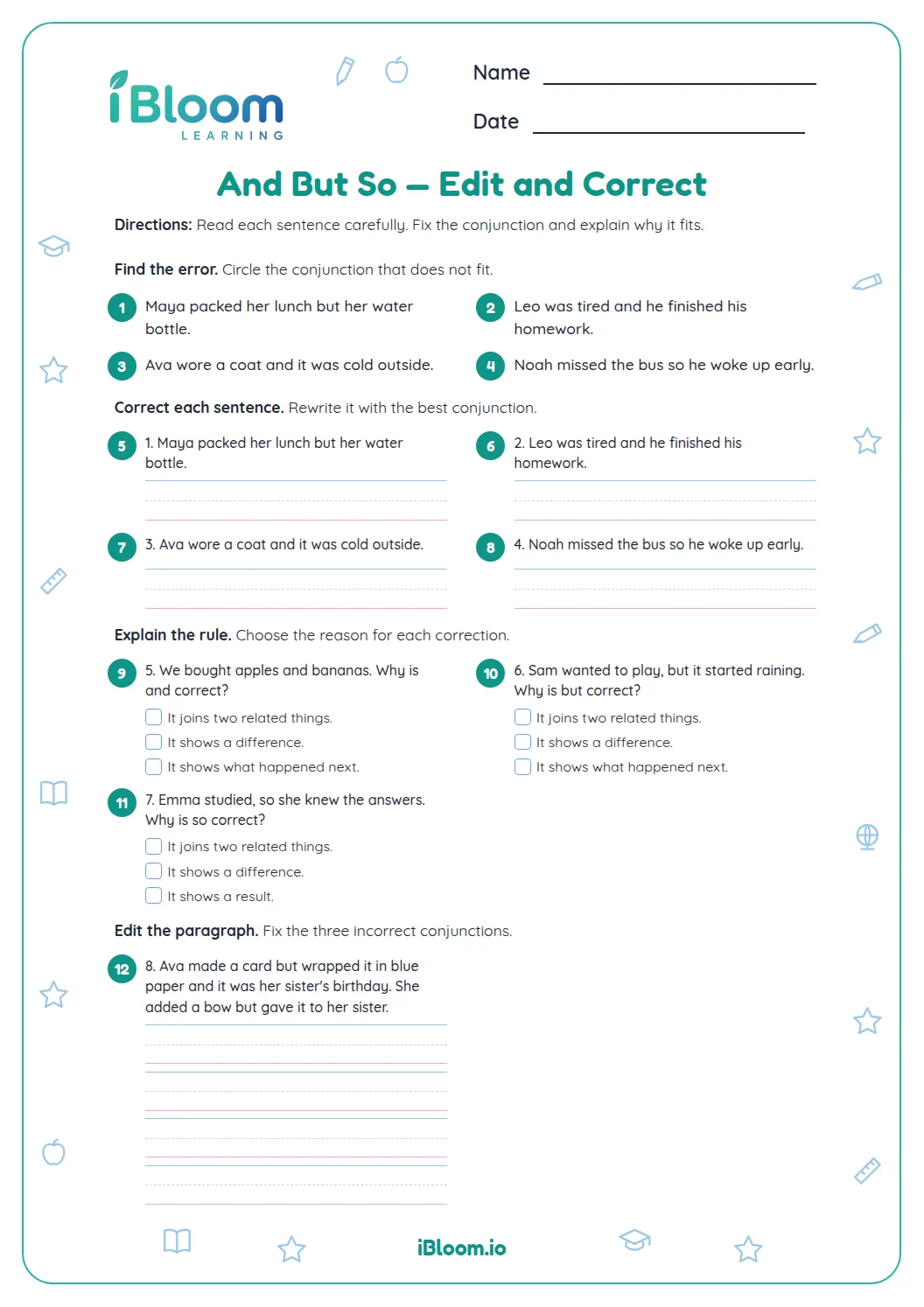
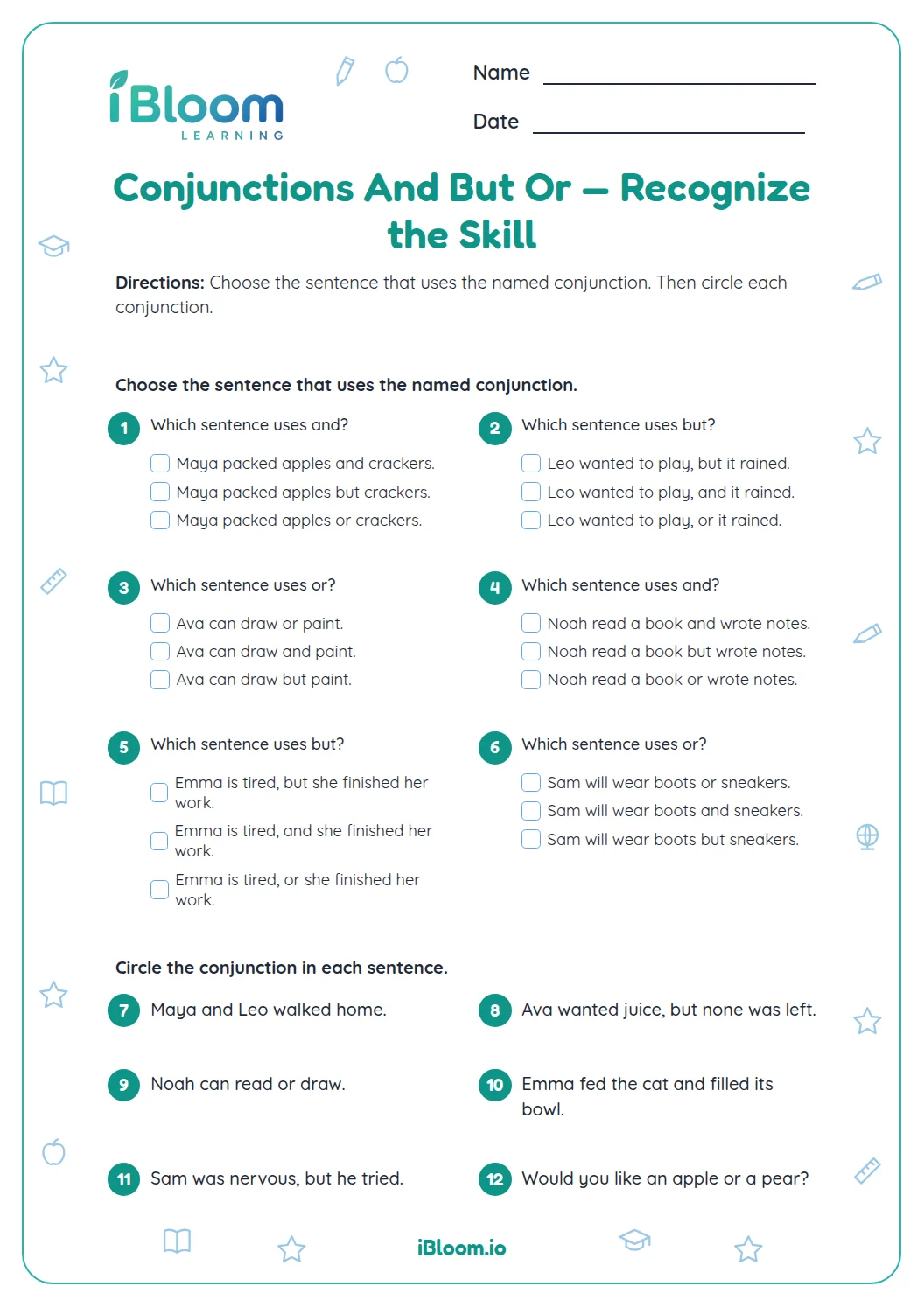
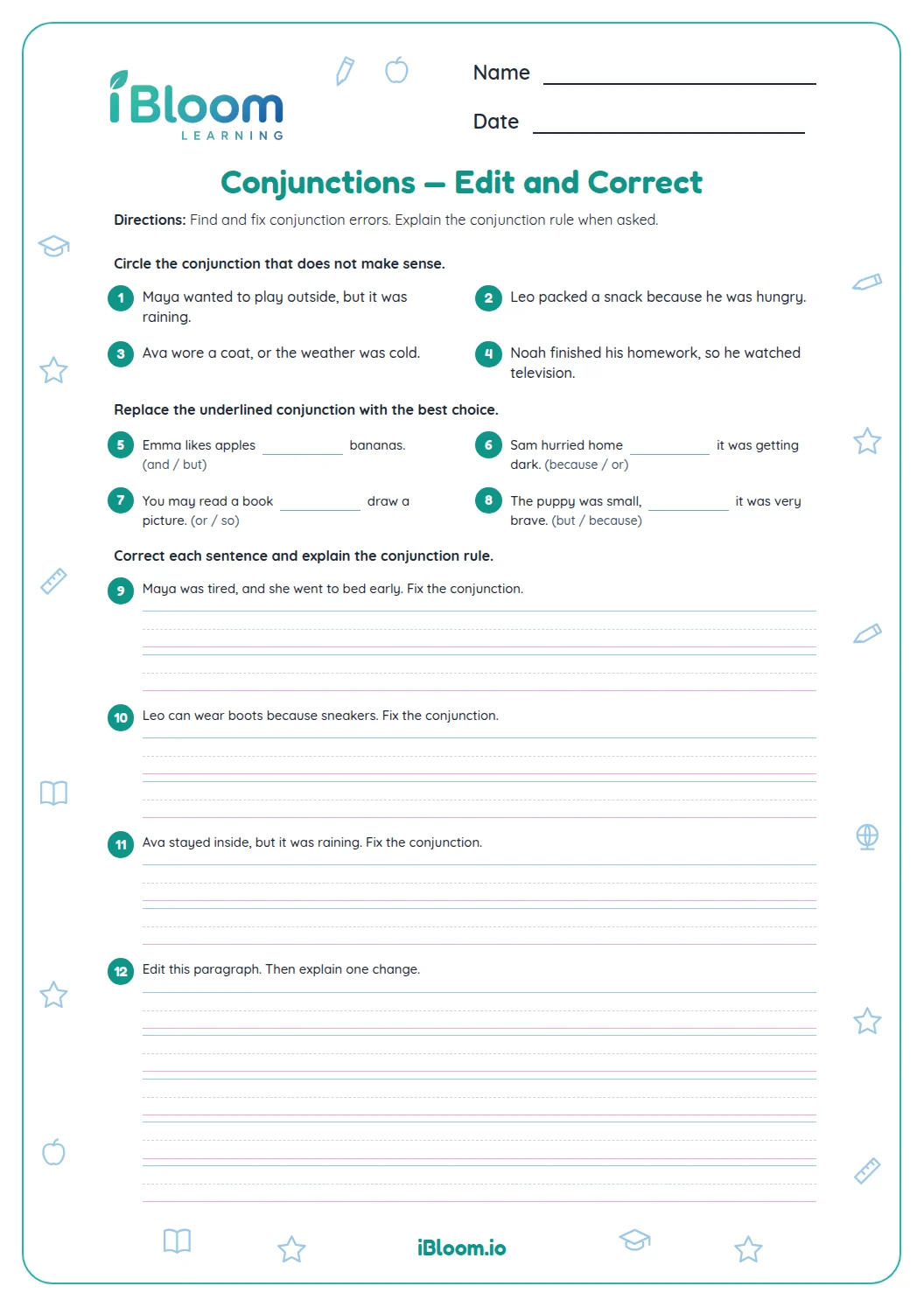
This Grade 3 coordinating conjunctions worksheet helps students connect words and ideas with and, but, or, and so. Part A asks them to select a conjunction that fits the relationship in a sentence. Part B asks them to combine pairs of ideas using a named conjunction. The answer key provides the choices and complete model sentences.
Aligned to L.3.1.h
How do coordinating conjunctions connect ideas?
And adds or joins, but shows a contrast, or offers a choice, and so introduces a result. Read both sides of the blank before choosing.
- 1Question 3: “Nia practiced each day, ___ she learned the song.” → so; learning the song is the result of practice.
How can you join two complete thoughts?
Keep the meaning of both short sentences. Choose the conjunction named in the prompt, then write one complete sentence. When it joins two complete thoughts, put a comma before the conjunction.
- 1Question 11: “The trail was steep. We reached the top.” → “The trail was steep, but we reached the top.”
How do you distinguish a choice from a result?
Or presents alternatives; so tells what happened because of something else. Re-read the sentence with each option to see which relationship makes sense.
How to use this worksheet
- 1Read both ideas around the blank before looking at the options.
- 2Ask whether the sentence adds, contrasts, offers a choice, or gives a result.
- 3In Part B, keep both original ideas and use the conjunction named in the prompt.
- 4Check that the joined sentence sounds complete and keeps the intended meaning.
- 5Use the key to compare punctuation and wording.
Common mistakes and quick fixes
The mistake
Choosing and when the ideas contrast.
The fix
Look for a difference or surprise; but may show that relationship.
The mistake
Using so for a choice between two options.
The fix
Use or when the reader can choose one alternative.
The mistake
Forgetting the comma between two complete thoughts.
The fix
Check whether each side could stand alone as a sentence.
Common Core alignment
The worksheet gives students practice using conjunctions to connect ideas in complete sentences.
Use coordinating and subordinating conjunctions to connect simple sentences.
On this sheet: Students select and use coordinating conjunctions to connect words and related ideas.
Show the official wordingHide the official wording
Use coordinating and subordinating conjunctions.
What to practice next
Make more practice
Further reading
Questions parents and teachers ask
Which conjunctions appear on this worksheet?
Students practice and, but, or, and so. In Part A they choose a word to show addition, contrast, choice, or result; in Part B they join ideas with a named conjunction. The answer key gives the choices and complete model sentences.
How many questions are included?
There are 16 questions in two parts: eight conjunction choices and eight sentence-joining items. Students choose among and, but, or, and so, then use a named conjunction to connect ideas. The key gives the choice or a complete model sentence.
How can a child choose between but and so?
Use but when the second idea contrasts with the first. Use so when the second idea tells what happened as a result. Read the full sentence with each word to check which relationship matches the meaning, then compare with the key.
Does every conjunction need a comma?
Use a comma when a coordinating conjunction joins two complete thoughts, as in “The trail was steep, but we reached the top.” The comma is usually not needed when the conjunction joins words or phrases, as in “apples and crackers.”
Can students write a different sentence in Part B?
Yes. Part B names the conjunction and provides the ideas to connect, but a student may phrase the full sentence differently while keeping both ideas and using the named word correctly. The key shows one model sentence for comparison.