

About this worksheet
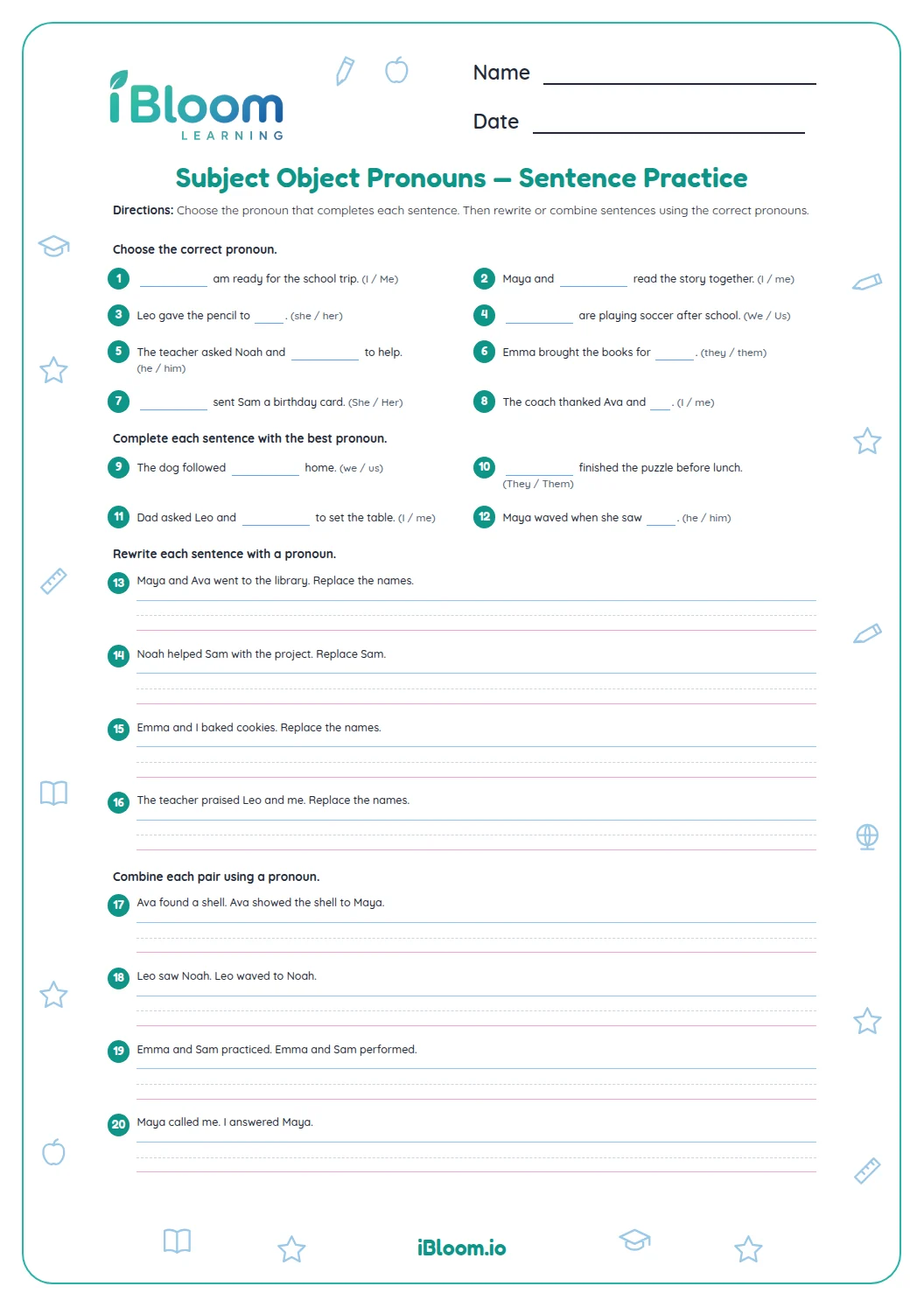
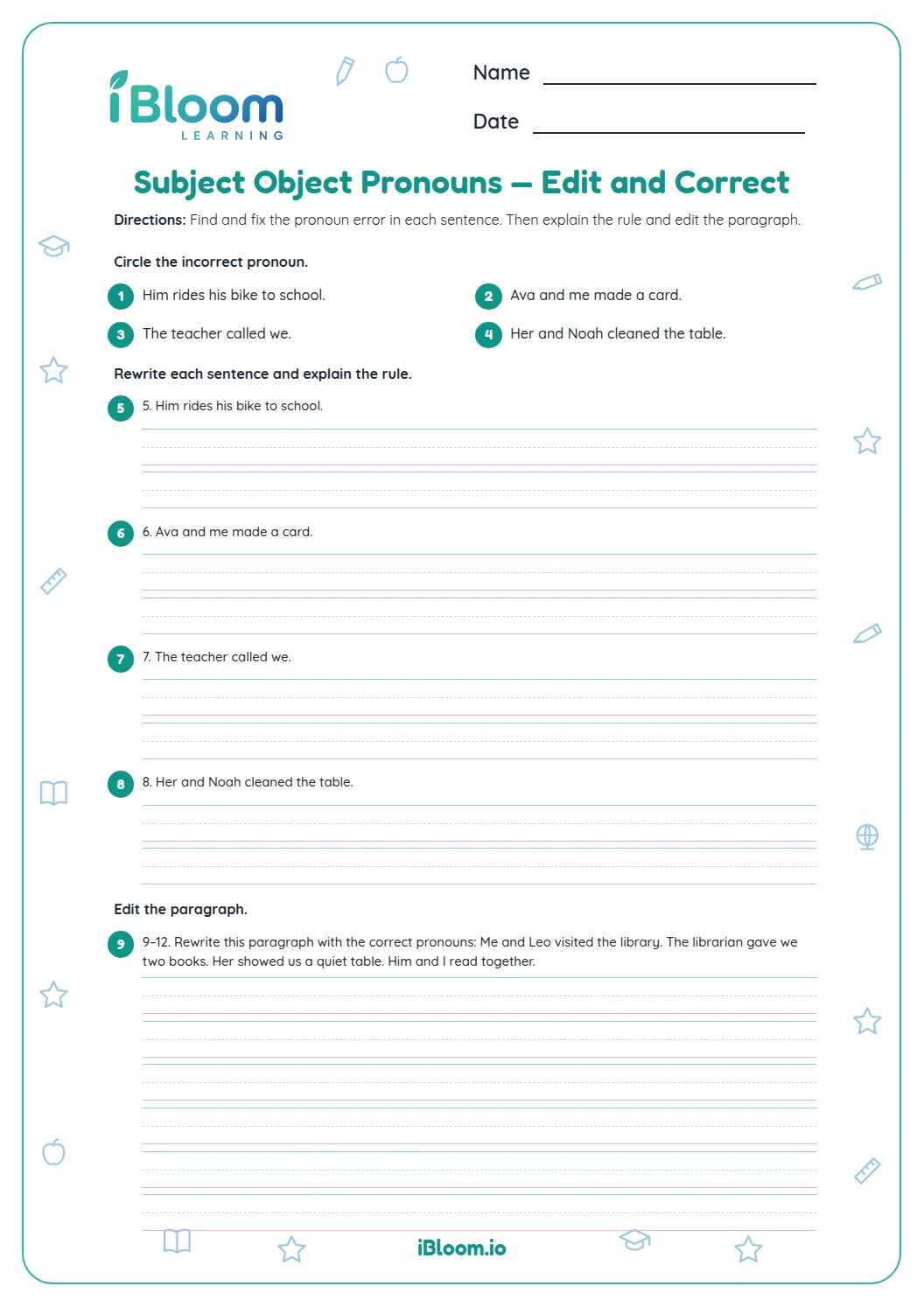
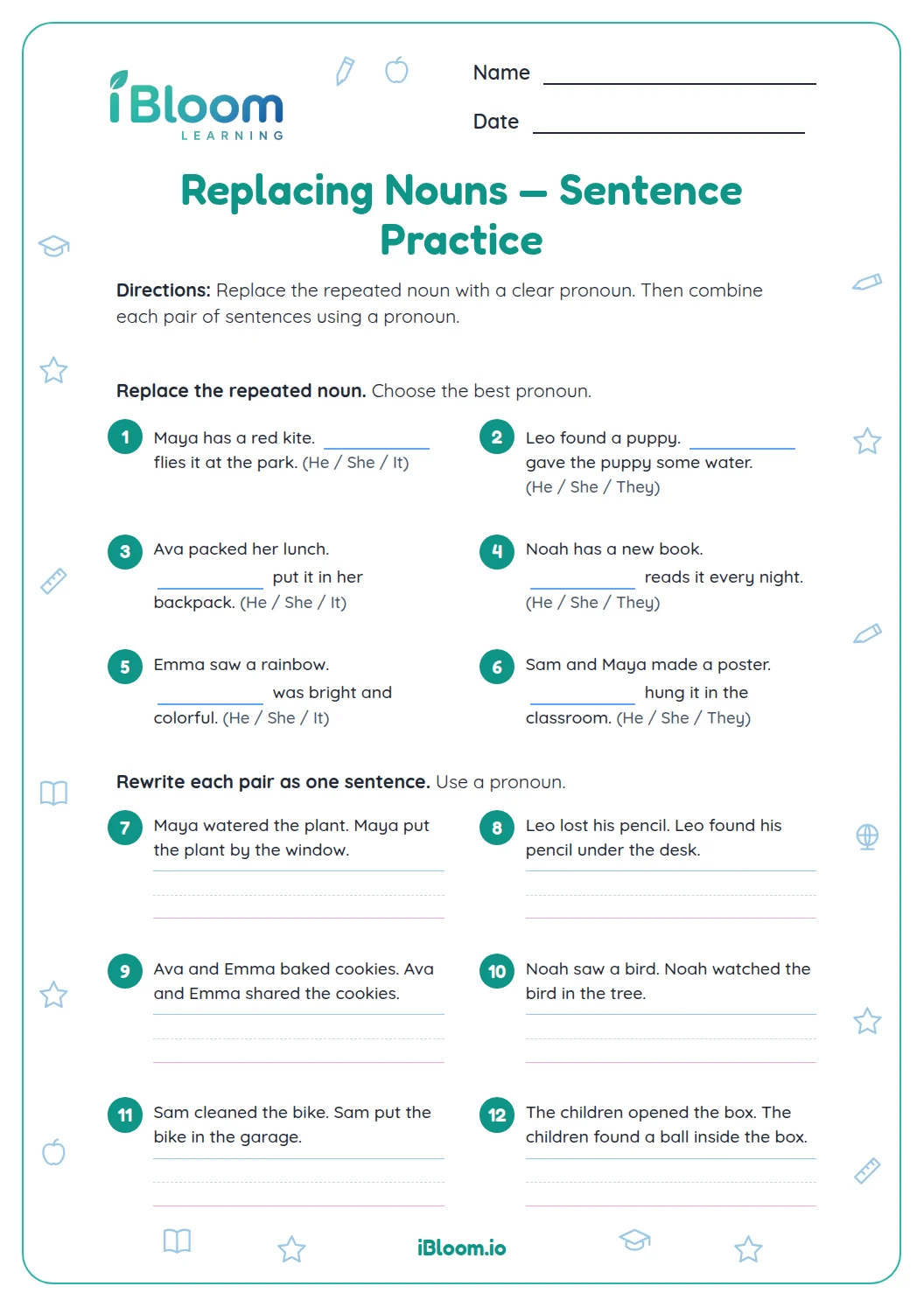
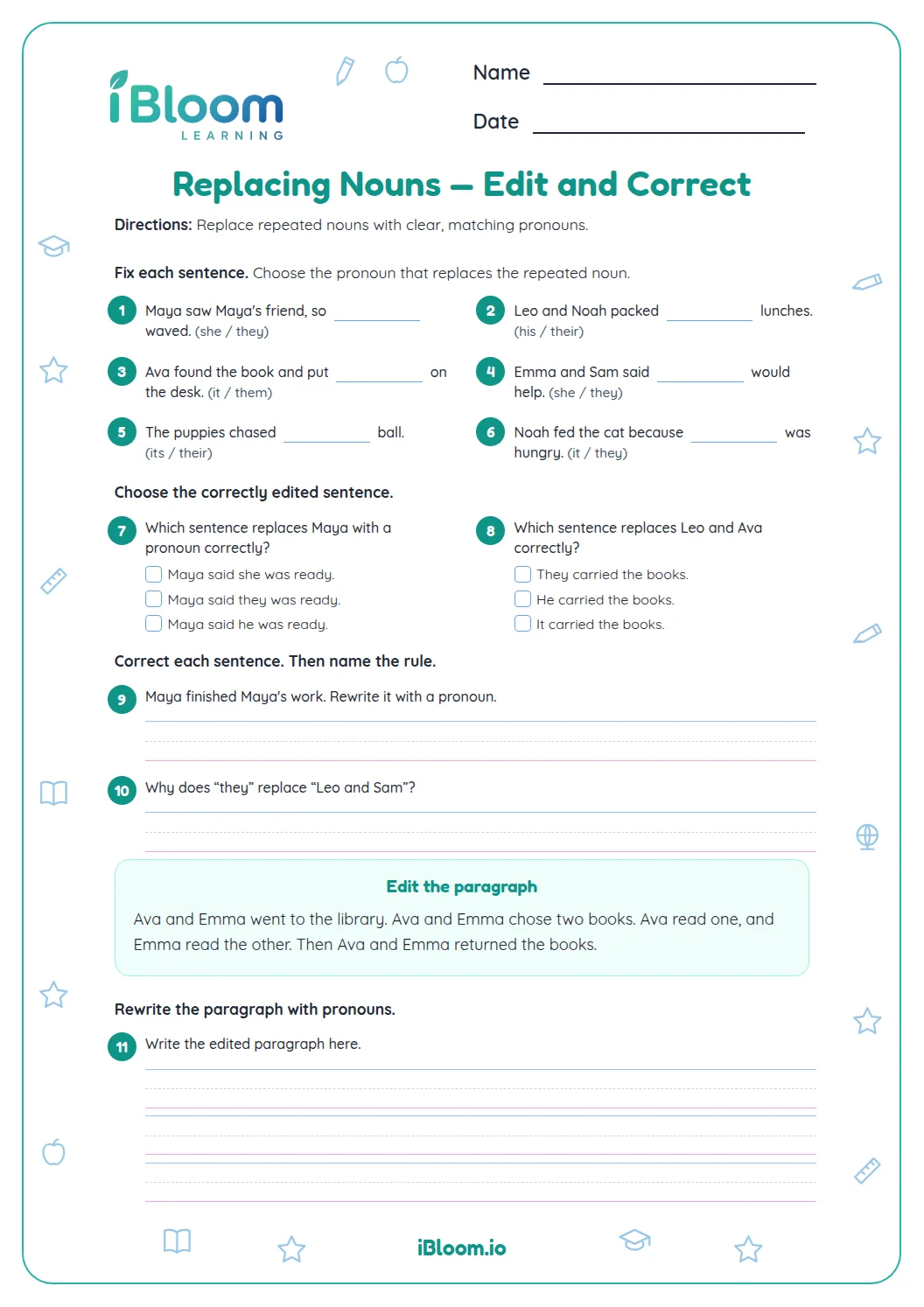
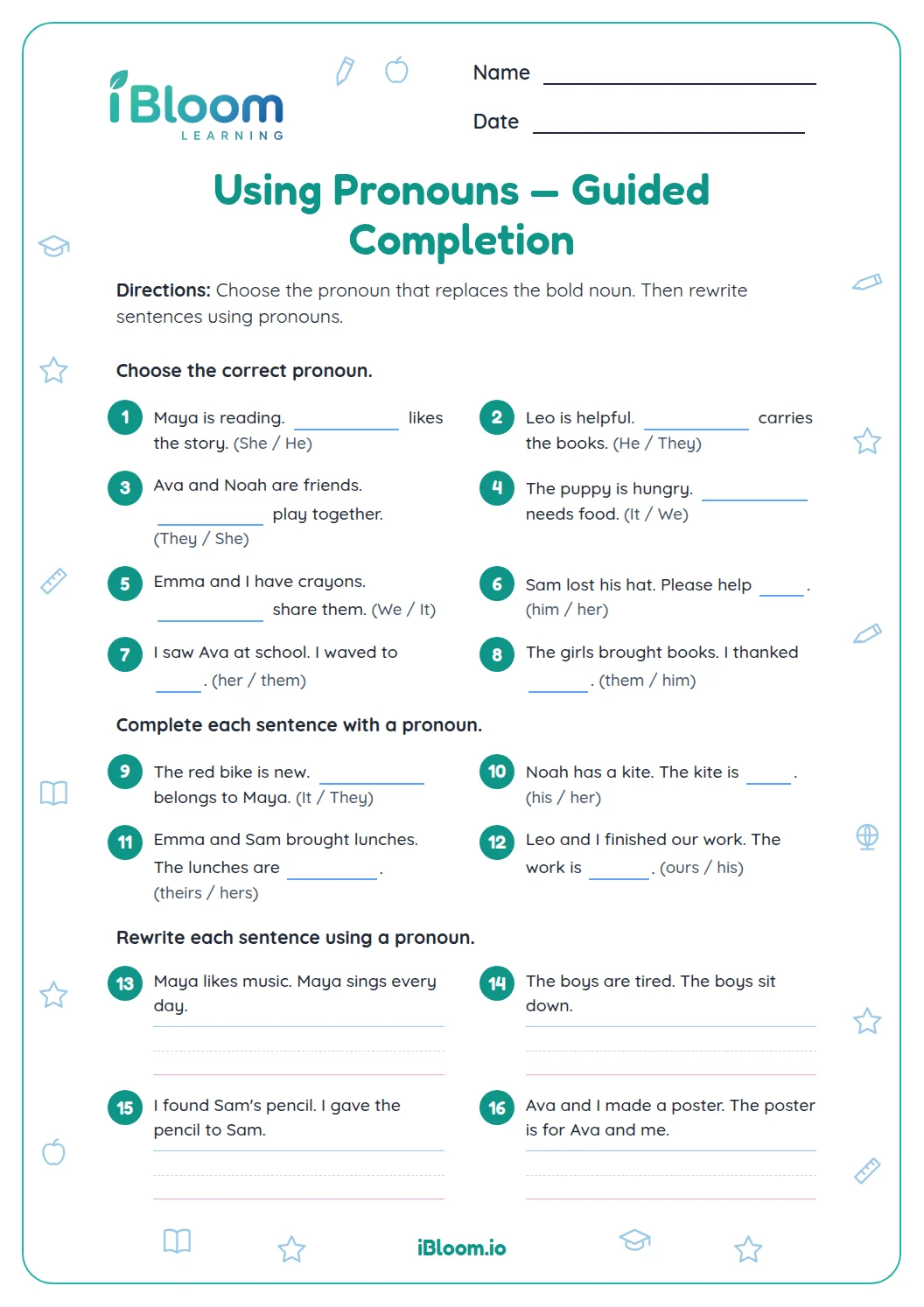
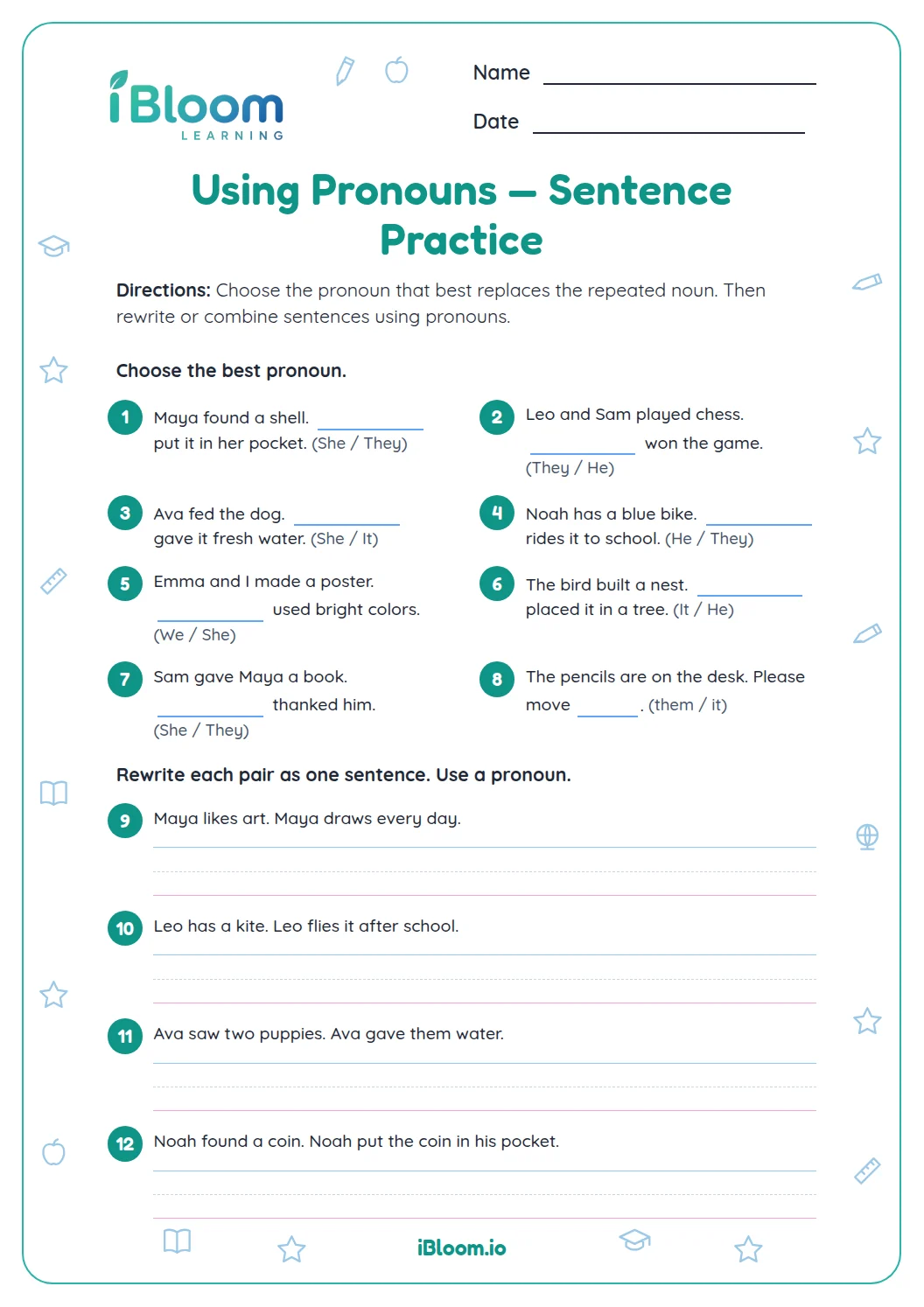
This Grade 3 grammar worksheet gives children repeated practice recognizing subject and object pronouns in complete sentences. Part A asks them to circle subject pronouns, Part B focuses on object pronouns, and Parts C and D provide fresh examples of each role. The 16 short sentences include pronouns such as she, they, me, him, us, and it. A separate answer key identifies the word to circle in each sentence.
Aligned to L.3.1a
What is the difference between subject and object pronouns?
A subject pronoun names who or what does the action: I, you, he, she, it, we, or they. An object pronoun receives the action or follows a preposition: me, you, him, her, it, us, or them.
The same person can be named by different forms depending on the sentence. “They waved” uses a subject pronoun; “I waved to them” uses an object pronoun.
How can you find the pronoun’s job?
Find the verb and ask who does the action. The subject pronoun names that person or thing. Then look for the person or thing receiving the action, or a pronoun after a preposition such as to or for.
- 1Kim saw me today.
- 2Kim does the seeing, so Kim is the subject.
- 3Me receives the action, so it is an object pronoun.
- 4Answer: circle me.
What does each part ask children to do?
Part A circles subject pronouns, and Part B circles object pronouns. Parts C and D give a new group of sentences for each pronoun role. Children can reread each sentence and ask whether the pronoun does the action or receives it.
The four groups keep each task short and give practice with singular and plural pronouns in familiar sentence contexts.
How to use this worksheet at home or in class
- 1Read the whole sentence before choosing a pronoun.
- 2Find the action verb and ask who does it.
- 3Check for a noun that receives the action or follows a preposition.
- 4Choose the subject or object form that matches the noun.
- 5Replace the name and reread the sentence to check it still works.
Common mistakes and quick fixes
The mistake
Using an object form as the sentence subject, as in “Her packed lunch.”
The fix
Ask who did the action; use she, he, we, or they in the subject position.
The mistake
Using a subject form after a verb or preposition, as in “called we.”
The fix
Ask who received the action or follows the preposition; use us, them, him, or her.
The mistake
Choosing a pronoun only by whether the noun is singular or plural.
The fix
Check both number and job in the sentence before selecting the pronoun.
Common Core alignment
This practice asks children to explain and apply pronoun functions in sentences.
Explain and use pronouns according to their function in a sentence.
On this sheet: Children identify subject and object pronouns and use each form in a sentence.
Show the official wordingHide the official wording
Explain the function of nouns, pronouns, verbs, adjectives, and adverbs in general and their functions in particular sentences.
What to practice next
Make more practice
Further reading
Questions parents and teachers ask
What is a subject pronoun?
A subject pronoun stands for the person or thing doing the action in a sentence. In “They carried the books,” they is the subject because they did the carrying. Part A and Part C on this sheet ask children to find subject pronouns in complete sentences.
What is an object pronoun?
An object pronoun stands for the person or thing receiving the action or following a preposition. In “Milo thanked him,” him receives the thanks. Object forms include me, you, him, her, it, us, and them; Parts B and D practice spotting them.
How do I help with we and us?
Ask who is doing the action. If the pronoun is the subject, use we, as in “We packed lunch.” If the group receives the action, use us, as in “The coach called us.” Pointing to the verb can help children see the difference.
Does the worksheet practice replacing names with pronouns?
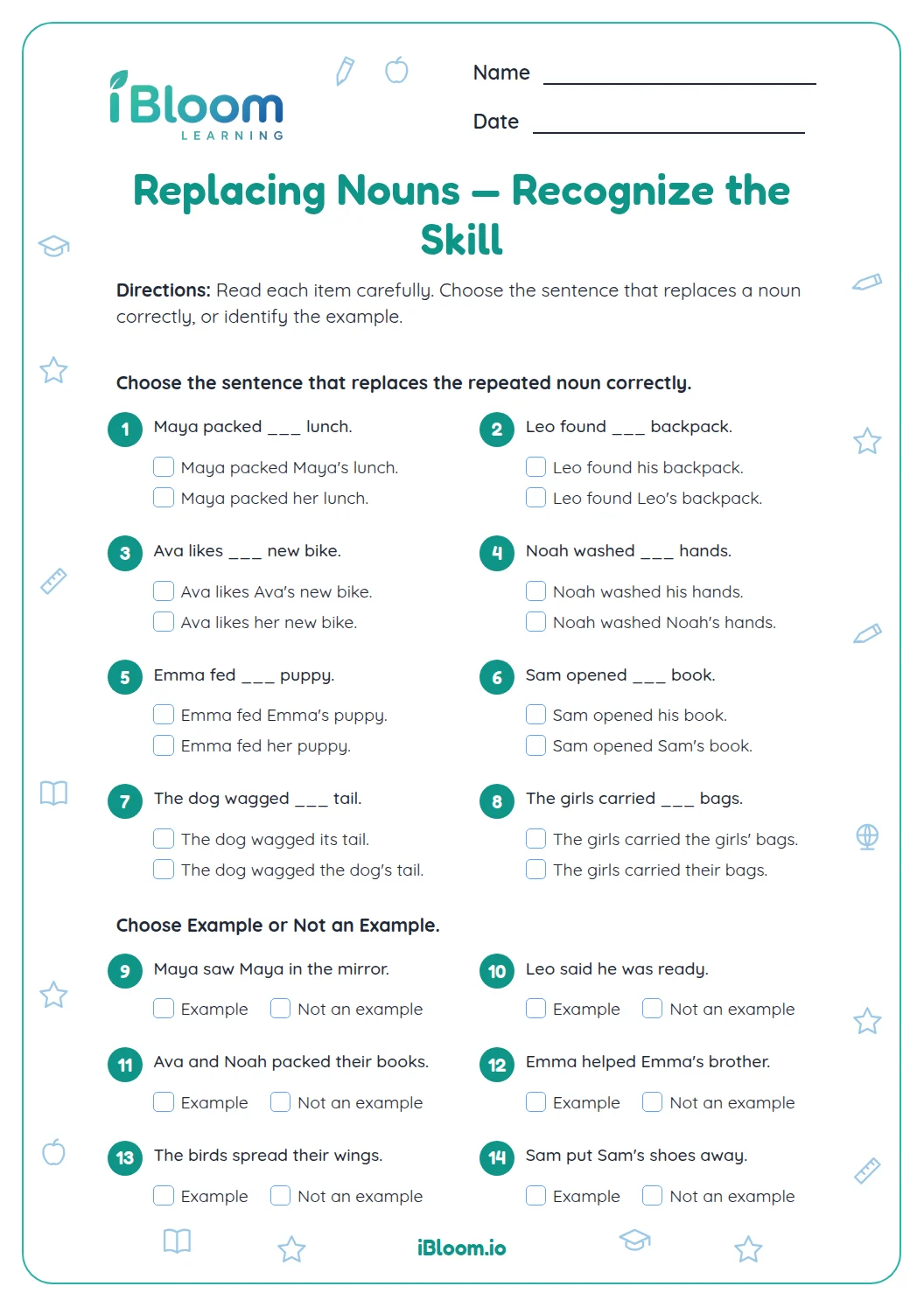
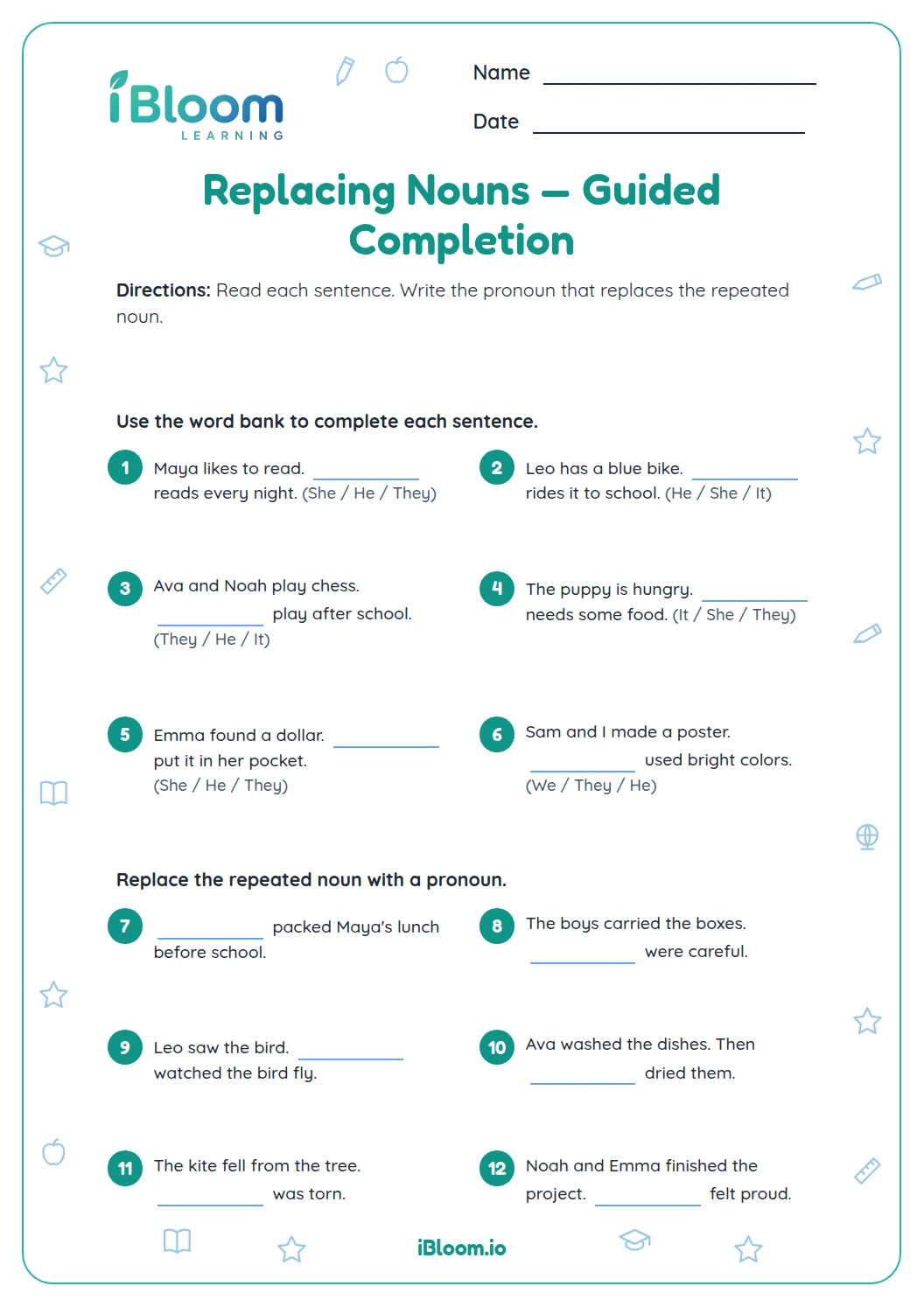
This page focuses on recognizing pronouns already used in sentences. Children circle subject and object forms in four groups of examples, including names, actions, and prepositions. Another pronoun worksheet can add more practice replacing noun names with matching forms. It practices identification first.
Is there an answer key?
Yes. A separate answer key identifies the pronoun to circle in all 16 sentences. Ask the child to explain whether each pronoun does or receives the action to reinforce its job, then reread the sentence together to check the choice.