


About this worksheet
An apostrophe can replace missing letters in a contraction or show ownership. Decide which job the word needs before placing the mark.
Aligned to L.3.2
When does an apostrophe show ownership?
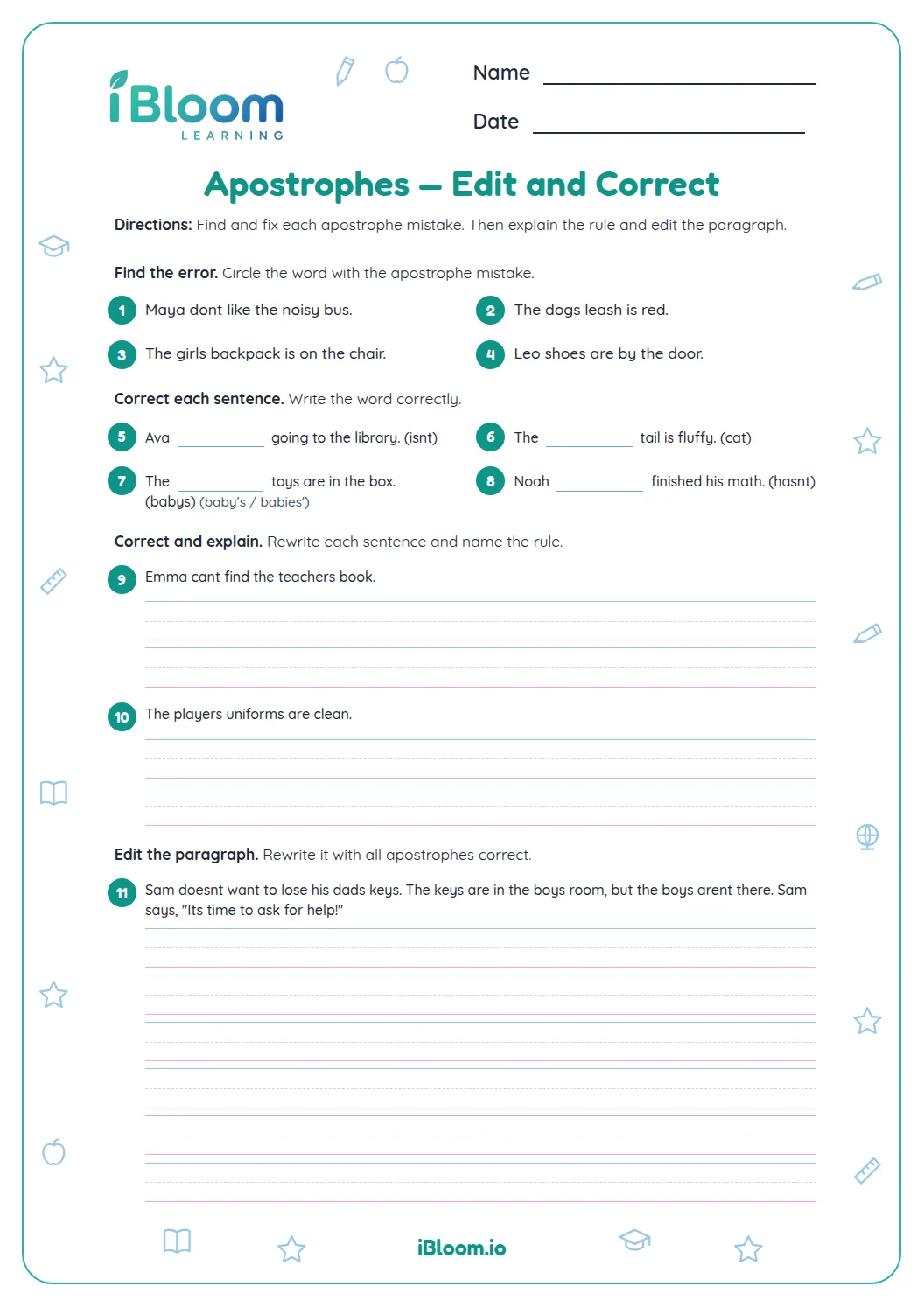
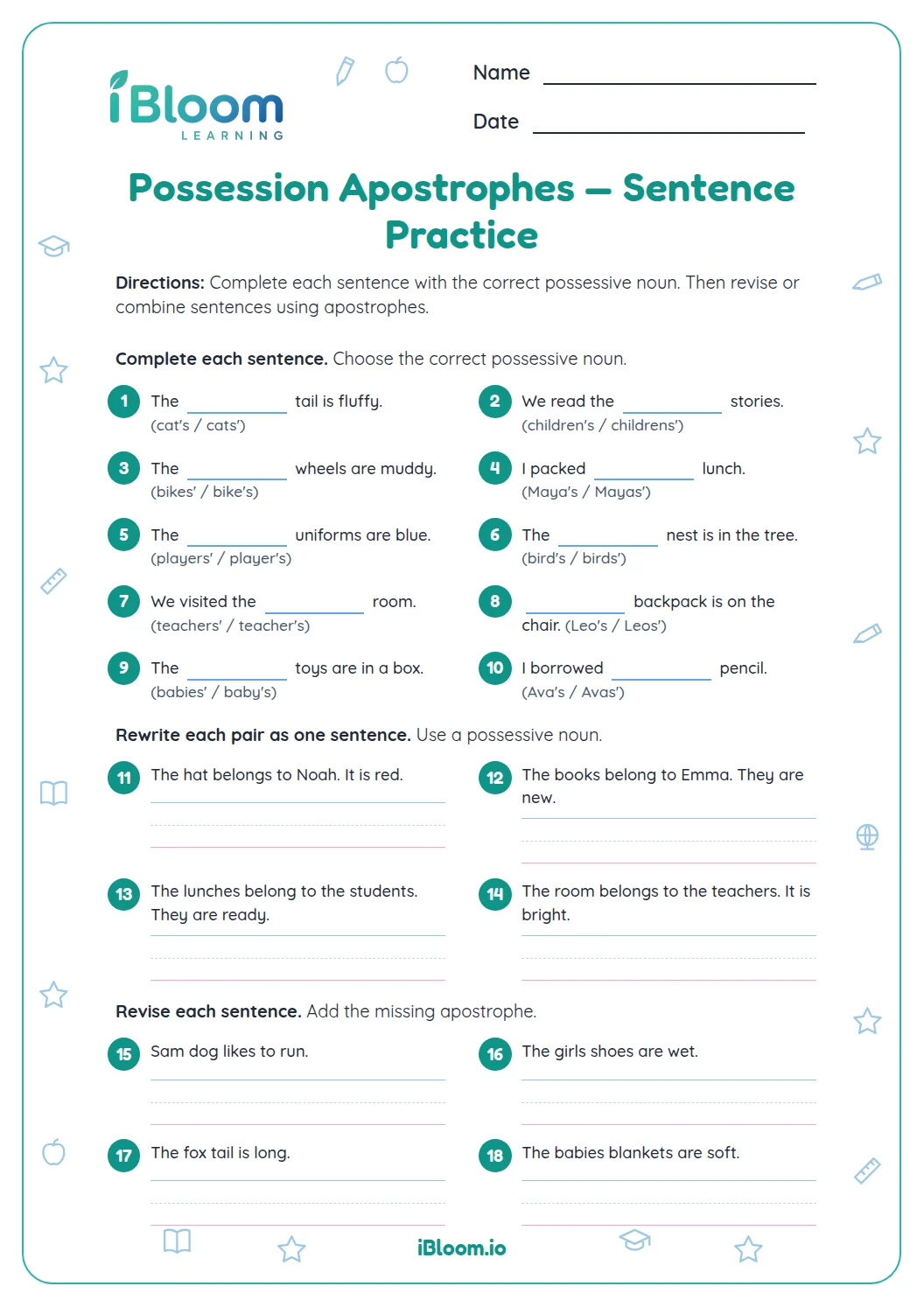
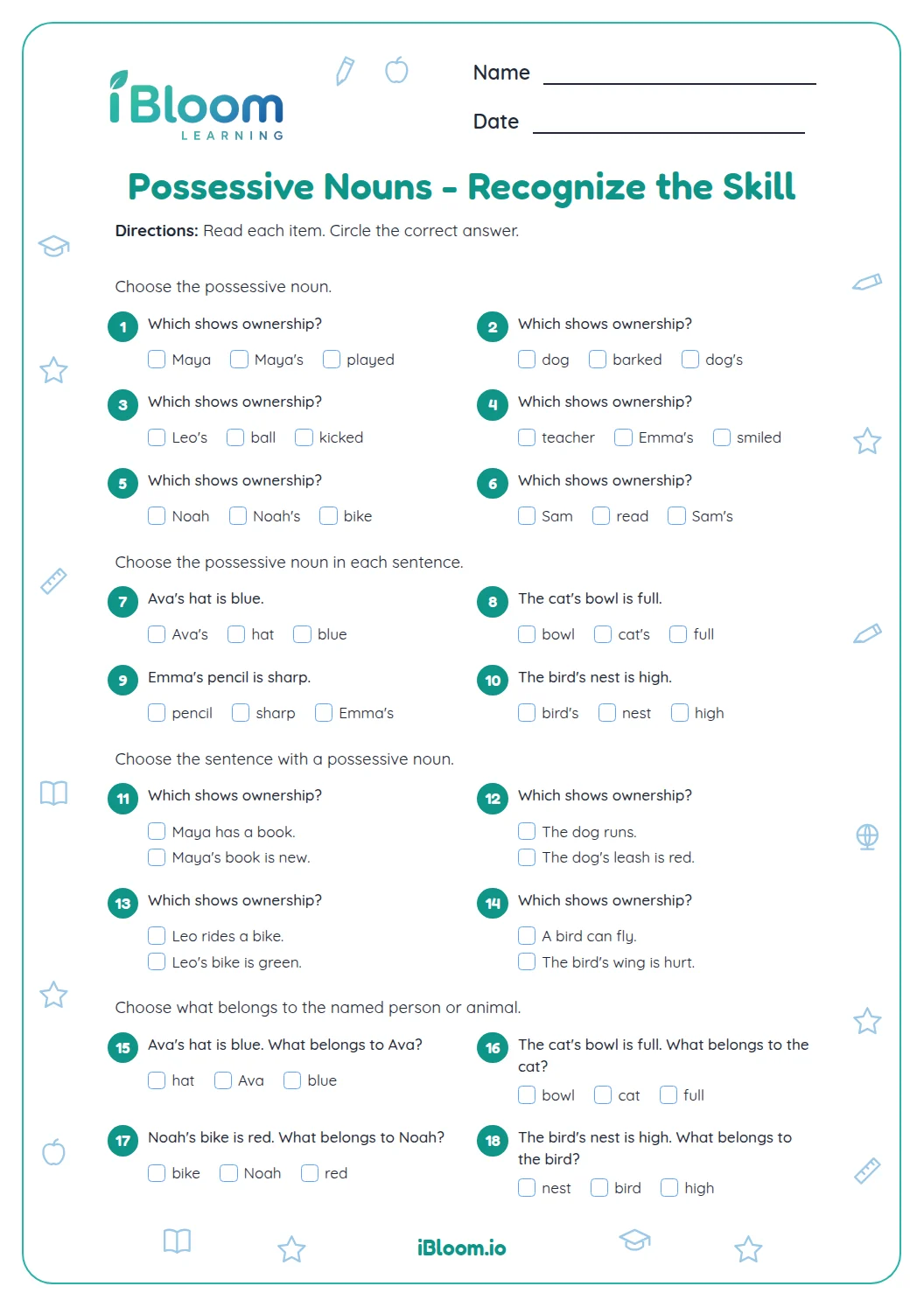
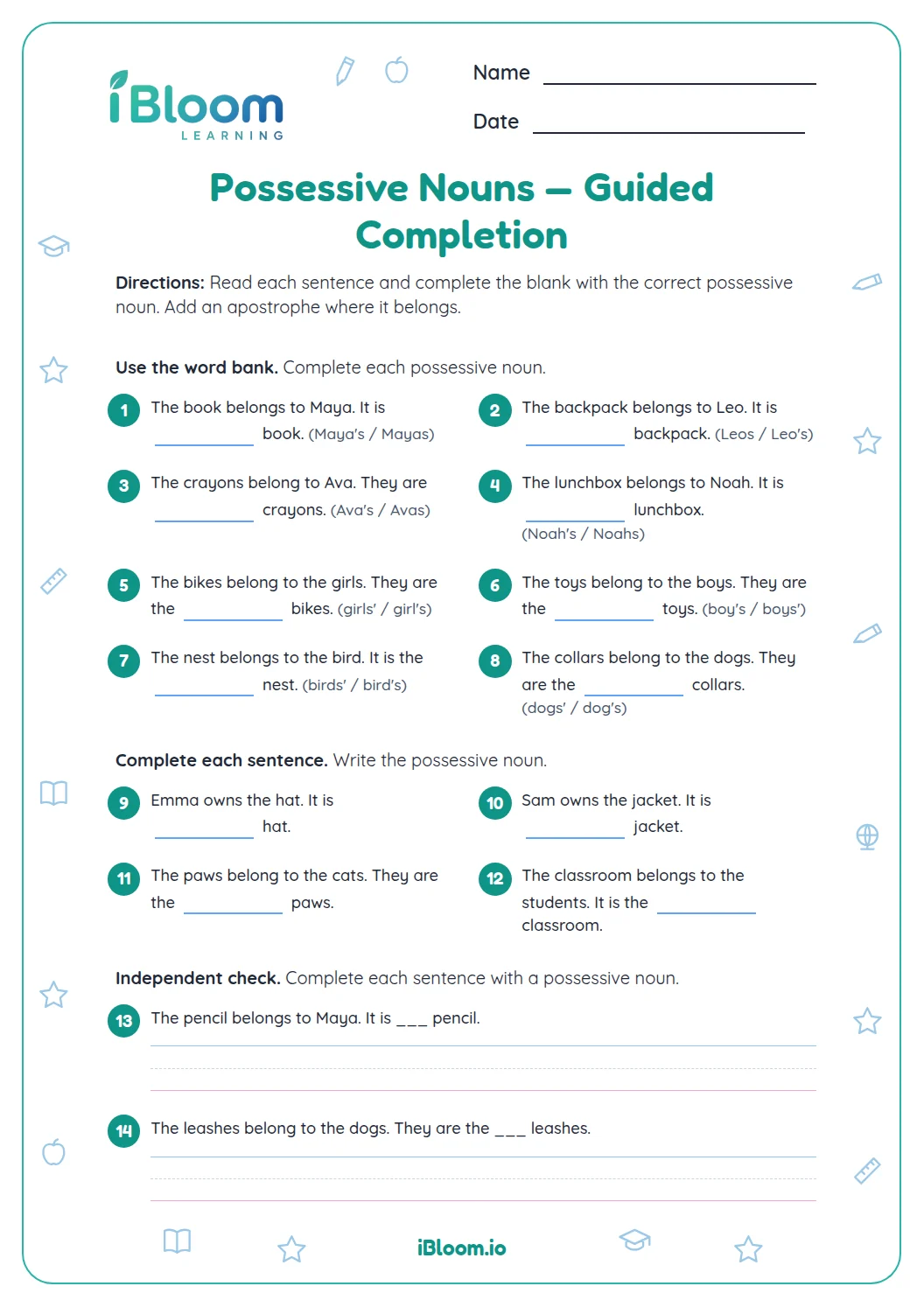
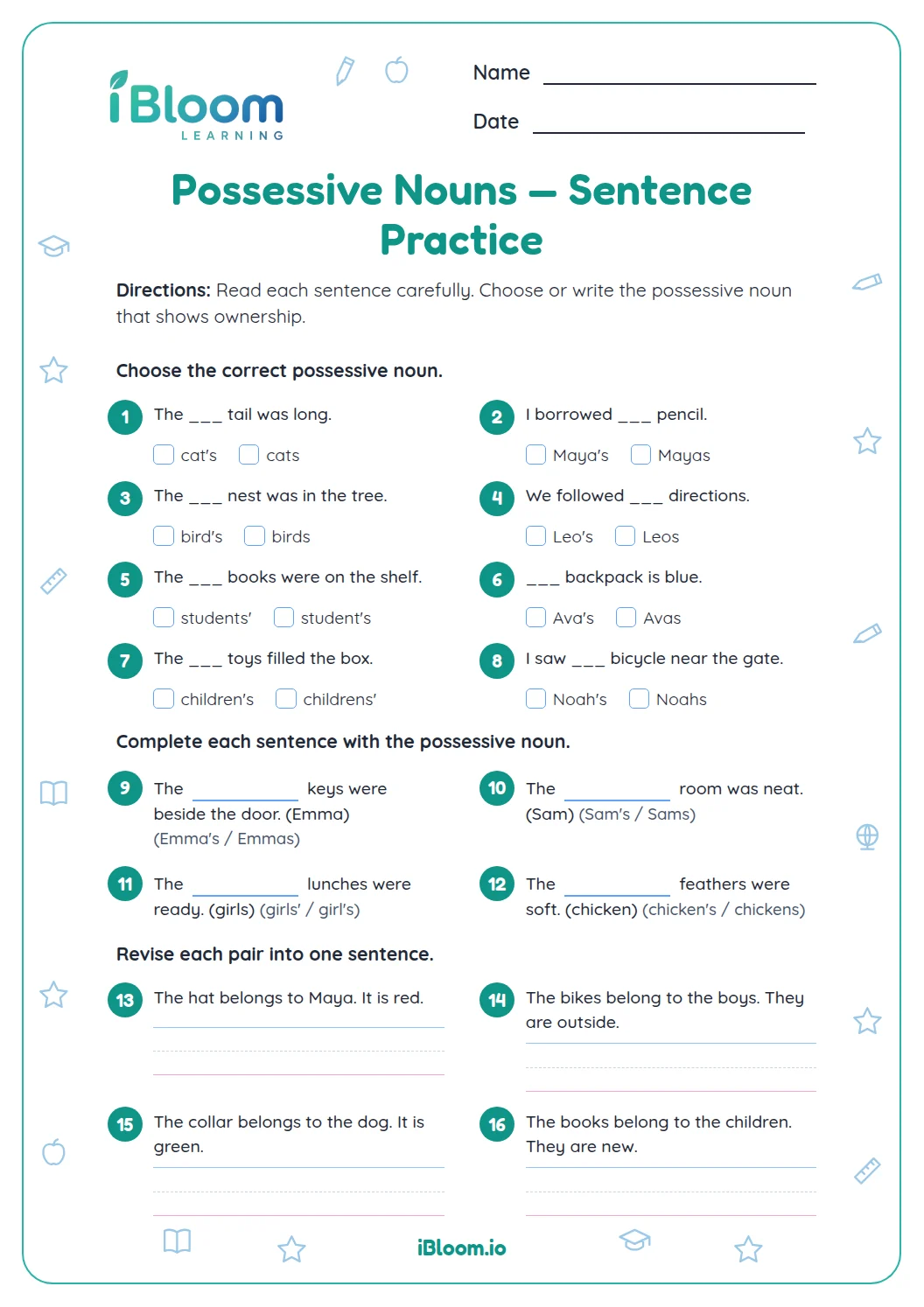
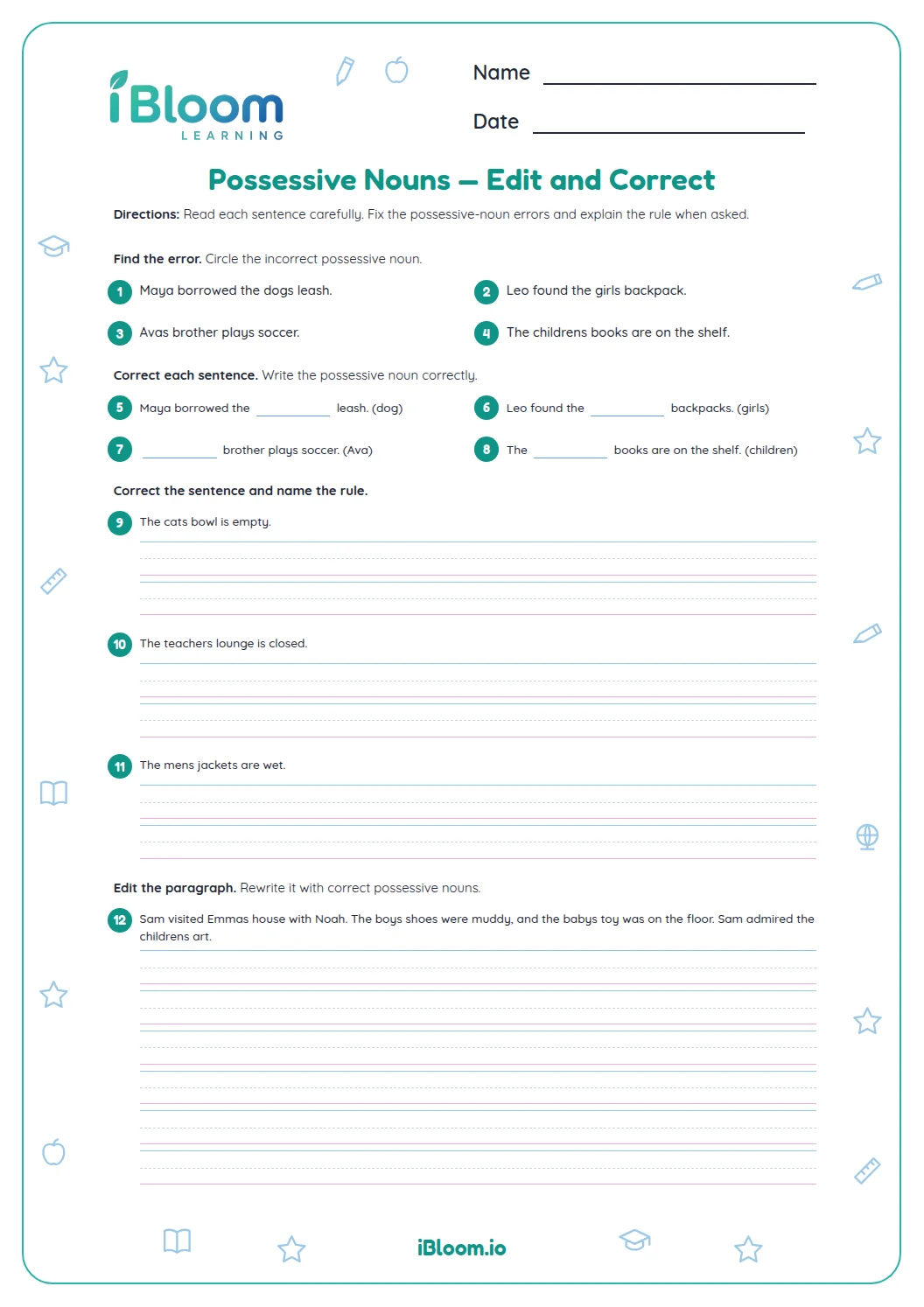
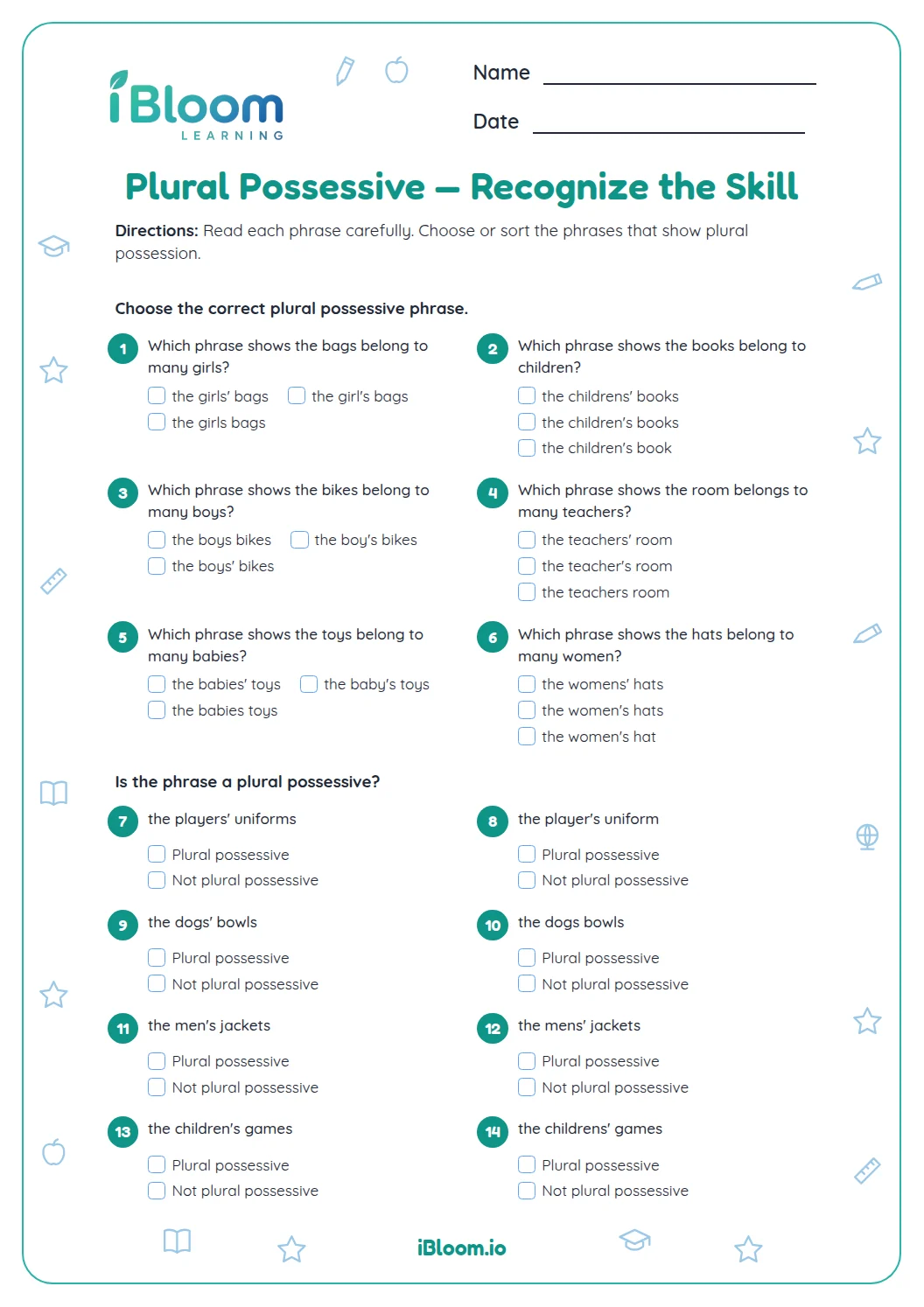
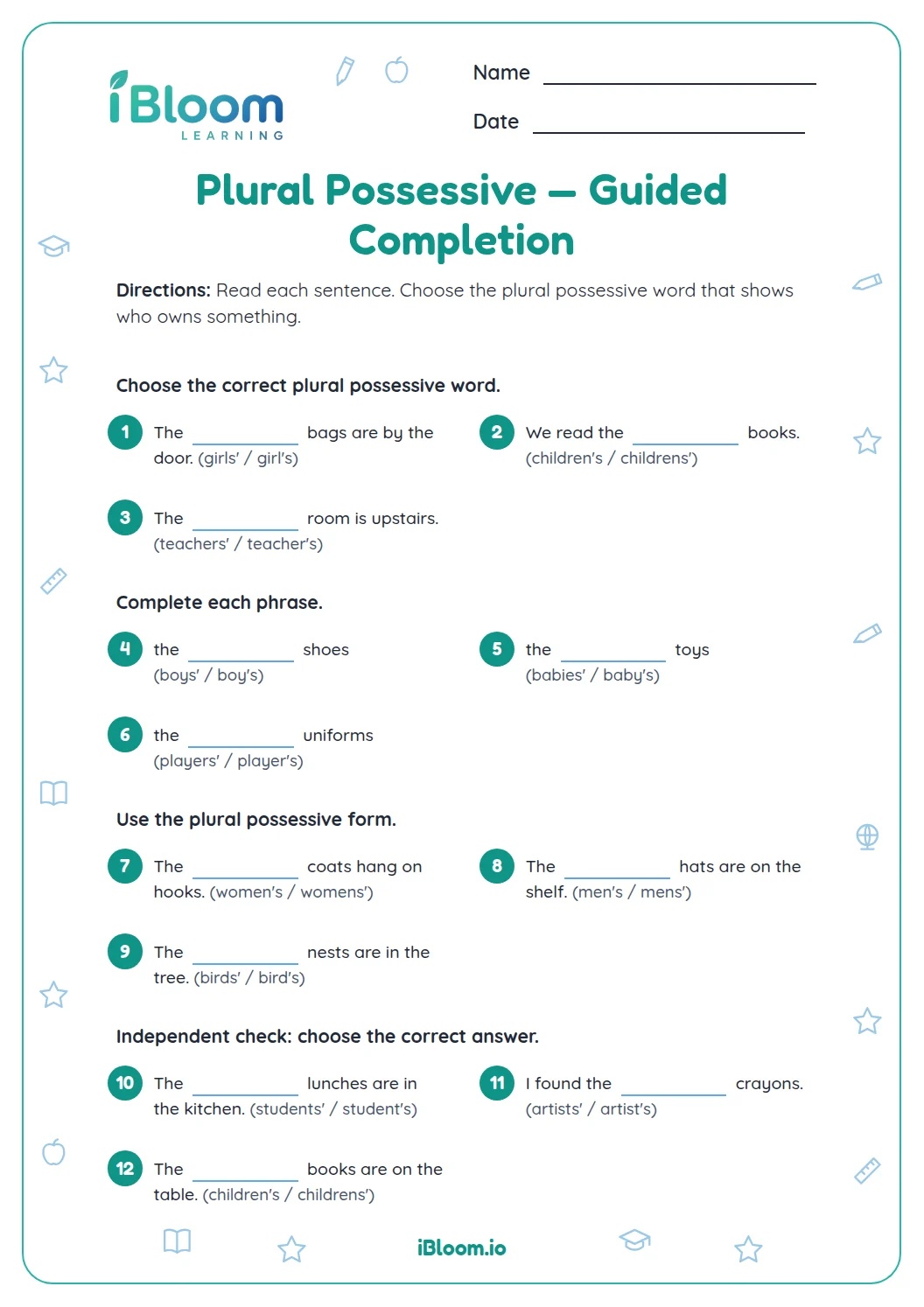
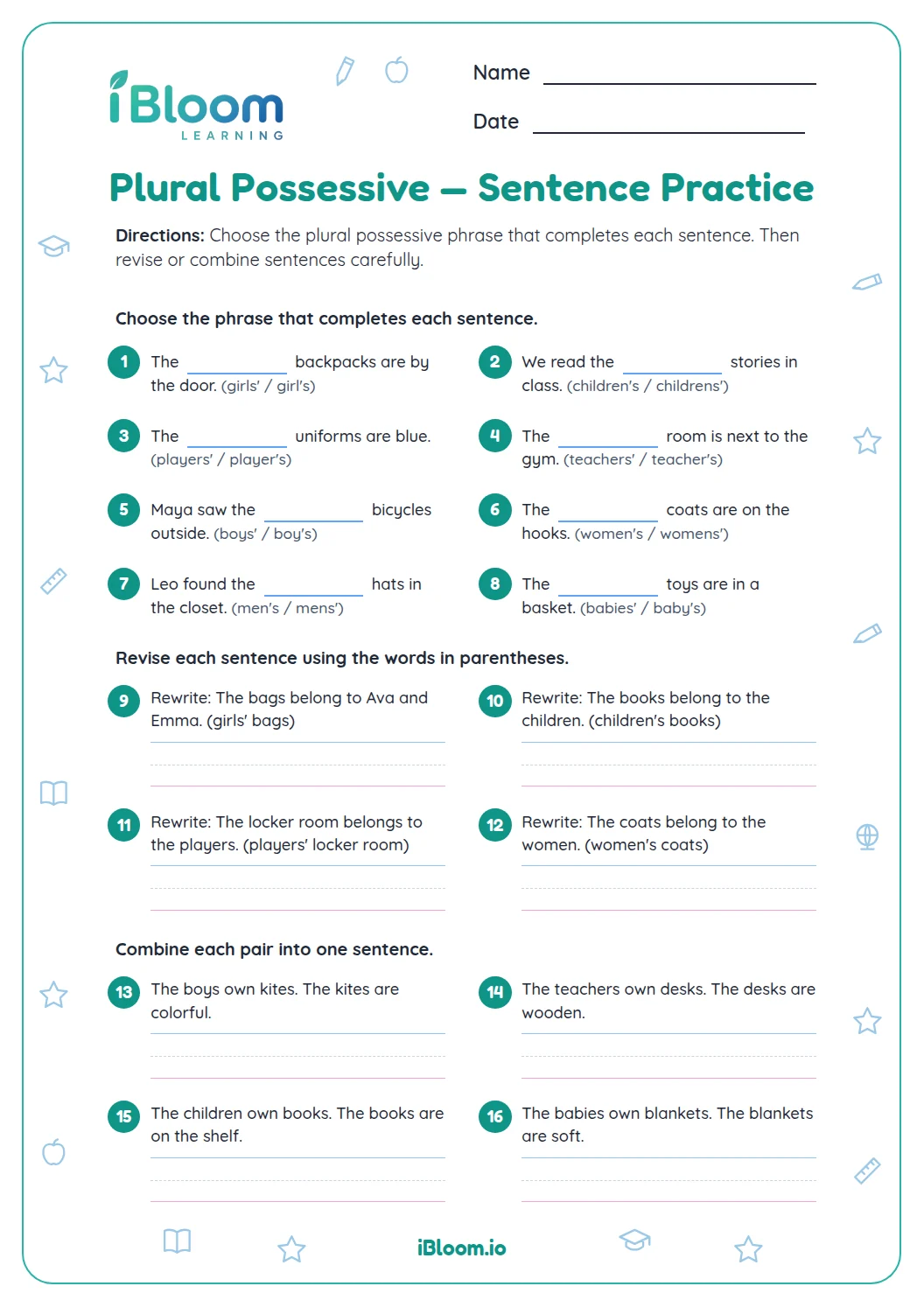
A singular owner usually takes apostrophe s: the bird’s wing. A plural noun ending in s takes an apostrophe after the s: the players’ shoes. If the plural does not end in s, add apostrophe s: children’s books.
Question 9 completes “The players___ shoes.” Players is plural and already ends in s, so the correct form is players’.
- 1players + apostrophe
- 2the players’ shoes
How can you check a contraction?
A contraction joins words and uses an apostrophe where letters are omitted: do not becomes don’t. Read the expanded words to check the meaning.
Its is possessive and has no apostrophe. It’s means it is or it has. In “The bird spread its wings,” ownership makes its the right form.
How to use this worksheet
- 1Read the direction at the start of each part.
- 2Solve each item and use the space provided for your work.
- 3Check each response against the answer key and revisit any missed item.
Common apostrophe mistakes and fixes
The mistake
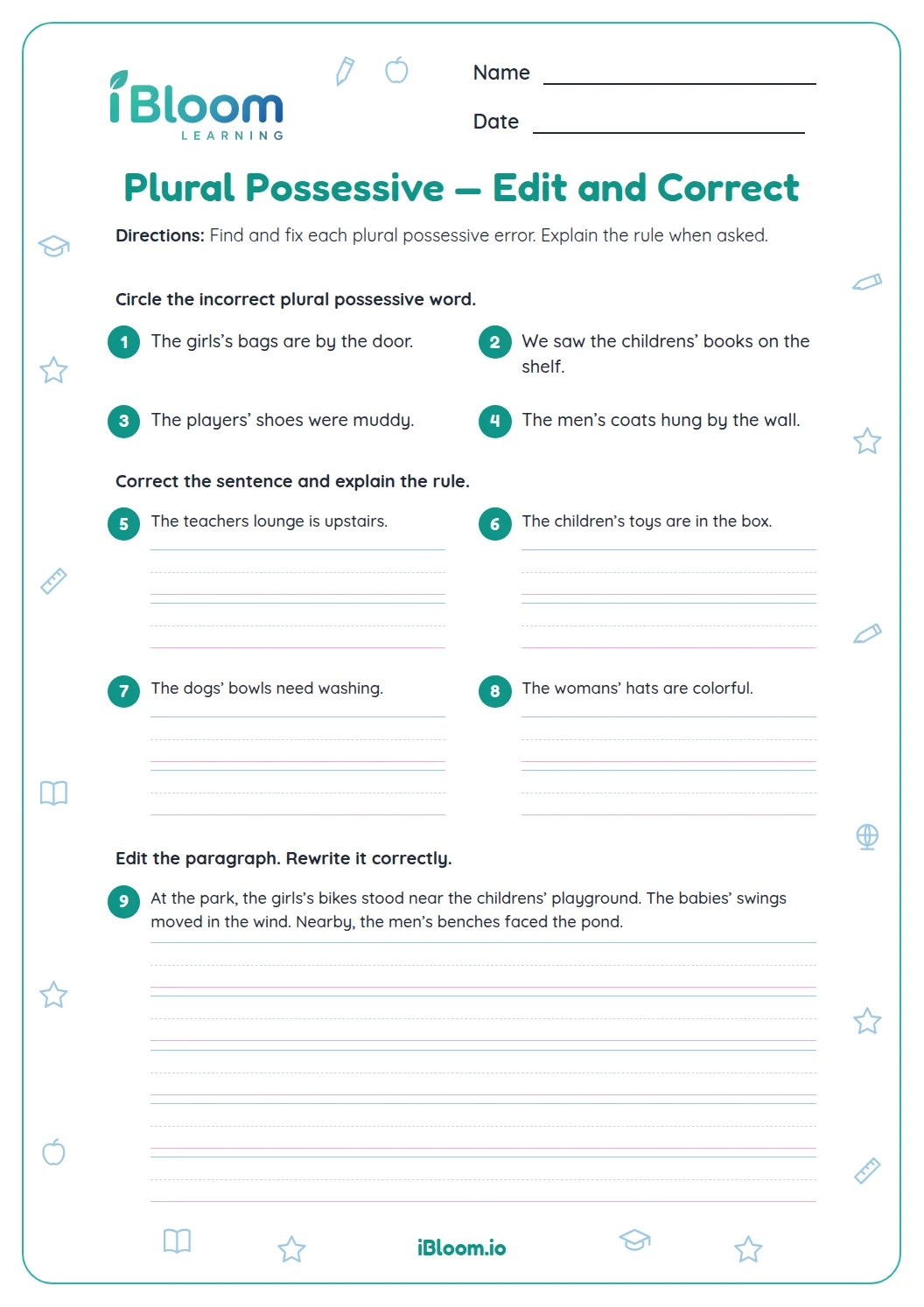
Putting the apostrophe before the s in a plural owner that already ends in s.
The fix
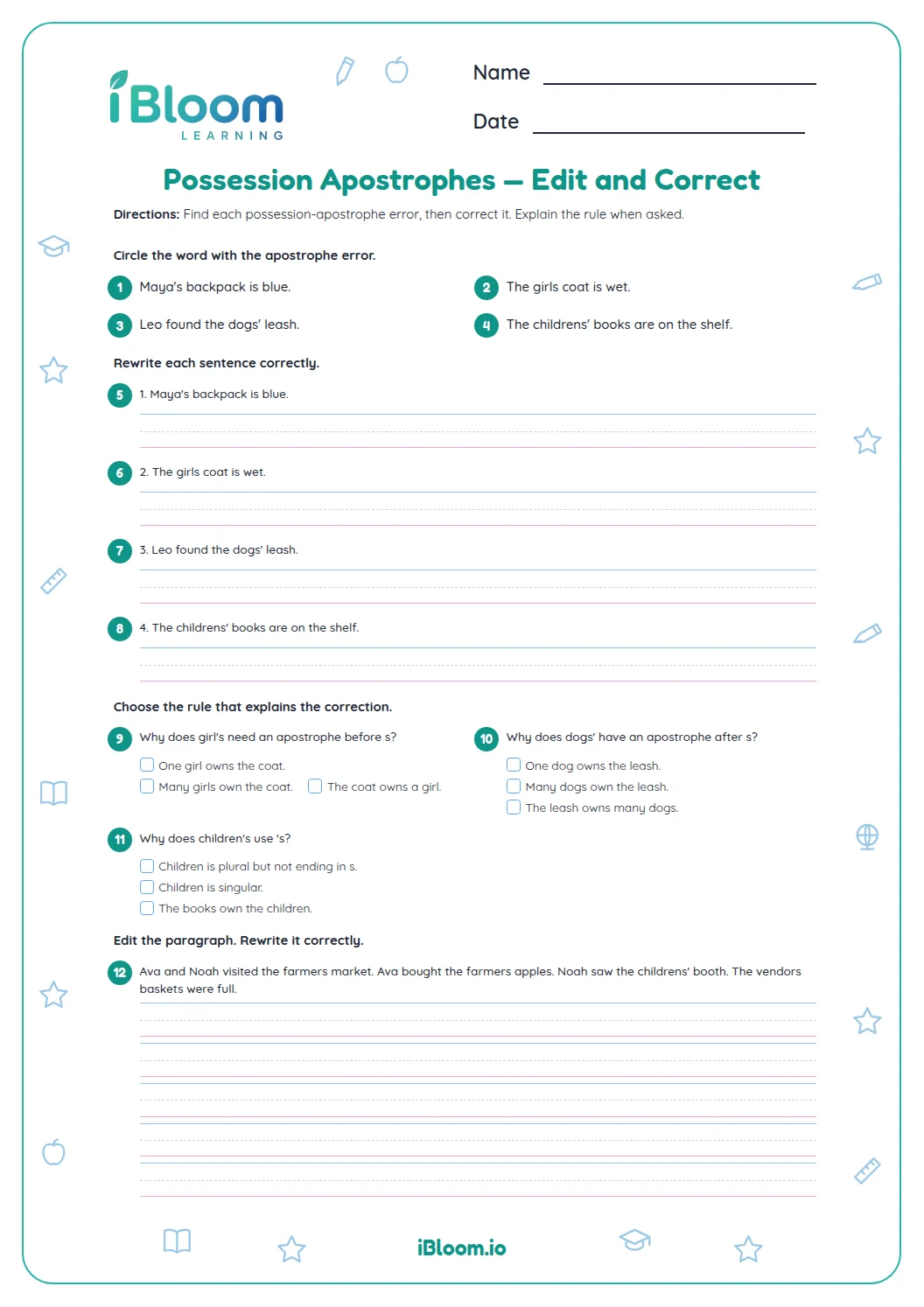
For coats belonging to dogs, write dogs’ coats: keep the plural s, then put the apostrophe after it.
The mistake
Adding an apostrophe to its when it shows ownership.
The fix
Try replacing it’s with “it is” or “it has.” If neither fits, use its without an apostrophe.
The mistake
Placing an apostrophe in the wrong part of a contraction.
The fix
Expand the word first. In don’t, the apostrophe marks the spot where letters from do not are omitted.
Curriculum alignment
This worksheet practices the listed Common Core skill.
Use standard English punctuation when writing contractions and possessive nouns.
On this sheet: Students select and write contractions and singular or plural possessives with correctly placed apostrophes.
Show the official wordingHide the official wording
Demonstrate command of the conventions of standard English capitalization, punctuation, and spelling when writing.
What to practice next
Make more practice
Further reading
Questions parents and teachers ask
Where does the apostrophe go in a contraction?
Place the apostrophe where letters are omitted. Do not becomes don’t, with the mark between n and t. Expand the contraction to its two words to check its meaning. The apostrophe replaces omitted letters, so it belongs inside the contraction rather than at the end.
What is the difference between its and it’s?
Its shows ownership, as in “The bird spread its wings.” It’s means it is or it has. Try expanding it’s; if neither phrase makes sense, use its without an apostrophe. The possessive its has no apostrophe; the contraction it’s can be checked by substituting “it is” or “it has.” The item uses a singular noun as its owner.
How do singular possessives work?
For a singular owner, add apostrophe s: the girl’s kite or bird’s wing. Identify the owner, then attach the mark and s to that noun. The singular owner keeps its noun form and receives apostrophe s to show possession.
How do plural possessives work?
If a plural noun already ends in s, put the apostrophe after it: dogs’ coats or players’ shoes. If it does not end in s, add apostrophe s, as in children’s books. The apostrophe comes after the plural s when the owner word already ends with s.
How many questions are on this worksheet?
There are 16 questions in two parts. Part A has five multiple-choice items about apostrophe forms; Part B has eleven completion questions about contractions and possessives. The first part asks children to recognize correct forms, then the second asks them to supply forms themselves.
What does the answer key show?
The separate key marks the correct sentence choices and supplies each contraction or possessive form. Use it to check spelling and apostrophe placement after completing the sheet. Checking the completed phrases in context helps confirm both the apostrophe location and the intended meaning.