


About this worksheet
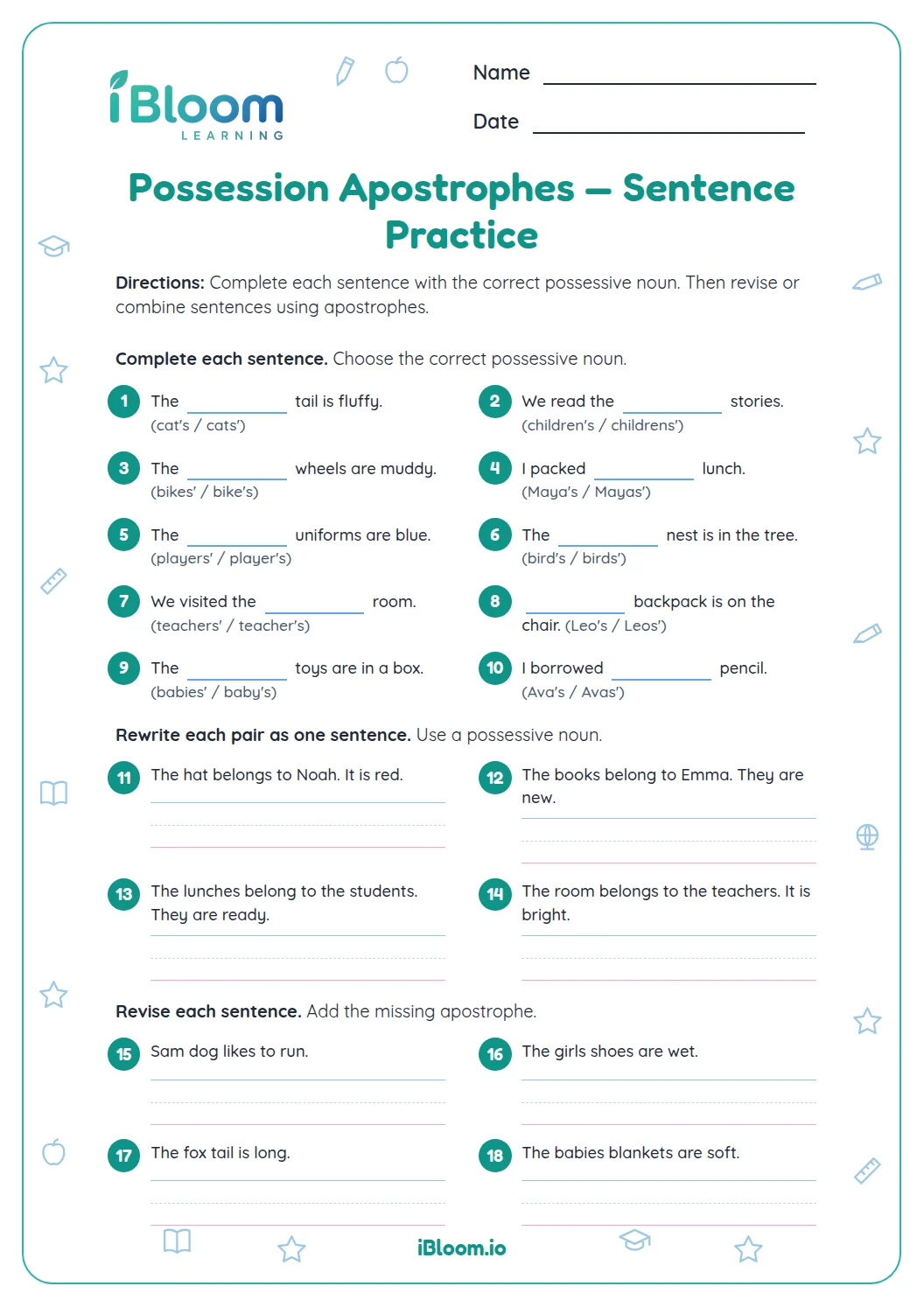
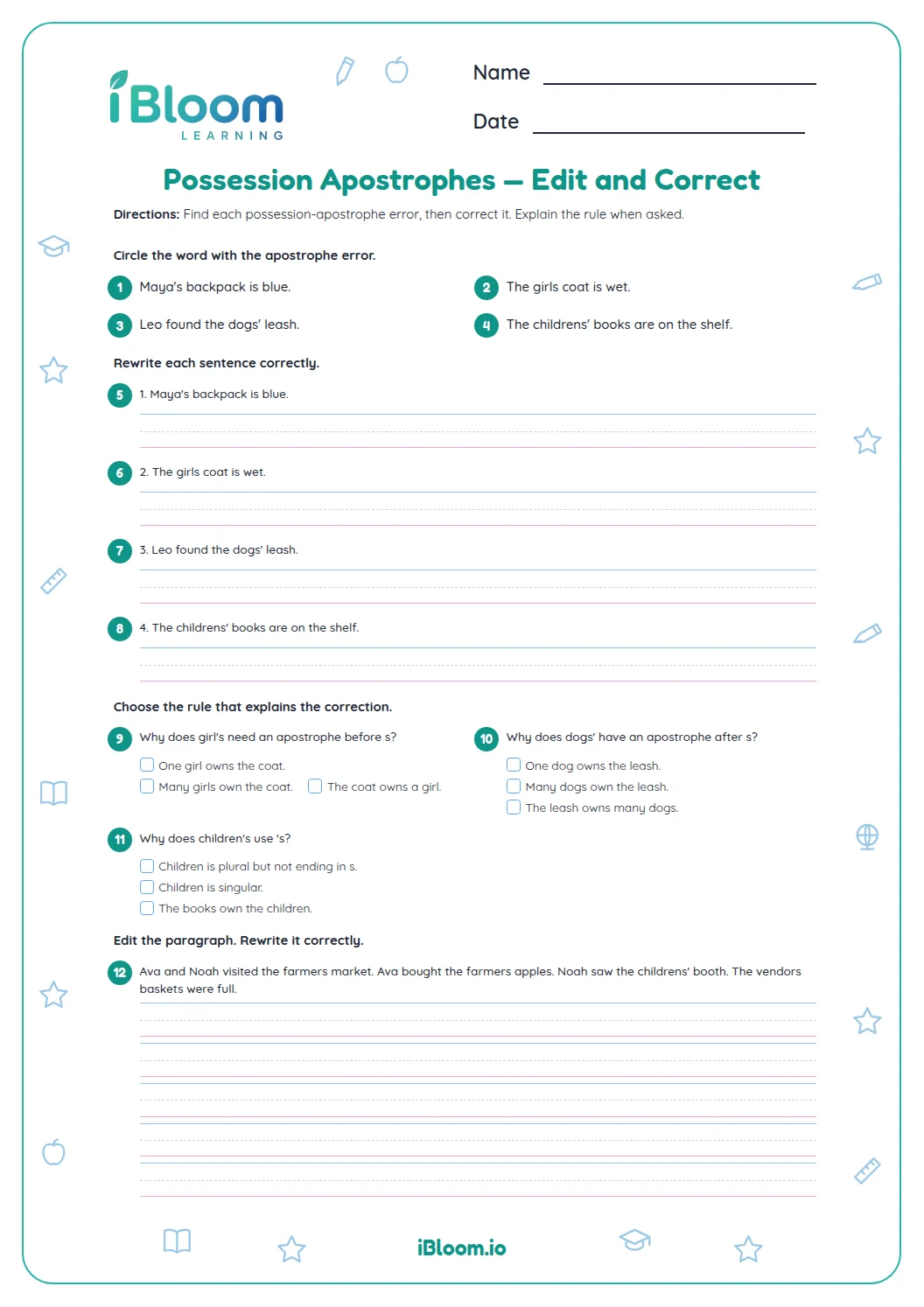
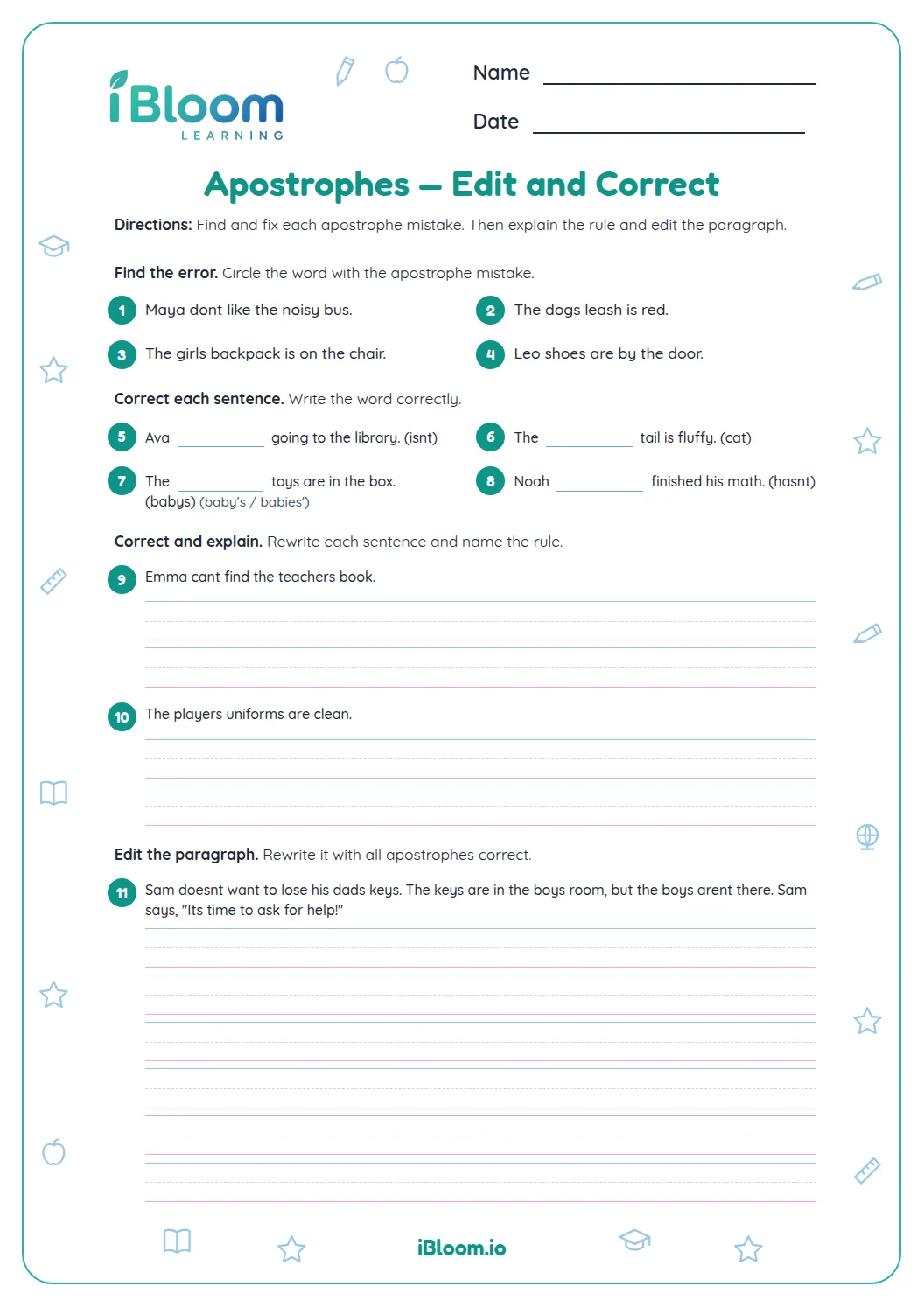
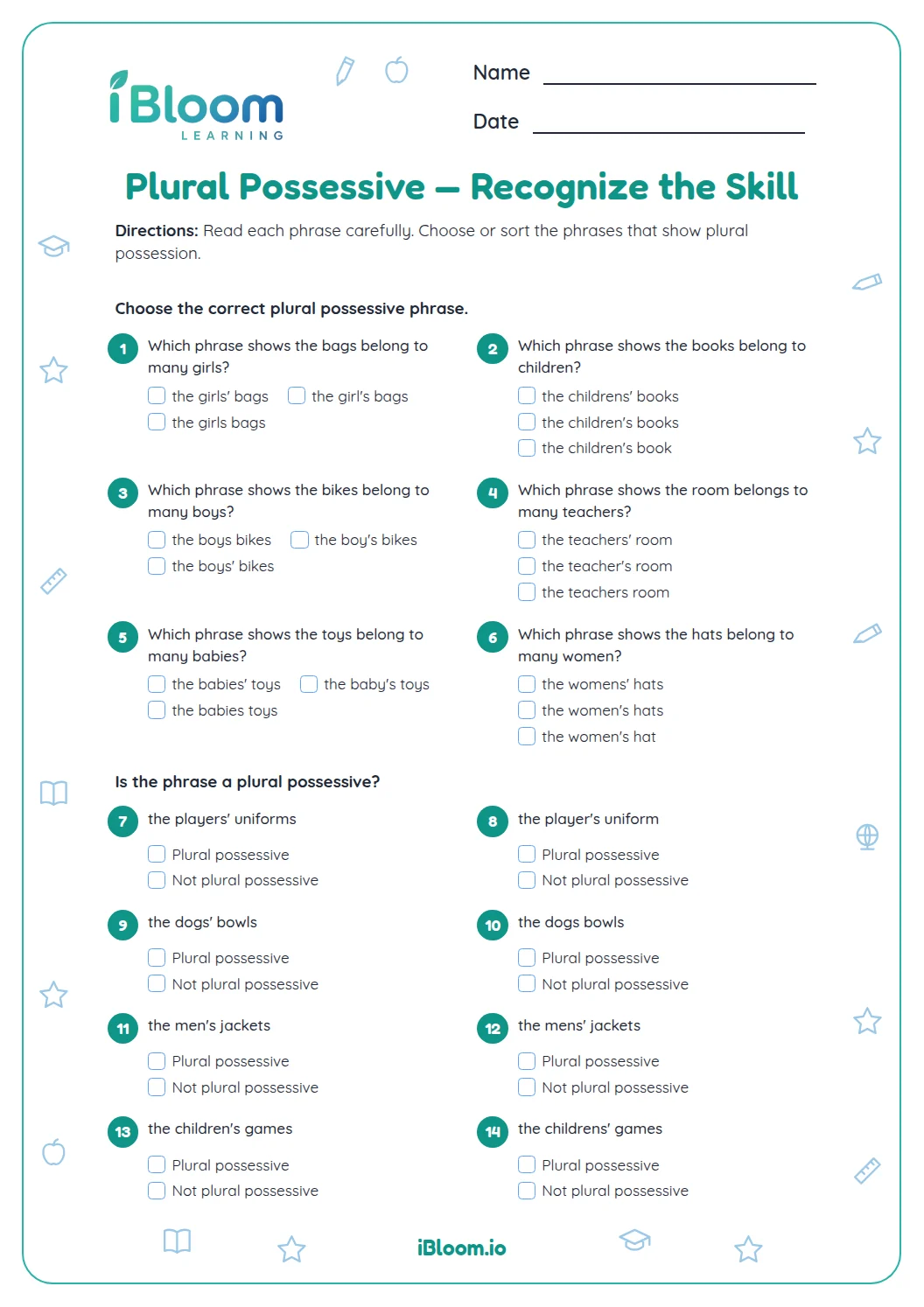
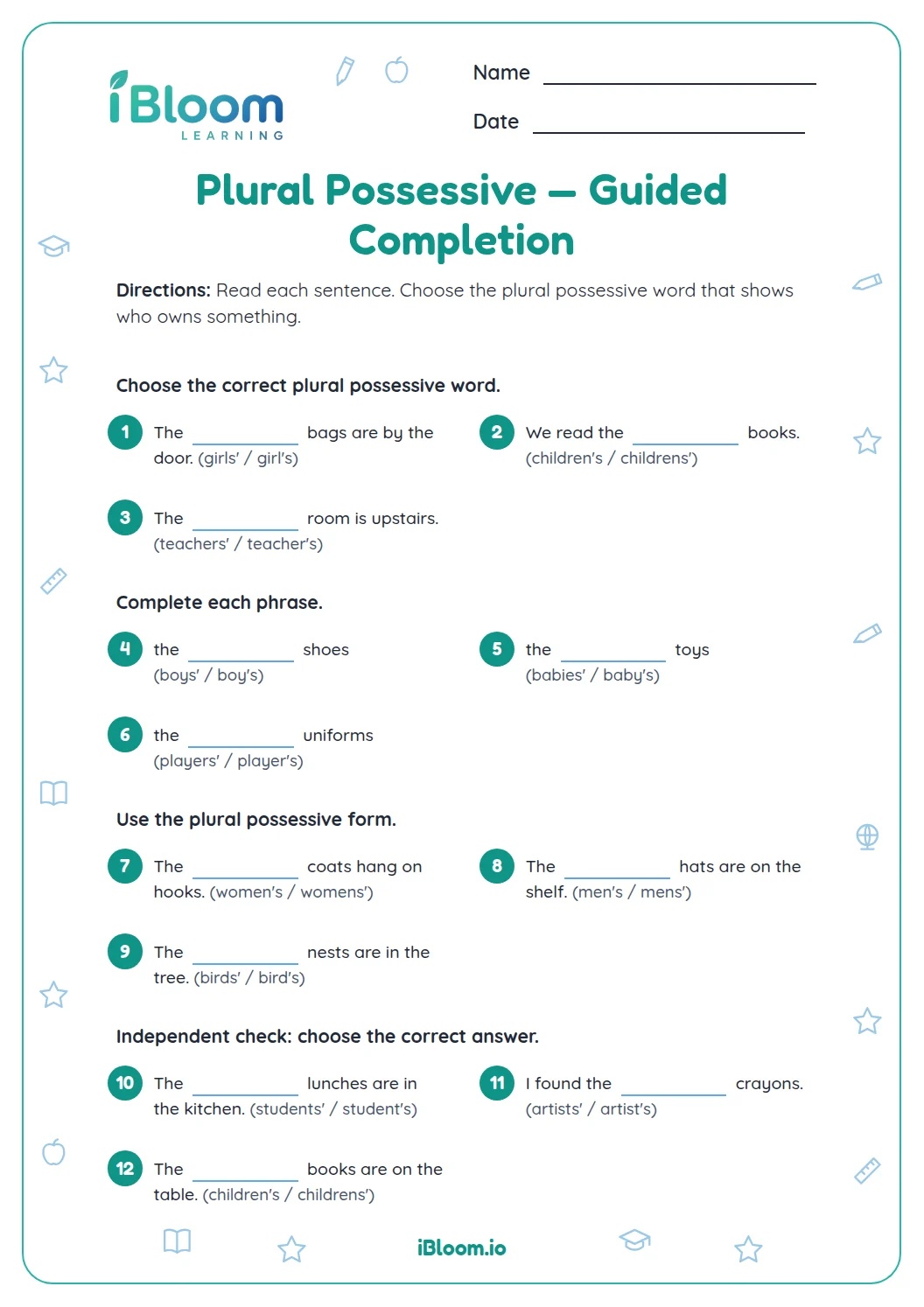
This Grade 3 worksheet teaches how apostrophes show possession. Students recognize singular and plural possessive phrases, add apostrophes to phrases, and proofread sentences, including an irregular plural. The practice aligns with CCSS L.3.2.d: form and use possessives.
Aligned to L.3.2
How do you show one owner?
For most singular nouns, add apostrophe-s. Keep the owner and the item together as one phrase.
- 1one dog owns the tail → the dog's tail
How do you show plural owners?
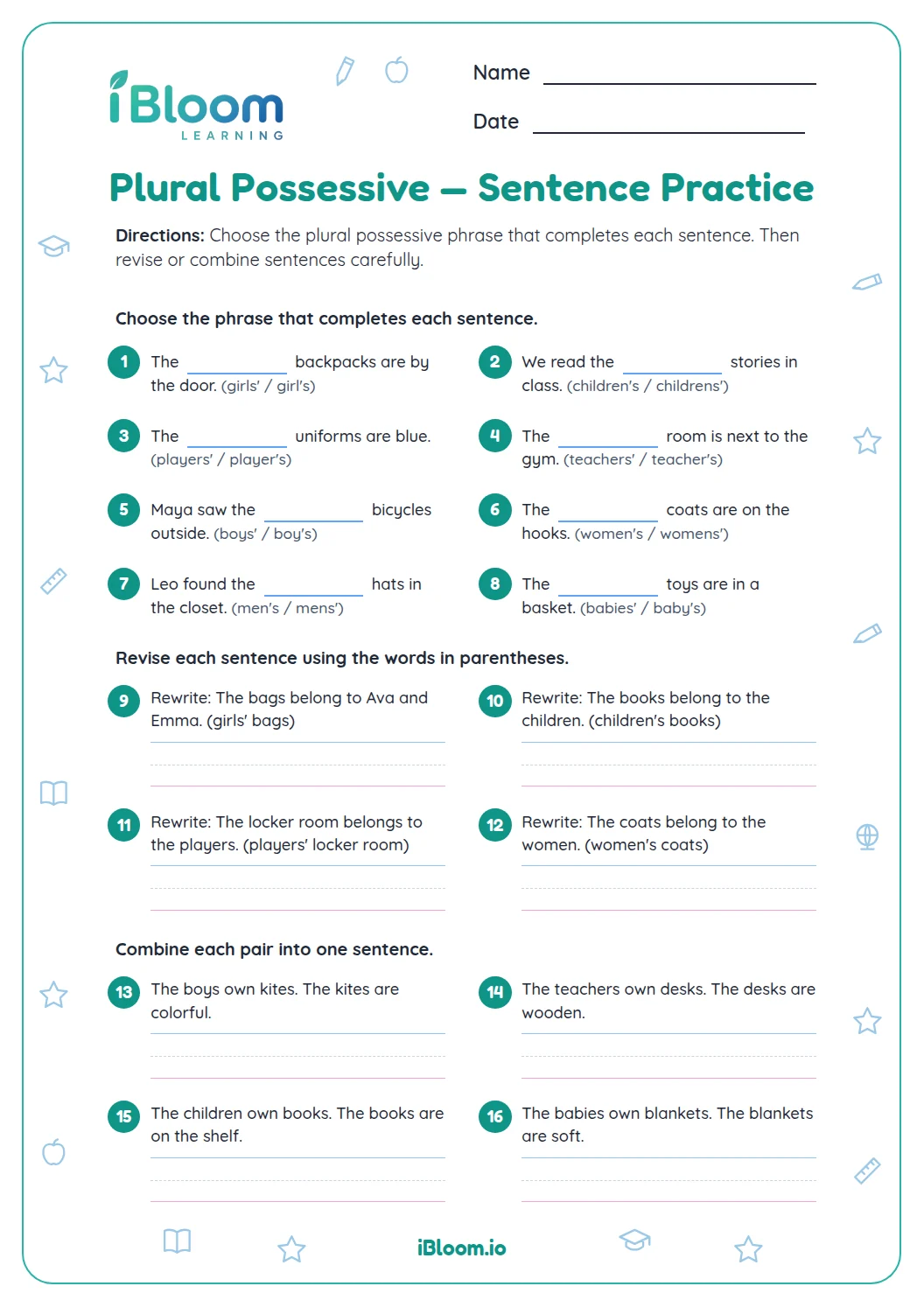
If the plural noun ends in s, add the apostrophe after that s. For irregular plurals such as children, add apostrophe-s.
How can you check a sentence?
Find the owner, read the noun aloud, then check the apostrophe position. The corrected phrase must show the intended owner clearly.
How to use this worksheet
- 1Find the noun that owns or is connected to something.
- 2Decide whether that noun is singular or plural.
- 3For a singular owner, add apostrophe-s.
- 4For a plural ending in s, add an apostrophe after s.
- 5Read the phrase again to check its meaning.
Common mistakes and quick fixes
The mistake
Writing “dogs tail” for one dog.
The fix
Add apostrophe-s: the dog’s tail.
The mistake
Writing “cats’s toys” for plural cats.
The fix
The plural already ends in s; add only an apostrophe after it.
The mistake
Writing “childrens’ books.”
The fix
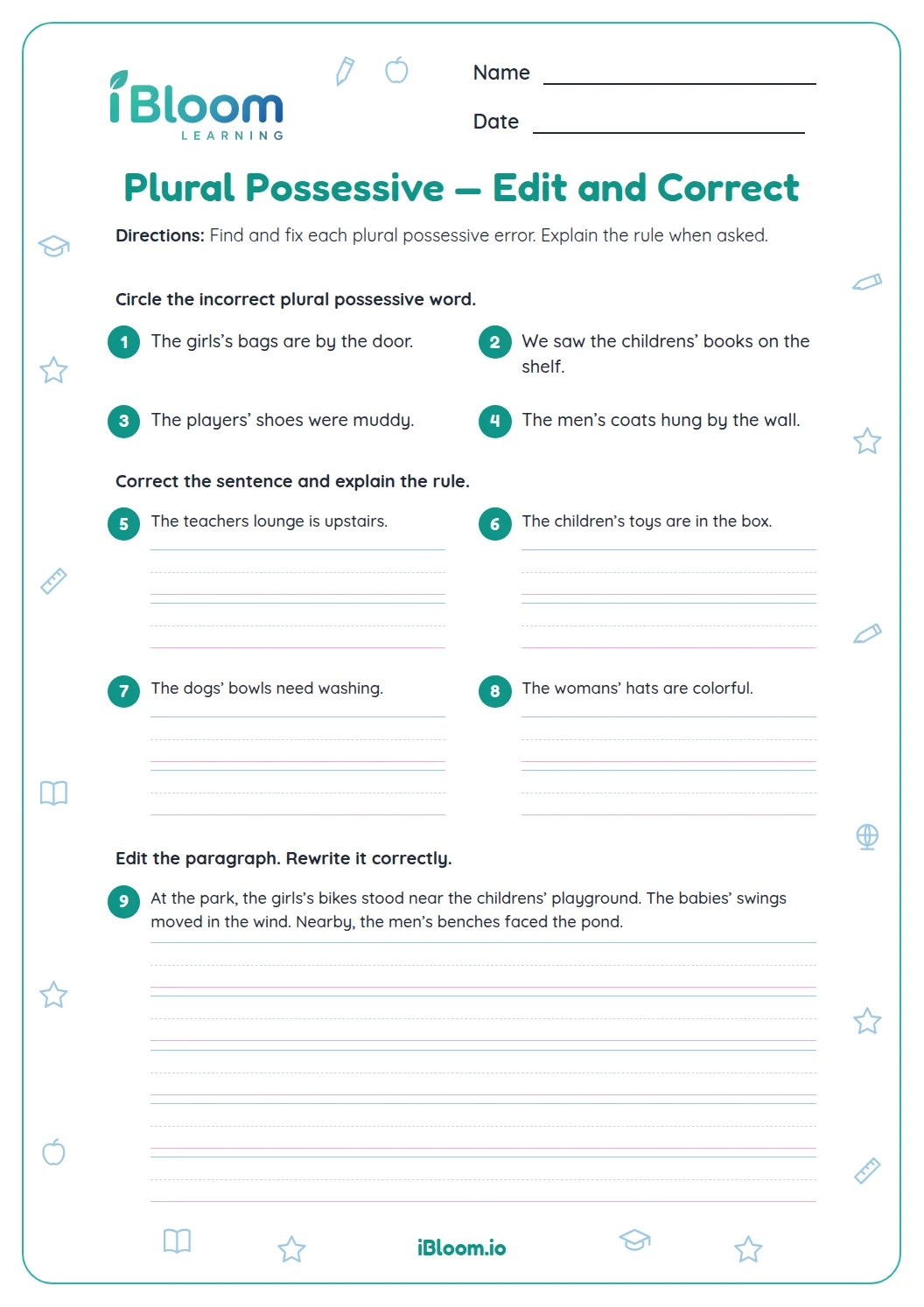
Children is an irregular plural, so add apostrophe-s: children’s books.
Common Core alignment
The worksheet practices forming and recognizing possessive nouns.
Form and use possessives in writing.
On this sheet: Students recognize and write singular, plural and irregular possessive nouns.
Show the official wordingHide the official wording
Demonstrate command of the conventions of standard English capitalization, punctuation, and spelling when writing.
What to practice next
Make more practice
Further reading
Questions parents and teachers ask
Where does the apostrophe go for one owner?
For most singular owners, put apostrophe-s after the noun: the coach’s hat. The apostrophe marks the noun as possessive. Part A asks students to recognize this pattern, and Part B asks them to write it in phrases such as “the hat belonging to one coach.”
Where does it go for plural owners ending in s?
For a plural owner that ends in s, put the apostrophe after the s: the cats’ toys. The plural noun already has its ending, so do not add another s. The worksheet contrasts this form with singular phrases and asks students to write both.
How do possessives work with children?
Children is an irregular plural and does not end in s. Add apostrophe-s to show possession: children’s books. Part C includes a sentence about children’s books so students can apply the rule while proofreading. This page includes the example as a sentence to correct.
What is the difference between player’s and players’?
Player’s names one player as the owner; players’ names more than one player as the owners. The corrected sentence on this page says “The player ball rolled away,” which points to one player and takes apostrophe-s: “The player’s ball rolled away.”
What will students do on the worksheet?
Students complete 15 questions in four parts: recognize possessive phrases, rewrite phrases with apostrophes, correct sentences, and explain an apostrophe. A separate answer key gives the target forms, including singular, plural and irregular plural examples. The activities move from recognition to corrections.