



About this worksheet
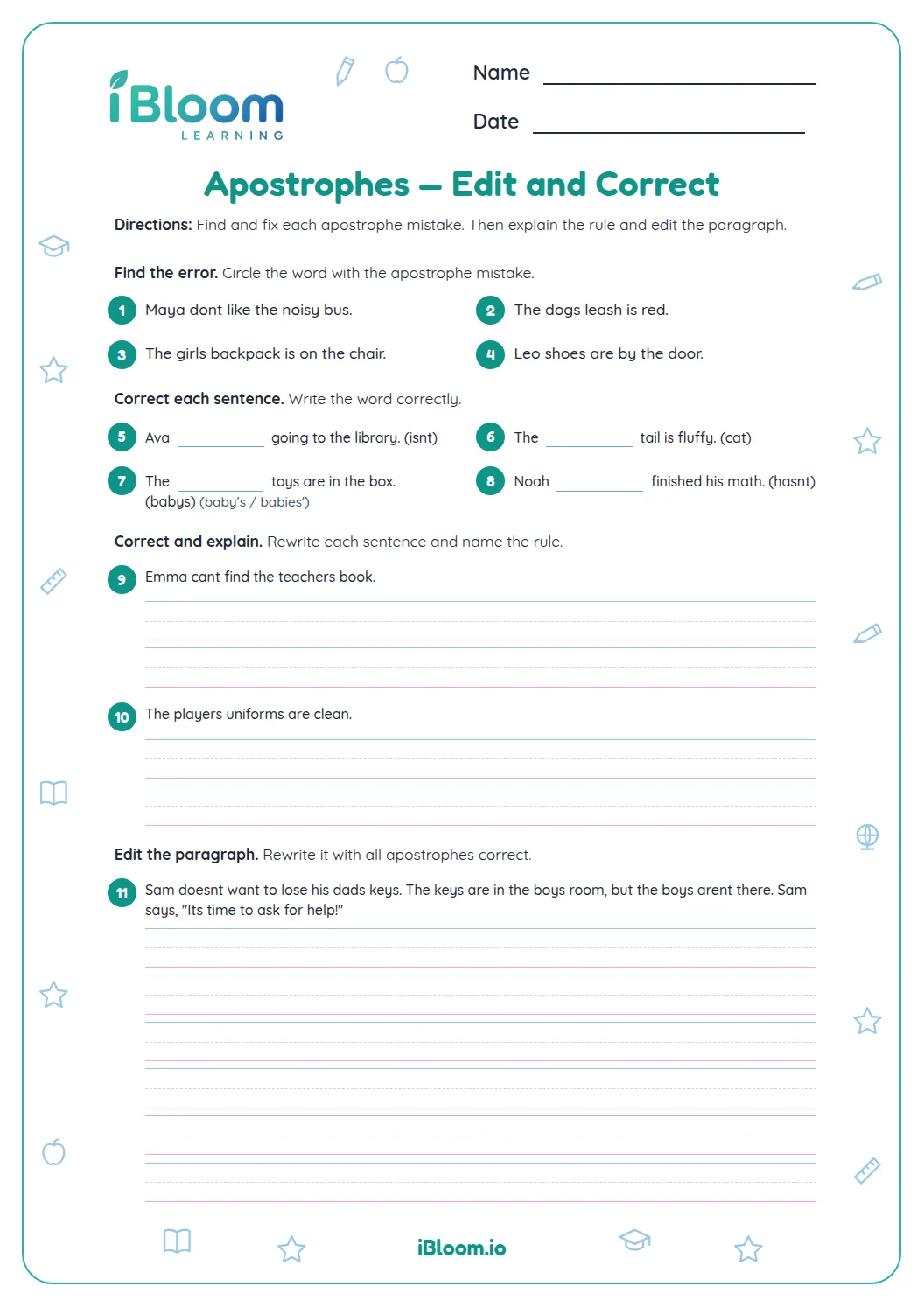
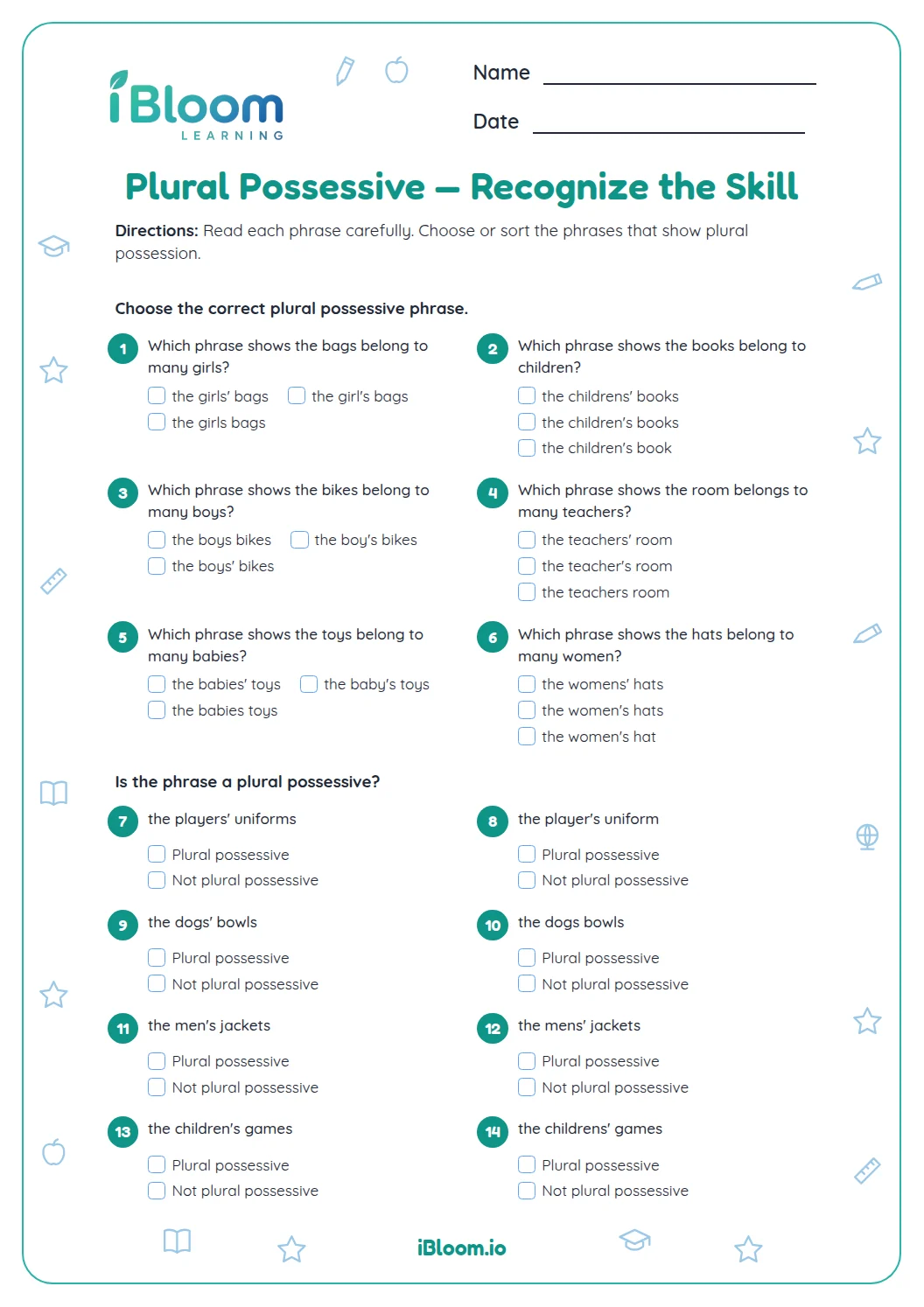
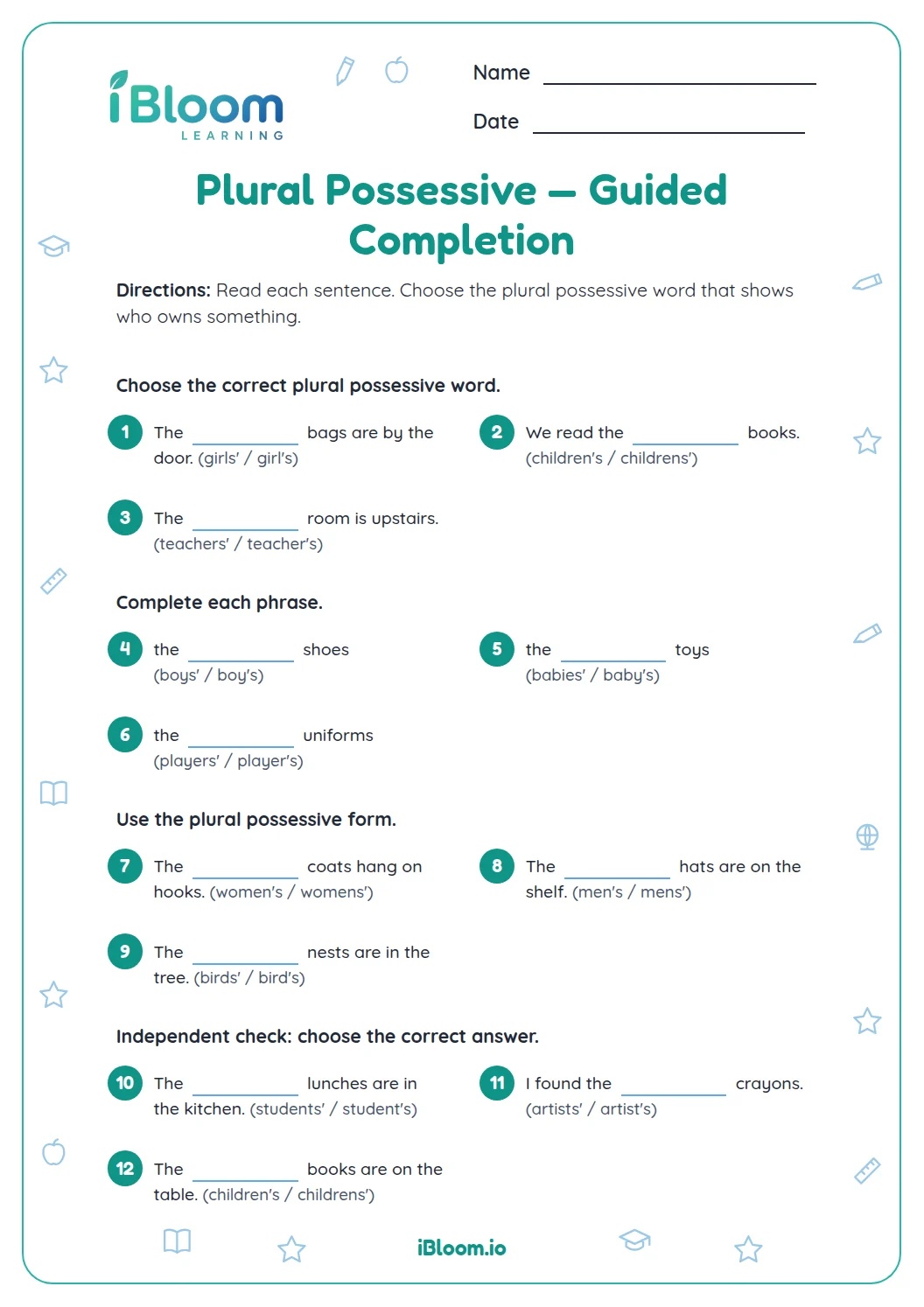
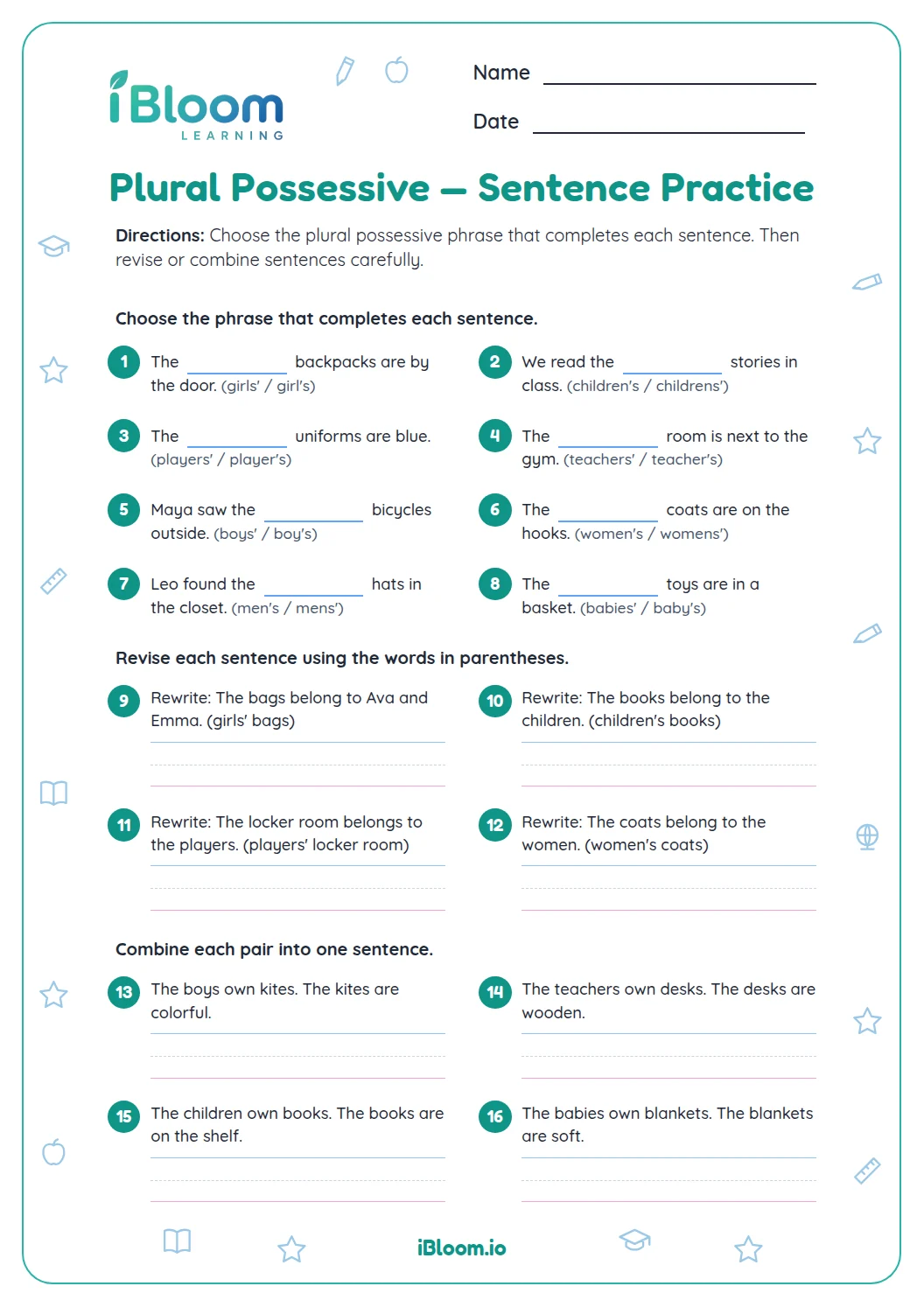
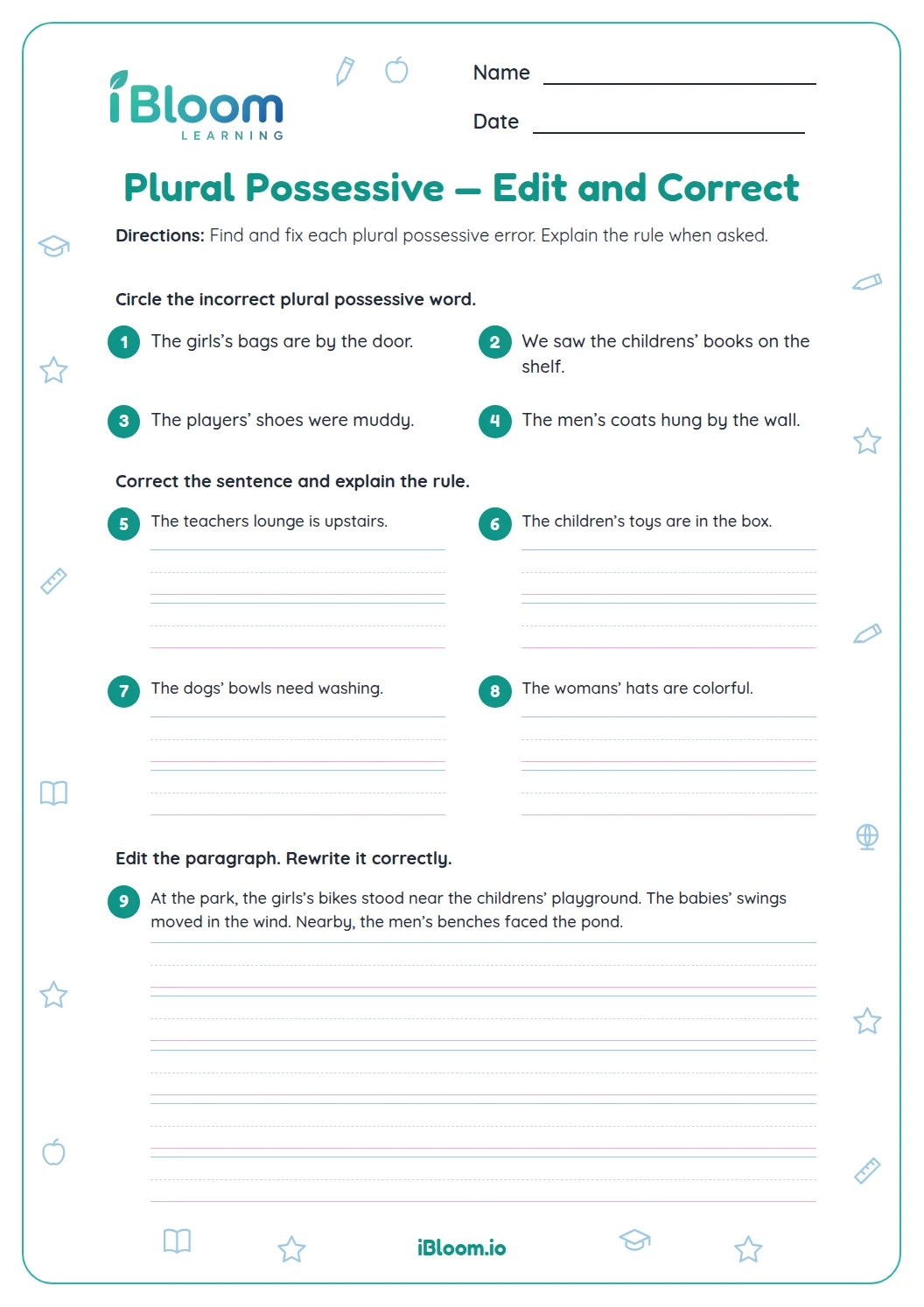
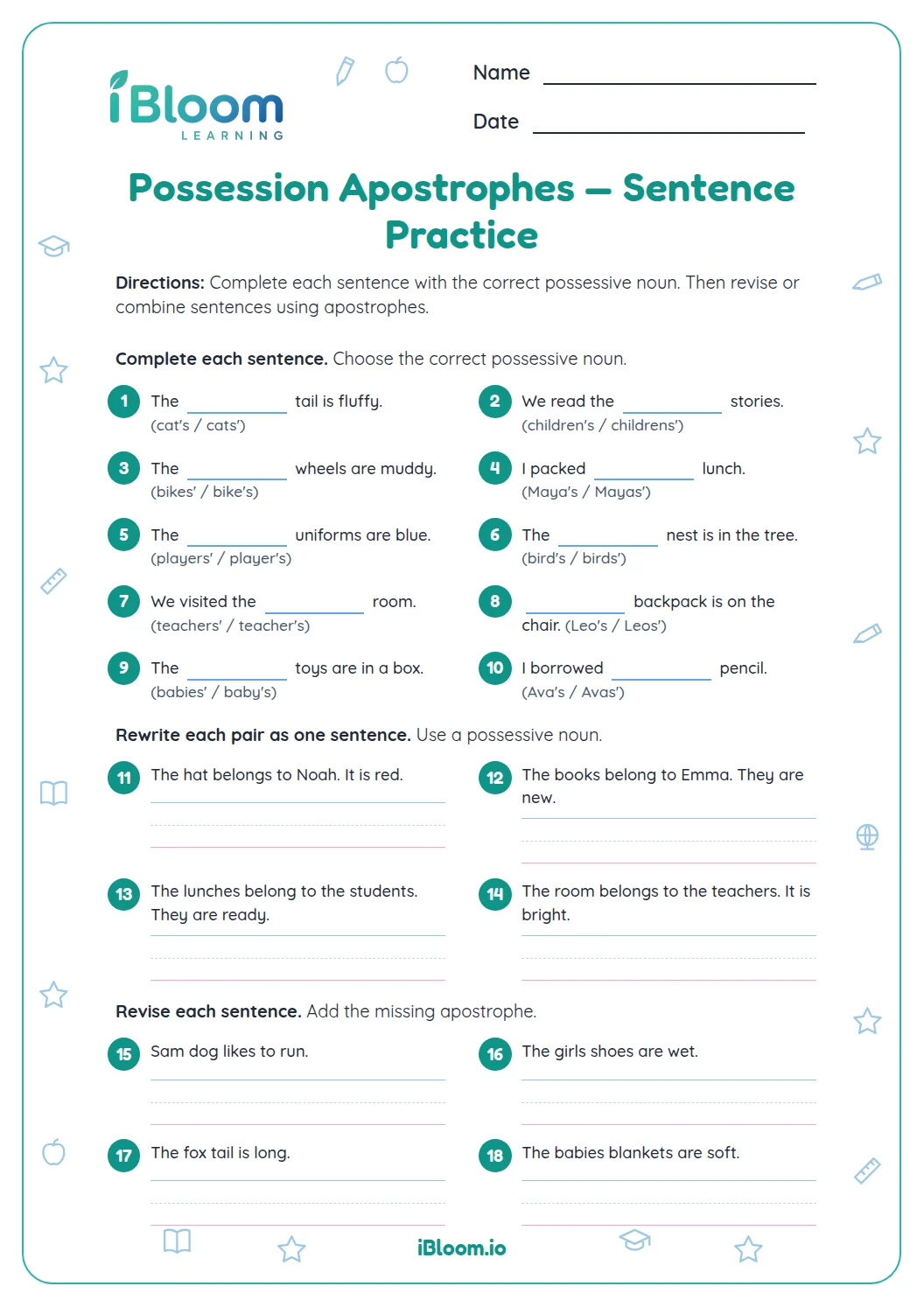
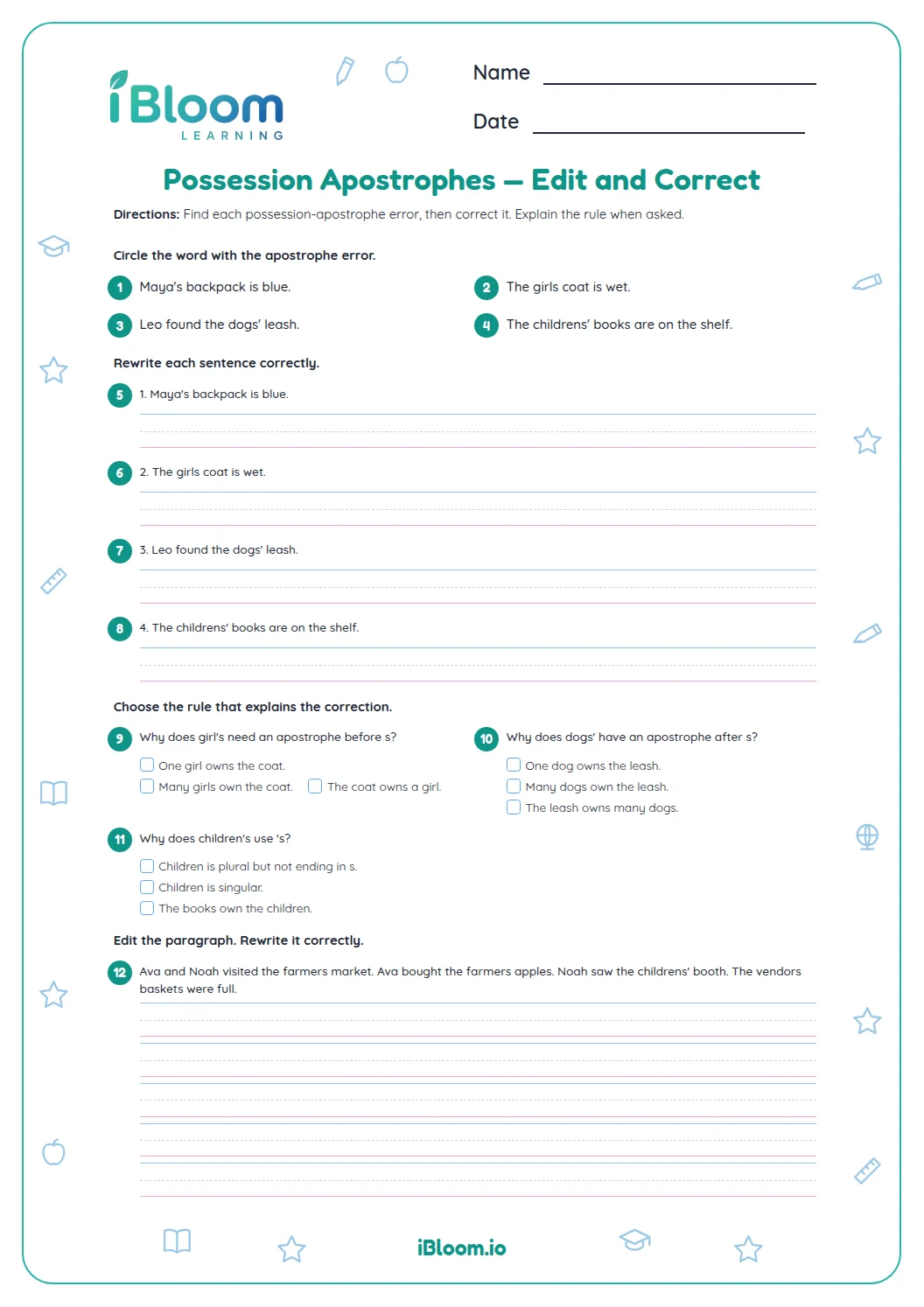
This Grade 3 printable helps children use apostrophes in contractions and possessives. Learners complete sentences, revise or combine ideas, and choose correctly punctuated examples. The separate answer key includes sample sentences for open responses. The skill aligns with CCSS L.2.2.c.
Aligned to L.2.2.c
Where does an apostrophe belong?
An apostrophe can stand for missing letters in a contraction, as in isn’t for is not. It can also show ownership: Leo’s bike belongs to Leo. For a plural owner ending in s, place the apostrophe after the s, as in the boys’ toys.
- 1The bike belongs to Leo.
- 2Write Leo’s bike.
- 3Leo’s shows that Leo owns the bike.
What does each part practice?
The first part completes sentences with contractions and possessives. The next part combines or revises sentences. The last part asks children to choose a correctly punctuated sentence.
How can I use this worksheet?
- 1Ask whether the apostrophe replaces missing letters or marks ownership.
- 2For contractions, say the two full words and check which letters disappear.
- 3For one owner, add ’s; for a plural owner ending in s, place ’ after the s.
- 4Read the revised sentence aloud and check that its meaning stayed the same.
Common mistakes and quick fixes
The mistake
Writing its for it is.
The fix
Use it’s for it is; its without an apostrophe shows ownership.
The mistake
Adding ’s to a plural owner that already ends in s.
The fix
For plural owners such as boys, put the apostrophe after the s.
The mistake
Changing the sentence meaning while combining ideas.
The fix
Keep the original owner or action clear in the new sentence.
Common Core alignment
Use apostrophes to form contractions and frequently occurring possessives.
On this sheet: Use apostrophes to form contractions and frequently occurring possessives.
Show the official wordingHide the official wording
Use an apostrophe to form contractions and frequently occurring possessives.
What to practice next
Make more practice
Further reading
Questions parents and teachers ask
Who is this worksheet for?
This worksheet is for Grade 3 learners practicing apostrophes. It has 16 questions across the printed practice pages and a separate answer key. A parent or teacher can review one example, then let the learner work through the parts.
How many questions are included?
There are 16 questions. Learners complete sentences, combine or revise ideas, and choose correctly punctuated examples. The parts practice contractions and possessives, including plural owners. The answer key follows the practice pages and includes sample responses for items where wording can vary.
Does it include an answer key?
Yes. A separate answer key follows the practice pages. Use it to check selected or computed answers after the learner finishes. For questions where the wording can vary, the key provides a sample response that shows the expected idea and reasoning.
How can I help with a missed answer?
Ask the learner to point to the part of the question that determines the answer, then work through that step together. Compare the result with the answer key and have the learner explain any correction in their own words.
Can I print the worksheet and key separately?
Yes. The worksheet and answer key are arranged on separate pages, so you can print the practice pages for the learner and keep the answers for checking. The learner can write directly on the worksheet, then review missed items with an adult.
When does a contraction need an apostrophe?
For one owner, add ’s, as in Ava’s book. For a plural owner that ends in s, place the apostrophe after the s, as in the boys’ toys. Learners practice both patterns in complete sentences and choose correctly punctuated examples in the final part.
Where does the apostrophe go for a plural owner?
The answer key includes the completed sentences, selected choices, and sample responses for open revisions. For a written answer, compare the learner’s sentence with the model for correct apostrophe use and meaning; wording may differ while remaining correct.