





About this worksheet
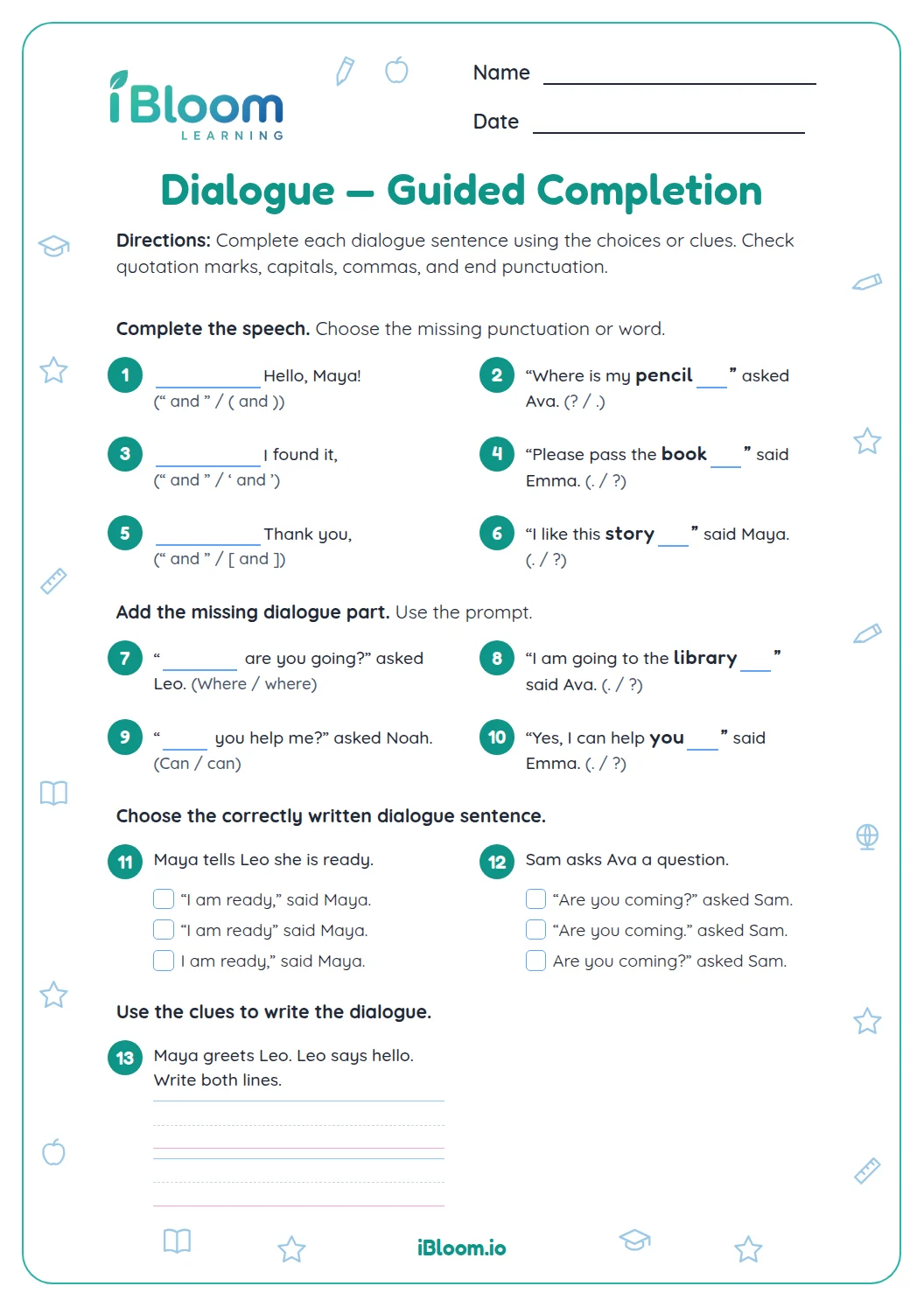
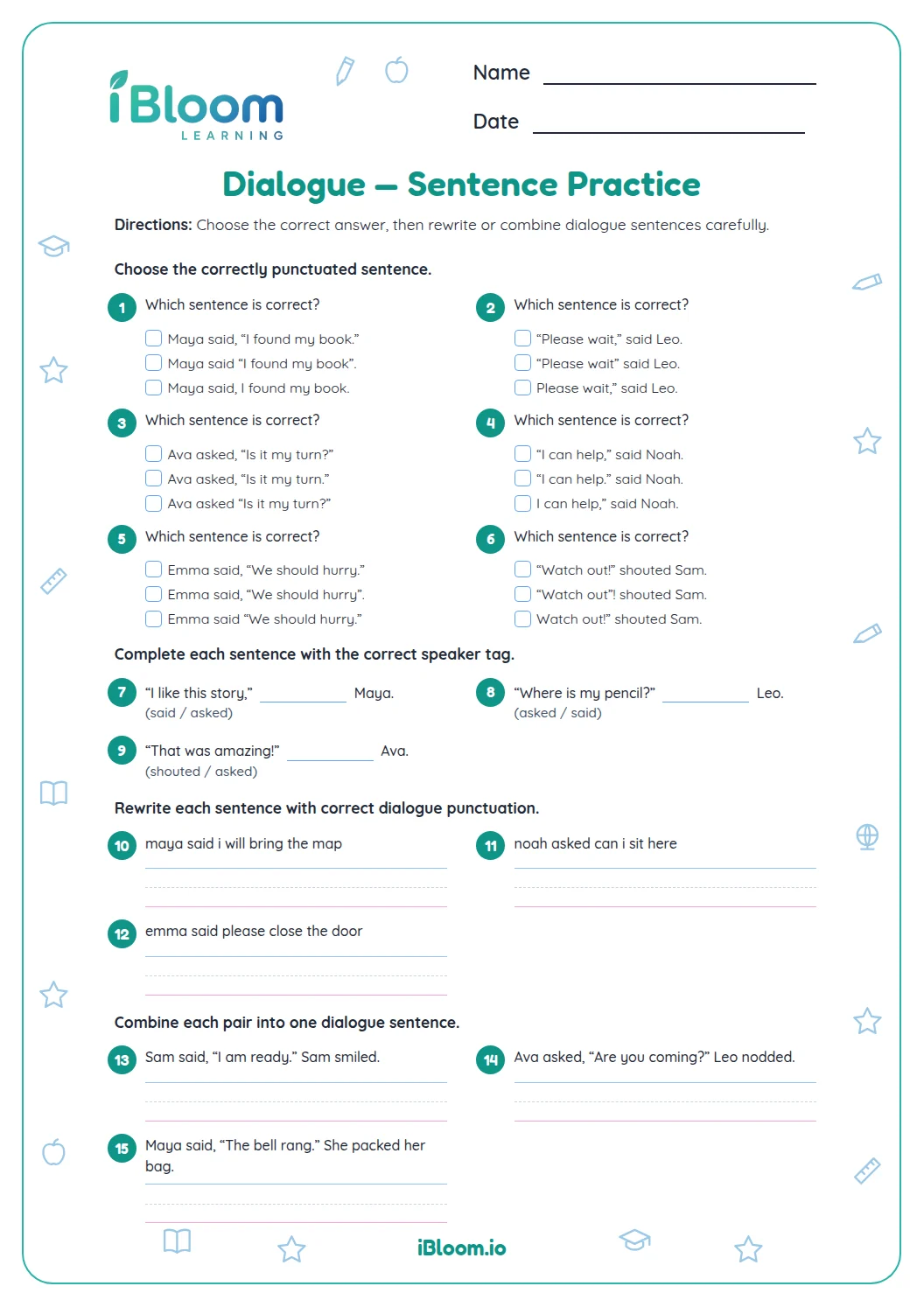
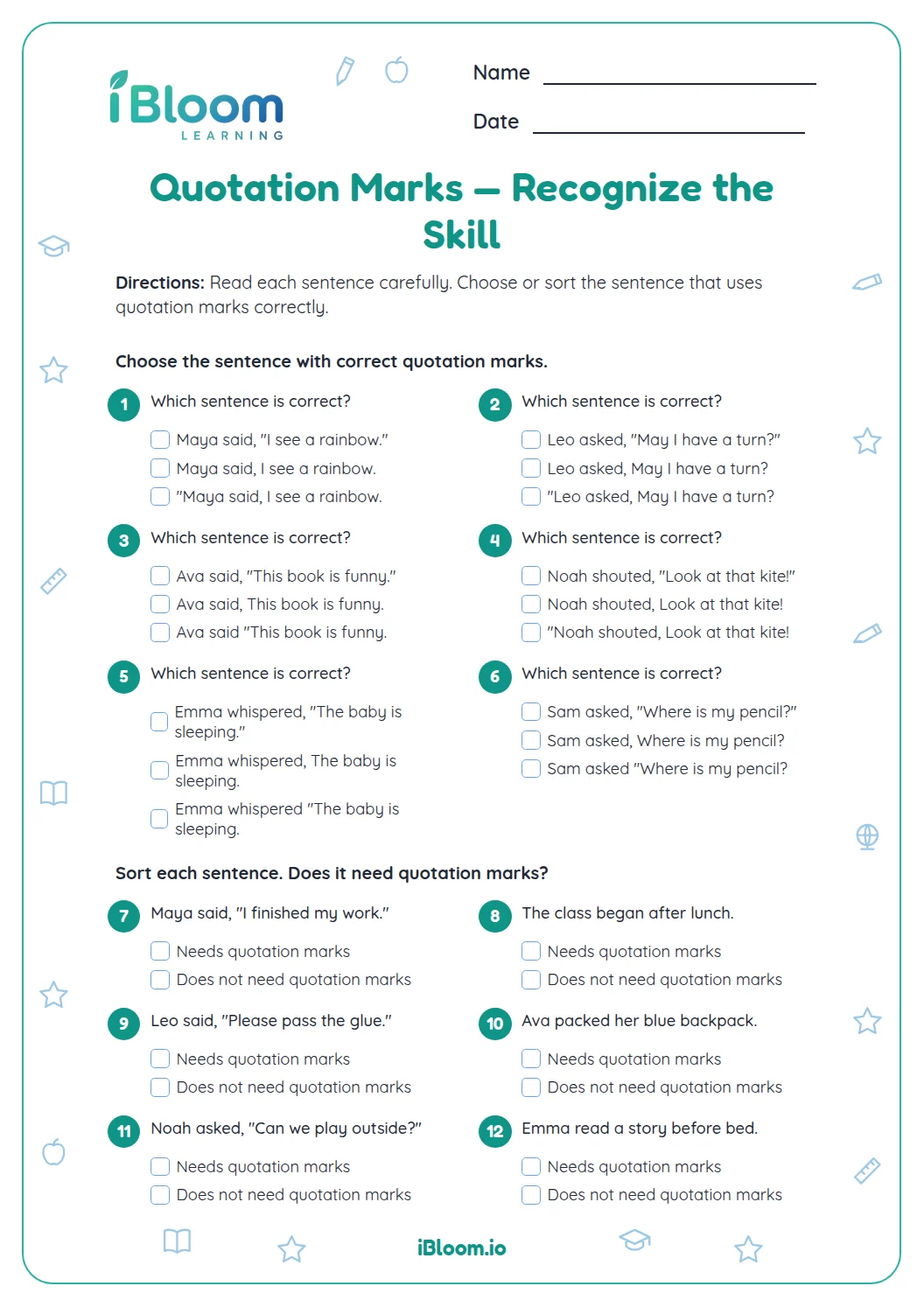
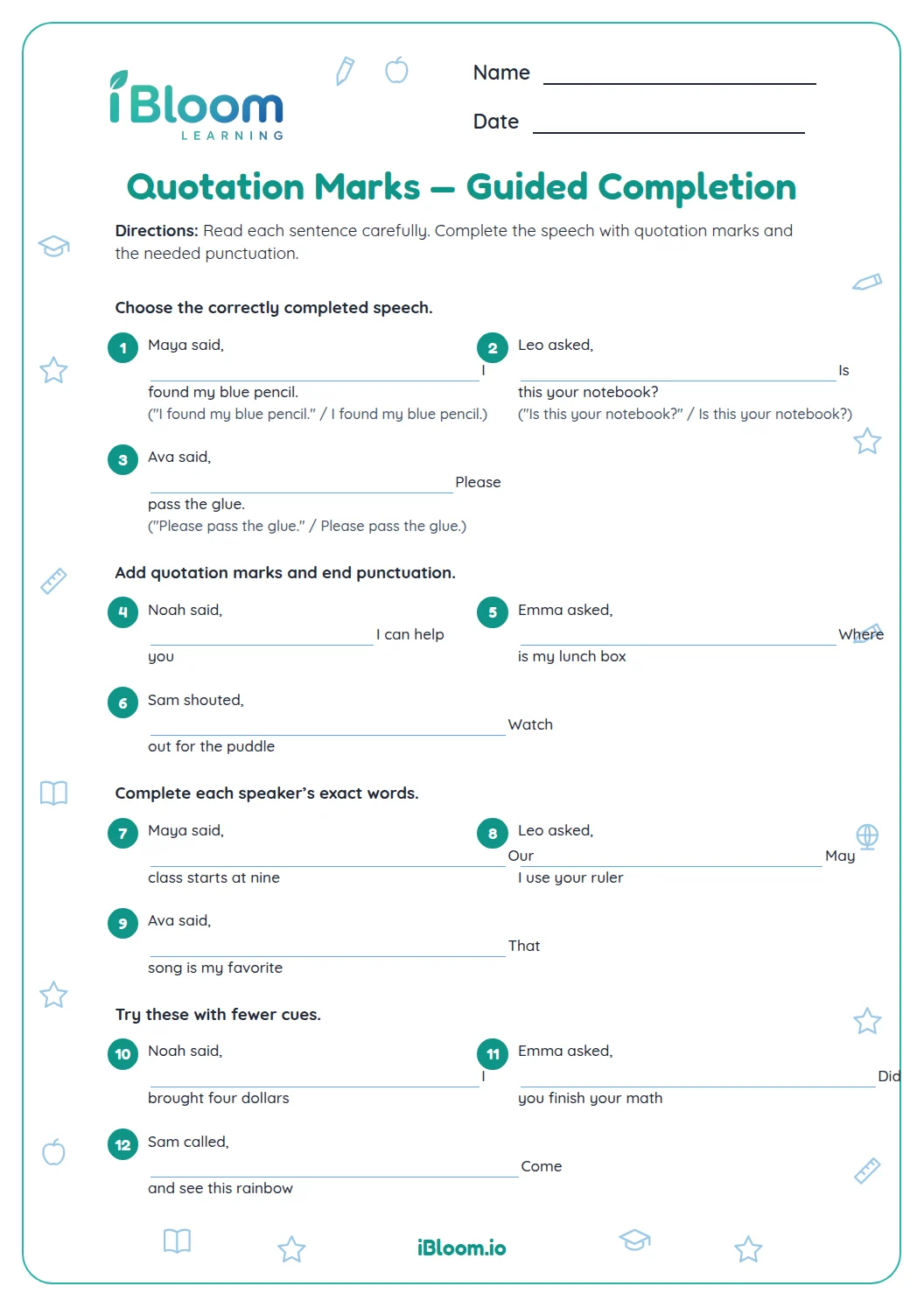
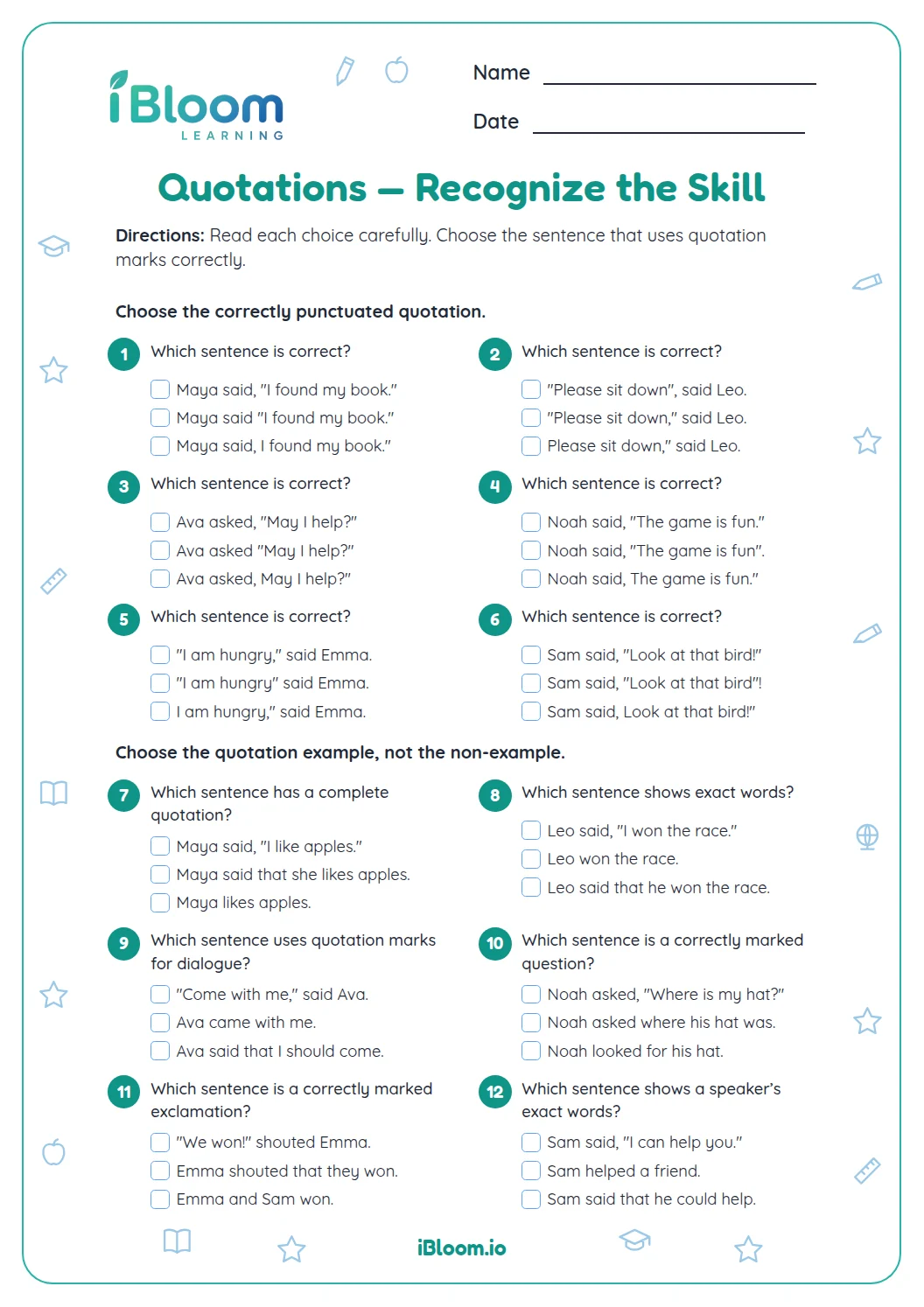
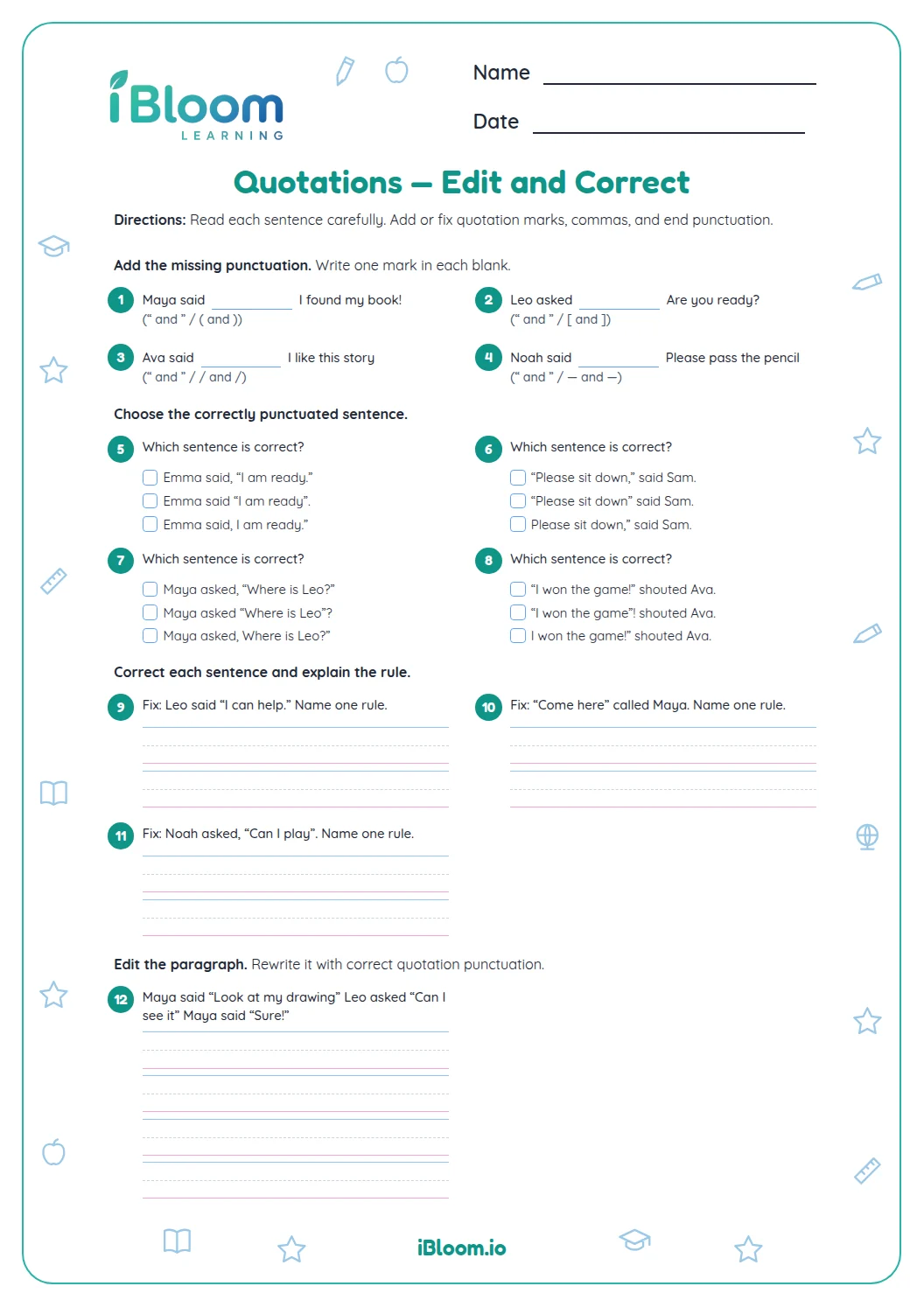
This Grade 3 sheet focuses on recognizing how dialogue works on the page. Children identify a speaker and spoken words, notice quotation marks and end punctuation, then repair sentences where commas, quotation marks, or periods are misplaced.
Aligned to L.3.2.c
Spot the spoken words?
Dialogue is the exact words a person or character says. Quotation marks go around those spoken words so readers can tell them apart from the speaker tag, such as said Ava.
A comma often separates quoted words from a speaker tag. The punctuation that belongs to the spoken sentence stays inside the closing quotation mark. Questions and exclamations keep their question mark or exclamation point.
Check the punctuation together?
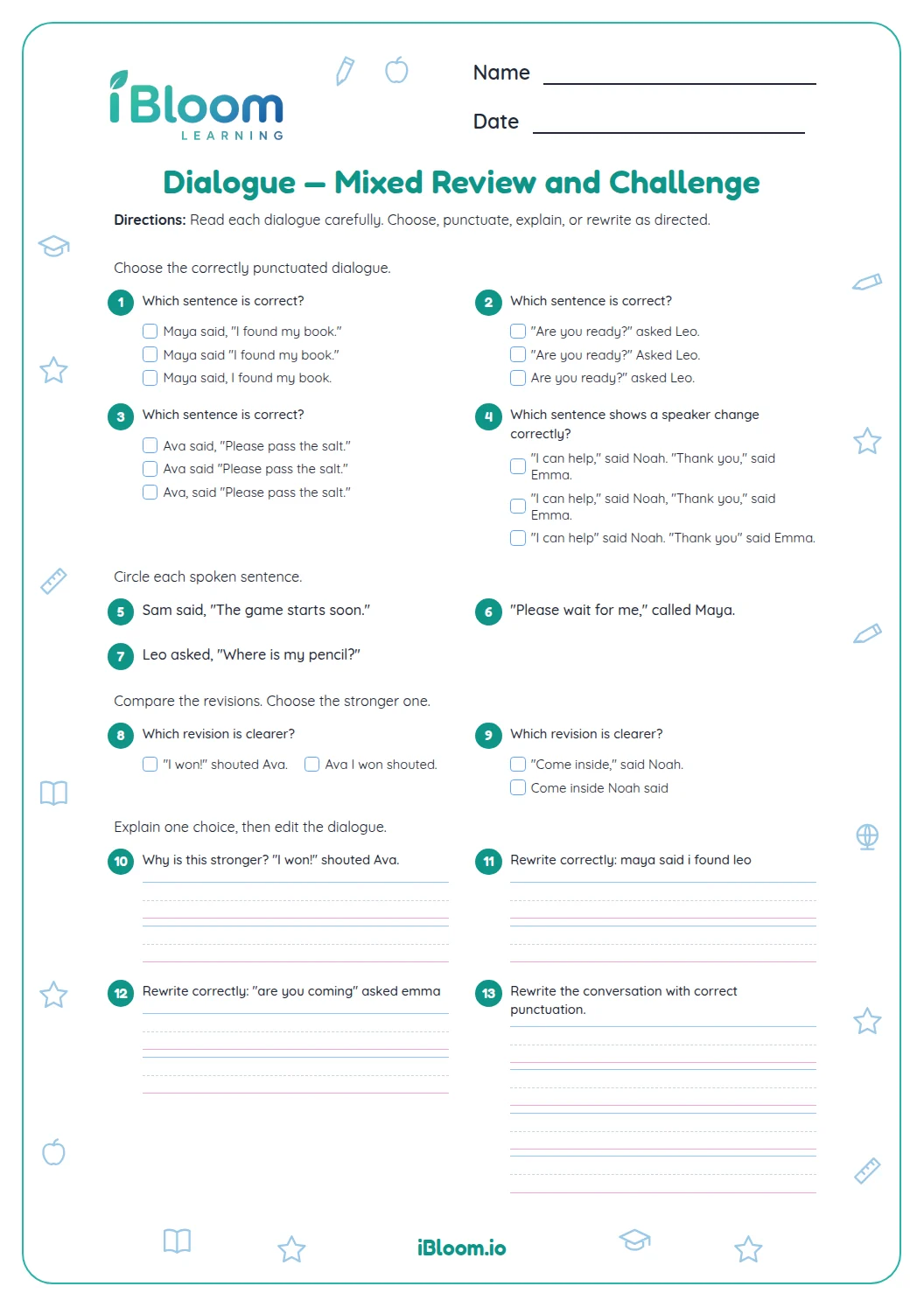
The editing questions contain one clear punctuation issue each. Read the sentence aloud, locate the spoken words, then check the opening and closing quotation marks and the mark at the end.
In the final response, explain the reader’s job for quotation marks in a dialogue sentence.
How to use this worksheet
- 1Read the full sentence before choosing an answer.
- 2Point out the speaker tag and the exact spoken words.
- 3For editing, check both quotation marks and the end mark.
- 4Explain how punctuation helps readers follow a conversation.
Common mix-ups
The mistake
Leaving quotation marks open or placing them around the speaker tag.
The fix
Put quotation marks around only the exact words spoken.
The mistake
Putting a question mark outside the closing quotation mark.
The fix
If the spoken words are a question, place the question mark inside the closing quotation mark.
The mistake
Putting a comma where a spoken question mark belongs.
The fix
Read the quoted words; if they ask something, use a question mark inside the quote.
The mistake
Putting a comma where a spoken question mark belongs.
The fix
Read the quoted words; if they ask something, use a question mark inside the quote.
The mistake
Putting a comma where a spoken question mark belongs.
The fix
Read the quoted words; if they ask something, use a question mark inside the quote.
Curriculum alignment
This worksheet gives focused practice with the skill named in its title.
Use commas and quotation marks in dialogue.
On this sheet: Learners recognize and correct quotation marks and commas in dialogue.
Show the official wordingHide the official wording
Use commas and quotation marks in dialogue.
What to practice next
Questions parents and teachers ask
What is dialogue?
Dialogue is the exact words a person or character says. In writing, quotation marks help readers see which words are spoken and which words tell who is speaking in a sentence or conversation between characters in a story.
Where do quotation marks go?
Put quotation marks around the spoken words. A speaker tag such as said Ava tells who is speaking, so it usually stays outside the quotation marks. Reread the sentence to check the boundaries around the spoken part and make sure each quote is closed.
Where does a spoken question mark go?
When the quoted words form a question, place the question mark inside the closing quotation mark. Read the quoted words aloud to hear whether they ask something, then check the mark before closing the quote in the written sentence.
What should children check when editing?
Check that quotation marks open and close around the spoken words. Then look at the comma or end mark and make sure it sits in the correct place next to the closing quotation mark in the sentence. This helps a reader follow the speaker.
How can an adult help with this page?
Read the directions aloud and let the learner try each item before offering a clue. Ask the child to point to the part of the word, picture, or sentence that supports the answer. The answer key can help an adult check responses and talk through any uncertain item.