





About this worksheet
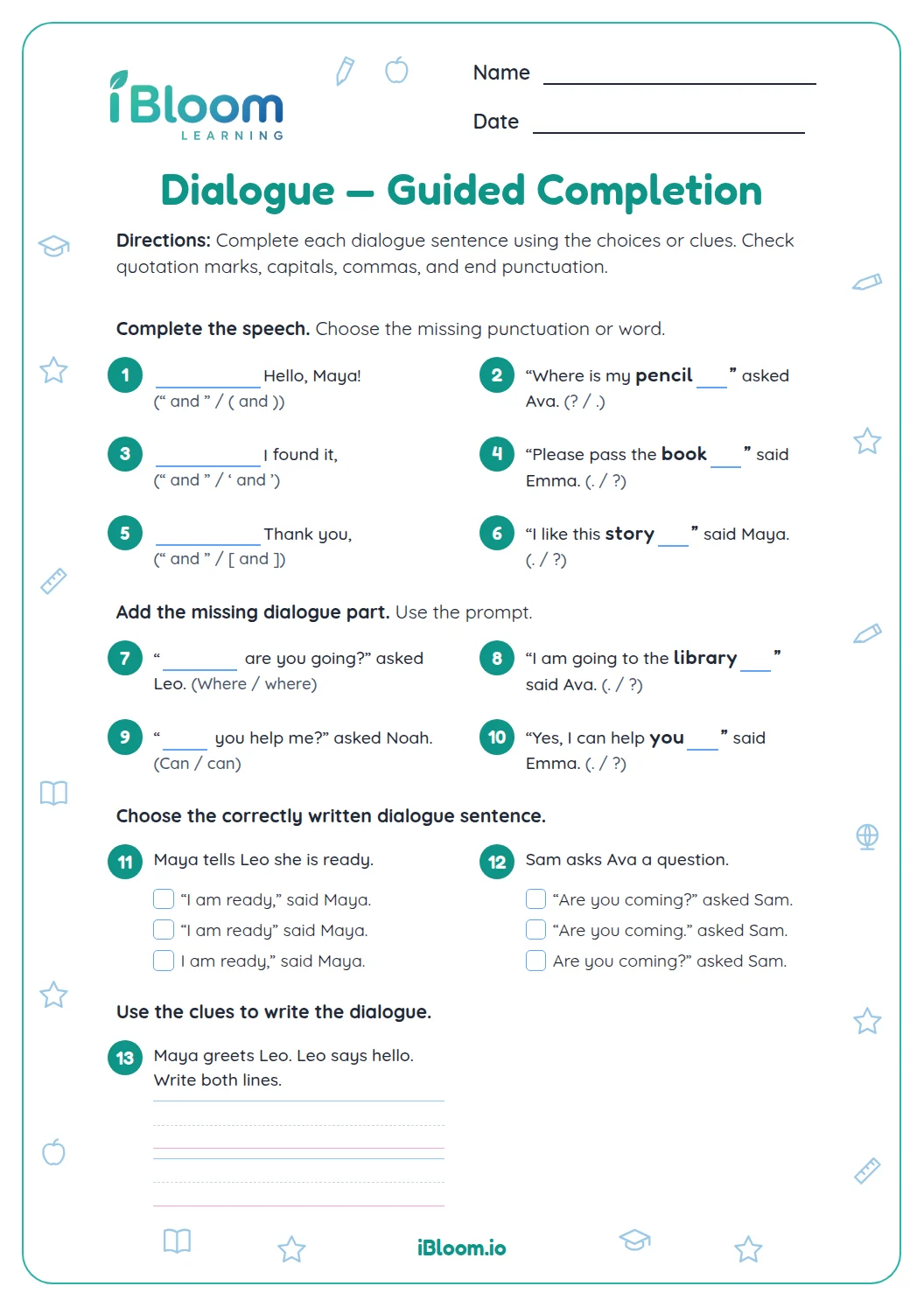
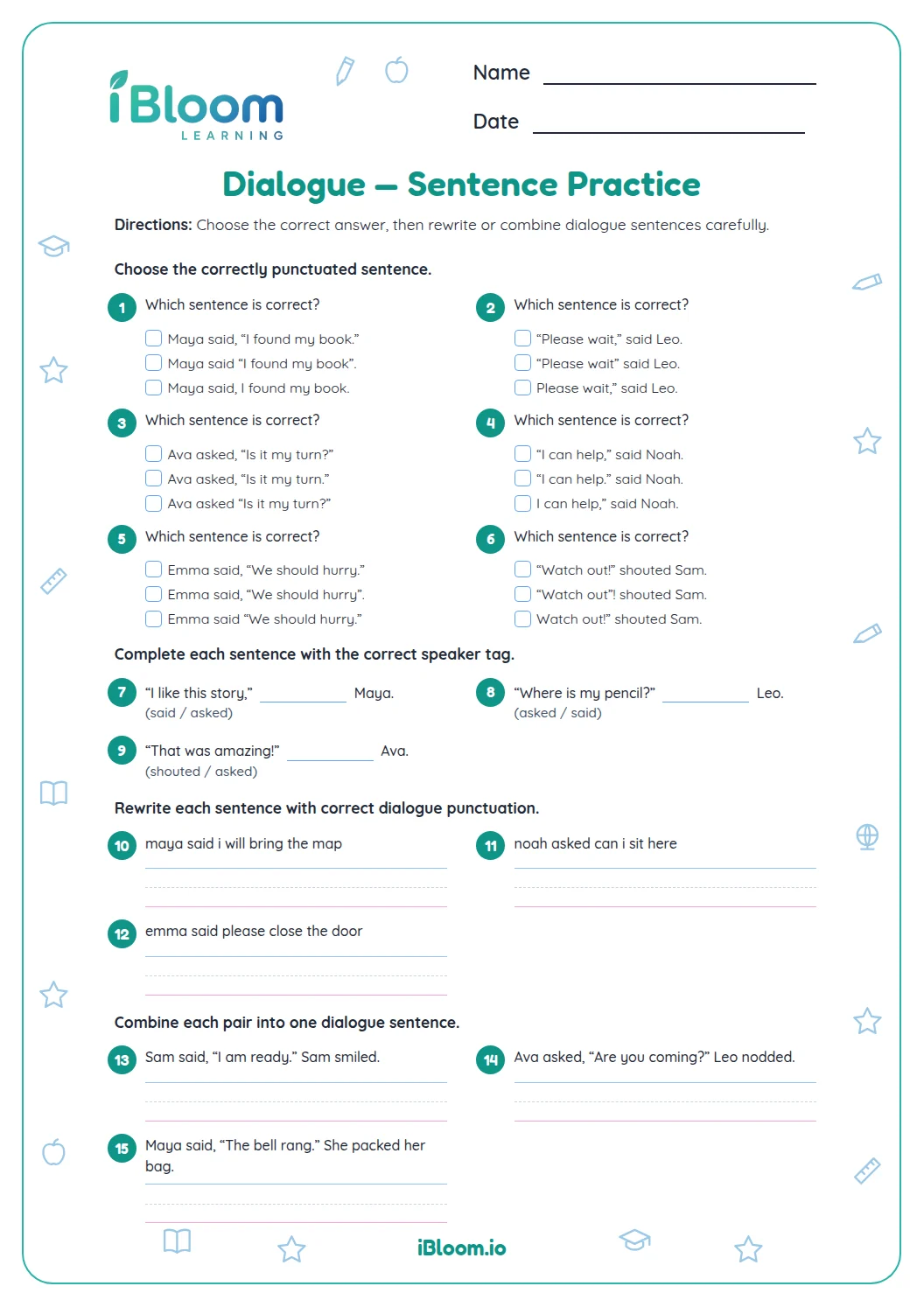
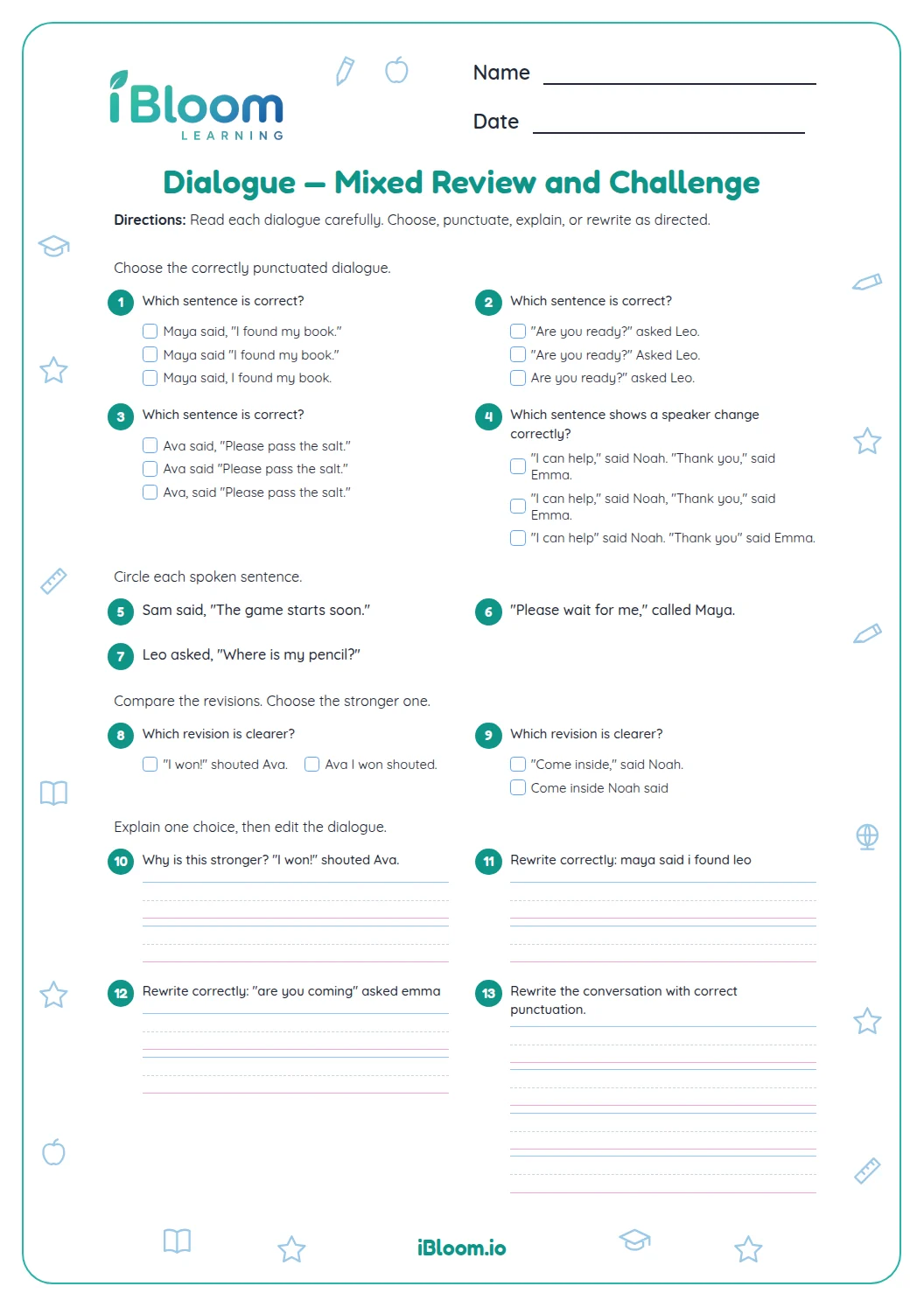
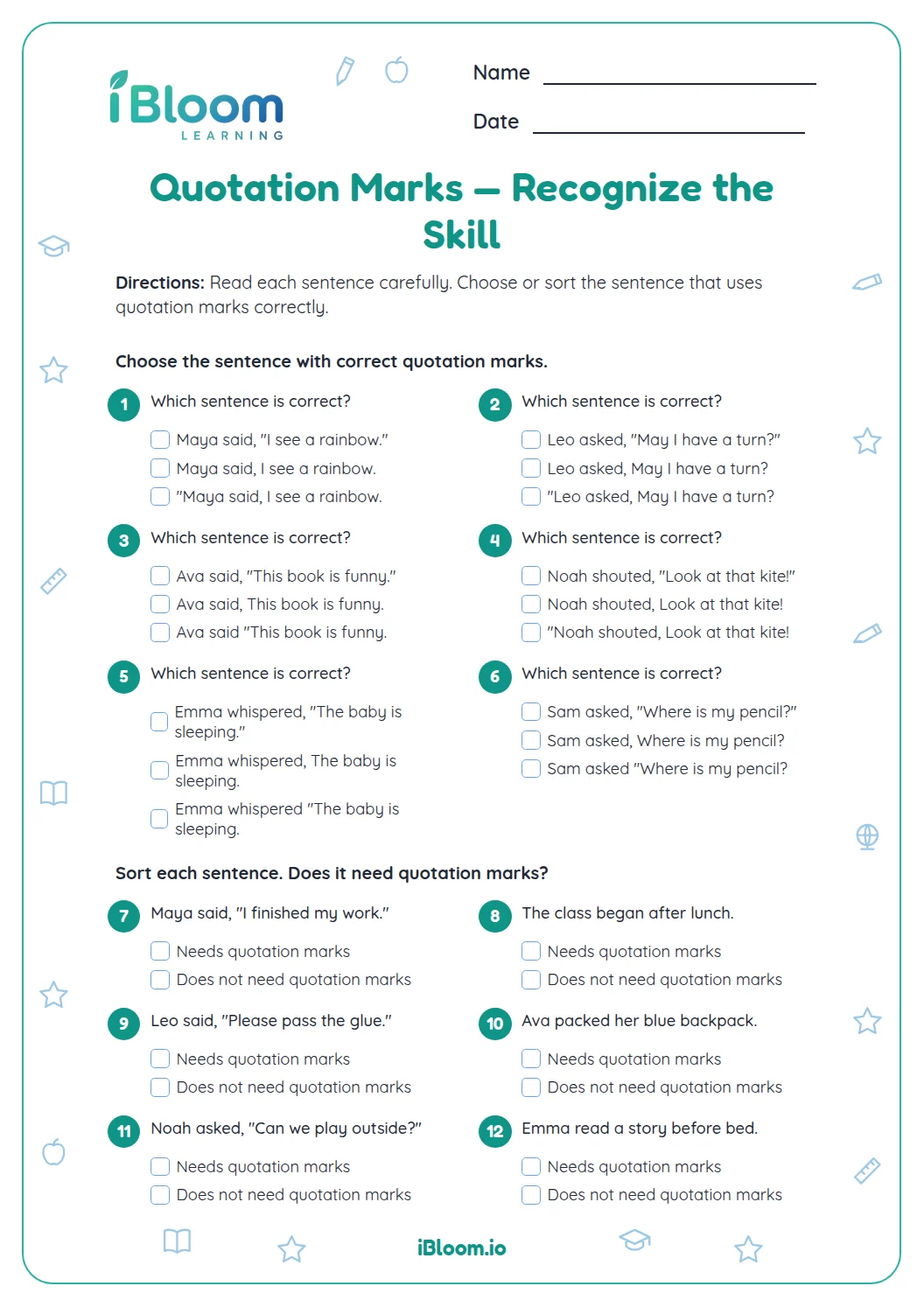
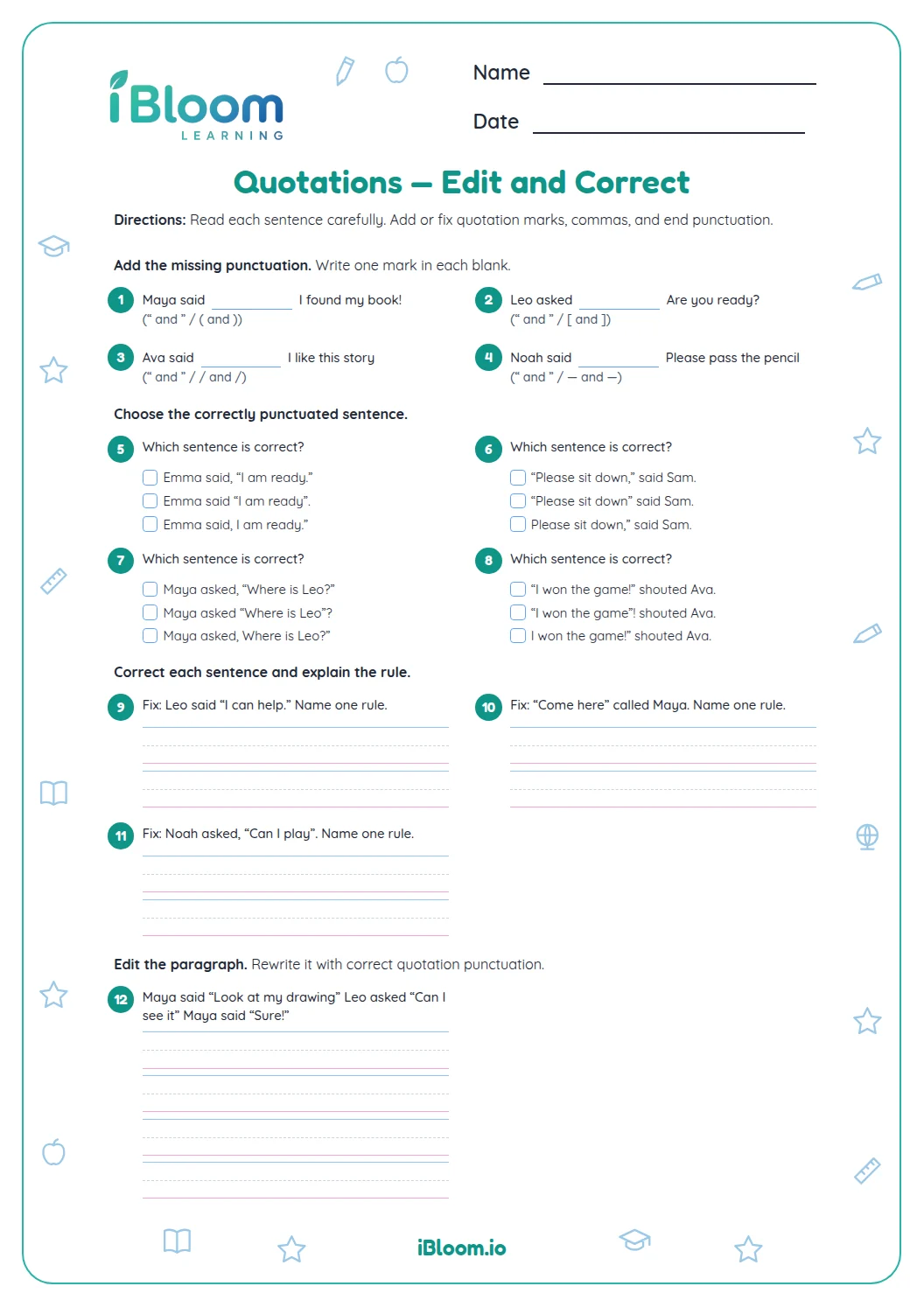
This Grade 3 printable helps learners edit dialogue by adding quotation marks and placing commas, question marks, and exclamation points. It includes missing punctuation, sentence choices, and four complete line rewrites. The practice aligns with Common Core L.3.2.c. A separate answer key supports quick checking.
Aligned to L.3.2.c
Where does the comma go before “said”?
Place the comma inside the closing quotation mark when a spoken statement continues into a speaker tag: “I found it,” said Ana.
- 1I am bringing a map said Tess
- 2“I am bringing a map,” said Tess.
What will learners practice?
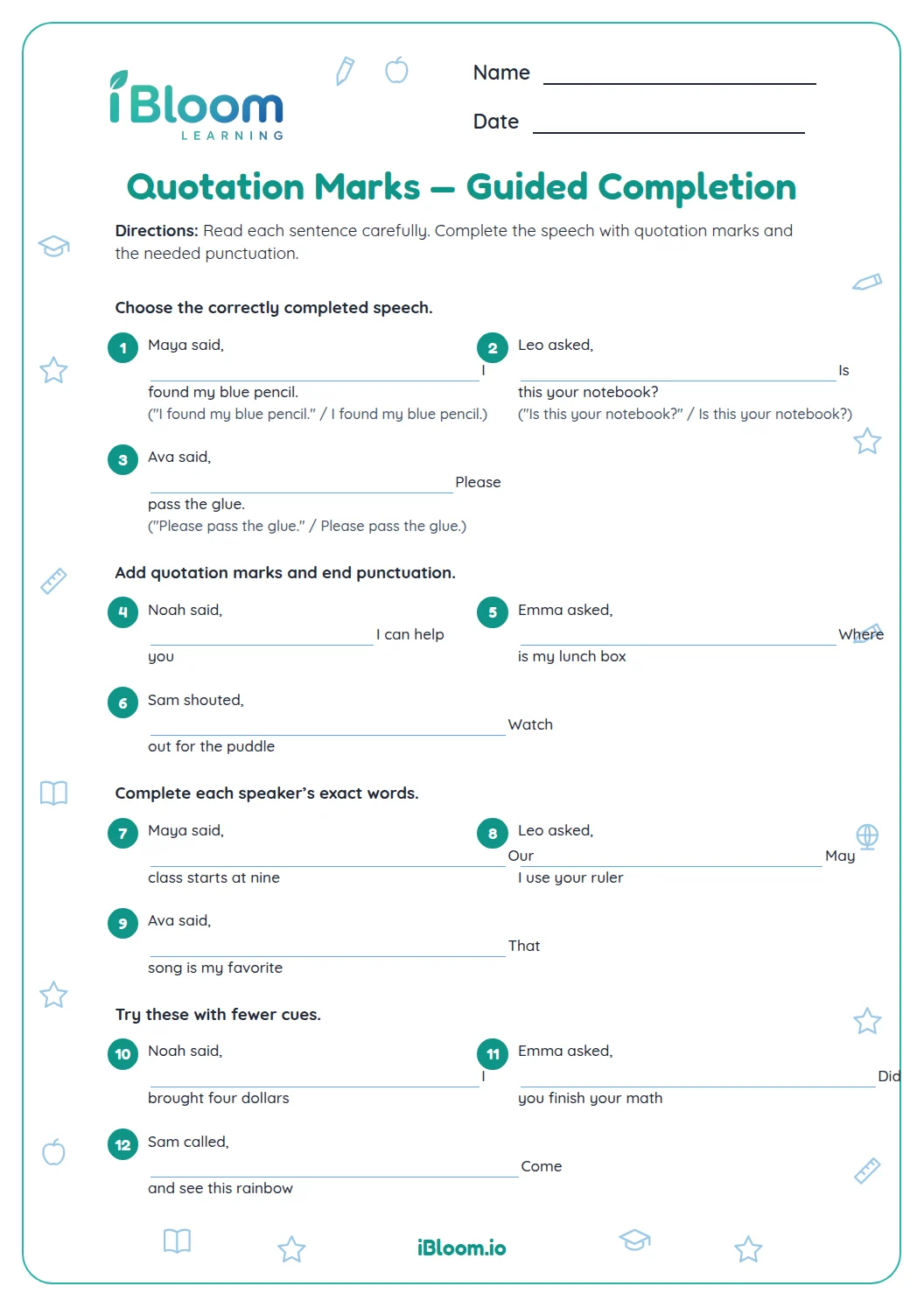
Eighteen items practice dialogue punctuation, from adding quotation marks to editing complete lines.
How can I use the answer key?
Check each response after the learner finishes a part. For open responses, compare the answer with the model and accept other clear, correct wording.
How to use this worksheet
- 1Read each line and decide where the speaker’s exact words begin and end.
- 2Add quotation marks, commas, and the end mark that fits the spoken sentence.
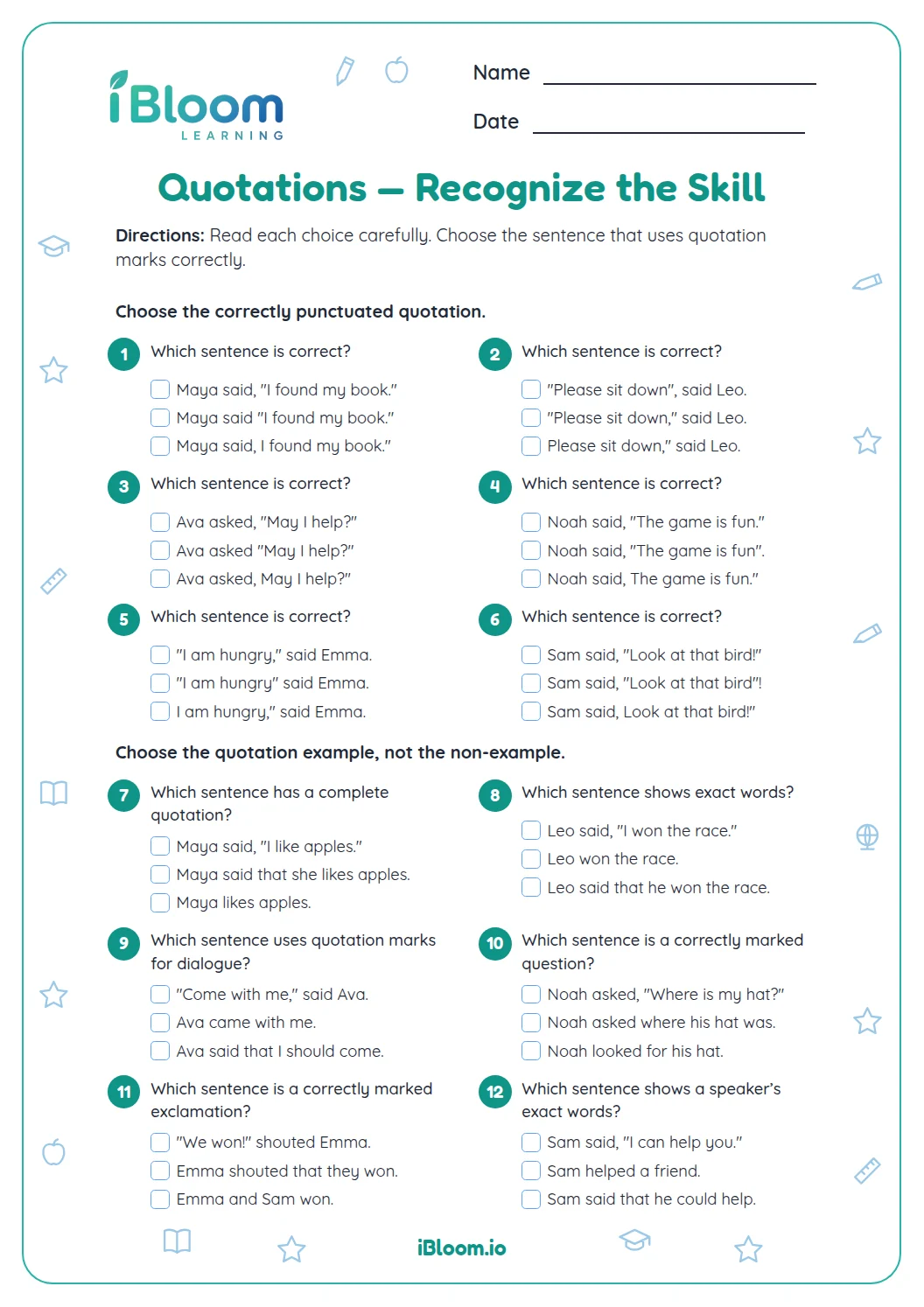
- 3For the choice section, compare the punctuation in each complete line.
- 4Rewrite the final dialogue lines, then check each mark against the key.
Common mistakes and quick fixes
The mistake
Do question marks go inside quotation marks?
The fix
Yes, when the spoken words are a question: “Are we there?” asked Lee. The question mark belongs to the quoted question.
The mistake
What mistake happens with exclamation points?
The fix
A writer may place the exclamation point after the closing quotation mark. Keep it with the spoken words: “Look out!” called Dad.
The mistake
Can I use a different correct rewrite?
The fix
Yes. A rewrite may vary in style if it keeps the original speaker’s words and uses quotation marks and punctuation correctly.
This worksheet practices the listed Common Core skill.
Use commas and quotation marks to punctuate the dialogue lines on this sheet.
On this sheet:
Show the official wordingHide the official wording
Use commas and quotation marks in dialogue.
What to practice next
Make more practice
Further reading
Questions parents and teachers ask
How do I punctuate dialogue?
Put quotation marks around the speaker’s exact words. Add a comma before a speaker tag when the spoken sentence continues, and keep a question mark or exclamation point inside the quotation marks. On this page, pause after each line and check where the spoken words begin and end.
Where does the comma go before “said”?
When a spoken statement is followed by a speaker tag, place the comma inside the closing quotation mark. For example, write “I found it,” said Ana. The comma shows that the spoken sentence continues into the tag. Read the speaker tag separately so it does not accidentally fall inside the quotation marks.
Do question marks go inside quotation marks?
Yes, when the spoken words form a question. Write “Are we there?” asked Lee. The question mark belongs to the quoted question, so it goes before the closing quotation mark. Say the line aloud to hear whether the speaker is asking, telling, or exclaiming.
What mistake happens with exclamation points?
A common editing slip is to put the exclamation point after the closing quotation mark. Keep it with the speaker’s excited words: “Look out!” called Dad. Then place the speaker tag after the quotation. Then compare your punctuation with the model and explain why the mark belongs there.
Can I use a different correct rewrite?
Yes. A rewrite may use a different style if it keeps the speaker’s words and punctuates them correctly. The answer key gives a model; compare your version for quotation marks, commas, and the right end mark. A partner can read one role while you listen for the exact words being spoken.