





About this worksheet
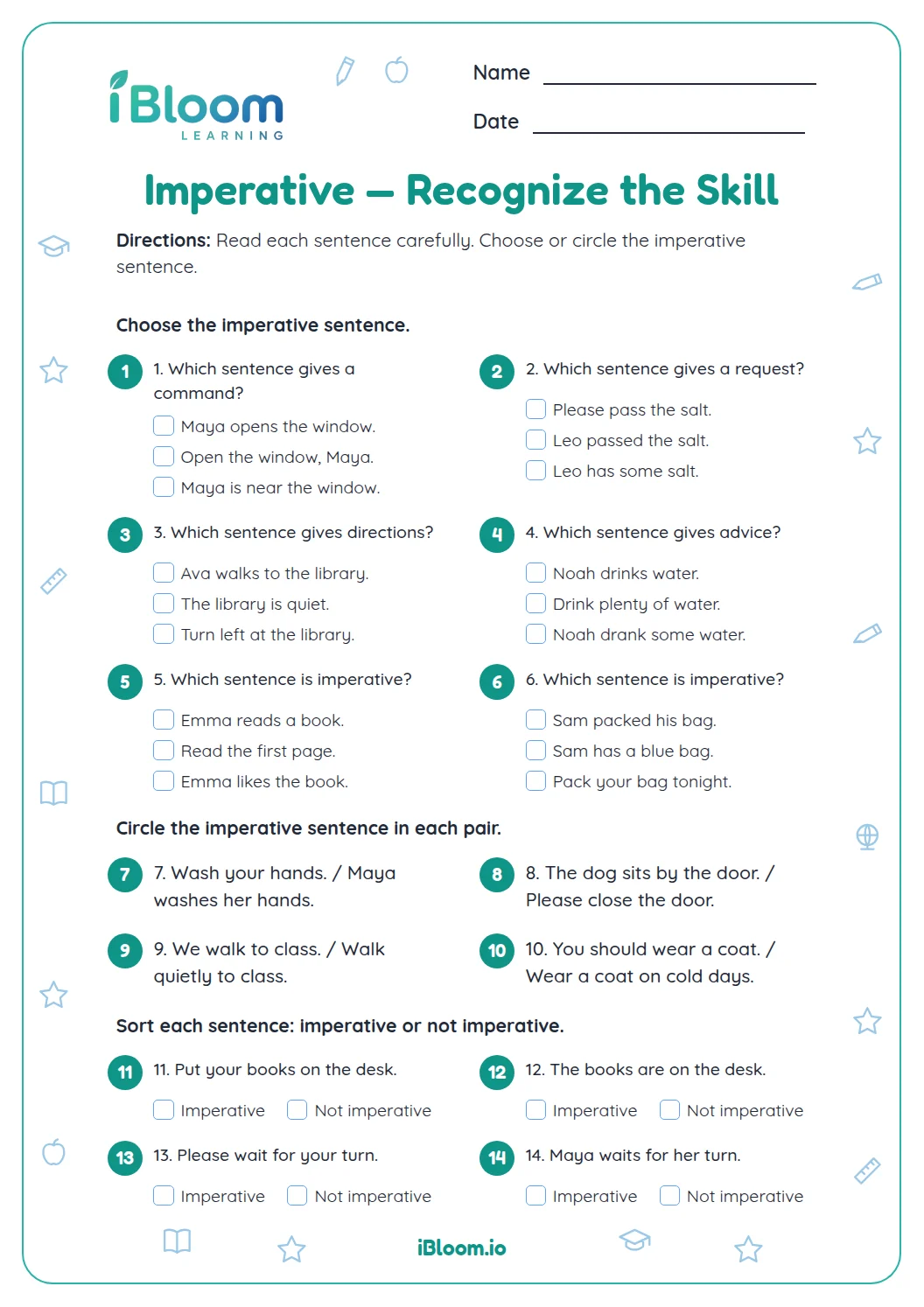
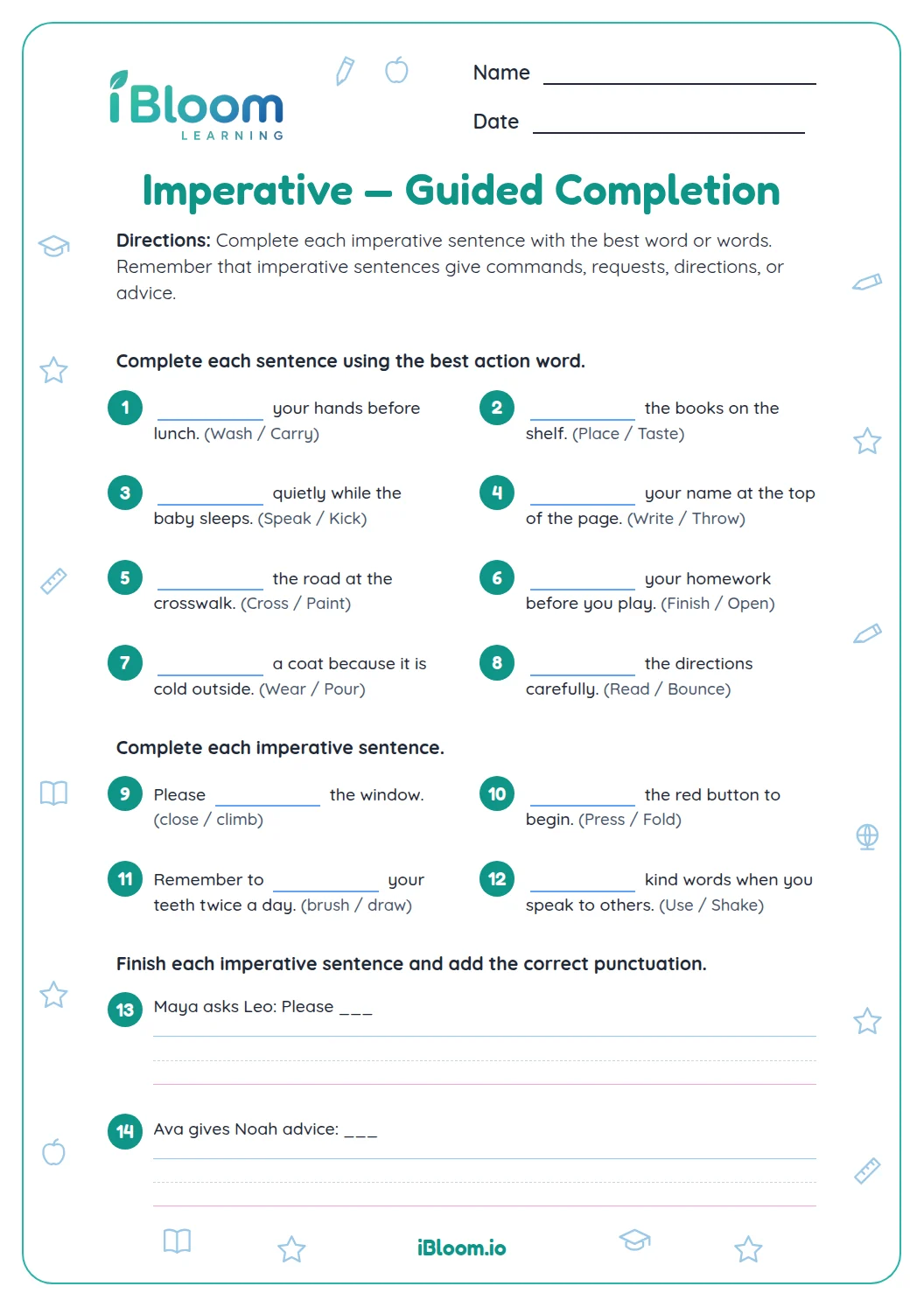
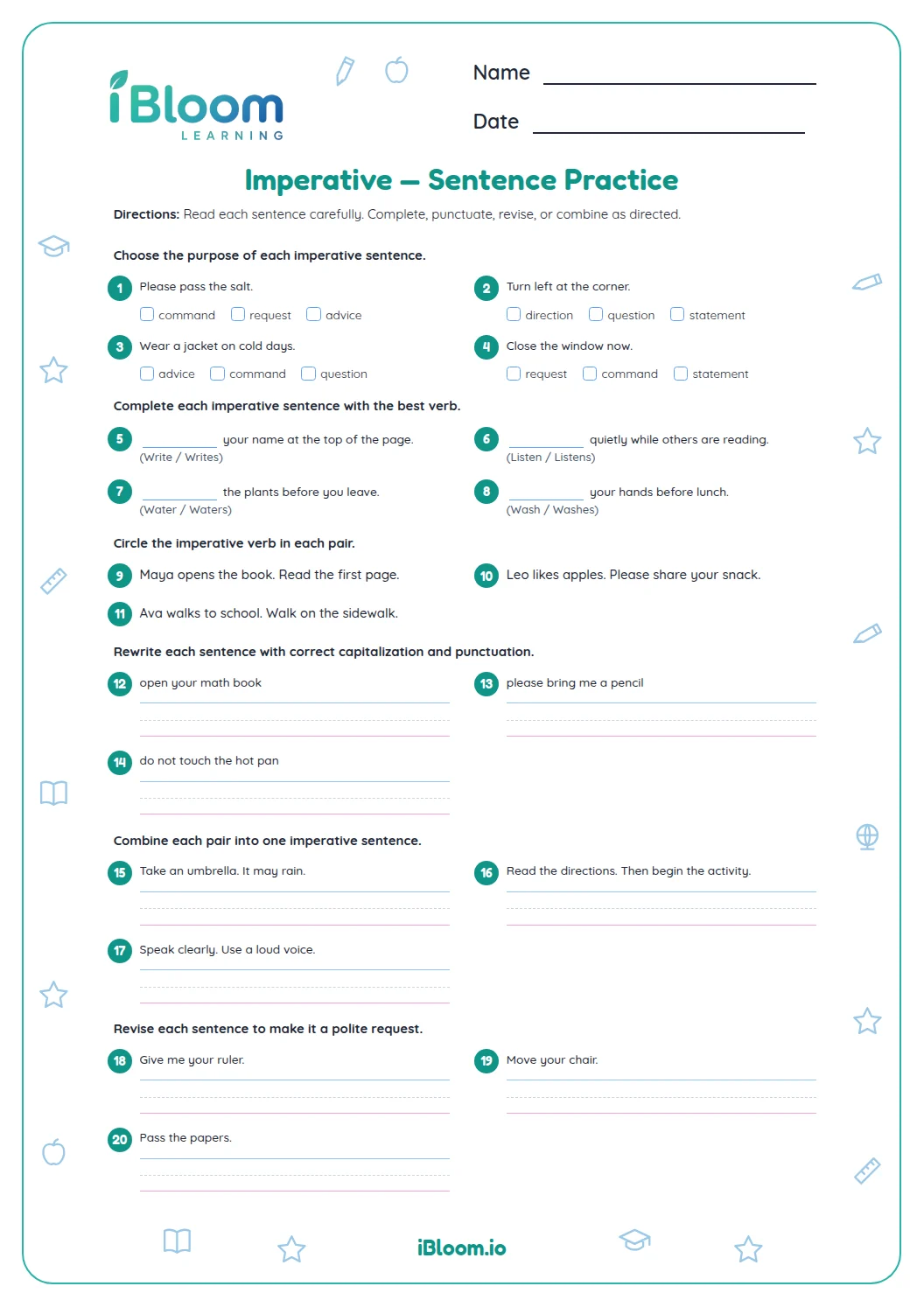
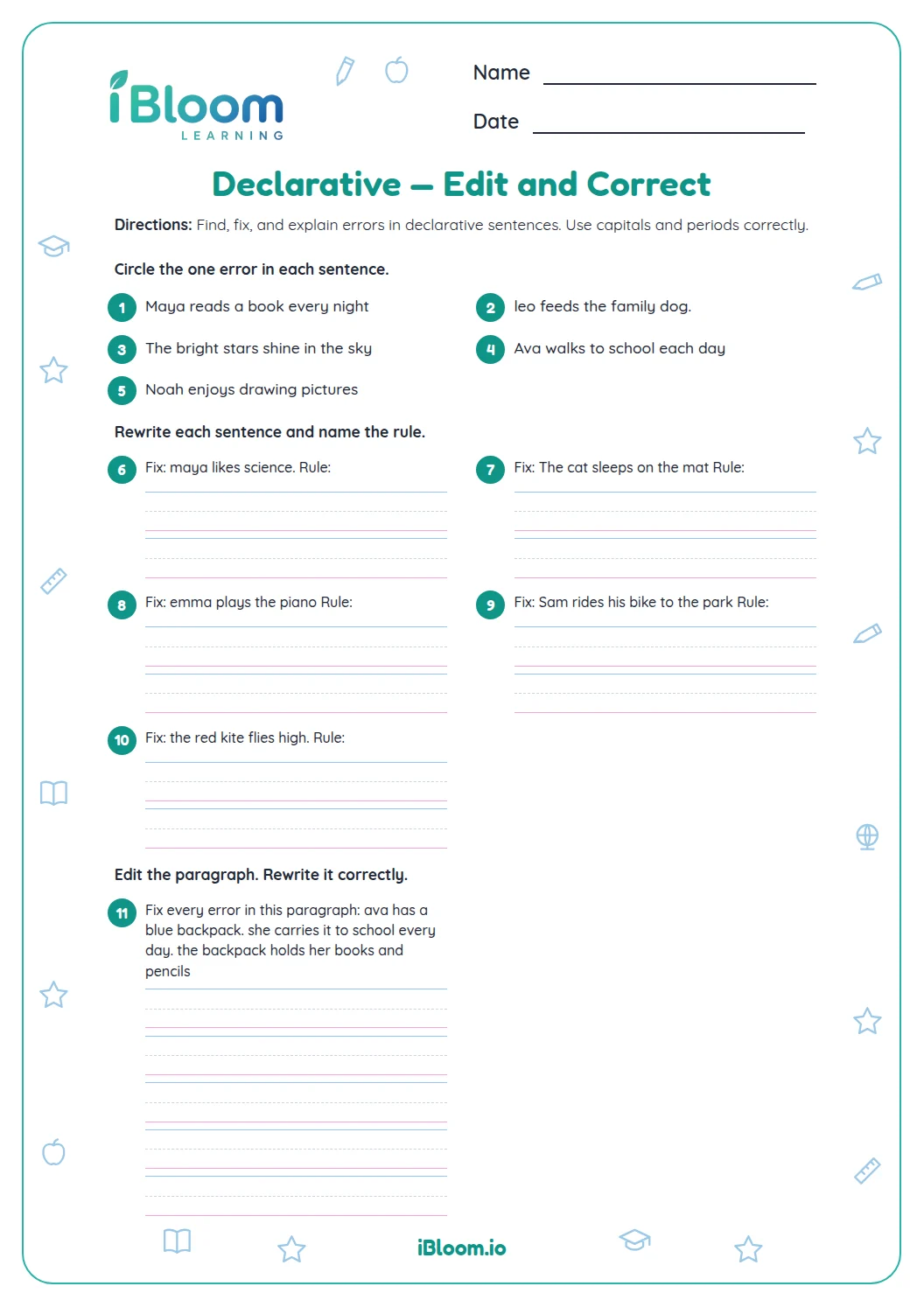
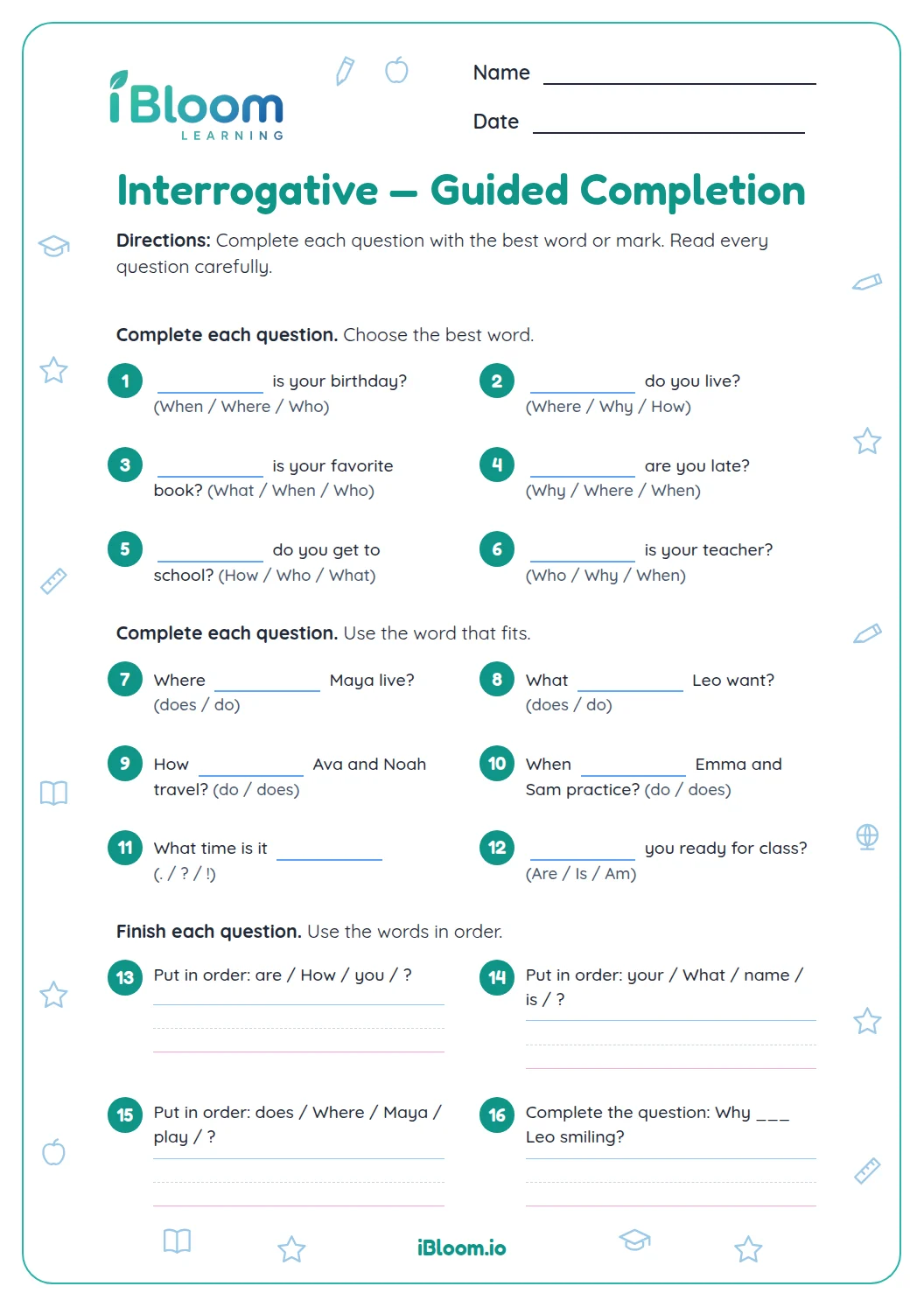
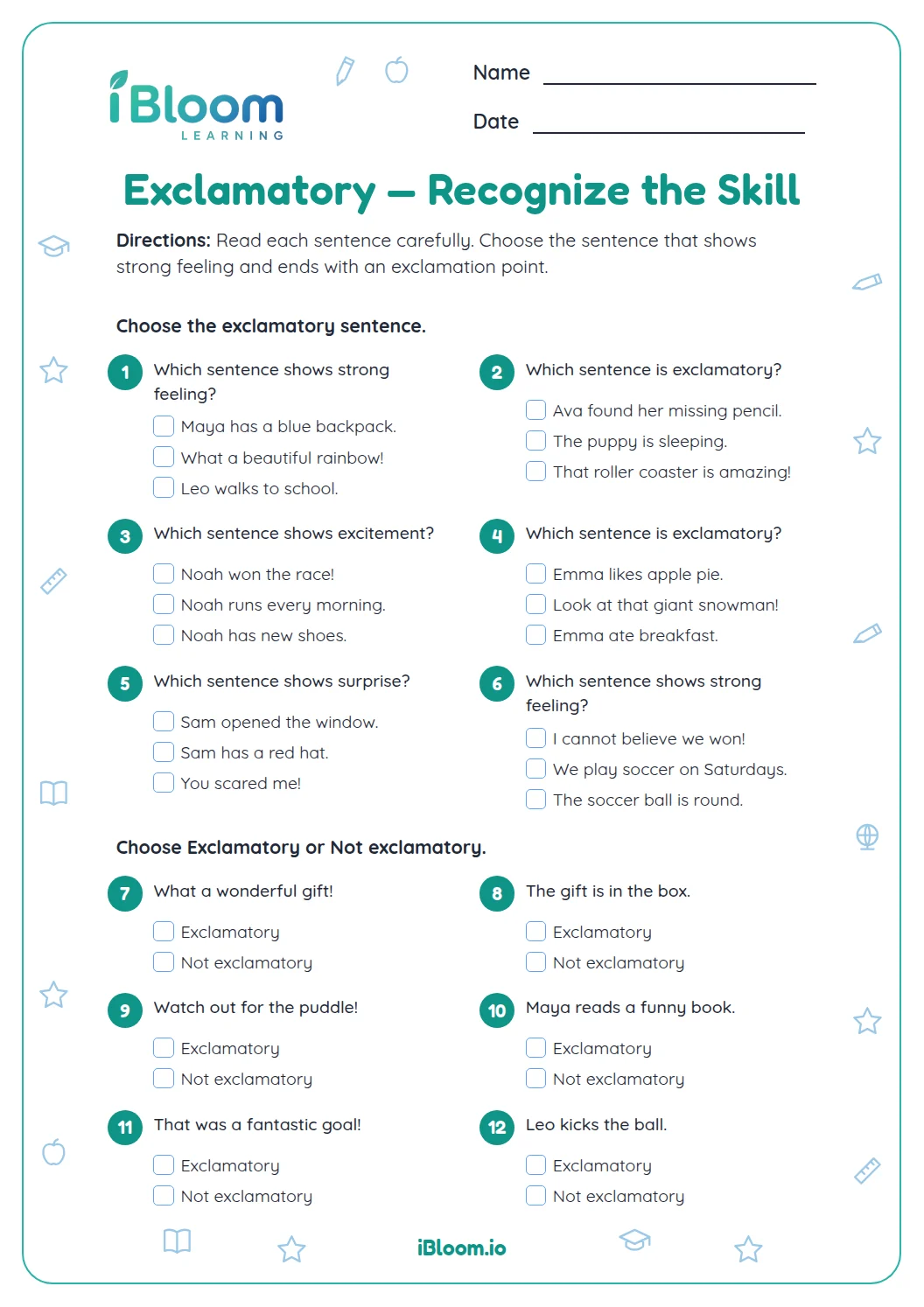
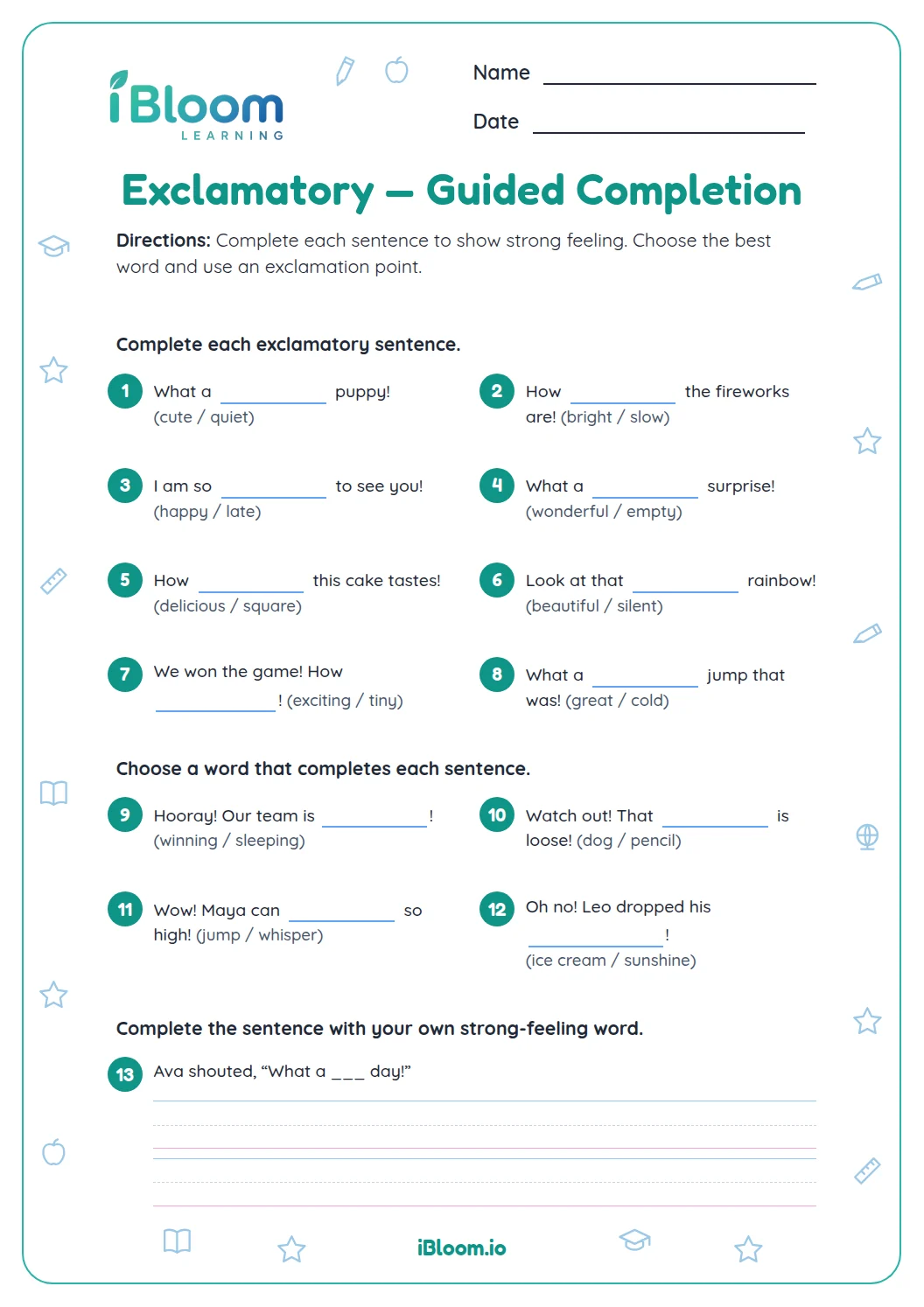
This Grade 3 worksheet helps learners recognize imperative sentences and use them in writing. Part A asks children to identify directions among statements and questions. Part B gives room to write or revise commands, including polite requests, and add ending punctuation. The separate answer key provides exact answers for editing items and models for open responses.
Aligned to L.3.1
How can you spot an imperative sentence?
Part A asks you to choose the sentence that gives a direction or request. “Please close the gate.” is imperative because it asks someone to close the gate. A statement about the gate and a question about it do not give a direction.
How do you write a clear command?
Part B asks learners to rewrite, complete, or punctuate commands. Most commands begin with an action word, and the subject you is understood. A polite request can add please: “Please share the markers.”
Which punctuation mark should finish the sentence?
Use a period for a calm direction. An exclamation point can show strong feeling, but it should not be added automatically. Read the whole command aloud and choose the ending that matches its tone.
How to use this worksheet
- 1Read each sentence aloud.
- 2Ask whether it tells someone to do something.
- 3For a written command, begin with a clear action word.
- 4Add please when the prompt asks for a polite request.
- 5Capitalize the first word and add fitting end punctuation.
- 6Compare fixed answers with the key; accept equivalent polite wording when a sample is given.
Common mistakes and quick fixes
The mistake
Choosing a question because it mentions an action.
The fix
Check whether the sentence asks what, when, or where, or directly tells someone what to do.
The mistake
Leaving out the action word in a command.
The fix
Begin with the action the reader should take, such as carry, fold, or listen.
The mistake
Forgetting the final punctuation mark.
The fix
Reread the command and add a period for a calm direction or an exclamation point for strong feeling.
Common Core alignment
Learners apply English grammar and usage conventions while writing and editing commands.
Write and edit commands using standard English grammar and usage.
On this sheet: Learners write and revise complete imperative sentences with appropriate sentence conventions.
Show the official wordingHide the official wording
Demonstrate command of the conventions of standard English grammar and usage when writing or speaking.
What to practice next
Make more practice
Further reading
Questions parents and teachers ask
What does imperative mean?
An imperative sentence gives a command, direction, or request. It often begins with an action word, and the subject you is understood, as in “Please wait by the door.” Have the learner explain the clue before checking the answer key together. A nearby calendar or model can make the sequence easier to see.
Do all commands need an exclamation point?
No. A period is a natural ending for most calm directions. An exclamation point is appropriate when the speaker wants to show strong feeling, so learners should match punctuation to the sentence’s tone. Have the learner explain the clue before checking the answer key together. A nearby calendar or model can make the sequence easier to see.
What does Part A ask children to do?
Part A has eight multiple-choice items. Children choose a direction or command from three sentences, distinguishing it from statements and questions. Have the learner explain the clue before checking the answer key together. A nearby calendar or model can make the sequence easier to see.
What does Part B ask children to write?
Part B has eight written items. Learners revise directions into polite commands, write requests, and add missing punctuation; the answer key includes sample language for prompts with more than one suitable response. Have the learner explain the clue before checking the answer key together. A nearby calendar or model can make the sequence easier to see.
How can I help without giving away the answer?
Ask the learner who the sentence is speaking to and what that person should do. Then have them read the sentence aloud and listen for whether it gives a direction, states information, or asks a question. Have the learner explain the clue before checking the answer key together. A nearby calendar or model can make the sequence easier to see.