




About this worksheet
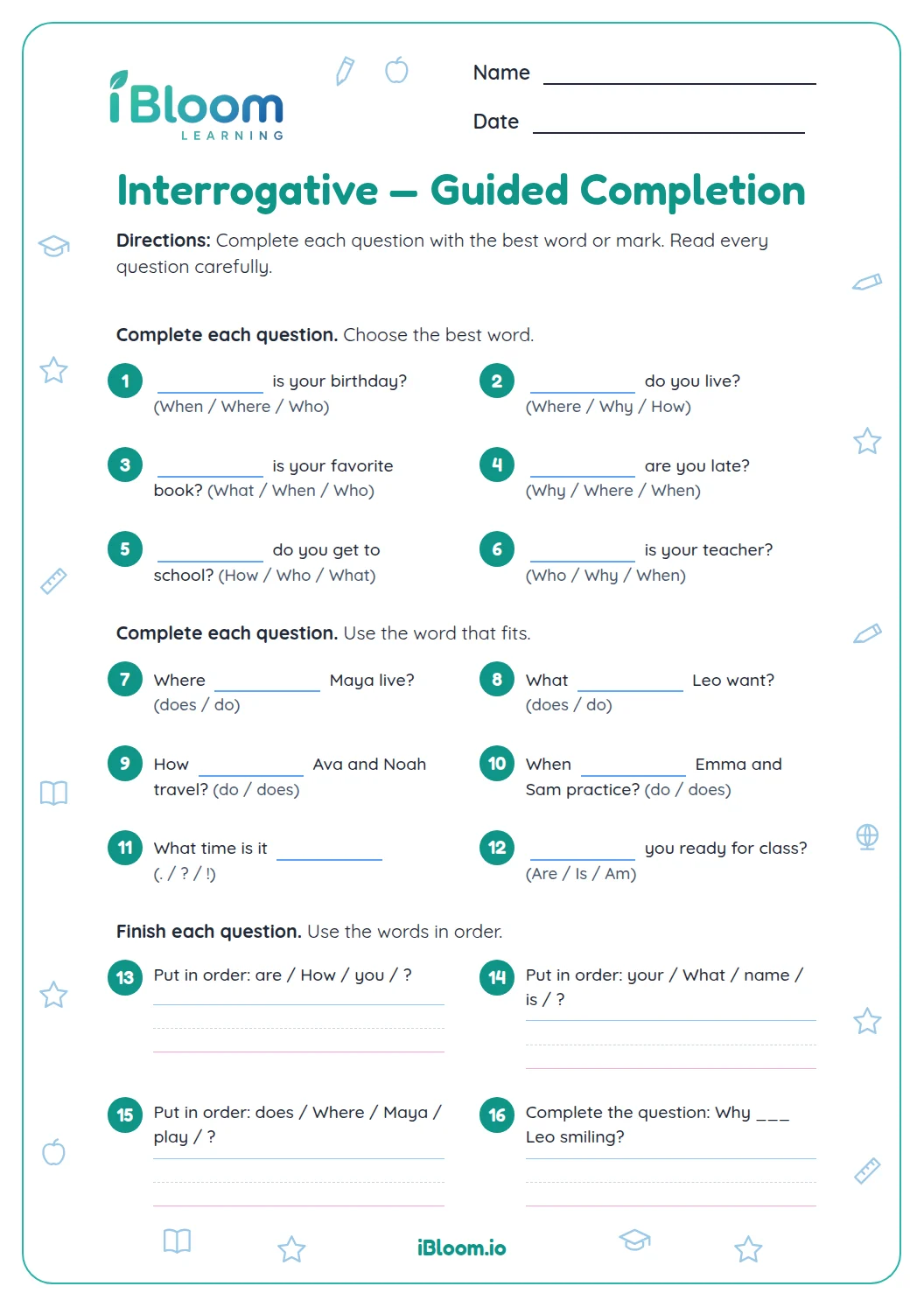
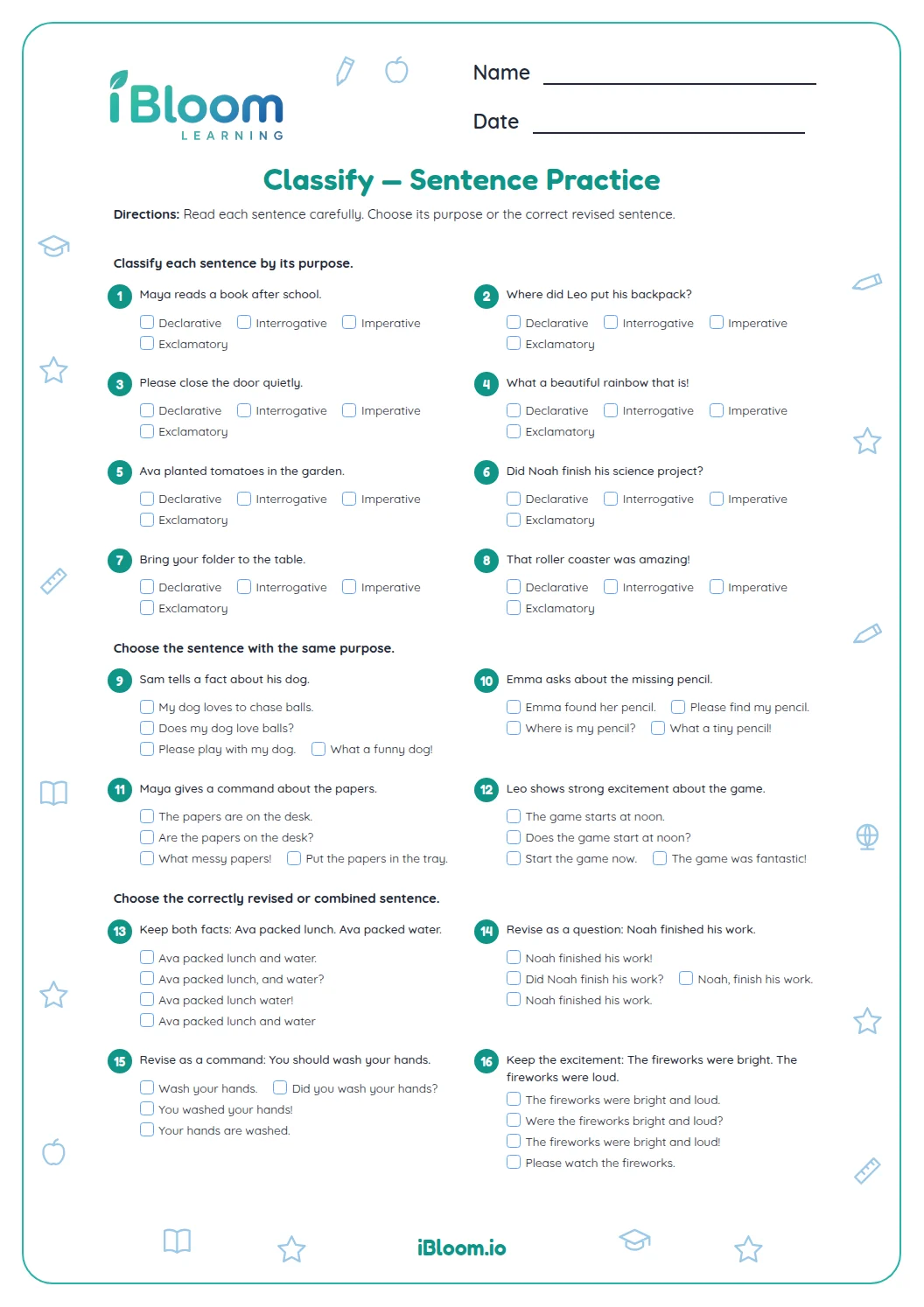
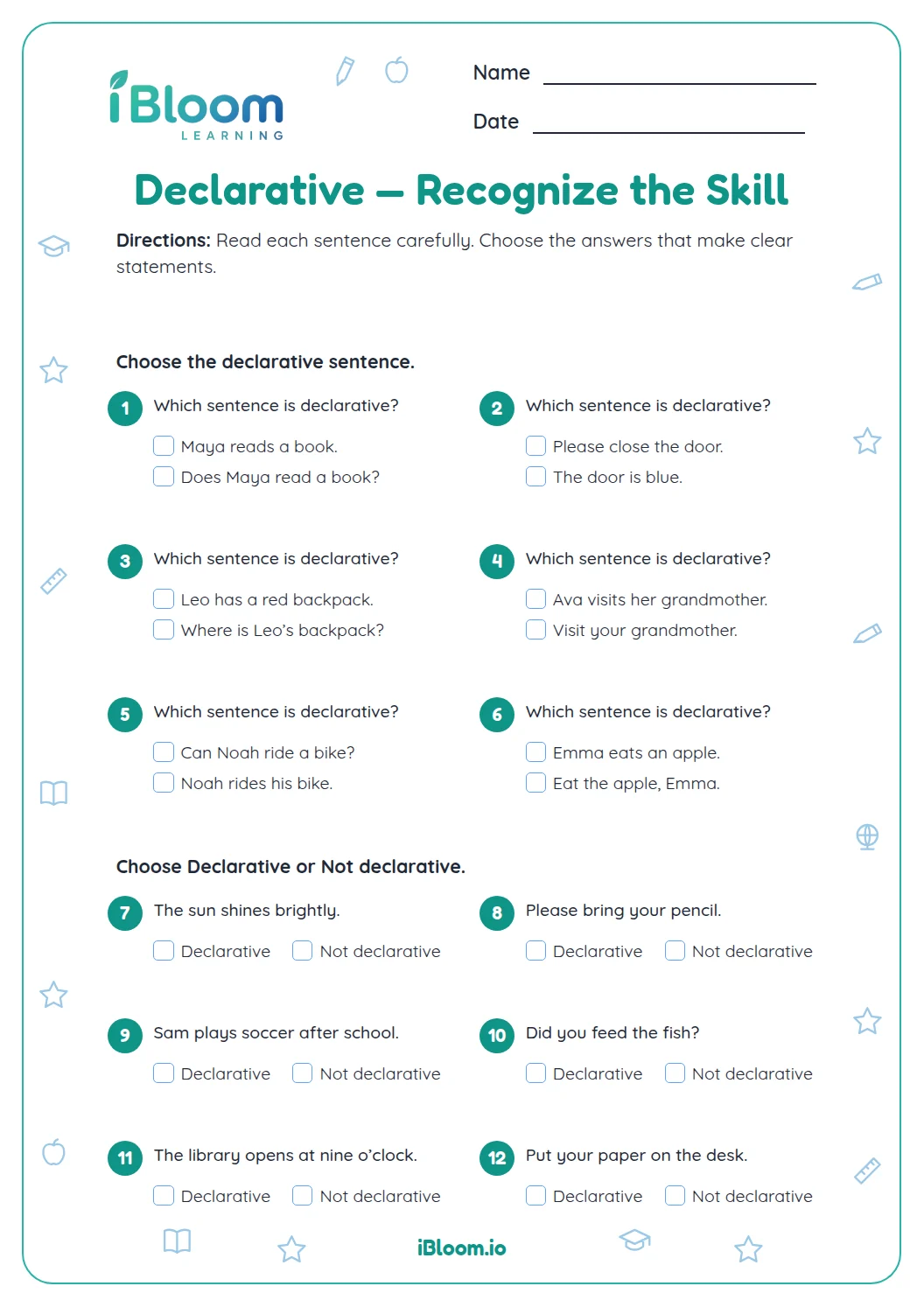
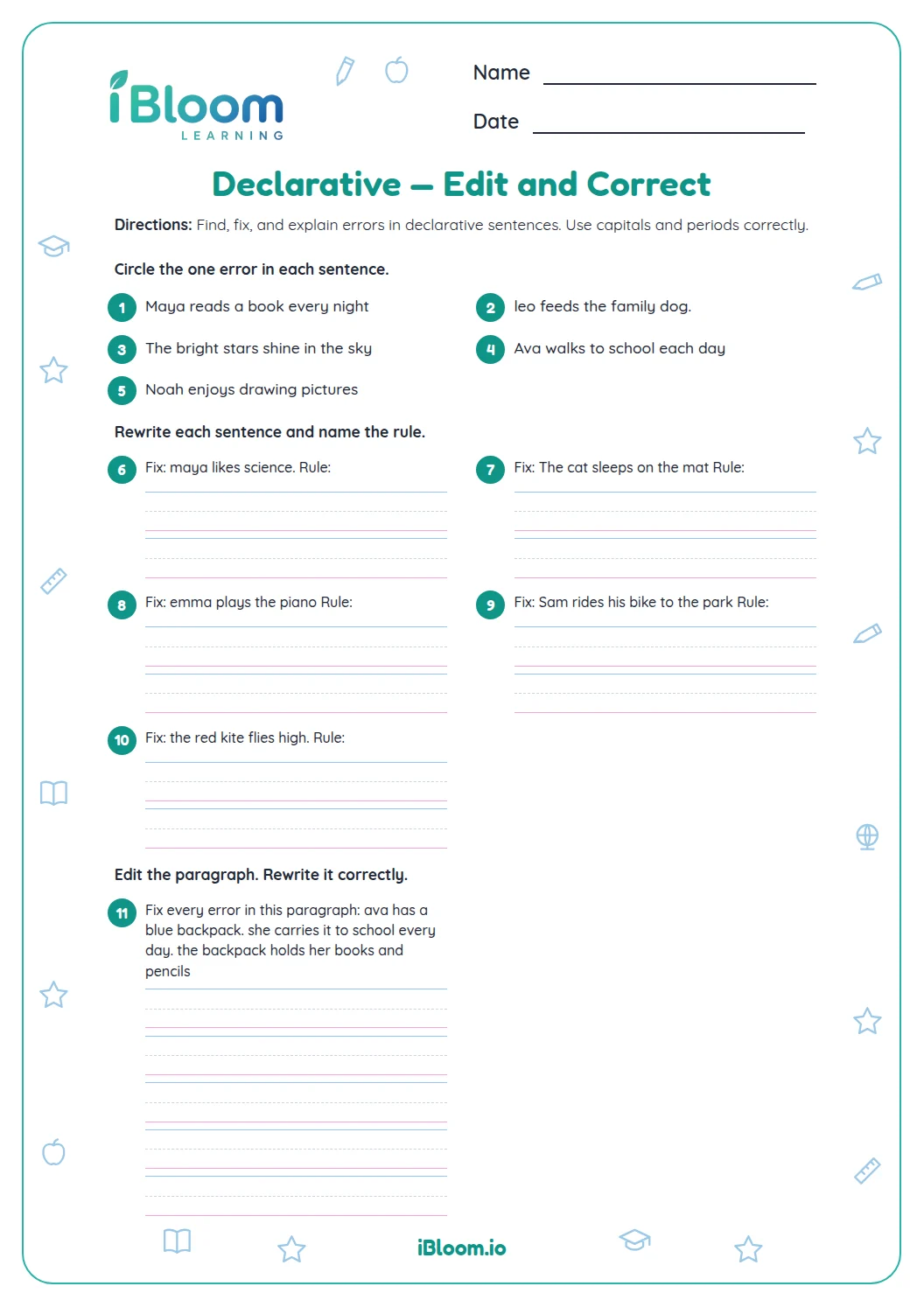
This Grade 3 printable focuses on recognizing and forming interrogative sentences, or questions. Learners distinguish questions from statements, choose correct question punctuation, and classify sample sentences. Its 16 items keep the work centered on the signal that a sentence asks something and ends with a question mark. A separate key gives the response for every item.
What makes a sentence interrogative?
An interrogative sentence asks a question. It often begins with a word such as who, what, where, when, why, or how, or with a helping verb such as can or will. Its ending punctuation is a question mark.
- 1Where did the class put its plants?
- 2It asks where the plants were put, so it is interrogative.
How do you finish a question?
Read the whole sentence aloud and listen for the question. Then choose the question mark. A period ends a statement, while an exclamation mark shows strong feeling. The words and punctuation should agree.
What will the three parts ask you to do?
Part A distinguishes interrogative sentences from declarative statements. Part B selects the correctly punctuated question. Part C sorts sentences by whether they ask something. Together, the parts include 16 items.
How to use this worksheet
- 1Read the complete sentence before choosing.
- 2Ask what the speaker wants to know.
- 3Look for question words or a helping verb at the start.
- 4Check that a question ends with a question mark.
- 5For the sorting items, use meaning and punctuation together.
- 6Compare all 16 responses with the key.
Common slips and quick fixes
The mistake
Choosing a sentence because it starts with a question word even when it does not ask something.
The fix
Read it aloud and decide whether it requests information.
The mistake
Calling a statement interrogative because it mentions a question.
The fix
Classify the sentence by what it does, not by one word.
The mistake
Ending a question with a period or exclamation mark.
The fix
Reread it as a question and use a question mark.
What to practice next
Questions parents and teachers ask
What is an interrogative sentence?
An interrogative sentence asks a question. “Where did the class put its plants?” is interrogative because it asks where something happened and ends with a question mark. The first part contrasts questions with statements, and later parts practice punctuation and sentence sorting.
How many questions are included?
The worksheet has 16 items across three parts. Learners recognize sentence types, choose punctuation for questions, and sort sentences. A separate two-page answer key gives the correct response for each numbered item. Each part has a different format, but all items focus on questions and their punctuation.
Do all questions begin with who, what, or where?
No. Some questions begin with a question word, such as why or how, and others begin with a helping verb, such as will, can, or may. The worksheet includes both patterns so learners attend to the meaning and ending punctuation.
What punctuation ends an interrogative sentence?
An interrogative sentence ends with a question mark. A period usually ends a statement, while an exclamation mark signals strong feeling. In Part B, read each option to find the version whose words and ending mark form a question.
Can a sentence with a question word be a statement?
Yes. A question word by itself does not determine the sentence type. Read the complete sentence and ask whether it requests information. The worksheet’s examples help learners use the sentence’s purpose and punctuation together. Children can explain their choice by pointing to the sentence meaning and its final mark.