





About this worksheet
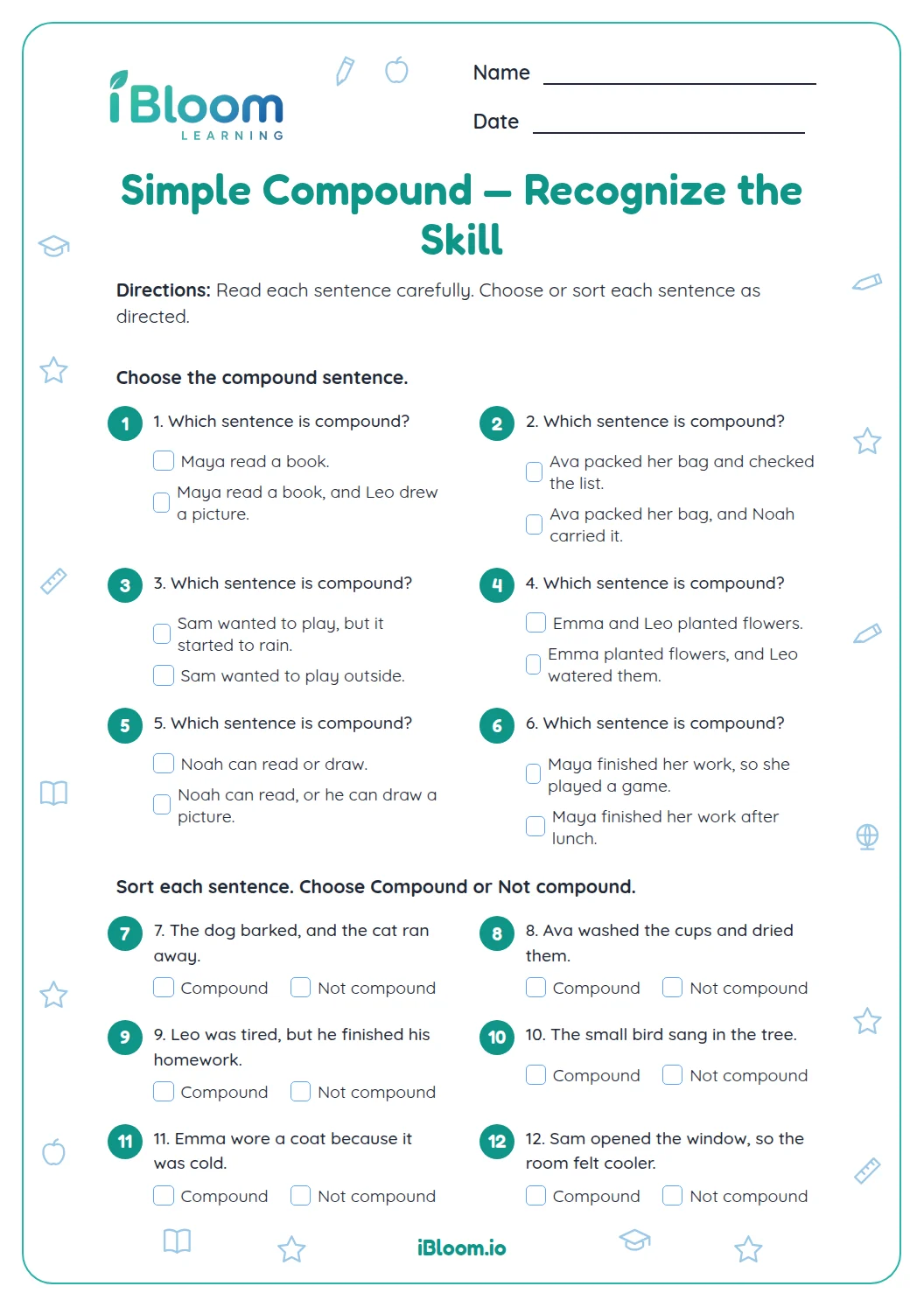
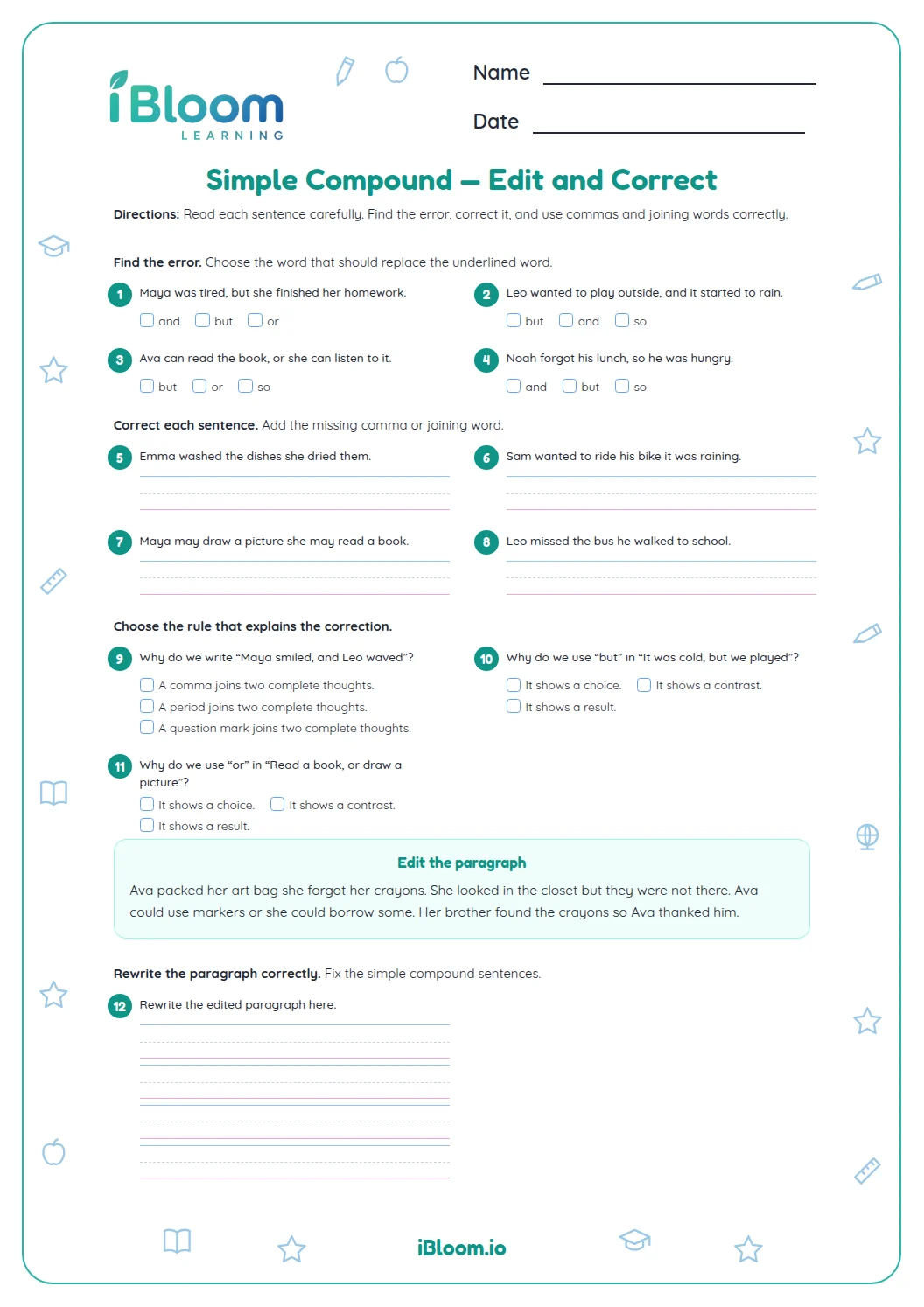
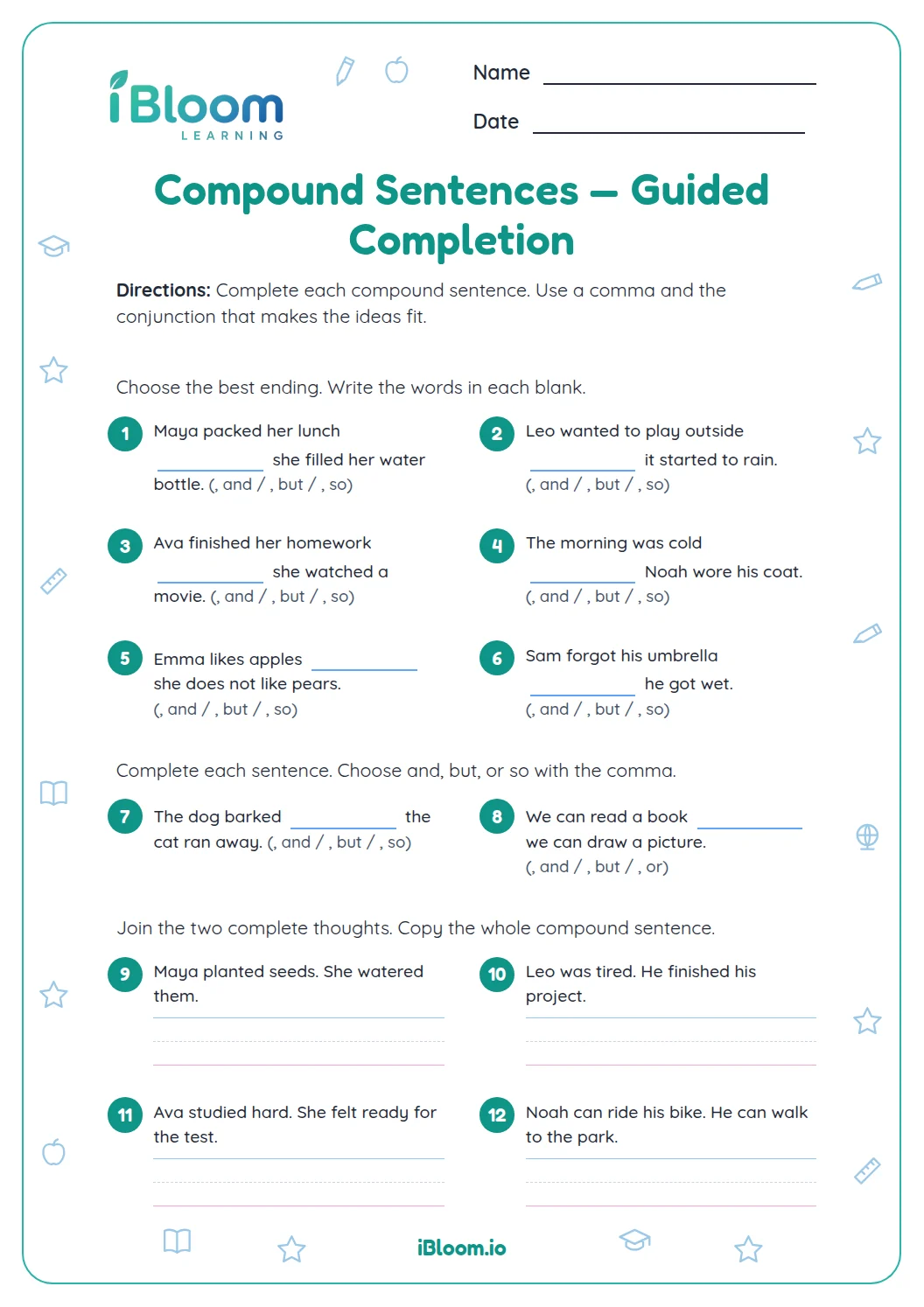
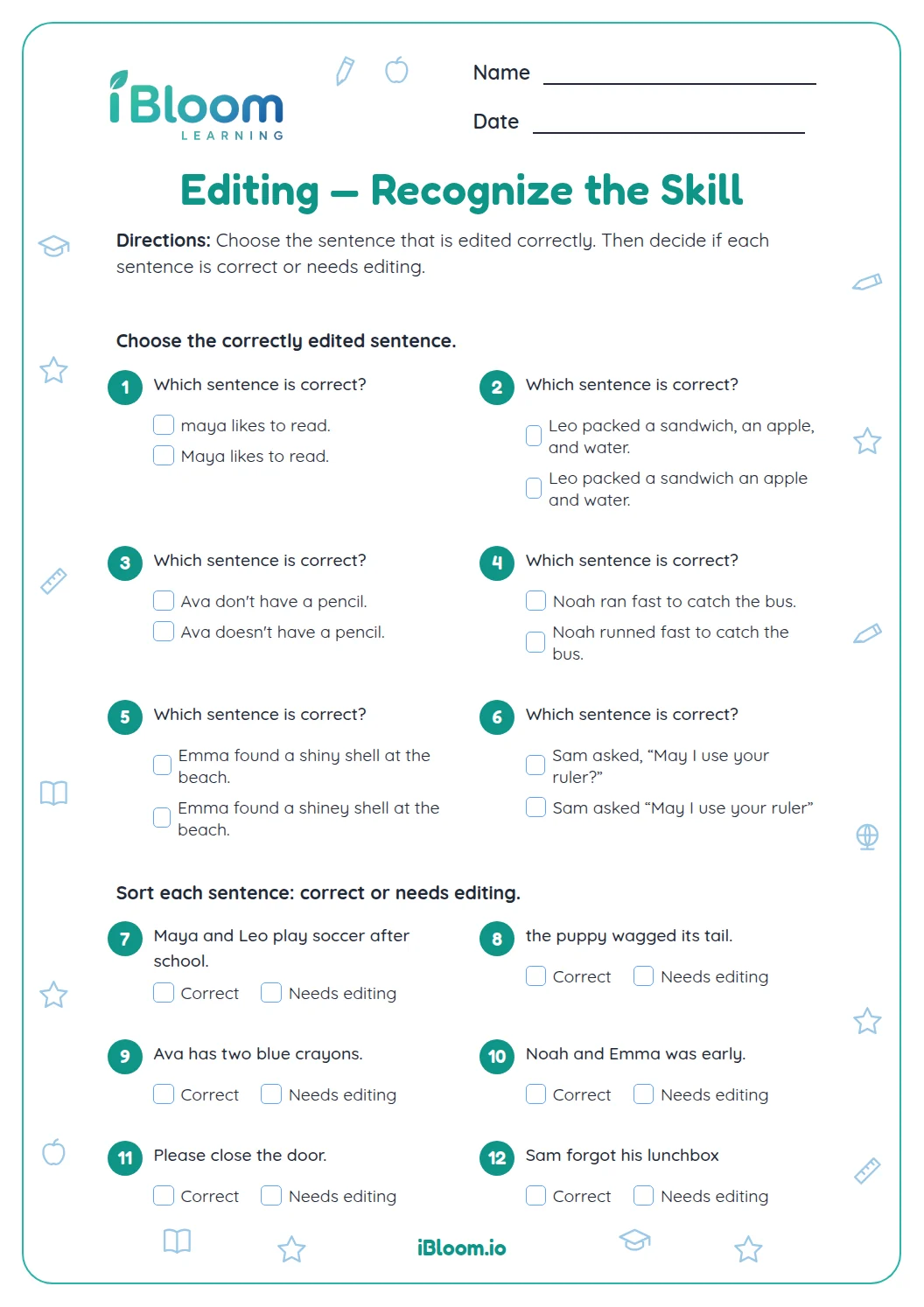
This Grade 3 worksheet practices joining complete thoughts with and, but and or. Students choose a conjunction, finish a second thought, and complete more compound sentences. The prompts use familiar situations and leave room for more than one sensible ending where a response is open-ended. The answer key supplies sample endings and the intended conjunctions.
Aligned to L.3.1.i
How do and, but and or connect thoughts?
And adds a related thought, but signals a contrast, and or offers a choice. Read both sides of the blank to decide which relationship makes sense.
In question 2, wanting to play outside contrasts with rain starting, so “but” fits.
- 1Ava wanted to play outside, ___ it began to rain. → but
How can you finish the second thought?
After a conjunction, write a complete thought that matches the relationship. Keep the subject and verb clear. For question 6, “Maya opened the window, and fresh air came inside” gives a related result.
How to use this worksheet
- 1Read both thoughts before choosing a conjunction.
- 2Ask whether the second thought adds, contrasts or gives a choice.
- 3For an ending, write a complete thought with a subject and verb.
- 4Reread the whole sentence aloud for sense and punctuation.
Common slips and helpful fixes
The mistake
Using and when the second thought gives a contrast.
The fix
Ask whether the two ideas differ; if they do, try but.
The mistake
Writing only a word after the conjunction.
The fix
Make the ending a complete thought with its own subject and verb.
The mistake
Choosing or when there is no choice.
The fix
Check that the sentence offers two alternatives before using or.
Common Core alignment
This practice builds complete sentences by joining related thoughts.
Use coordinating conjunctions to make compound sentences.
On this sheet: Children connect two complete thoughts with and, but, or or.
Show the official wordingHide the official wording
Produce simple, compound, and complex sentences.
What to practice next
Make more practice
Further reading
Questions parents and teachers ask
Which joining words appear?
Students choose among and, but and or. And connects related thoughts, but signals a contrast, and or presents a choice. The final set gives more practice choosing a word from the relationship between the two ideas. Read both thoughts before deciding.
Can my child write a different sentence ending?
Yes. The key gives one sample, but another complete thought works if it fits the conjunction and makes sense with the first thought. Have your child reread the whole sentence to check that the ideas connect clearly. A subject and verb make the ending complete.
How many questions are included?
There are 16 questions across three worksheet pages, followed by a three-page answer key. Students choose conjunctions, complete four open sentence endings, and fill conjunction blanks in complete compound sentences. The page uses familiar situations to make the connection between ideas clear.
What makes a compound sentence?
A compound sentence joins two complete thoughts, often with a comma and a coordinating conjunction such as and, but or or. Each side needs a subject and a verb. This page asks children to select or supply the word that connects those thoughts.
Should students add punctuation?
The worksheet supplies commas and sentence endings around the blanks. Students can reread each completed sentence to make sure both thoughts are complete and the conjunction expresses the intended connection. Reading the sentence aloud can help them hear whether it makes sense.