




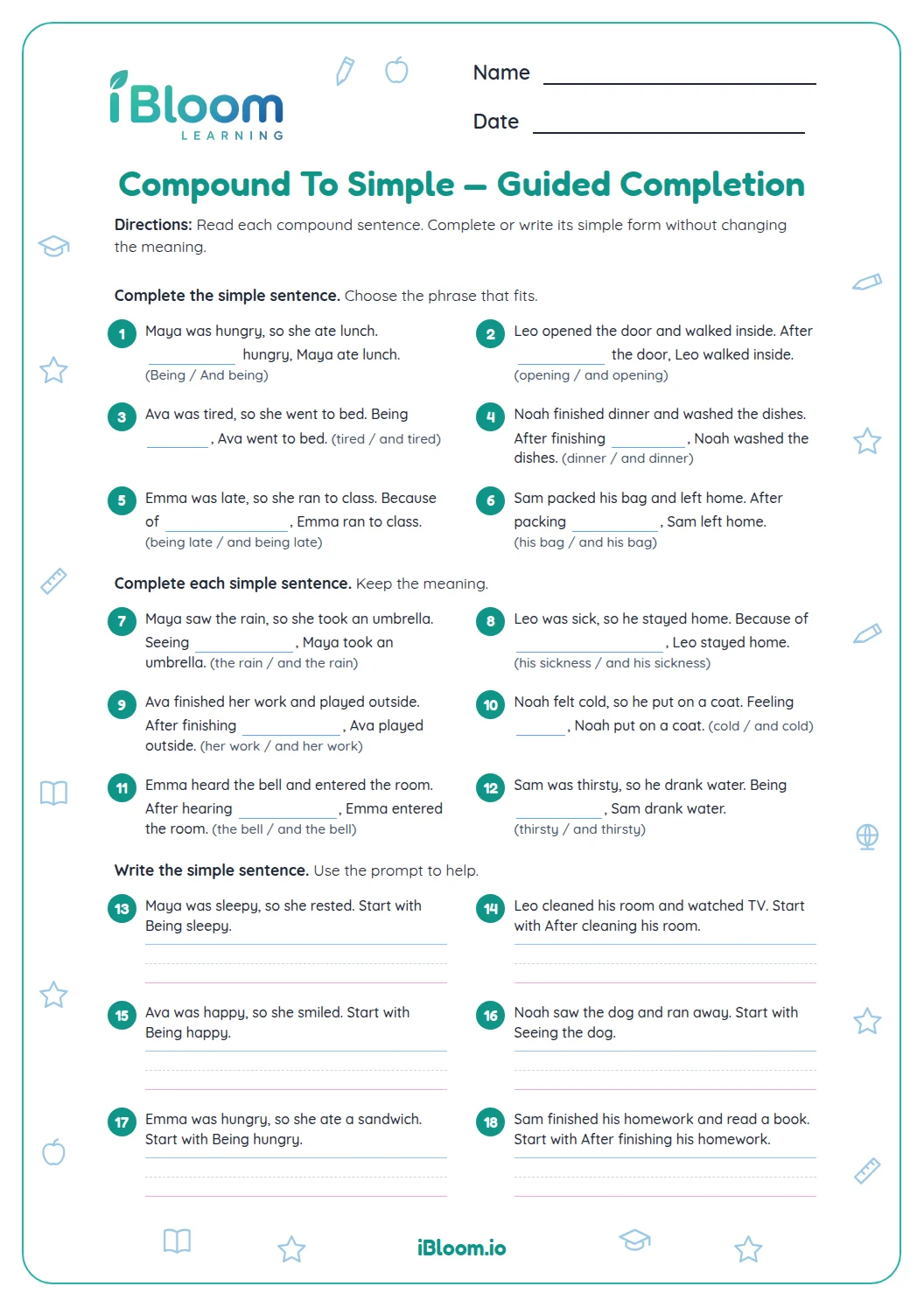

About this worksheet
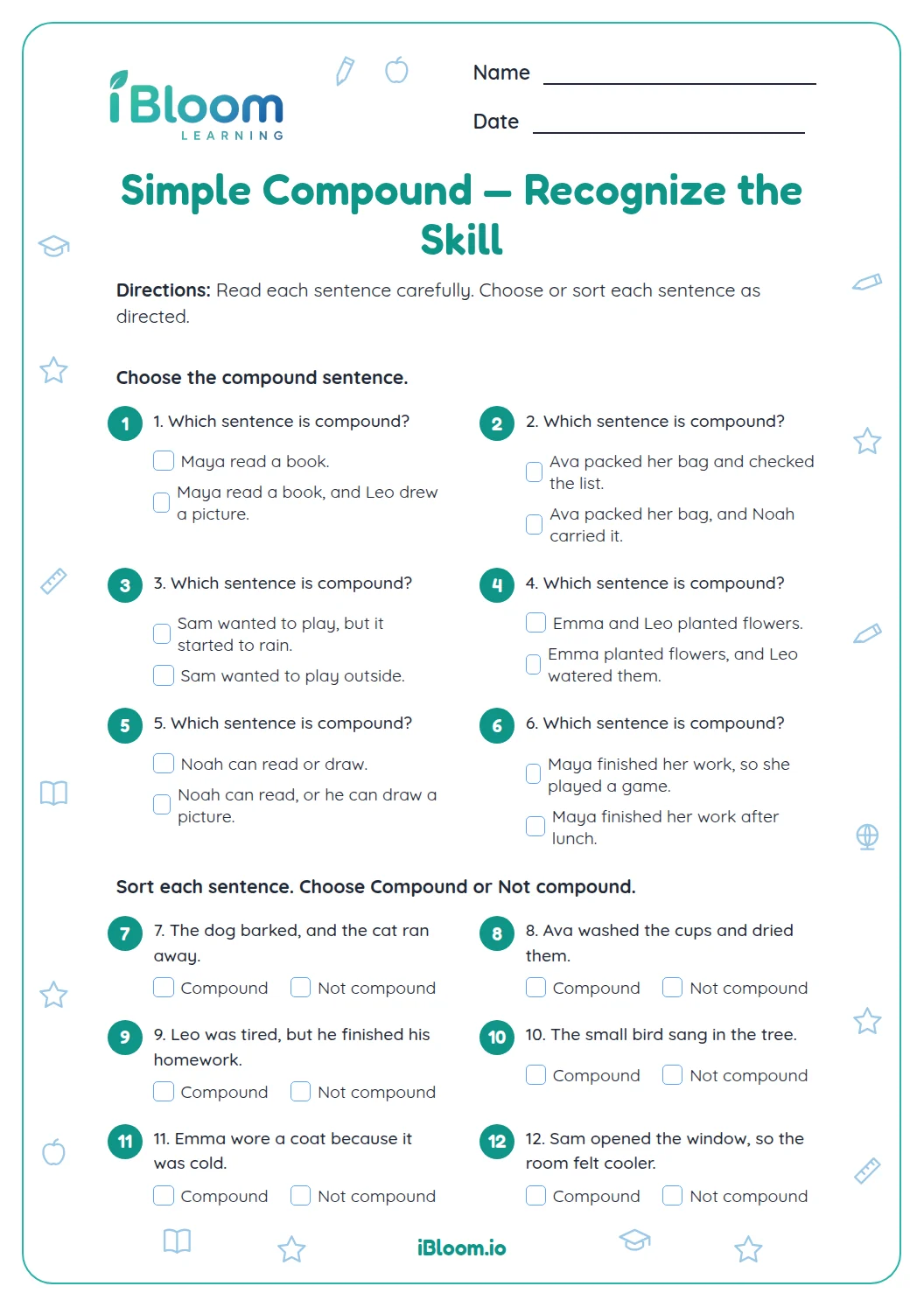
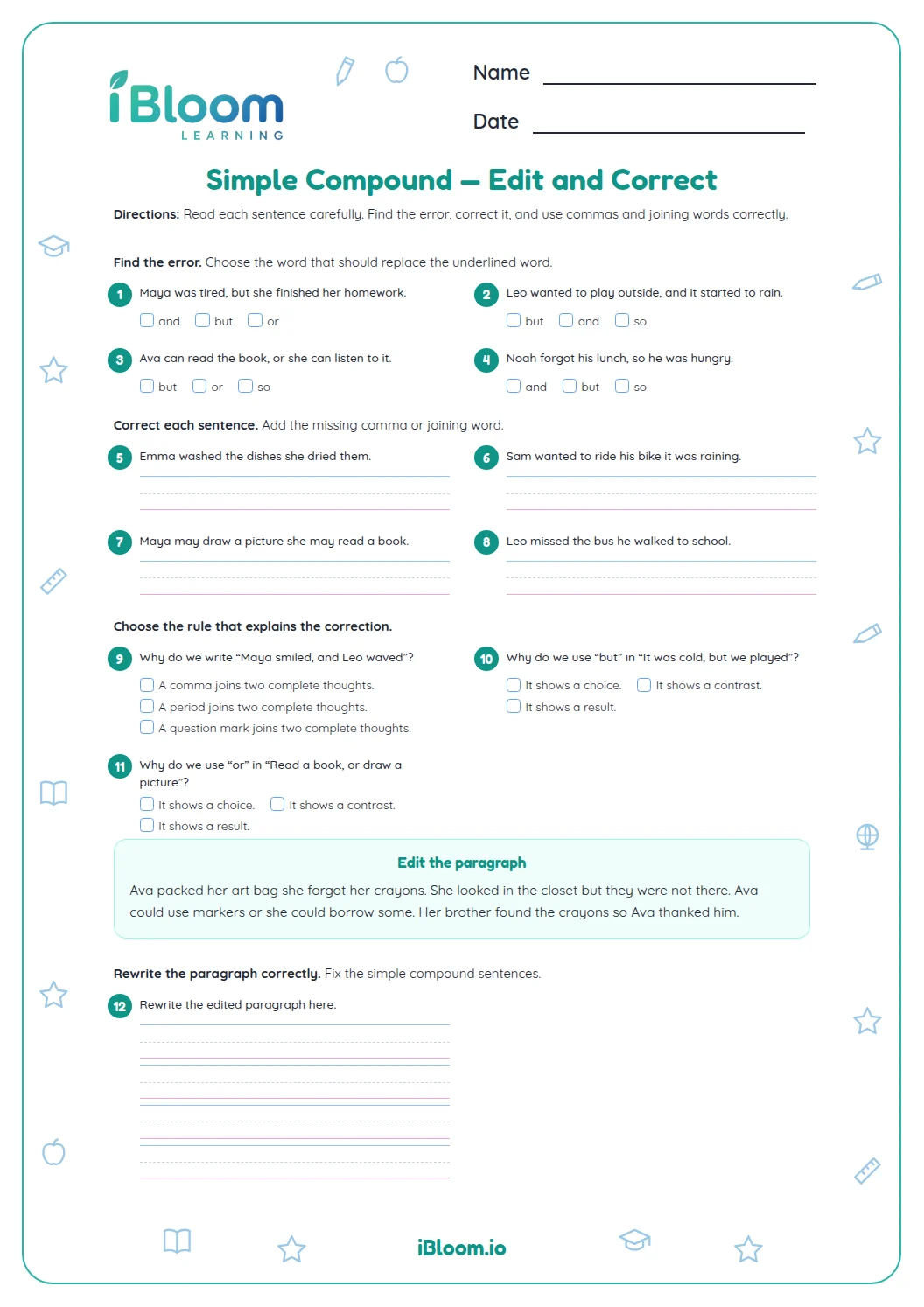
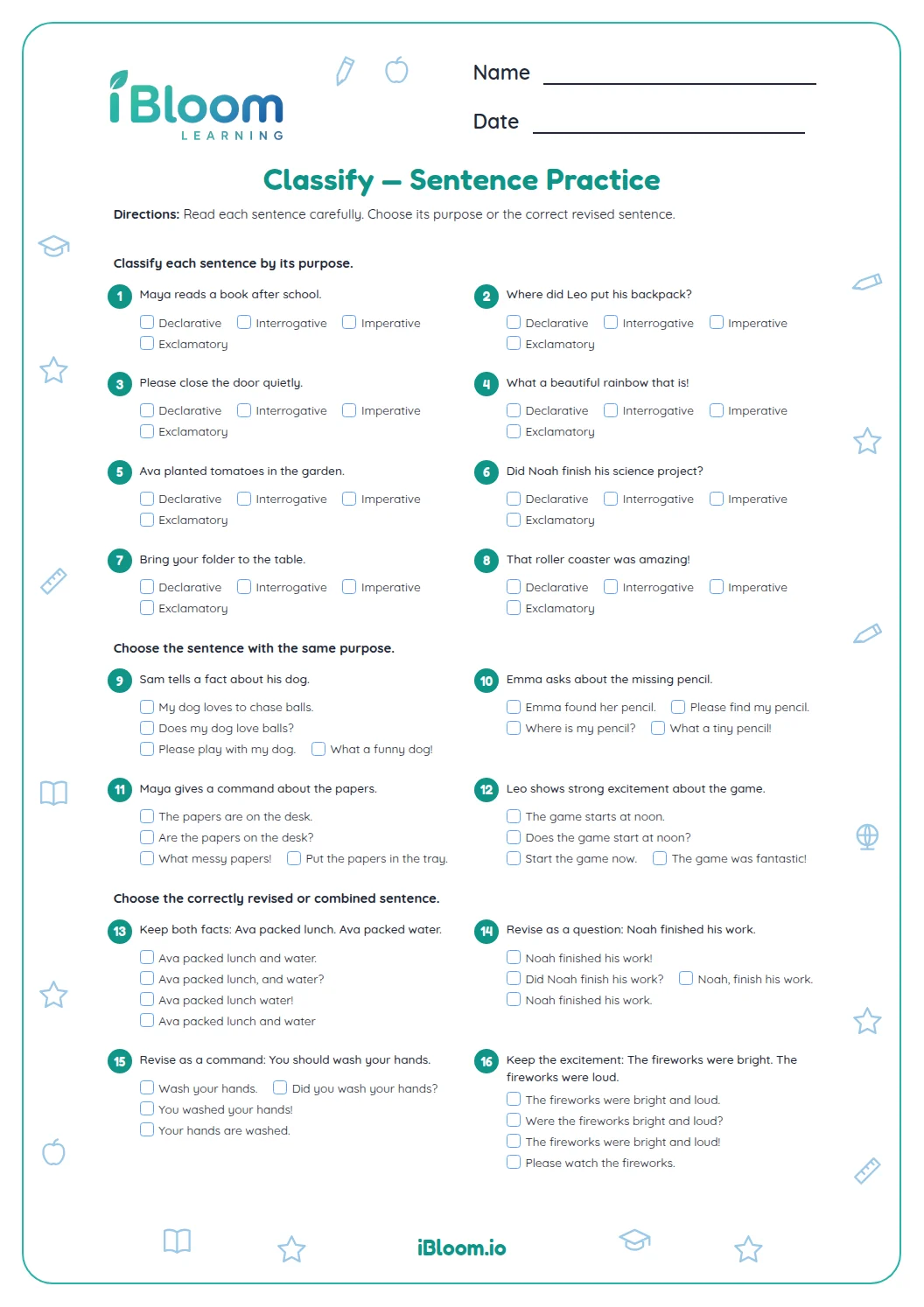
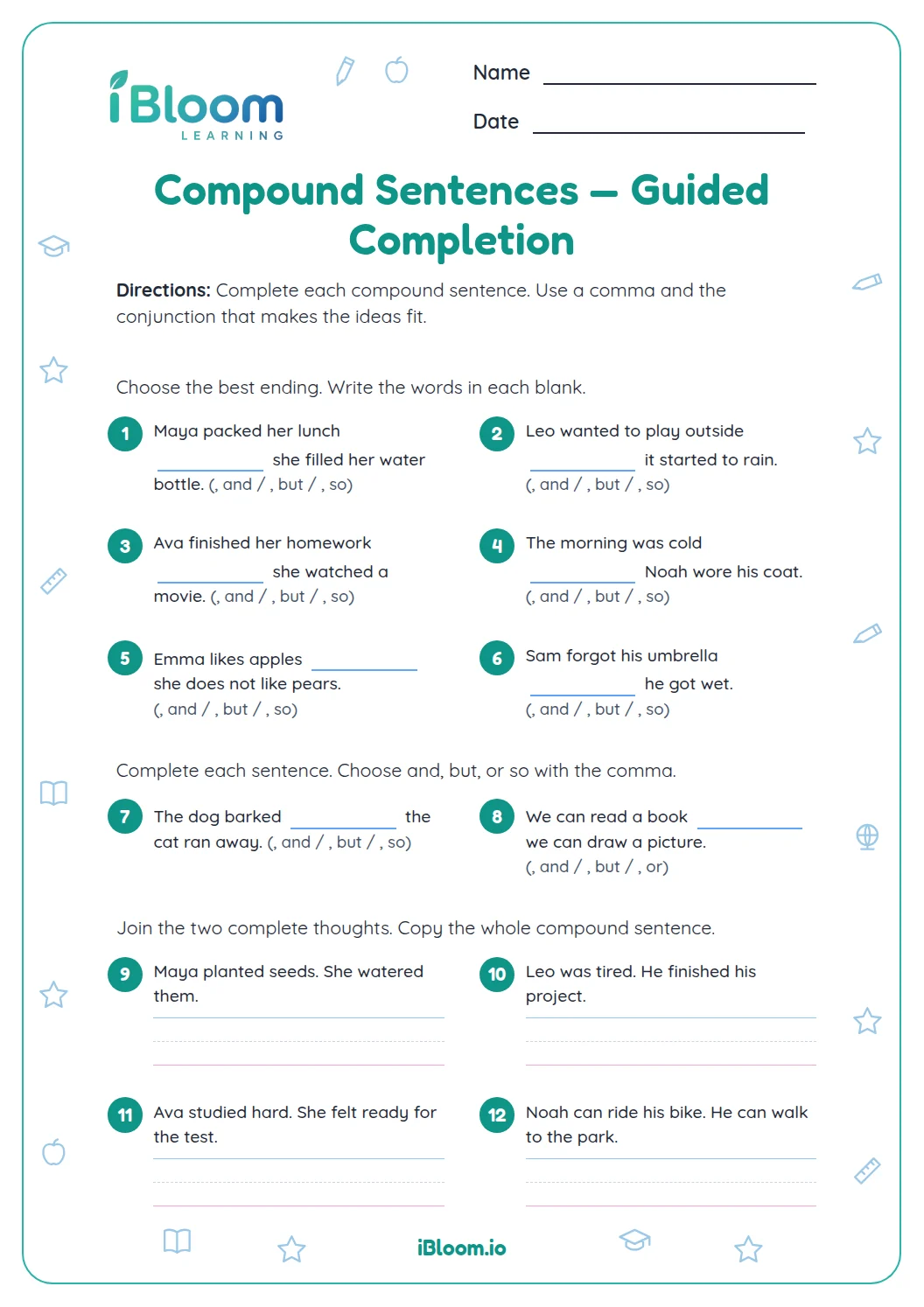
This Grade 3 printable reviews how simple and compound sentences are built. Students identify sentence types, complete compound sentences, and check how conjunctions and punctuation connect ideas. The answer key lists each response. It practices CCSS.ELA-LITERACY.L.3.1.i.
Aligned to CCSS.ELA-LITERACY.L.3.1.i
How can you tell a simple sentence from a compound one?
A simple sentence gives one complete thought. A compound sentence joins two complete thoughts, often with a comma and a coordinating conjunction such as and, but, or so. Read each side aloud and check that it could stand as a sentence.
- 1The rain stopped, so we went outside.
- 2Two complete thoughts joined with a comma and so.
How do you join two complete thoughts?
Place a comma before the conjunction that connects the thoughts. Choose a word that shows how the ideas relate: and can add, but can contrast, and so can show a result.
What does a compound sentence join?
A compound sentence joins two complete thoughts. A comma and a conjunction such as and, but, or so connect the ideas. Students finish the page by identifying sentence types and naming what a compound sentence contains.
How to use this worksheet
- 1Read each choice and check whether it expresses a complete thought.
- 2For a compound sentence, check that both sides can stand alone.
- 3Choose a conjunction that fits the relationship between the ideas.
- 4Use a comma before the conjunction joining two complete thoughts.
- 5Check each response with the answer key and reread the sentence aloud.
Common sentence slips
The mistake
Joining two complete thoughts with only a comma.
The fix
Add a conjunction after the comma or separate the thoughts with a period.
The mistake
Calling “After the bus arrived” a complete sentence.
The fix
Ask who or what did something and whether the thought is complete.
The mistake
Leaving out the comma before a conjunction joining complete thoughts.
The fix
Find the two complete thoughts and put the comma before and, but, or so.
Common Core alignment
This Grade 3 worksheet practices sentence construction and conventions.
Produce simple, compound, and complex sentences.
On this sheet: Learners identify, combine, and compose simple and compound sentences.
Show the official wordingHide the official wording
Produce simple, compound, and complex sentences.
What to practice next
Further reading
Questions parents and teachers ask
What is a simple sentence?
A simple sentence expresses one complete thought. For example, “The puppy naps.” has a subject and a verb and can stand on its own. Children can use this check when they decide whether a choice is a complete sentence or only a phrase. That check also helps distinguish a complete thought from an unfinished phrase.
How do you punctuate a compound sentence?
When two complete thoughts are joined by a coordinating word such as and, but, or so, place a comma before the joining word. Read both sides aloud to check that each side can stand alone as a sentence. A comma alone does not join two complete sentences correctly in this pattern.
How can a student check a compound sentence?
Check that the sentence joins two complete thoughts. In this pattern, place a comma before a conjunction such as and, but, or so. Then read each side by itself: each side should still express a full thought. The answer key gives sample joining words for the completion items.
What does this worksheet practice?
The activities move from recognizing simple and compound sentences to completing compound sentences and identifying how conjunctions connect ideas. This gives children practice with sentence structure and punctuation. Read each completed sentence aloud and check that both sides express complete thoughts.
How many questions are on the worksheet?
There are 14 questions in three parts. Students choose sentence types, complete compound sentences, answer brief questions about sentence structure, and identify a way to repair a comma splice. The answer key lists the expected responses for each item, including the conjunction that can fix the comma splice.
What should a correct compound sentence include?
It should join two complete thoughts with a comma and a conjunction that fits their relationship. For example, “The path was muddy, so we wore boots” has a complete thought on each side and uses so to show a result. The key accepts other clear conjunctions when they fit.