




About this worksheet
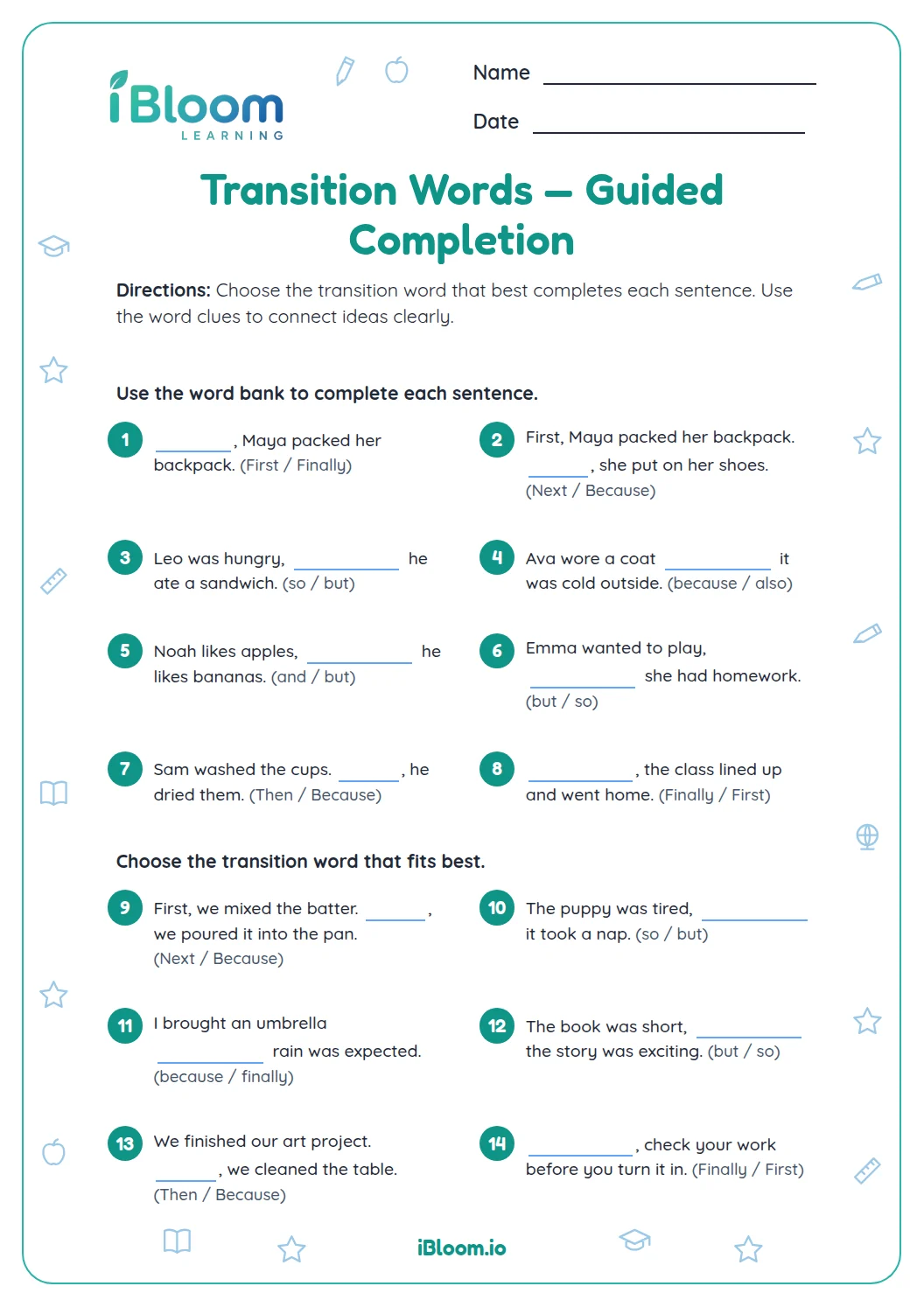
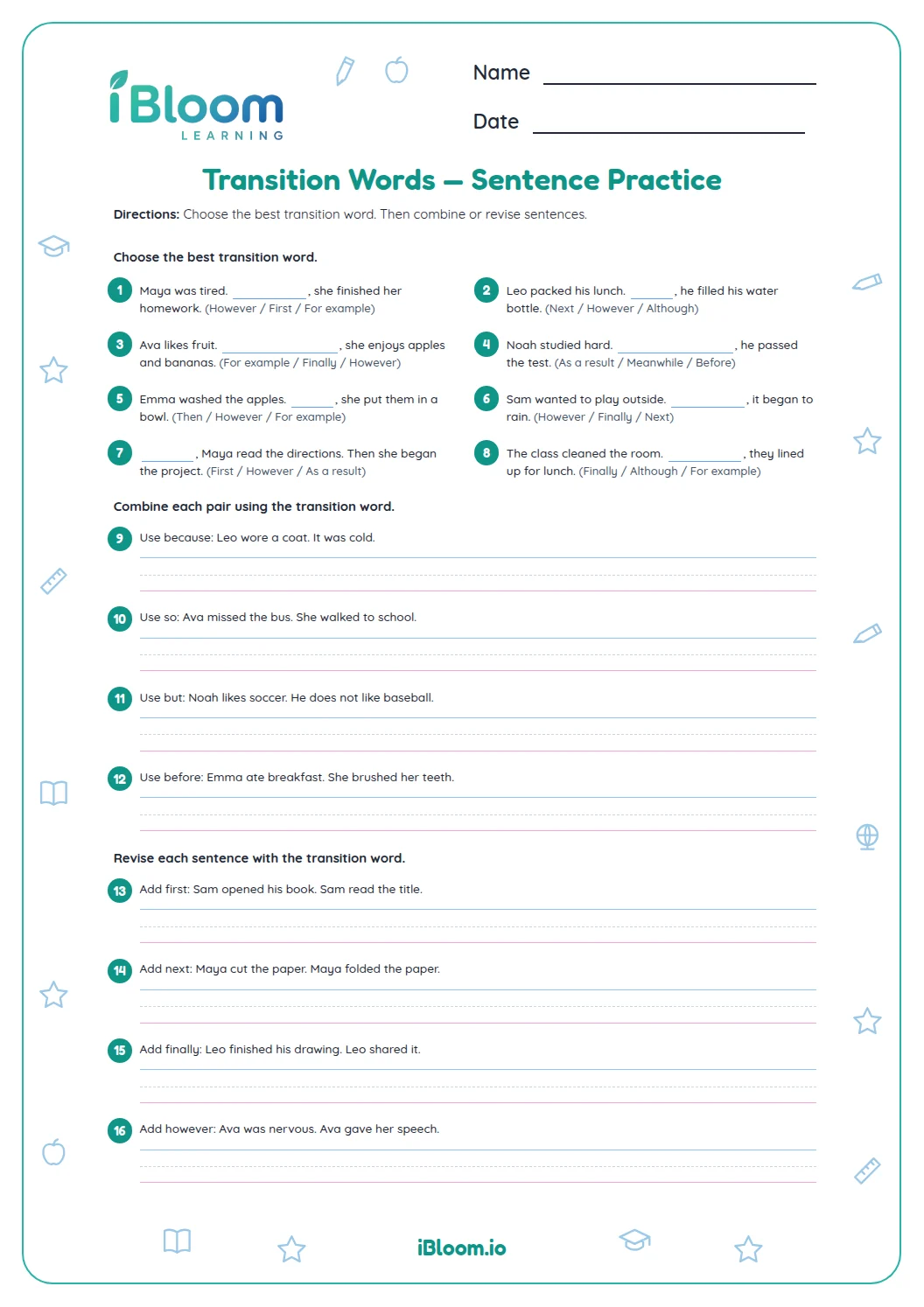
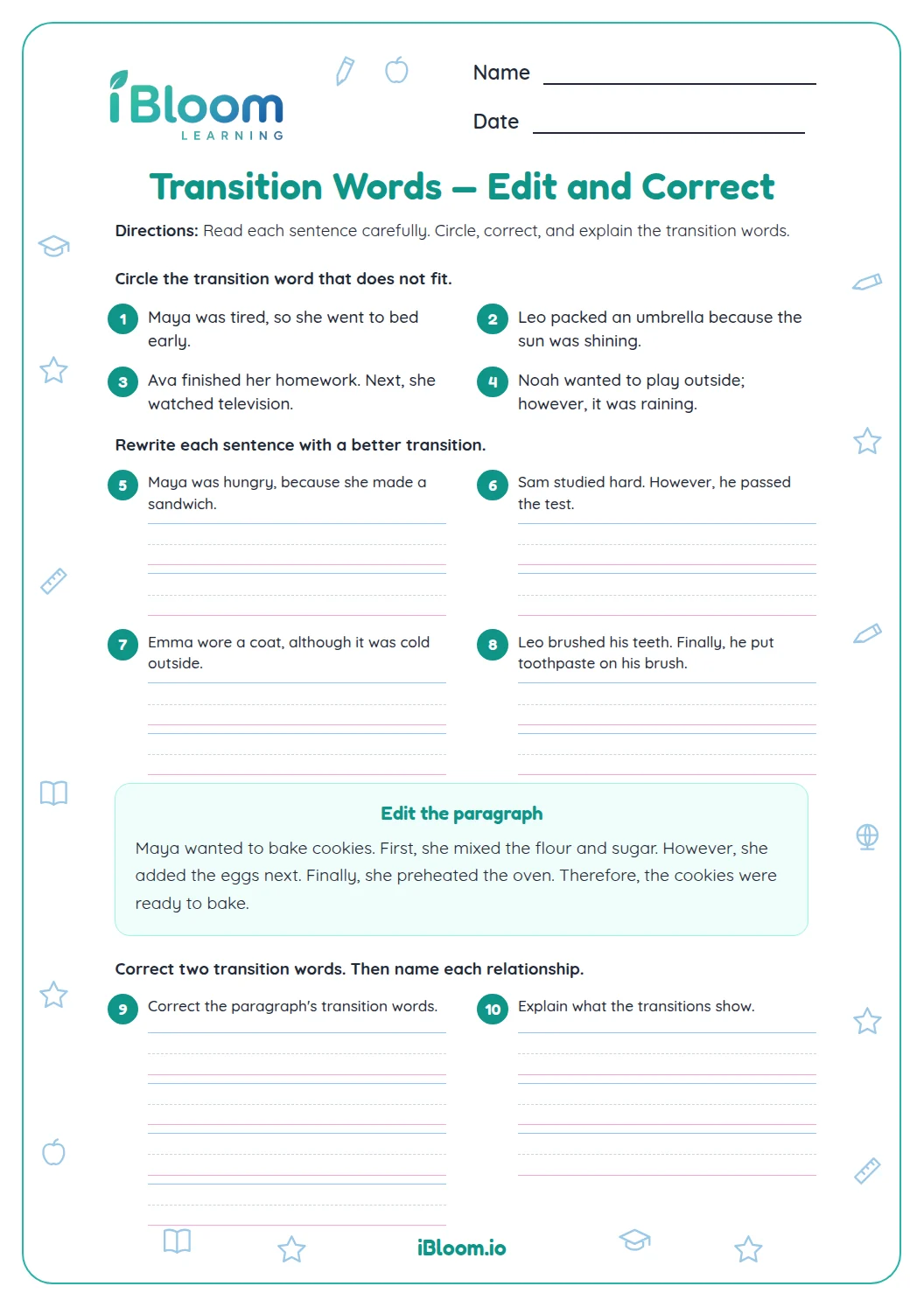
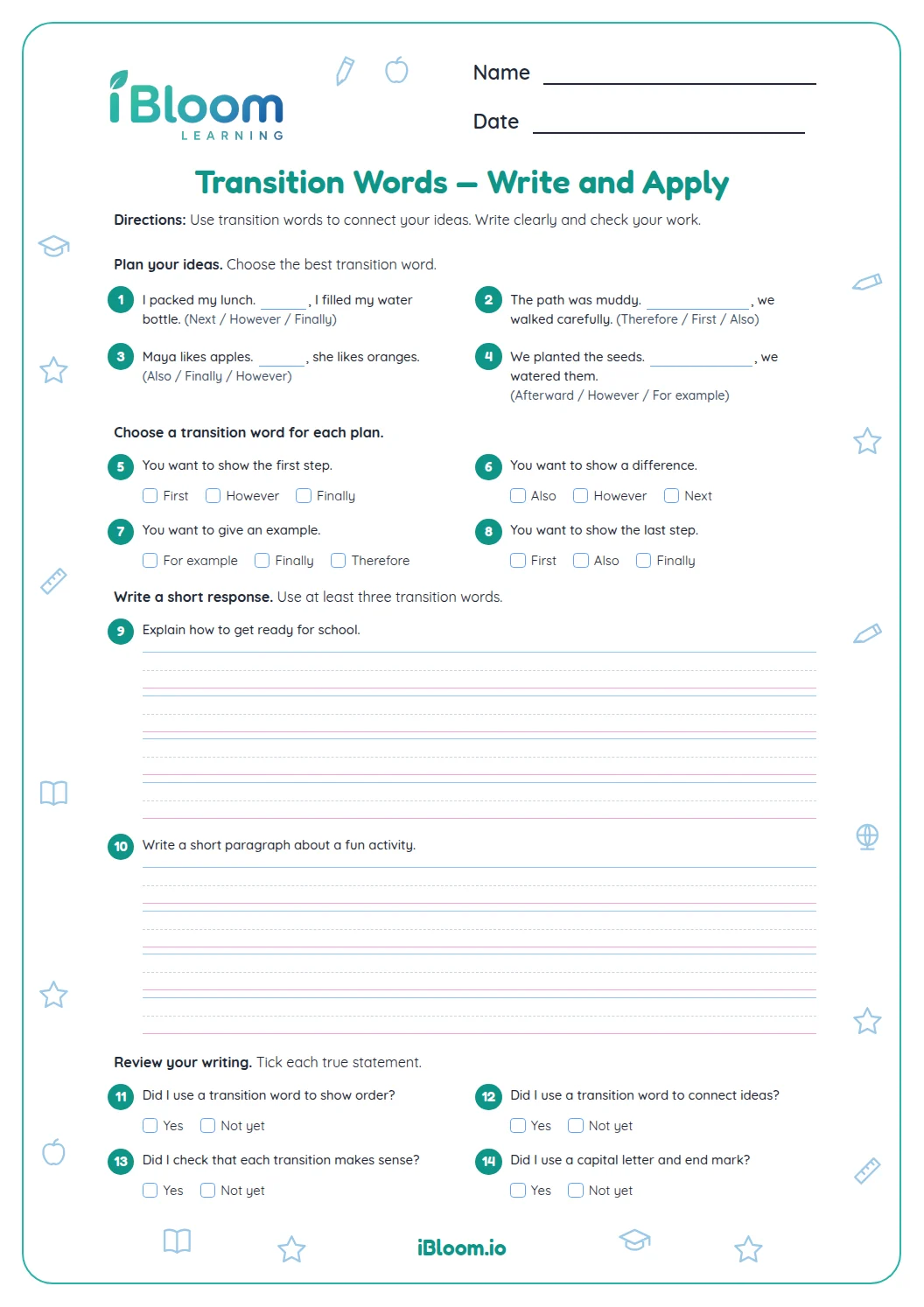
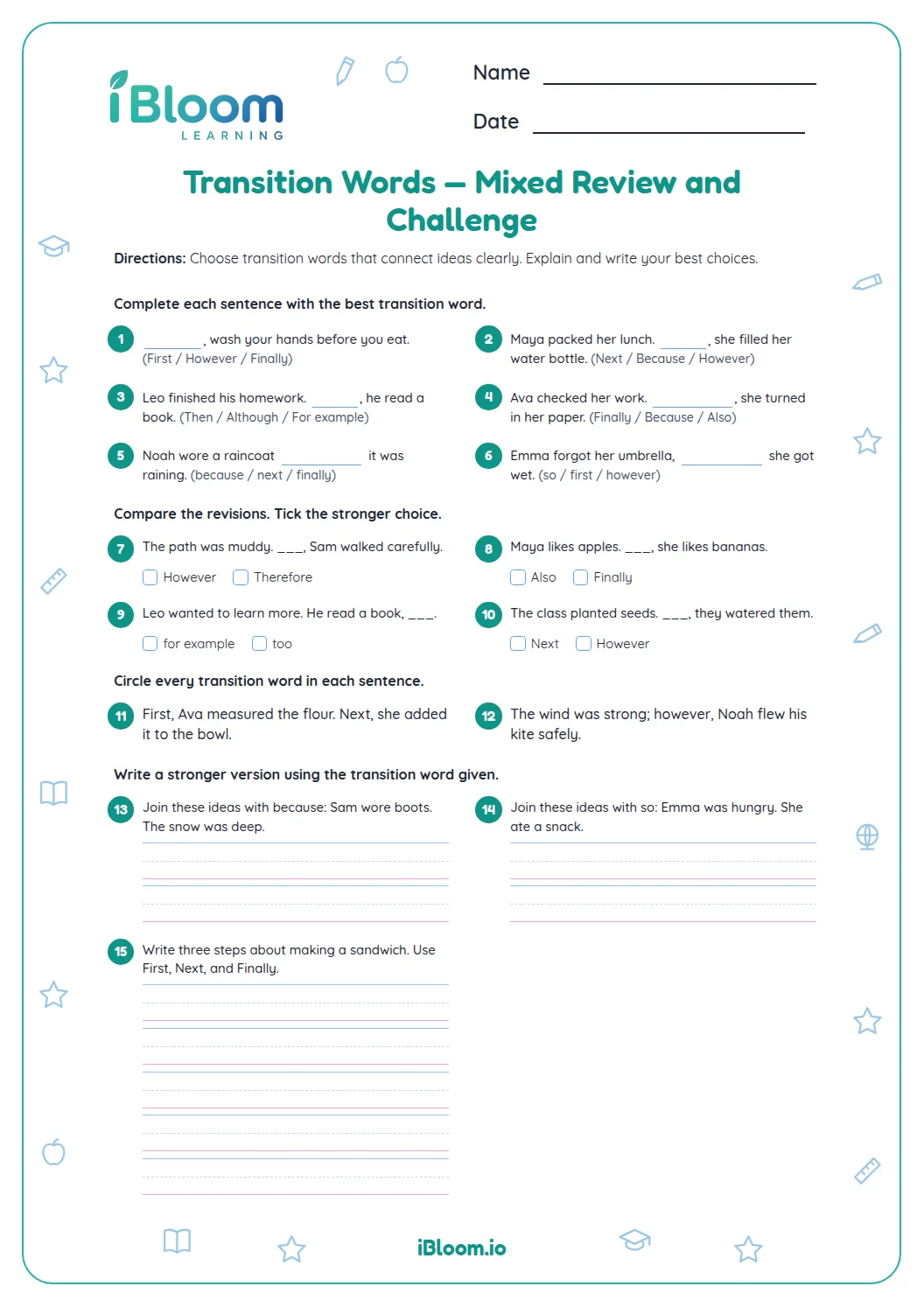
This Grade 3 worksheet helps students recognize transition words that signal when story events happen. Fourteen short sentence questions ask students to choose words for sequence, earlier or later events, and actions happening at the same time. The separate answer key lists each transition. The practice aligns with W.3.3.c.
Aligned to W.3.3.c
What does a transition word tell a reader?
A temporal transition signals order or timing. “First” opens a sequence, “next” or “then” moves it forward, “before” and “after” relate two events, and “meanwhile” shows overlap.
How can you choose a word that fits?
Read both events and decide whether they happen in sequence, at the same time, or in a before-and-after relationship. Then choose the word that says that relationship.
- 1Milo planted the seeds. Next, he watered the soil.
- 2“Next” signals the following action.
What changes in Part B?
Part A completes sentences directly. Part B names two events and asks which transition makes their timing clear. In both parts, use the relationship between events rather than choosing a familiar word at random.
How to use this worksheet
- 1Read the entire sentence or event pair.
- 2Decide which event happens first or whether they overlap.
- 3Check what the transition means.
- 4Read the sentence again with the chosen word.
- 5Make sure the order still makes sense.
Common mistakes and quick fixes
The mistake
Using “meanwhile” for events that happen one after another.
The fix
Use “meanwhile” when the actions overlap in time.
The mistake
Choosing “finally” for an event in the middle.
The fix
Save “finally” for the last event in a sequence.
The mistake
Ignoring a clue such as “already” or “at the same time.”
The fix
Use timing clues in the sentence to narrow the choices.
Common Core alignment
This worksheet practices W.3.3.c through its questions and examples.
Choose transitions that show when story events happen.
On this sheet: Choose transitions that show when story events happen.
Show the official wordingHide the official wording
Use temporal words and phrases to signal event order.
What to practice next
Make more practice
Further reading
Questions parents and teachers ask
What is a transition word?
A transition word or phrase connects ideas and can show how events relate in time. This worksheet focuses on time words such as first, next, before, after, later, meanwhile, and finally. Students use sentence clues to recognize which relationship a transition expresses.
How many questions are on the page?
There are 14 sentence questions. Students choose transitions that show sequence, earlier or later events, endings, or actions happening at the same time. The answer key lists the best fit for each sentence, with context clues helping readers tell the choices apart.
What does “meanwhile” mean?
“Meanwhile” signals that another action is happening at the same time. In “The soup simmered. Meanwhile, Dad set the table,” the two actions overlap. A clue in the sentence helps students choose it over a word that signals a later step.
How are “before” and “after” different?
“Before” points to an earlier event, while “after” points to a later one. In “Before the class left, they put away their books,” putting away the books happens first. Check which event each transition places earlier in time in the sentence.
Can more than one transition ever work?
Some transitions can work in more than one sentence, depending on context. On this worksheet, the surrounding events and the choices point to the clearest answer. Students should check whether the word signals sequence, an ending, or actions happening at once.
What can students practice next?
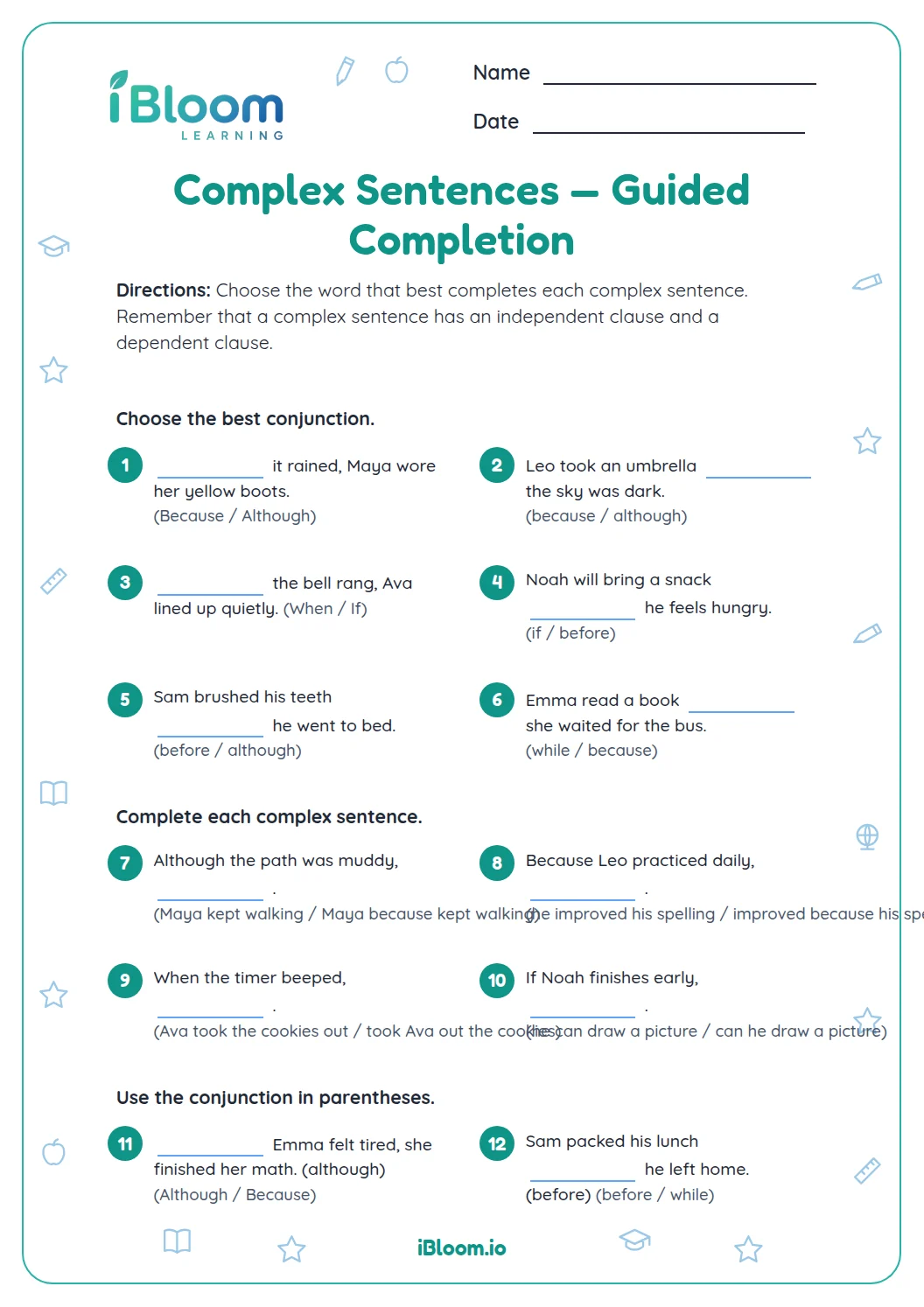
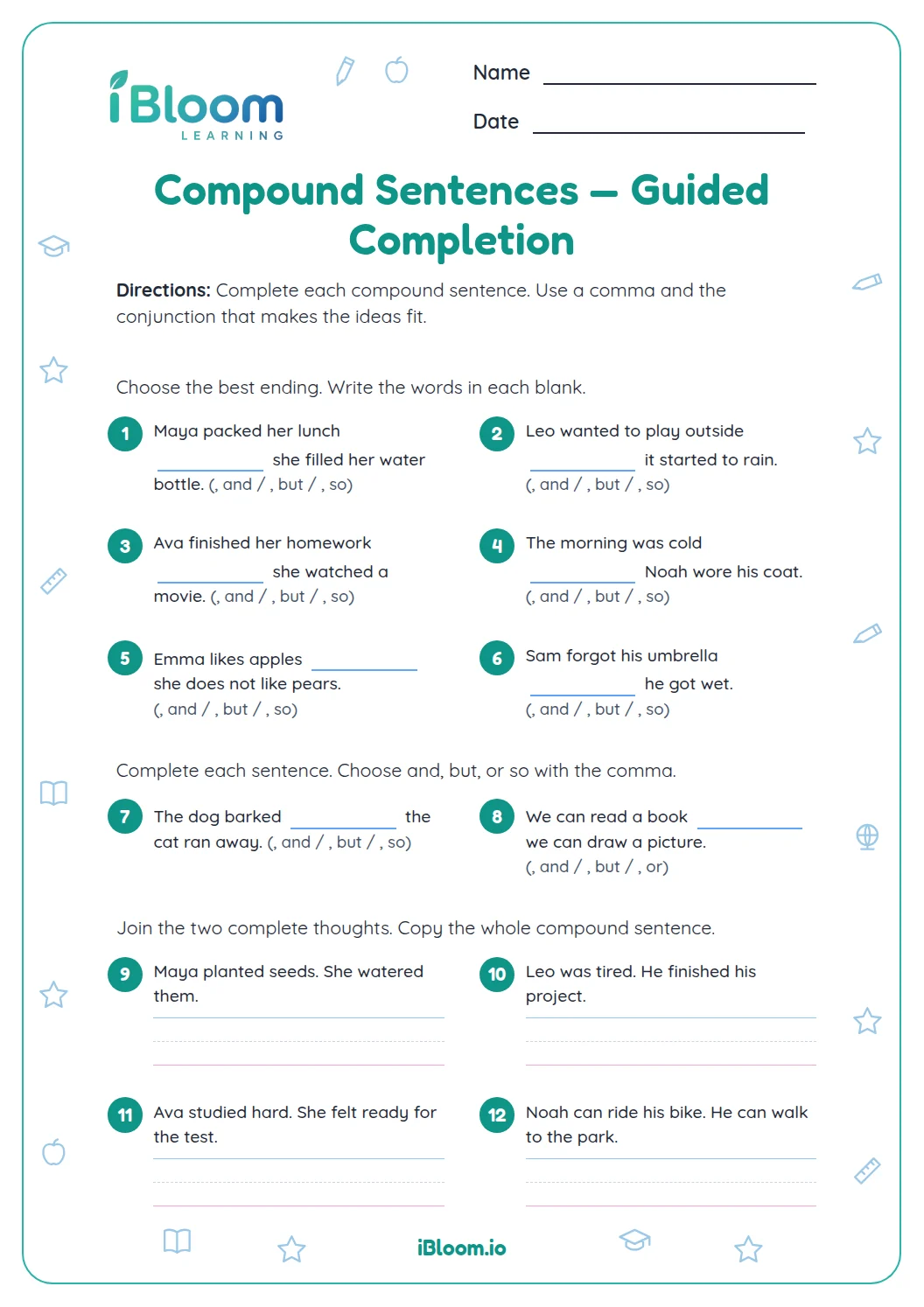
The sibling pages on complex and compound sentences offer practice connecting ideas in longer sentence structures. They build on the transition work by asking students to notice how words and clauses relate. Those pages are a useful next step after identifying time-order words.