





About this worksheet
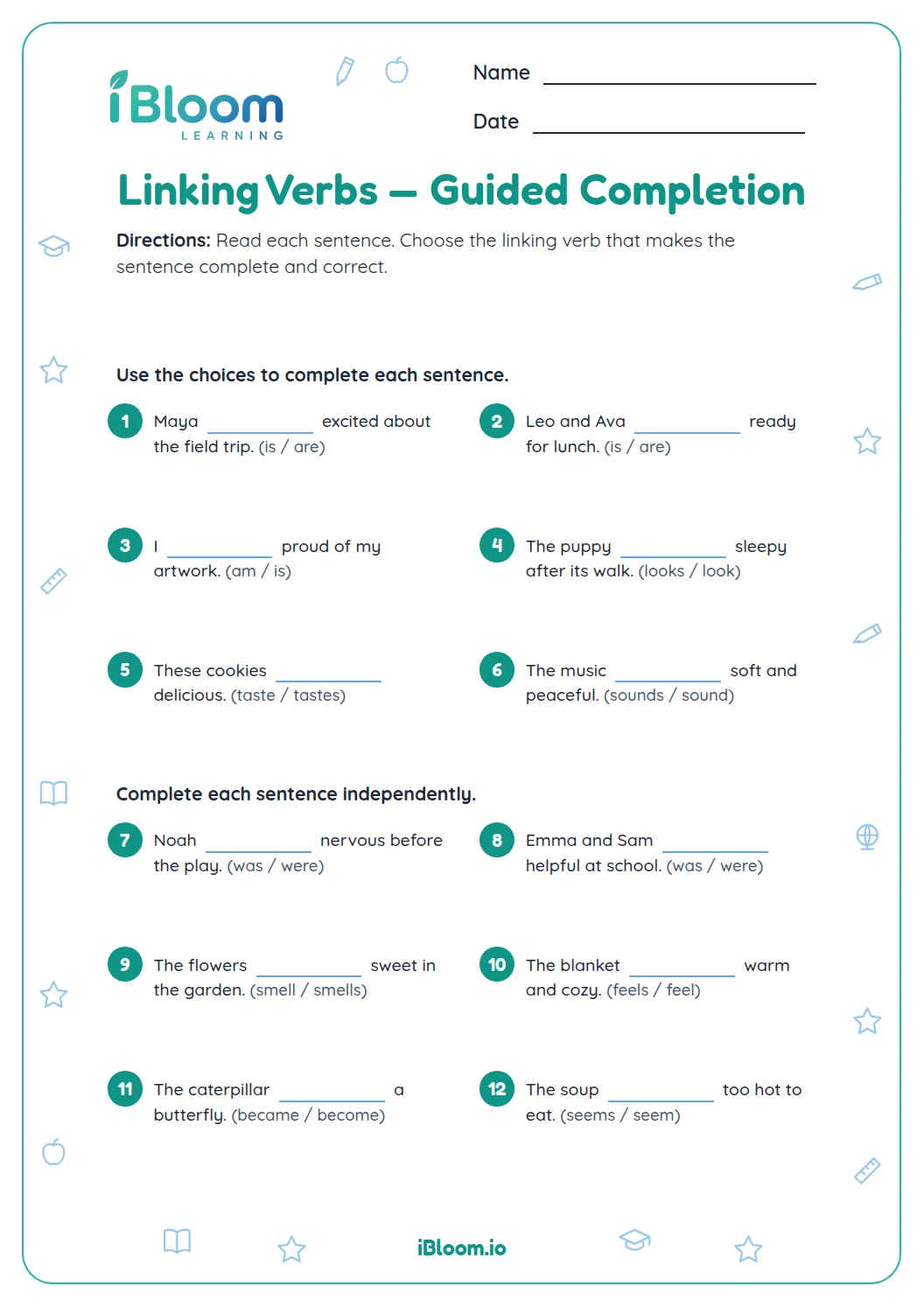
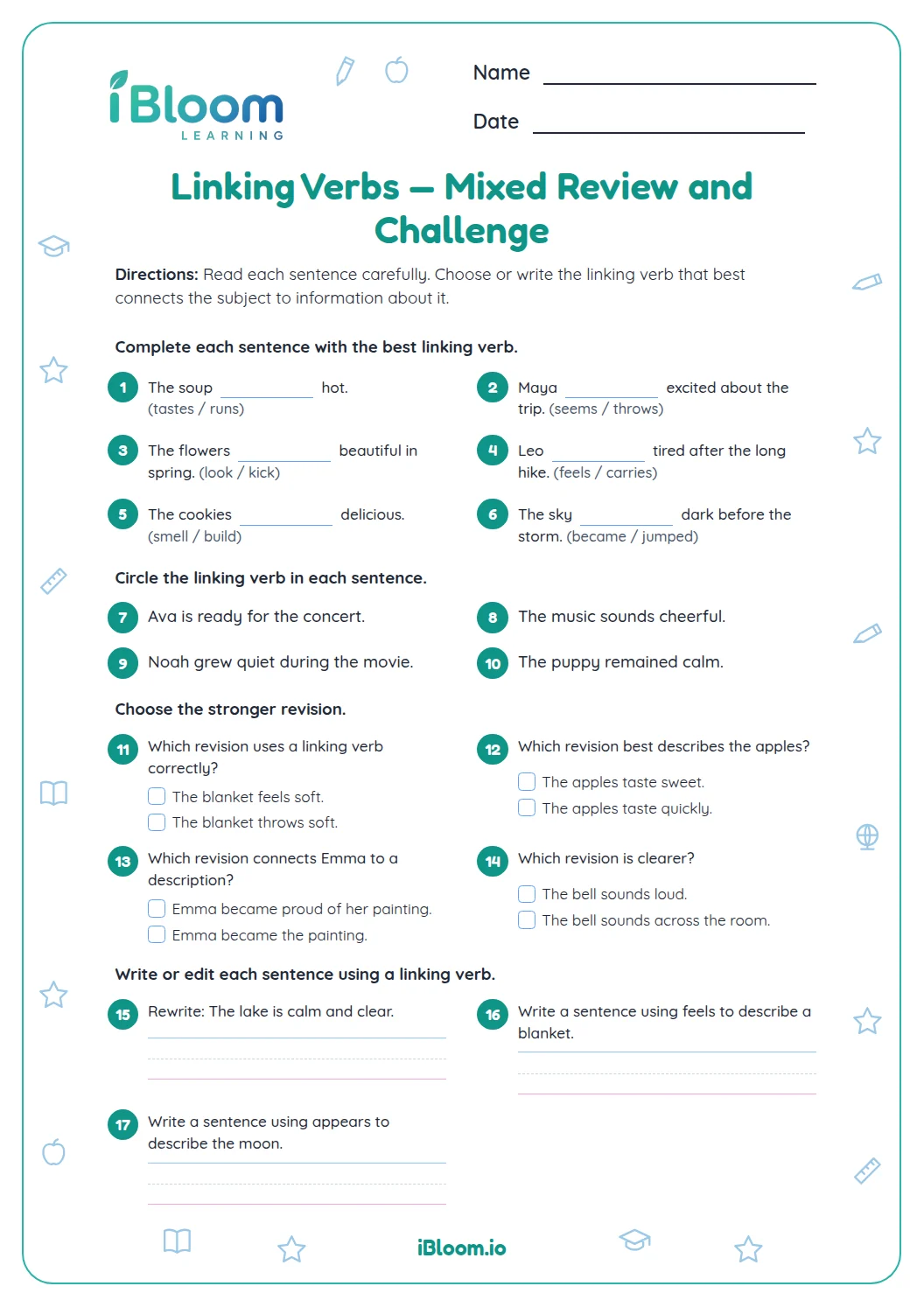
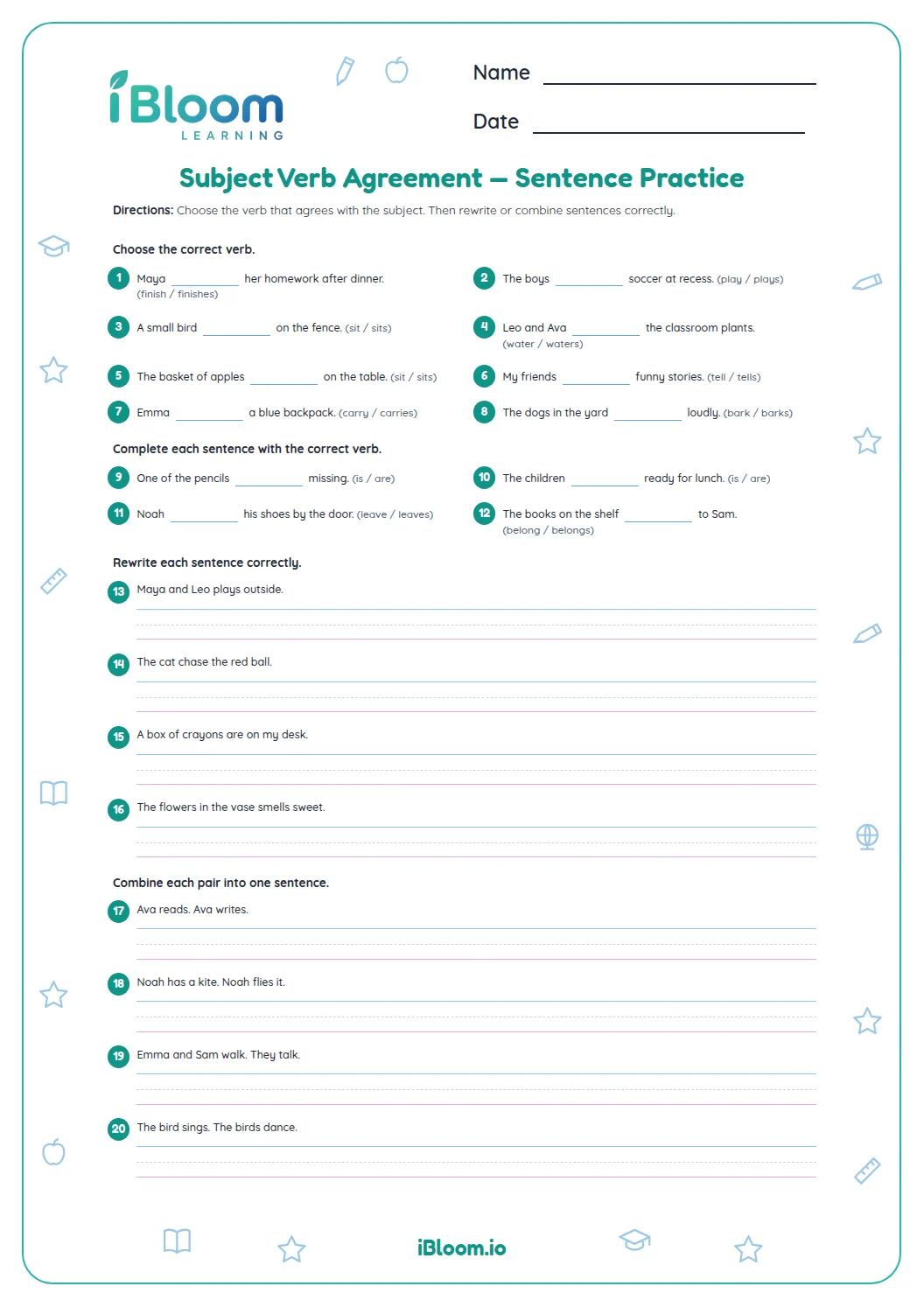
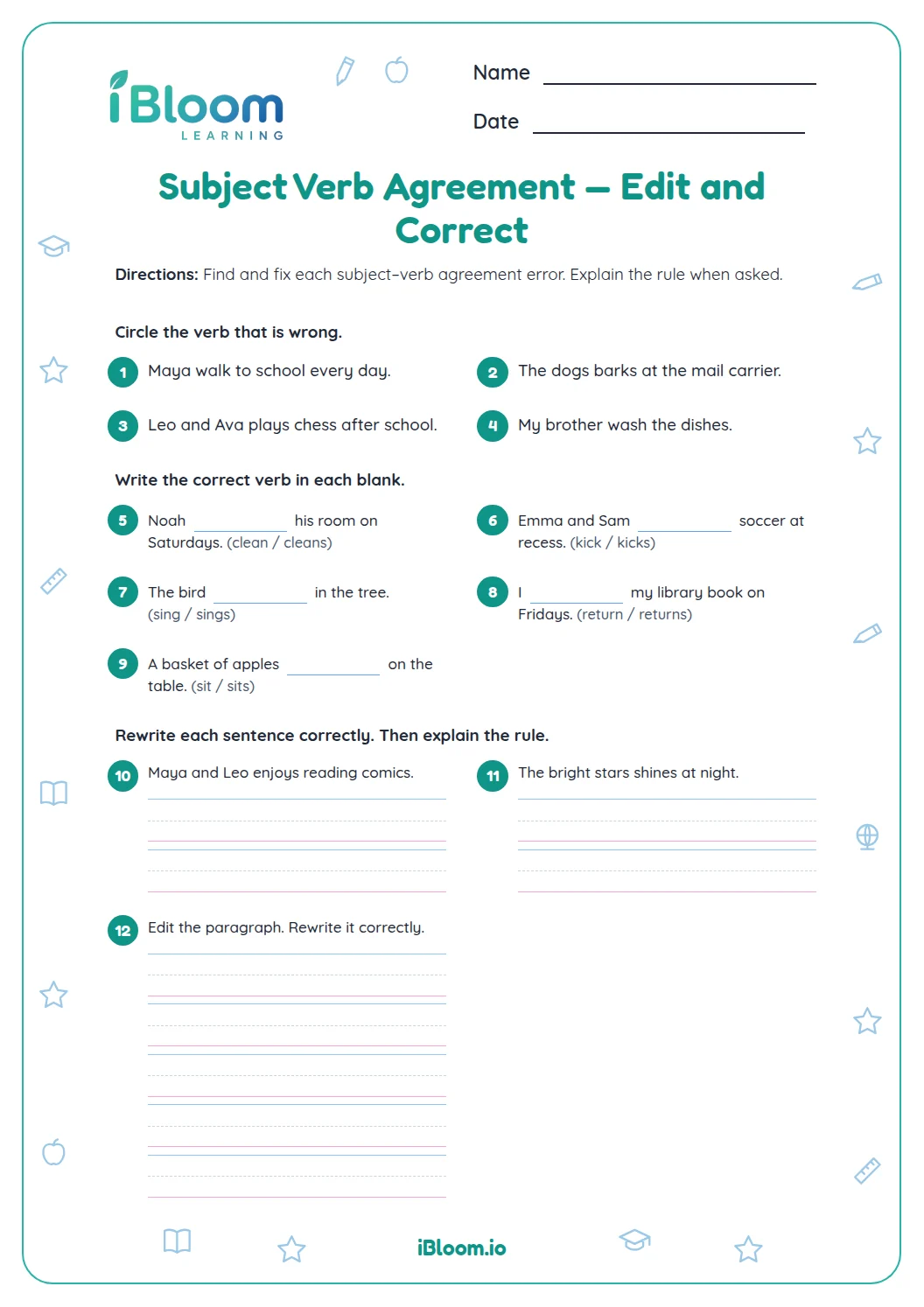
This Grade 3 printable gives students focused practice with linking verbs such as is, seem, smell, grow, and become. Part A asks them to spot a verb that connects a subject with a description. Part B asks them to distinguish linking uses in sentences. Part C shifts to editing: students fix verb forms and Part D asks them to write sentences with linking verbs of their own. The 16 questions practice grammar choices in context and clear sentence revision, with a separate answer key and alignment to CCSS L.3.1.
Aligned to L.3.1
How can you spot a linking verb?
A linking verb connects the subject to a name or description. In “The soup smells spicy,” smells links soup to spicy. It does not show an action the soup performs.
- 11) The soup smells spicy. → smells links soup to spicy.
- 22) The puppies seem sleepy. → seem links puppies to sleepy.
Can one verb act differently in another sentence?
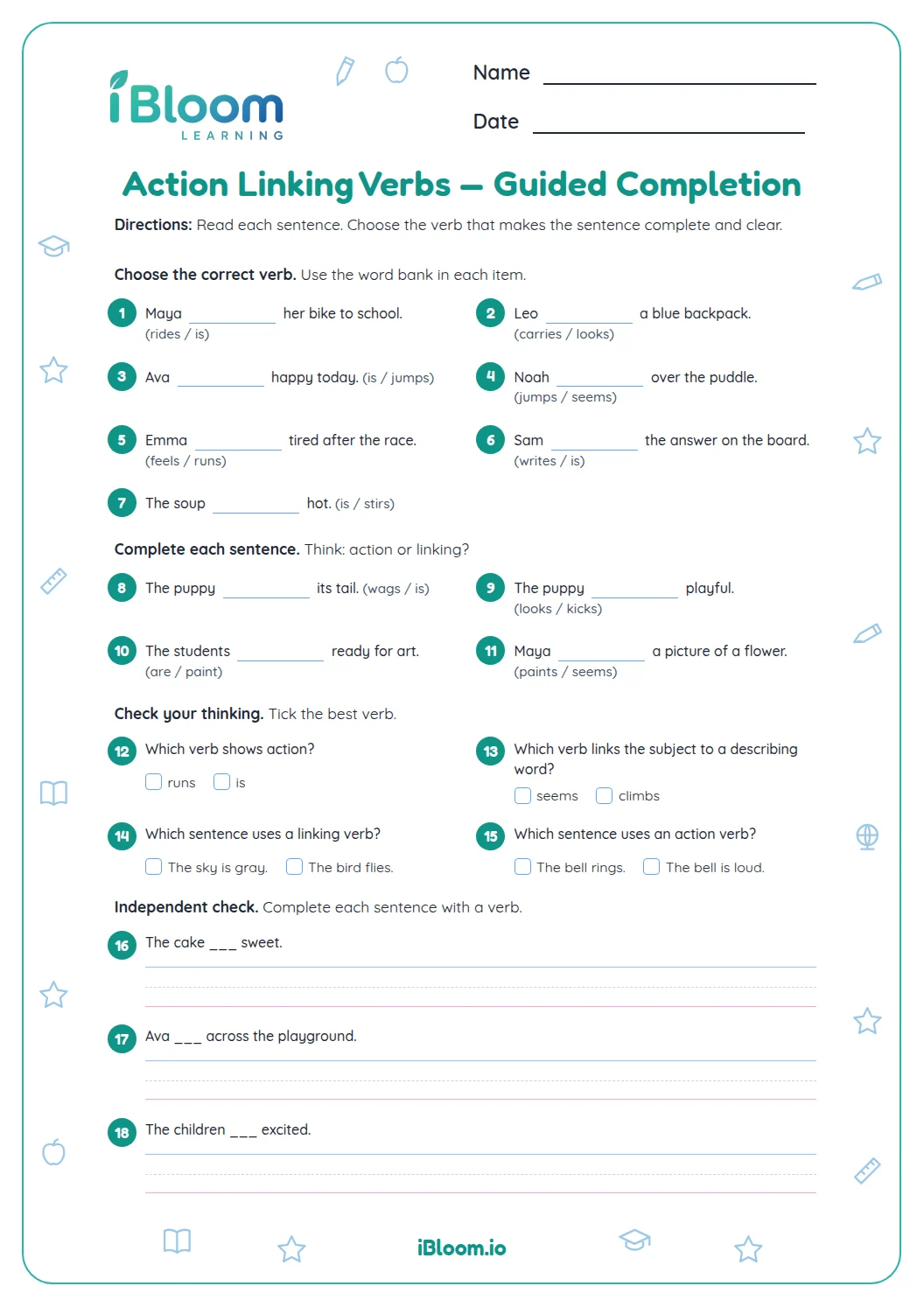
Yes. A verb’s job depends on the sentence. In “The berries taste sweet,” taste links berries to sweet. In “We taste the berries,” taste tells what we do. Read for the relationship, not just a familiar verb list.
- 110) The berries taste sweet. → linking use
- 2The child tastes a berry. → action use
How do you correct a sentence with a linking verb?
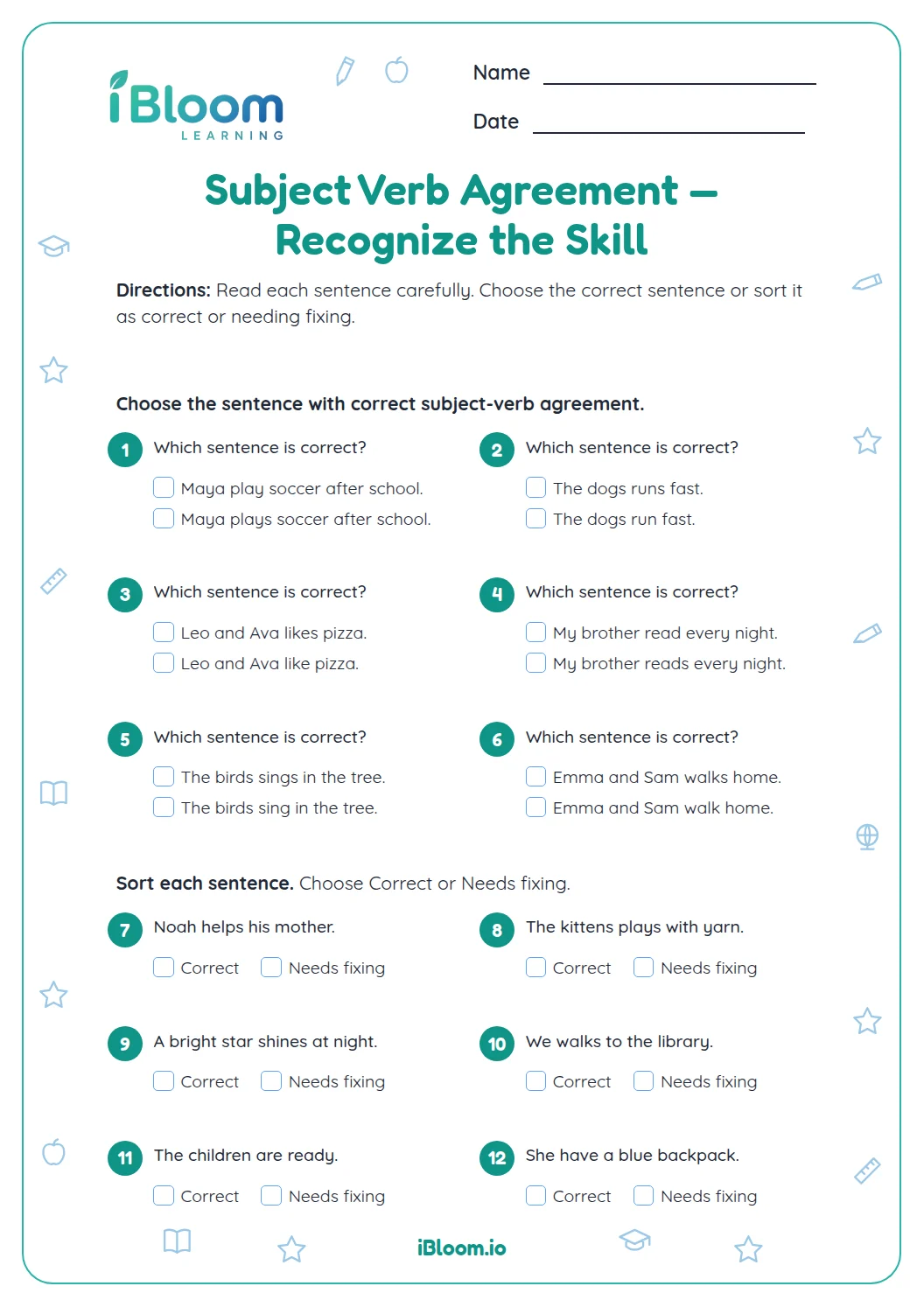
Keep the subject and its description connected, then check that the verb matches the subject. A plural subject such as cookies pairs with smell; one cookie pairs with smells.
- 112) The cookies smells delicious. → The cookies smell delicious.
How to use this worksheet
- 1Read the Part A direction and look for the subject before choosing a verb.
- 2Ask whether the verb connects the subject to a name or description.
- 3In Part C, read the corrected sentence aloud and check subject–verb agreement.
- 4Use the answer key to compare edits; accept equivalent clear sentences for open responses.
Common mistakes and quick fixes
The mistake
Choosing a linking verb by memorizing a list without reading its sentence.
The fix
Name the subject and the description. If the verb connects them, it is linking in that sentence.
The mistake
Writing “The cookies smells” because cookies is far from the verb.
The fix
Find the subject first. Cookies is plural, so use smell.
The mistake
Adding an action after a linking verb when a description is needed.
The fix
Complete “The berries taste ___” with a describing word, such as sweet.
Common Core alignment
These standards describe the grammar, reading, writing, or math skills practiced on this page.
Use standard English grammar when writing and speaking.
On this sheet: Students identify linking verbs and edit sentences so verbs agree and connect subjects to descriptions.
Show the official wordingHide the official wording
Demonstrate command of the conventions of standard English grammar and usage when writing or speaking.
What to practice next
Make more practice
Further reading
Questions parents and teachers ask
What is a linking verb?
A linking verb connects the subject to a word that names or describes it. In question 1, smells links soup with spicy. The soup is not doing the smelling as an action; the verb connects soup to the description spicy. Students can check for that subject-to-description link.
Are “smell” and “taste” always linking verbs?
No. Their job changes with the sentence. In “The berries taste sweet,” taste links berries to sweet. In “We taste the berries,” taste tells what we do. Read the full sentence and ask whether the verb links the subject to a description or names an action.
What should students check when editing?
Find the subject, then check that the linking verb agrees with it and connects it to a clear name or description. In question 12, cookies is plural, so the sentence uses smell: “The cookies smell delicious.” Read the revised sentence once more to check its meaning.
How many questions are on the worksheet?
There are 16 questions in four parts. Students identify linking verbs, choose a linking use in a sentence, edit sentences with agreement errors, and write two original examples. The answer key provides a sample for each open response and accepts another clear sentence that uses the verb as a link.
How can I help if my child calls every verb an action?
Ask whether the subject performs an action or whether the verb connects it to a name or description. “The room became quiet” tells what the room became. Here became links room to quiet, rather than describing an action the room performs.
What can students practice next?
Action Linking Verbs is a useful next step because it compares linking and action uses of familiar verbs. Action Verbs and Subject Verb Agreement add practice with what a subject does and how its verb form matches. Each linked page offers another focused way to work with verbs.