





About this worksheet
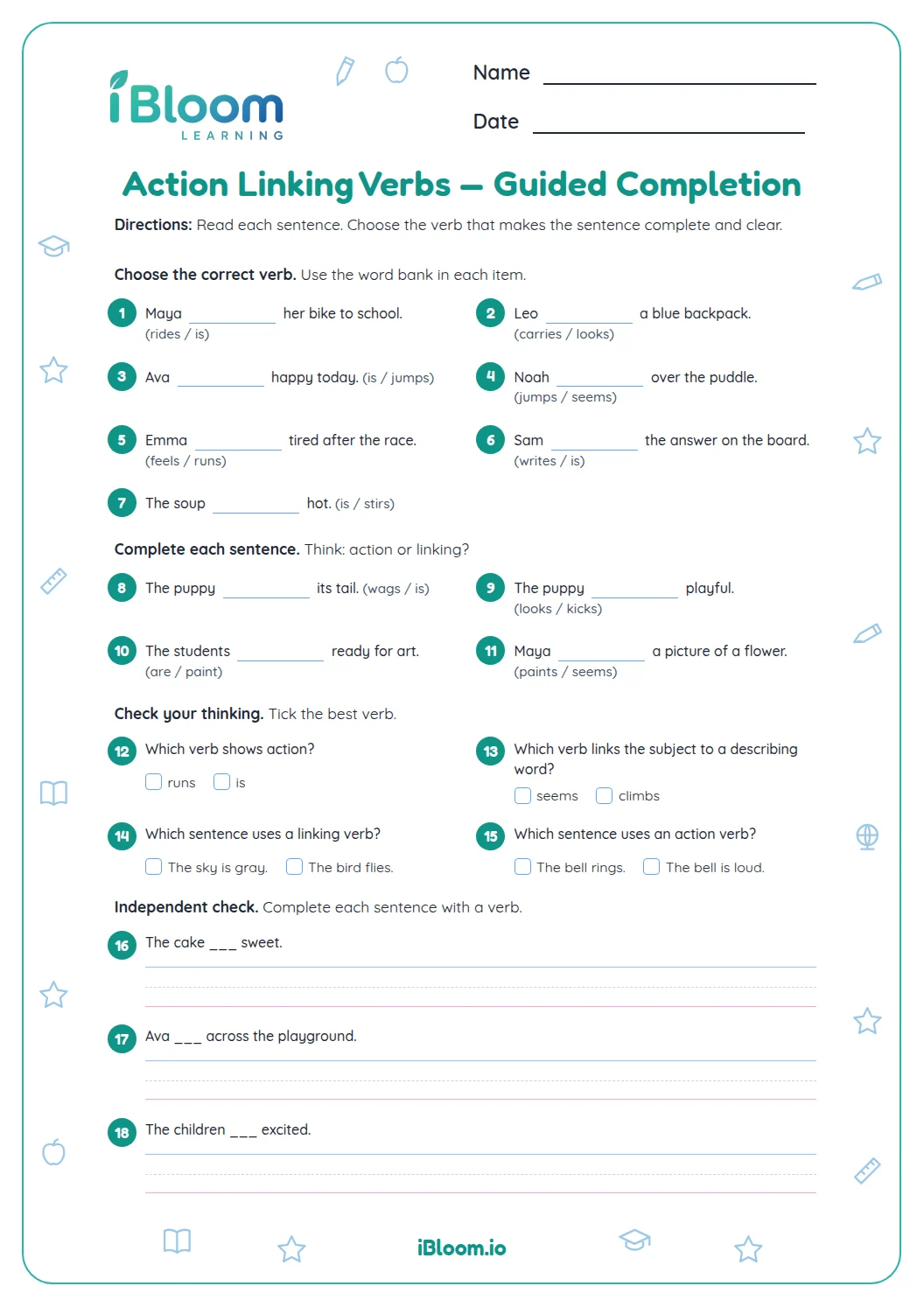
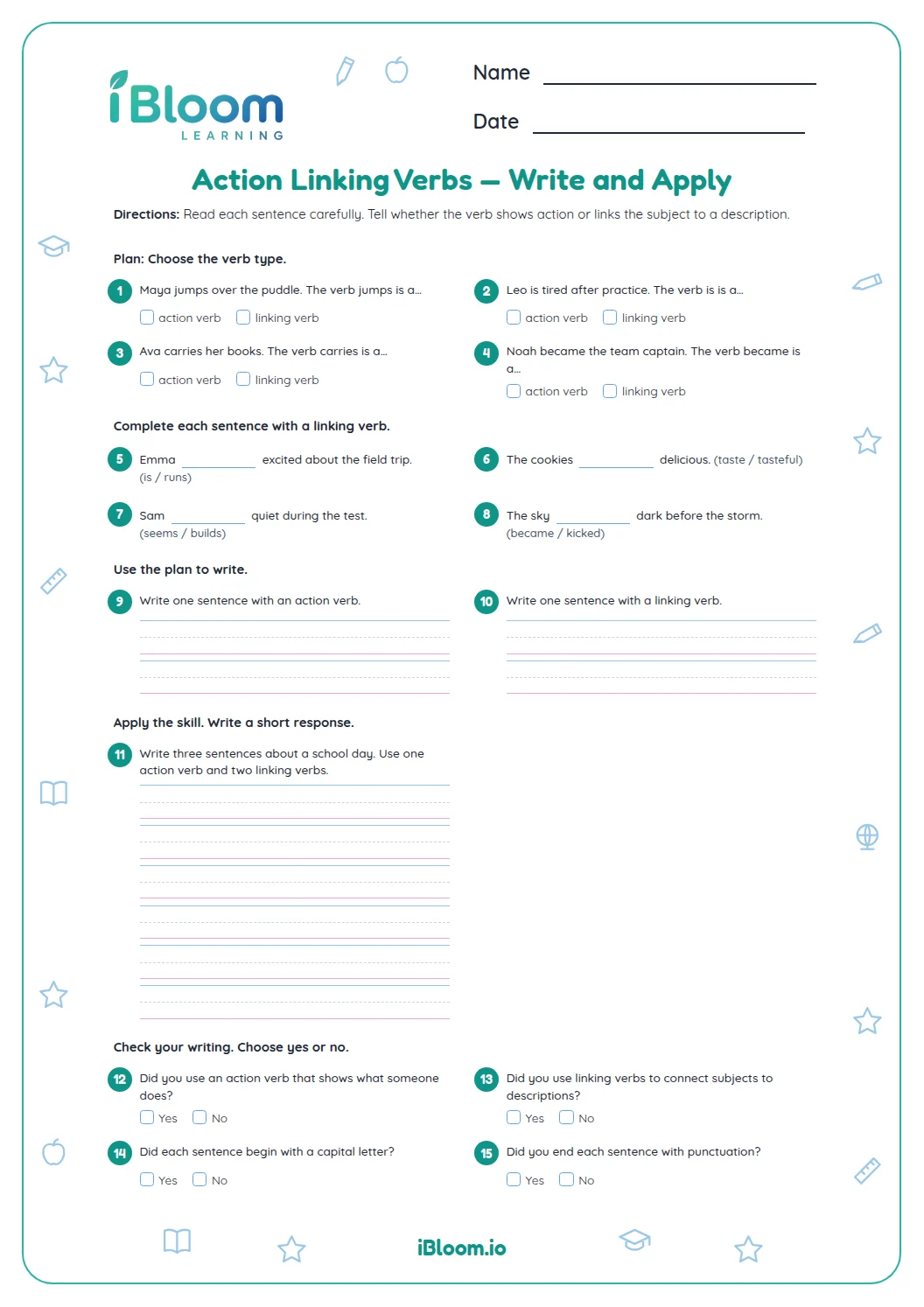
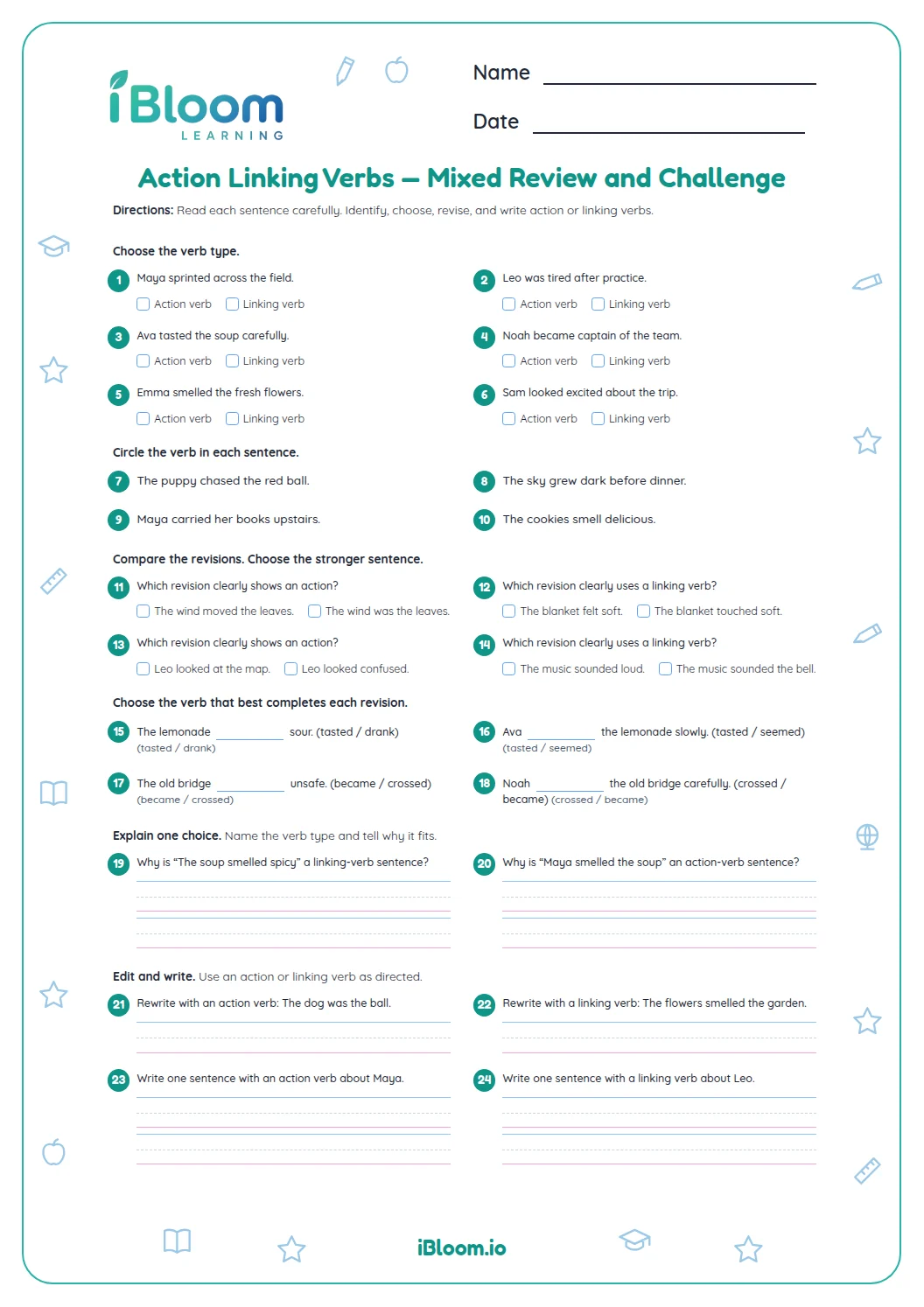
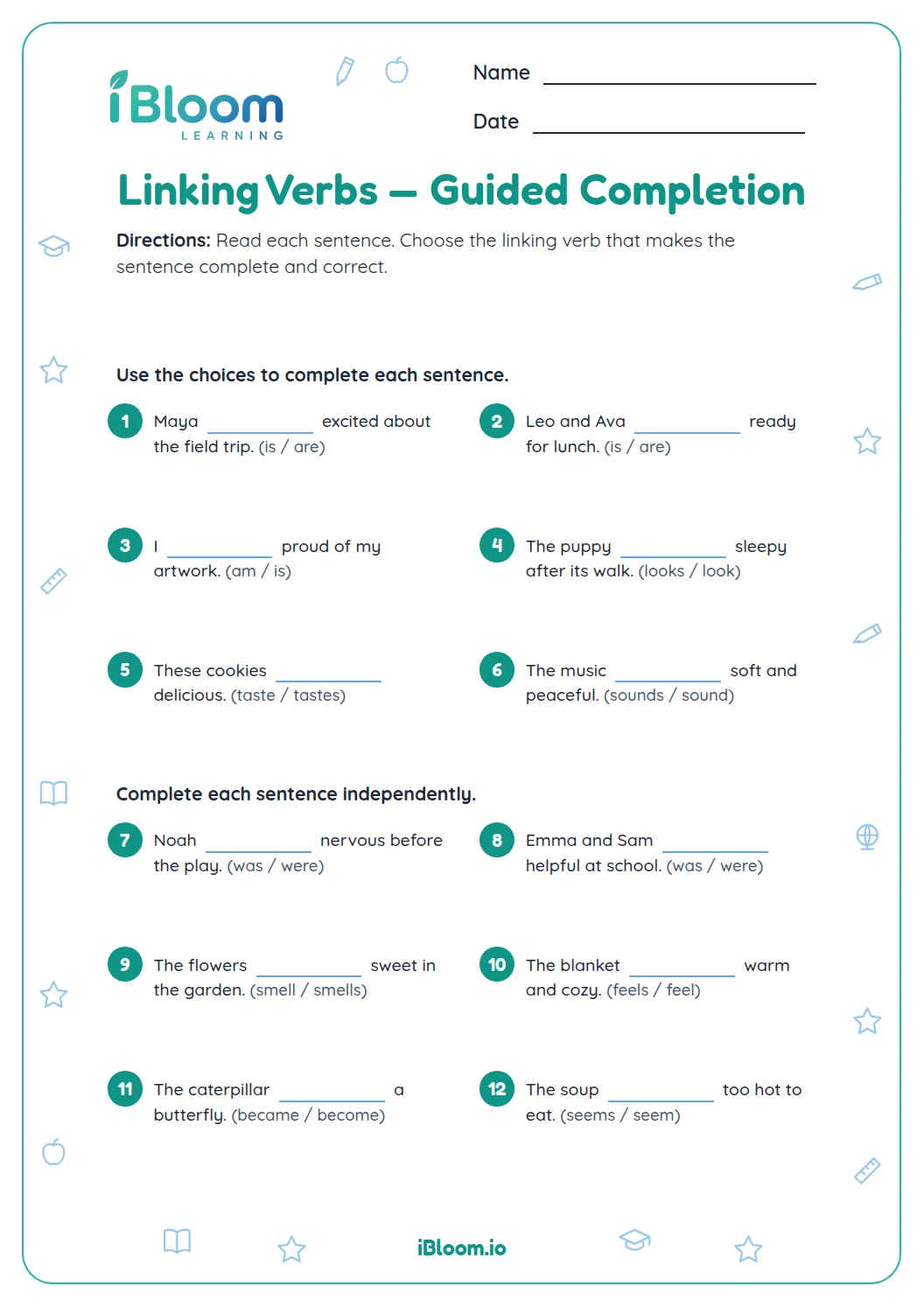
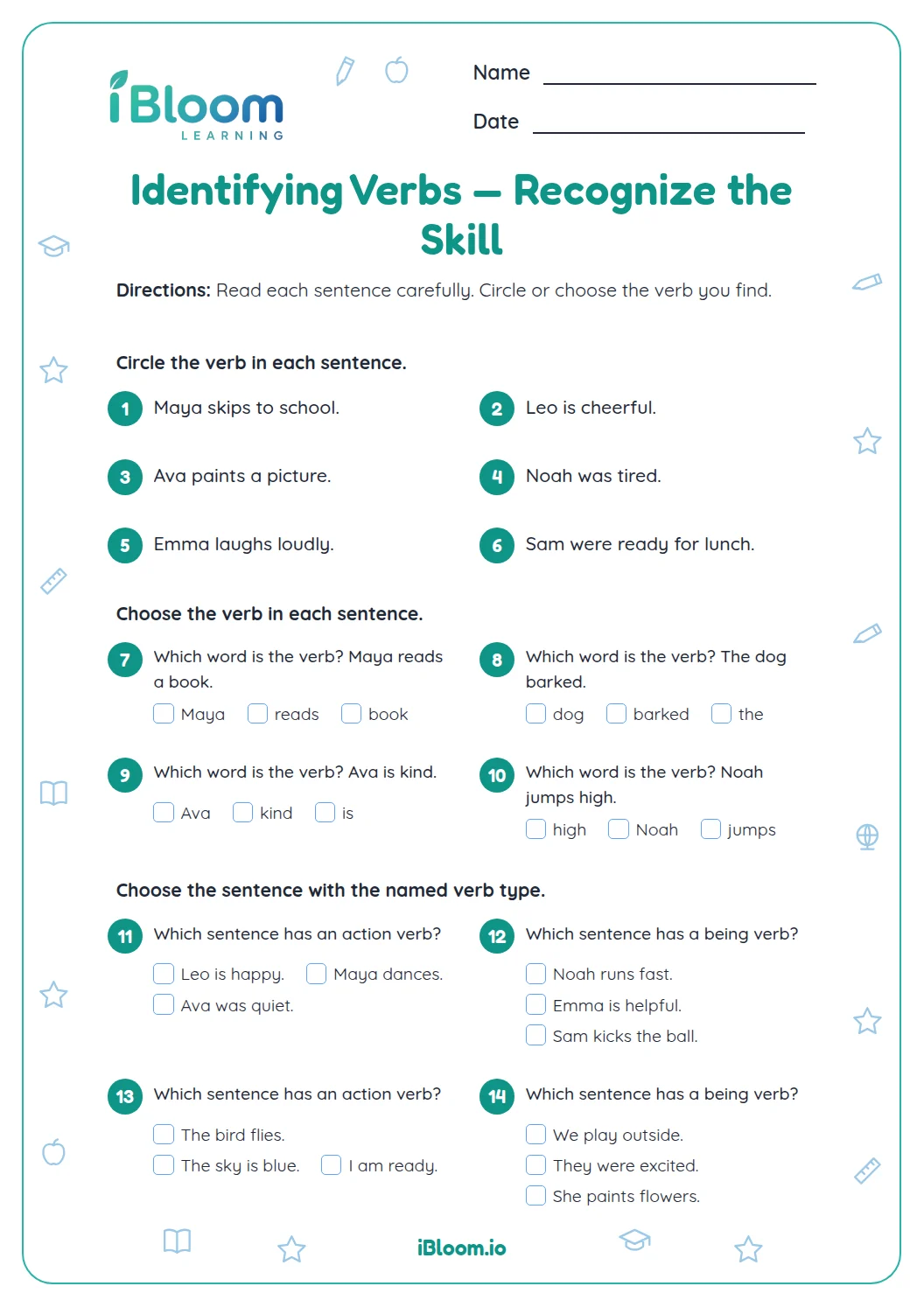
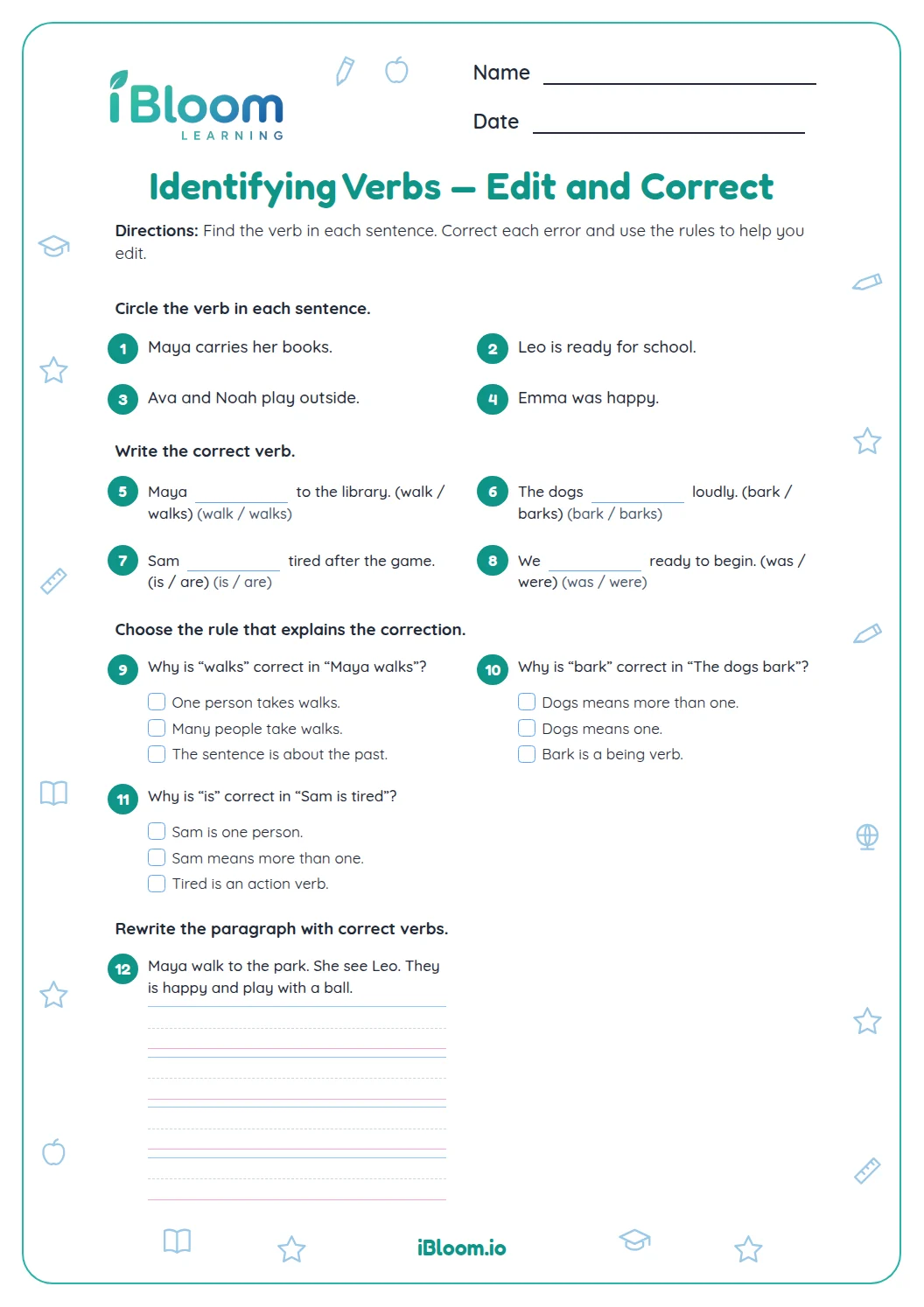
This Grade 3 grammar worksheet helps children recognize action and linking verbs in complete sentences. The first part asks them to classify verbs such as runs, smells and is. The second part uses sentence context to identify what the verb expresses and which verbs connect a subject to a description. A separate answer key is included.
Aligned to L.3.1.a
How can you spot an action verb?
Ask what the subject does. In “Milo runs fast,” runs names Milo’s action. Question 1 is an action verb because it tells what Milo does.
- 1Subject: Milo
- 2What does Milo do? runs
- 3runs is an action verb
How does a linking verb work?
A linking verb joins the subject to a description or name. In “The soup smells spicy,” smells connects soup to spicy; it does not describe an action performed by the soup.
Why should you read the whole sentence?
Some verbs can function differently depending on context. Ask whether the verb shows what the subject does or connects it to a description. The words around the verb help reveal its job.
What does this worksheet include?
There are 14 questions: eight direct classifications followed by six choices about how a verb works in its sentence. Examples include seems and became as linking verbs, and clapped and opened as action verbs.
How to use this worksheet
- 1Read the complete sentence first.
- 2Find the subject and ask what it does.
- 3If the verb joins the subject to a description, label it linking.
- 4Use the words after the verb as a clue, but check the meaning.
Common mistakes and quick fixes
The mistake
Calling a sense verb an action verb every time.
The fix
Read what follows the verb: “smells spicy” links soup to a description, while “smells the soup” names an action.
The mistake
Labeling a verb without reading the sentence.
The fix
Read the whole subject and predicate, then ask what job the verb does there.
The mistake
Calling the describing word after a linking verb the verb.
The fix
In “The leaves look bright,” look is the verb; bright describes the leaves.
Common Core alignment
This worksheet gives focused practice with the skill described below.
Explain what verbs do in sentences, including action and linking roles.
On this sheet: Questions ask children to explain whether each verb shows an action or links a subject to a description.
Show the official wordingHide the official wording
Explain the function of nouns, pronouns, verbs, adjectives, and adverbs in general and their functions in particular sentences.
What to practice next
Make more practice
Further reading
Questions parents and teachers ask
Can the same verb be action or linking?
Yes. The sentence meaning matters. “The soup smells spicy” uses smells to connect soup to spicy, while “I smell the soup” uses smell for an action. Read the whole sentence before labeling the verb; this page uses verbs in complete sentence contexts.
Is “is” a linking verb in “Our class is ready”?
Yes. In that sentence, is connects the subject, “our class,” to the description “ready.” The verb does not name an action. The worksheet includes this kind of linking example alongside action verbs such as runs, carries, and bakes.
How do you distinguish a linking verb from an action verb?
Ask whether the verb tells what the subject does or joins the subject to a description or name. “The puppy seems sleepy” links the puppy to sleepy; “Dad bakes bread” tells what Dad does. These examples use the same contrast as the worksheet.
Which verbs appear on the worksheet?
The first part uses runs, smells, fly, is, carries, look, bakes, and seems. Later questions include sentence choices with became, clapped, taste, opened, and wiggles. Read the complete example because some verbs, including smell, can have different jobs in different sentences.
Is an answer key included?
Yes. The separate answer key identifies the action or linking choice for each of the 14 questions. Ask the child to explain whether the verb names what the subject does or connects the subject to a description. That short explanation helps show the sentence clue behind the choice.