




About this worksheet
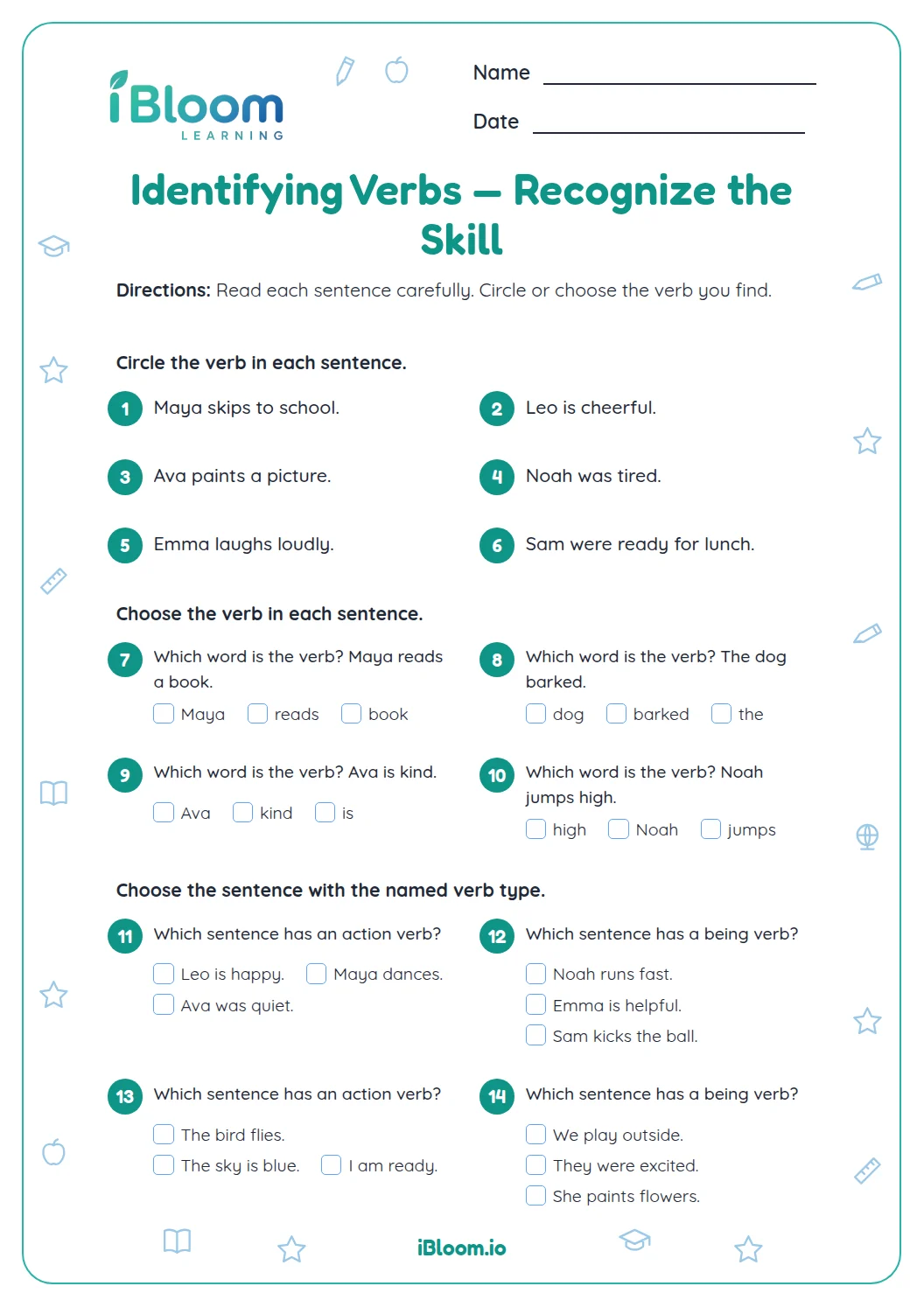
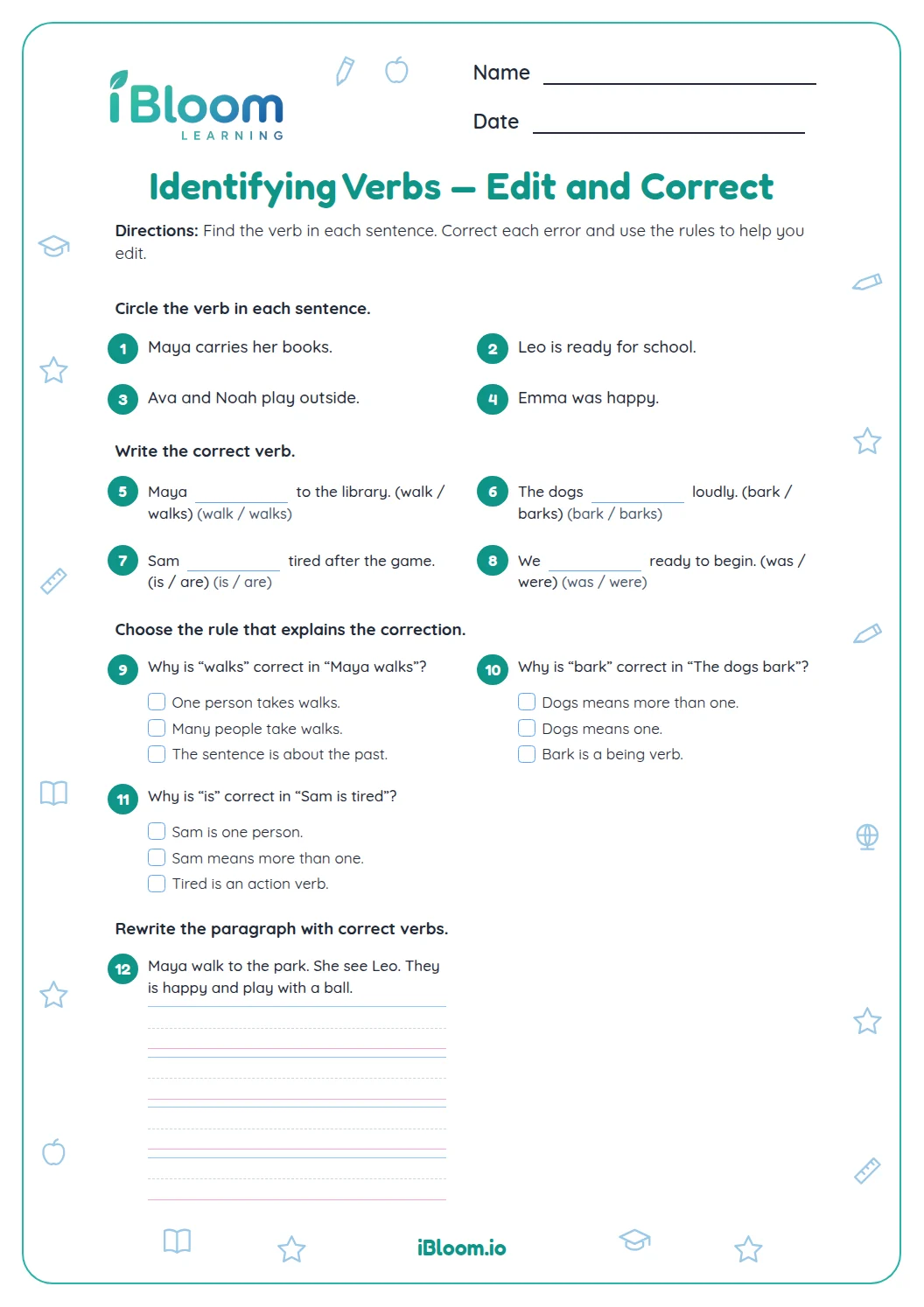
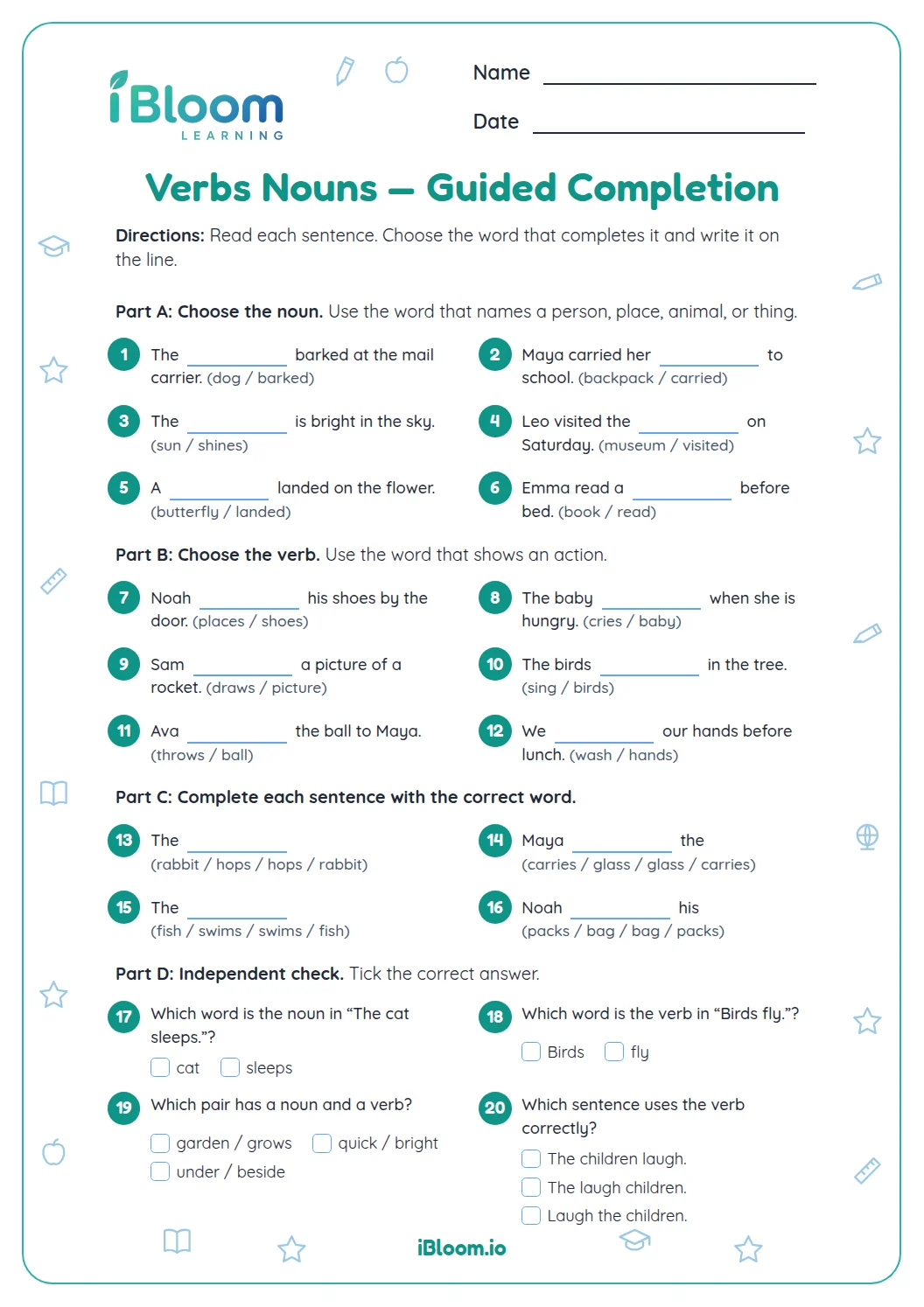
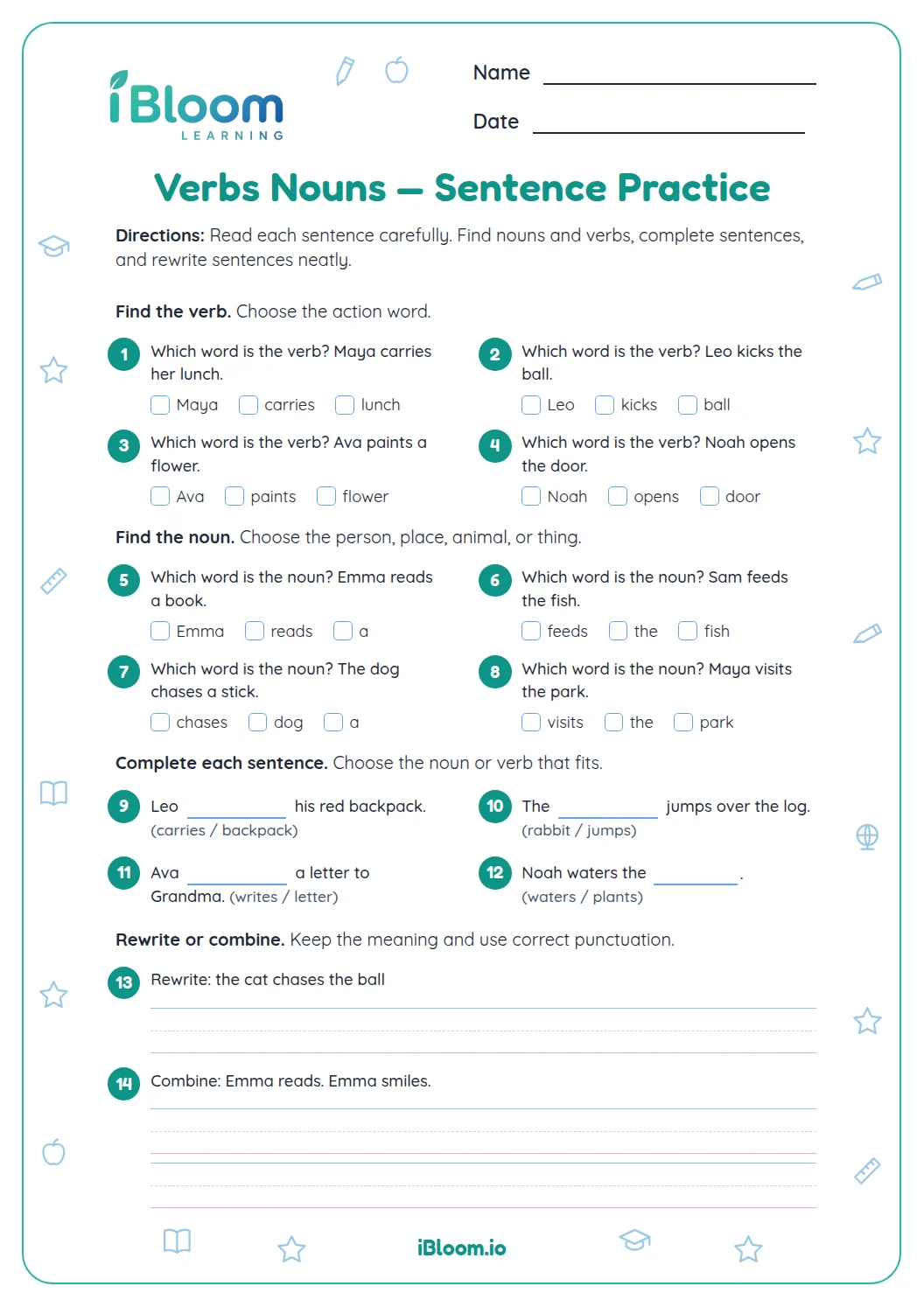
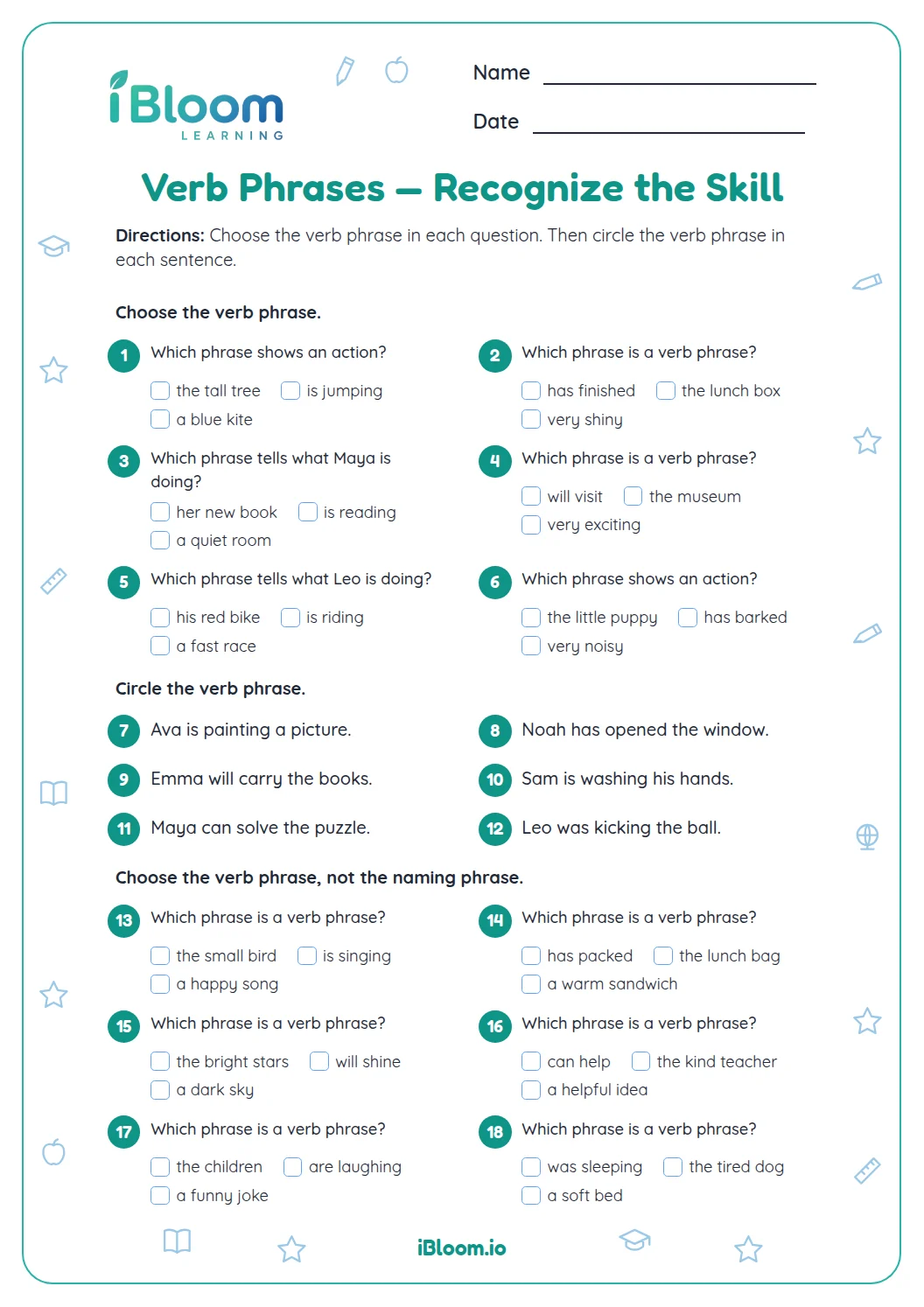
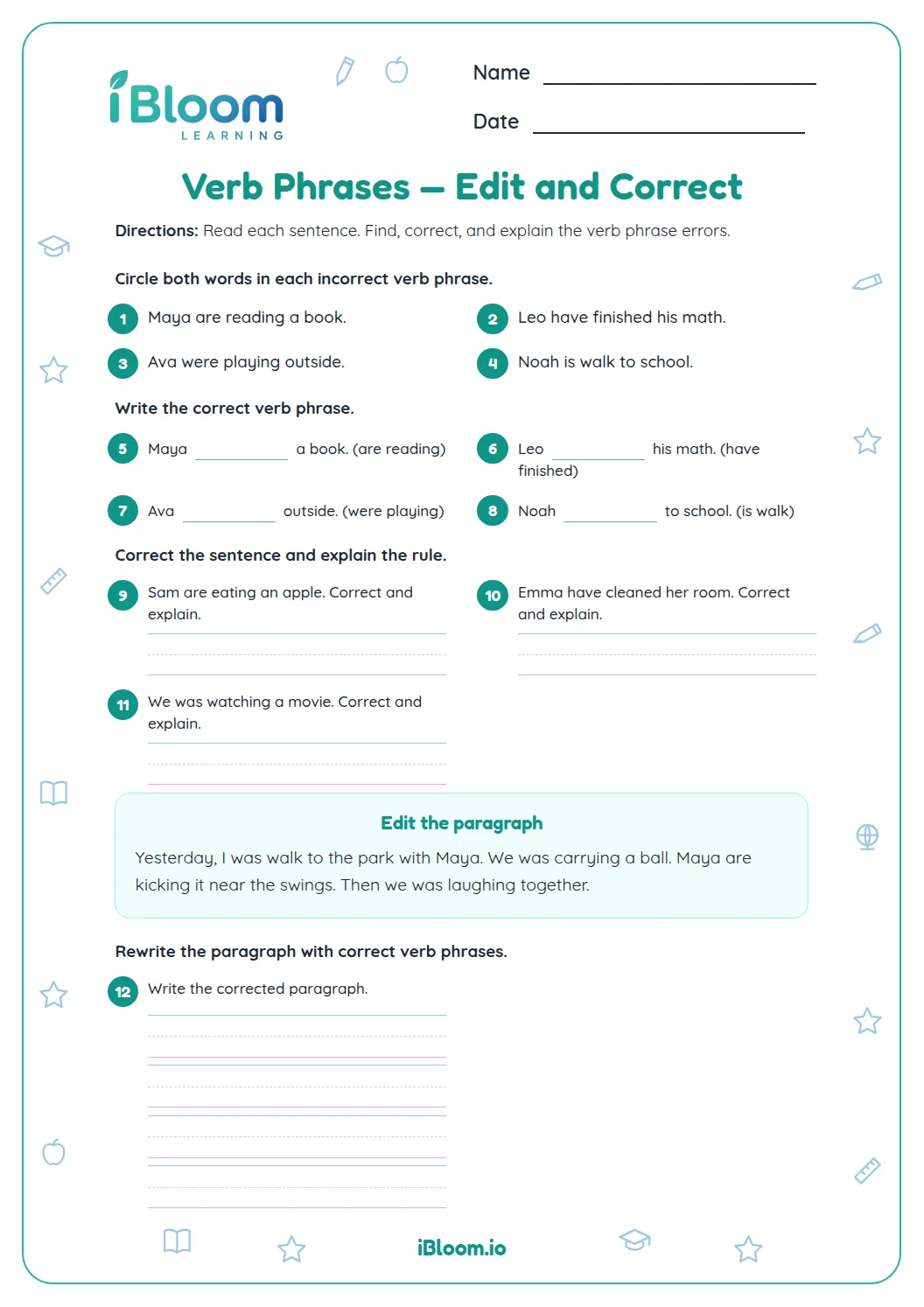
This Grade 3 printable gives learners 15 short sentences in which to identify the verb. They write an action word in the first set and a linking verb in the second, using sentence meaning as a clue. A separate answer key shows the target for each sentence. It practices Common Core L.3.1.a.
Aligned to L.3.1.a
How can you find the verb in a sentence?
A verb tells what someone or something does, or what happens. In “The puppy barks loudly,” the puppy does something: barks. Ask “What does the subject do?” to test a word.
- 1The puppy barks loudly.
- 2Ask: What does the puppy do? It barks.
- 3Answer: barks
What should you write for each answer?
Part A asks for action verbs that tell what the subject does. Part B uses linking verbs such as is, are, and am. These verbs connect the subject to a description or feeling rather than naming an action.
- 1Maya is happy today.
- 2“Is” links Maya to the description happy.
- 3Answer: is
How to use this worksheet
- 1Read the whole sentence once.
- 2Find who or what the sentence is about.
- 3Ask what that subject does or what happens.
- 4Check that your answer is a word in the sentence.
- 5Use the answer key to review each verb.
Common mistakes and quick fixes
The mistake
Choosing a describing word such as loudly.
The fix
Ask what the subject does; loudly tells how the barking happens.
The mistake
Choosing a naming word such as puppy.
The fix
Ask what the puppy does instead of naming the subject.
The mistake
Choosing a small word such as the.
The fix
Look for the word that tells an action or event.
Common Core alignment
This practice connects the worksheet tasks to a specific Common Core skill.
Explain how verbs work in sentences.
On this sheet: Each question asks the learner to identify the verb doing work in a particular sentence.
Show the official wordingHide the official wording
Explain the function of nouns, pronouns, verbs, adjectives, and adverbs in general and their functions in particular sentences.
What to practice next
Make more practice
Further reading
Questions parents and teachers ask
What counts as a verb on this worksheet?
The target is the word that tells what a subject does or links it to a description. In “The puppy barks loudly,” barks is the action verb; in “Maya is happy,” is links Maya to happy. The 15 sentences practice both kinds in context.
Are all the answers action words?
The first ten questions focus on clear actions and events, such as paints, rang, drift, and built. The final five use linking verbs, including is, are, and am. Learners use the sentence to decide whether the verb shows an action or links a subject to a description.
How should a child check a chosen verb?
Have the child reread the sentence and ask what the subject does or what happens. The answer should be present in the sentence and should make sense in that question. If it tells where, when, or how, it is likely a detail rather than the verb.
How many items are on the sheet?
There are 15 sentence questions across two worksheet pages. The first ten ask learners to name the verb directly; the last five phrase the same search as “Which word tells what happens?” A separate key lists the target verb for each sentence.
What does the answer key show?
The answer key gives one target verb for each sentence. Learners can use it to check spelling and then point to the subject and explain what it does. That brief explanation helps connect the word choice to its role in the sentence.