

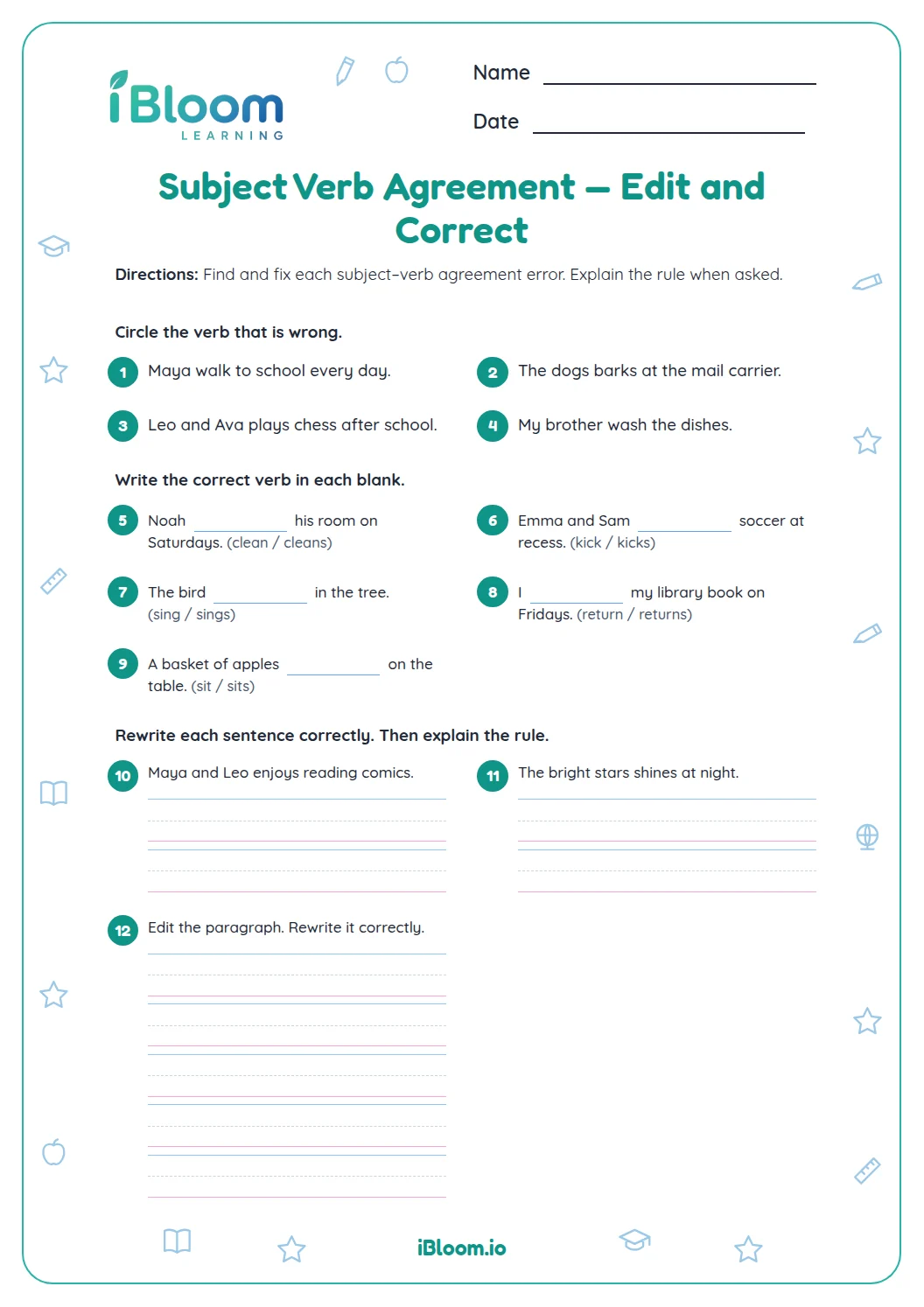


About this worksheet
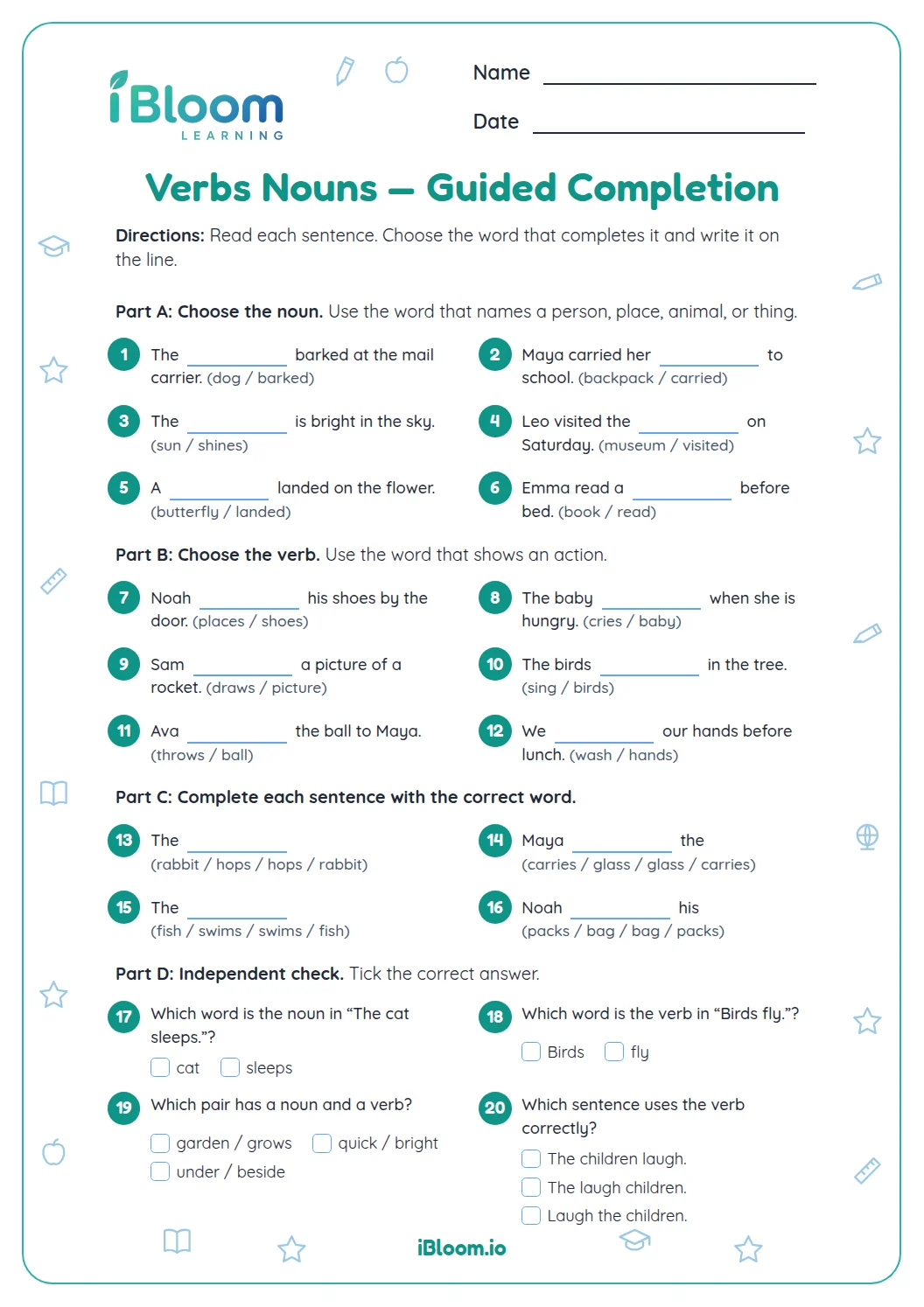
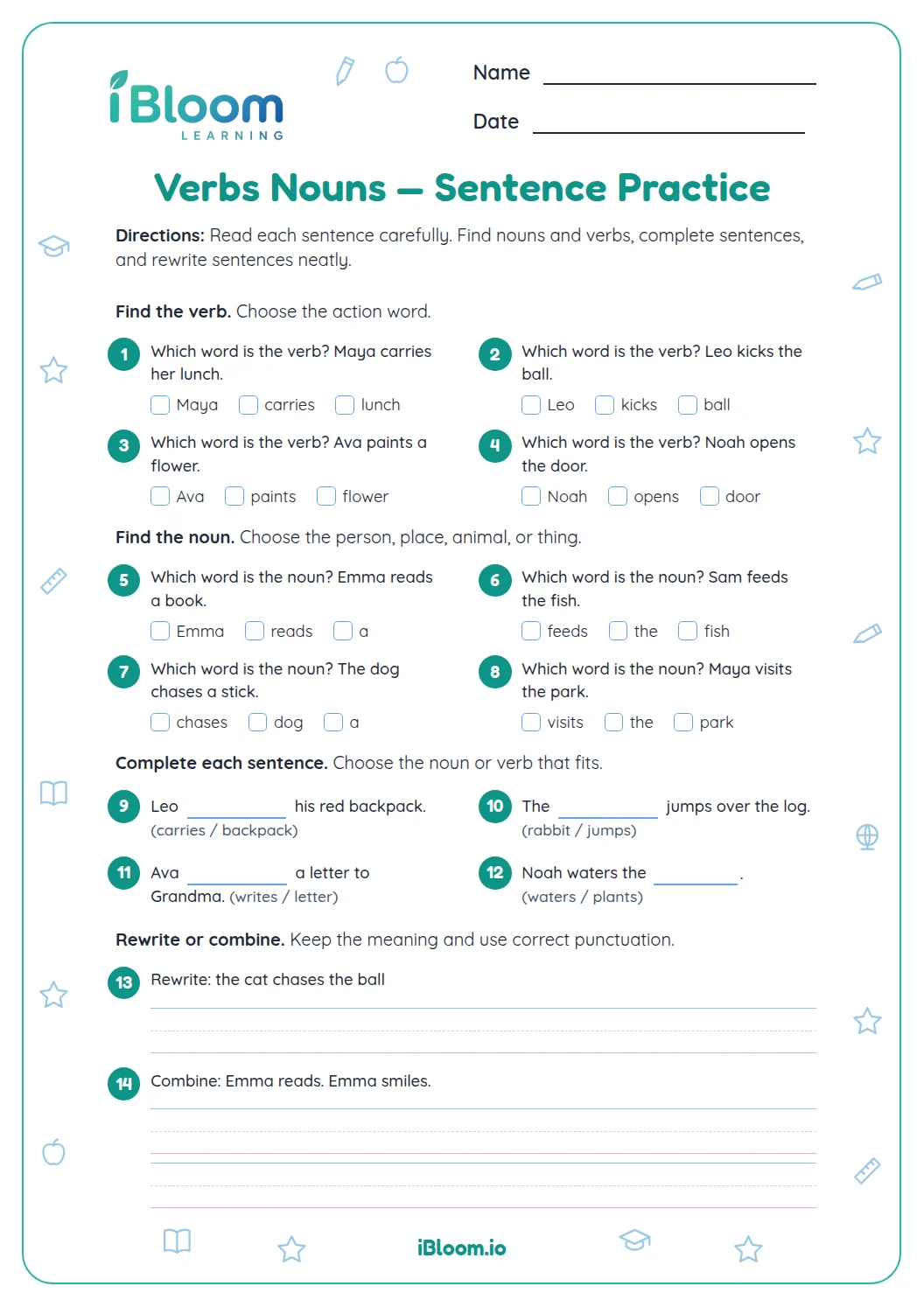
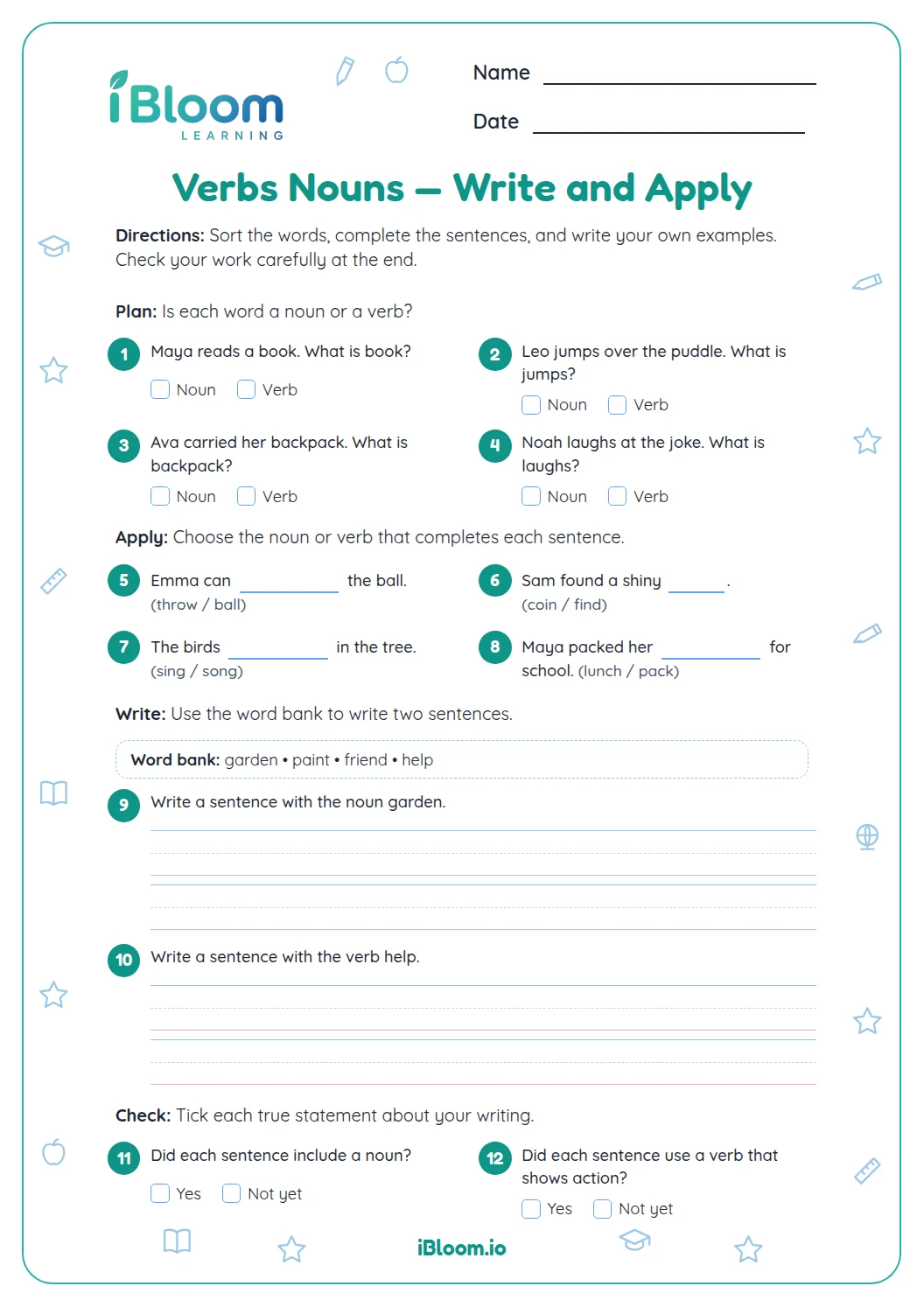
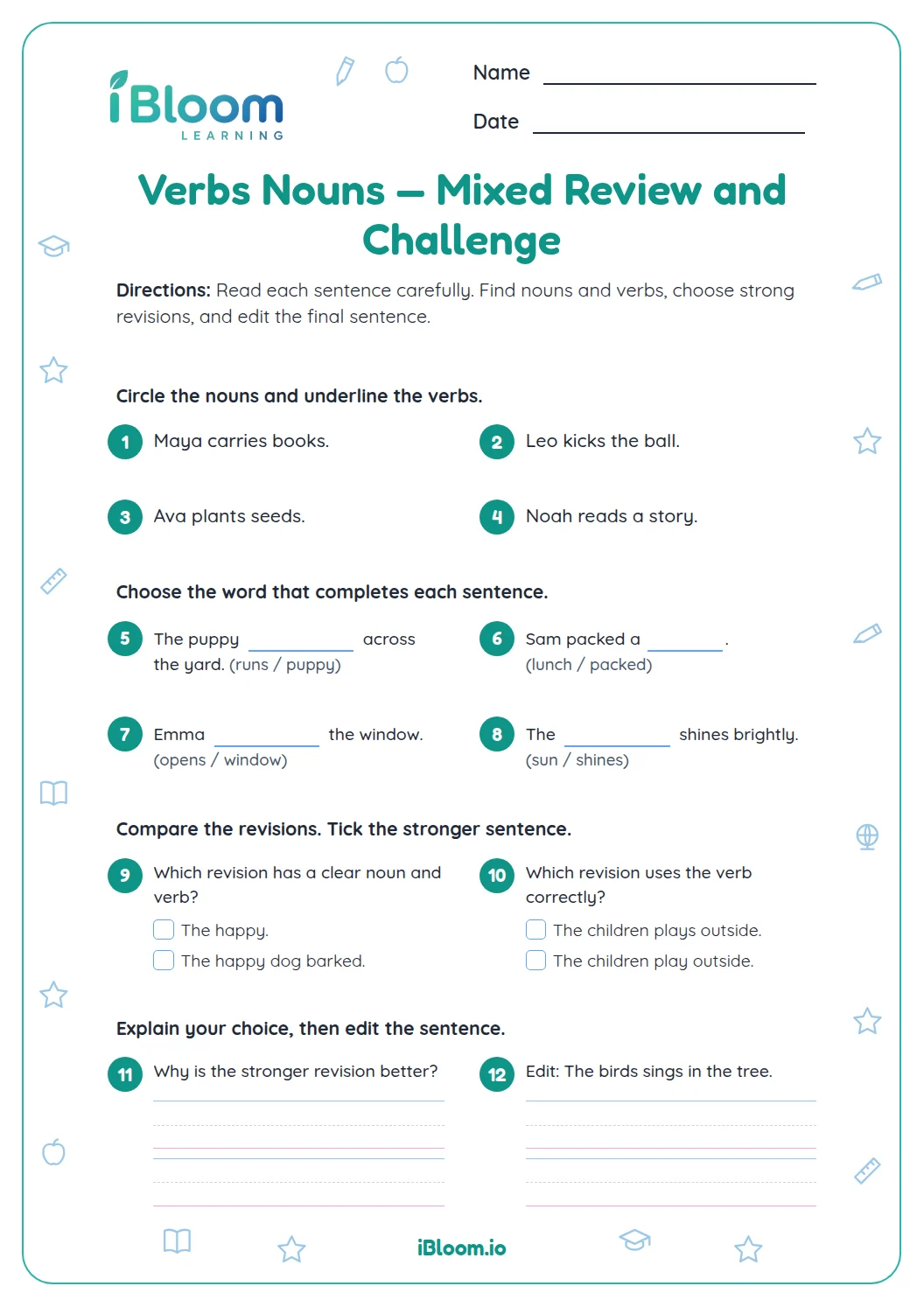
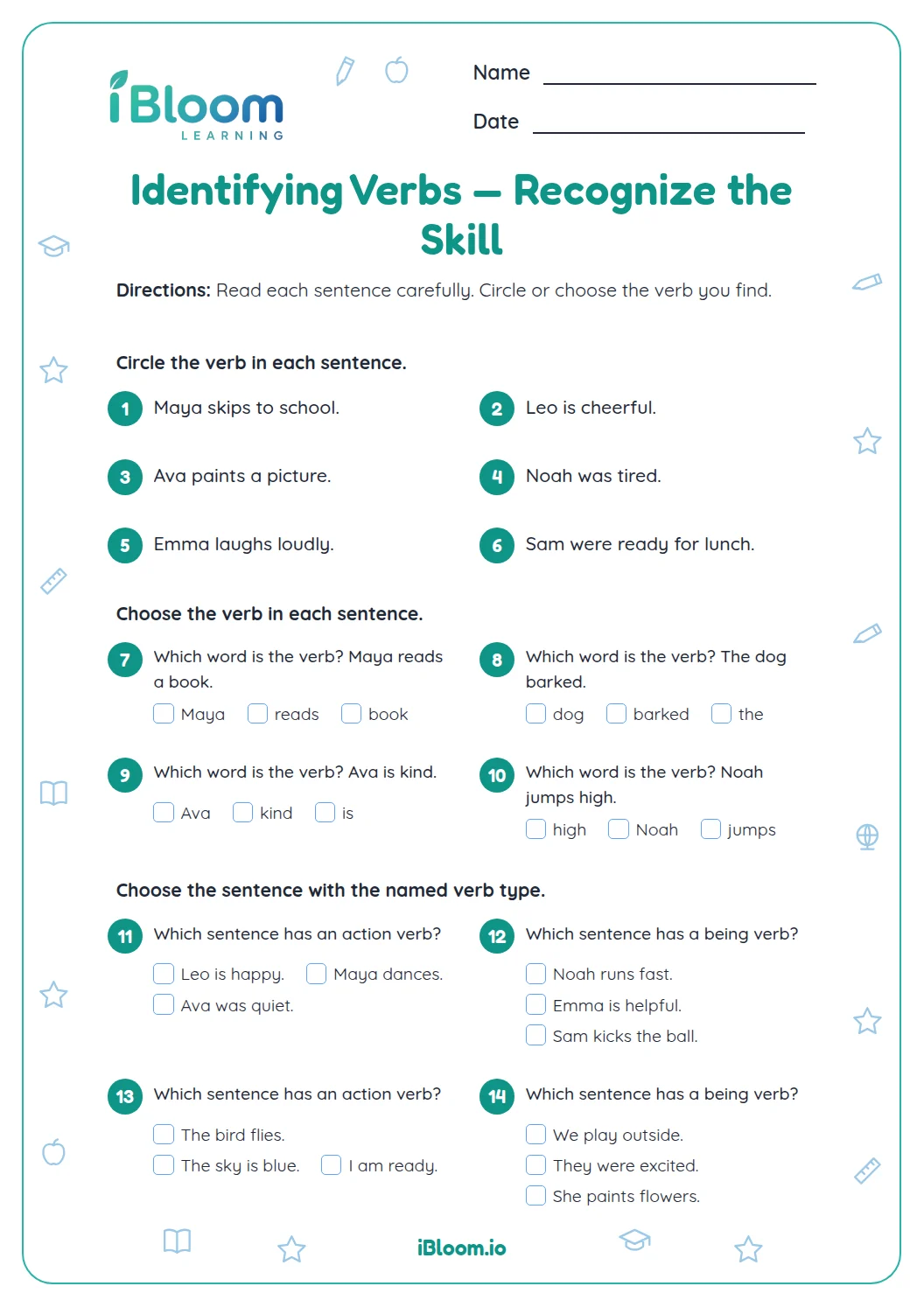
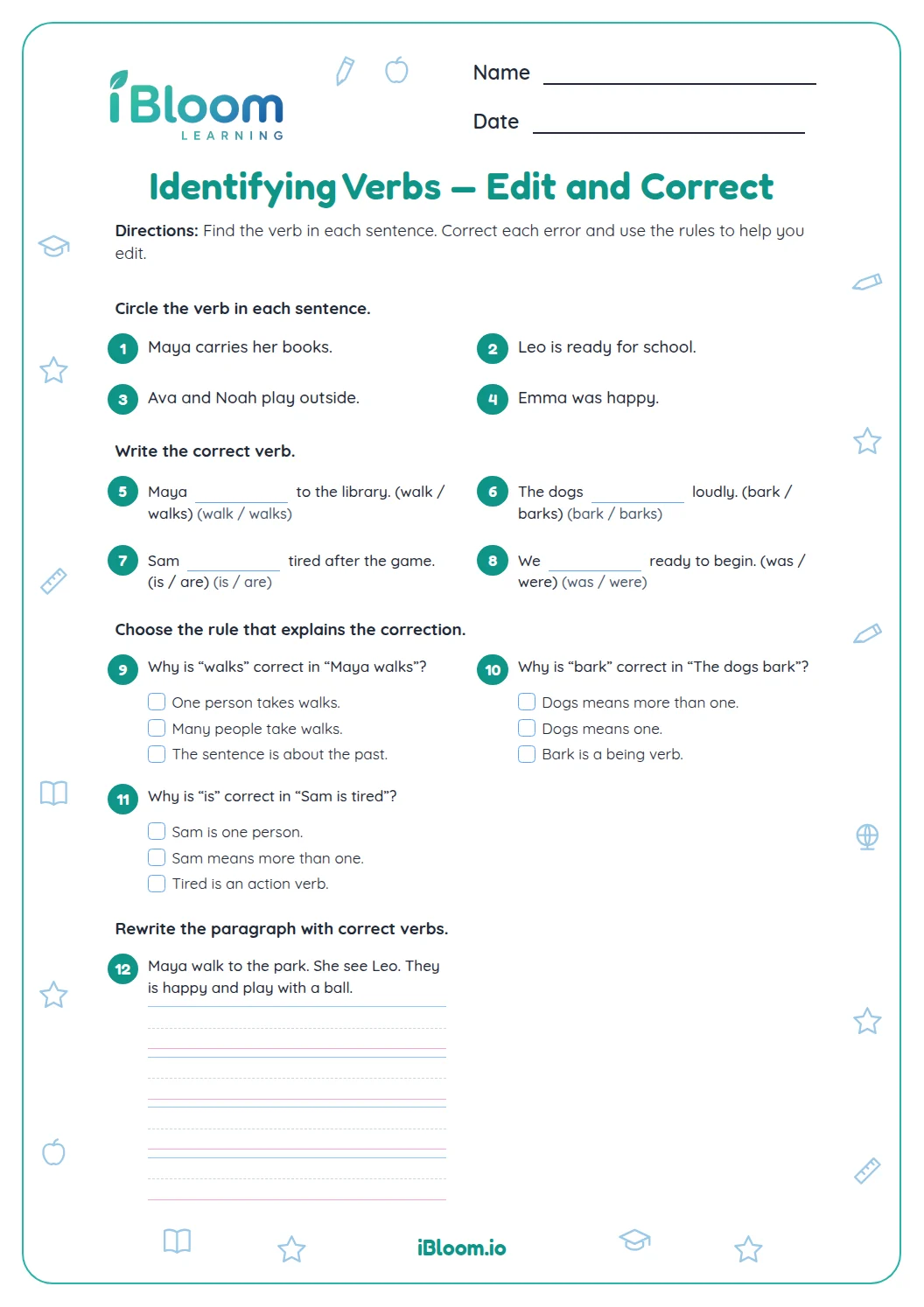
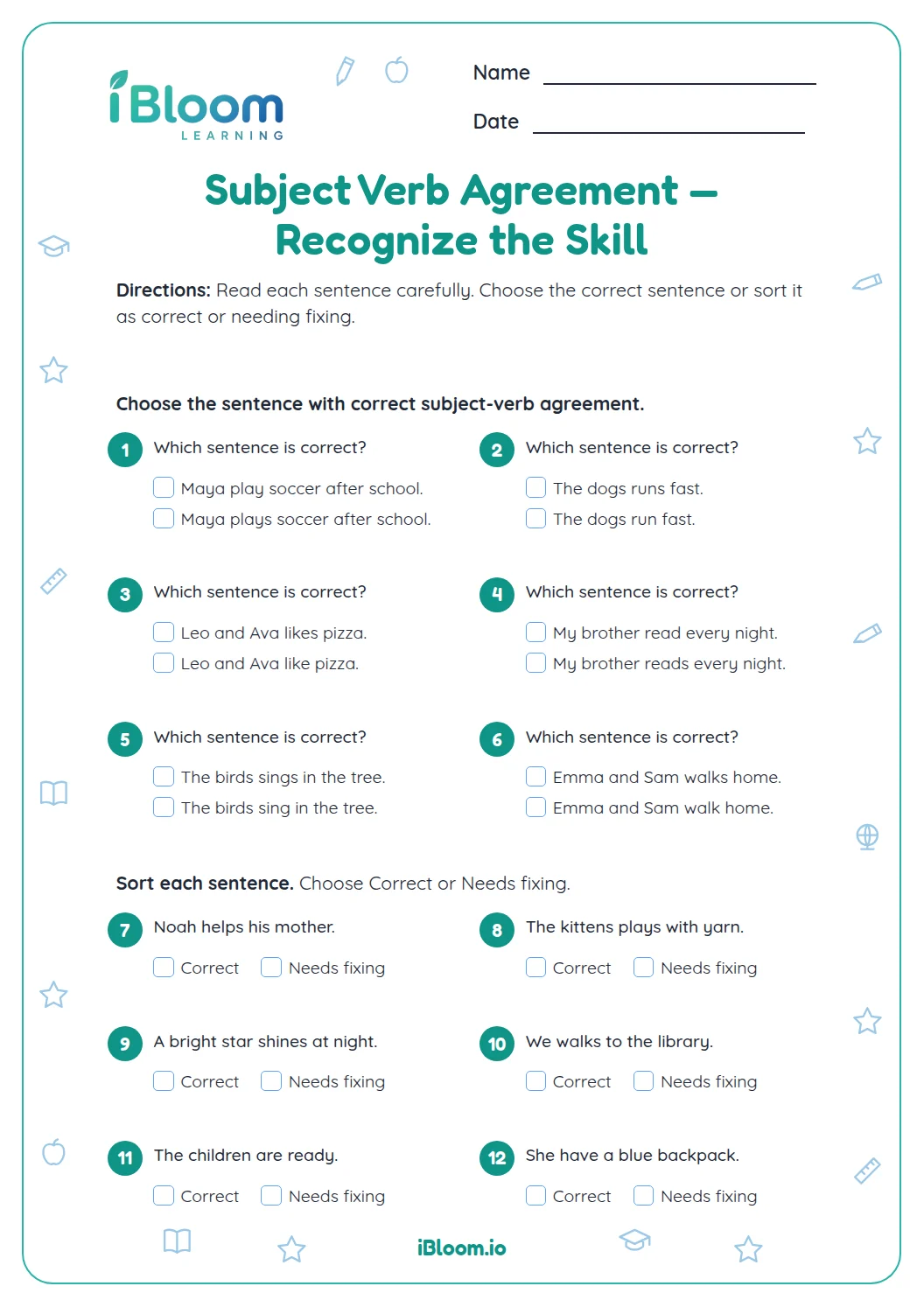
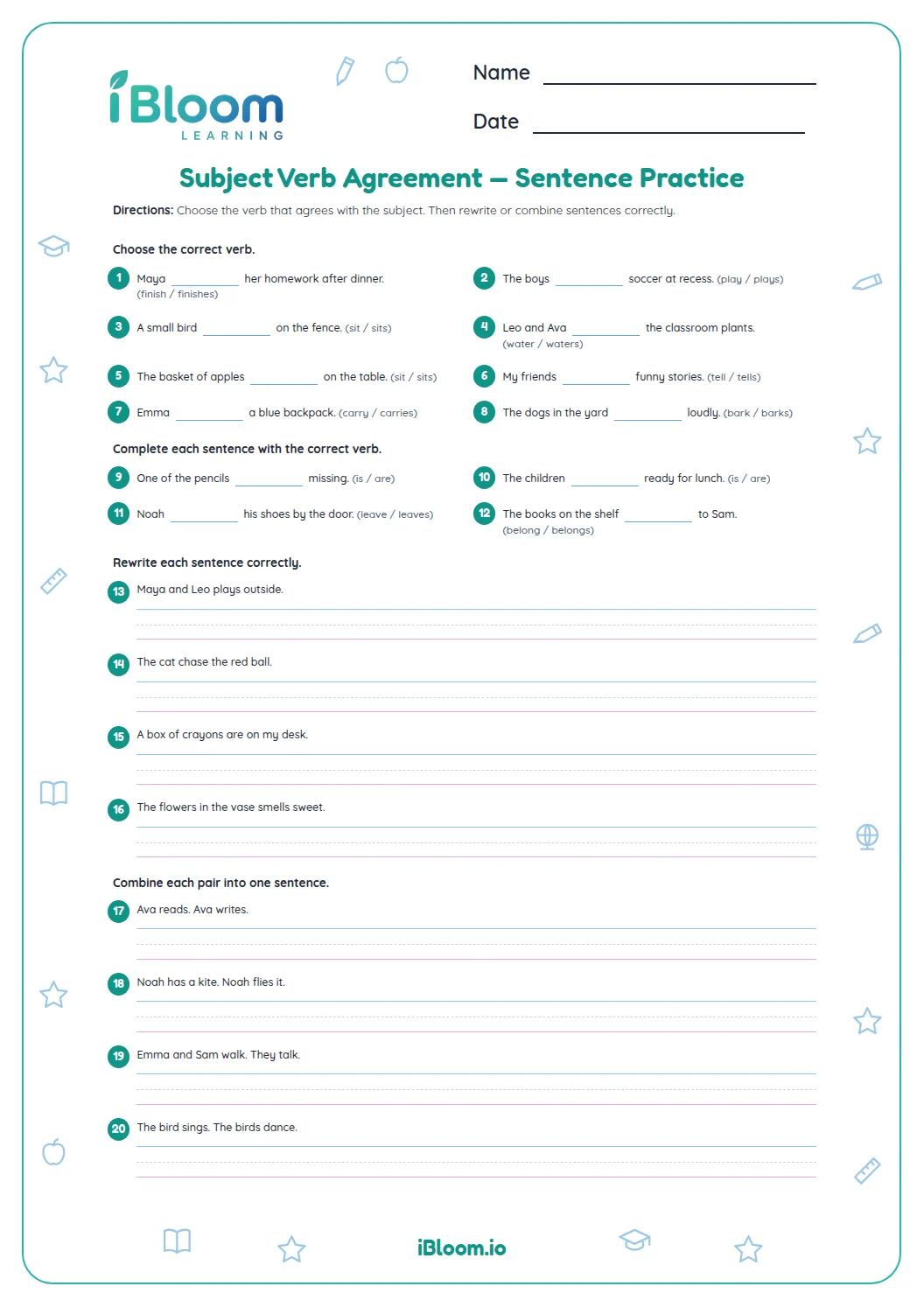
This free printable Grade 3 grammar worksheet has 16 multiple-choice questions in two parts. First, students identify nouns and verbs in sentences; then they edit sentences so each verb agrees with its subject. Examples include finding the verb in “Birds build nests” and correcting “The kittens naps.” The answer key marks each response. The work practices noun and verb functions in sentences, as described by Common Core L.3.1.a.
Aligned to L.3.1.a
How can students spot a noun or verb?
A noun names a person, place, thing or idea. A verb tells what someone or something does or is. Read the sentence and ask what each word contributes.
- 1In “Birds build nests,” build is the verb because it names the action.
What changes when a subject is plural?
A singular subject often pairs with a verb ending in s, as in “The bell rings.” A plural subject usually uses the base verb, as in “The bells ring.”
How can editing improve a sentence?
Check that each sentence has a subject and a verb that agree. Then read it once more to make sure it sounds complete.
How to use this worksheet
- 1Read the whole sentence before choosing a word.
- 2Ask whether the target names a person or thing, or tells an action.
- 3For editing, find the subject and decide whether it is singular or plural.
- 4Read the corrected sentence aloud to check that it is complete.
Common mistakes and quick fixes
The mistake
Calling an action word a noun.
The fix
Ask whether the word names something or tells what it does.
The mistake
Adding s to every verb.
The fix
Check whether the subject is one or more than one.
The mistake
Correcting one word but leaving the sentence incomplete.
The fix
Read the entire revised sentence and check its subject and verb.
Common Core alignment
This page practices L.3.1.a through its worksheet questions.
Identify noun and verb functions, then match verbs to sentence subjects.
On this sheet: The questions ask learners to practice edit and correct.
Show the official wordingHide the official wording
Explain the function of nouns, pronouns, verbs, adjectives, and adverbs in general and their functions in particular sentences.
What to practice next
Further reading
Questions parents and teachers ask
What grammar skills do the two parts practice?
Part A asks students to identify nouns and verbs in sentences. Part B asks them to choose a correction that matches the subject and verb, such as changing “The kittens naps” to “The kittens nap.” The key marks each correct response.
How can students tell a noun from a verb?
A noun names a person, place, animal, or thing; a verb tells what someone or something does. In “Birds build nests,” birds and nests are nouns, while build names the action. The worksheet asks students to choose the word named in each prompt.
What should students check when editing a sentence?
Check whether the verb form matches its subject. A singular subject takes “The bell rings,” while a plural subject takes “The dogs bark.” Part B gives three sentence choices so students can compare the subject and verb before selecting a correction.
Does every editing item ask for the same kind of correction?
Each editing question asks for a sentence with a subject and verb that agree. The subjects vary, including kittens, a bell, friends, a kite, a turtle, leaves, dogs, and Lena, so students must read each sentence rather than repeat one correction.
How can the answer key help after a mistake?
The key marks the correct word or sentence in green. Ask the student to name the subject and verb in a missed item, then check their match. For example, “Leaves cover the path” uses a plural subject with the base verb cover.