




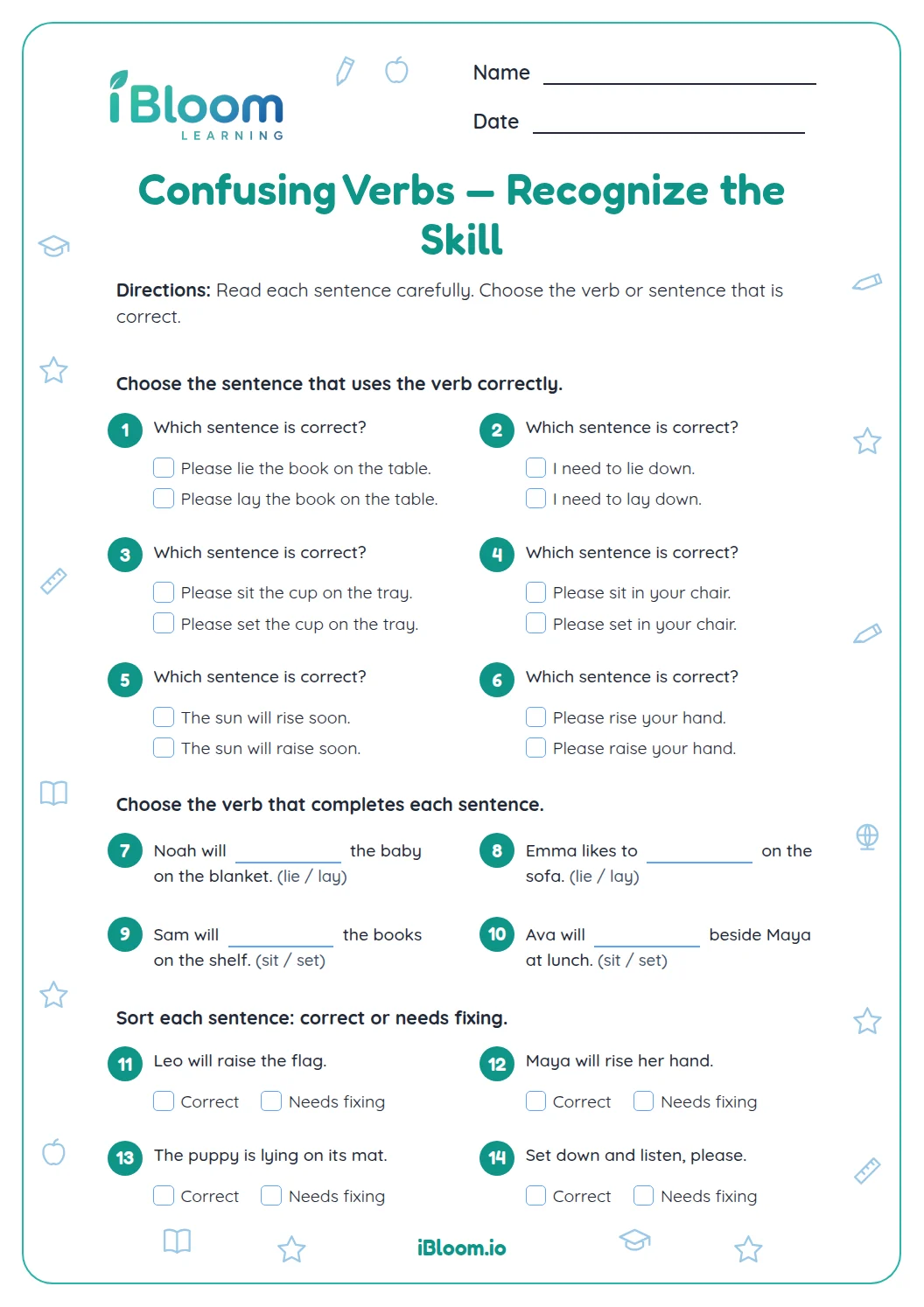
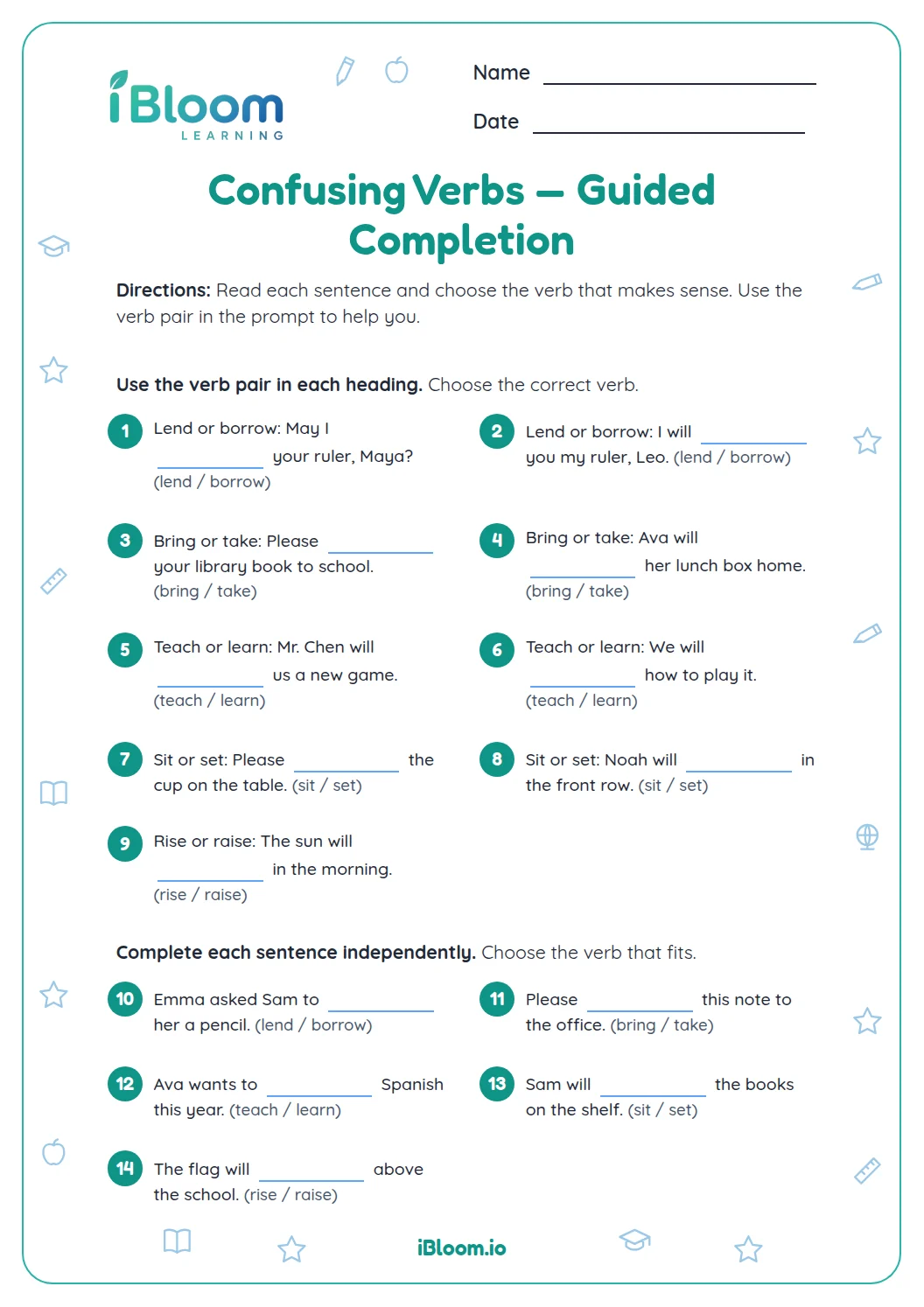


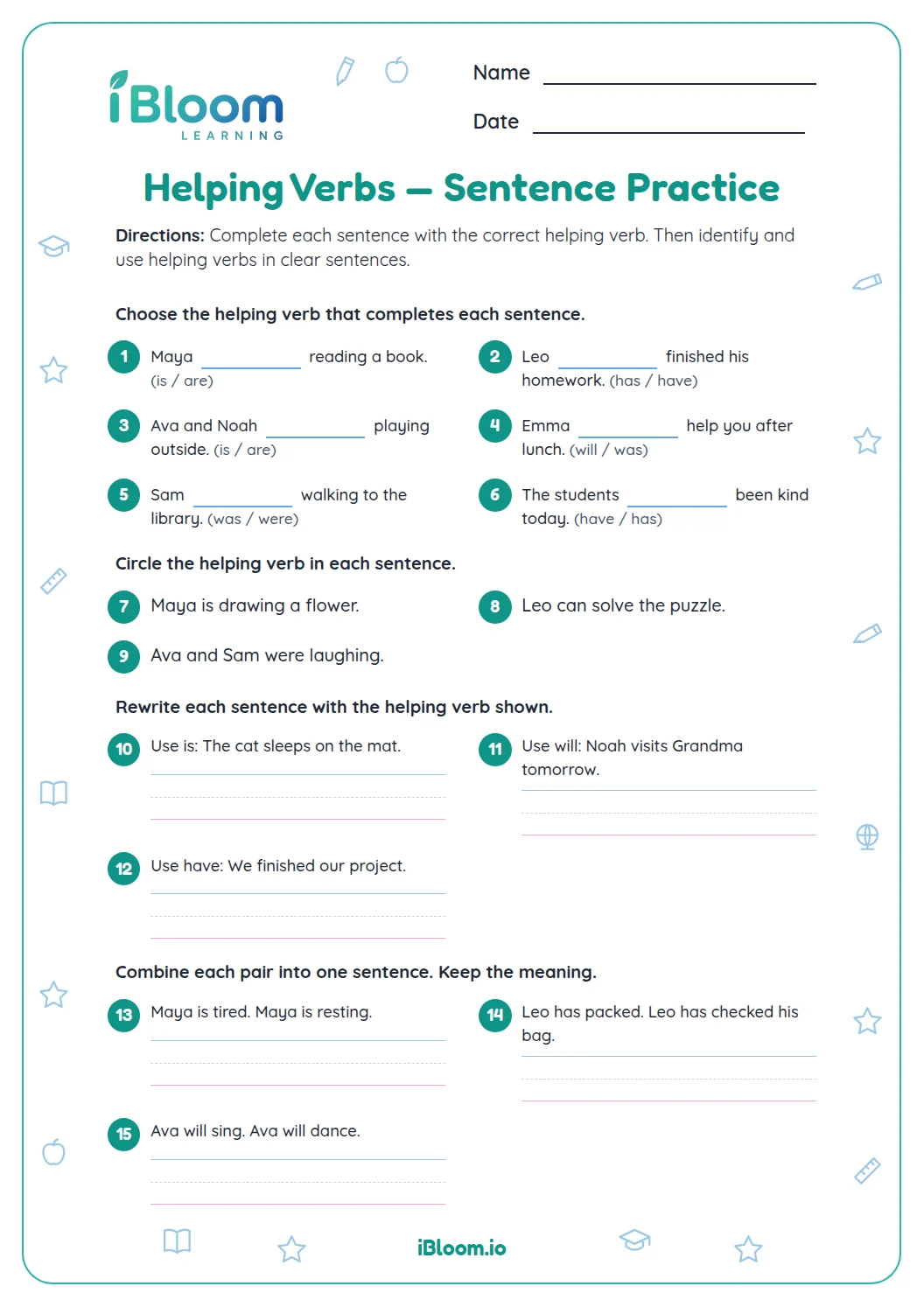

About this worksheet
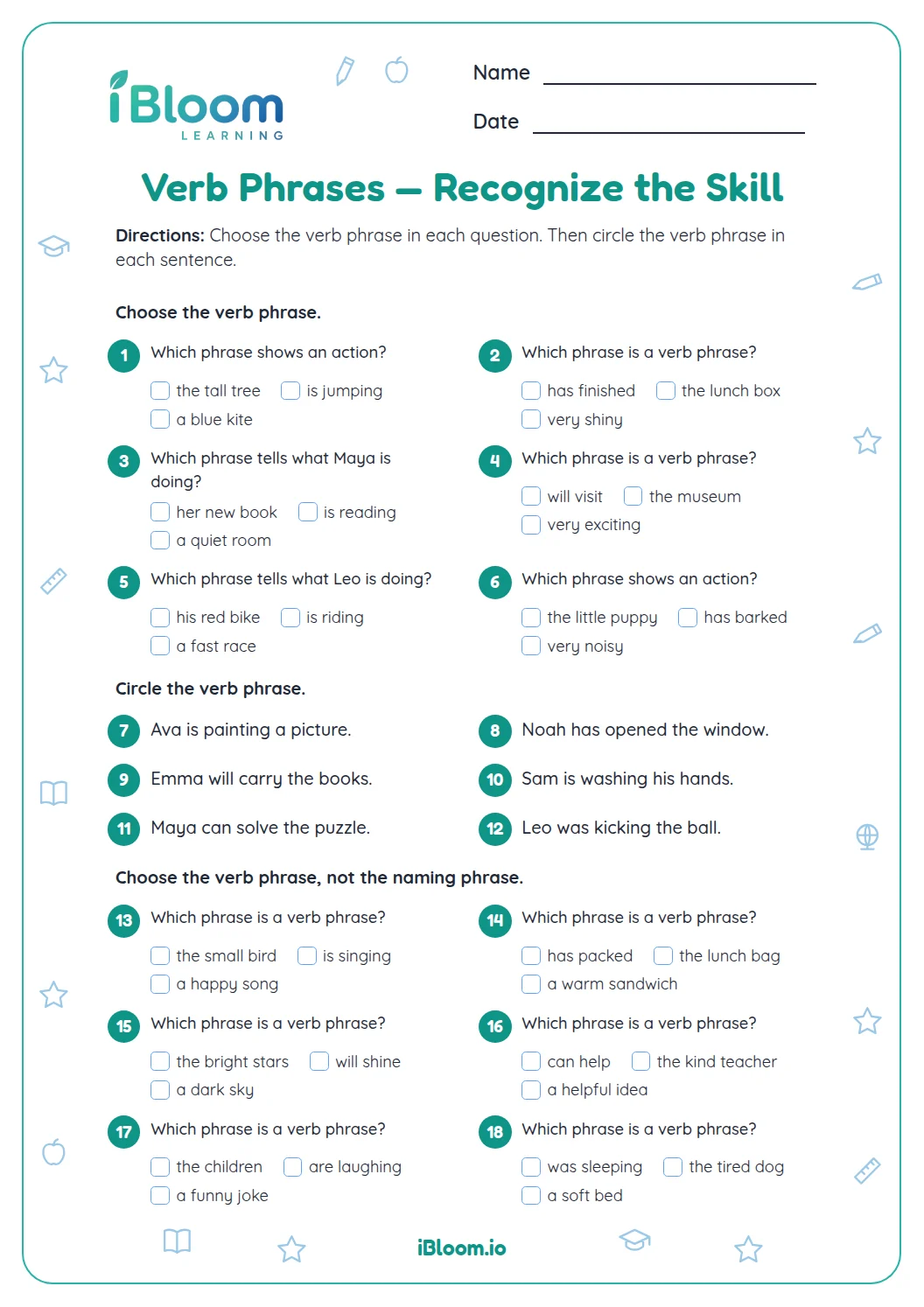
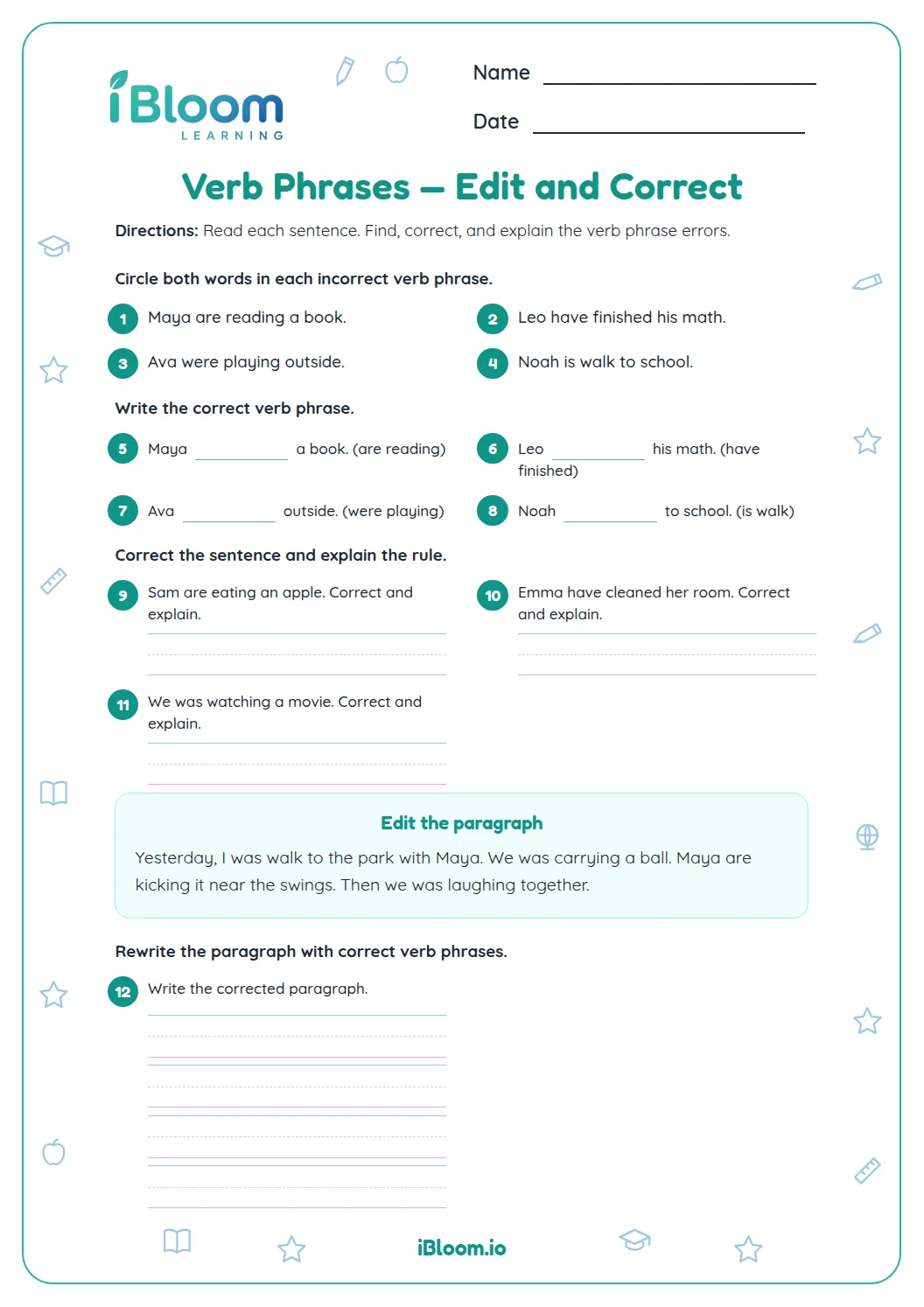
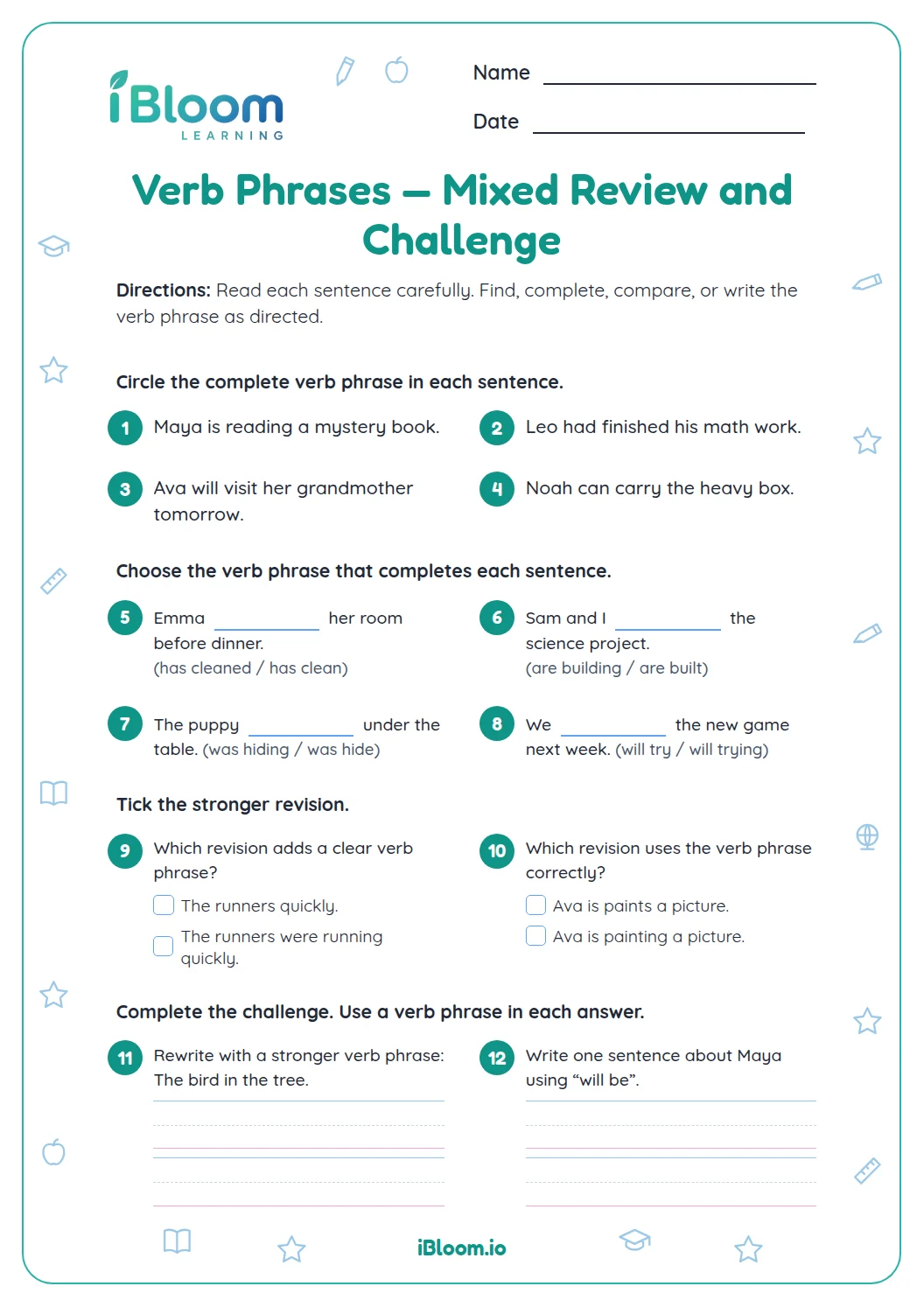
This Grade 3 worksheet moves from recognizing verb phrases to writing with them. Part A asks students to circle a helping verb and its main verb together in each sentence. Part B gives phrase starters and sentence changes so students can apply the pattern in their own writing. The answer key lists each phrase and sample sentences.
Aligned to L.3.1
How can students find the whole phrase?
Look for a helping verb such as is, have, will or were, then include the main verb that follows it. In question 1, “is sleeping” names the full action.
- 1q1: Circle “is sleeping.”
What changes in the writing section?
Students shift from spotting a phrase to using it in a complete sentence. The subject and extra details may change, but the verb phrase must stay correct.
How to use this worksheet
- 1Read the whole sentence before marking a phrase.
- 2In Part A, find the helping verb and the main verb it works with.
- 3Circle both words together.
- 4In Part B, keep the given verb phrase intact when writing.
- 5Check that each response is a complete sentence with a subject and ending punctuation.
Common mistakes and quick fixes
The mistake
Circling only the helping verb.
The fix
Include the main action word with the helping verb.
The mistake
Including a nearby noun in the phrase.
The fix
A verb phrase contains verbs; leave the subject and object outside.
The mistake
Writing a fragment after a phrase starter.
The fix
Add a subject and finish the thought as a complete sentence.
Common Core alignment
This worksheet practices the listed Common Core skill through the questions on the page.
Identify helping verbs with main verbs, then use complete verb phrases in sentences.
On this sheet: The worksheet asks students to practice this skill directly.
Show the official wordingHide the official wording
Demonstrate command of the conventions of standard English grammar and usage when writing or speaking.
What to practice next
Make more practice
Further reading
Questions parents and teachers ask
How should students approach verb phrase practice?
A verb phrase combines a helping verb with a main verb, such as “is sleeping” or “will bring.” Students read each sentence, identify the helping verb and action word, then write both words together. They finish by creating or revising sentences that use complete verb phrases.
How many questions are on the worksheet?
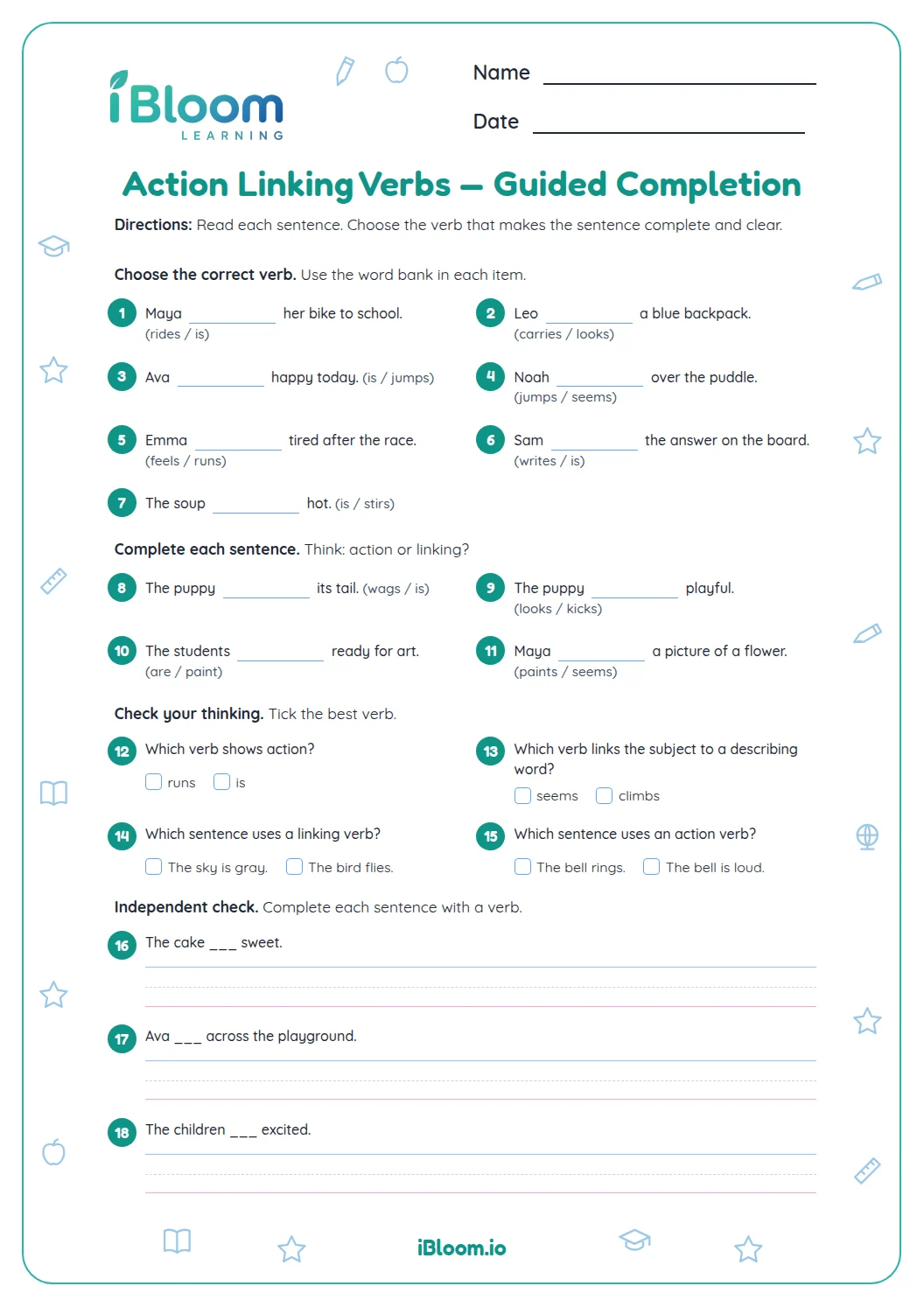
There are 16 questions on three worksheet pages, followed by a separate answer key. The first eight ask students to find and write verb phrases; the next eight ask them to use a phrase in a complete sentence.
Is an answer key included?
Yes. A separate answer key lists a response for every question, including sample responses where students can write different correct answers. Use it after the learner has tried the page, then revisit any item that needs another explanation.
How long does this worksheet take?
Plan for about 15 minutes, with more time if the learner wants to explain a strategy or revise a written response. The questions are divided into two parts, which makes it easy to complete one section at a time.
What should I do when an answer differs from the key?
First check whether the response still meets the question’s directions. For a fixed answer, compare the calculation or grammar clue; for a writing item, use the sample as a model and check that the response includes the requested details.