





About this worksheet
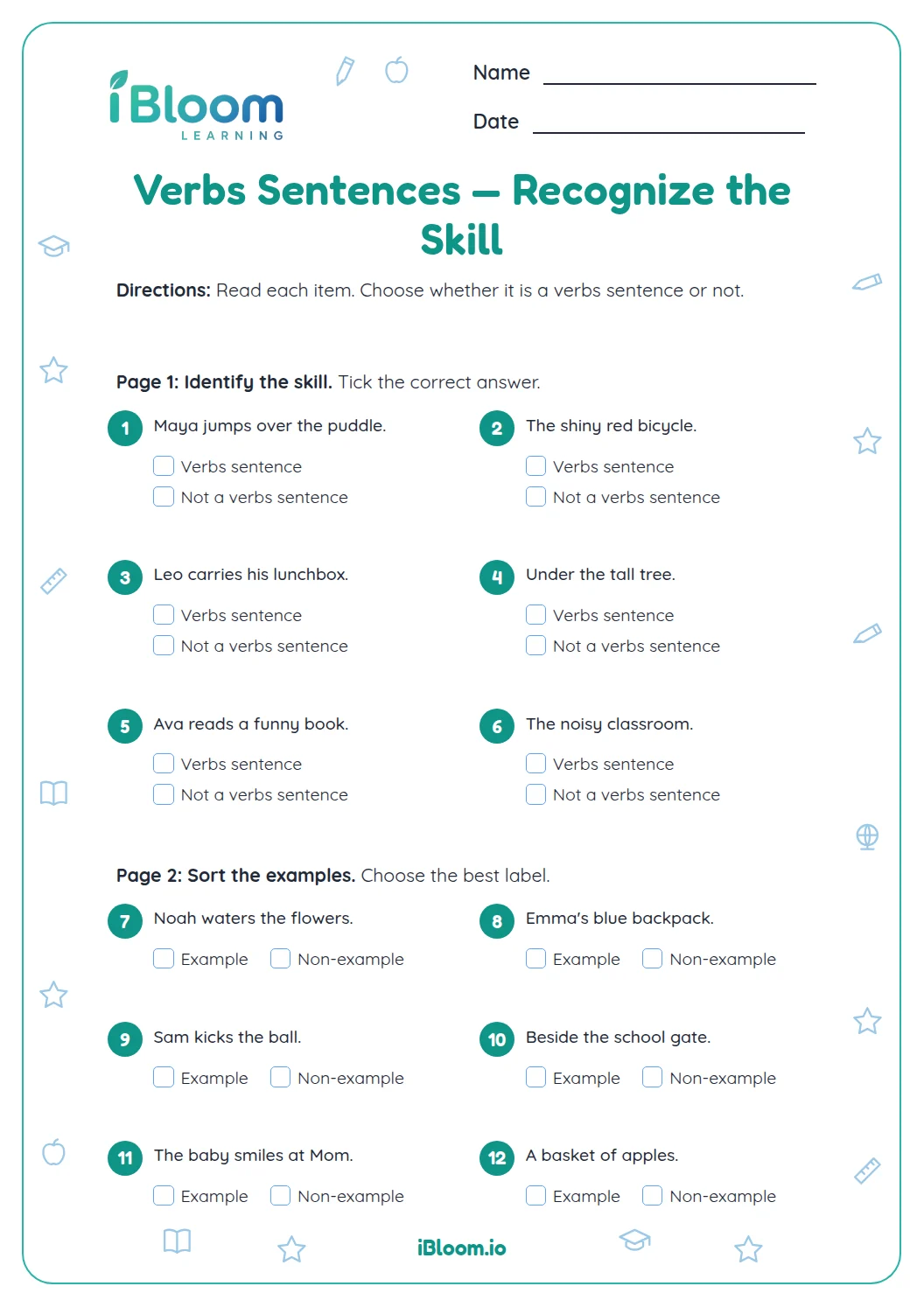
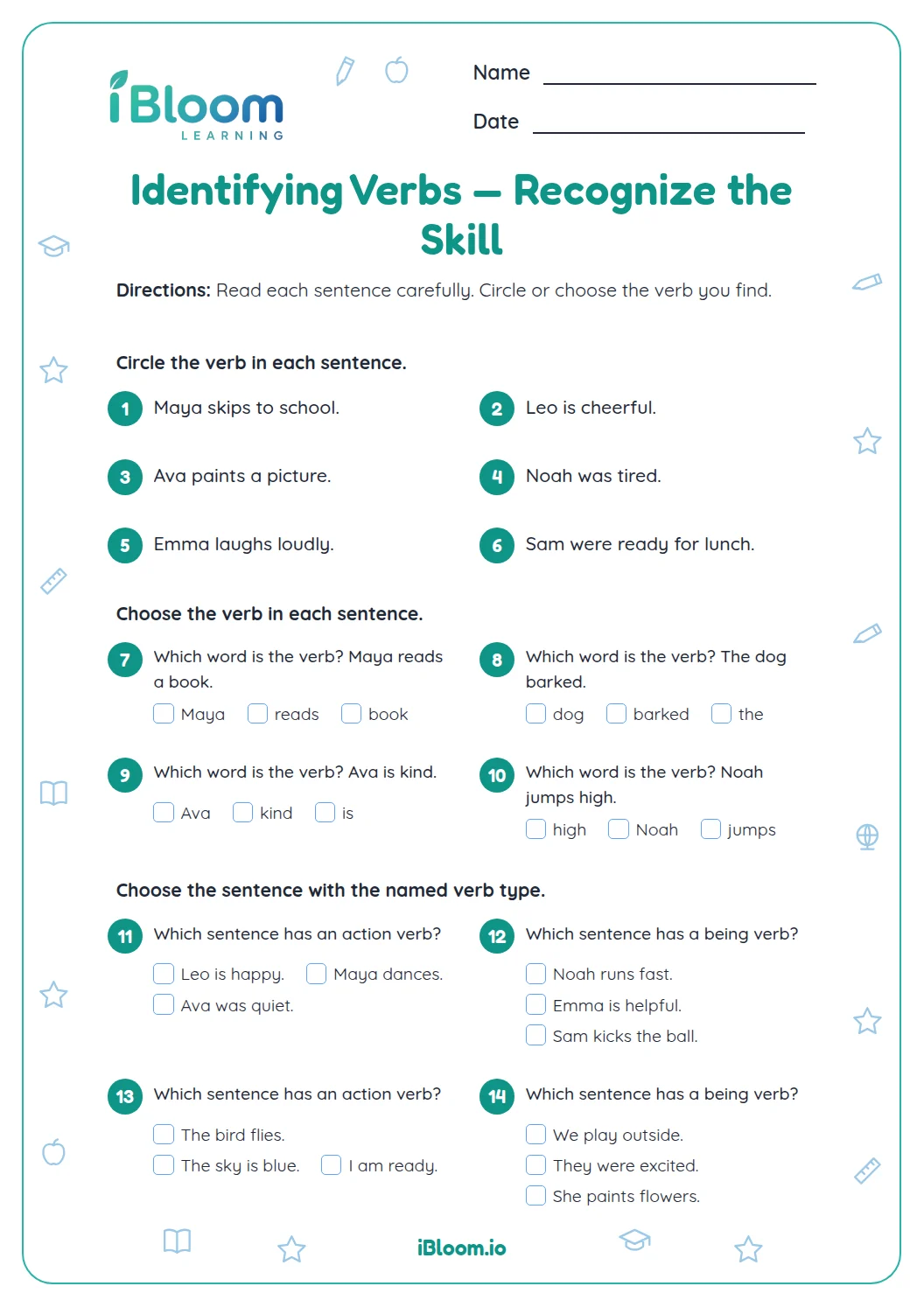
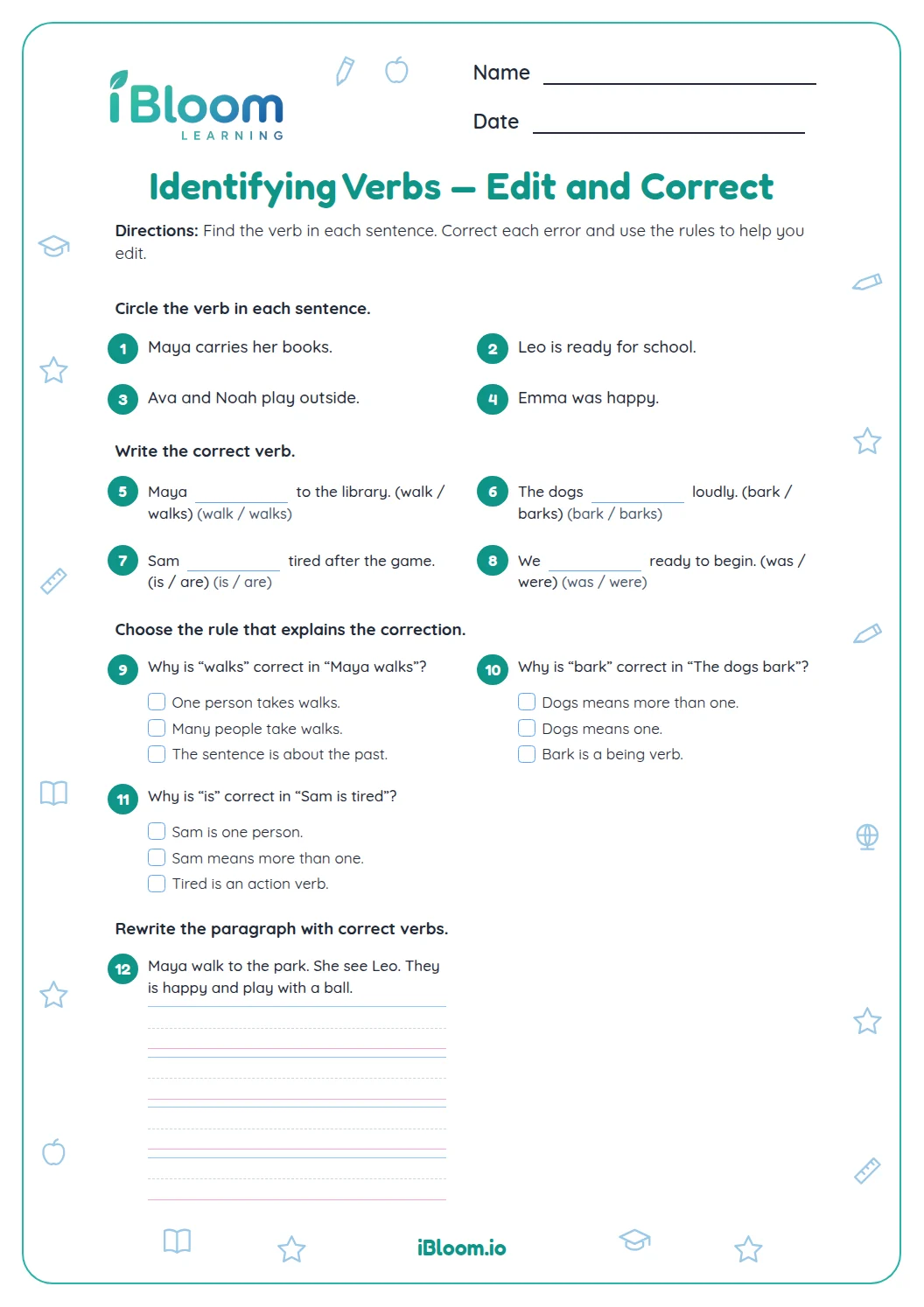
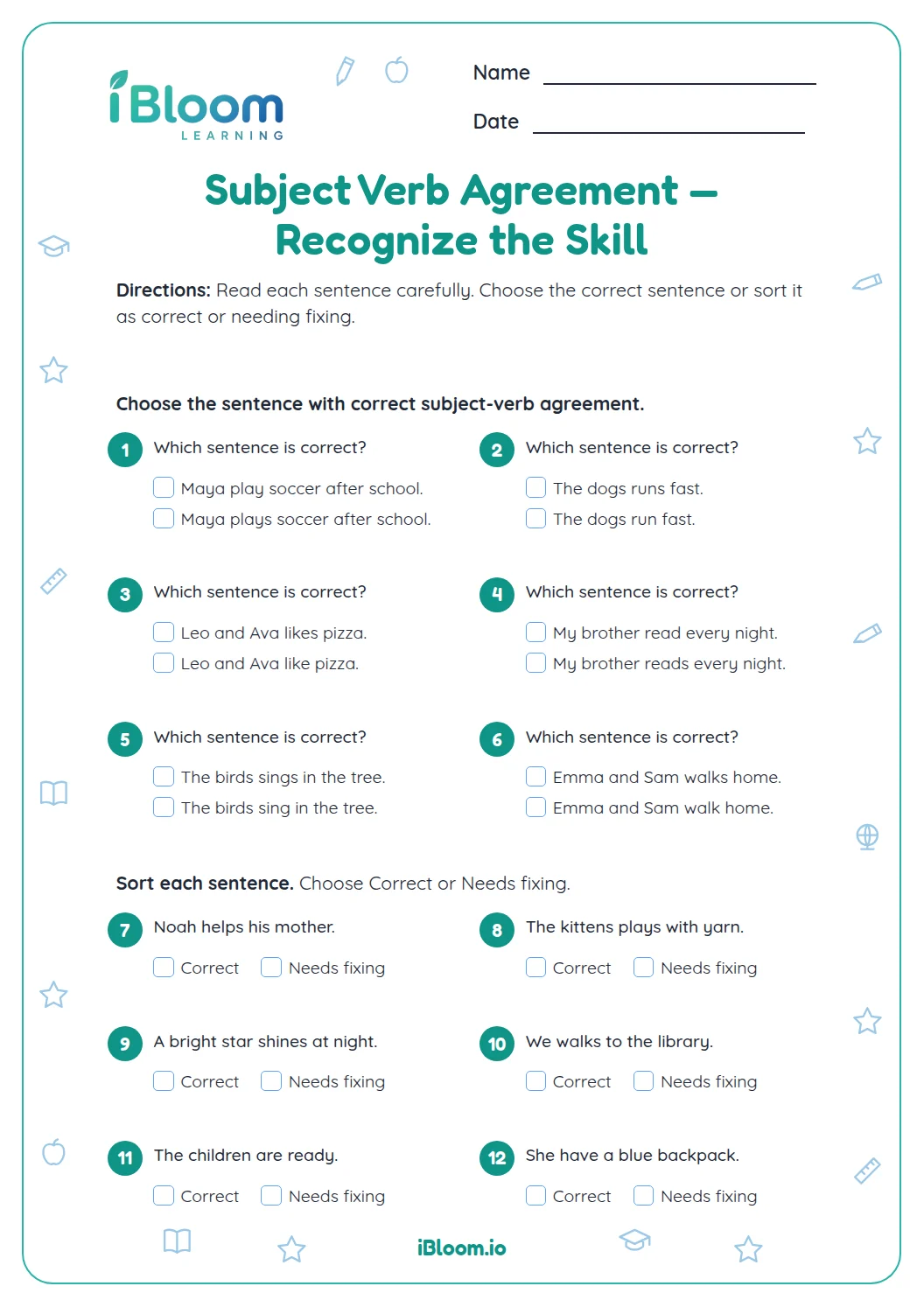
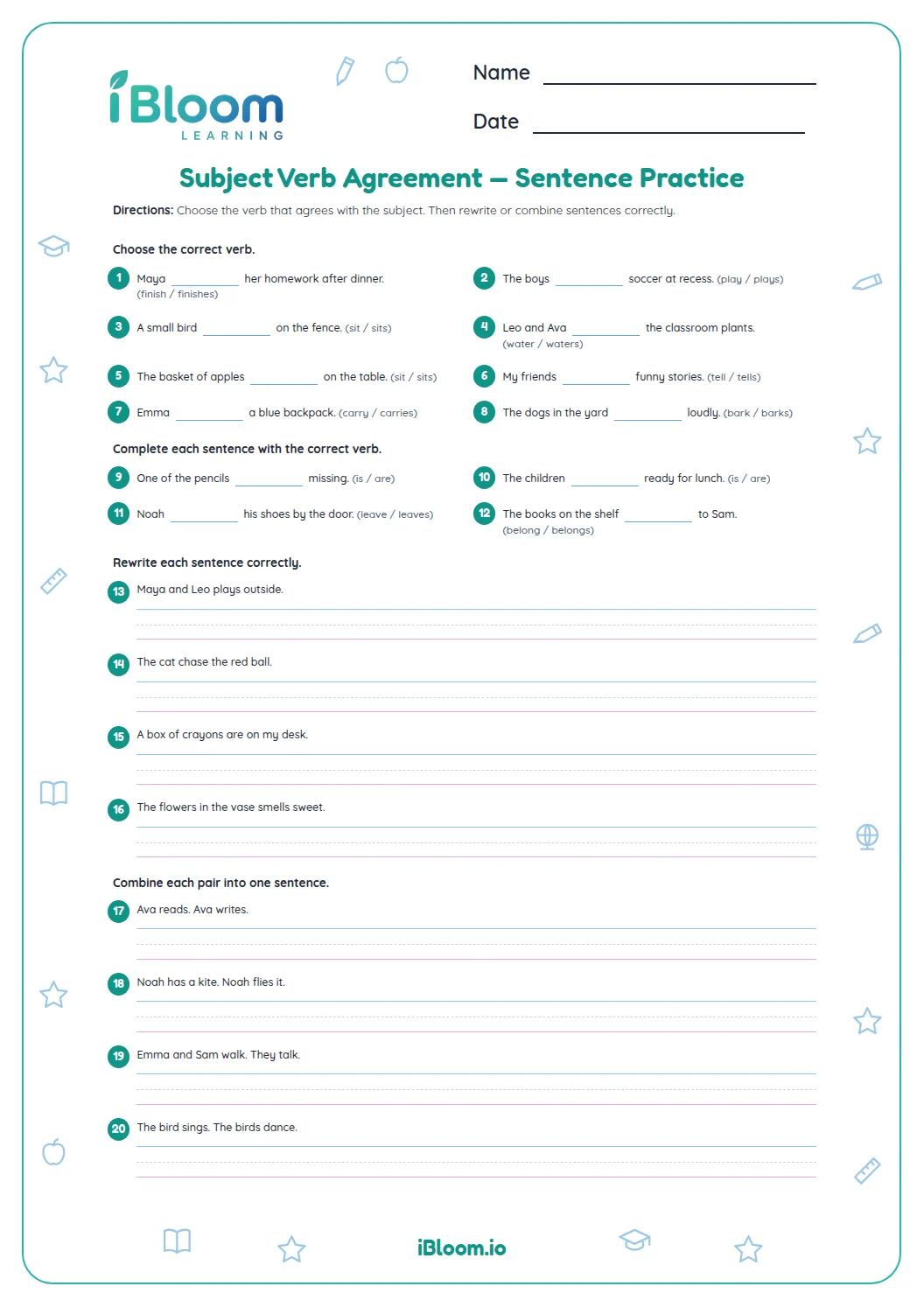
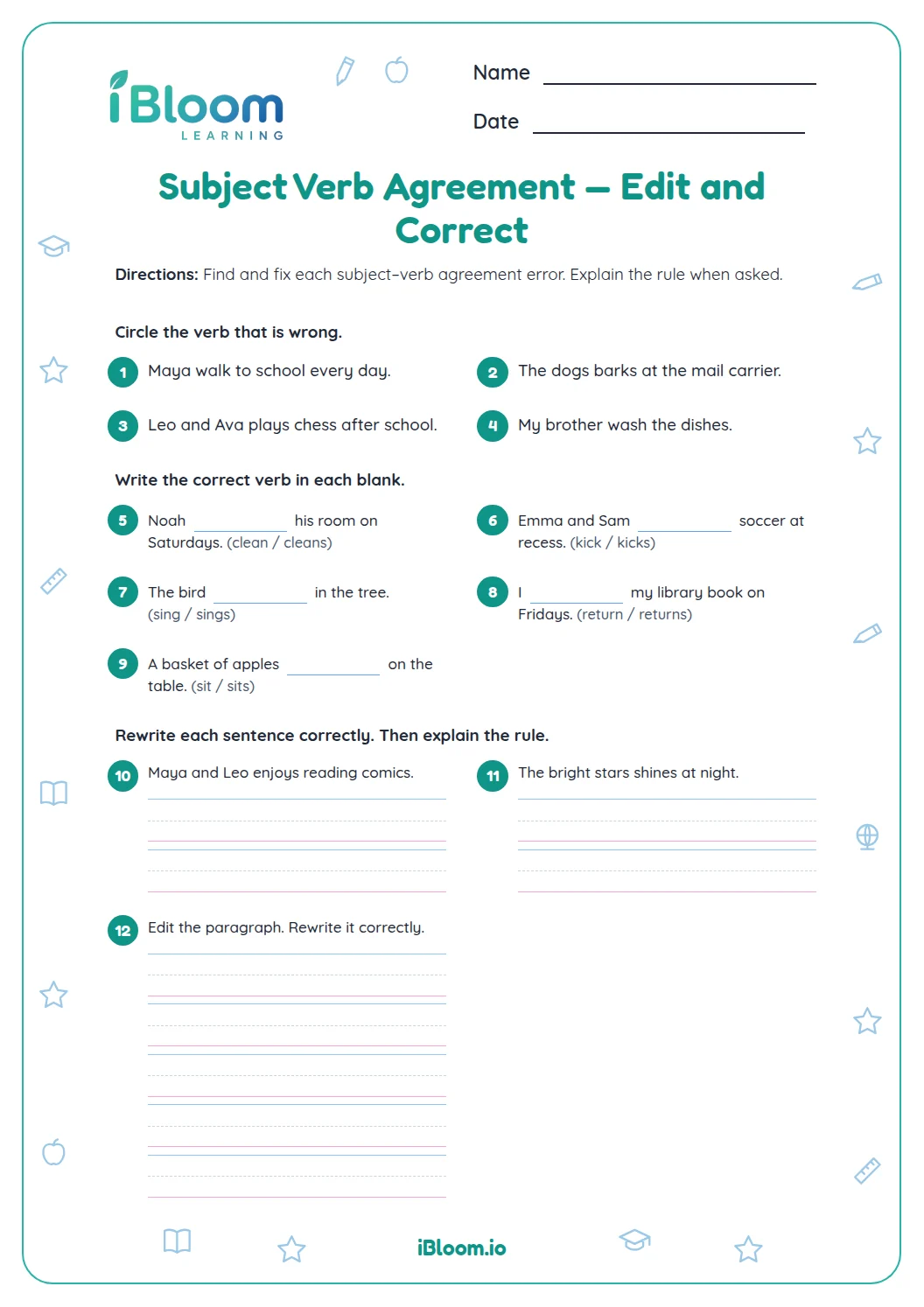
This Grade 3 printable gives learners 16 short questions on using verbs in context and choosing forms that fit each sentence. It includes a separate answer key for checking responses.
What verb skills does the worksheet practice?
Parts A and B use sentence context and time words such as Yesterday and Last night to complete each sentence with a fitting verb. Part C asks students to supply a reasonable verb, and Part D continues with sentence completion and verb meaning.
The open responses have many possible correct answers. The key supplies samples; a different verb is correct when it creates a sensible complete sentence.
- Choose verbs that complete a sentence
- Use past and present time clues
- Supply verbs in context
- Write and analyze complete sentences
How does a time clue help choose a verb?
“Yesterday” tells us the action happened in the past. The sentence “Yesterday, Maya ___ a kite” needs the past form “flew,” not “flies.”
- 1Yesterday, Maya ___ a kite.
- 2Yesterday signals past time.
- 3Maya flew a kite.
How can you tell a sentence is complete?
A complete sentence tells who or what and includes a verb that says what happens or what the subject is like. In “The horse galloped home,” horse names who and galloped tells the action.
How to use the worksheet
- 1Read the whole sentence before looking at the choices.
- 2Find time clues such as yesterday, last night, or in spring.
- 3Choose a verb that agrees with the subject and makes sense.
- 4For open blanks, write a verb that completes the idea.
- 5Read each finished sentence aloud to check that it sounds complete.
Common mistakes and quick fixes
The mistake
Choosing a verb because it matches the subject but ignoring “yesterday.”
The fix
Use time words to decide whether the action is in the past or present.
The mistake
Writing “The twins packs” because twins sounds like one group.
The fix
Twins is plural, so use the base verb: “The twins pack.”
The mistake
Completing a sentence with a describing word instead of an action or being verb.
The fix
Check that the blank tells what the subject does or is, as in “The chef stirred the soup.”
What to practice next
Questions parents and teachers ask
What is a verb in a sentence?
A verb tells an action or state, such as “waits,” “tastes,” or “is.” This sheet uses verbs in full sentences so students can notice both what the subject does and how the verb completes the thought. The surrounding words help make the choice clear.
How do time words help with verb choice?
Time words give a clue about when an action happens. “Yesterday” and “last night” point to the past, while “in spring” can describe a present or recurring action. Read the clue and the whole sentence before choosing a verb form.
Are there multiple right answers for the blank questions?
Some open blanks allow many sensible verbs. For example, a chef may stir, heat, or taste soup. The key shows one sample, and another answer is acceptable if it makes a complete sentence and fits the context. Students can refer to the worked examples and answer key to check each step.
How can I check that a sentence is complete?
Look for a subject and a verb that express a complete thought. In “The horse galloped home,” “the horse” tells who and “galloped” tells what happened. A phrase such as “A brown horse” does not tell what the horse does.
Should students write the whole sentence or just the verb?
Each prompt has a blank for the missing verb. Students write the verb form that makes the sentence complete, using the time clue and subject as guides. The answer key provides the target form and sample verbs where answers can vary.
Is an answer key included?
Yes. The separate answer key gives the selected verbs and sample sentences for open questions. Use it to check tense and meaning, while allowing other correct verbs in prompts that invite students to supply their own. Students can refer to the worked examples and answer key to check each step.