






About this worksheet
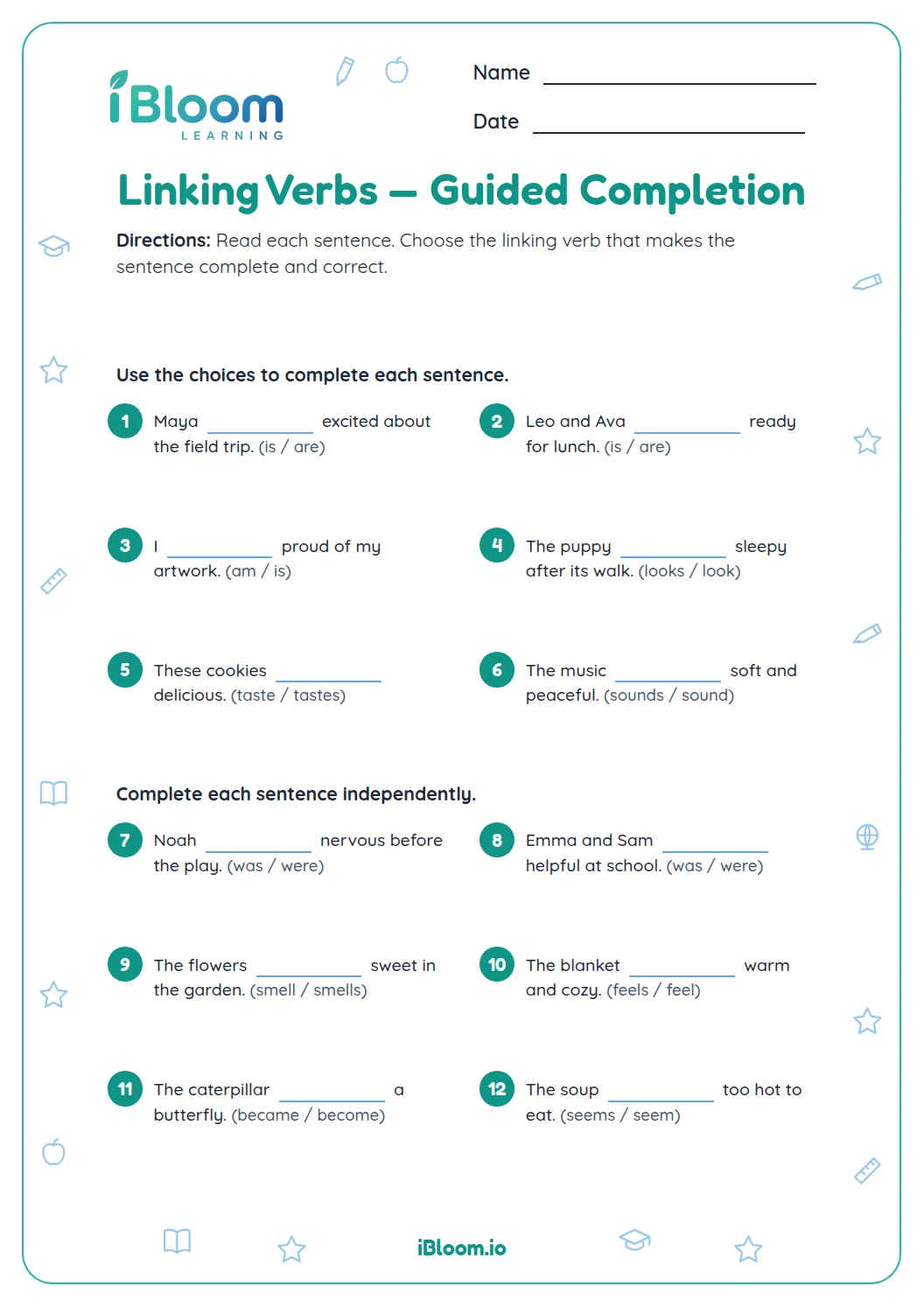
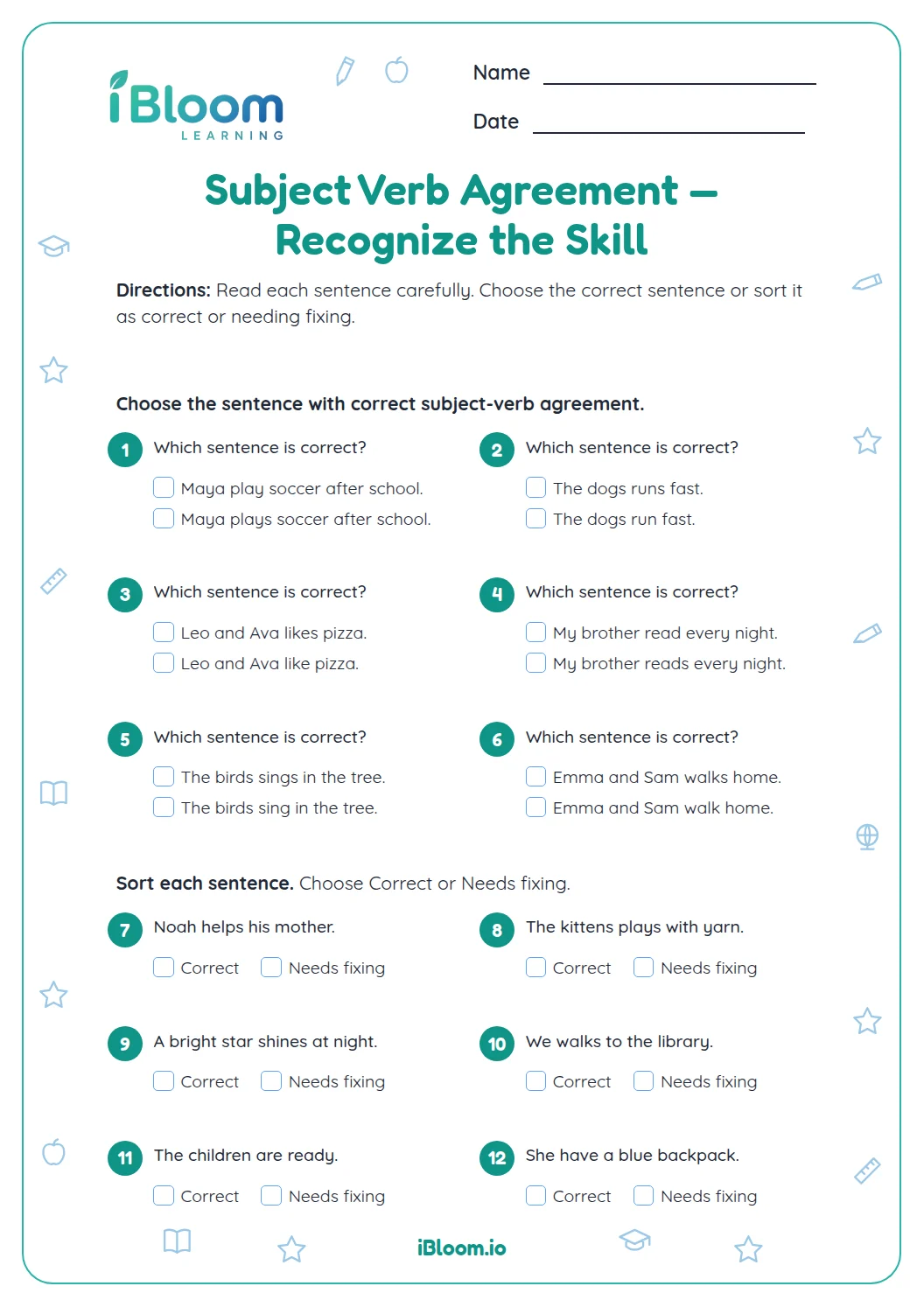
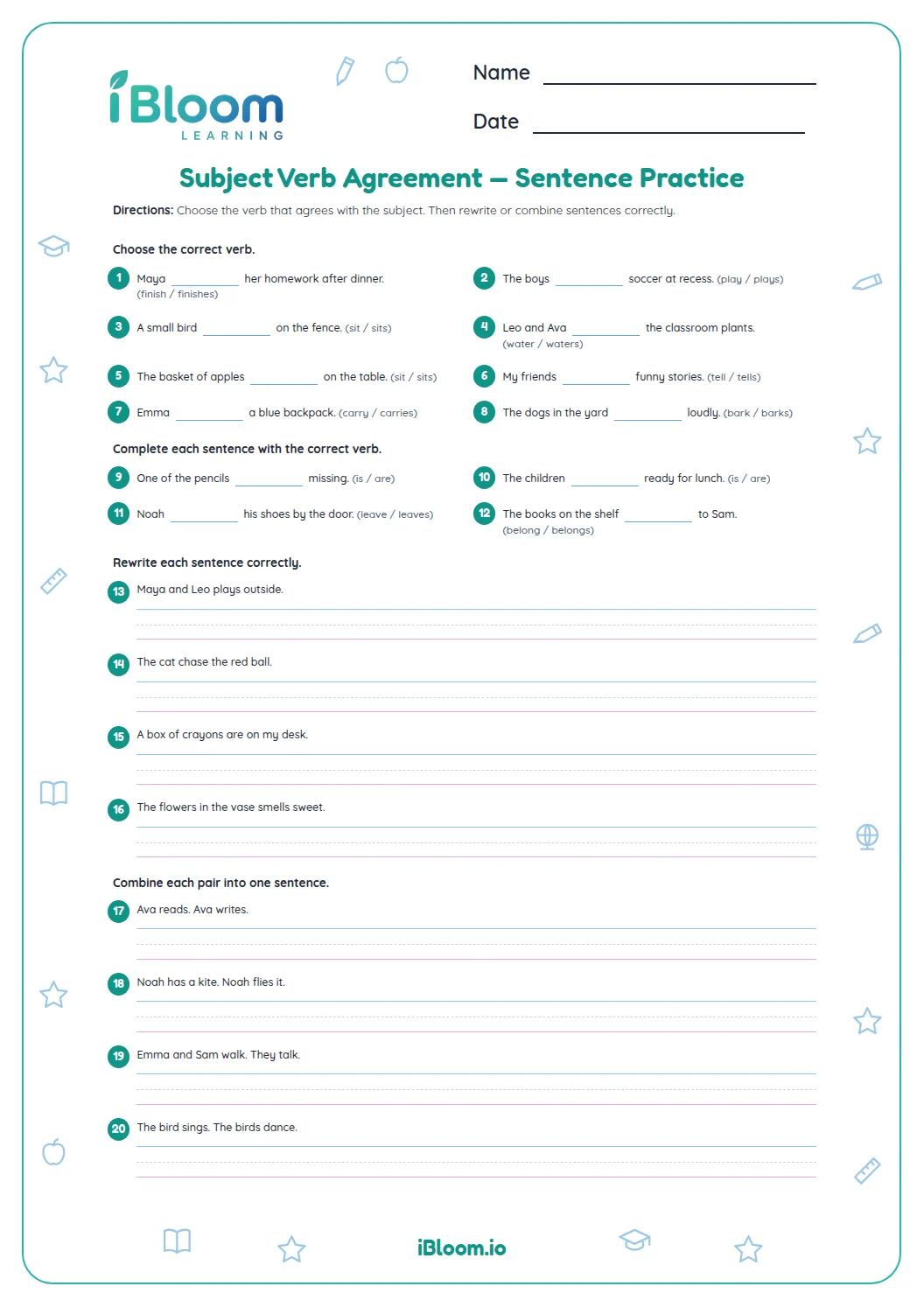
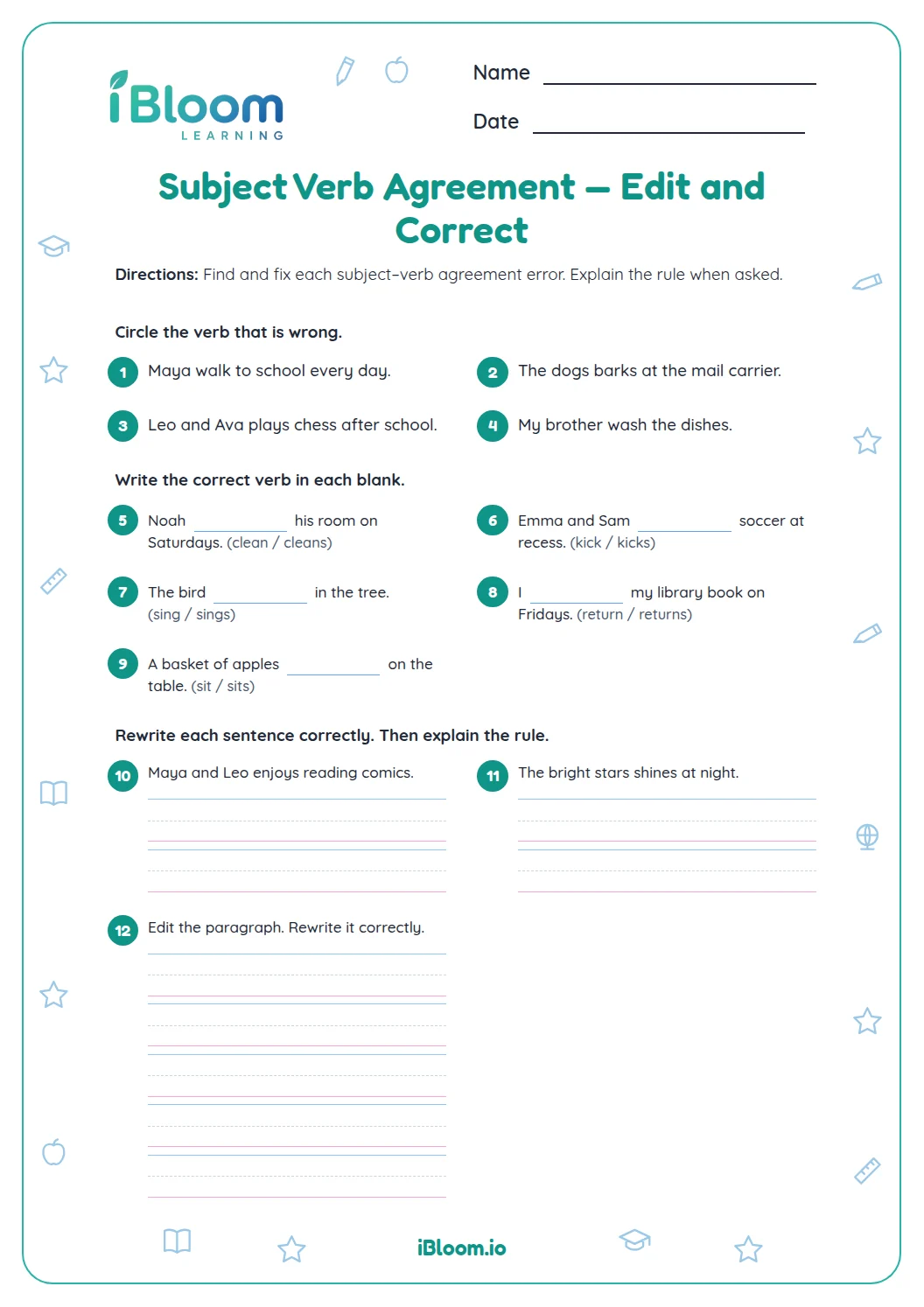
This Grade 3 printable gives learners 14 ways to work with verbs in sentences. Children circle verbs in short examples, choose action and linking verbs that complete sentence contexts, then write original sentences using a requested verb. The questions move from recognizing how a verb works to applying it in writing. The answer key includes a sample for each open response. The page aligns to Common Core L.3.1.a.
Aligned to L.3.1.a
Which word is the verb?
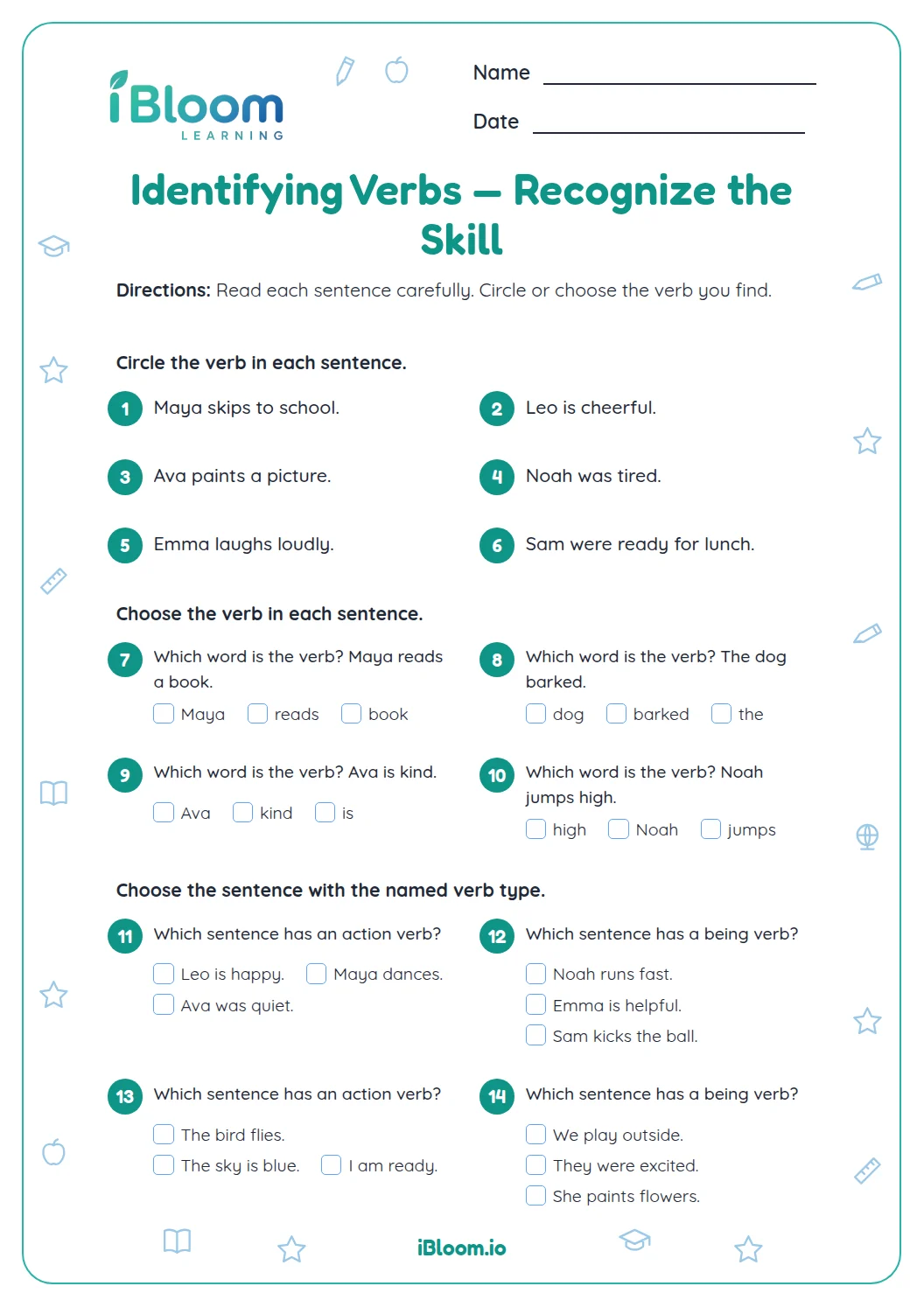
Part A asks learners to read the whole sentence and find the word named by the question. Some verbs show action; others connect the subject to a description.
- 1The puppy trots beside the fence.
- 2The action word is trots.
Which verb makes the sentence complete?
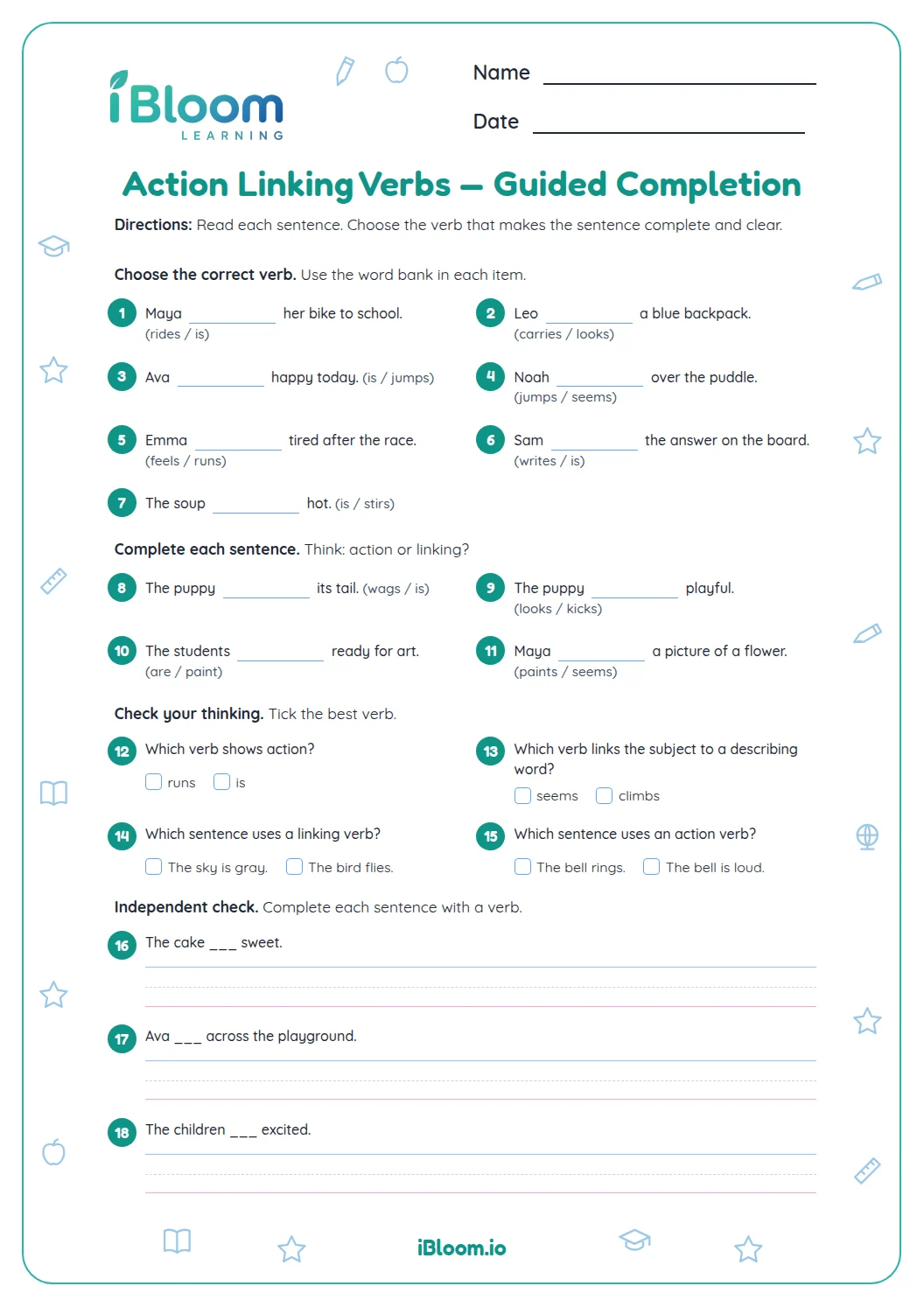
Part B asks for a verb that fits the subject and meaning. Read the finished sentence to make sure it sounds grammatical.
How can I use verbs in my own sentences?
Part C asks for original sentences. Use the requested verb, include a subject, and make the idea complete.
How can I use this worksheet?
- 1Read the subject and the whole sentence.
- 2Ask whether the verb shows an action or makes a link.
- 3For a sentence blank, choose a verb that fits the meaning.
- 4For your own writing, include a subject and a complete thought.
- 5Check capitalization and punctuation.
What should I check as I work?
The mistake
Naming a describing word as the verb
The fix
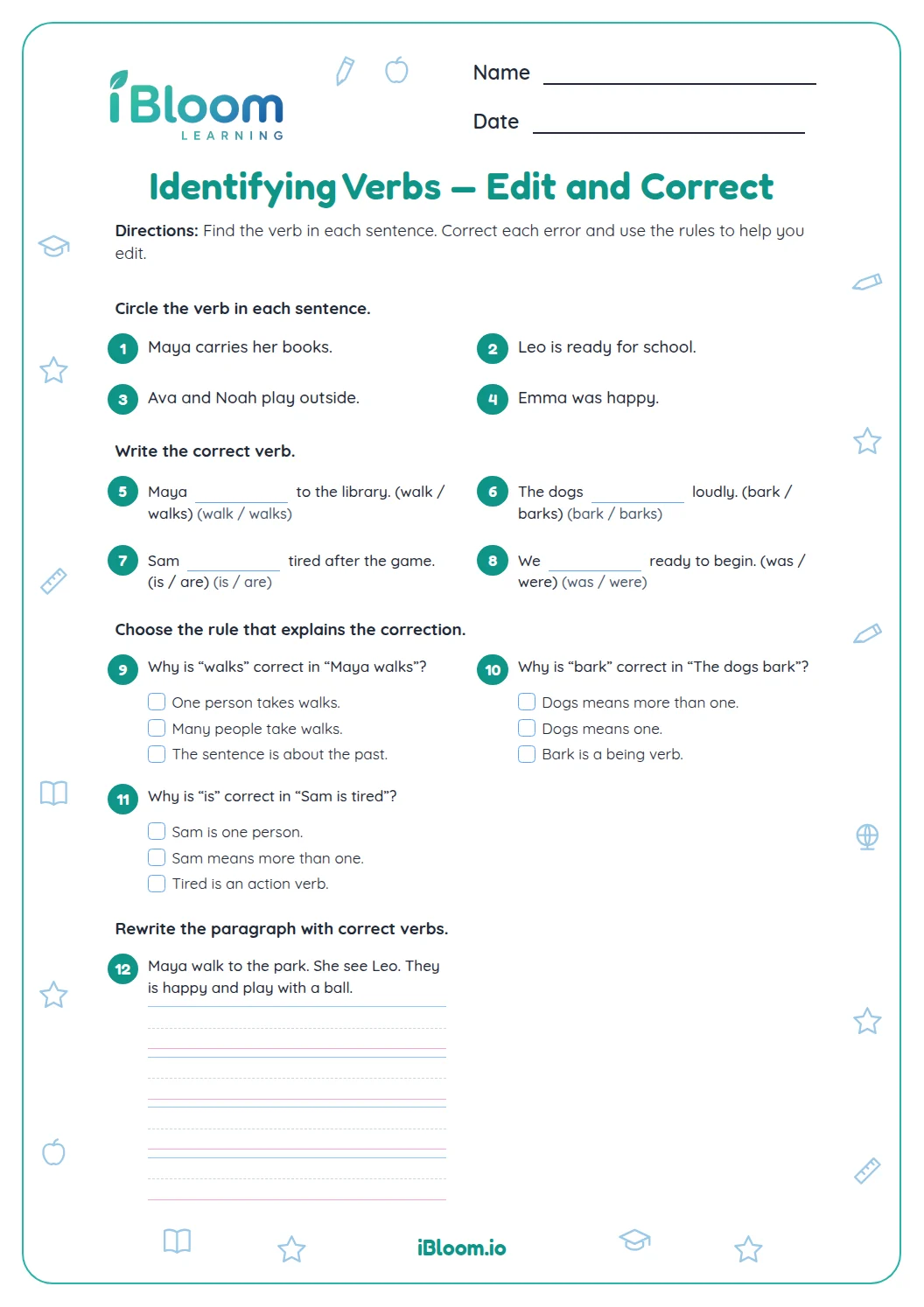
Ask what the subject does or which word links it to the description. A describing word alone is not the verb.
The mistake
Choosing a verb that does not fit the subject
The fix
Read the sentence aloud with your verb. Make sure it agrees with the subject and fits the meaning.
The mistake
Writing a phrase instead of a sentence
The fix
Add a subject and finish the thought. Then check the first capital and ending punctuation.
Common Core alignment
The questions identify verbs and use them to make complete sentences.
Recognize verbs and explain what they do in particular sentences.
On this sheet: Learners identify action and linking verbs in sentences and use verbs in their own writing.
Show the official wordingHide the official wording
Explain the function of nouns, pronouns, verbs, adjectives, and adverbs in general and their functions in particular sentences.
What to practice next
Make more practice
Further reading
Questions parents and teachers ask
What is a verb in a sentence?
A verb tells what the subject does or links the subject to a description. In “The puppy trots,” trots names an action. In “Nina feels proud,” feels links Nina with the description proud. The sentence context helps show what the verb contributes to the whole idea.
How many questions does the page include?
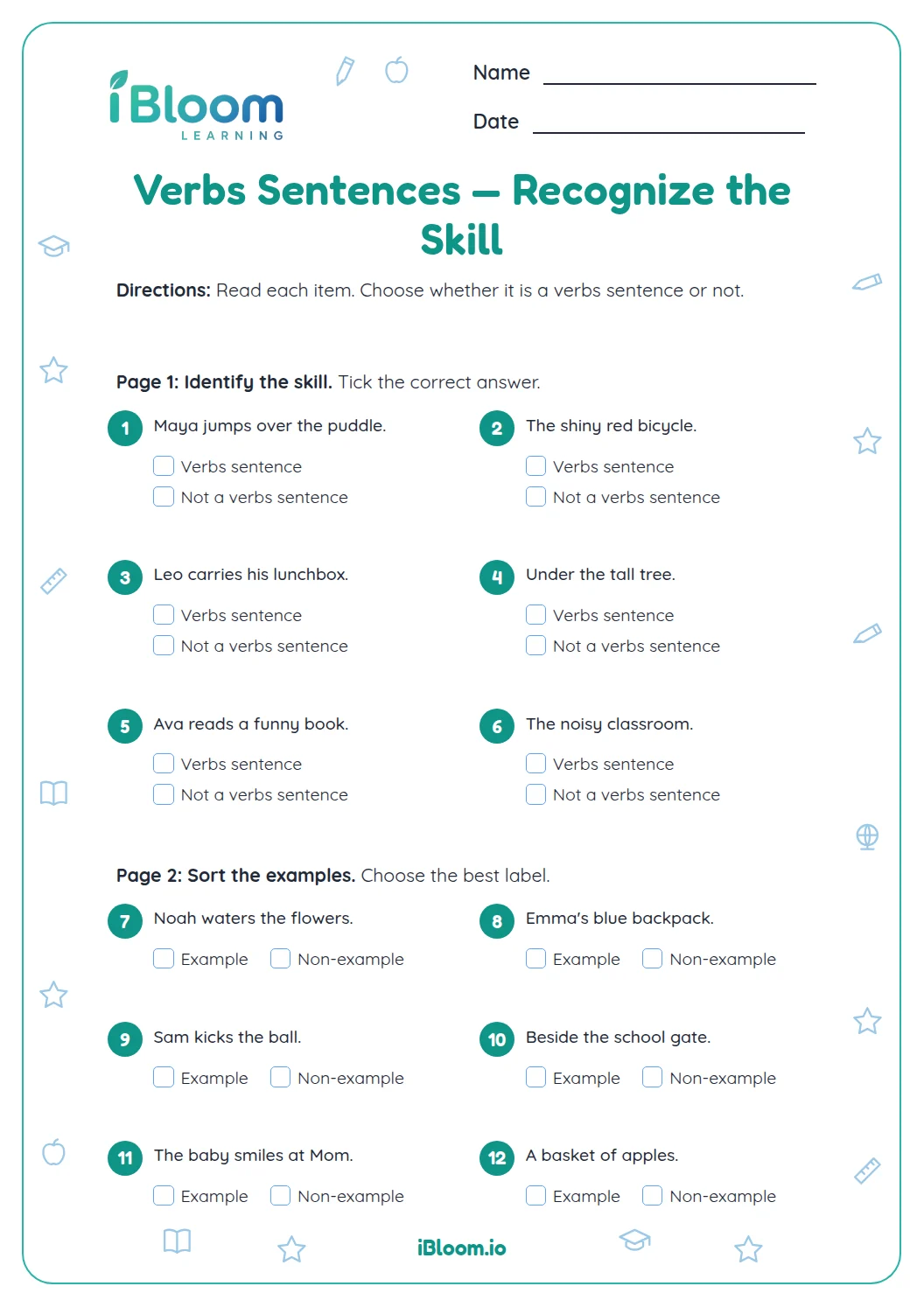
The worksheet has 14 questions in three parts: four sentence items for identifying verbs, eight sentence completions, and two original writing prompts. The separate answer key lists the target verbs and provides sample sentences for writing. Families can compare responses with the examples.
Are linking verbs included?
Yes. Some sentence items use linking verbs such as feels, turn, smells, and were. These connect a subject to a description or condition. Other items use action verbs, so children can notice how verbs work in different sentences.
Can more than one verb fit a sentence?
Include a subject, use the requested verb correctly, and finish a complete thought. Add a detail when it helps the reader understand the sentence, then check the first capital letter and the punctuation at the end. Reading the sentence aloud can help catch an unfinished idea.
How can a child write a strong sentence with a verb?
Yes. The key lists the verbs for identification and sentence-completion items, followed by one sample sentence for each writing prompt. Other complete sentences are acceptable when they use the requested verb correctly. Check that the sentence has a subject and expresses a complete thought.
Is an answer key included?
Yes. The key lists the verbs for identification and sentence-completion items, followed by one sample sentence for each writing prompt. Other complete sentences are acceptable when they use the requested verb correctly. Check that each response has a subject and communicates a complete idea, then compare it with the sample.