





About this worksheet
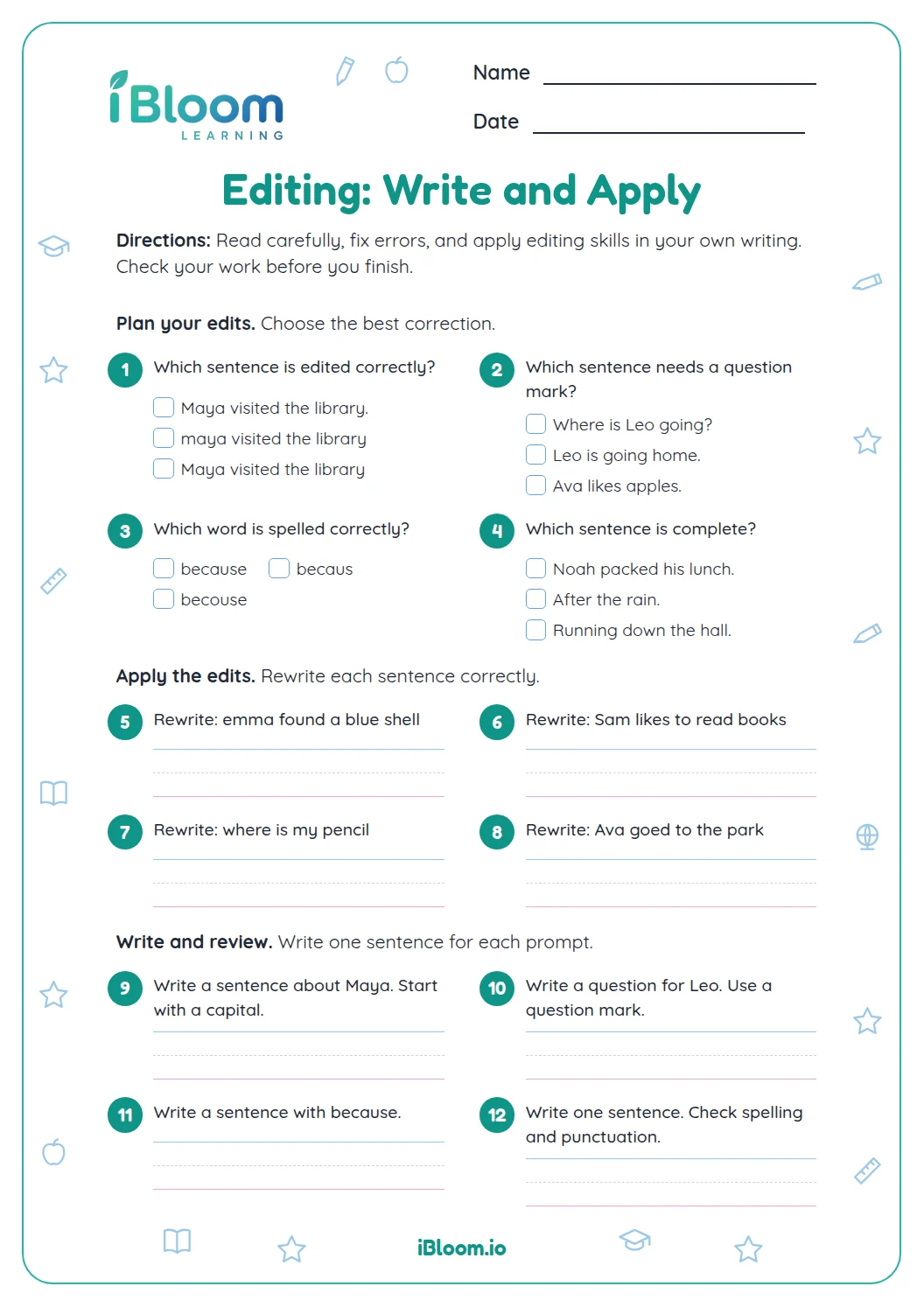
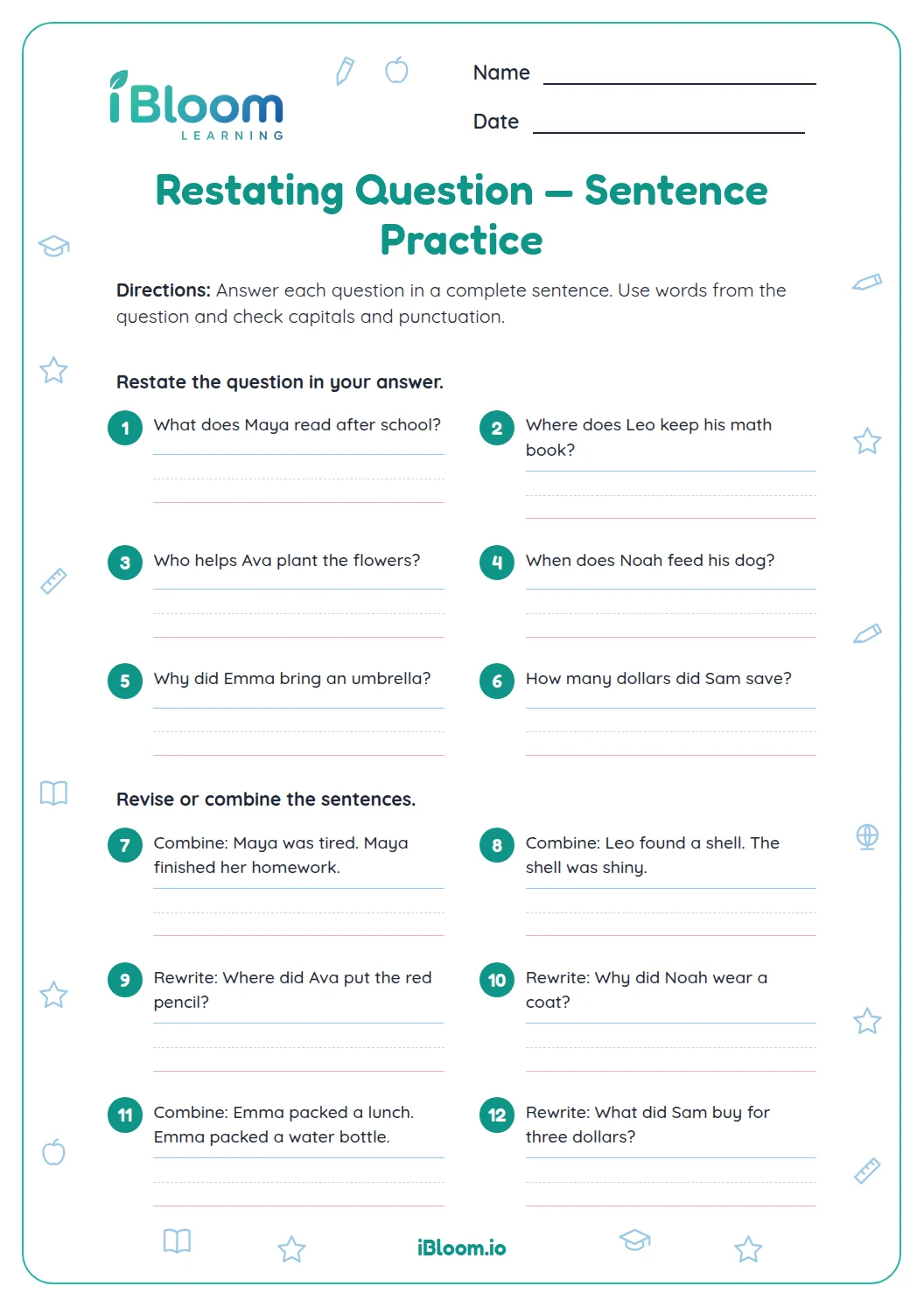
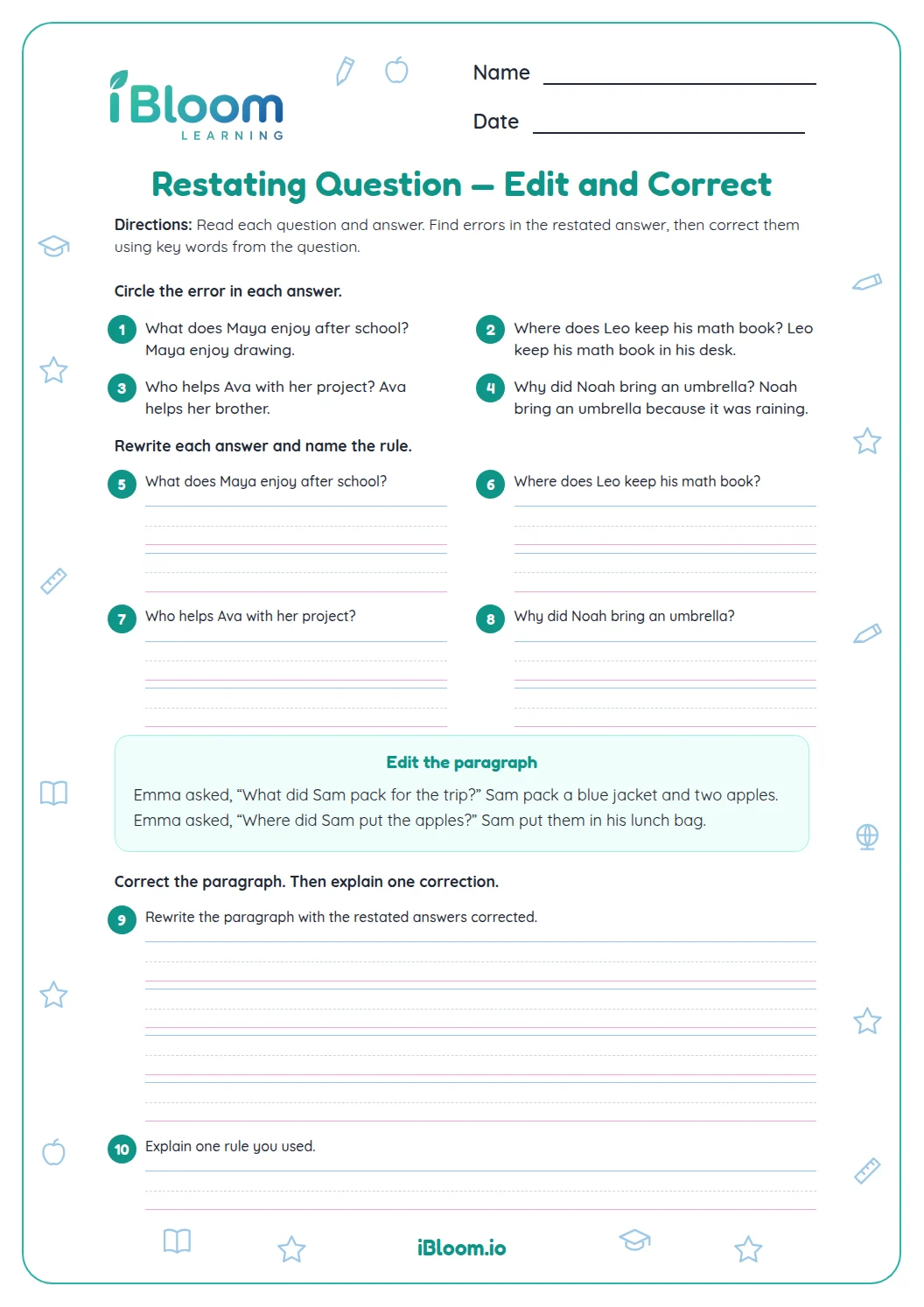
This Grade 3 editing worksheet asks students to notice and fix common sentence errors. Part A focuses on capitals and end marks; Part B adds commas, spelling, apostrophes, and clear sentence order. The sentences use familiar school and home situations so children can focus on editing choices.
Aligned to L.3.2 and W.3.5
What does the worksheet practice?
Part A checks capitals, end marks, commas in lists, and dialogue punctuation. Part B moves to spelling, apostrophes, run-ons, and sentence clarity. Students choose edits and rewrite selected sentences.
- Use capitals for sentence beginnings, names, days, and places.
- Choose punctuation that matches a question or statement.
- Check spelling and reread to make sure a sentence makes sense.
How can a child edit one sentence at a time?
Read the sentence aloud slowly. Look for one kind of error at a time: first capitals, then punctuation, then spelling and word order. Finally, read the corrected sentence again to see if it sounds complete.
Try this editing routine
- 1Read the whole sentence before changing anything.
- 2Check the first word and any names or place names.
- 3Look at the end mark and commas.
- 4Reread the finished sentence aloud.
Common editing slips
The mistake
Fixing the first letter but forgetting the punctuation at the end.
The fix
Point to both the first character and the final mark during a last check.
The mistake
Adding a comma between every word in a list.
The fix
Use commas to separate list items, not between a noun and its describing words.
Common Core alignment
This worksheet practices Grade 3 conventions and the editing step of the writing process.
Use capitalization, punctuation, and spelling conventions.
On this sheet: Students correct capitals, commas, apostrophes, end punctuation, and spelling.
Show the official wordingHide the official wording
Demonstrate command of the conventions of standard English capitalization, punctuation, and spelling when writing.
Strengthen writing through planning, revising, and editing.
On this sheet: Students practice checking and correcting sentence conventions as part of editing.
Show the official wordingHide the official wording
With guidance and support from peers and adults, develop and strengthen writing as needed by planning, revising, and editing.
What to practice next
Make more practice
Further reading
Questions parents and teachers ask
What errors does this editing page cover?
The worksheet has 14 choices about capitals, end punctuation, commas, dialogue punctuation, apostrophes, spelling, and sentence order. Each item asks students to select a corrected version, so they can compare the original error with a complete edit. Ask the student to name the clue or operation that supports the choice, then check the completed sentence or equation against the.
Should a student read each sentence aloud?
Yes. Reading a sentence slowly can make a missing word, awkward order, or run-on easier to notice. After correcting it, read the whole sentence again and check its first letter and final punctuation mark. This final reread helps the correction stick and makes the sentence easier for another person to understand.
How can an adult help without telling the answer?
Ask the child to name one thing they are checking, such as capitals or commas. Then invite them to compare the choices and explain which one follows that rule. The answer key can confirm their reasoning afterward. The goal is to help the student notice the rule and make the decision independently.
What is the difference between editing and revising?
Editing checks conventions such as spelling, punctuation, and capitalization. Revising changes ideas or organization to make writing stronger. This worksheet focuses on editing sentence-level details, not on changing the topic or adding new information. Both steps matter, but this page isolates conventions so a learner can practice careful sentence-level checks.
How many editing questions are on the worksheet?
There are 14 multiple-choice editing questions across two parts. Students select corrected sentences or punctuation marks, then use the answer key to check capitals, commas, end marks, spelling, and sentence order. Ask the student to name the clue or operation that supports the choice, then check the completed sentence or equation against the key. This quick check connects the.