





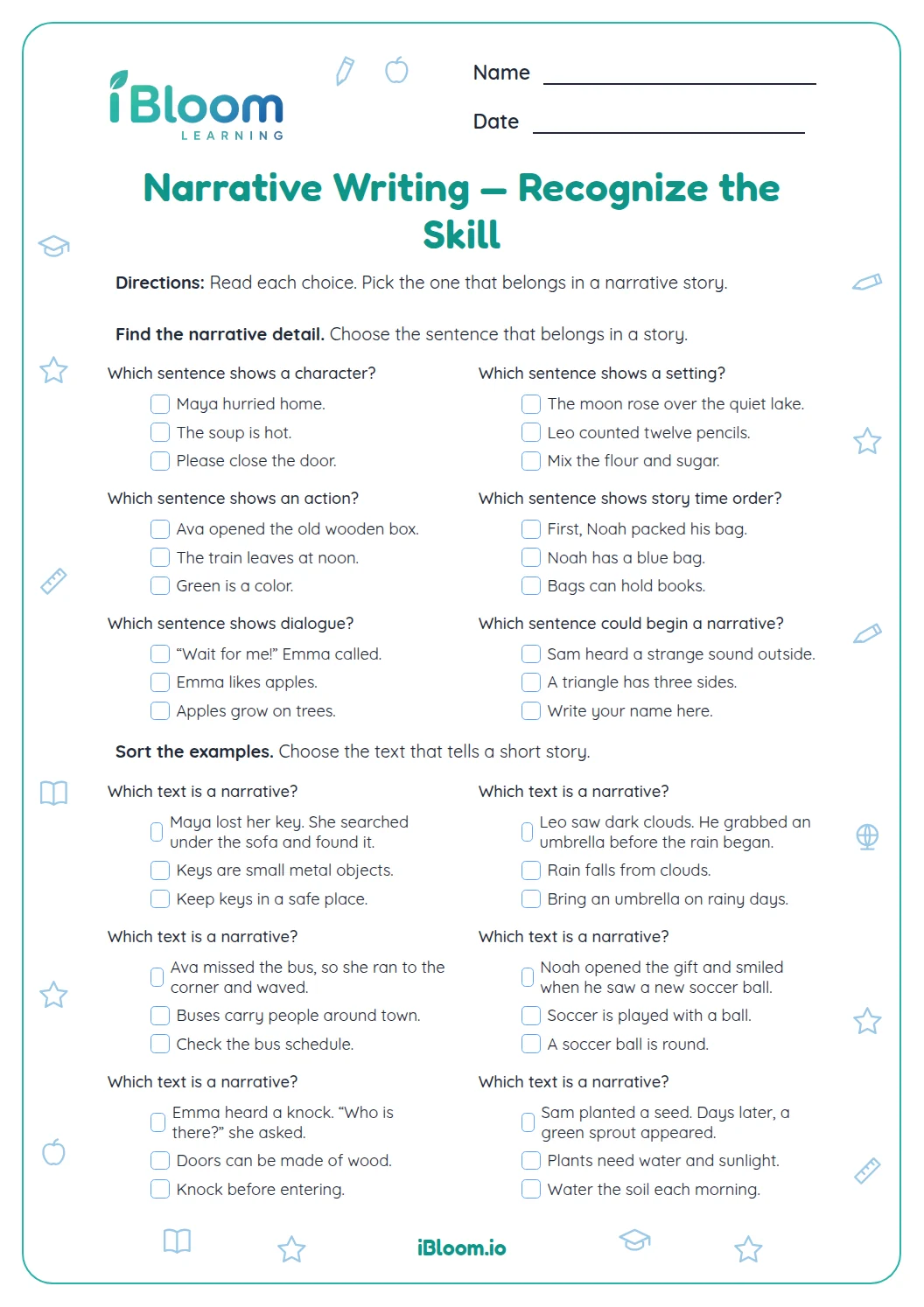

About this worksheet
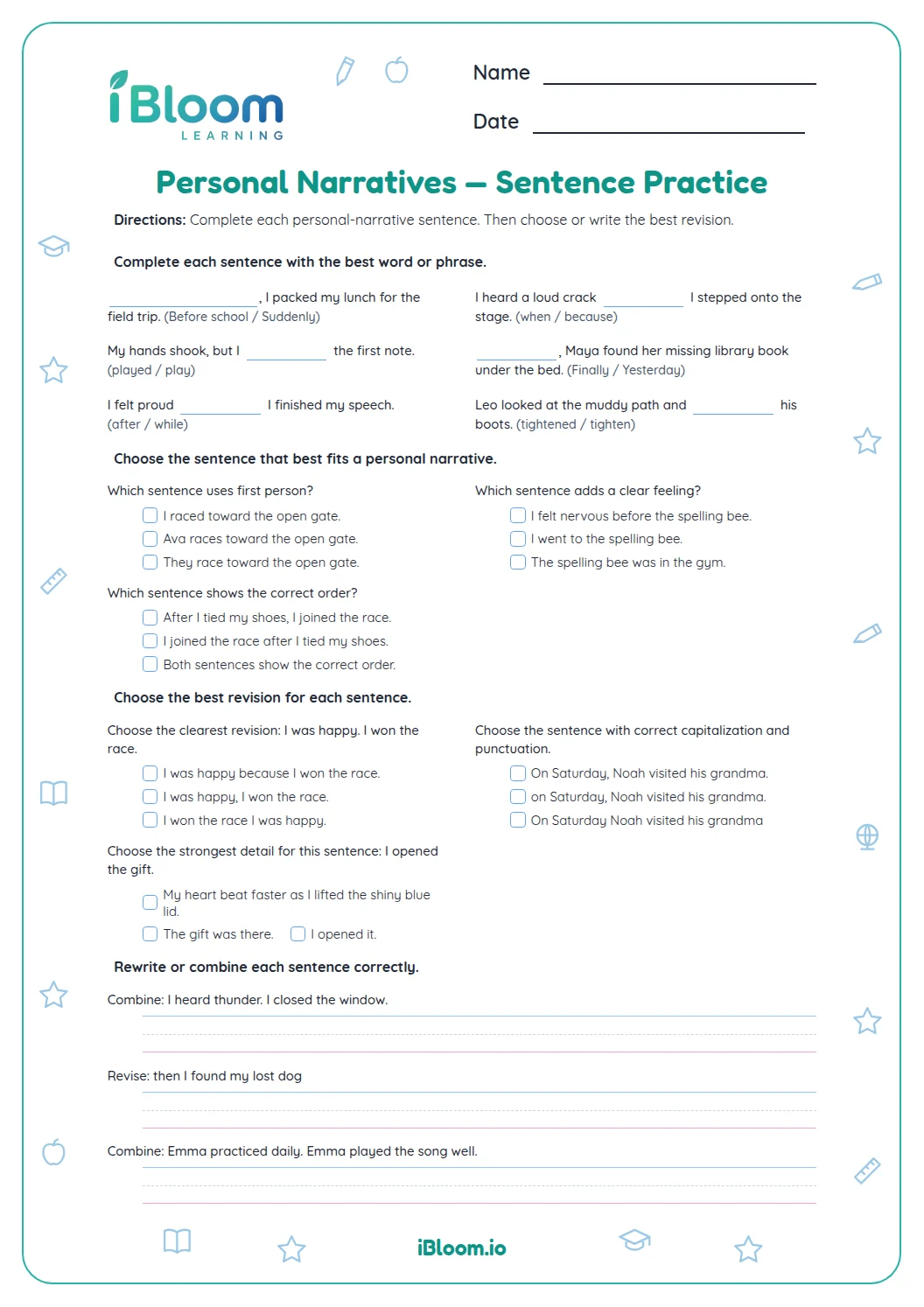
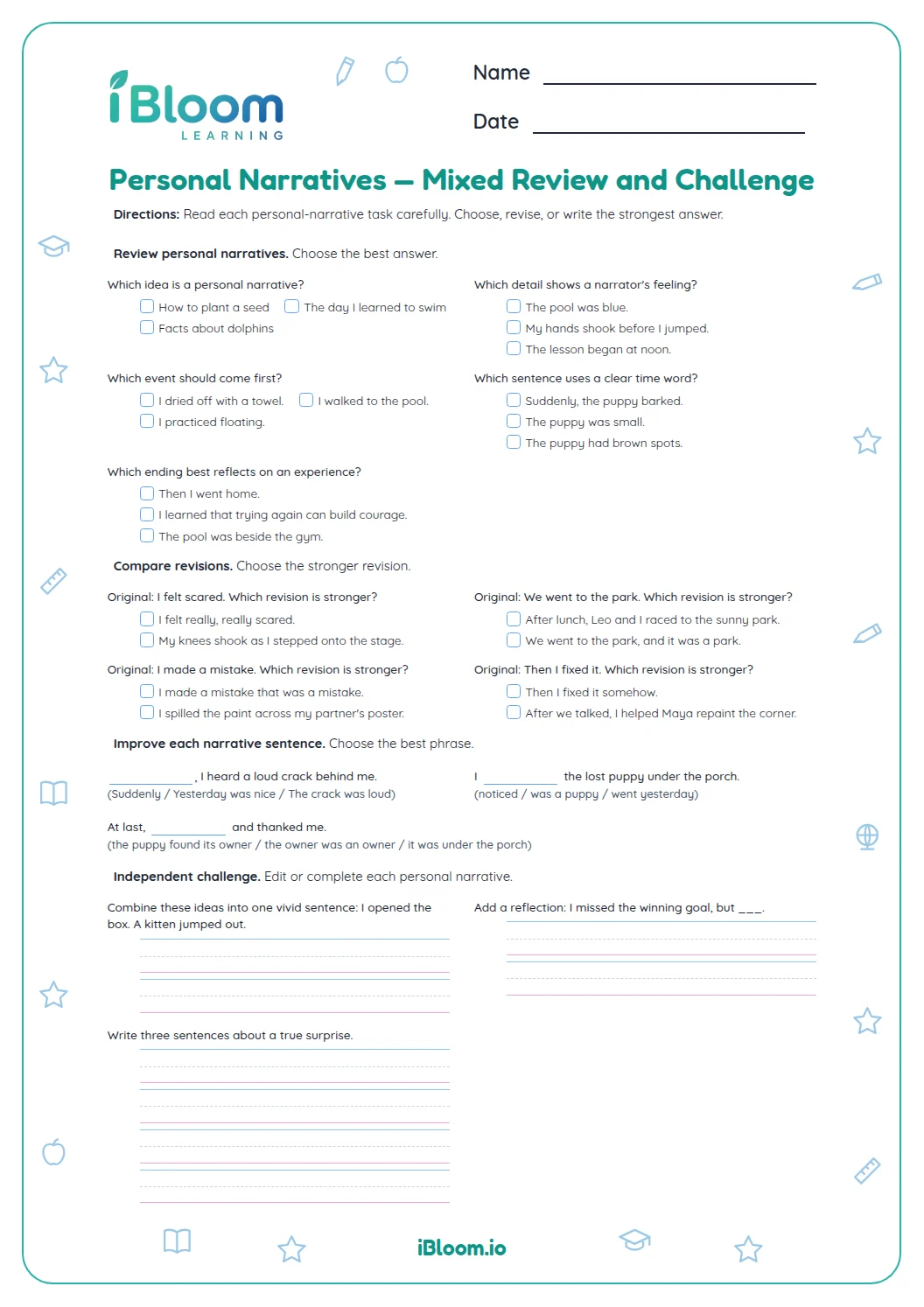
This Grade 4 personal narrative worksheet moves from recognizing story details to applying the skill in one sentence about a real moment. Students consider point of view, sensory details, event order, dialogue, and an ending. The answer key gives the intended choices and a model for the open response. It aligns with W.4.3.
Aligned to W.4.3
What does this narrative worksheet ask students to do?
Students begin by identifying details that show character, point of view, setting, and event order. Planning and writing questions then build toward a short true story about a time the writer helped someone.
- Part A: notice point of view, setting, character, and event sequence
- Part B: plan and revise a small moment
- Part C: write one sentence about a true moment
How can a writer plan a small moment?
Choose one event that can be told in a few connected steps. Name where it happened, decide what occurred first and next, then identify the moment that changed or solved the problem.
- 1Locked shed → search backpack → find key
- 2The steps stay in the order that the narrator experiences them.
How do details help a reader picture an event?
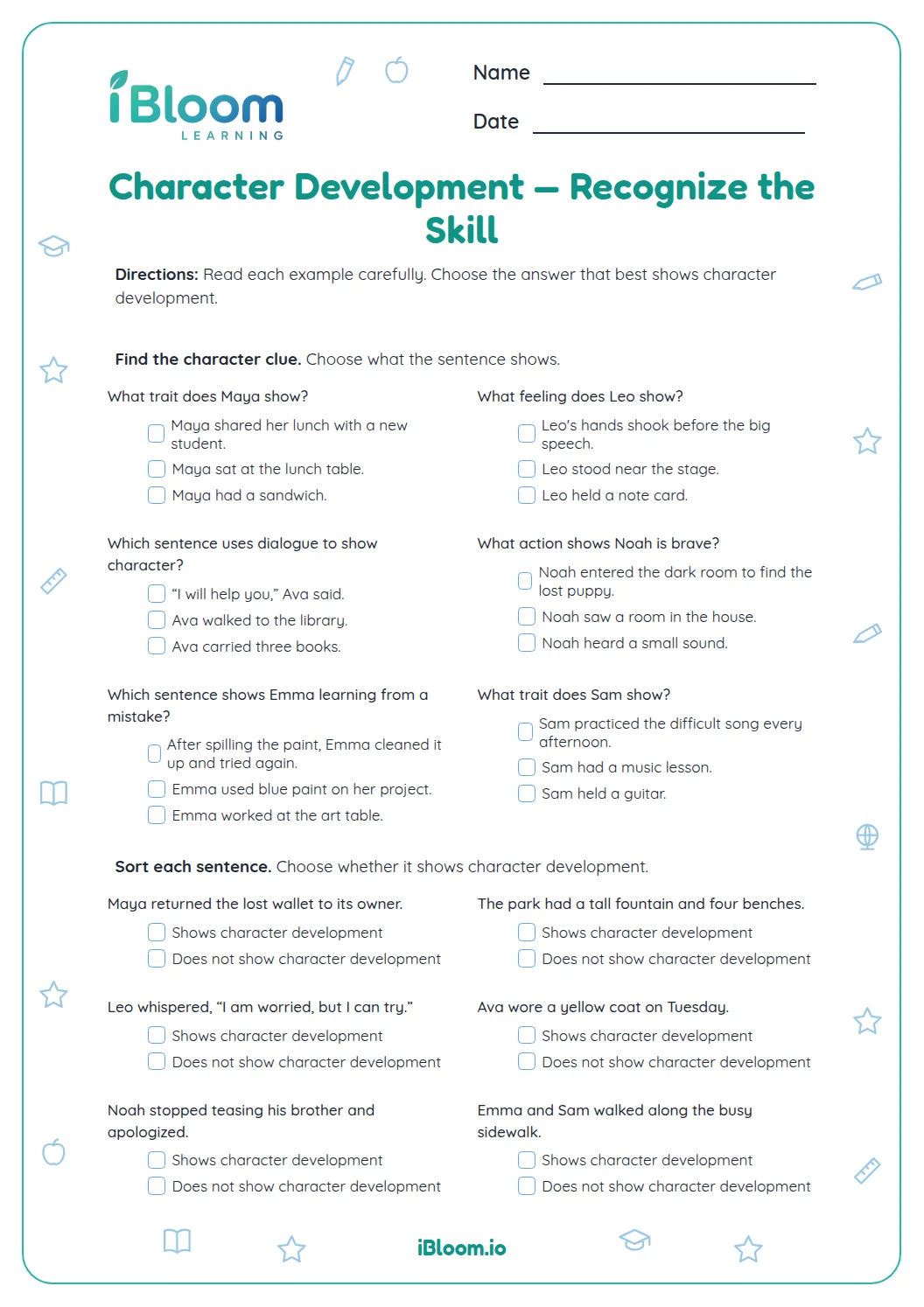
A specific action or sensory detail lets readers infer feelings and imagine the setting. “Maya twisted her program in both hands” gives an observable clue that she feels nervous. Dialogue can show what a person said during the moment.
How to use the worksheet
- 1Read each choice and find the words that signal point of view or feeling.
- 2Put the planning events in the order the narrator experienced them.
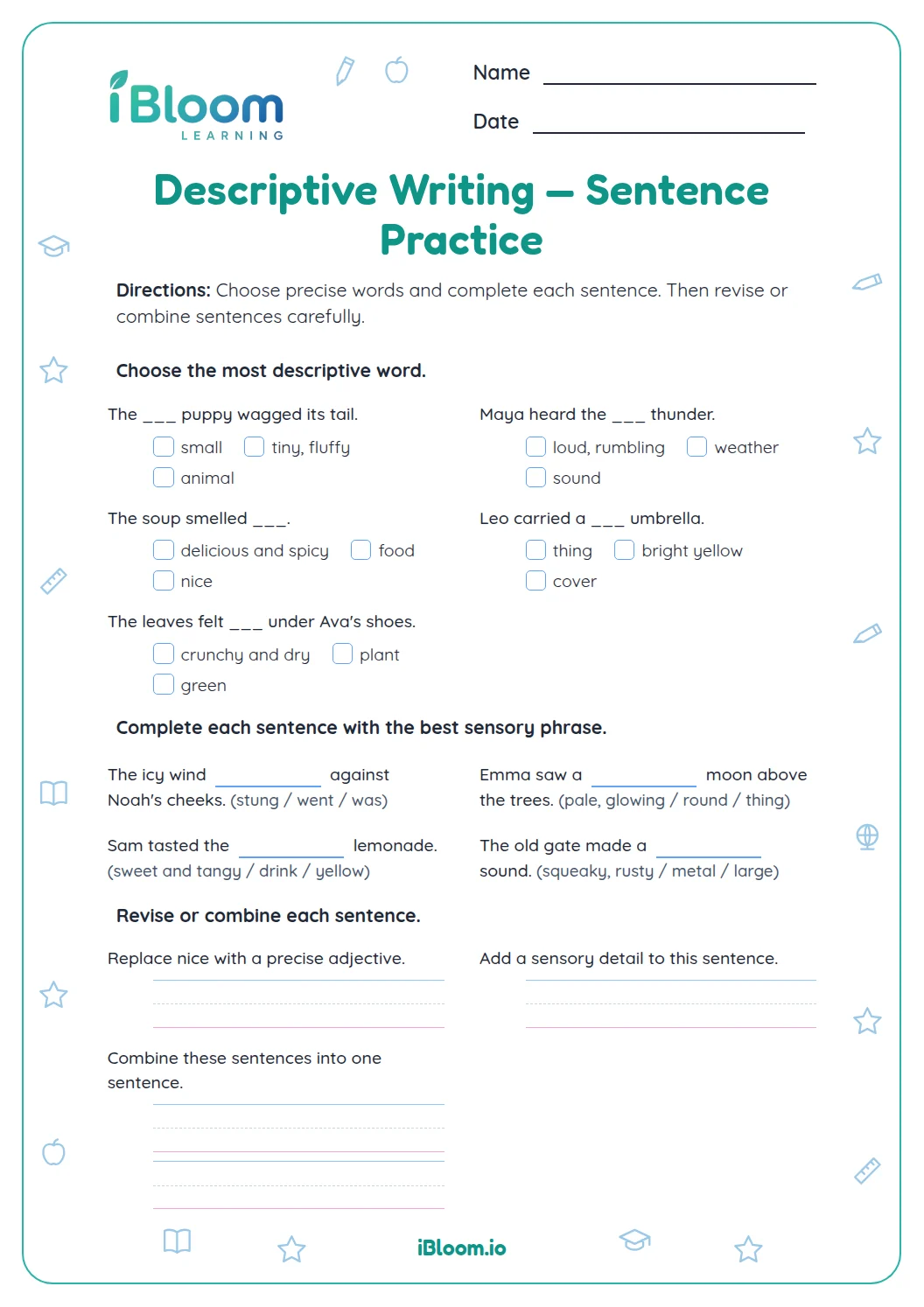
- 3Replace vague words with an action or sensory detail.
- 4Use quotation marks around spoken words and punctuation inside the quotation marks.
- 5Draft a beginning, one or more ordered events, and an ending.
- 6Use the answer key as a model for open responses; your own true event can differ.
Common mistakes and quick fixes
The mistake
Listing events without showing which happened first.
The fix
Use time words such as first, next, and finally, then check the order.
The mistake
Naming a feeling without giving the reader a clue.
The fix
Add a visible action, thought, or sensory detail that lets the reader infer it.
The mistake
Writing dialogue without quotation marks.
The fix
Place quotation marks around the exact words spoken and include the needed punctuation.
Curriculum alignment
Students develop real experiences with narrative technique, descriptive details, and a clear event sequence.
Write narratives that develop real or imagined experiences.
On this sheet: Students practice sequencing events and using description and dialogue in personal narratives.
Show the official wordingHide the official wording
Write narratives to develop real or imagined experiences or events using effective technique, descriptive details, and clear event sequences.
What to practice next
Make more practice
Further reading
Questions parents and teachers ask
What is a personal narrative?
A personal narrative tells about a true event from the writer’s life. It names a situation, develops what happened with details, and ends in a way that follows from the experience. The final prompt asks students to write about a moment when they helped someone.
How can a student show a character’s feeling?
Give the reader an action, thought, or detail that suggests the feeling. “Maya twisted her program in both hands” lets readers infer nervousness. This kind of specific clue helps a reader picture the moment instead of simply being told how someone feels.
How should events be ordered in a narrative?
Put events in the order the narrator experienced them. Time words such as first, next, and finally can make the order clear. The planning prompt about the key asks students to arrange the locked shed, searching a backpack, and finding the key.
How should dialogue be punctuated?
Put quotation marks around the words a person says. In the worksheet sentence, the spoken words follow “Mom said,” and end with punctuation inside the closing quotation mark. Dialogue gives readers a moment from the scene in the speaker’s voice.
Does the answer key give one required personal story?
No. The last writing prompt asks each student to tell a moment from their own life. The answer key offers sample responses for the shorter open-ended questions, while the narrative can be different as long as it includes the requested parts.