






About this worksheet
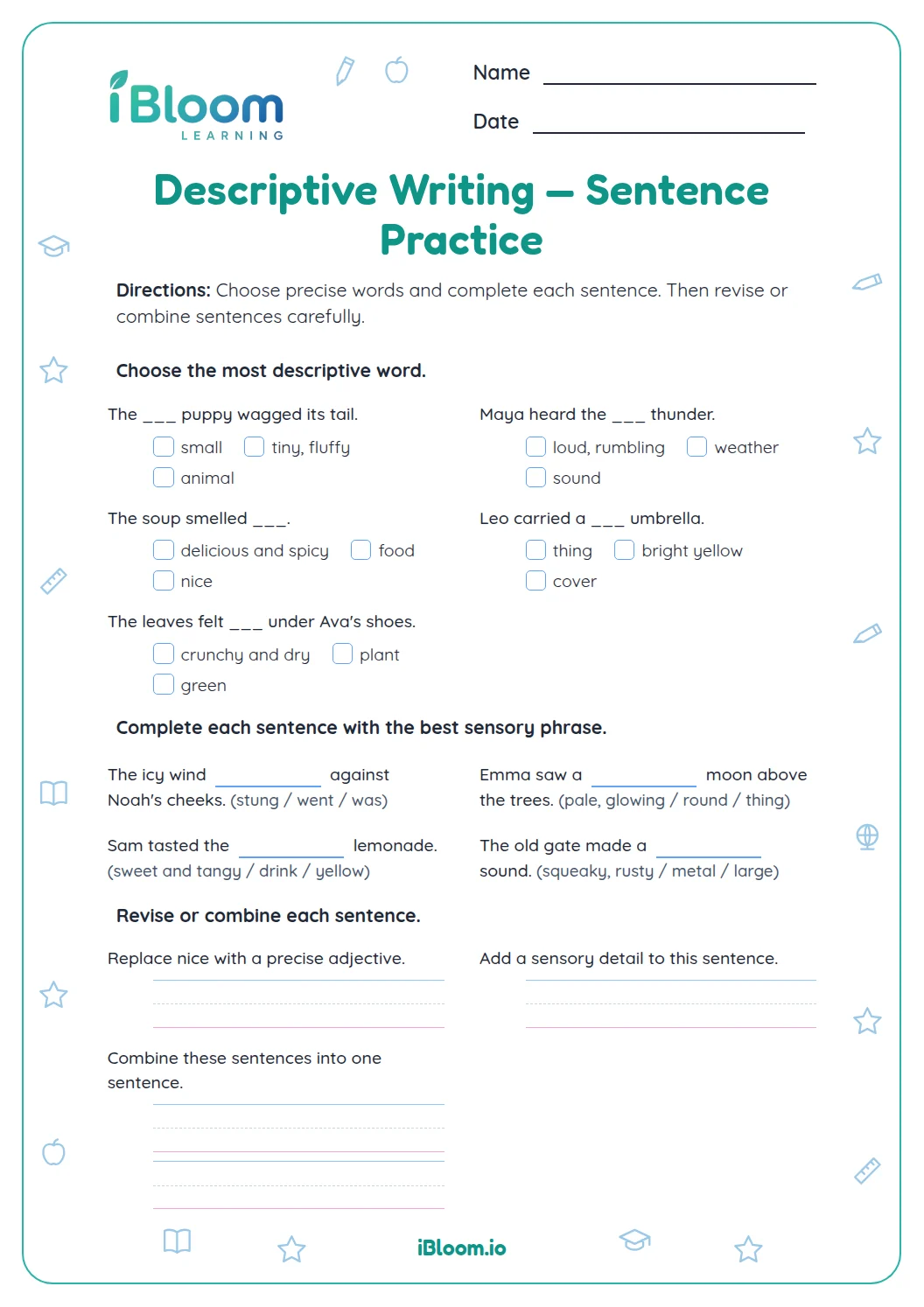
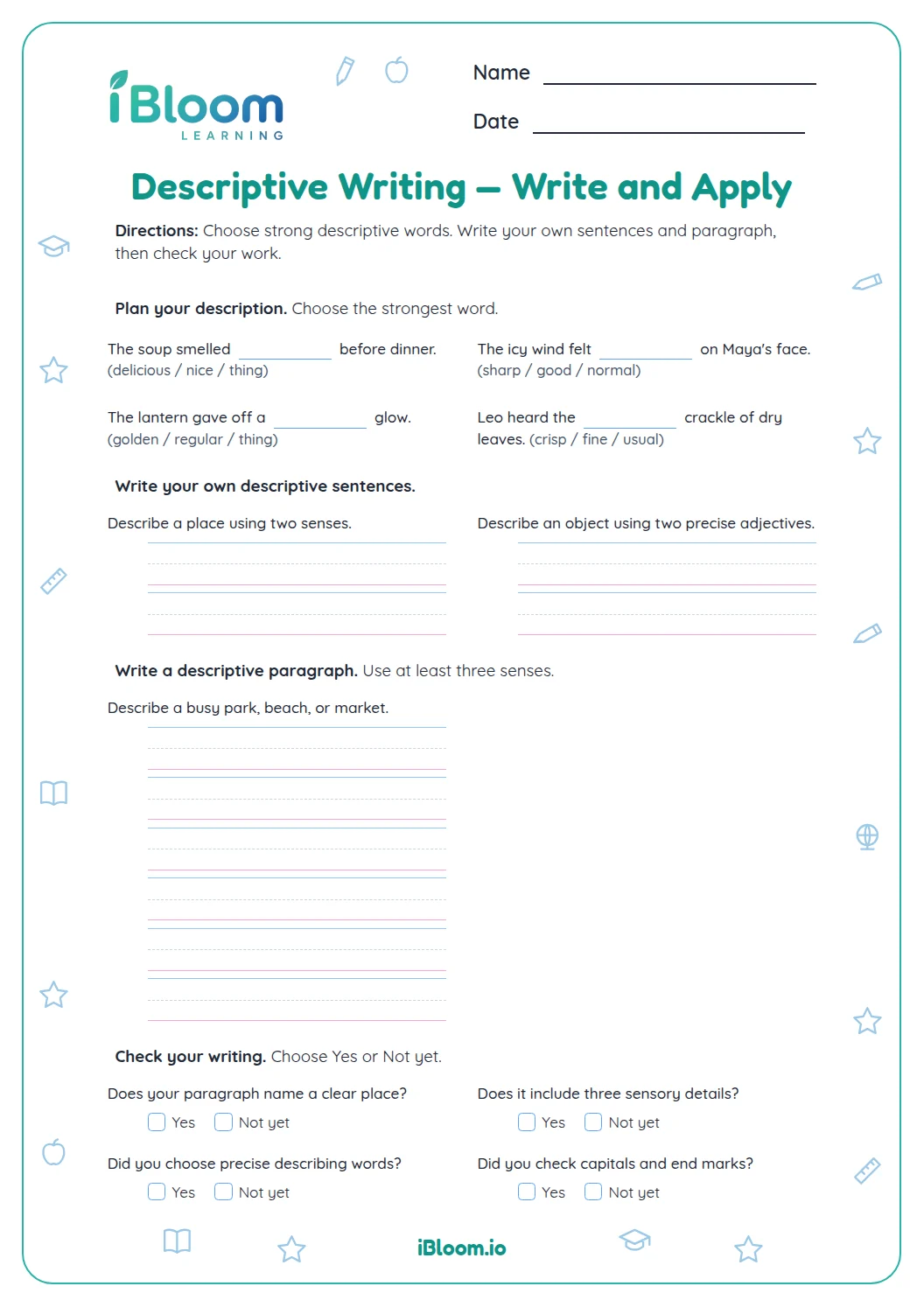
This Grade 4 printable guides students from recognizing vivid details to adding precise words in sentences and a short scene. It includes six sentence choices and eight completions about sound, smell, touch, setting and action. The answer key gives choices and sample responses students can adapt. The work practices Common Core W.4.3.d by using concrete words and sensory details to convey experiences and events precisely.
Aligned to W.4.3.d
What makes one detail more descriptive?
A precise verb, concrete noun or sensory phrase gives the reader information to imagine. “Rain tapped on the metal roof” names a sound and an object; “Rain was wet” gives less to picture.
How does the guided frame build a scene?
Question 13 asks students to add a sound detail to a pond scene. Other completions focus on different sensory clues and precise actions, so students practice choosing a detail that fits its sentence.
- 1“At the pond, I heard frogs croaking.”
- 2The phrase names a sound and connects it to the pond setting.
How can a writer show instead of tell?
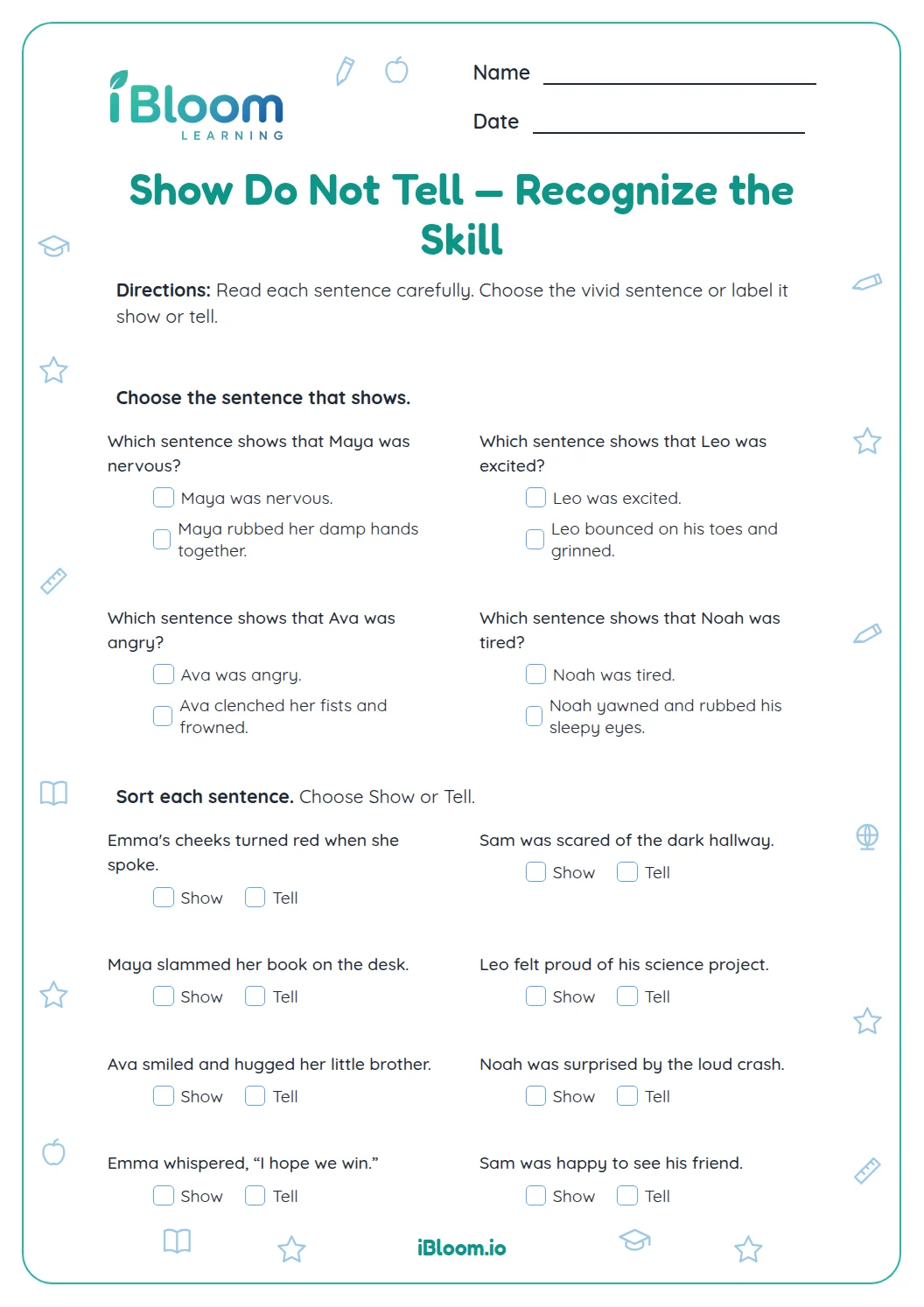
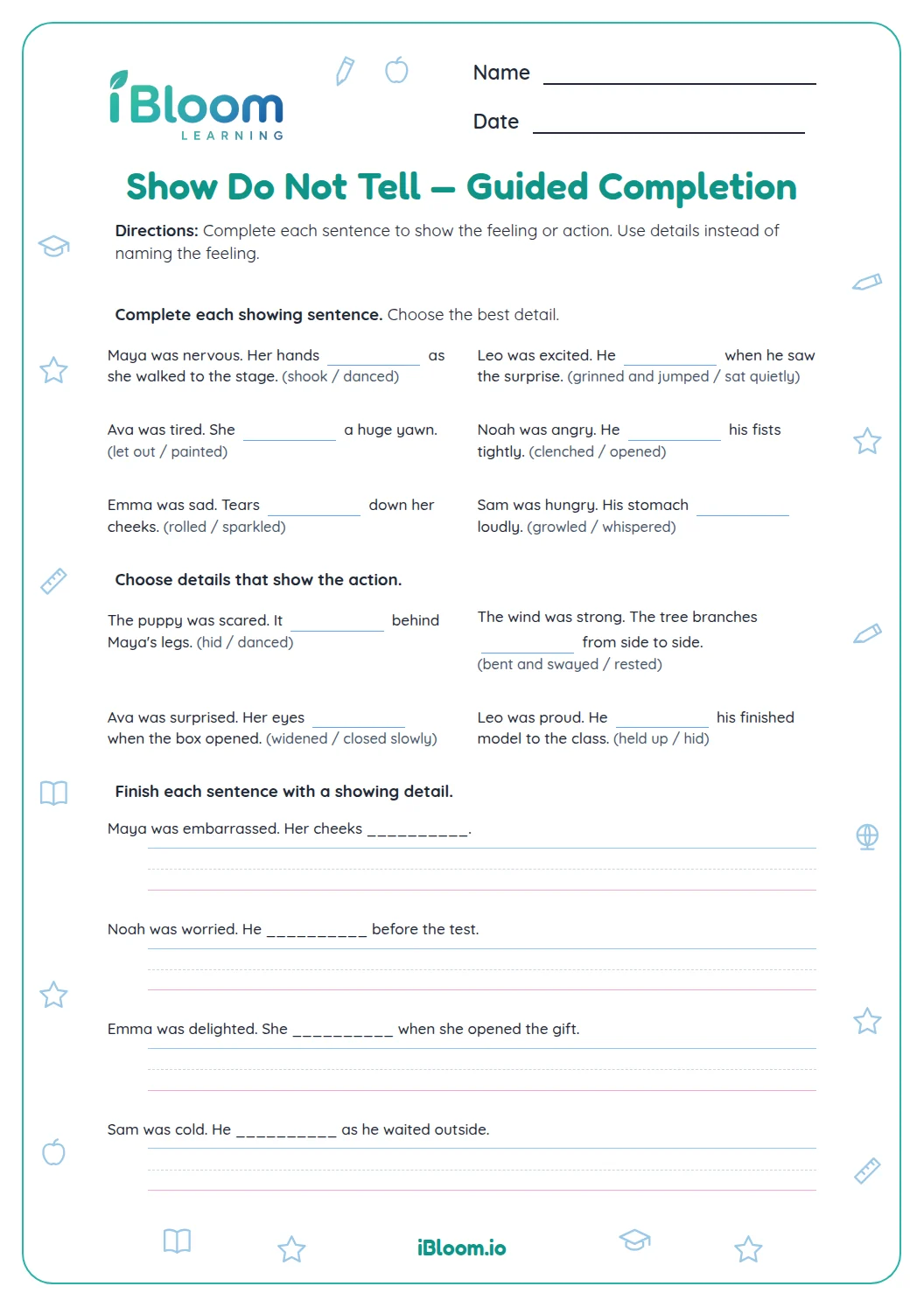
A writer can replace a general emotion label with an action or body clue. For example, shaking knees and damp palms let a reader infer nervousness.
How to use this worksheet
- 1Read both choices and notice which gives a precise detail.
- 2In Part B, match each blank to the kind of detail named in parentheses.
- 3Complete the pond prompt with a sound that fits the place.
- 4Replace “ran” with a more precise action word.
- 5Compare open responses with the key’s samples and check that each fits the sentence.
Common mistakes and quick fixes
The mistake
Choosing a general word such as “nice” when a specific smell is requested.
The fix
Name the scent, as in “warm cinnamon,” so the reader can imagine it.
The mistake
Listing sensory words without connecting them to the scene.
The fix
Place each detail beside a person, place or action in the moment.
The mistake
Naming a feeling instead of showing a clue.
The fix
Add an action or physical response that helps the reader infer the feeling.
Common Core alignment
The writing tasks practice using concrete language and sensory details to make narrative moments precise.
Use precise words and sensory details to show experiences and events.
On this sheet: Students complete and revise narrative moments with specific sensory details and actions.
Show the official wordingHide the official wording
Use concrete words and phrases and sensory details to convey experiences and events precisely.
What to practice next
Make more practice
Further reading
Questions parents and teachers ask
How many prompts are included?
There are 14 prompts: six sentence choices and eight completions. Students move from identifying vivid details to adding words about senses, setting and action. The answer key lists each choice and sample completions for open responses. Students also complete a prompt about a pond sound and improve a broad action verb.
Can students give answers different from the key?
Yes. Several completions allow more than one response. The key’s words are examples; a different answer can work if it fits the sentence and supplies the requested kind of detail, such as a sound, smell, touch clue or precise action.
What is a sensory detail?
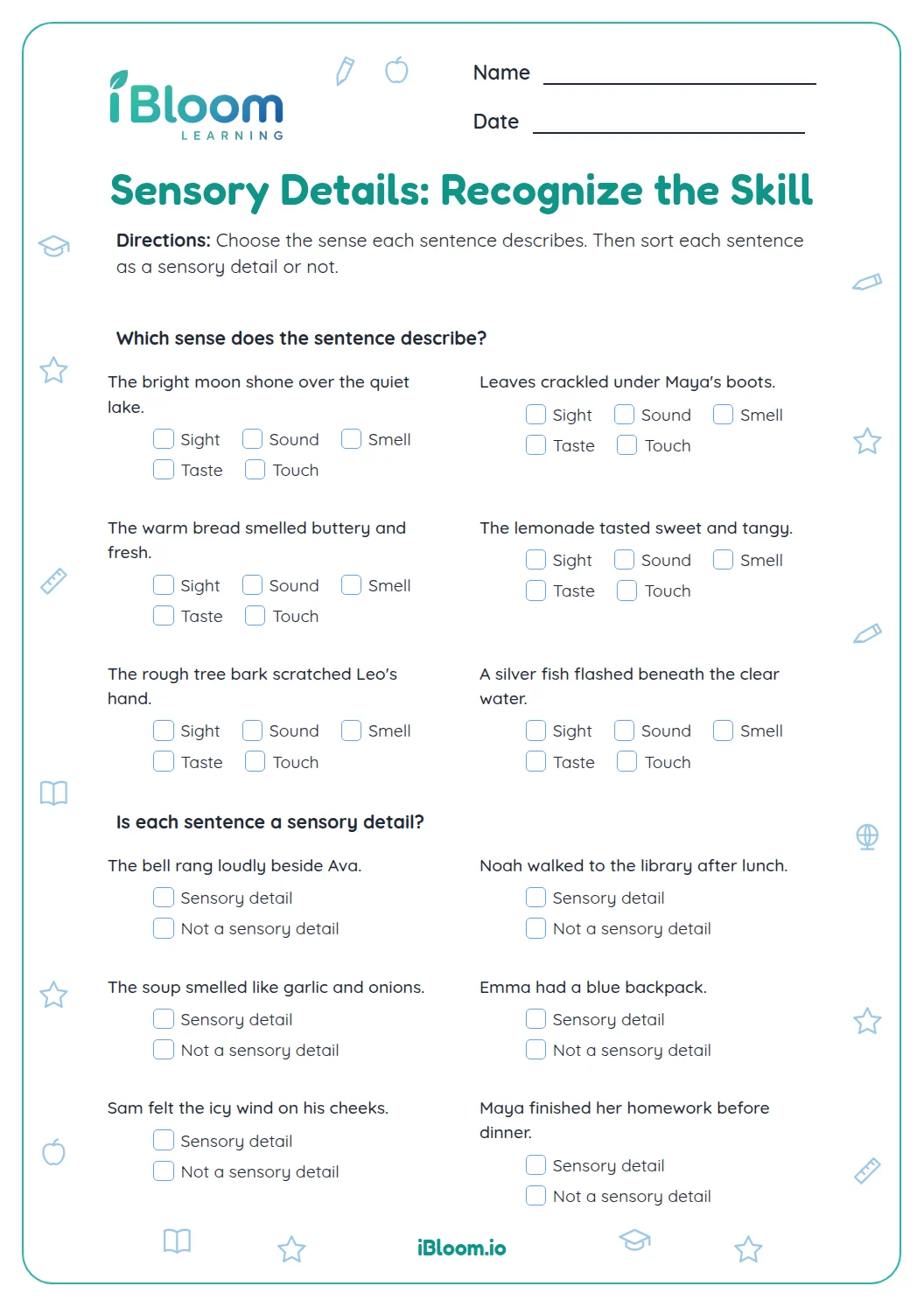
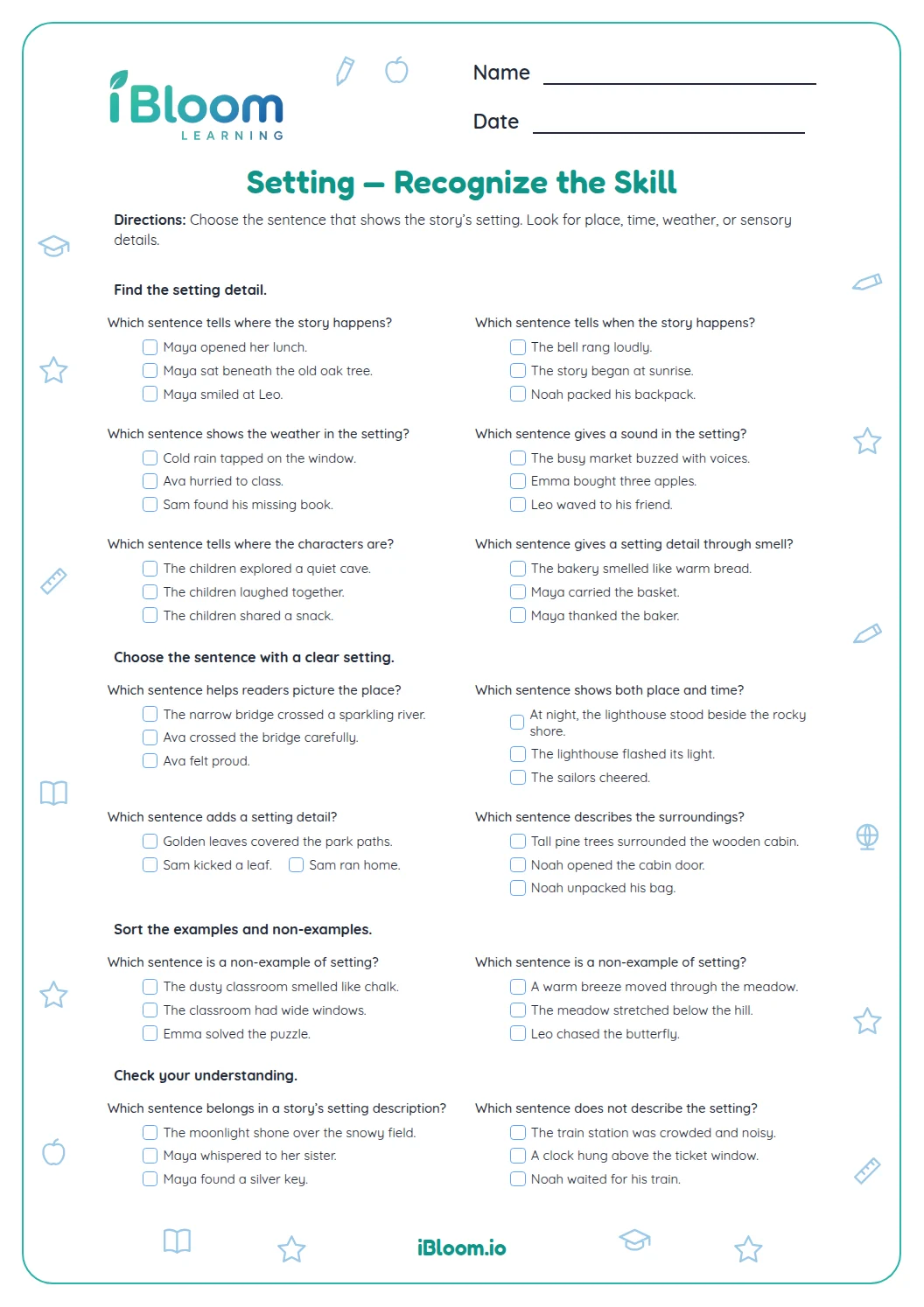
A sensory detail tells what someone sees, hears, smells, tastes or feels. “Rain tapped on the metal roof” names a sound, while “cool, gritty sand” describes touch. The worksheet asks students to recognize and add sensory details in short sentences.
How does the sheet practice precise actions?
Students replace the broad verb in “The horse ran” with a more exact action. The key suggests “galloped.” Other prompts ask students to choose details that make a scene easier to imagine, including what a character hears or feels.
Do writers need all five senses in every scene?
No. Writers choose details that fit the moment. This worksheet focuses on a few requested senses in individual sentences; the pond prompt asks for sound, while other items ask about smell, taste, touch or sight. A detail should make sense in its scene.