




About this worksheet
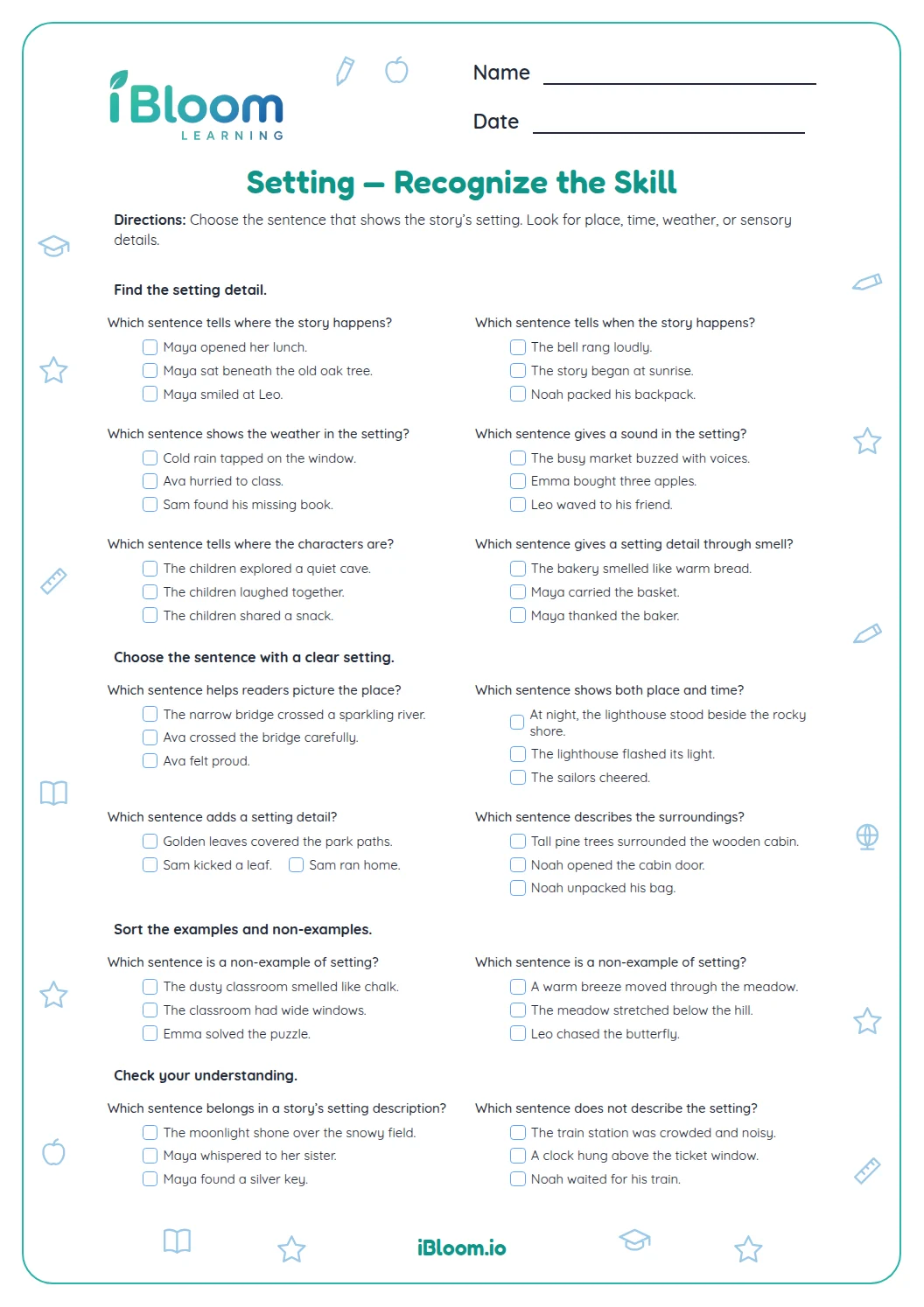
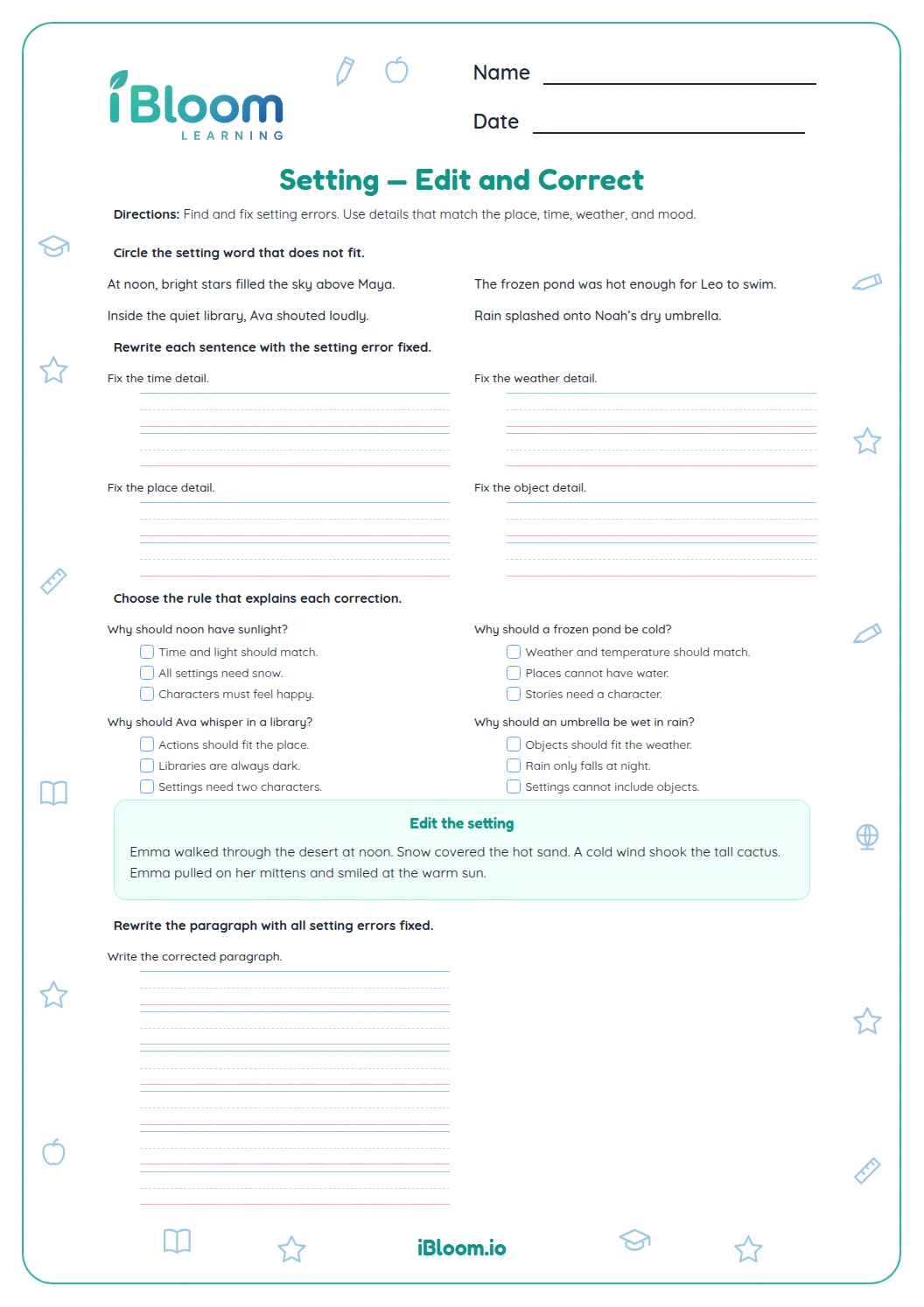
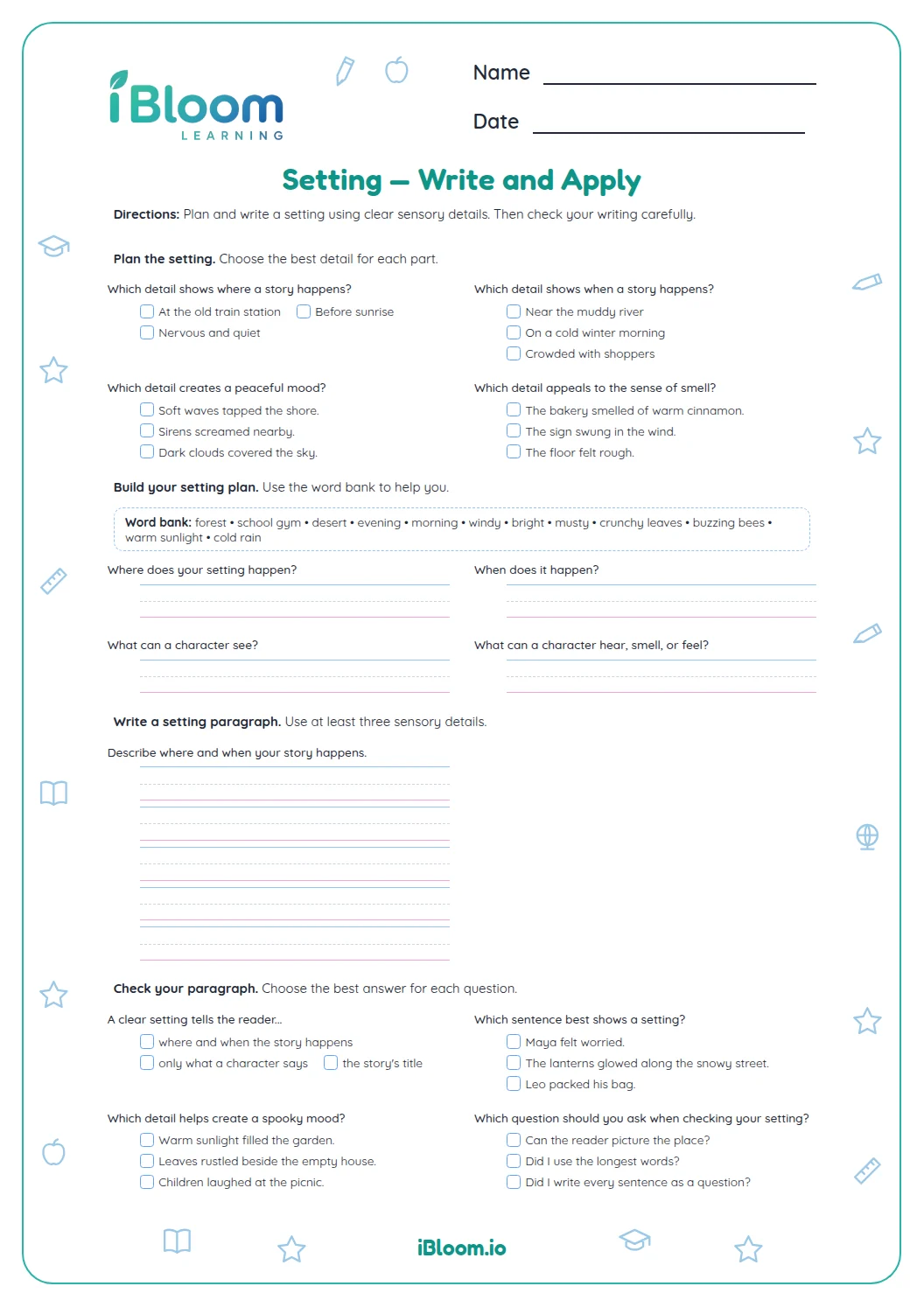
This Grade 4 writing worksheet gives students 14 guided setting tasks in two parts. Students choose sensory clues that establish a place or time, then complete setting sentences with concrete words. A separate key lists the correct choices. The activity supports narrative detail writing in CCSS W.4.3d.
Aligned to W.4.3d
What does setting tell a reader?
Setting tells where and when a story happens. A strong setting detail gives readers something concrete to imagine, such as frost on steps, bus engines, or a lantern beside a tent.
- 1Frost covered the school steps.
- 2The frost and school steps point to a cold morning at school.
- 3The backpack detail names a character’s object but gives less information about time and place.
How can a detail make a setting clearer?
Choose words that belong in the place and help a reader picture it. Sound, sight, smell, touch, and weather can all build setting. A detail should fit the sentence as well as the location.
- 1At dawn, silver mist curled over the lake as the fishing boat left shore.
- 2“Lake” fits the boat and shore clues.
What will students complete?
Part A asks students to pick the strongest time or place clue. Part B completes six setting sentences with concrete words that fit a place or time.
- Part A: 8 setting clues
- Part B: 6 guided sentence completions
How to use this worksheet
- 1Read the whole sentence before choosing a setting clue.
- 2Ask whether the detail points to a place, a time, or both.
- 3For Part B, test the word in the sentence and check that it fits the setting.
- 4For Part C, choose one specific sound, sight, smell, touch, or weather detail.
- 5Make sure the detail could happen in that location.
- 6Use the key’s examples as models; a different fitting detail can also work.
Common mistakes and quick fixes
The mistake
Choosing a detail about a character instead of the setting.
The fix
Ask what the detail helps the reader picture about the place or time.
The mistake
Adding a sensory detail that does not match the location.
The fix
Name the setting first, then choose something that could be seen, heard, smelled, or felt there.
The mistake
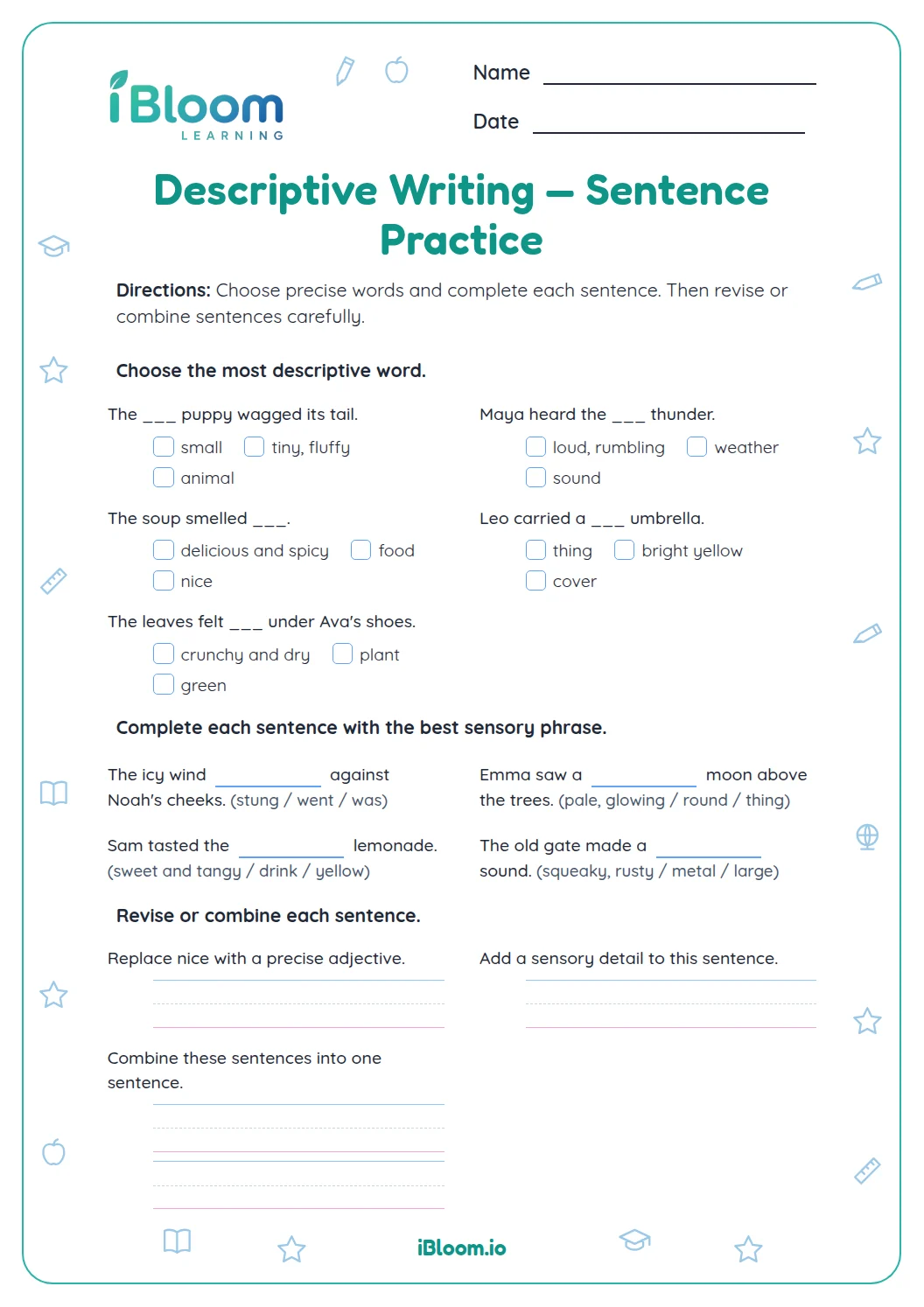
Using a broad word such as nice or pretty.
The fix
Replace it with a concrete image, sound, or texture.
Common Core alignment
The writing prompts ask students to use concrete language and sensory details.
Use concrete words and sensory details to make events and settings precise.
On this sheet: Students add concrete sound, sight, smell, and weather details to narrative settings.
Show the official wordingHide the official wording
Use concrete words and phrases and sensory details to convey experiences and events precisely.
What to practice next
Make more practice
Further reading
Questions parents and teachers ask
What is setting in a narrative?
Setting is where and when a narrative happens. Details about weather, light, sounds, and objects can help a reader picture it. This worksheet asks students to recognize setting clues and choose concrete words that fit a location or time.
How many writing questions are included?
There are 14 questions in all: eight choices that identify strong setting clues and six guided sentence completions. Students first recognize details that establish place or time, then choose concrete words that fit a sentence. The answer key lists each correct choice.
What counts as a sensory detail?
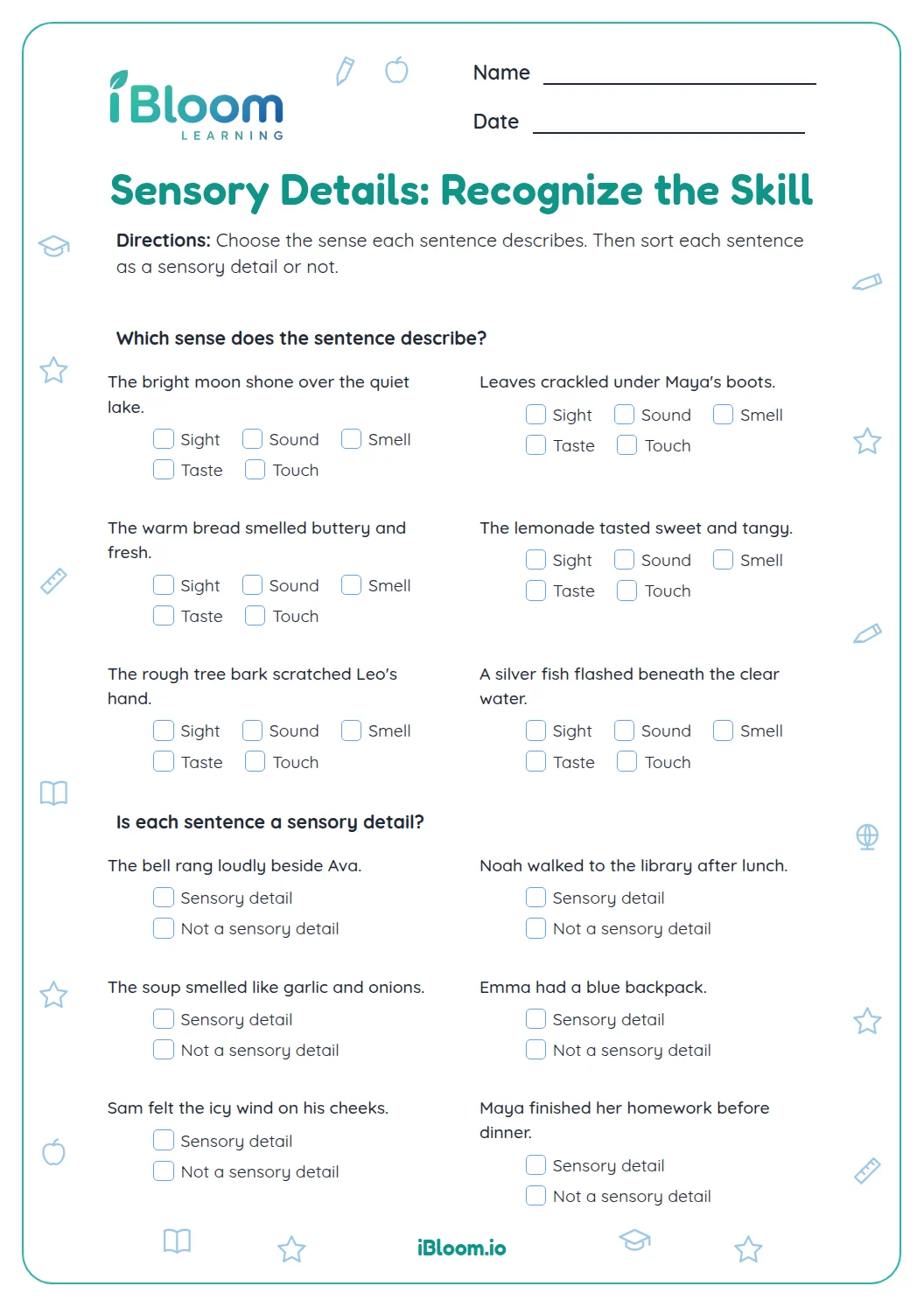
A sensory detail describes something a person might see, hear, smell, taste, or touch. For example, a lantern glowing beside a tent gives a visual clue. Students also consider sounds, weather, and objects that help a reader picture a specific setting.
Can students write a different answer from the key?
The completion questions offer choices so students can focus on selecting a concrete detail that fits the sentence and setting. The answer key lists the intended word for each item, and students can discuss other details that might fit a rewritten sentence.
How long should this worksheet take?
About 20 minutes is a reasonable estimate for reading the setting clues, completing the choices, and reviewing the answers. Students may take longer if they discuss how each concrete word helps a reader picture a place or time. The pages can also be completed in shorter sessions.