




About this worksheet
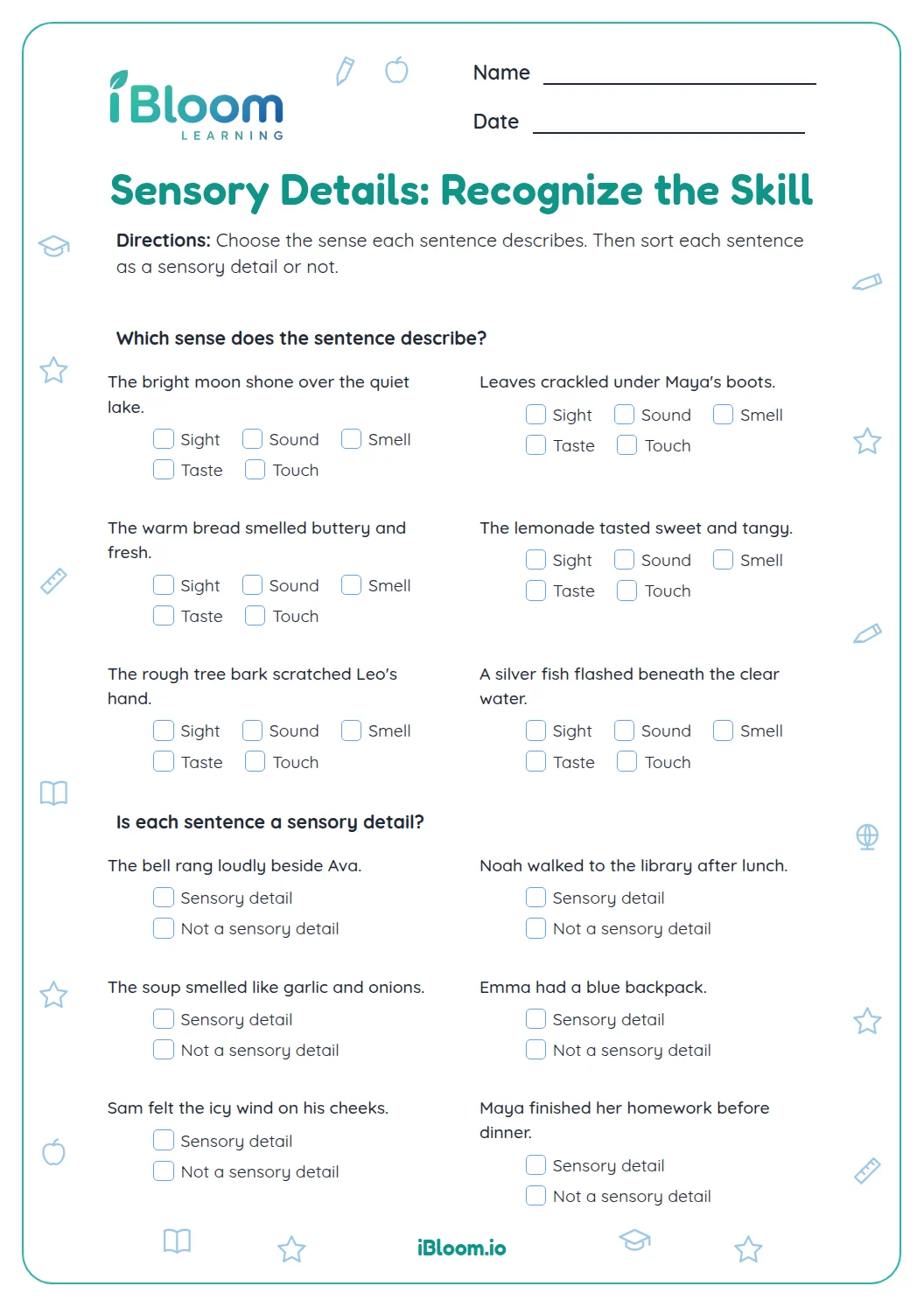
This Grade 4 worksheet gives students 14 multiple-choice opportunities to recognize and edit sensory details in narrative sentences. Part A asks them to match a phrase with sight, sound, touch, taste, or smell. Part B asks them to choose precise sensory revisions, combine ideas, and correct a sentence. The answer key identifies the best choice for each item.
Aligned to W.4.3.d
Which details appeal to each sense?
Part A includes five short choices that ask students to recognize details for sight, sound, touch, taste, and smell.
- 1For “Which detail shows touch?” choose “string scratched my palm.”
How can I choose a stronger sensory edit?
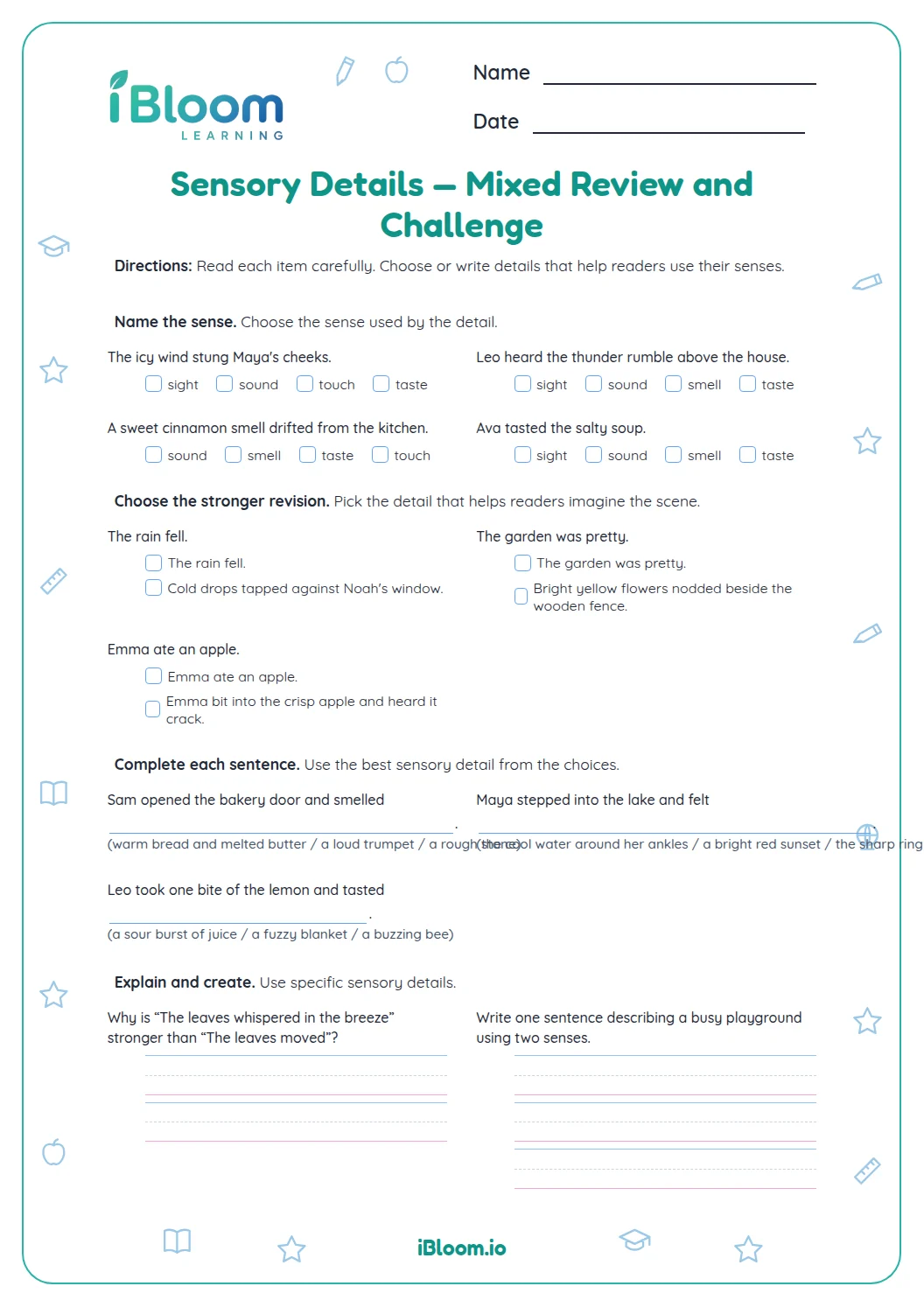
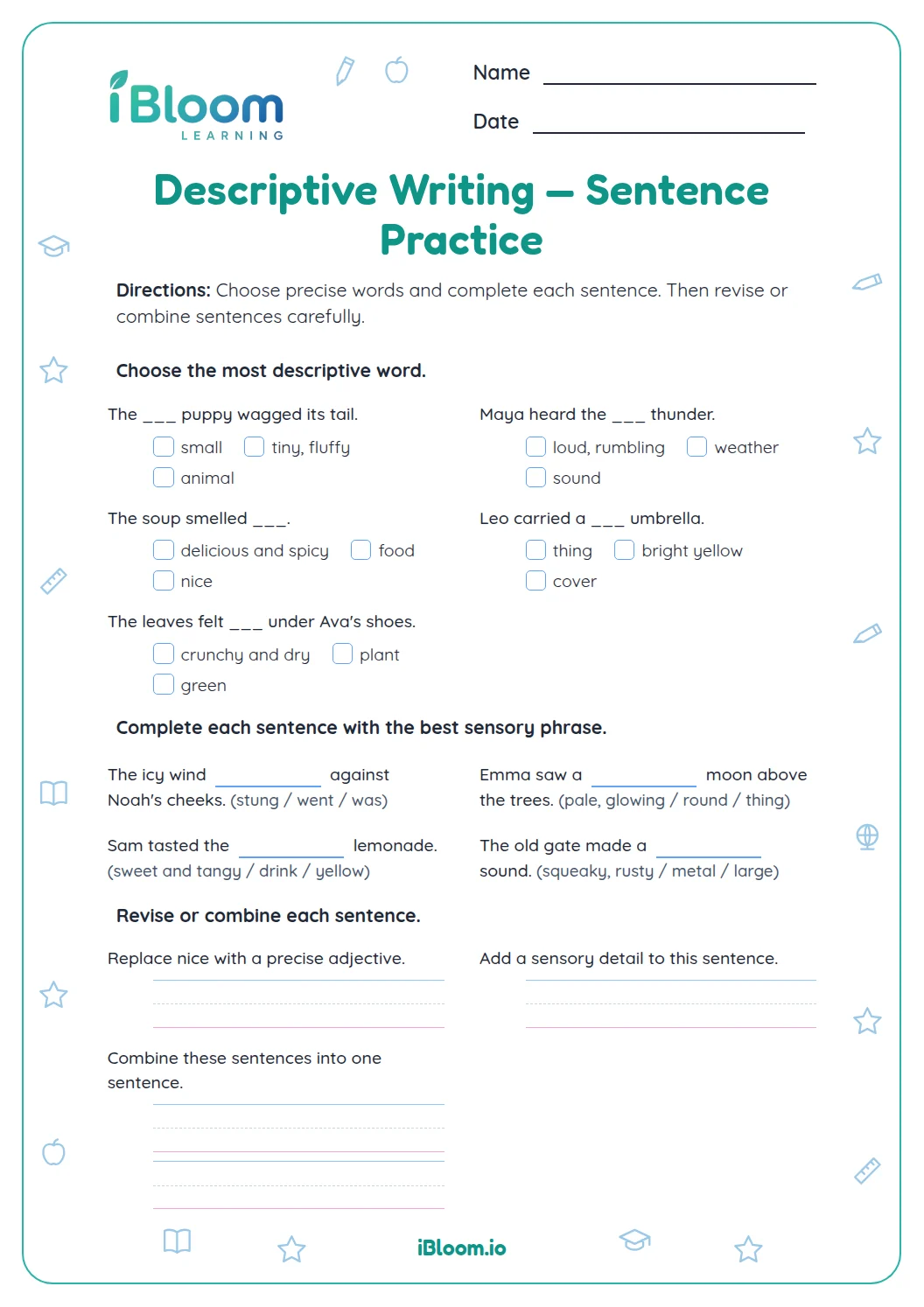
Part B asks students to select a precise phrase, combine two ideas with a sound detail, replace a vague smell word, and correct a sentence.
- 1To add taste to “The cake was good,” choose “warm and sweet.”
What should I check in the corrected sentence?
Choose a phrase that fits the named sense and keeps the sentence clear. For the final item, make the subject and verb agree while keeping its sensory meaning.
How to use this worksheet
- 1Read the sentence and notice the sense named in the question.
- 2Compare the choices for a precise, relevant detail.
- 3For an edit, keep the event while improving its sensory language.
- 4Check that the final sentence is complete and grammatically correct.
Check your editing
The mistake
Using a sight word when the prompt asks for sound.
The fix
Ask whether a reader could hear, see, touch, taste, or smell the detail.
The mistake
Adding a vague word such as “nice” or “good.”
The fix
Name a specific quality, such as cinnamon scent or a crisp crunch.
The mistake
Changing the event while adding description.
The fix
Keep the original action and add only a detail that fits it.
Curriculum alignment
This worksheet practices W.4.3.d through the listed tasks.
Choose and revise narrative details that convey an experience through the senses.
On this sheet: Part A identifies sensory details, and Parts B and C ask students to use concrete sensory language in narrative revisions.
Show the official wordingHide the official wording
Use concrete words and phrases and sensory details to convey experiences and events precisely.
What to practice next
Make more practice
Further reading
Questions parents and teachers ask
What does this worksheet practice?
Students identify phrases that appeal to the five senses and choose edits that make narrative sentences more precise. The multiple-choice format lets them compare a useful sensory detail with alternatives that describe a different sense or add less specific information.
How many questions are included?
There are 14 multiple-choice questions in two parts. Part A focuses on recognizing sensory details. Part B asks students to choose sensory revisions, combine ideas, replace a vague smell word, and correct a sentence. The key makes the best fit easy to check.
Does the worksheet ask students to write their own sentences?
The sheet focuses on selecting an effective revision from choices. Students still evaluate how a phrase changes a sentence, but each item has one best answer shown in the answer key. The key makes the best fit easy to check.
Which senses appear in the questions?
Sight, sound, touch, taste, and smell all appear. Students match descriptive phrases to a sense, then use that understanding to choose revisions for a cake, rain, a trail, a shell, and an oven. The key makes the best fit easy to check.
What should students check when editing?
Students should choose a detail that fits the requested sense and the original event. In the final question, they also check subject–verb agreement so the corrected sentence remains both vivid and grammatically complete. The key makes the best fit easy to check.