




About this worksheet
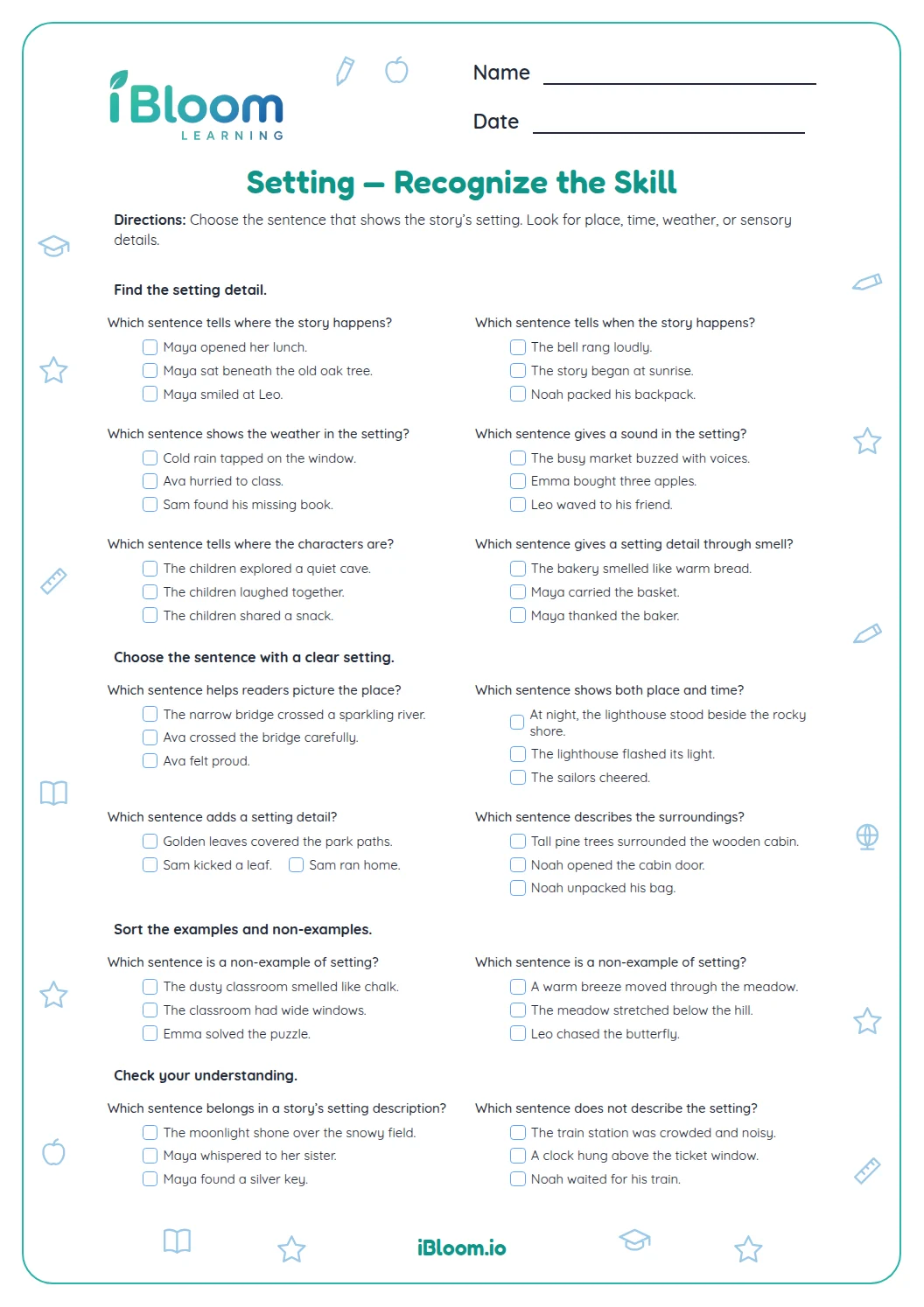
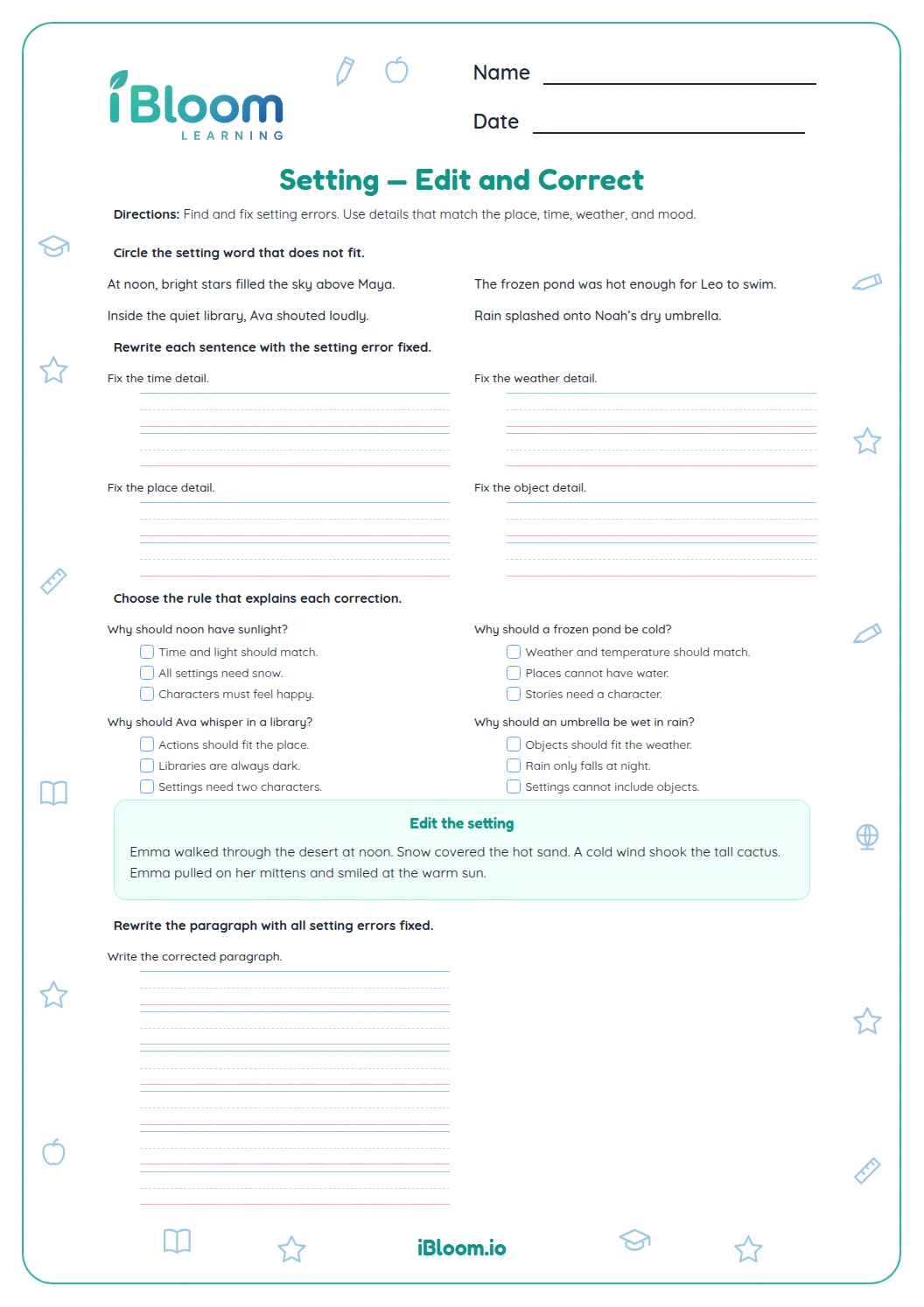
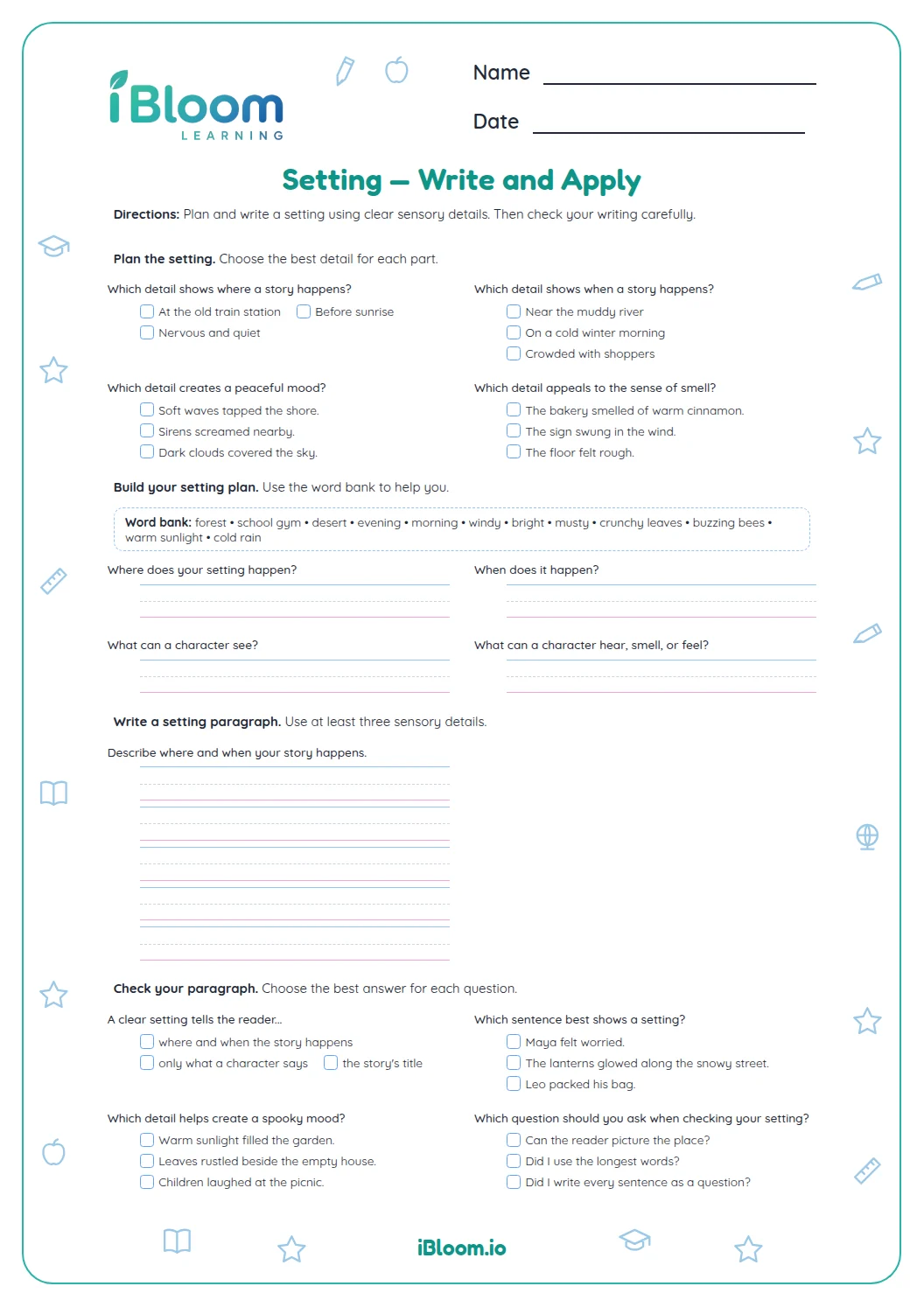
This Grade 4 worksheet helps students identify story settings through place, time, mood, and sensory clues. Fourteen brief questions use a greenhouse scene and other familiar settings, then ask students to choose details that strengthen a place or connect setting with mood and events. The answer key lists the intended choices. The practice aligns with W.4.3.d.
Aligned to W.4.3.d
What does a story setting tell the reader?
A setting gives a story its place and time. Details such as “at dawn,” “inside the cabin” or “snow covered the steps” help readers build a picture.
- 1At dusk, the campers reached a pine forest. → place: pine forest; time: dusk
How can setting shape a scene’s mood?
Weather, light, sounds and surroundings can make a scene feel peaceful, exciting or uneasy. The detail should support the mood rather than merely name it.
How can students add useful setting details?
Choose details that help readers picture where and when a scene happens. The last questions ask students to choose concrete details that connect setting and mood or problem.
- 1Rain flooded the path, and Eli could not reach the bridge.
How to use this worksheet
- 1Read the full sentence before changing anything.
- 2Check the target skill and find a clue in the sentence.
- 3Make one clear correction at a time.
- 4Reread your revised sentence aloud.
- 5Compare your work with the answer key.
Common mistakes and quick fixes
The mistake
Naming a character’s feeling as the setting.
The fix
Look for details that tell where and when events happen.
The mistake
Listing details that do not affect the scene.
The fix
Choose a sensory detail that helps readers picture the place or mood.
The mistake
Giving a place but no time clue.
The fix
Add a phrase such as “before sunrise” or “after school.”
Common Core alignment
This page practices the listed grade-level reading and writing skills.
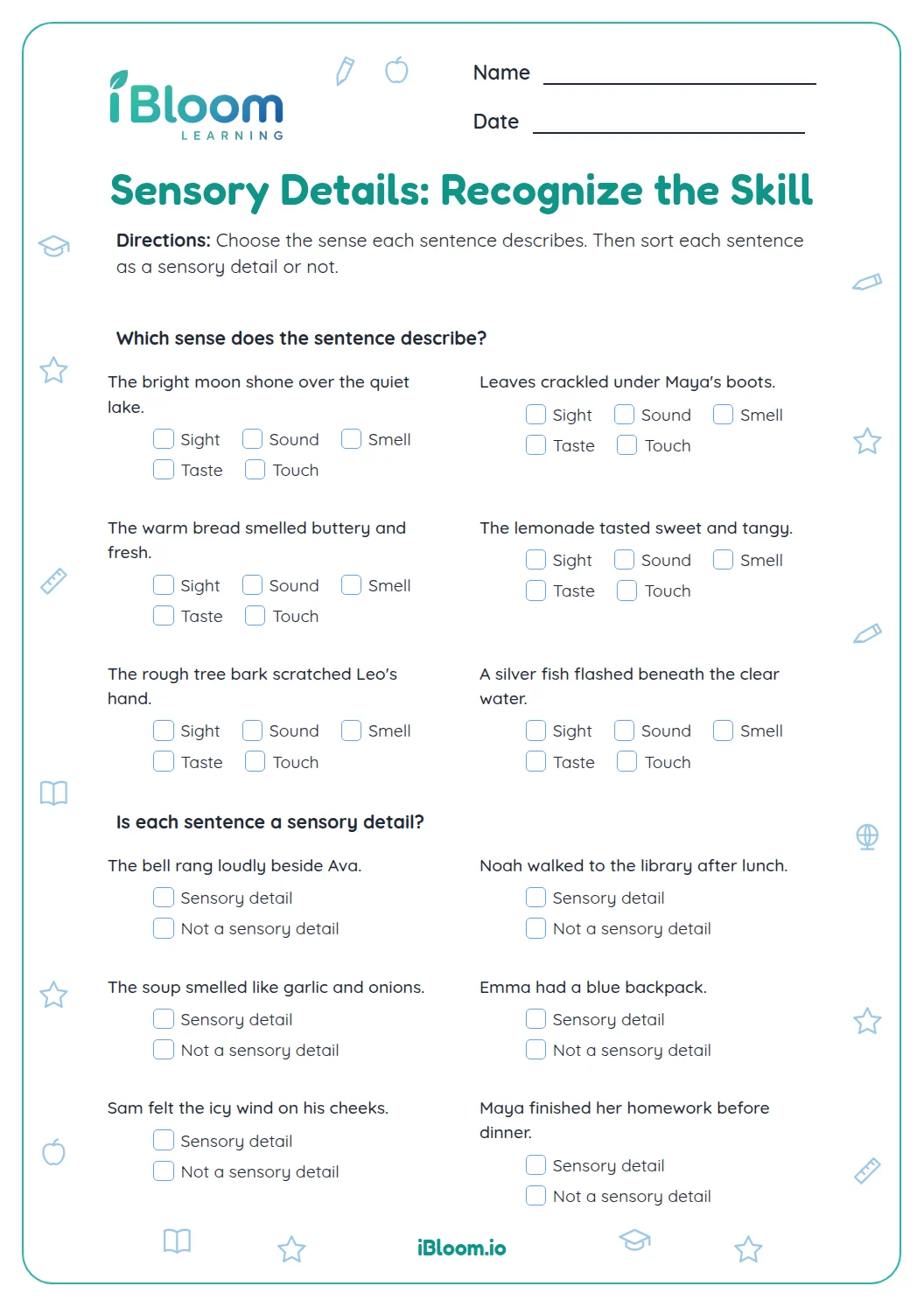
Use precise sensory details to strengthen the setting in a narrative.
On this sheet: Students add sensory details to setting descriptions and explain how setting details affect a scene.
Show the official wordingHide the official wording
Use concrete words and phrases and sensory details to convey experiences and events precisely.
What to practice next
Further reading
Questions parents and teachers ask
What does the Grade 4 setting worksheet practice?
The 14 items ask students to recognize place and time clues, connect setting details with mood, and strengthen brief scenes with sensory details. Students also write a setting sentence and explain how a setting could create a problem for a character.
What counts as a setting detail?
A setting detail helps a reader picture where or when a scene happens. “At dusk” gives a time, while “a pine forest” gives a place. Sensory clues such as wind, light, or sound can make that setting feel calm, cold, or uneasy.
How can setting affect a story?
A setting can shape a scene’s mood and what a character can do. Rain may make a walk difficult; darkness may make a familiar place feel uncertain. The final prompt asks students to explain a possible obstacle created by a setting.
What is one example from the worksheet?
For “At dusk, the campers reached a pine forest,” the place is a pine forest and the time is dusk. Naming both clues helps the reader picture the scene. The final written challenge also asks students to pair a storm setting with a concrete problem.
How should we check a written response?
Look for a detail that fits the requested place, time, mood, or sense. A response can vary from the key if it clearly strengthens the scene. For the prompt about rain and dark windows, an uneasy or eerie mood is supported by the clues.