







About this worksheet
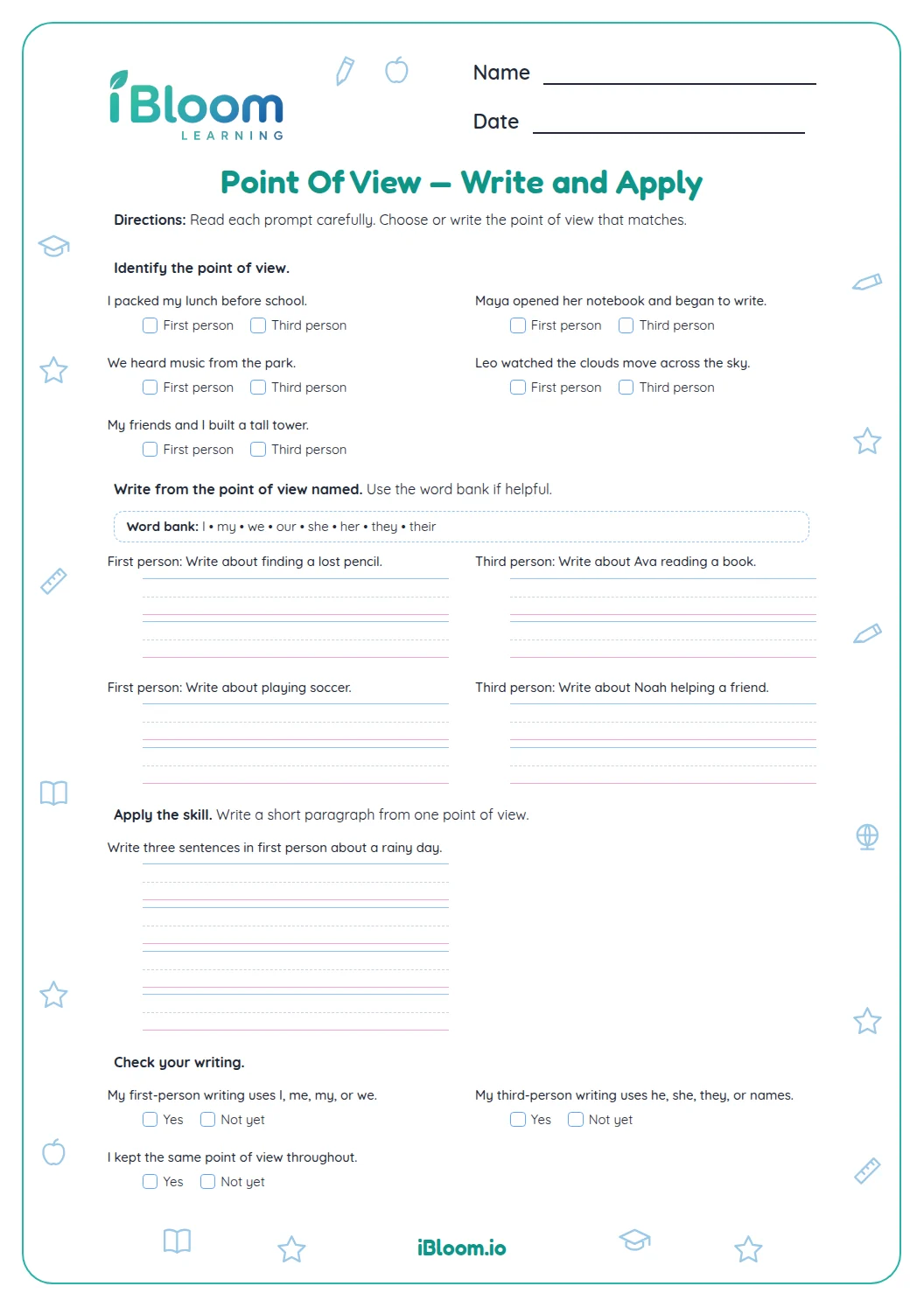
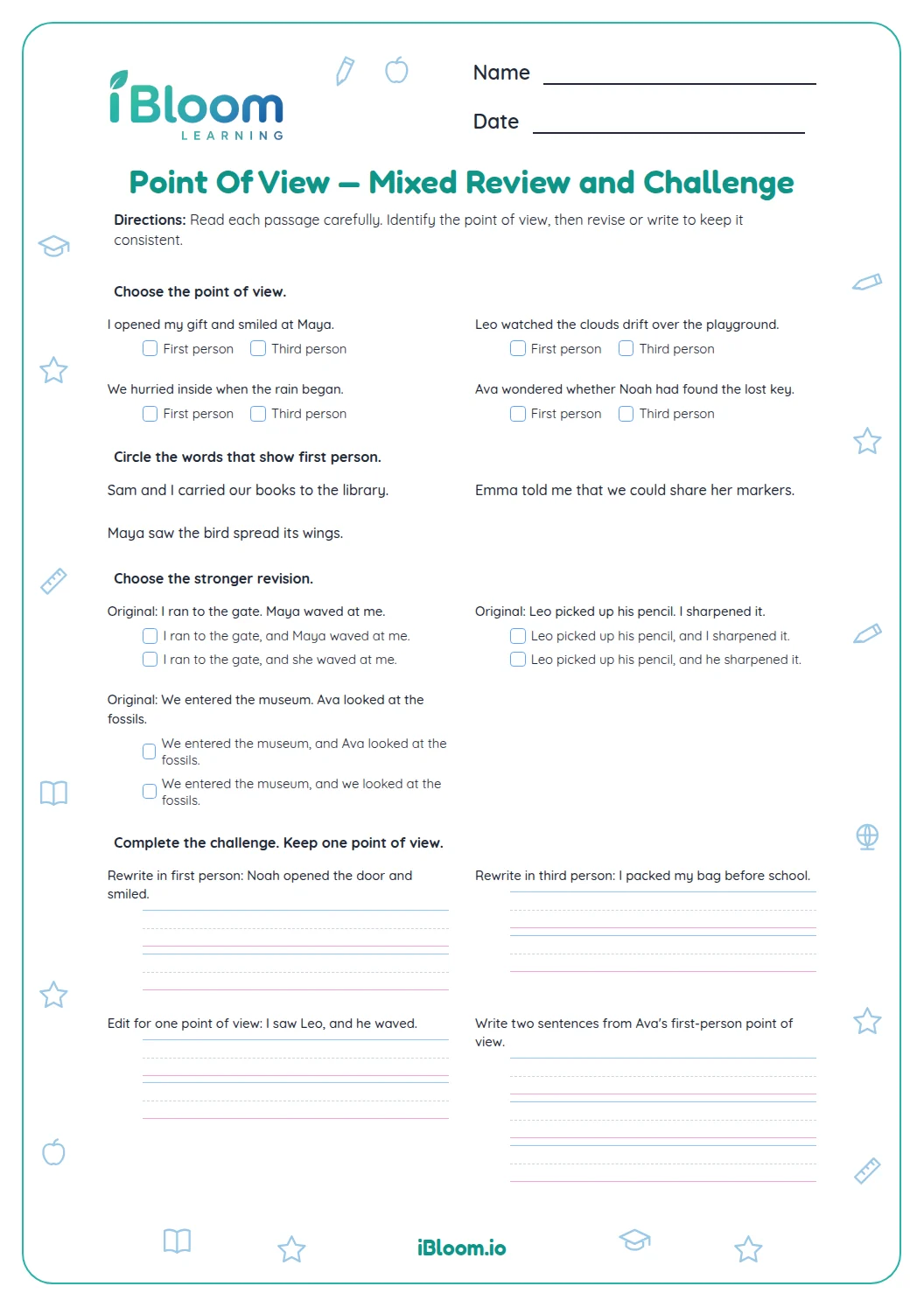
This free Grade 4 worksheet gives students focused practice recognizing first-person and third-person narration. Sixteen complete sentences mix clues such as I, we, my, character names, and pronouns such as she or they. Students choose the point of view for each sentence, then use the answer key to check how the narrator’s language signals who is telling the event.
Which words signal first-person narration?
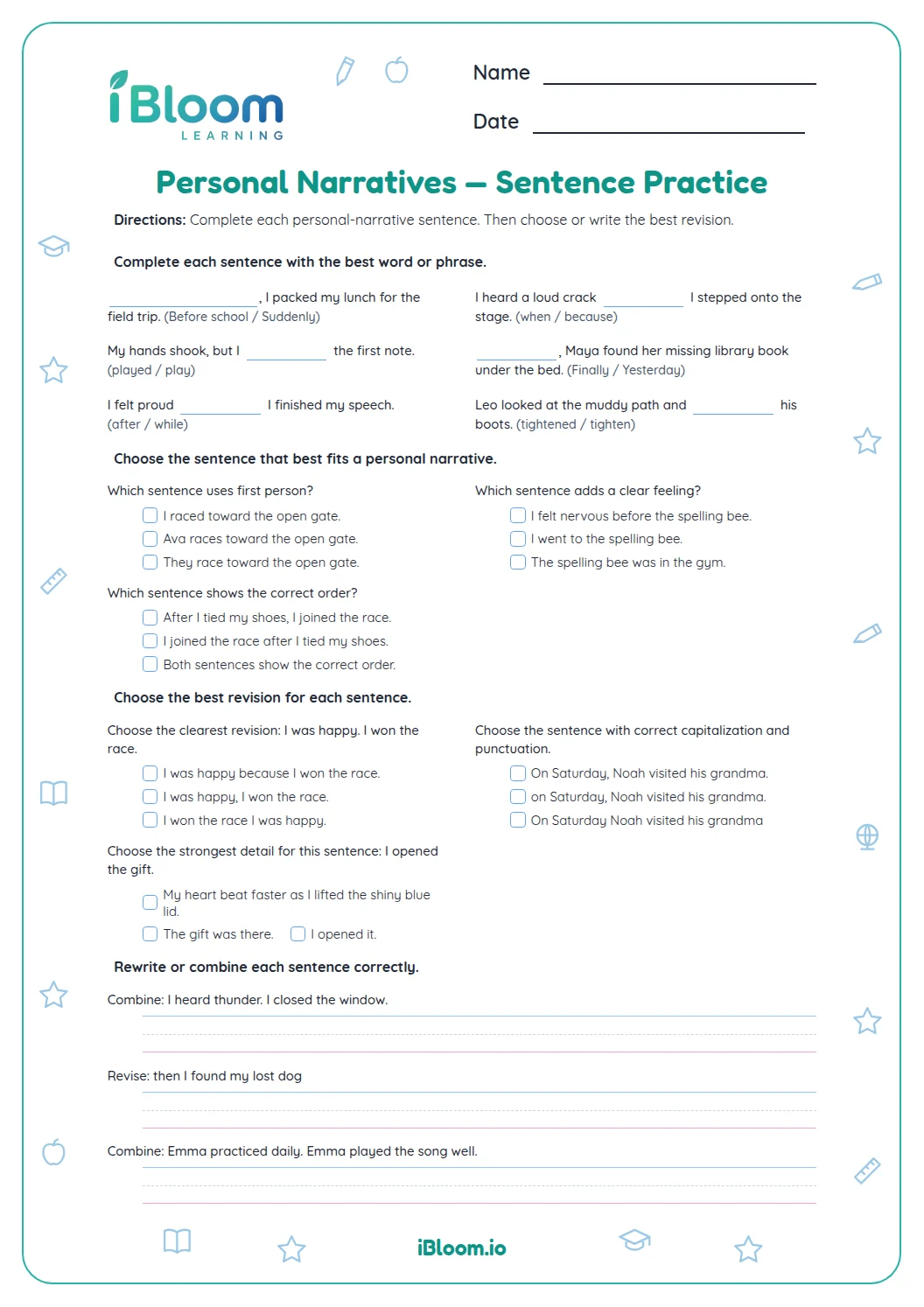
First-person narrators use words such as I, me, my, and we to tell about their own experiences. In Part A, the sentence “I packed my lunch before school” uses I and my, so it is first person.
- 1I packed my lunch before school.
- 2Clues: I and my
- 3Point of view: first person
How can a sentence use third person?
Third-person sentences tell about someone using a name or words such as he, she, or they. The narrator describes the character rather than using I or we to tell their own experience.
What should I check before choosing?
Read the whole sentence and find who is telling it. A character name alone is a strong third-person clue, while I or we makes the speaker part of the event.
How can I use this worksheet?
- 1Read the whole sentence once for meaning.
- 2Underline pronouns or names that identify the narrator’s language.
- 3Choose first person when the narrator says I, me, my, or we.
- 4Choose third person when the sentence tells about characters by name or as he, she, or they.
- 5Use the key to check each choice and explain the clue.
Common mistakes and quick fixes
The mistake
Choosing third person because a sentence mentions another person.
The fix
Check whether the narrator also says I or we; that clue signals first person.
The mistake
Treating we as a third-person word.
The fix
We includes the narrator, so it signals first person.
The mistake
Choosing from a character’s name without reading the sentence.
The fix
Read all the words and identify whether the narrator speaks as I or describes someone from outside.
What to practice next
Make more practice
Questions parents and teachers ask
What is first-person point of view?
First person is told by a narrator who takes part in the events and uses words such as I, me, my, or we. For example, “I packed my lunch before school” is first person because the narrator speaks as I.
What is third-person point of view?
Third person tells about characters using their names or pronouns such as he, she, or they. “Maya opened her science book” is third person because the narrator describes Maya from outside the event rather than saying I or we.
What is on this Grade 4 worksheet?
The sheet has 12 complete sentences in two multiple-choice parts. Students identify first-person or third-person narration, with examples using singular and plural pronouns and character names. The separate key marks each correct choice and offers a quick way to review the clues.
Does we indicate first person?
Yes. We includes the narrator, so “We watched the fireworks together” is first person. Read the entire sentence and look for words that place the speaker inside the event; the choice is based on the narrator’s language in the complete sentence.
Can a sentence mention I and still be third person?
If I is the narrator speaking about an event, the point of view is first person. A sentence may mention other people too, but the narrator’s own I, me, my, or we clue identifies first person in these examples.
Is the answer key included?
Yes. The separate answer key marks first person or third person for each sentence. Students can also point to the pronoun or name that helped them decide, then compare that clue with the explanation at the top of the page.