

About this worksheet
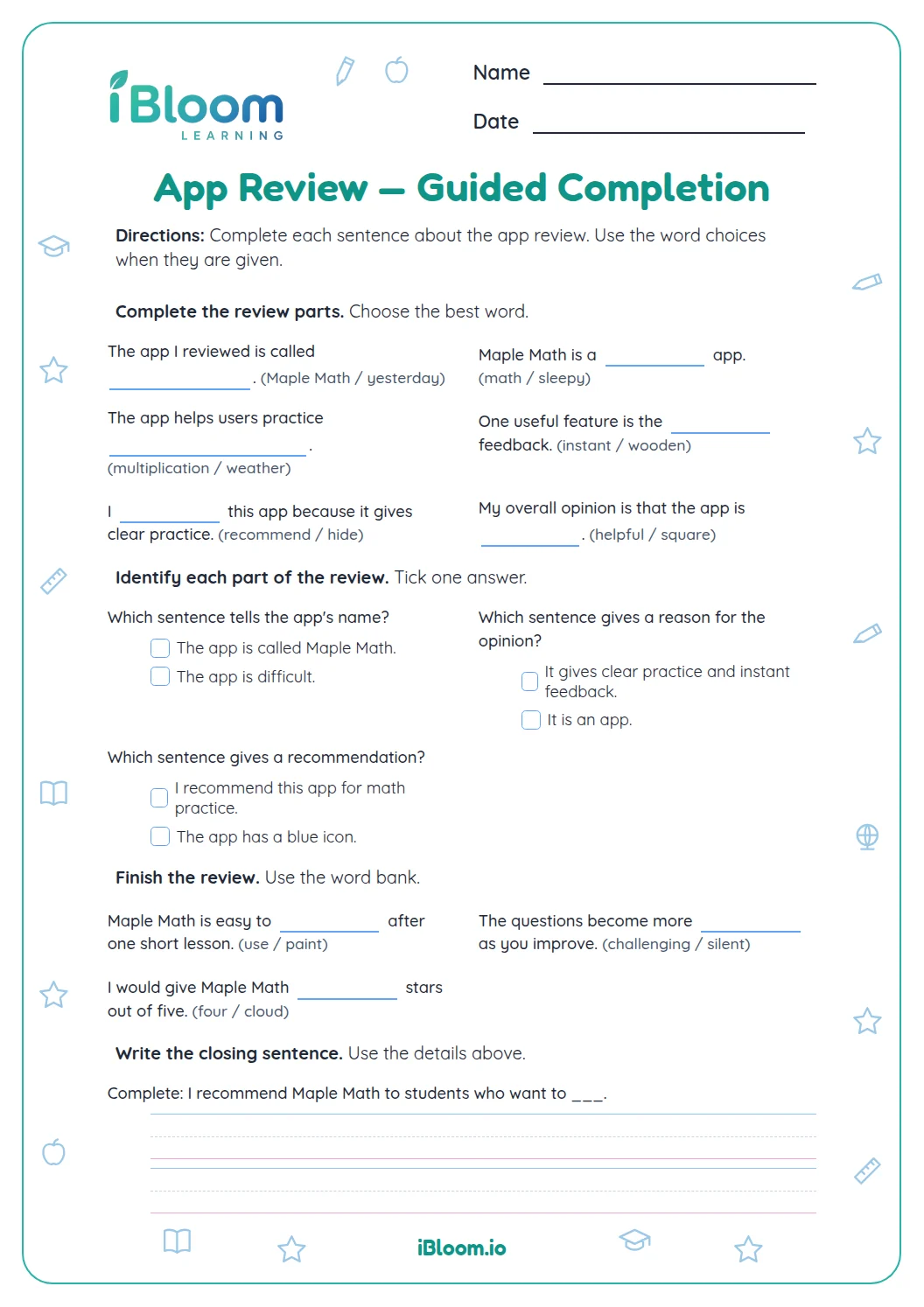
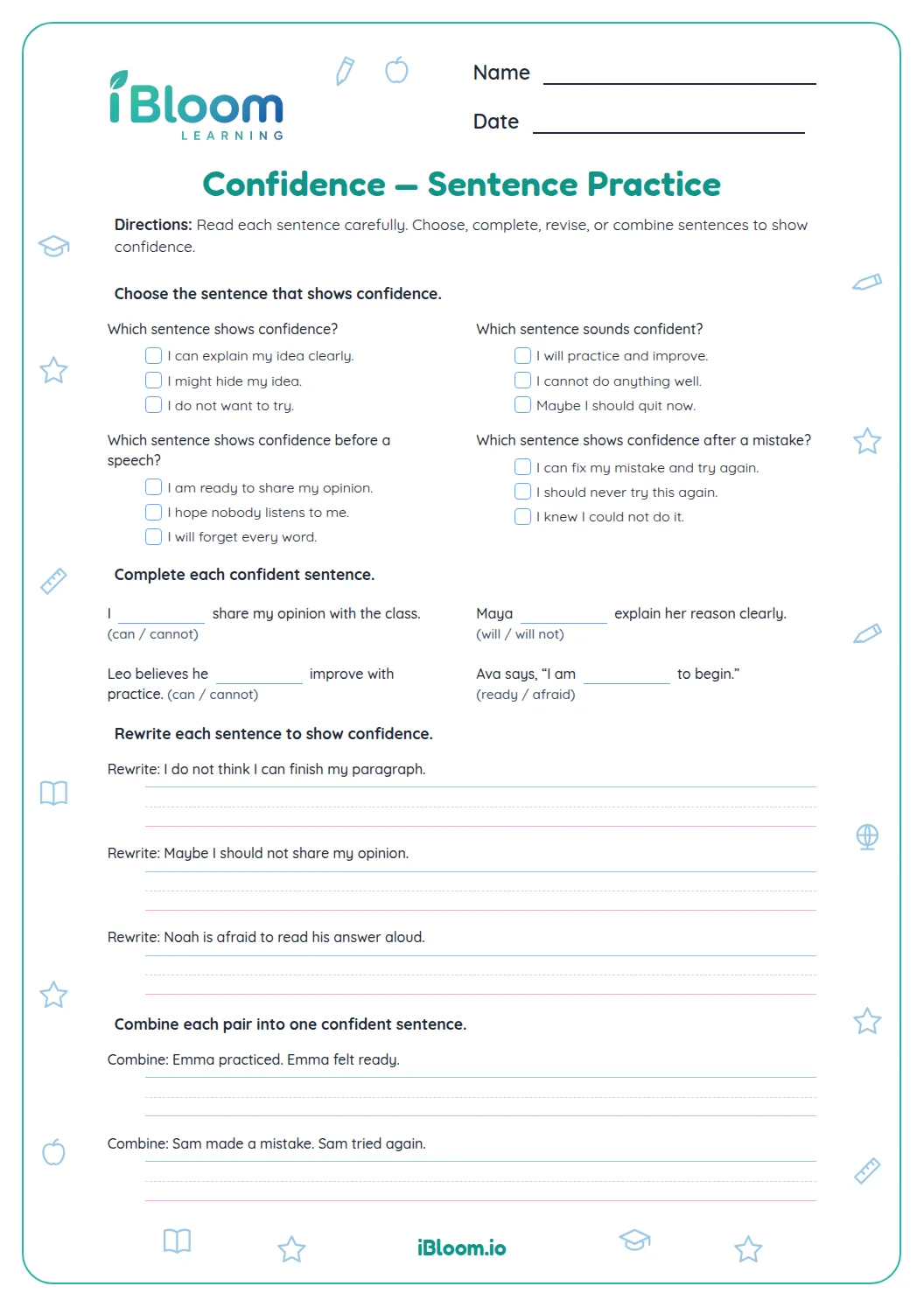
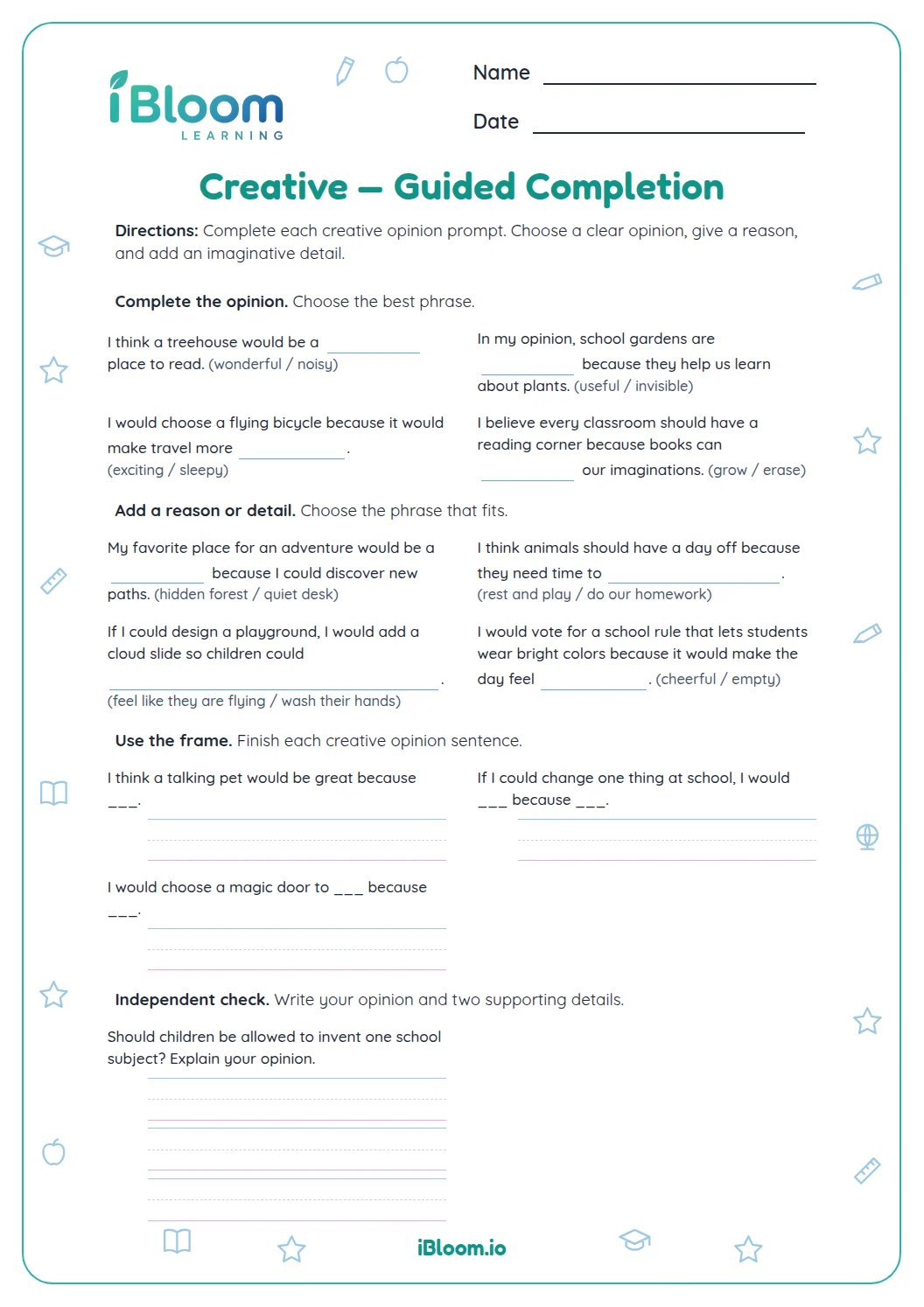
This Grade 4 opinion-writing worksheet uses a reading-app review to connect a position, reasons, details, and a recommendation. Students identify useful review parts, complete related idea prompts, then write a short review that brings those parts together. The 14 questions move from selections and sentence completions to two written responses; the answer key includes sample ideas. It practices Common Core W.4.1: stating an opinion and supporting it with reasons and information.
Aligned to W.4.1
What belongs in an opinion?
An opinion tells the reader what the writer thinks. A focused statement names the subject and takes a clear position, so the reasons that follow have something specific to support.
- 1“I think this app is useful” states an opinion, as in question 1.
How can a writer support an opinion?
Reasons explain why the writer holds the opinion. Details make a reason more convincing by naming a likely use or giving a concrete example. Linking phrases such as “for example” and “in addition” help readers follow the connection.
- 1The opinion that an app is helpful is supported by this detail from question 2: it helps me practice math facts.
How does a review reach a conclusion?
A conclusion brings the opinion and its strongest support together. It can also name who may find the app useful, as long as that recommendation follows from the details.
How to use this worksheet
- 1Read the feature named in the prompt and decide what you think about it.
- 2Write one direct opinion before adding explanations.
- 3Add a reason that answers “Why?”
- 4Include a concrete detail, example, or likely reader.
- 5Use a linking phrase where it helps connect a second point.
- 6Reread the conclusion to make sure it matches the opinion.
What should students check?
The mistake
Mistake: giving a feature description without an opinion.
The fix
Add a position such as “I recommend” or “The app should.”
The mistake
Mistake: repeating the opinion as the only reason.
The fix
Explain why the feature helps a reader.
The mistake
Mistake: ending with a conclusion that changes the position.
The fix
Restate the same view and connect it to the reasons.
Common Core alignment
The questions give students direct practice with the listed skill.
State an opinion and support it with reasons and information.
On this sheet: Students draft opinion statements, add reasons and details, connect ideas, and write review conclusions.
Show the official wordingHide the official wording
Write opinion pieces on topics or texts, supporting a point of view with reasons and information.
What to practice next
Make more practice
Further reading
Questions parents and teachers ask
Can a student have a different opinion from the sample answer?
Yes. The key gives sample responses, not the only possible view. A different opinion works when it states a clear position and supports it with relevant reasons or details about the reading app. A focused view helps the reader follow the recommendation.
What makes a reason different from a detail?
A reason explains why the writer holds an opinion. A detail gives a specific example or information that helps readers understand that reason. Saving a place is a feature; returning to the exact page after a break explains its value.
Does every prompt ask for a full review?
No. Most prompts focus on one part of a review, such as an opinion, a reason, or a detail. The final response asks students to bring those parts together in a short review and make a recommendation to readers.
What does a strong app review include?
A strong review states an opinion, gives reasons, and supports them with details. It ends with a conclusion or recommendation that follows from the examples. Specific details help a reader picture how the app works. Specific examples make the recommendation easier to understand.
How should students use the sample answer key?
Students can compare their responses with the examples and check whether each answer does the requested job. Keep original wording when it makes a clear point and includes support; open responses can vary. Students can use their own words and examples.