





About this worksheet
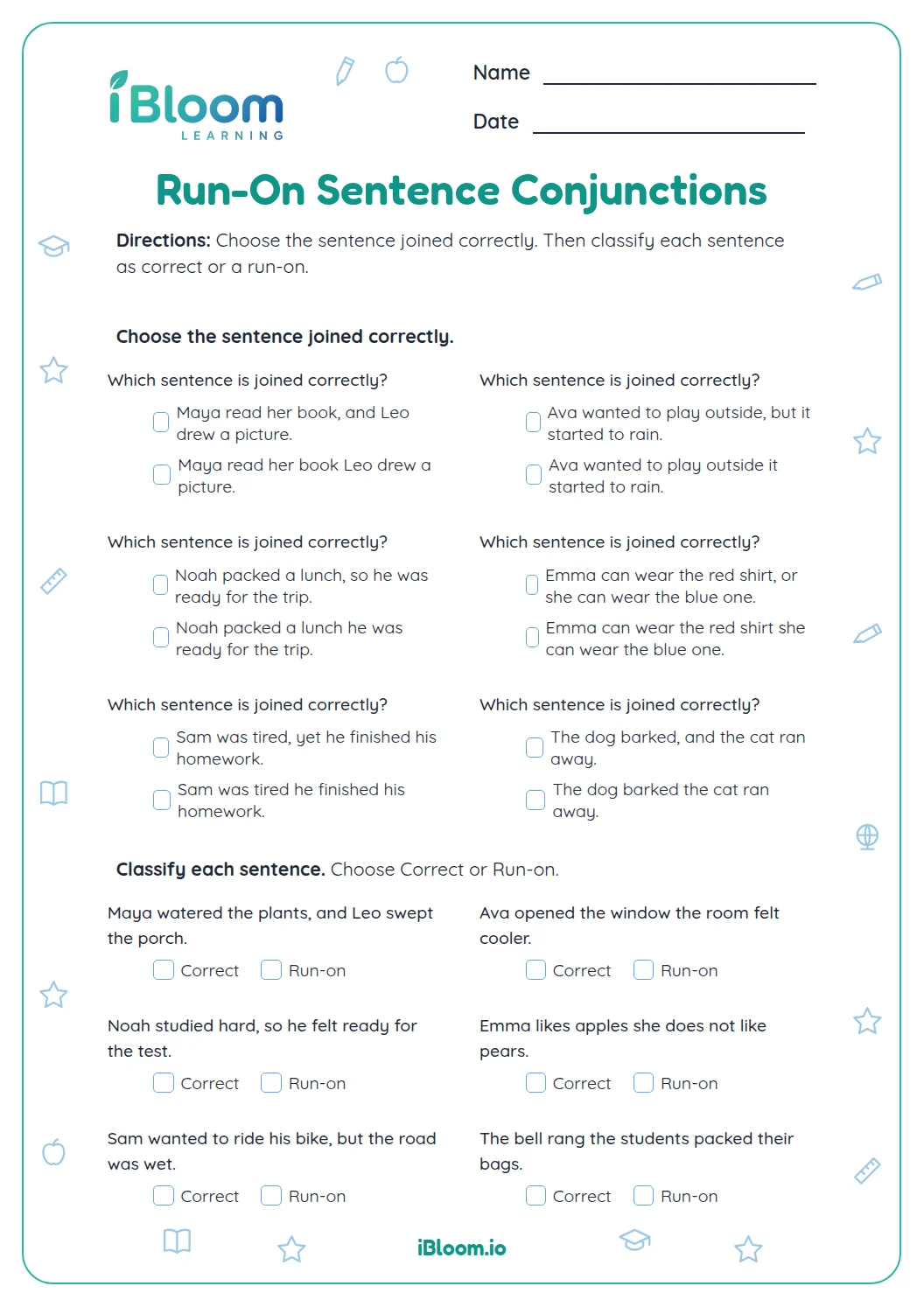
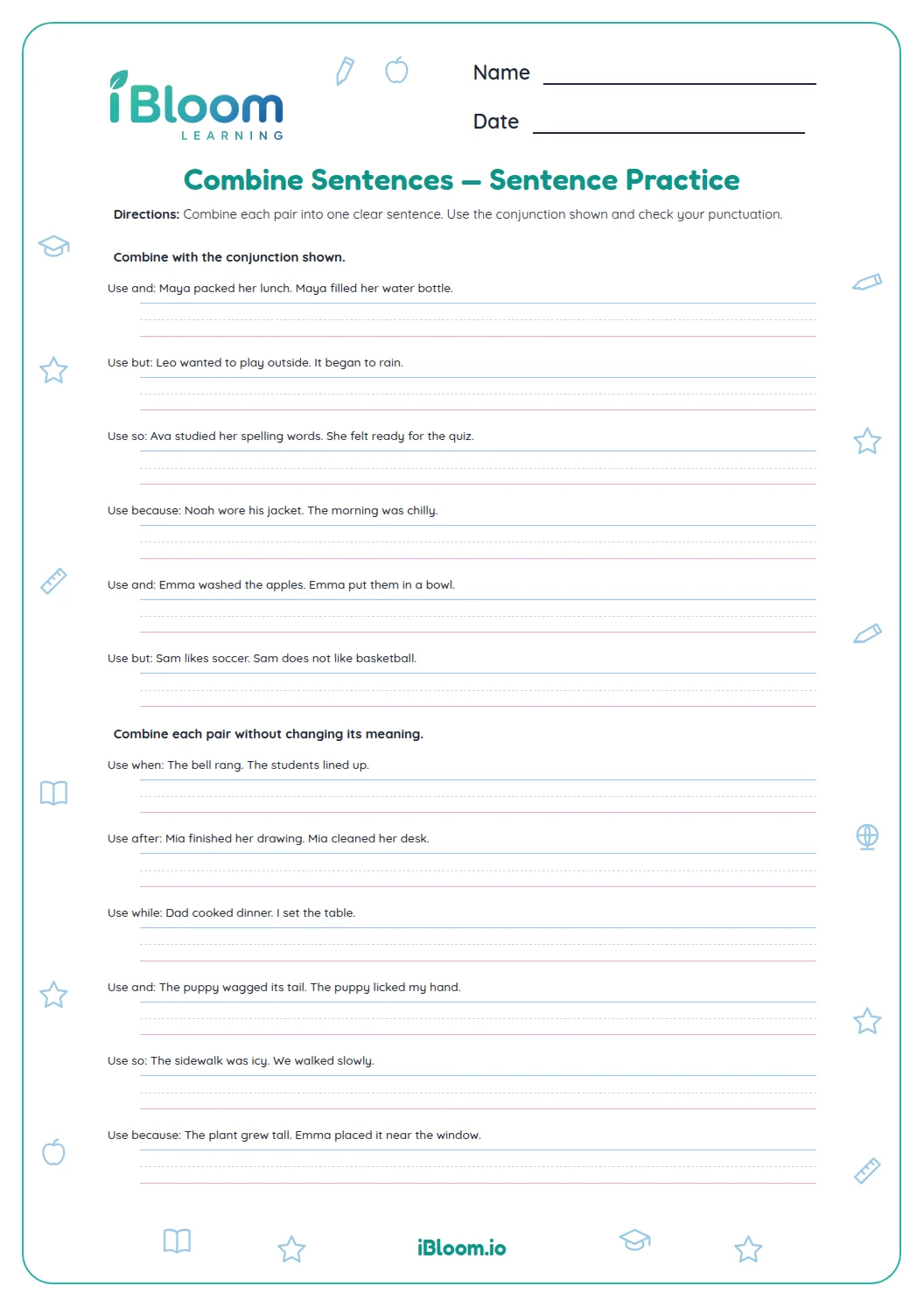
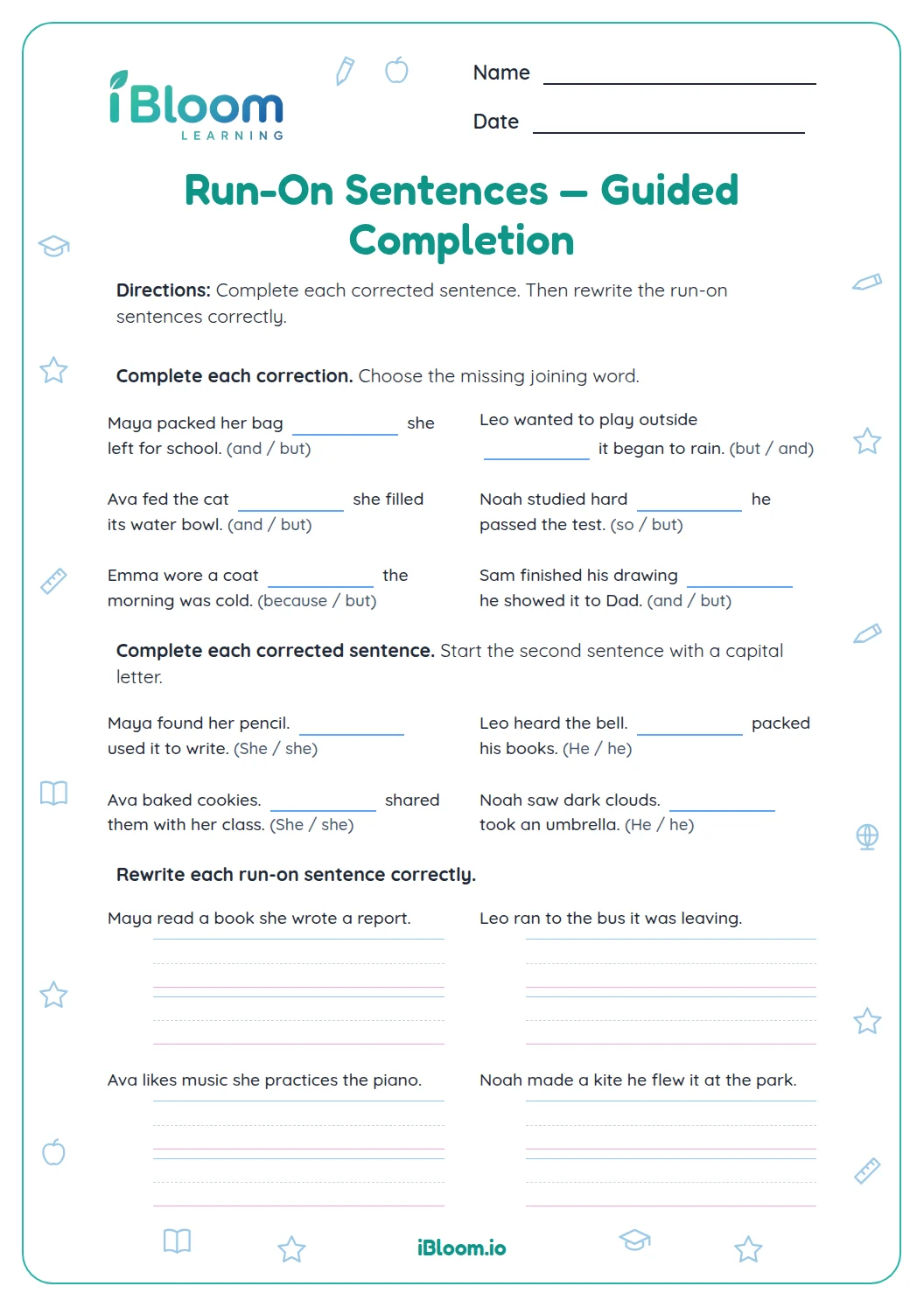
This Grade 4 printable gives students practice recognizing and repairing run-on sentences. Eleven choices ask them to identify complete joins, select a conjunction, or check a repair; three short responses ask them to repair a run-on. The answer key includes model repairs, with commas where a conjunction joins two complete thoughts.
Aligned to L.4.1f
How can a conjunction help fix a run-on?
This Grade 4 printable helps students recognize and repair run-on sentences by joining related ideas with conjunctions.
Use the worked item below as a model, then continue through the parts in order.
- 1The bell rang. We lined up.
- 2Both parts can stand alone as complete thoughts.
- 3Join them with a comma and and: The bell rang, and we lined up.
What will students practice?
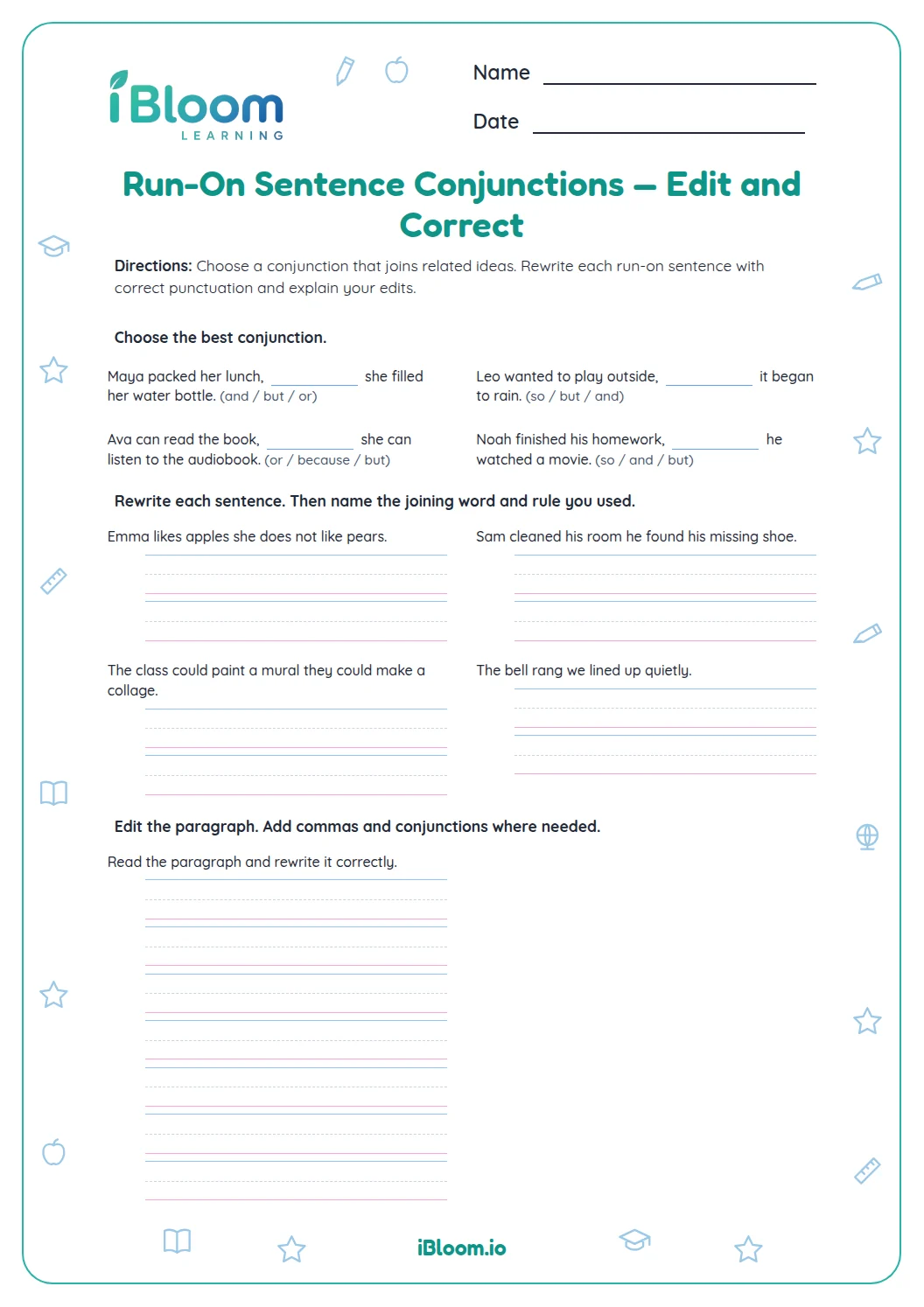
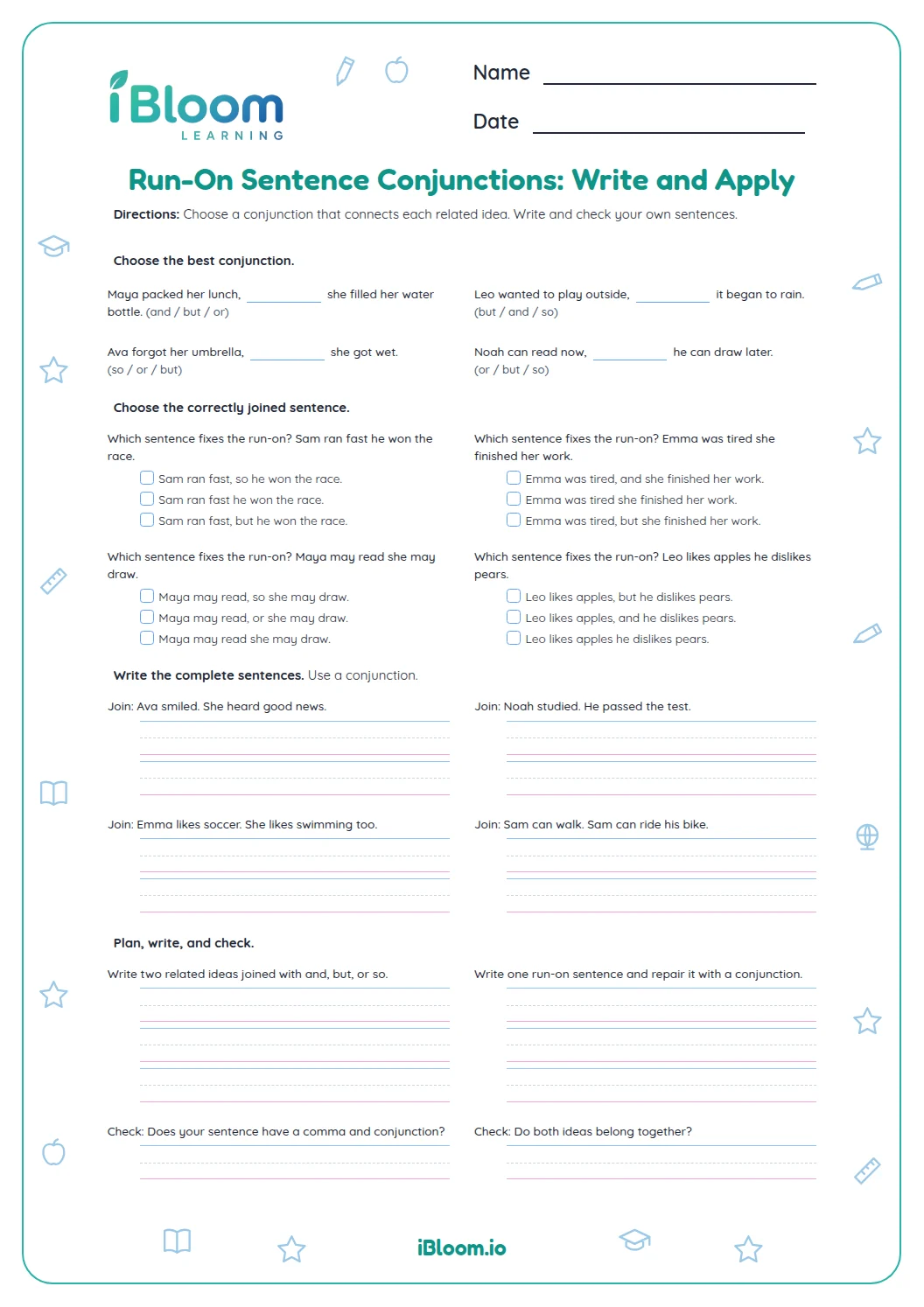
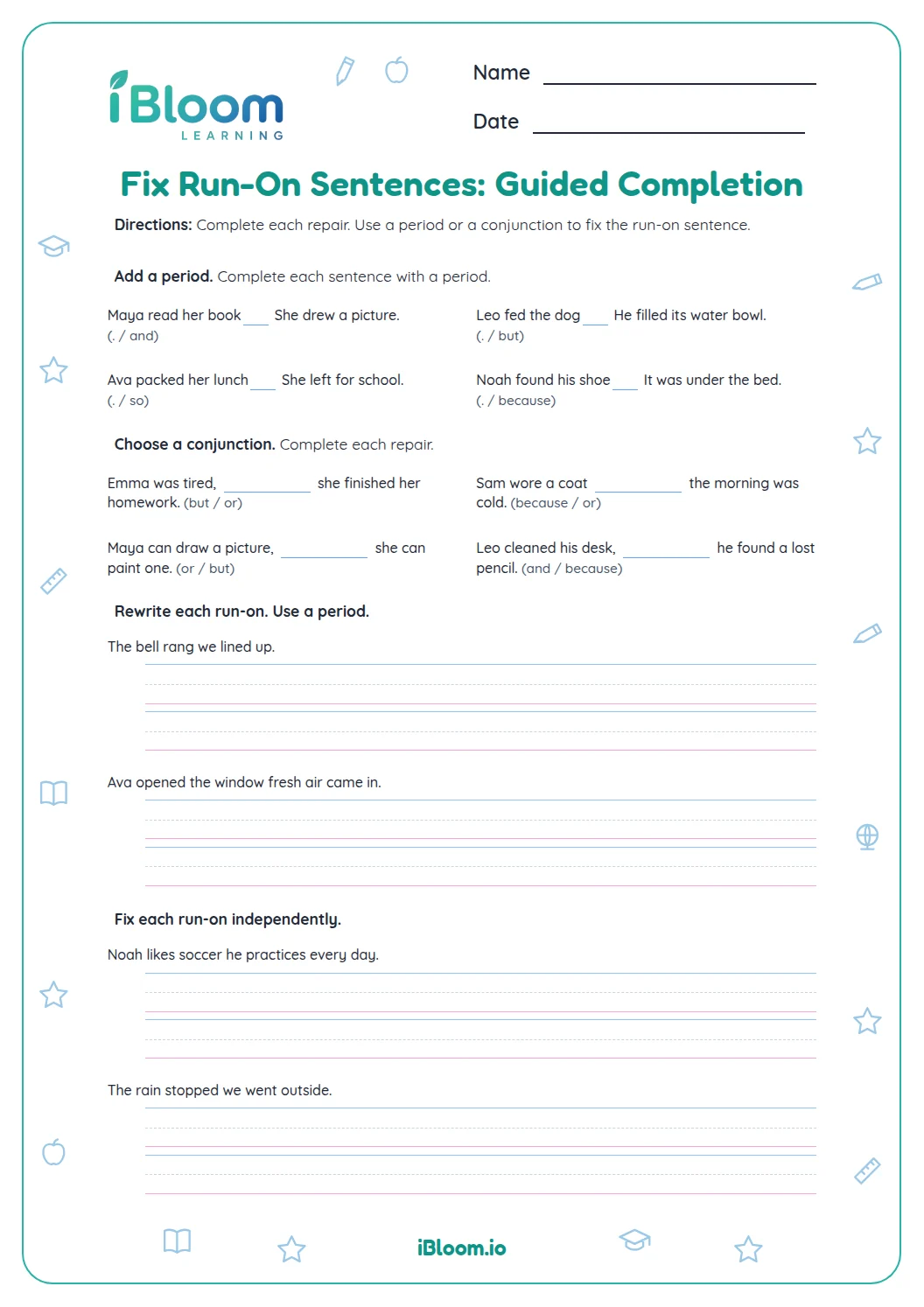
Part A has six choices about complete sentences, clear joins, and conjunction meaning. Part B has brief conjunction completions and repairs. Part C gives five choices that check repair and punctuation. Part D asks for two written repairs.
How can students check a repaired sentence?
Read each side on its own first. If both sides are complete thoughts, use a period or join them with a comma and a conjunction that fits.
How to use this worksheet
- 1Read the sentence once for meaning.
- 2Check whether each side has a subject and verb.
- 3Choose a conjunction that shows the relationship.
- 4Put a comma before the conjunction when it joins two complete thoughts.
- 5Read the repaired sentence again for meaning and punctuation.
Common mistakes and quick fixes
The mistake
Leaving out the comma before a conjunction.
The fix
Place a comma between two complete thoughts.
The mistake
Choosing so when the ideas contrast.
The fix
Use but for a contrast and so for a result.
The mistake
Joining a fragment as if it were a full thought.
The fix
Check for a subject and verb on both sides.
Common Core alignment
This worksheet gives students focused practice with the skills named in these standards.
Correct run-ons by joining related ideas with a conjunction and punctuation.
On this sheet: Students identify and repair run-on sentences.
Show the official wordingHide the official wording
Produce complete sentences, recognizing and correcting inappropriate fragments and run-ons.
What to practice next
Make more practice
Further reading
Questions parents and teachers ask
What is a run-on sentence?
A run-on joins two complete thoughts without the punctuation or connector needed to separate them. A period can divide them, or a comma and a fitting conjunction can join them. This sheet asks students to spot and repair examples.
Which conjunctions do students use?
The questions use and, but, so, or, and because. And joins related ideas, but signals contrast, so introduces a result, or offers a choice, and because gives a reason. Students should read the whole sentence and choose the word that matches the relationship.
When does a comma go before a conjunction?
Use a comma before a conjunction when it joins two complete thoughts, each with its own subject and verb. In “The bell rang, and we lined up,” both halves could stand alone. Do not add that comma automatically when the conjunction joins only words or phrases.
How many questions and pages are included?
There are 14 questions: eleven sentence choices and three written run-on repairs. The printable has two worksheet pages, followed by a separate two-page answer key. Students can complete one part at a time and use the model repairs to check punctuation and conjunction meaning.
Can more than one repair be correct?
Yes. A run-on can often be repaired with a period, a semicolon, or a comma and fitting conjunction. For items that name a conjunction, use that word and add punctuation where needed. The key gives a model; accept another grammatical repair that keeps the intended meaning.