








About this worksheet
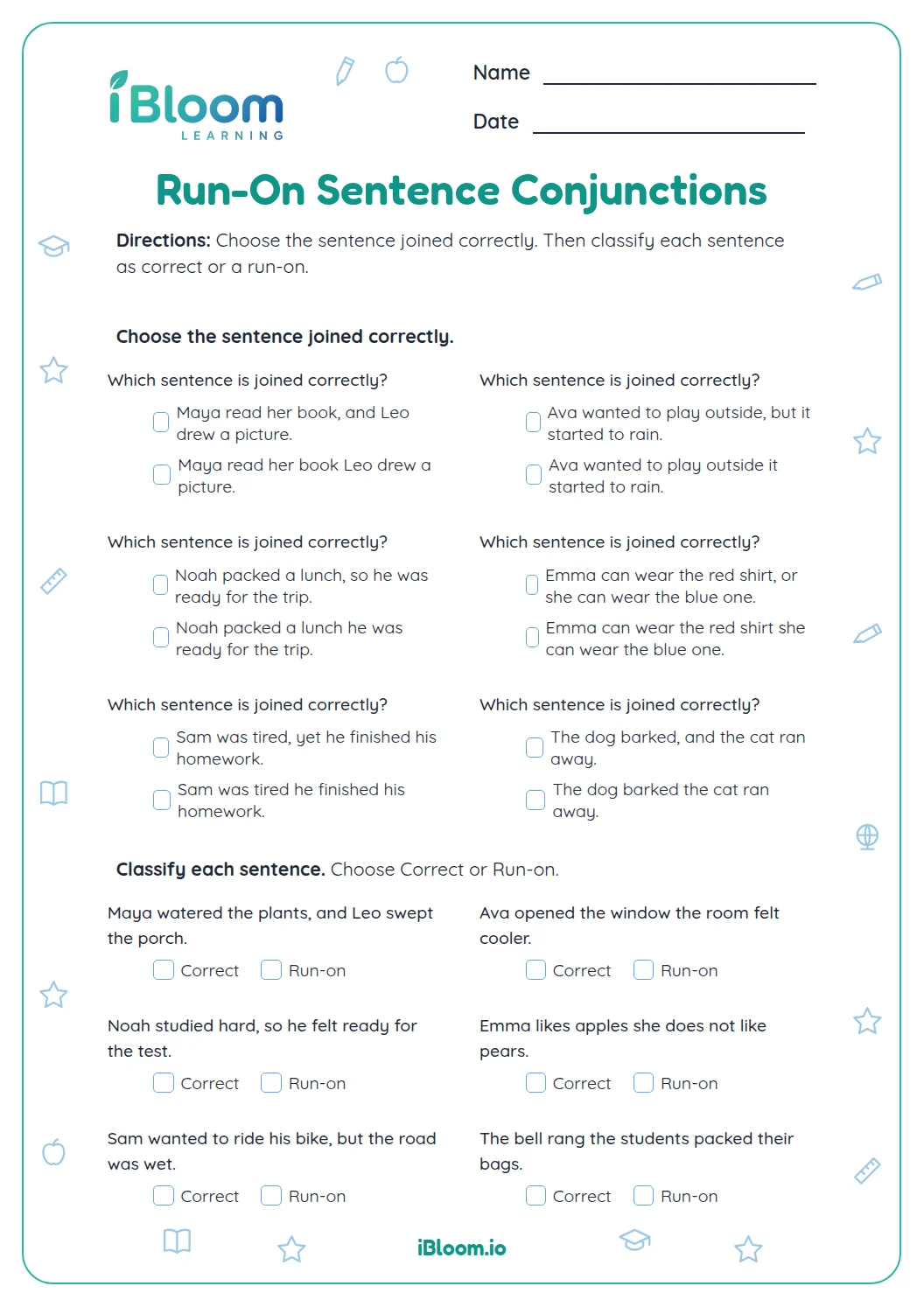
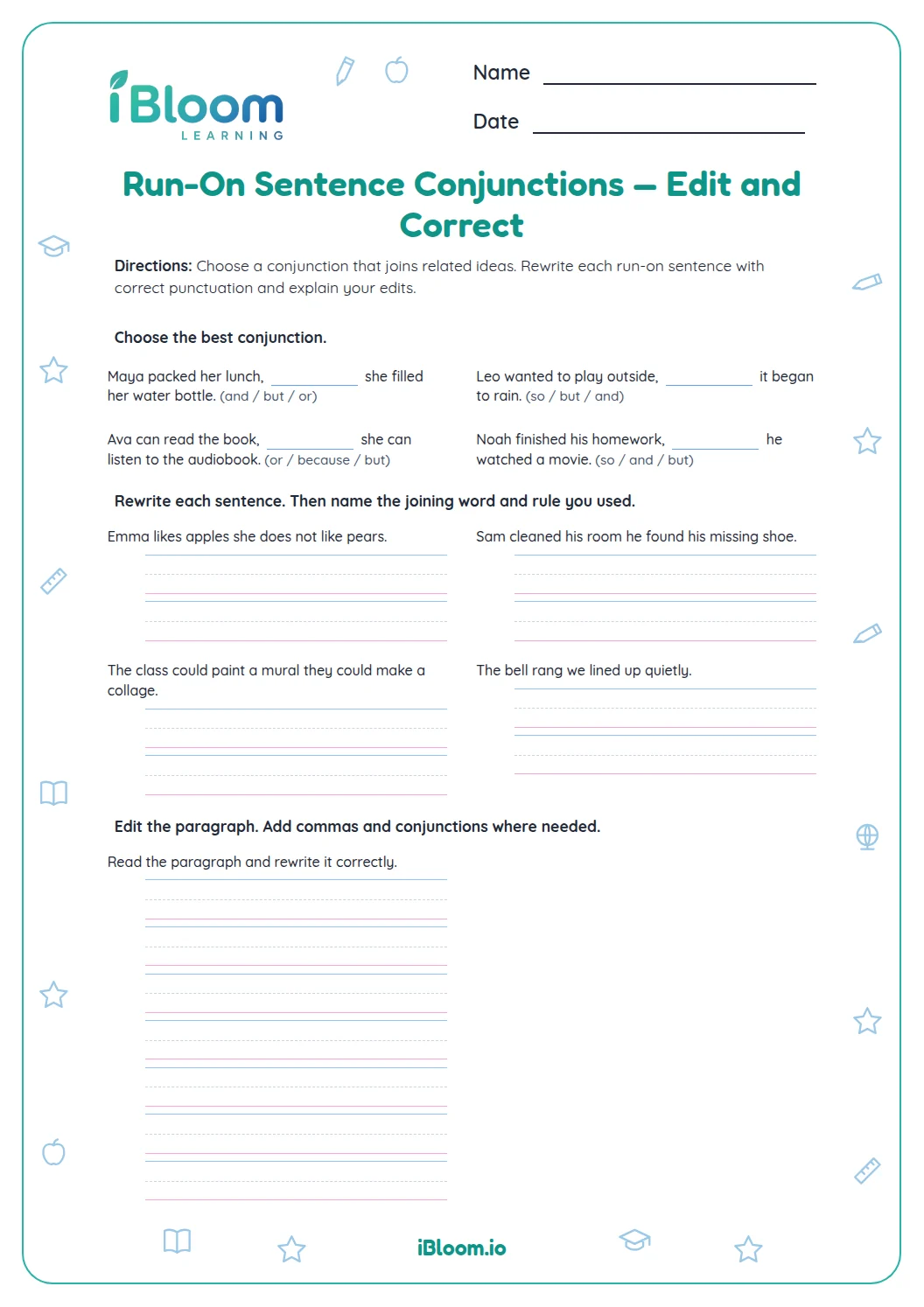
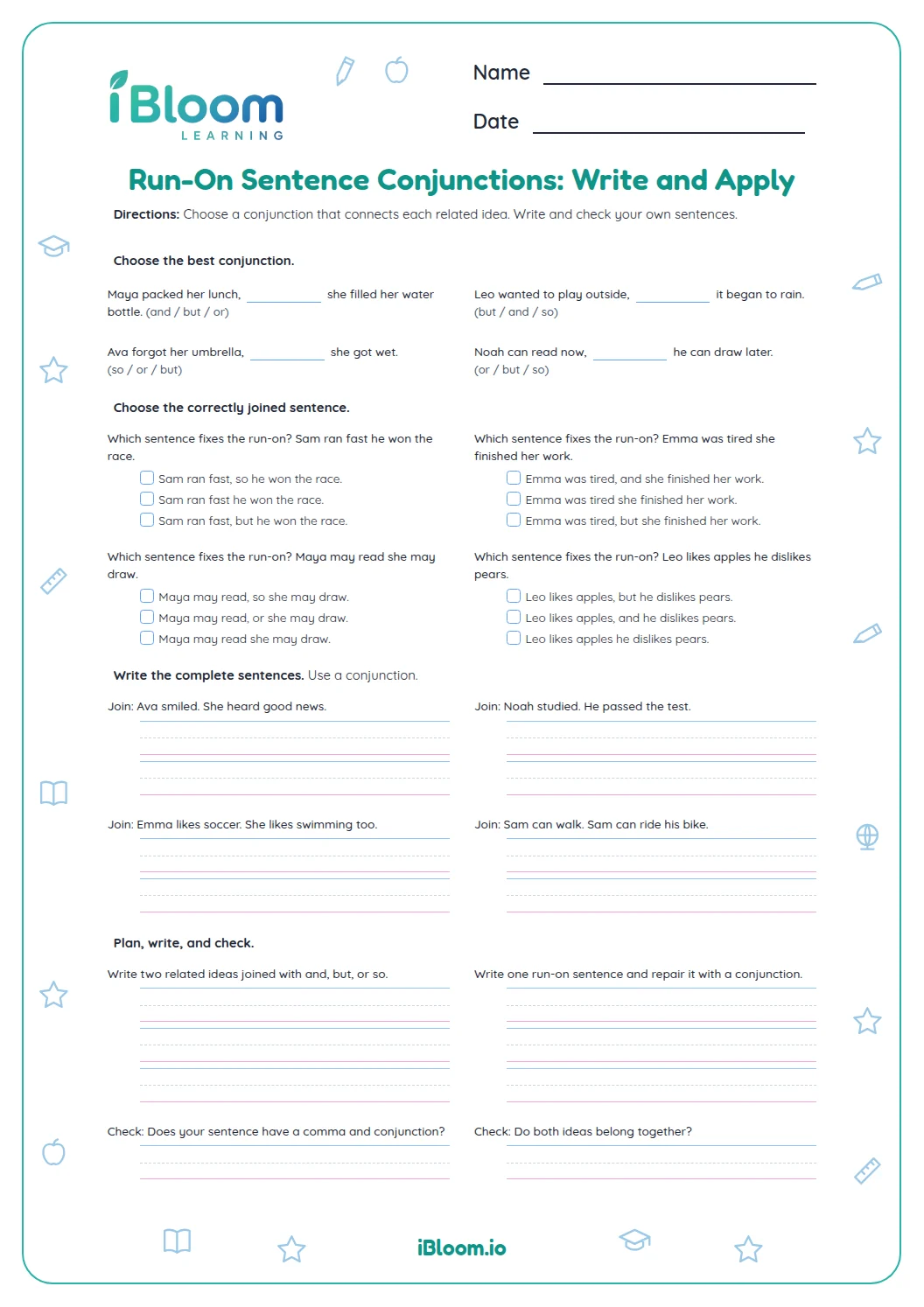
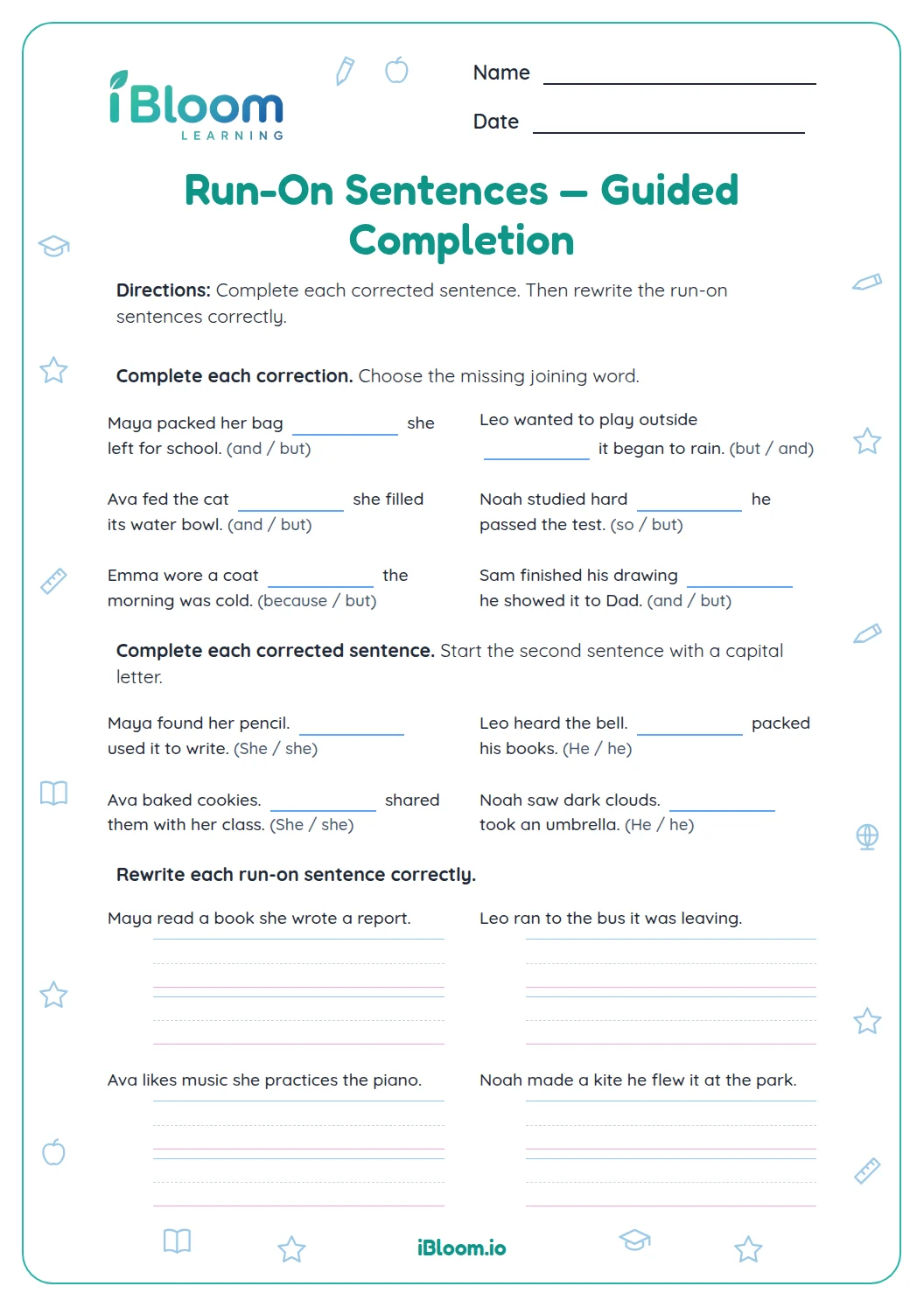
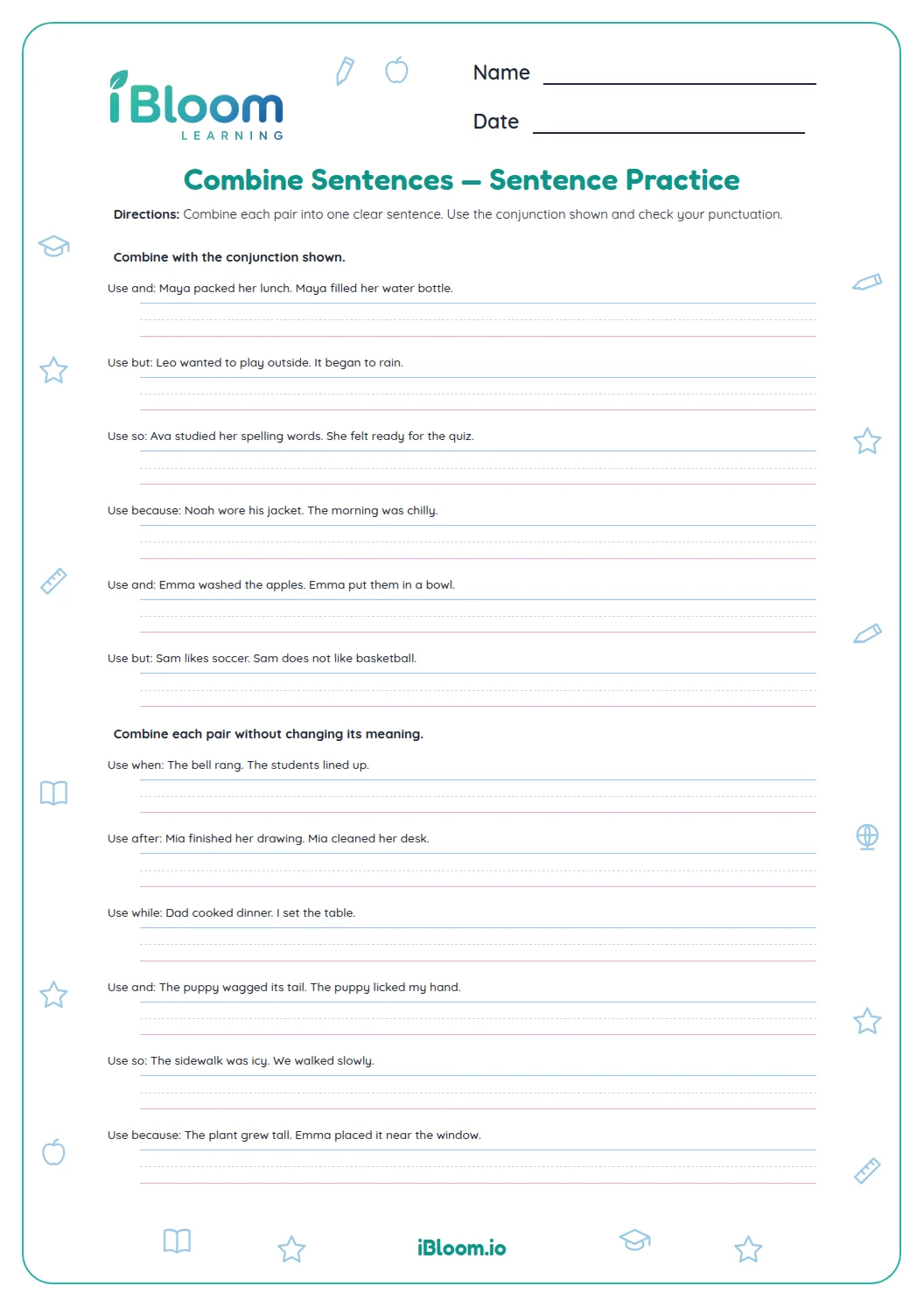
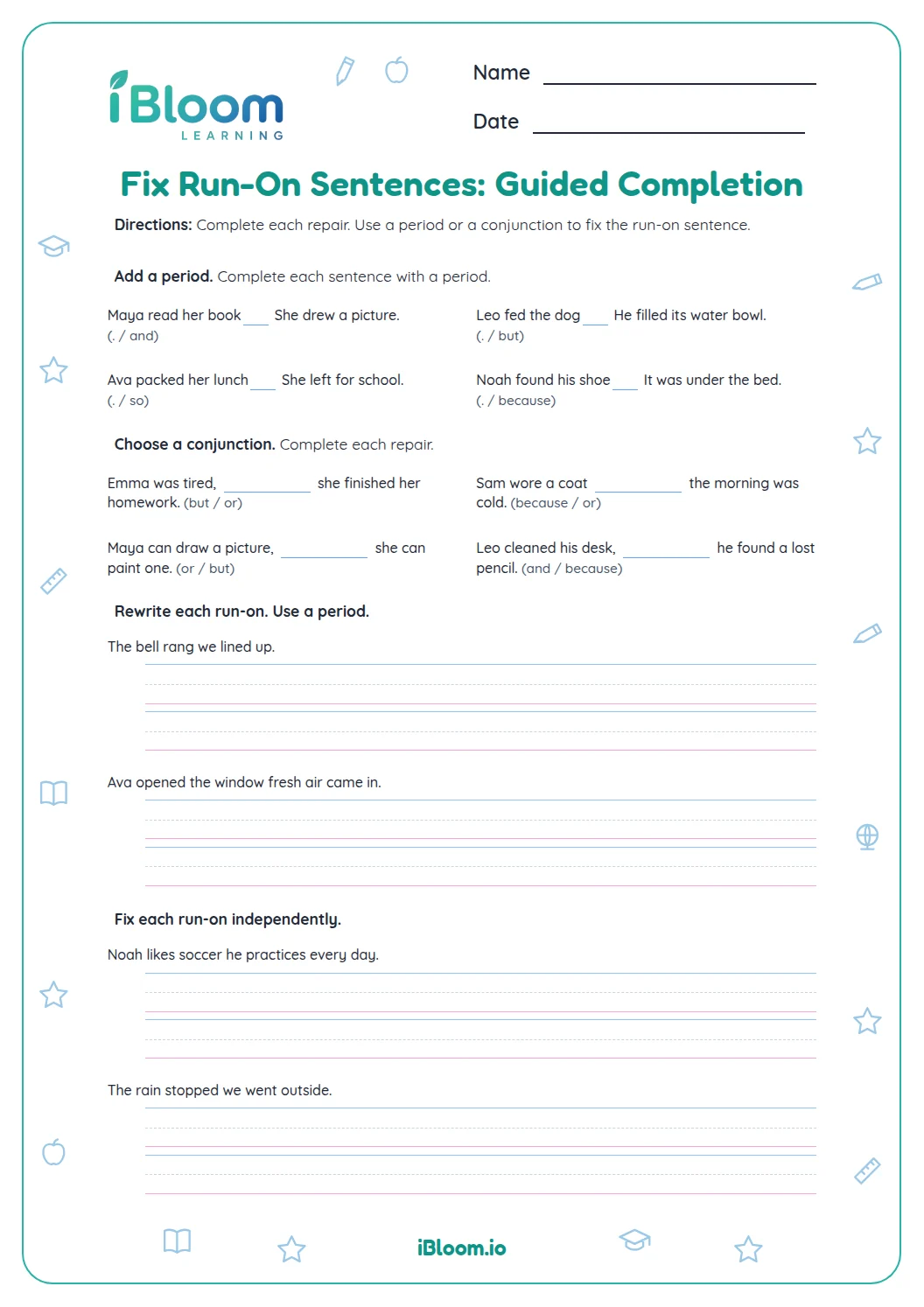
This Grade 4 grammar worksheet helps children connect related ideas and complete sentences with conjunctions. Part A has seven word choices; Part B has five sentence completions; Part C has two final relationship choices. The answer key lists each word. Children read both ideas first, then decide whether they show addition, contrast, choice, reason, or result.
Aligned to L.4.1f
How do conjunctions connect ideas?
And adds a related idea, but signals a contrast, or offers a choice, and so can show a result. Because gives a reason. Read both thoughts first, then choose the word that makes their relationship clear.
- 1The clouds grew dark, ___ we went inside.
- 2Going inside is the result of the dark clouds.
- 3Answer: so
What will children write?
Part A has seven sentence completions with conjunction choices. Part B has five more sentences with a blank for a conjunction. Part C asks children to choose a conjunction for two final context clues.
- 1I like apples, ___ I do not like pears.
- 2The two ideas contrast.
- 3Answer: but
How do I check a joined sentence?
Read the new sentence aloud. Check that both original ideas are still there and that the conjunction fits their relationship. When and, but, or, or so joins two complete thoughts, place a comma before the conjunction.
How to use this worksheet
- 1Read both thoughts before choosing a conjunction.
- 2Name the relationship: addition, contrast, choice, reason, or result.
- 3Complete Part A by choosing the word that fits.
- 4Join each pair in Part B and add punctuation.
- 5Compare your revision with the key; accept another clear, complete sentence.
What mistakes can I help with?
The mistake
Using and when the ideas show a contrast.
The fix
Read both thoughts together. If one idea differs from the other, try but and check whether the meaning is clear.
The mistake
Leaving out the comma between two complete thoughts.
The fix
Find the conjunction joining the thoughts. Put a comma before and, but, or, or so.
The mistake
Writing a joined sentence that leaves out one of the original ideas.
The fix
Compare the new sentence with both source sentences. Make sure each idea is still expressed.
Curriculum alignment
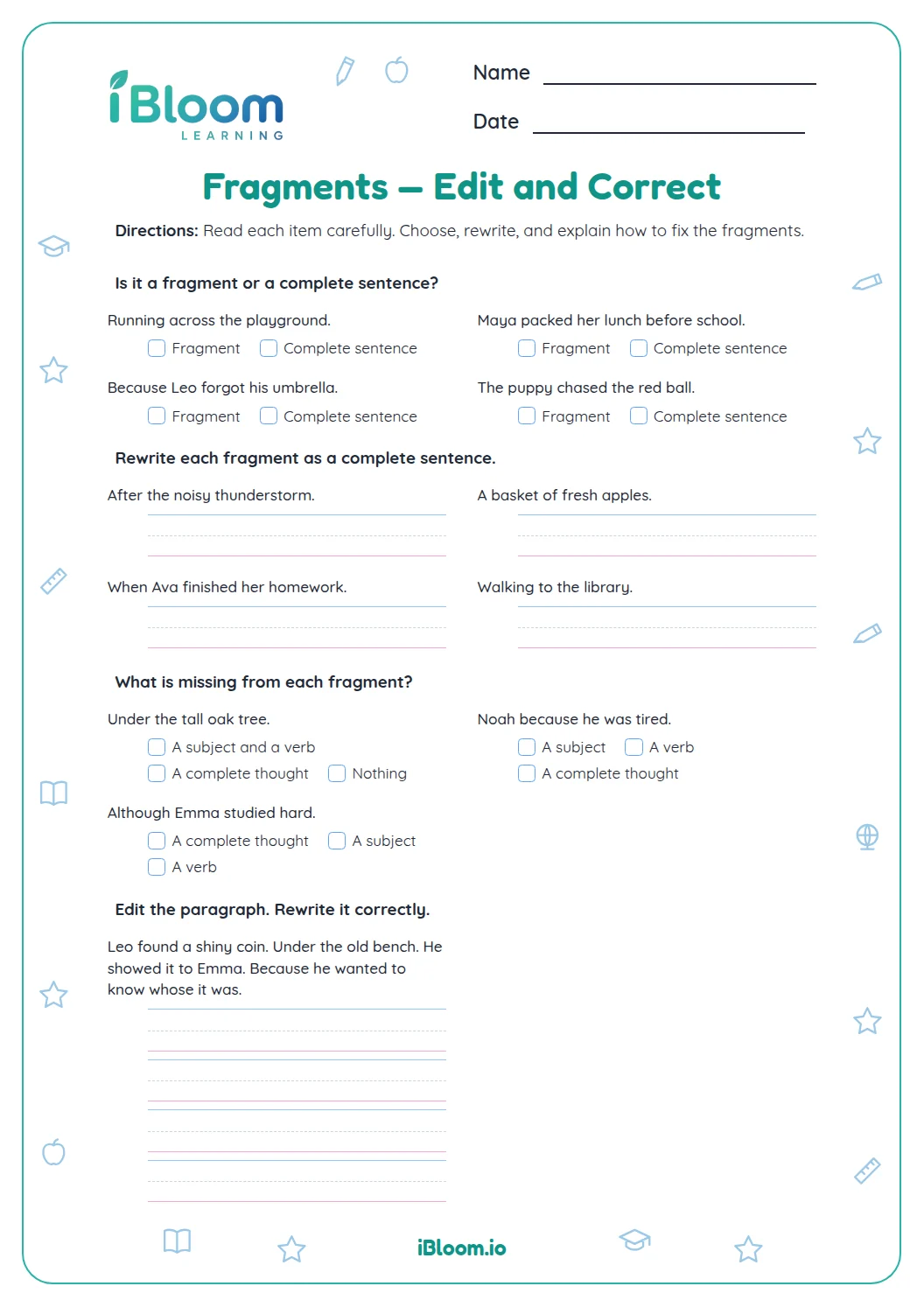
This sheet practices recognizing complete sentences and joining related ideas.
Join complete thoughts and check a sentence for run-ons.
On this sheet:
Show the official wordingHide the official wording
Produce complete sentences, recognizing and correcting inappropriate fragments and run-ons.
What to practice next
Make more practice
Further reading
Questions parents and teachers ask
What does this worksheet practice?
It practices choosing conjunctions that connect related ideas. Part A offers word choices, Part B asks children to write the missing conjunction, and Part C gives two final context checks. The separate key lists all 14 answers and supports a punctuation review.
Which conjunctions appear on the sheet?
The questions use and, but, or, so, and because. And adds a related thought, but shows contrast, or gives a choice, so can show a result, and because introduces a reason. Ask your child to explain the relationship before selecting a word.
How should a joined sentence be punctuated?
When two complete thoughts are joined with and, but, or, or so, place a comma before the conjunction. Begin with a capital letter and finish with an end mark. Read the result aloud to check that it remains a complete, clear sentence.
Can a written answer differ from the key?
Yes. Part B has open sentence pairs, and the key gives one sample for each. Another answer works if it keeps both original ideas, uses a conjunction that matches their relationship, and reads as a complete sentence with suitable punctuation.
Can my child say an answer before writing it?
Yes. Saying the ideas aloud can help a child hear whether they show addition, contrast, choice, reason, or result. Then the child can choose or write a conjunction and check the sentence. The answer key supports a quick review.