



About this worksheet
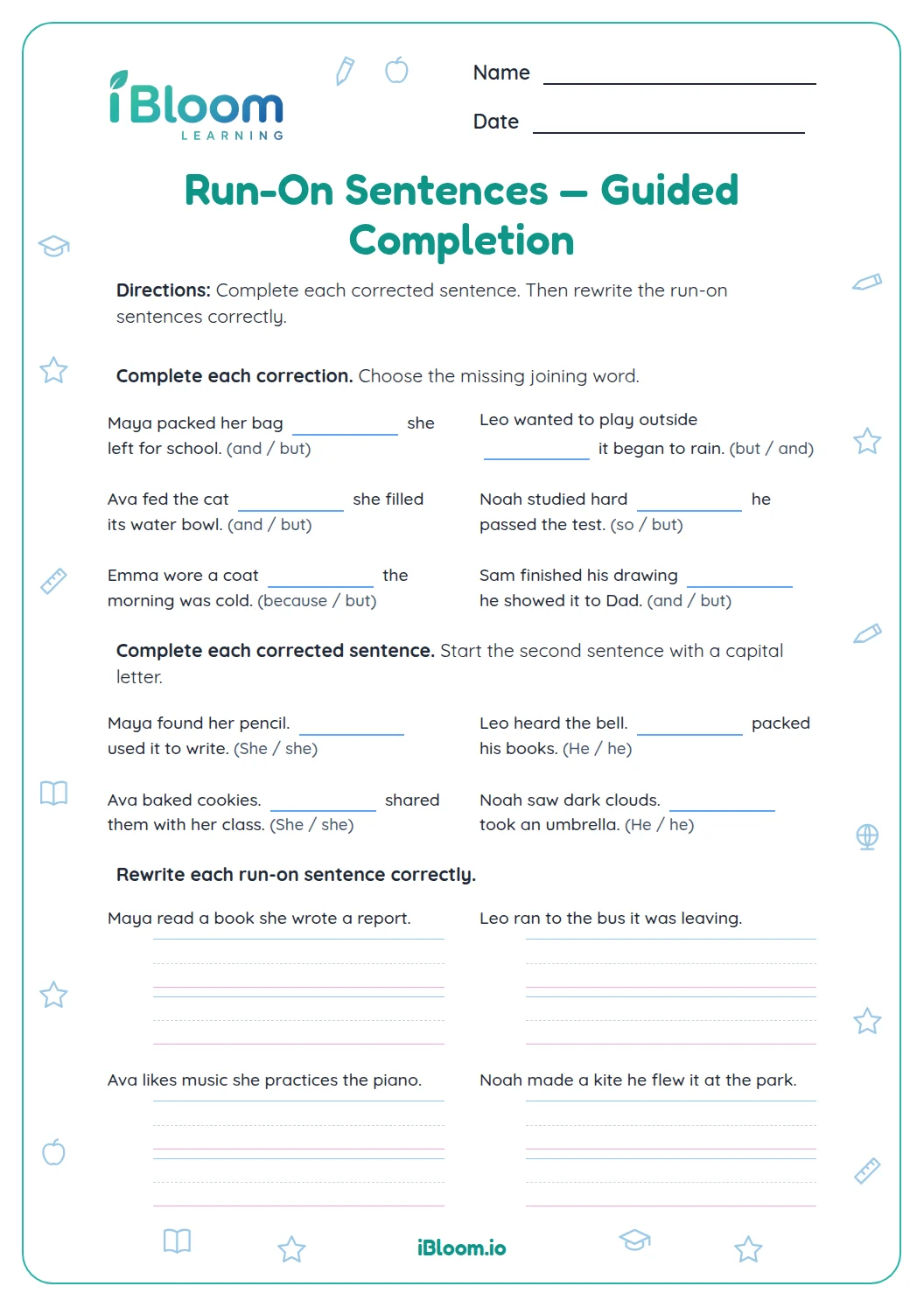
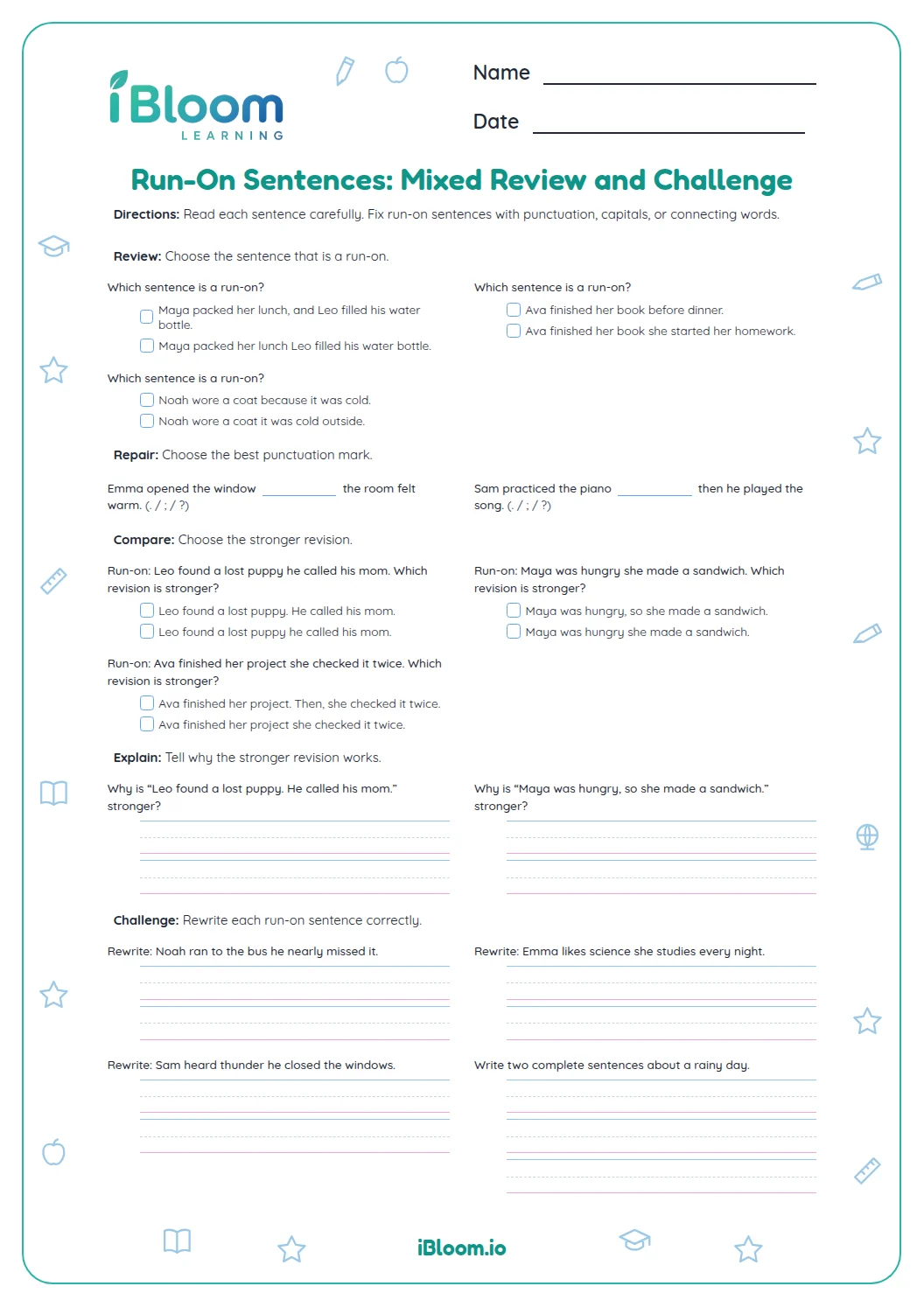
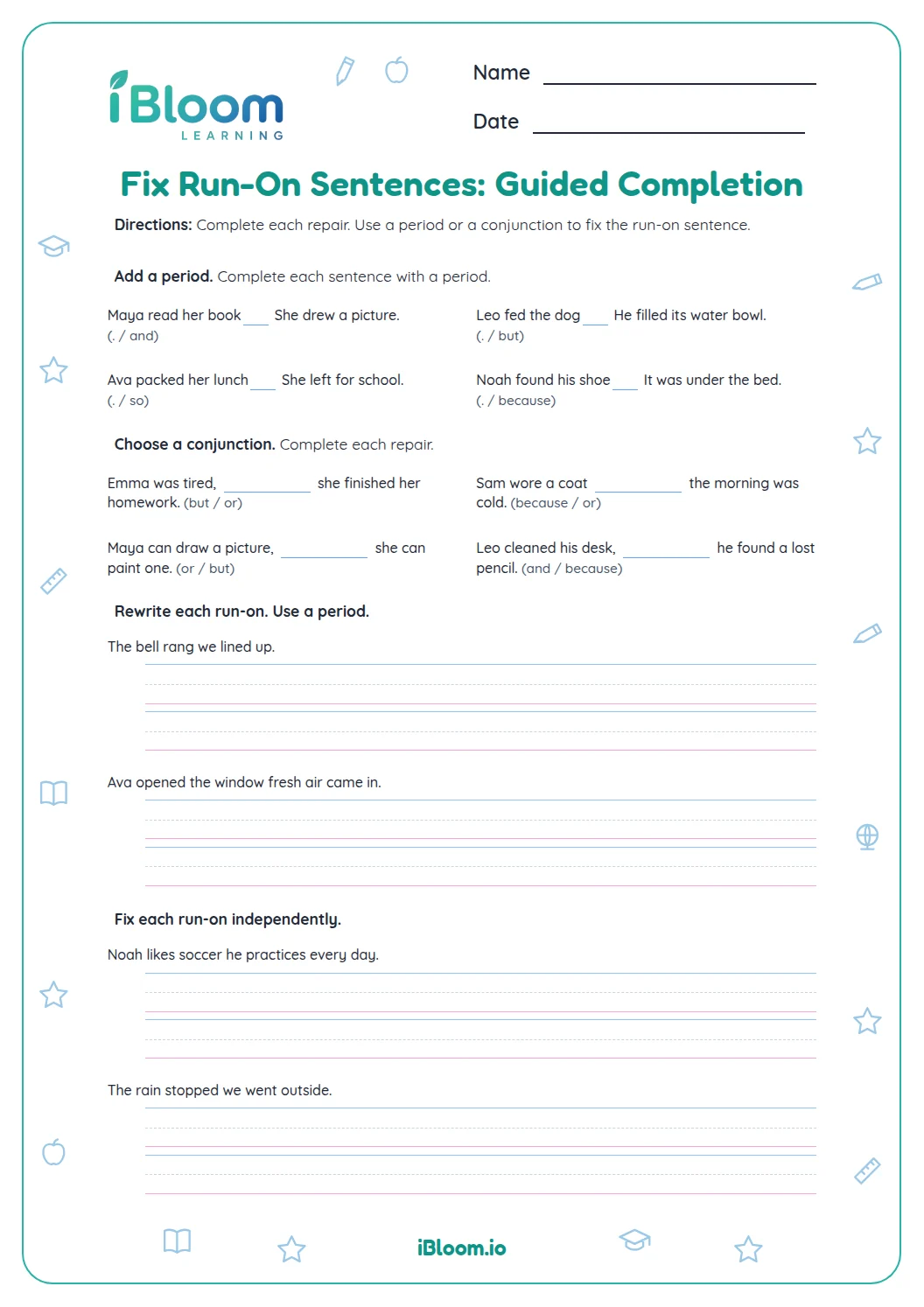
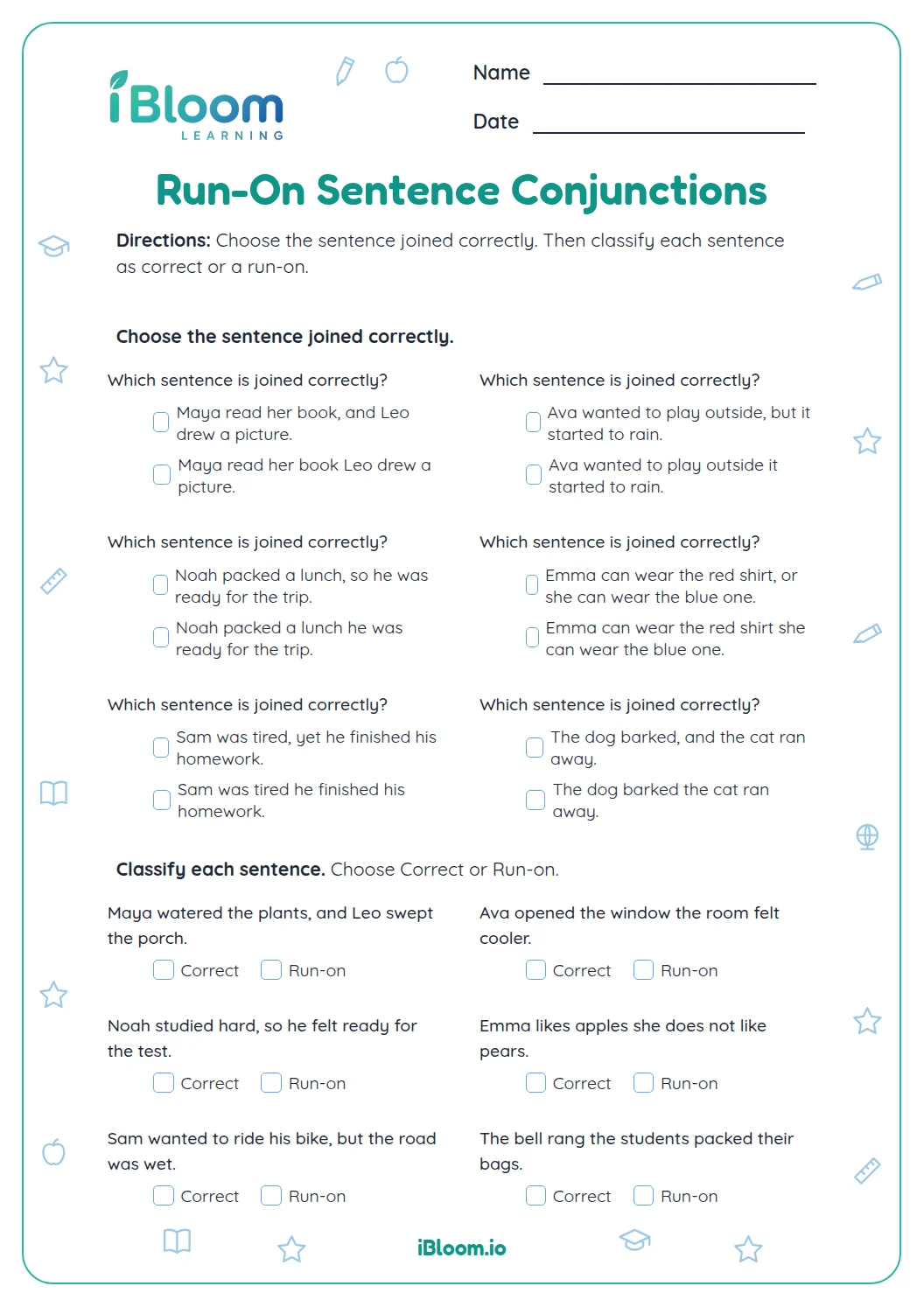
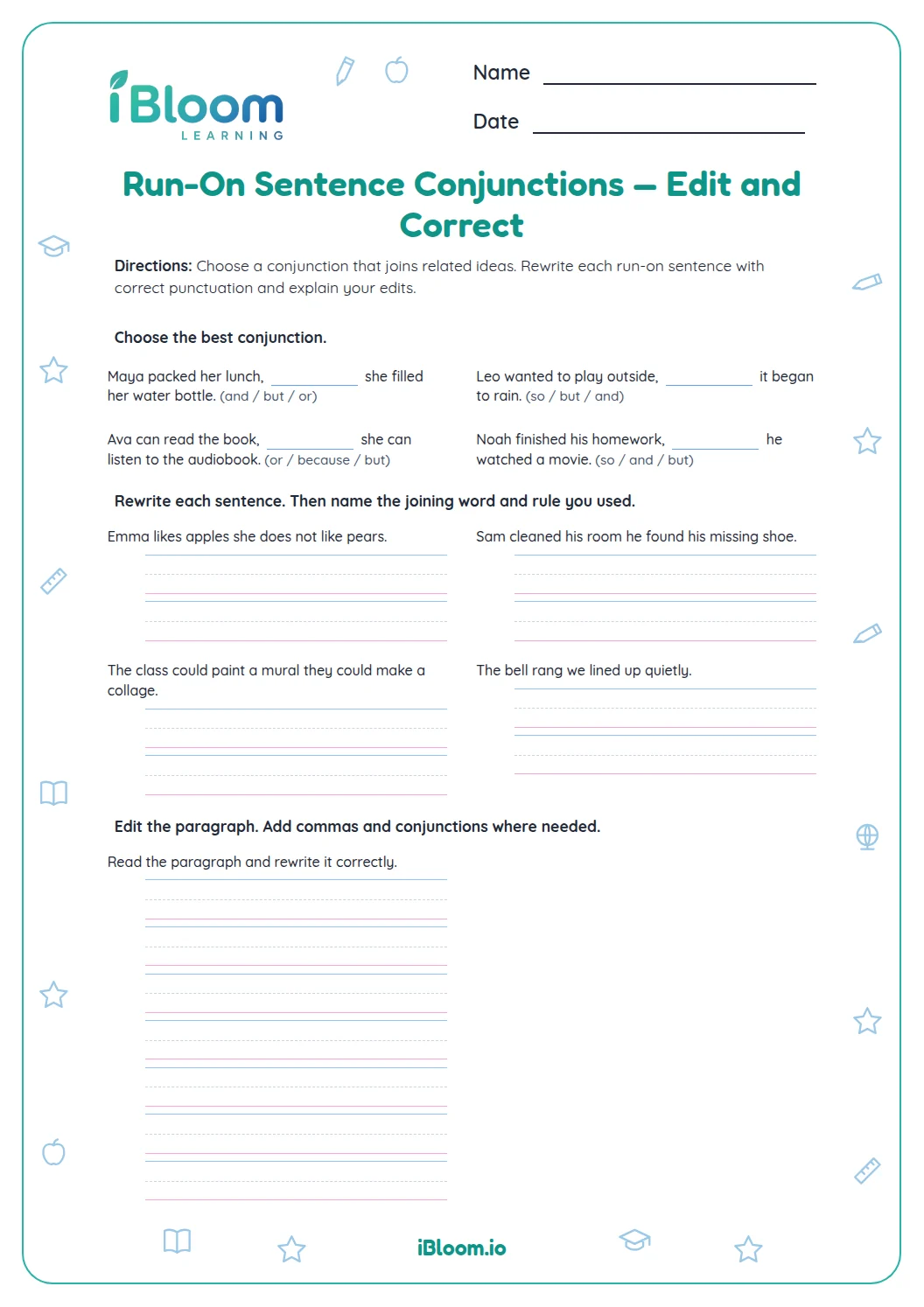
This Grade 4 worksheet helps students repair run-on sentences by separating complete thoughts or joining them with a comma and a coordinating conjunction. Twelve compact choices compare valid repairs with missing boundaries and comma splices. Two final choice items apply the same skill to related ideas and a compound sentence. The separate answer key gives model responses and allows other correct repairs.
Aligned to 4.L.1.f
How can you repair a run-on sentence?
The first ten items ask students to choose how to repair a run-on: separate thoughts with end punctuation or join them with a comma and a coordinating conjunction. The last two choices continue the same practice with new sentences.
- 1The rain stopped we went outside.
- 2Comma + so joins the ideas correctly.
How can you choose a clear sentence boundary?
The next repair checks ask students to choose whether to separate the ideas into two sentences or join them with a conjunction. A comma alone between complete thoughts creates a comma splice.
How can you apply the repair in new sentences?
Part C applies the same repair choices to two fresh sentences: one pair about a science project and one compound sentence about a game.
How to use this worksheet
- 1Read each run-on and find where one complete thought ends.
- 2Choose end punctuation or a comma with a coordinating conjunction.
- 3Reject a missing boundary and a comma placed alone between complete thoughts.
- 4Write the two requested applications as complete ideas.
- 5Compare with the key; another correct repair is fine if it preserves the meaning.
Run-on sentence mistakes and fixes
The mistake
Placing only a comma between two complete thoughts.
The fix
Use a period or add a coordinating conjunction after the comma.
The mistake
Adding a conjunction but leaving out the comma.
The fix
For two complete thoughts joined by and, but, or so, place a comma before the conjunction.
The mistake
Making one side of the repair a fragment.
The fix
Check that each separated sentence has a subject and a verb and expresses a complete thought.
Common Core alignment
This sheet gives focused practice with the skill named in the standard.
Write complete sentences and correct run-ons in editing and original writing.
On this sheet: Every repair identifies sentence boundaries and produces complete sentences.
Show the official wordingHide the official wording
Produce complete sentences, recognizing and correcting inappropriate fragments and run-ons.
What to practice next
Make more practice
Further reading
Questions parents and teachers ask
How can I fix a run-on sentence?
Separate complete thoughts with end punctuation, or join them with a comma and a coordinating conjunction such as and, but, or so. This worksheet asks students to write two repairs, check several repair choices, and create original sentences. The key gives models while allowing other correct revisions.
Does every repair need the word and?
No. A period can separate two thoughts, and different coordinating conjunctions can show how ideas connect. Choose punctuation that preserves the meaning and leaves each sentence complete. The writing prompts also let students create their own connected ideas. Reread both sides to confirm each thought is complete.
Why is a comma alone not enough?
A comma by itself does not provide a suitable boundary between two complete thoughts; that error is called a comma splice. Use a period or join the thoughts with a comma and a coordinating conjunction. Part B asks students to distinguish these choices.
What should the original writing include?
One prompt asks for two related complete sentences about a science project. The other asks for a compound sentence about a game using and, but, or so. The key provides examples, but students can write different ideas if the sentence boundaries and punctuation are correct.
Is an answer key included?
Yes. The separate key gives model revisions for the run-ons and examples for the original writing prompts. Some repairs allow more than one correct wording; accept a revision that preserves the idea and separates the complete thoughts correctly. Use the key after the child completes both parts.