




About this worksheet
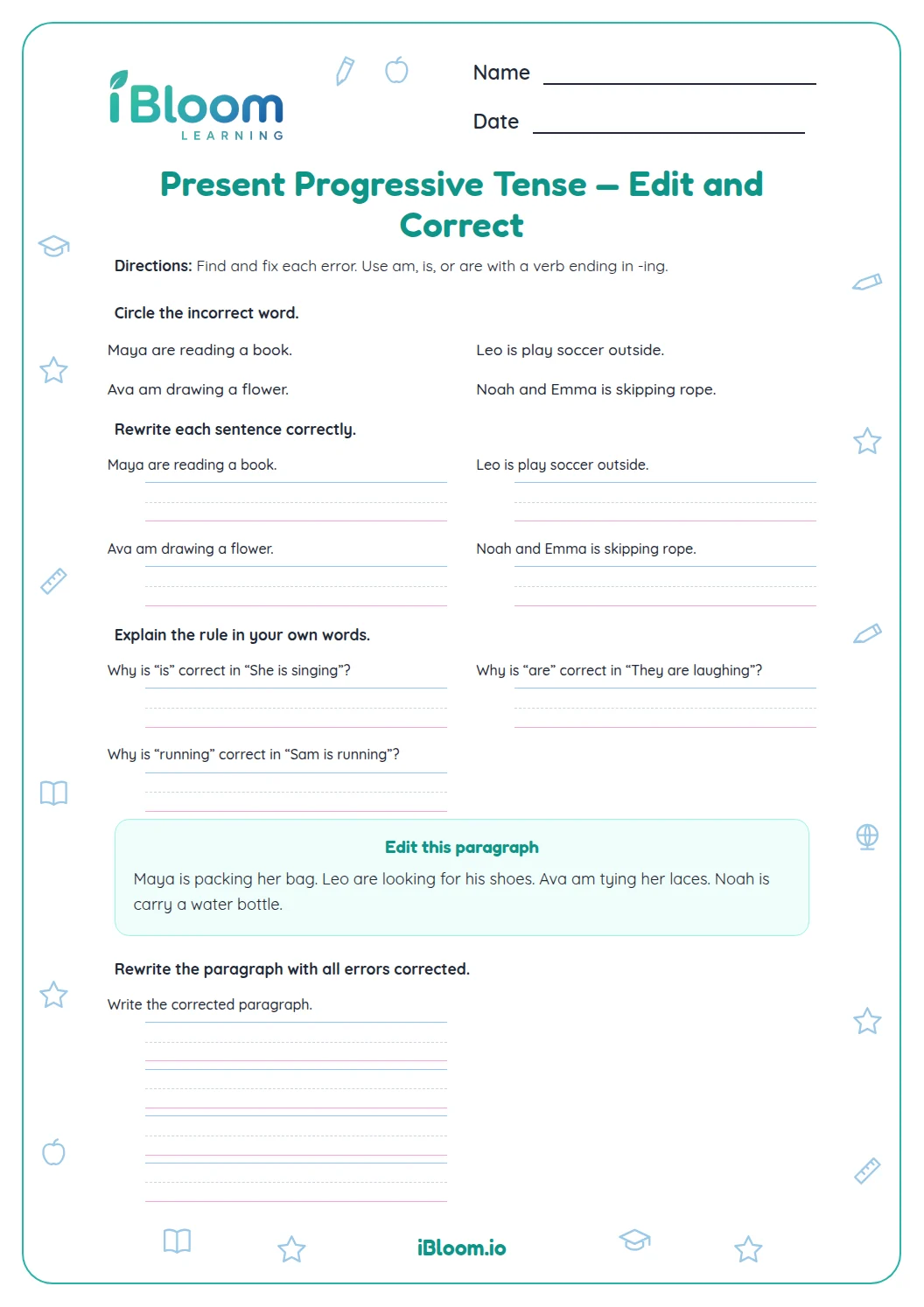
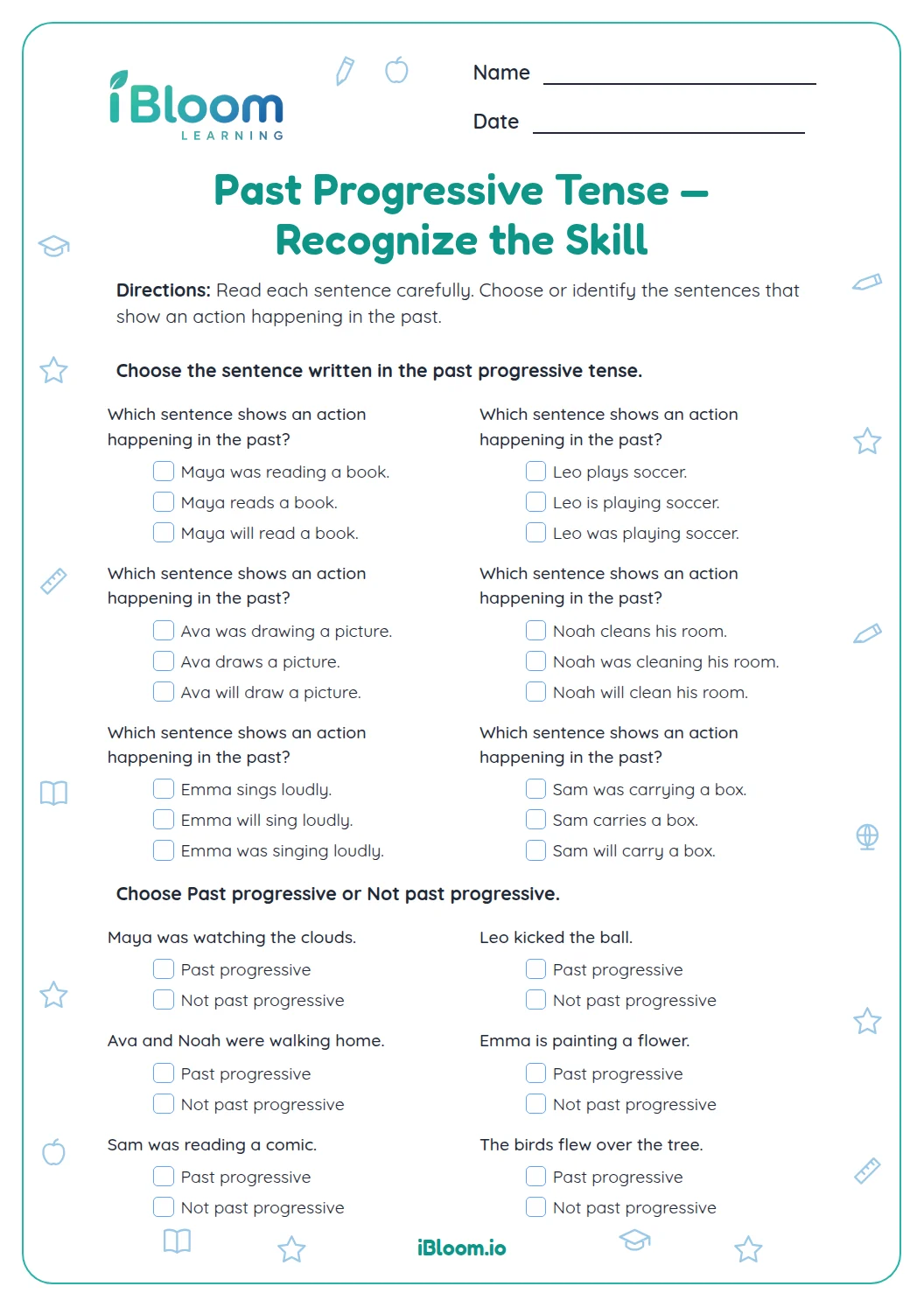
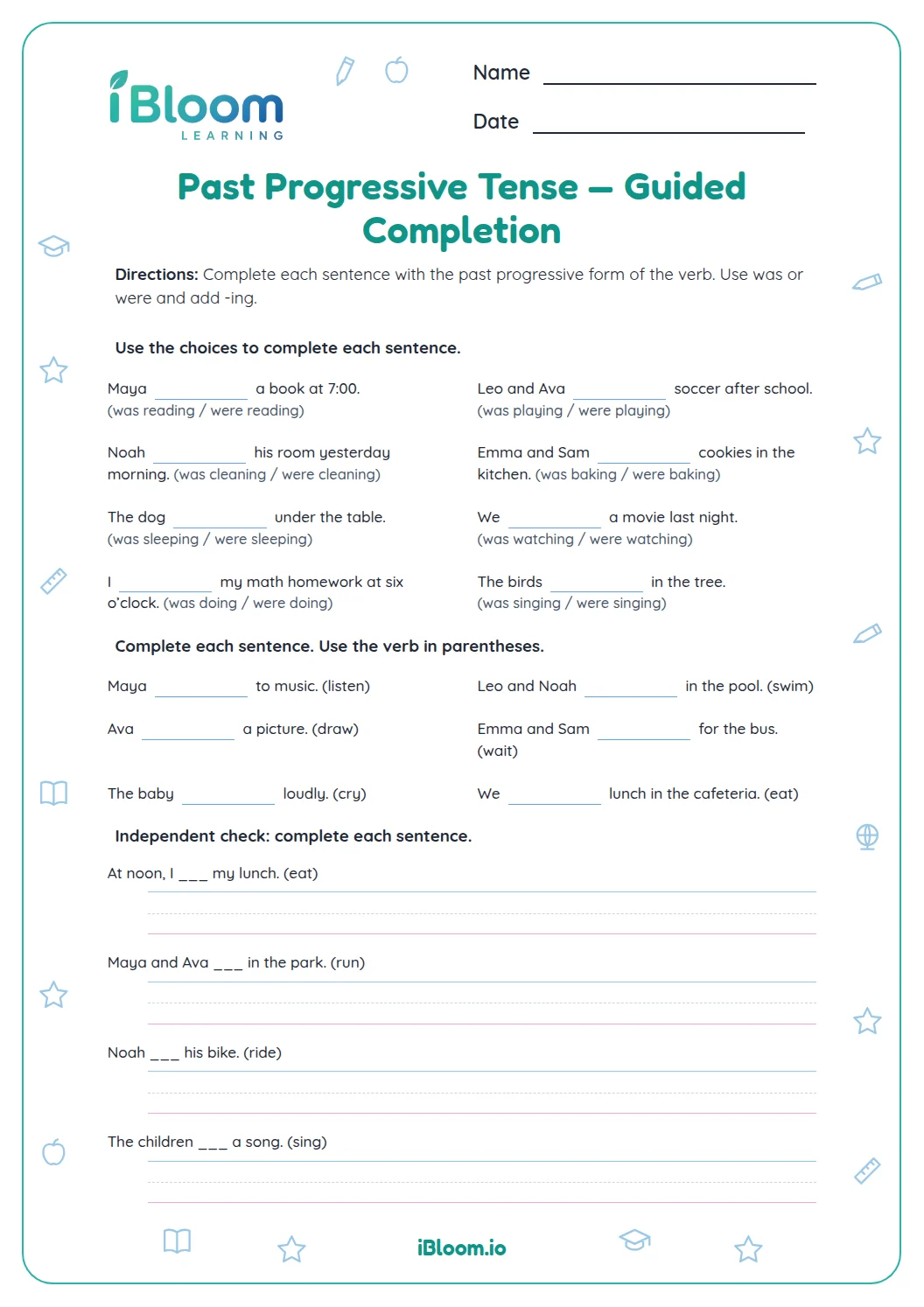
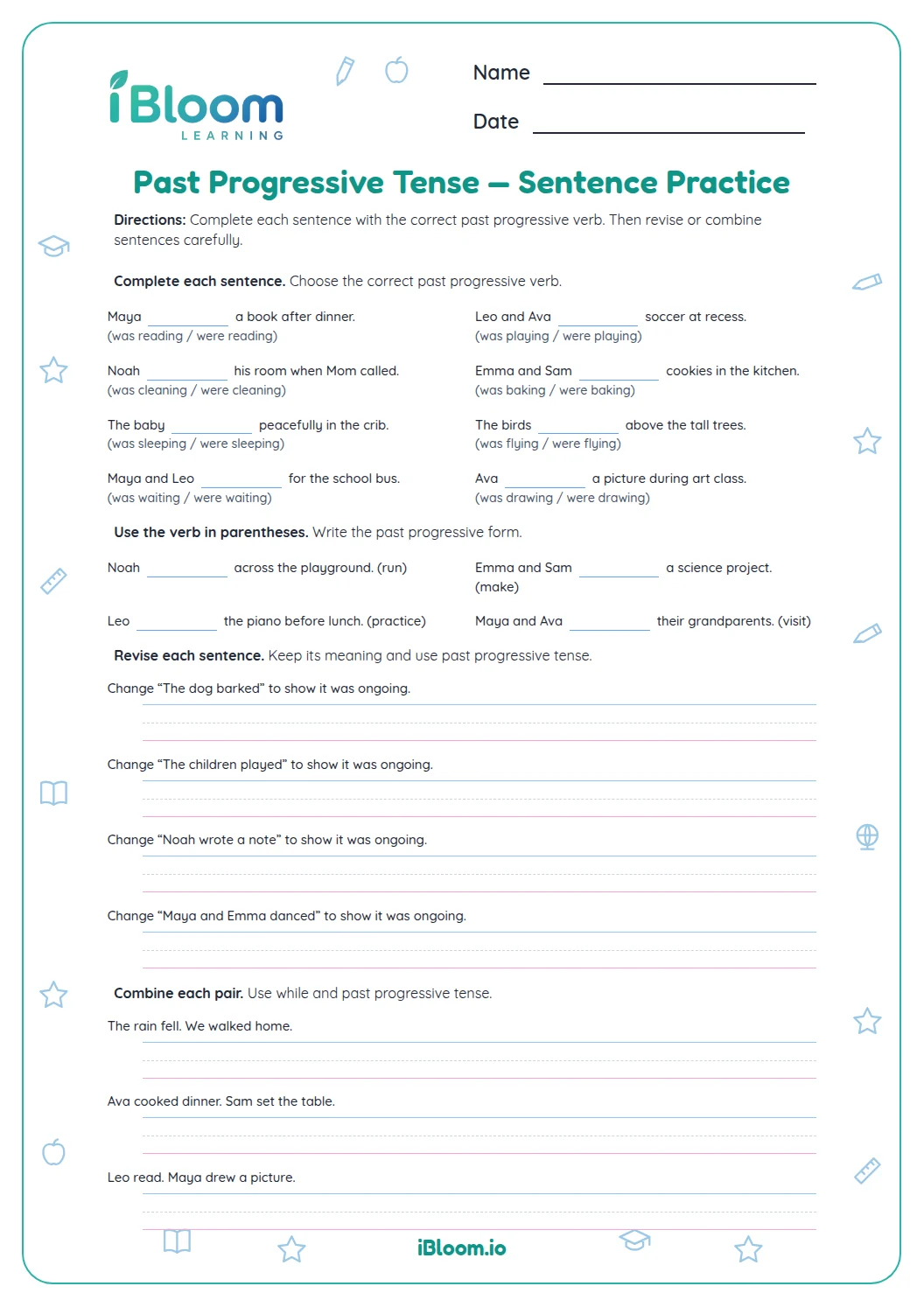
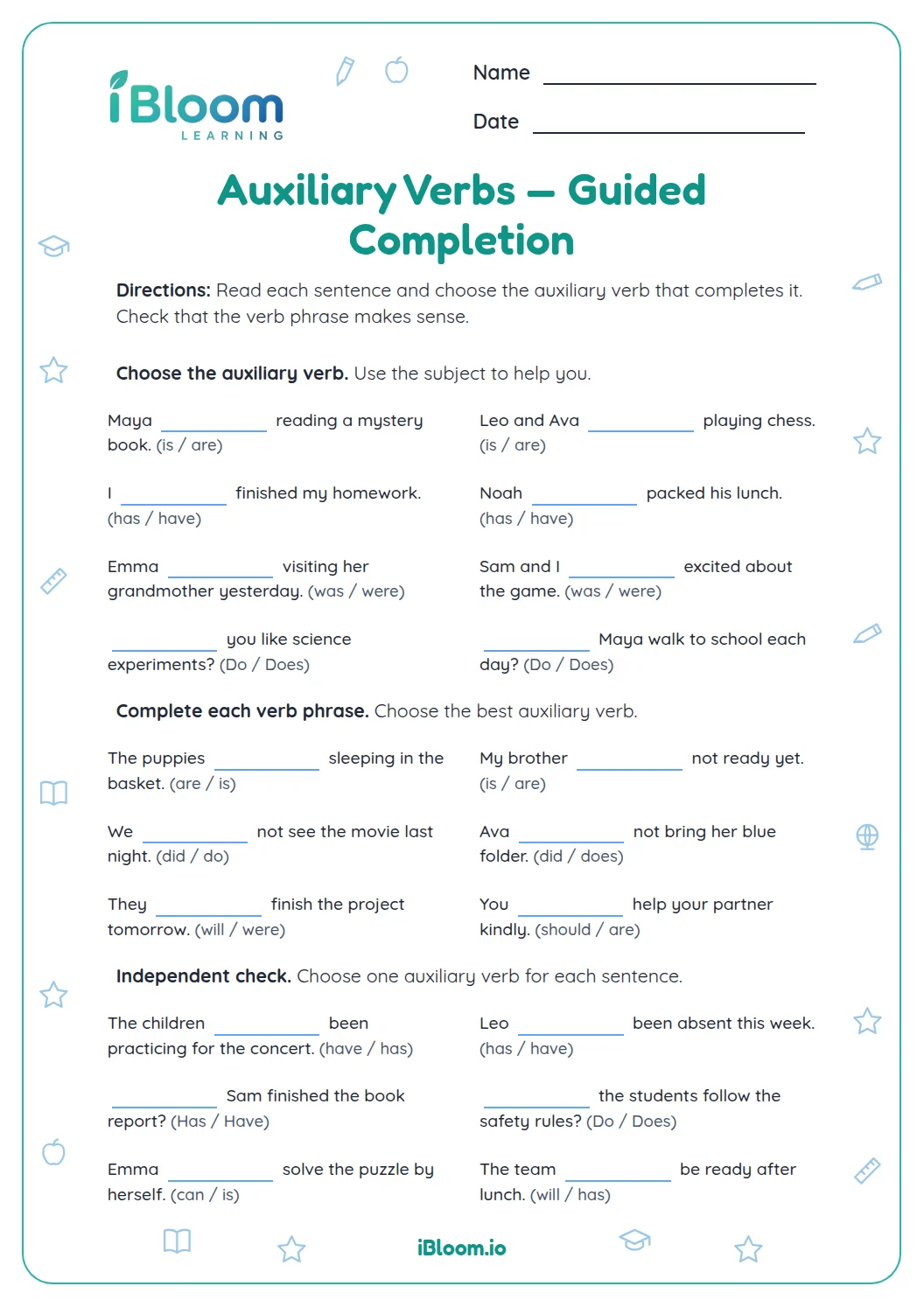
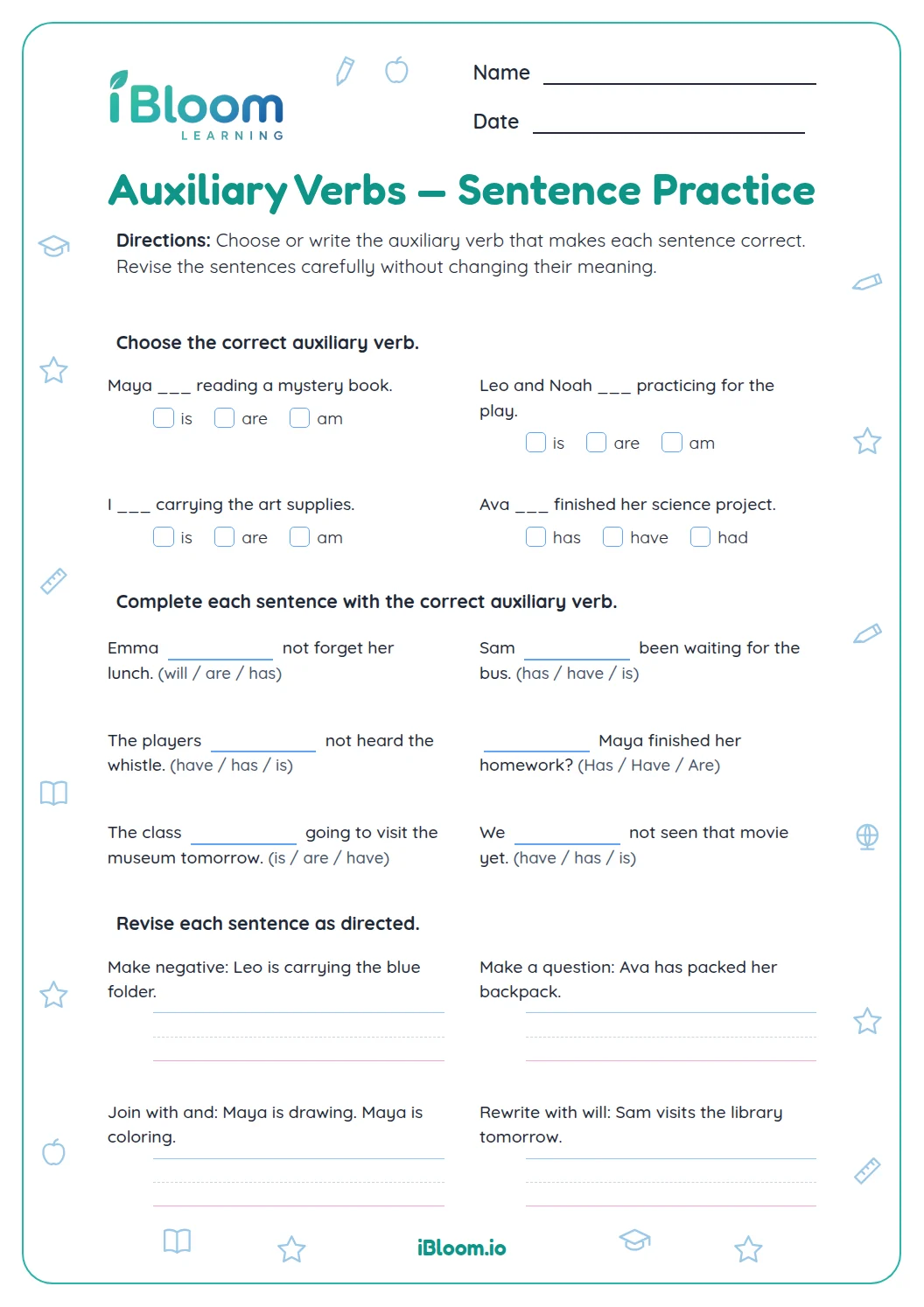
This free Grade 4 worksheet reviews the present progressive tense in context. Children identify actions happening now, pair am, is, or are with an -ing verb, correct subject-verb agreement, and write original examples. A mix of choices, completions, editing, and short responses brings the verb form into several sentence patterns. It aligns with Common Core L.4.1.b, with an answer key that provides sample responses for open writing.
Aligned to L.4.1.b
What makes a verb present progressive?
A present progressive verb shows an action happening now or around the present time. It uses a form of be—am, is, or are—followed by a verb ending in -ing.
Question 1 says Ava is doing the action now. “Is singing” has the helping verb is and the -ing form singing, so it is present progressive.
- 1Ava ___ a song now.
- 2Subject: Ava (one person)
- 3Use is + sing with -ing
- 4Answer: Ava is singing a song now.
How do you choose am, is, or are?
Match the helping verb to the subject: I am; he, she, it, or one noun is; you, we, they, or plural nouns are. Keep the main verb in its -ing form.
For question 8, the subject is puppies, a plural noun, so the sentence begins “The puppies are sleeping.”
How can you check a progressive verb in a sentence?
Look for both parts: a helping verb and an -ing verb. Then check that the helping verb agrees with the subject. “The birds is building” has the right -ing verb but the wrong helping verb; use are for birds.
For the writing prompts, include a subject and a matching helping verb. The key gives possible answers, but another grammatical sentence can also work.
How to use this worksheet
- 1Find the subject of the sentence.
- 2Choose am, is, or are to agree with it.
- 3Change the action verb to its -ing form.
- 4Read the whole sentence to confirm the action is happening now.
- 5Check agreement again when editing.
Common mistakes and quick fixes
The mistake
Using is with a plural subject, as in “birds is.”
The fix
Use are with plural subjects: the birds are building.
The mistake
Leaving out the helping verb, as in “Ava singing.”
The fix
Add am, is, or are before the -ing verb.
The mistake
Using the base verb after the helping verb.
The fix
Keep the -ing form: “is washing,” not “is wash.”
This sheet practices the following Common Core skill.
Children form and use progressive verb tenses, including present progressive forms.
On this sheet:
Show the official wordingHide the official wording
Form and use the progressive (e.g., I was walking; I am walking; I will be walking ) verb tenses.
What to practice next
Make more practice
Further reading
Questions parents and teachers ask
How many questions are on this worksheet?
There are 14 questions across two worksheet pages. They include multiple-choice identification, sentence completions, two editing or rewriting tasks, and one original sentence. A separate two-page key includes the fixed answers and a sample. The practice moves from recognition to producing complete verb phrases.
What makes a verb present progressive?
A present progressive verb phrase uses am, is, or are with a verb ending in -ing, such as “are waiting.” The helping verb must agree with the subject, as children practice in the choices and completions. The questions include both singular and plural subjects for comparison.
When should a child use am?
Use am with I: “I am writing.” Use is with a singular third-person subject, and are with you, we, they, or a plural noun. The worksheet asks children to choose or supply the form that agrees. The subject cue appears in each sentence that needs a helping verb.
Does every -ing word show present progressive tense?
No. The phrase needs a form of be plus the -ing verb. “Sleeping” by itself is not a present progressive verb phrase, but “The puppies are sleeping” is. The page contrasts complete verb phrases with forms from other tenses. Both parts must be present.
Can a child write a different sentence for the last question?
Yes. The key offers one sample about people cooking. Another answer works if it is a complete sentence and uses a subject with the matching am, is, or are form followed by an -ing verb. The prompt asks for a sentence about people, so a plural subject is a natural choice.