




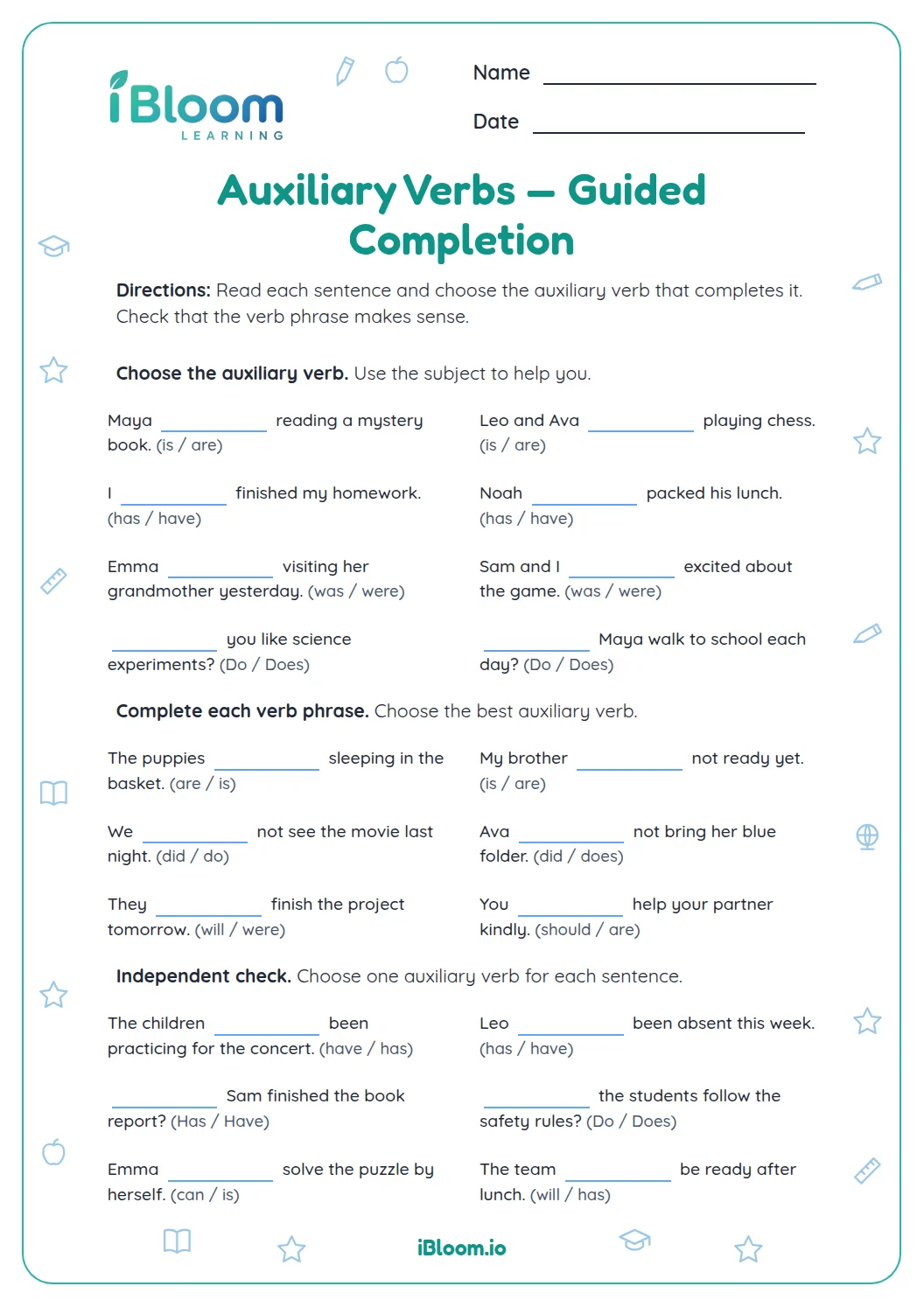
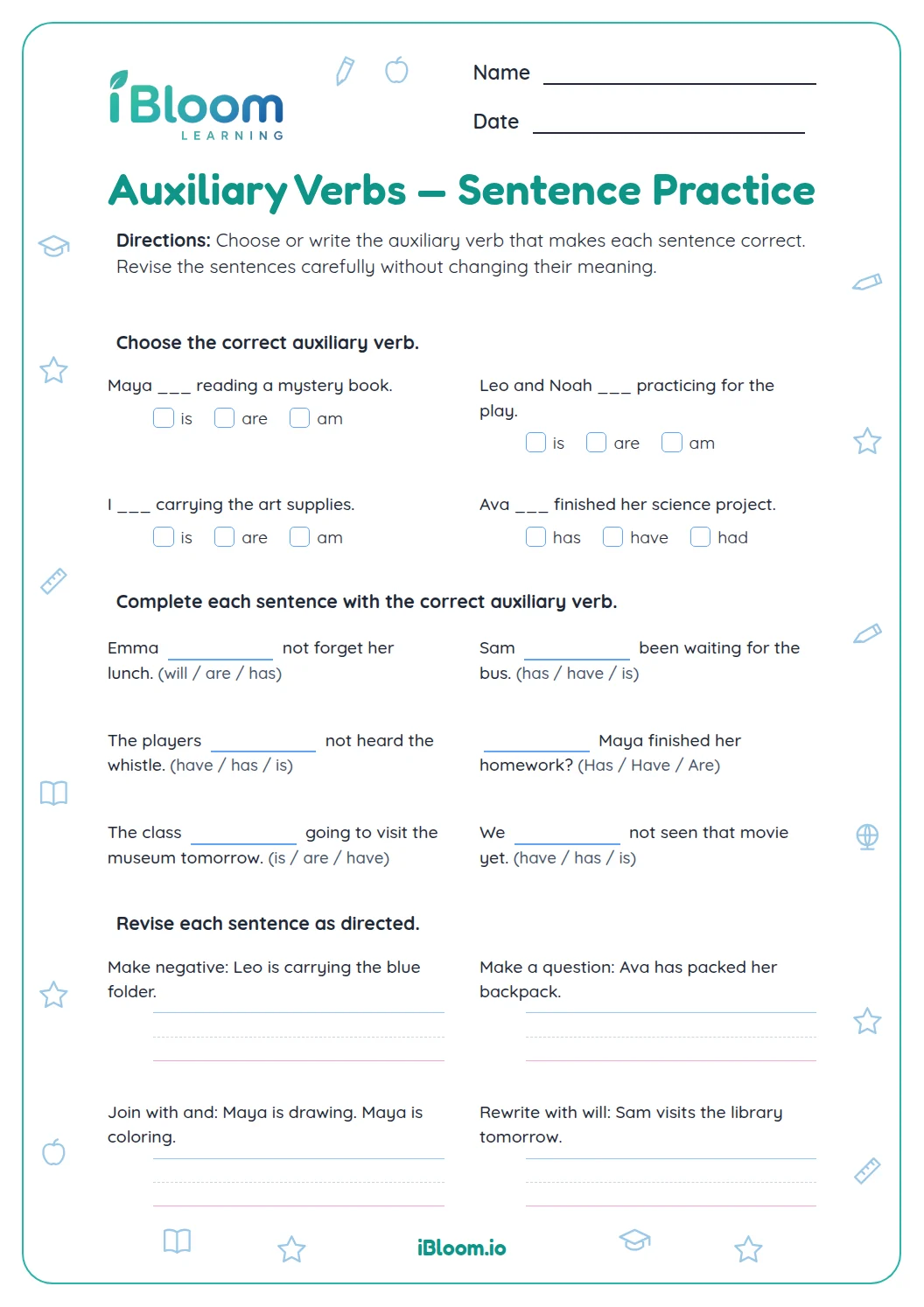
About this worksheet
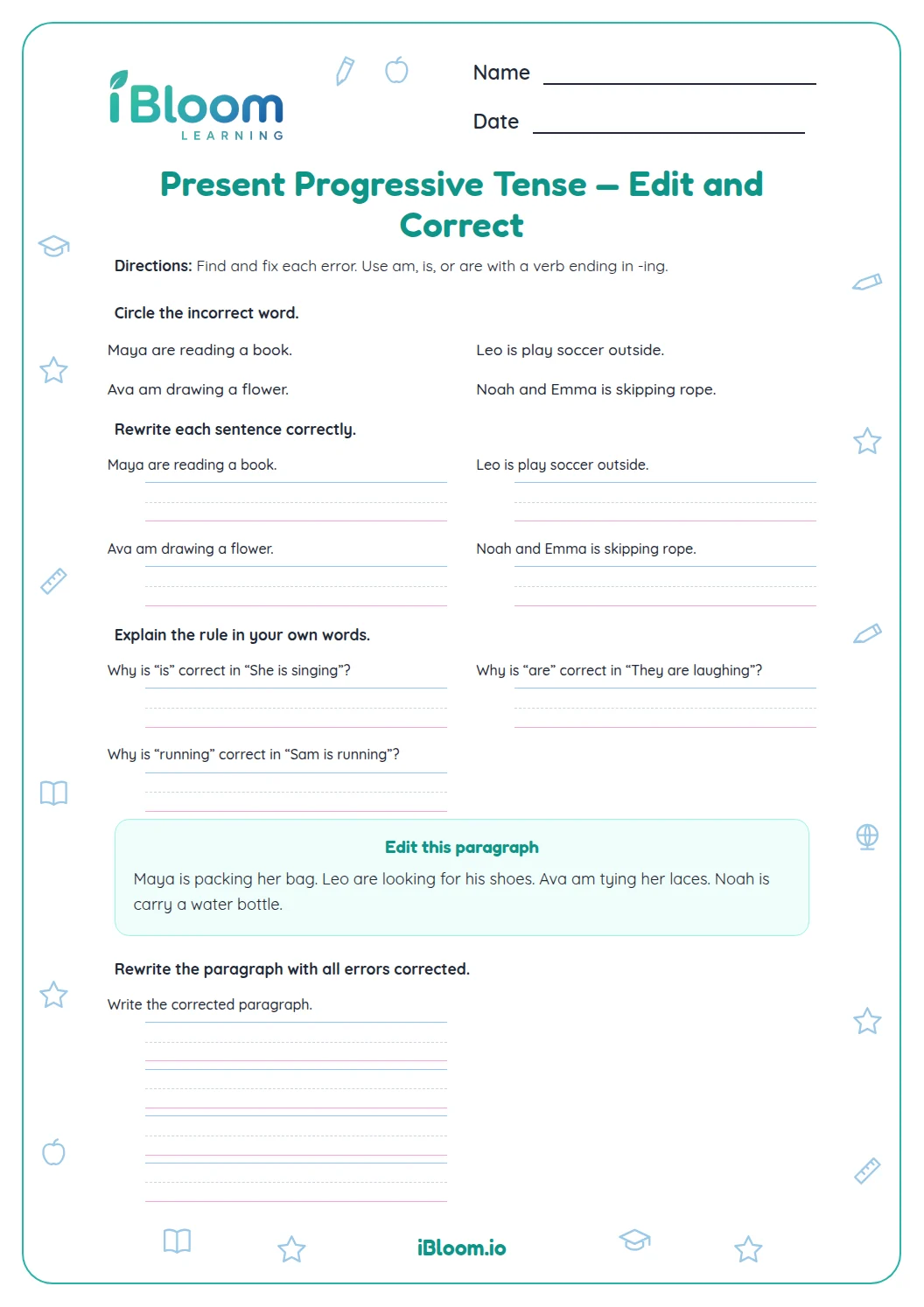
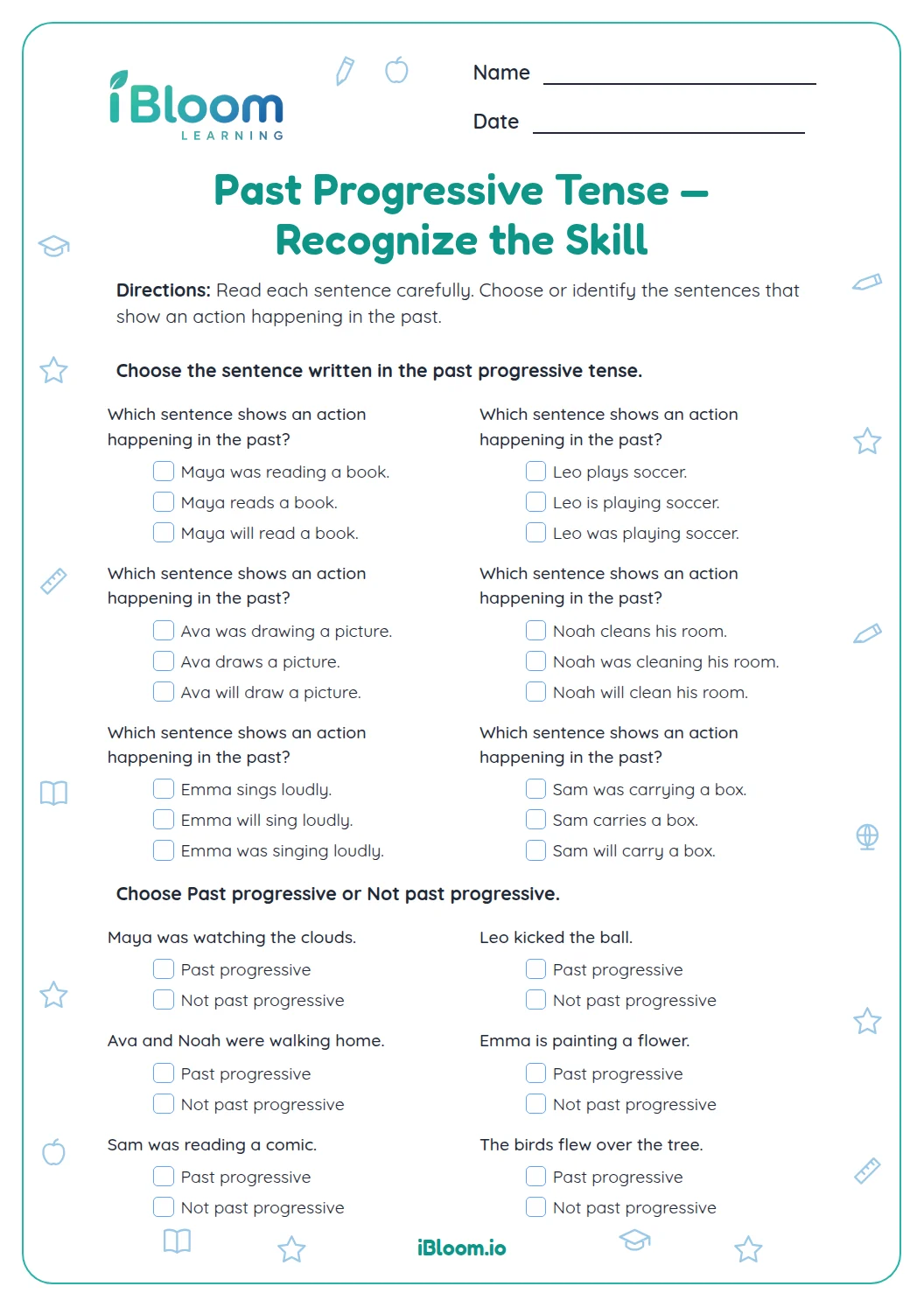
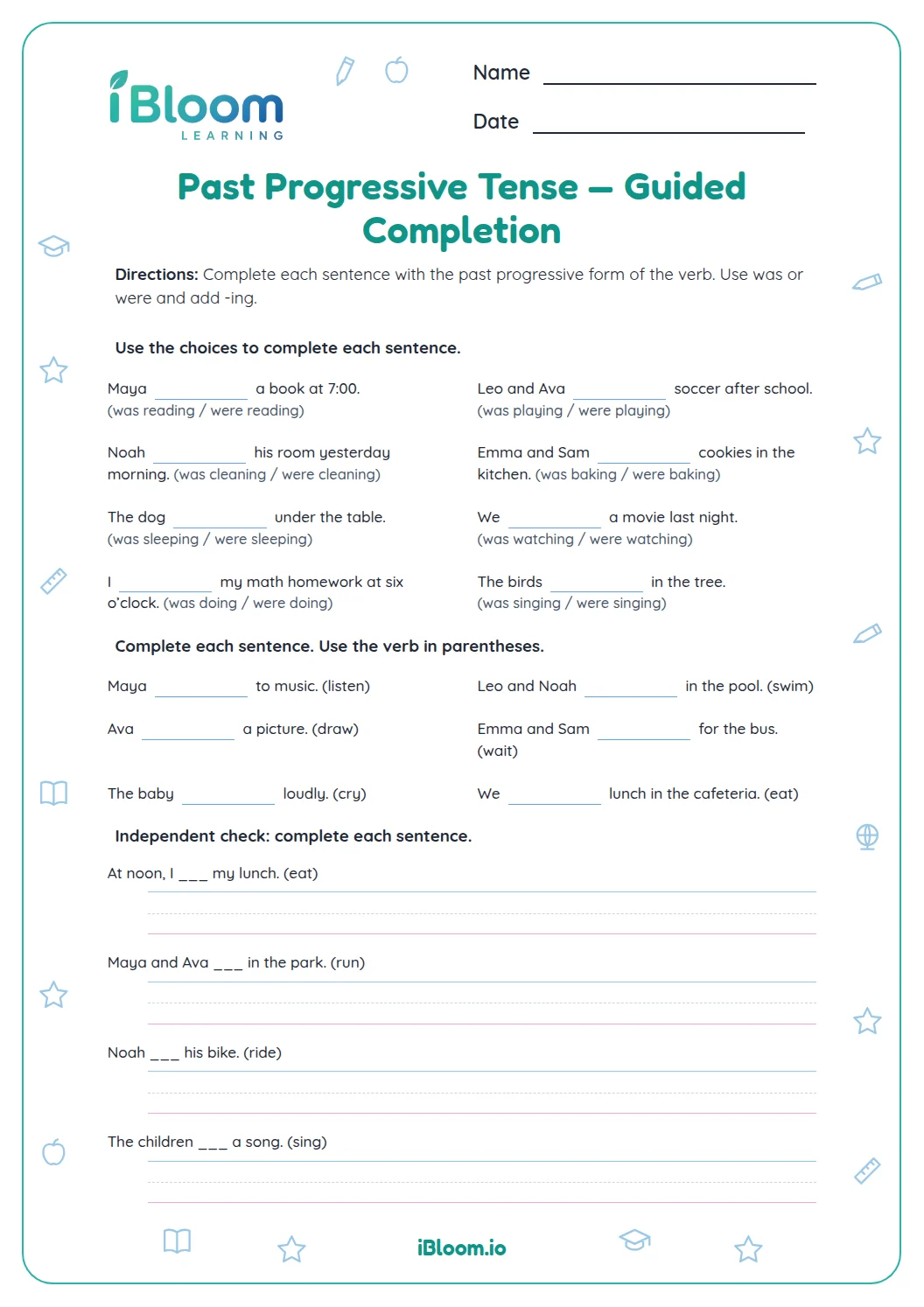
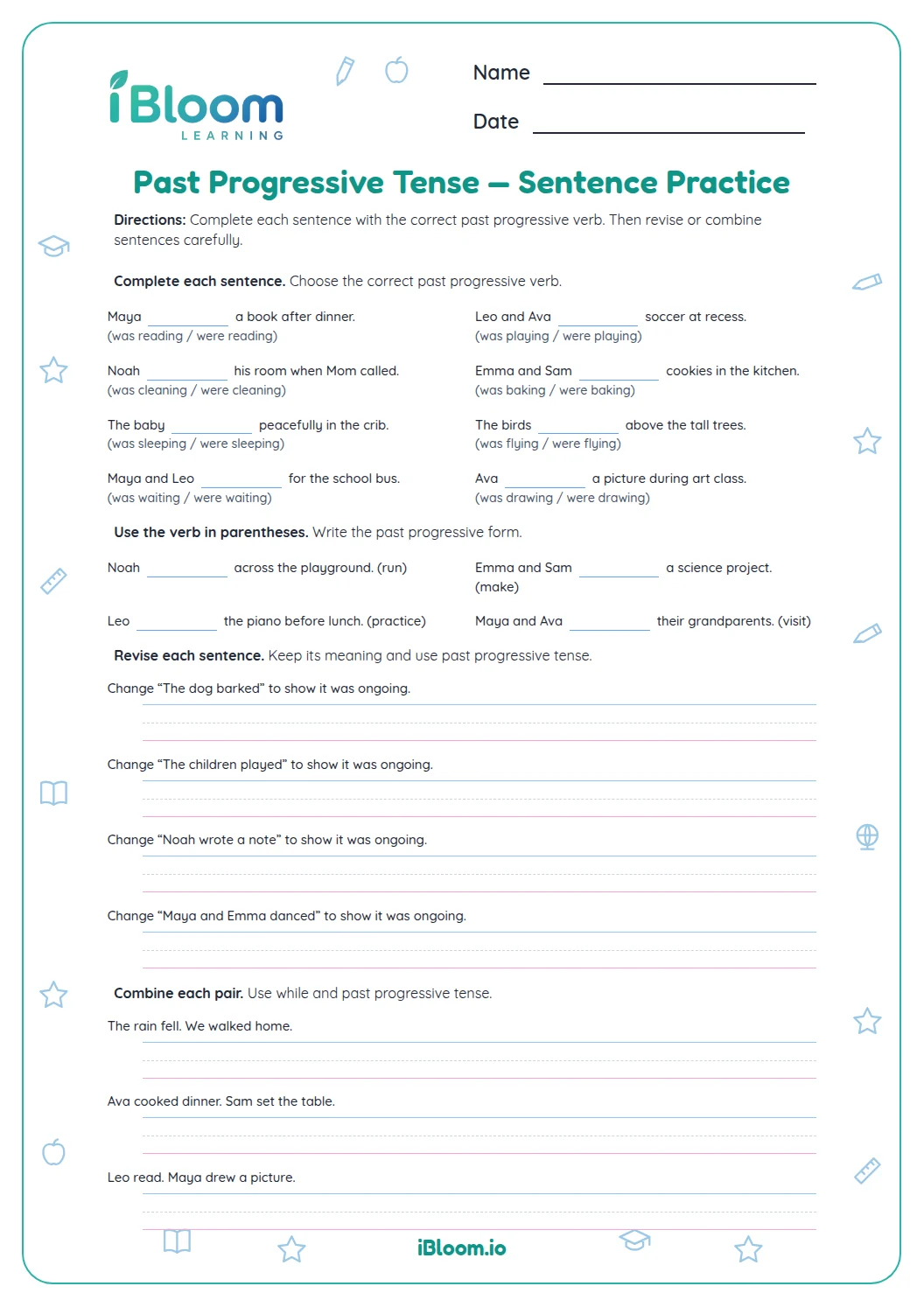
Students first distinguish an action happening now from past or future actions, then complete sentences with the correct -ing form. The final four prompts ask them to revise or create sentences using a helping verb and a present participle. This sequence supports the Grade 4 focus on forming and using progressive tenses.
Aligned to L.4.1.b
What is on this worksheet?
Part A distinguishes present progressive phrases from other tenses and asks students to identify the helping verb. Part B practices spelling changes before -ing. Part C moves to sentence writing, so students use the tense rather than only recognize it.
- Part A: identify the tense and helping verb.
- Part B: choose the correct -ing spelling.
- Part C: revise or write a sentence.
What two pieces make the present progressive?
A present form of be comes before the main verb ending in -ing: I am reading, she is reading, they are reading. The subject determines the helping verb. The main verb also changes spelling in some cases, as make becomes making and run becomes running.
How can students check a sentence they write?
Look for both parts: a matching form of be and a verb ending in -ing. “The twins are playing chess” has are + playing. A sentence such as “The twins playing chess” is missing its helping verb.
How to use this worksheet
- 1In Part A, underline the helping verb and the -ing verb when you find a progressive phrase.
- 2In Part B, read the base verb in parentheses and check whether its spelling changes before -ing.
- 3In Part C, match am, is or are to the subject, then add the present participle.
- 4Check the key; for open writing prompts, compare the required tense pattern rather than exact wording.
Common mistakes and quick fixes
The mistake
Leaving out the helping verb: “The puppy running.”
The fix
Check for both parts of the tense. Add “is” to make “The puppy is running.”
The mistake
Adding -ing without changing a final silent e, as in “makeing.”
The fix
For a verb such as make, drop the final e before adding -ing: making.
The mistake
Using a plural helping verb with a singular subject.
The fix
Match the subject: “Maya is making” but “Maya and Jo are making.”
Common Core alignment
This page practices a Common Core standard for the stated grade.
Form and use present progressive verb phrases in sentences.
On this sheet: Form and use present progressive verb phrases in sentences.
Show the official wordingHide the official wording
Form and use the progressive (e.g., I was walking; I am walking; I will be walking) verb tenses.
What to practice next
Make more practice
Further reading
Questions parents and teachers ask
What is the present progressive tense?
The present progressive describes an action in progress now. It uses am, is or are followed by a verb ending in -ing, as in “The birds are singing.” This worksheet asks students to recognize that pattern, form it correctly and write it.
How does the helping verb match the subject?
Use am with I, is with a singular subject such as Maya, and are with you, we, they or a plural subject. The helping verb changes, but the main verb still ends in -ing: “Maya is reading” and “Maya and Jo are reading.”
Why does “make” become “making”?
Many verbs ending in a silent e drop that e before adding -ing. Make becomes making, and write becomes writing. Short verbs such as run double the final consonant before -ing, giving running. Part B includes both patterns.
Can a present progressive sentence start with “now”?
Yes. A time word can help show when an action is happening, but it does not form the tense by itself. The sentence still needs a matching form of be plus an -ing verb, as in “Now, we are building a bridge.”
How should open writing answers be checked?
The final prompts allow different sensible sentences, so the answer key gives samples. Check that each sentence expresses an action in progress and includes a subject-matched form of be plus a correctly spelled -ing verb. The student does not need to copy the sample exactly.