






About this worksheet
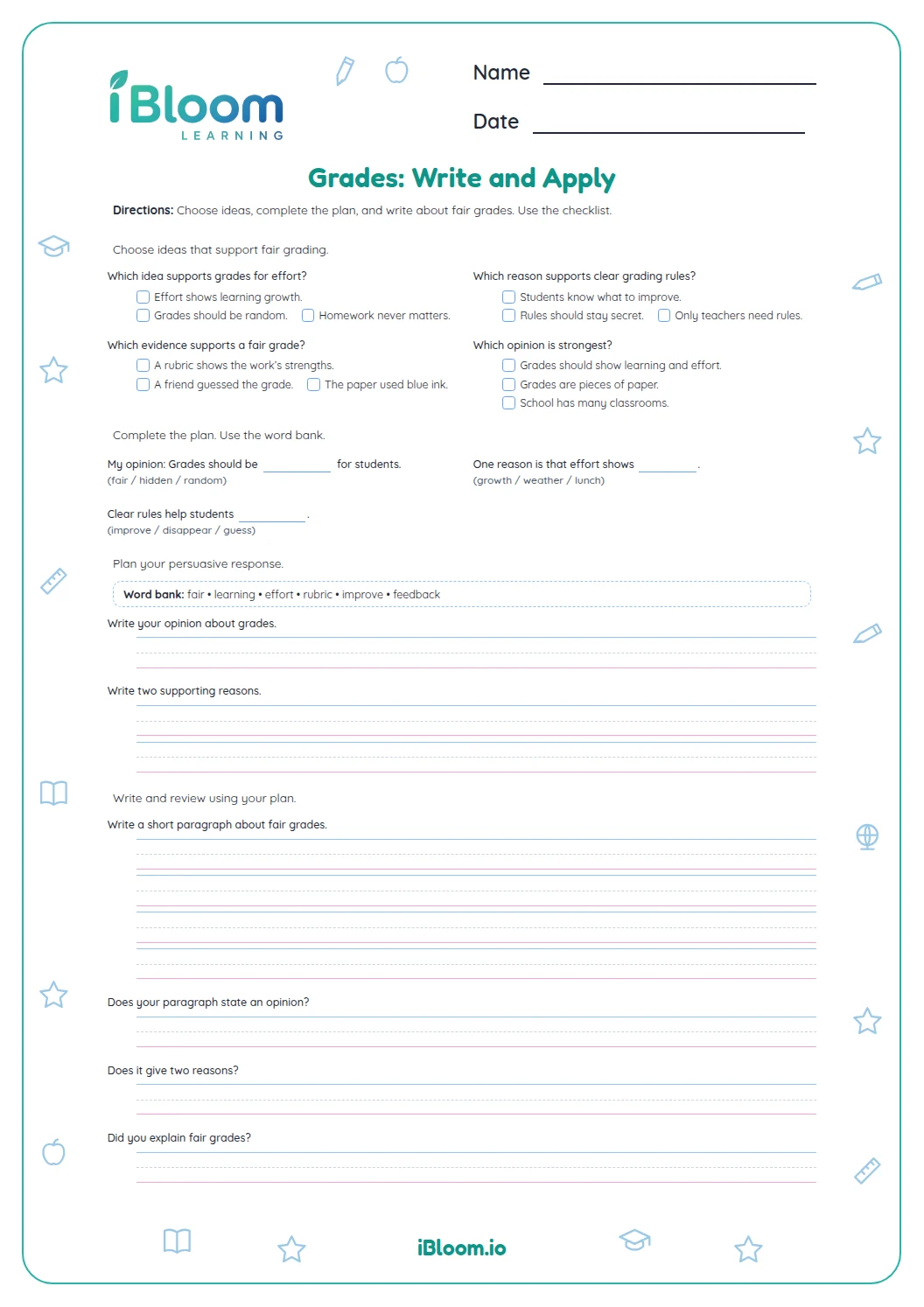
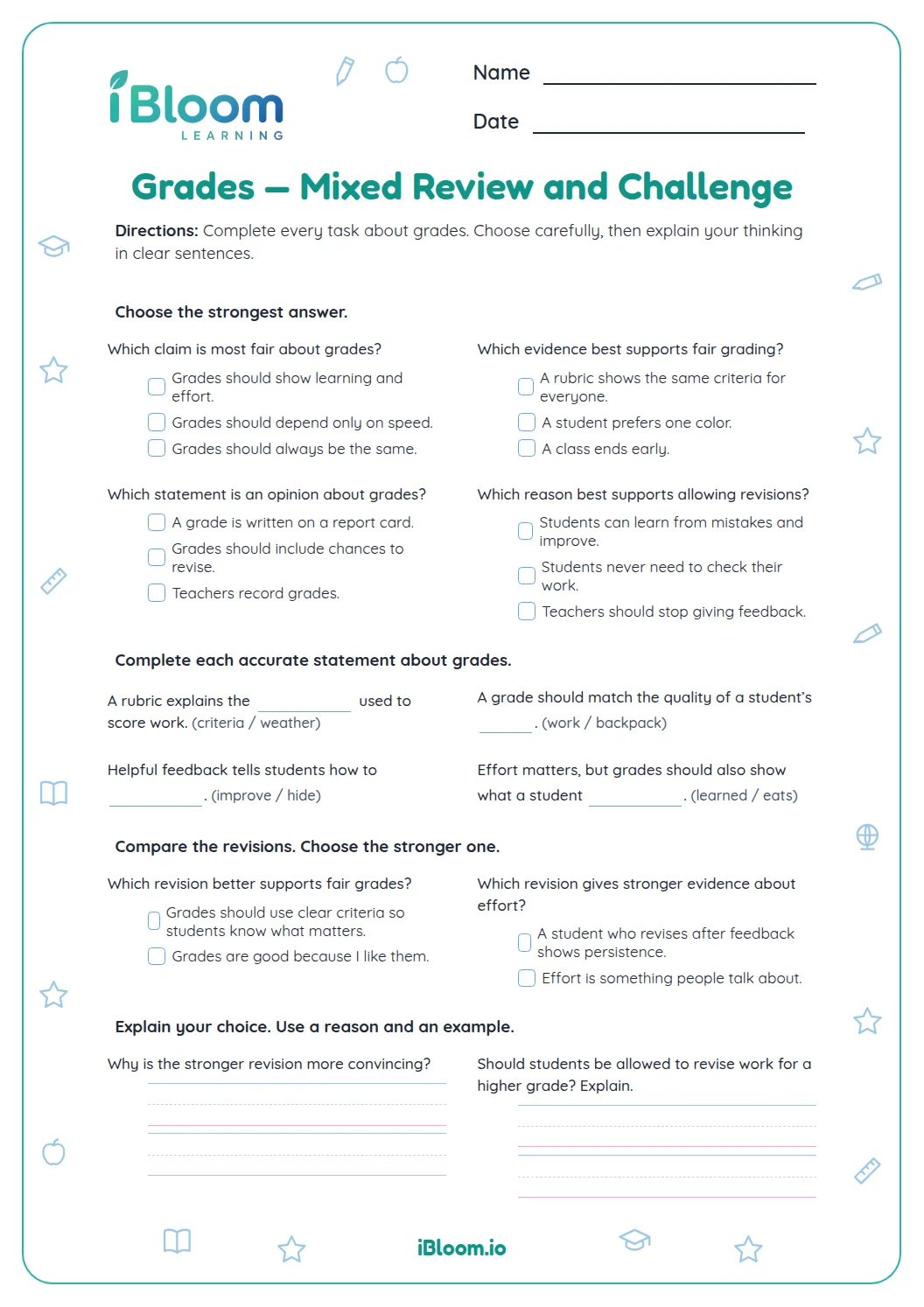
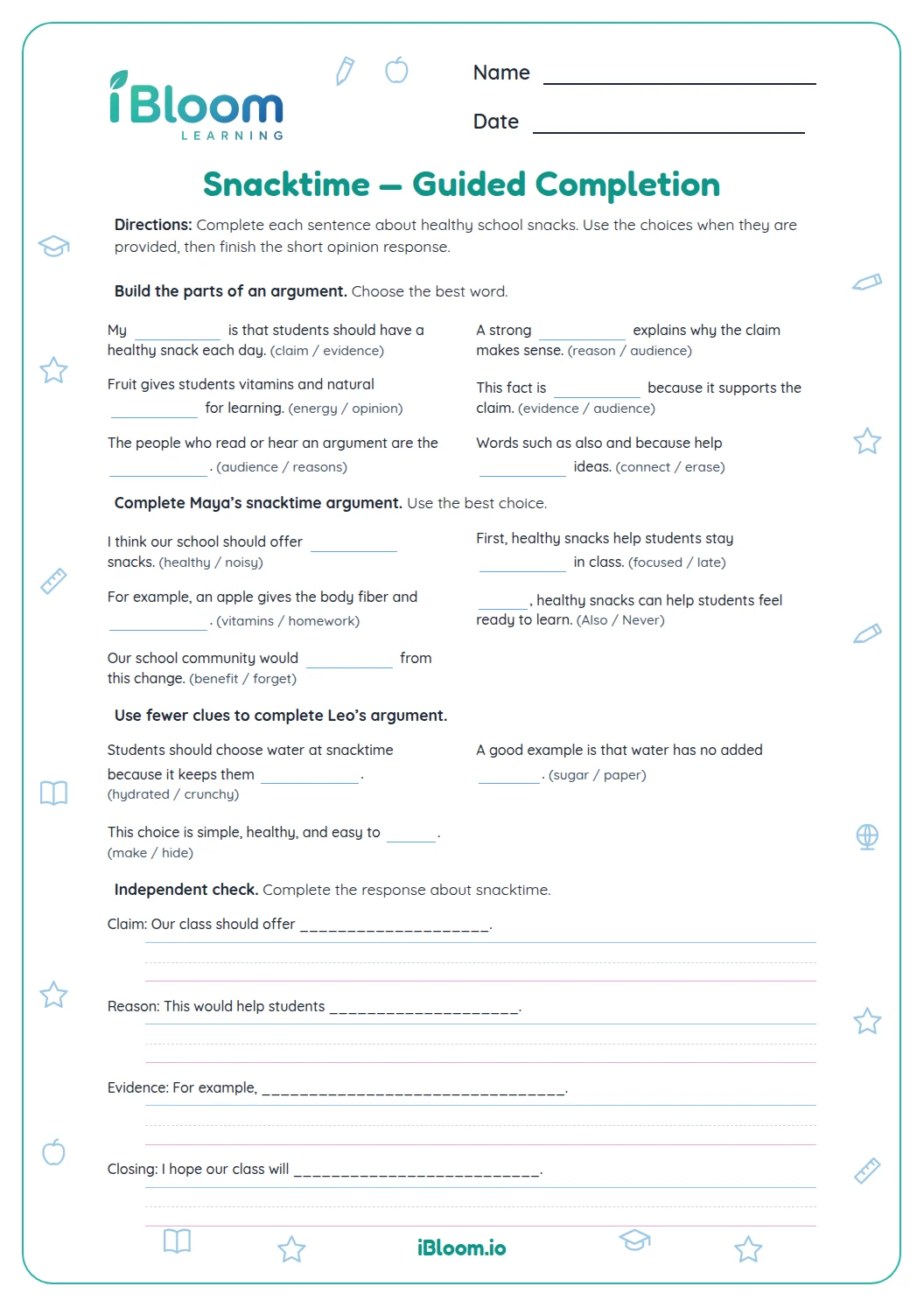
This Grade 5 worksheet helps students recognize how a point of view can be supported. Across 14 questions, they classify opinions and facts, identify relevant reasons, and choose evidence that supports a claim. The answer key marks each choice so a parent or teacher can review the reasoning with the student.
How can you tell an opinion from a fact?
An opinion states a judgment or point of view. A fact can be checked. “The school day begins at 8:15 a.m.” can be verified; “Recess is the best part” expresses a view.
- 1Claim: Our class should have a longer recess.
- 2Reason: Active breaks help students focus.
- 3The claim is an opinion; the second clause gives a reason.
What makes a reason relevant?
A relevant reason answers why the writer supports the opinion. “It can help students build a reading habit” supports daily library time. A detail about the library’s wall color does not.
What counts as useful evidence?
Evidence is specific information that a reader could check, such as a class count, observation, or example. It should connect to the reason and opinion rather than simply sound impressive.
How to use this worksheet
- 1Find the point of view or claim.
- 2Ask whether it can be checked as true or false.
- 3Look for a reason that explains why the claim matters.
- 4Choose evidence that is specific and relevant.
- 5Check that the reason and evidence support the same opinion.
Common mistakes and quick fixes
The mistake
Treating every sentence about school as a fact.
The fix
Look for judgment words such as should or best.
The mistake
Choosing a detail that is true but unrelated.
The fix
Ask whether the detail supports the opinion being discussed.
The mistake
Using a broad claim as evidence.
The fix
Choose a detail that can be observed, counted, or checked.
What to practice next
Make more practice
Further reading
Questions parents and teachers ask
What is the difference between an opinion and a fact?
An opinion expresses a point of view, while a fact is information that can be checked. “Recess is the best part of school” is an opinion; “School begins at 8:15 a.m.” can be verified. Part A asks students to tell these kinds of statements apart.
What makes a reason relevant?
A relevant reason explains why someone supports the opinion. “Movement helps focus” can support a longer-recess opinion, while a detail about the playground’s color does not explain why more recess is useful. Students compare related and unrelated choices on the page.
How many questions are included?
There are 14 questions in two parts. Students classify opinions and facts, identify reasons, and select evidence that could support a point of view. The key gives the intended answer for each multiple-choice item so the reasoning can be discussed.
What counts as evidence for an opinion?
Evidence is specific information that a reader could check, such as a recorded count, observation, or example. “Eighteen seeds were planted” is more checkable than “gardens are lovely.” The worksheet asks students to notice which details support the topic being discussed.
Does the worksheet ask students to write a full persuasive essay?
No full essay is required on this recognition page. Students practice identifying the parts that can support persuasive writing: a point of view, a relevant reason, and specific evidence. Afterward, the linked topic sheets offer a place to apply those parts in writing.