

About this worksheet
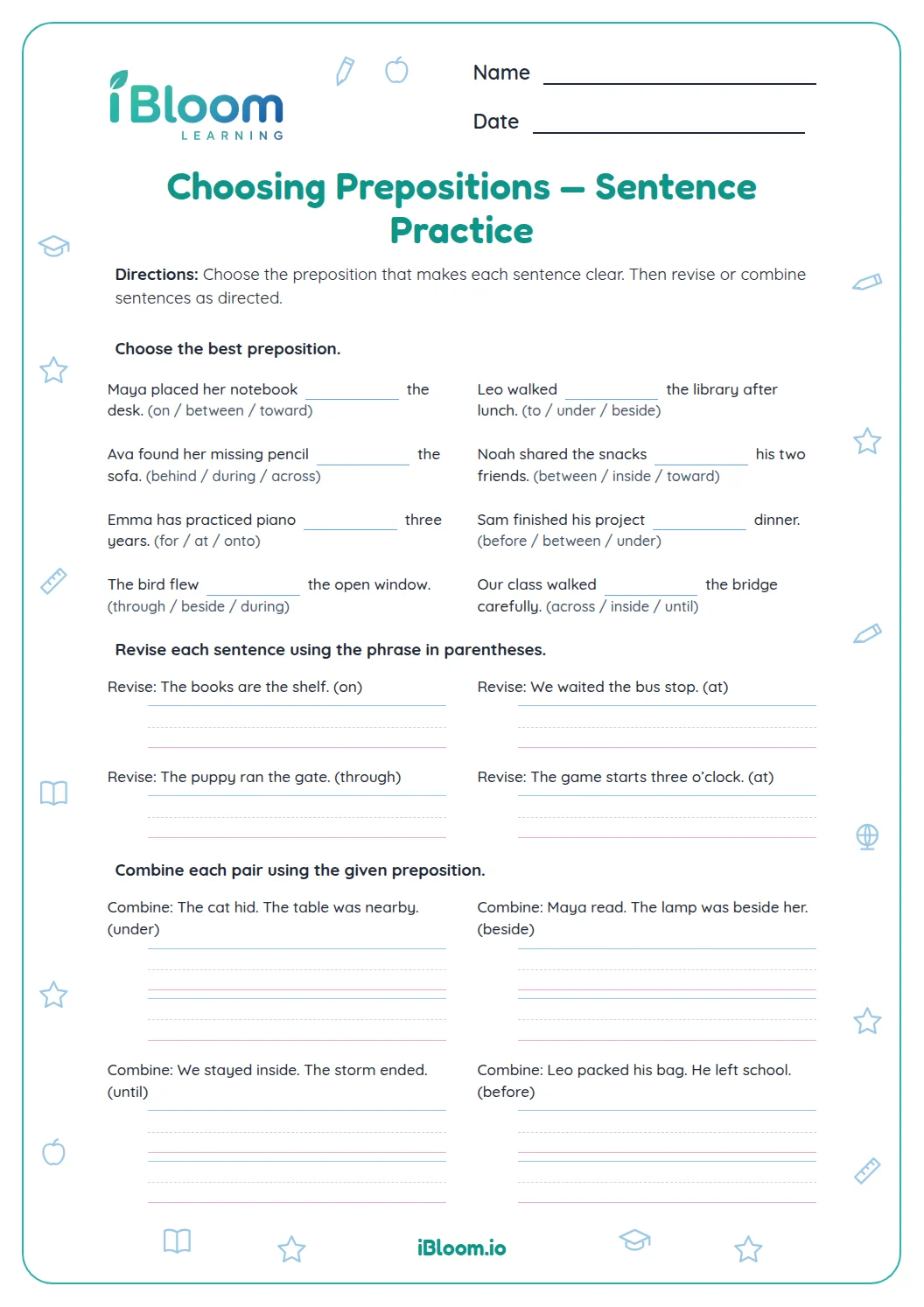
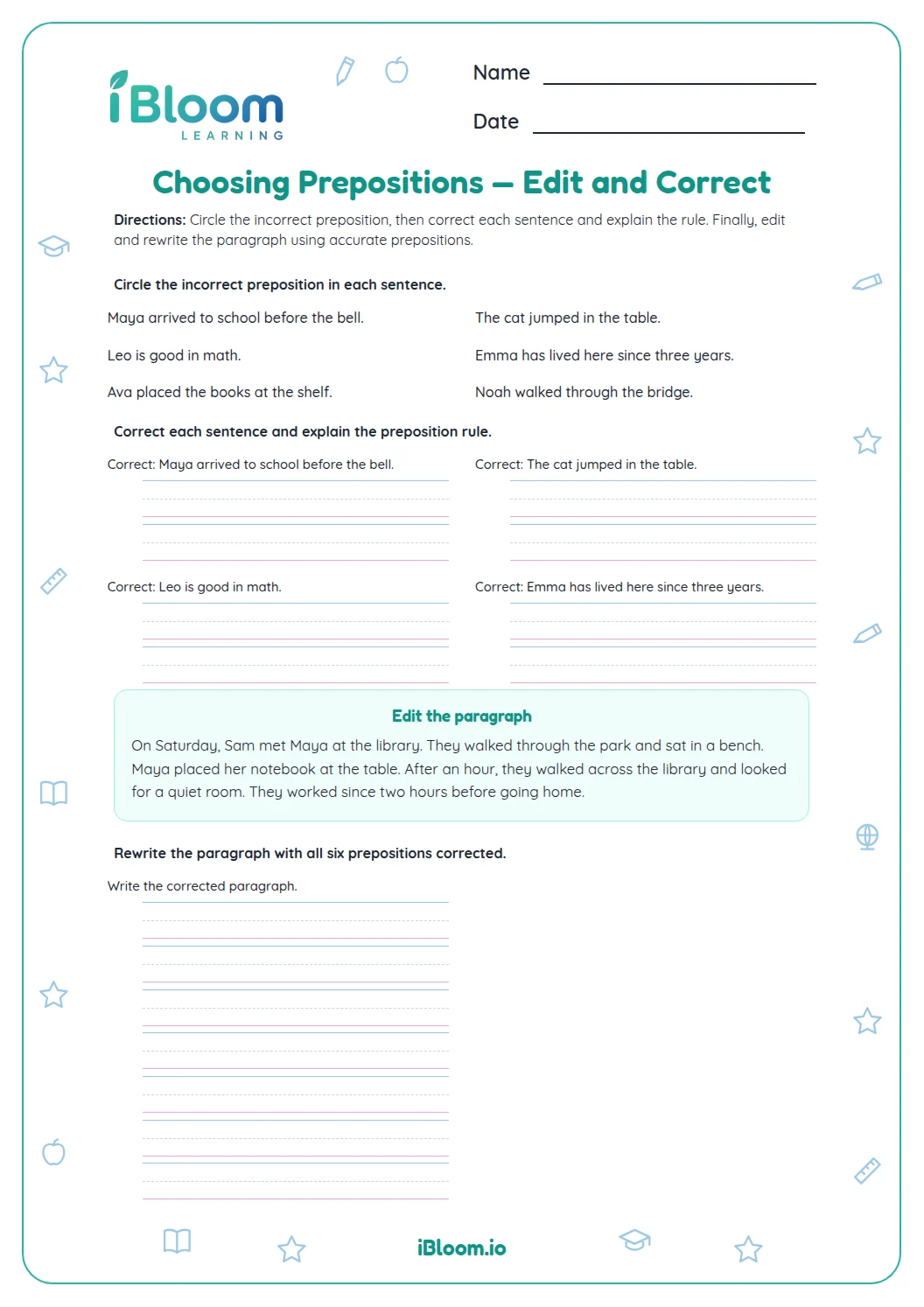
This free printable is for Grade 5 students practicing recognizing and writing prepositional phrases. It has 14 questions across two worksheet pages, followed by a separate two-page answer key. The examples build from the core idea to independent practice. CCSS L.5.1.a
Aligned to L.5.1.a
How can you recognize a prepositional phrase?
A prepositional phrase begins with a preposition and includes its object, often a noun or pronoun. It can tell where or when something happens, or add another detail. In “under the chair,” under is the preposition and chair is its object.
Question 1 asks for the phrase that tells where the lantern is. “Beside the door” gives that location.
- 1The lantern beside the door glowed.
- 2The phrase “beside the door” tells where.
- 3Choose: beside the door.
How can you write a phrase that fits?
Read the sentence and decide which detail it asks for: place, time, source, or description. Start the phrase with a preposition, then add the words needed to complete the thought.
For “The map rested ___,” a phrase such as “beside the tent” tells where the map rested. Read the full sentence again to check that it makes sense.
What is on the printable?
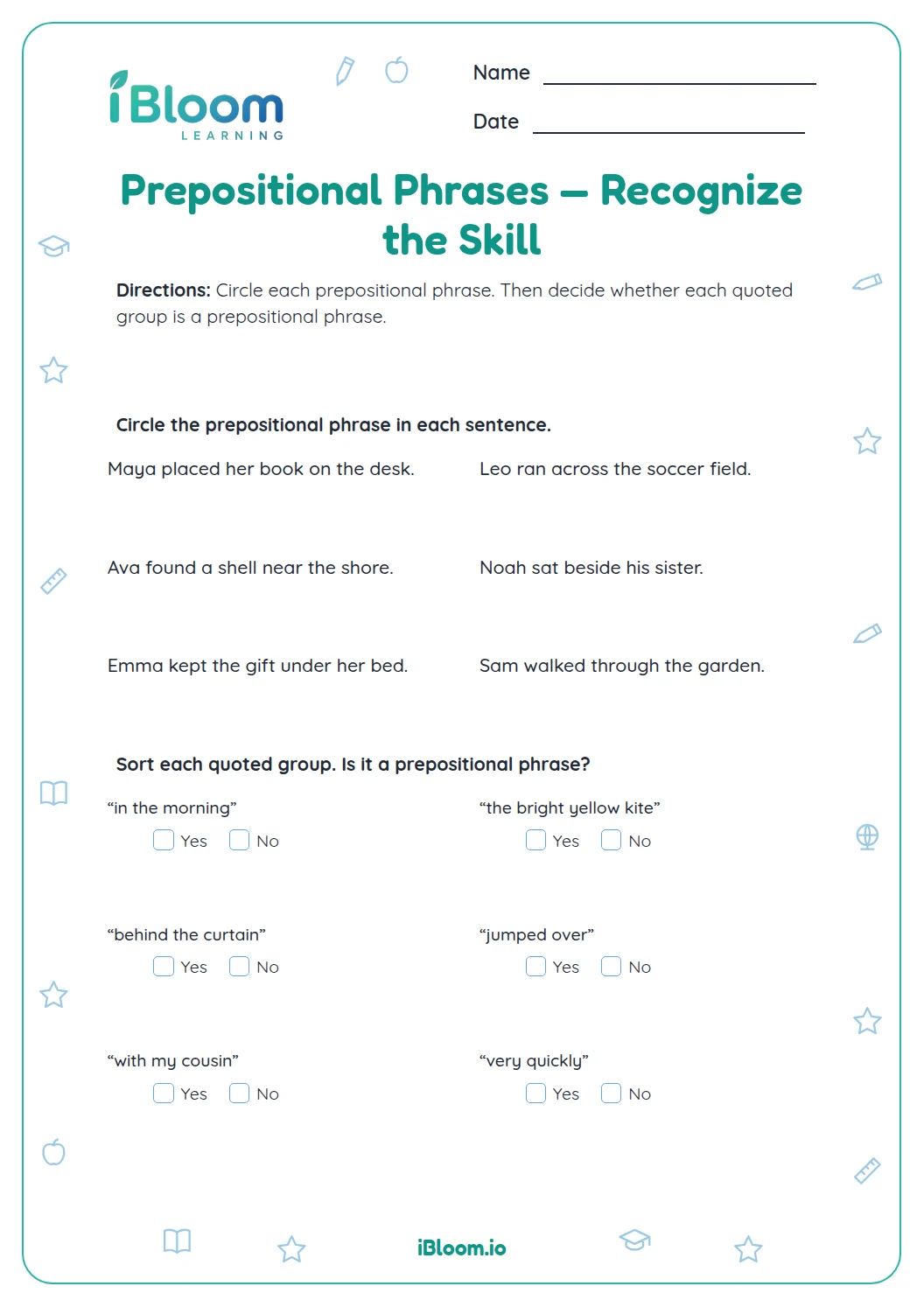
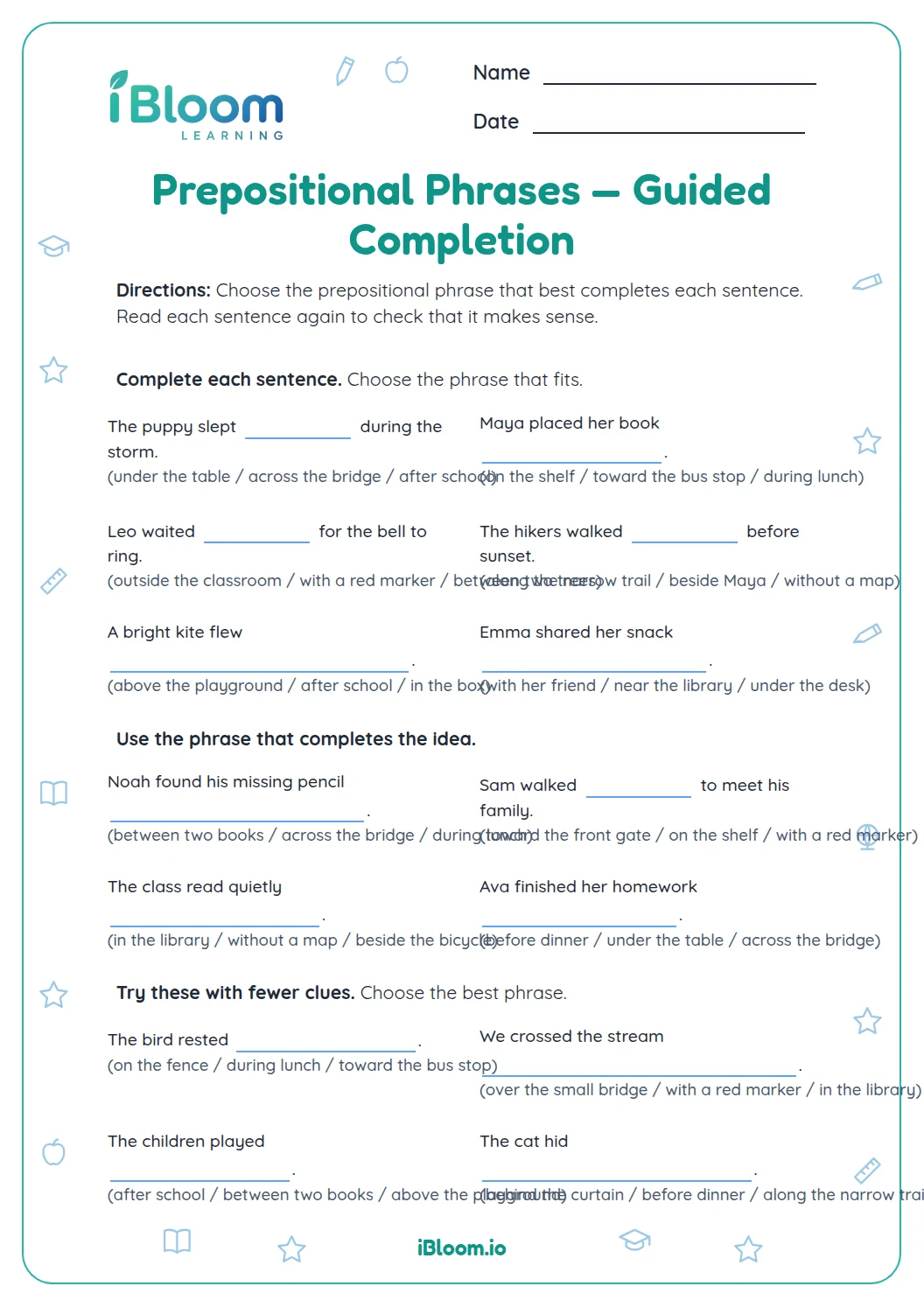
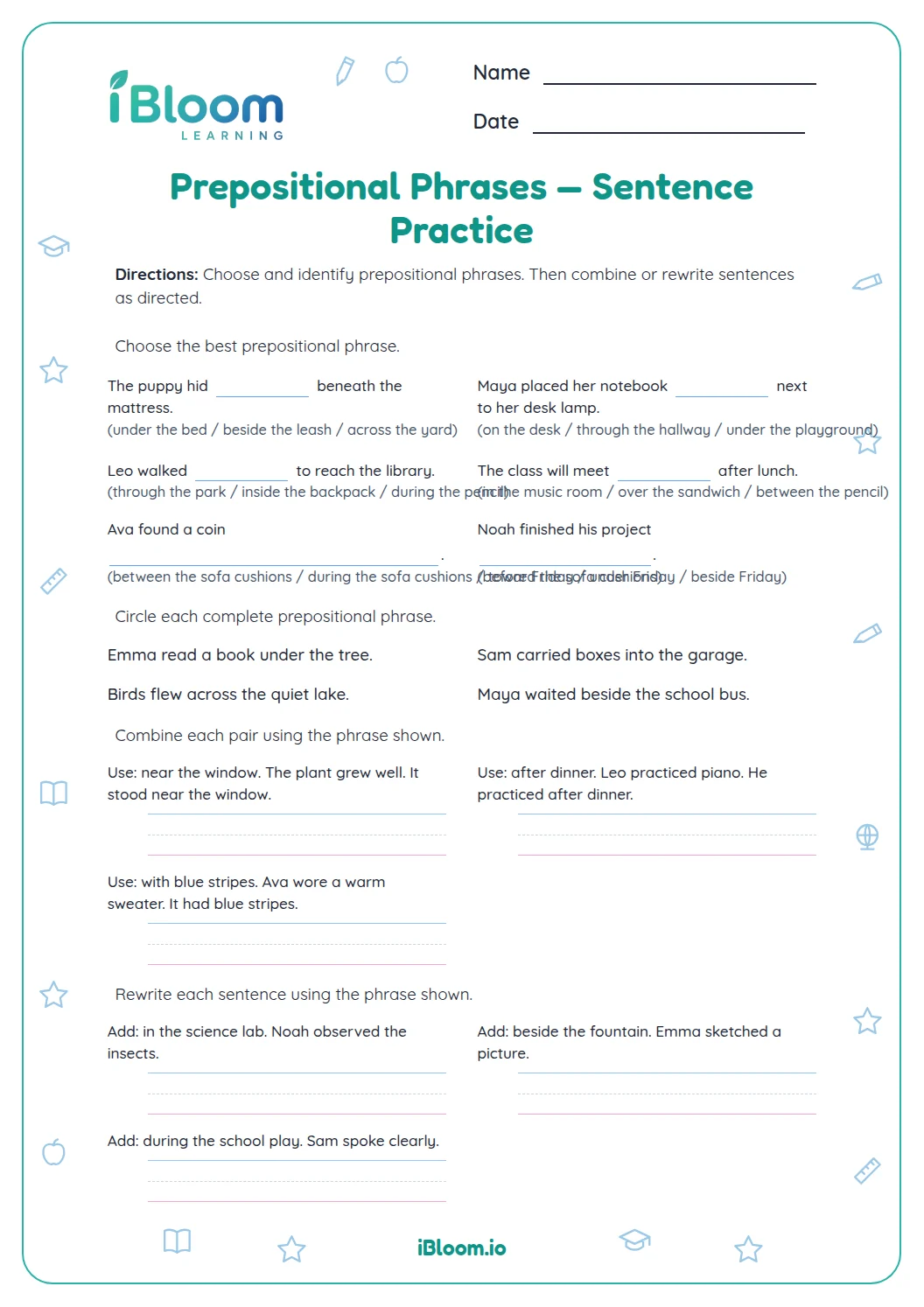
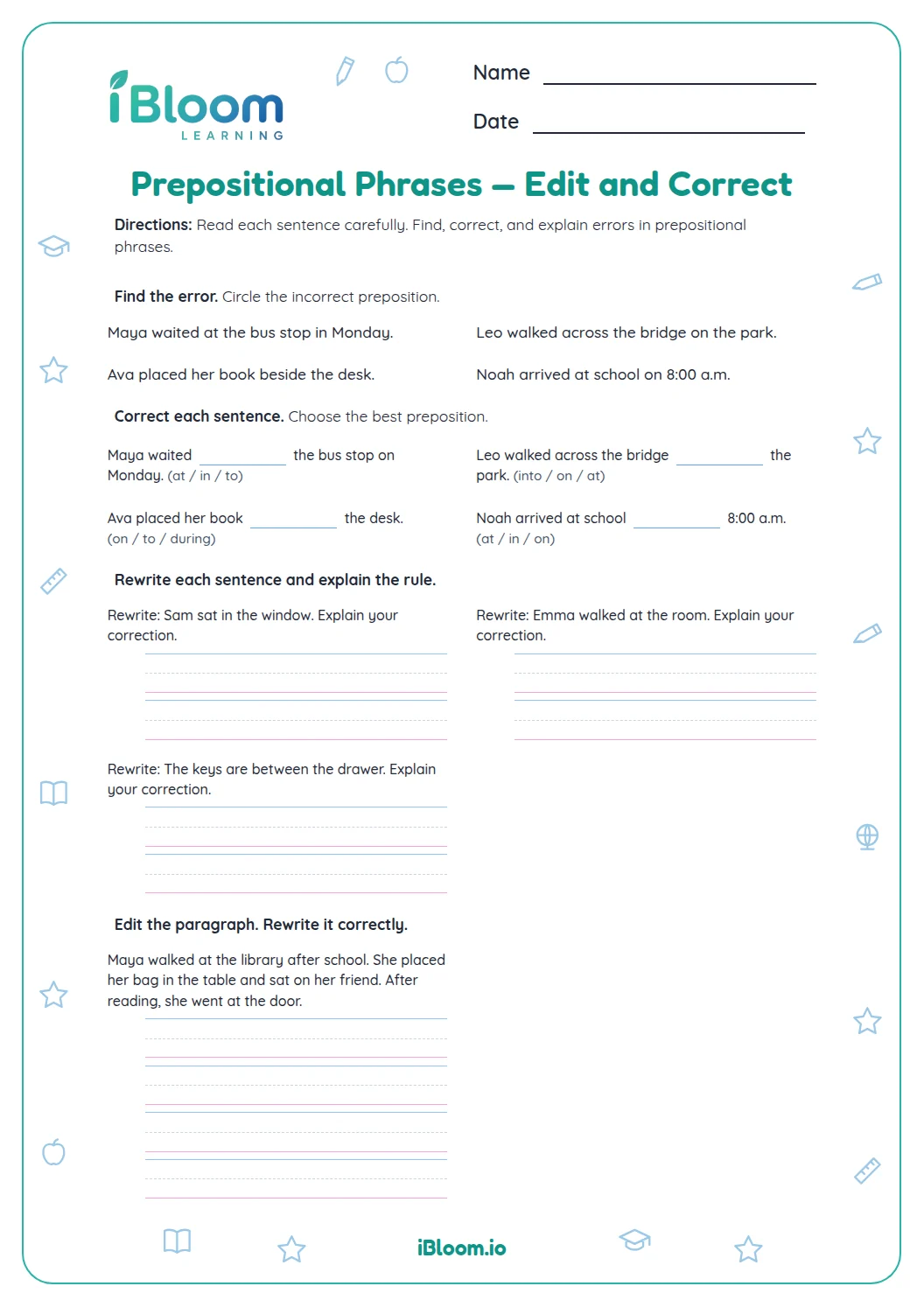
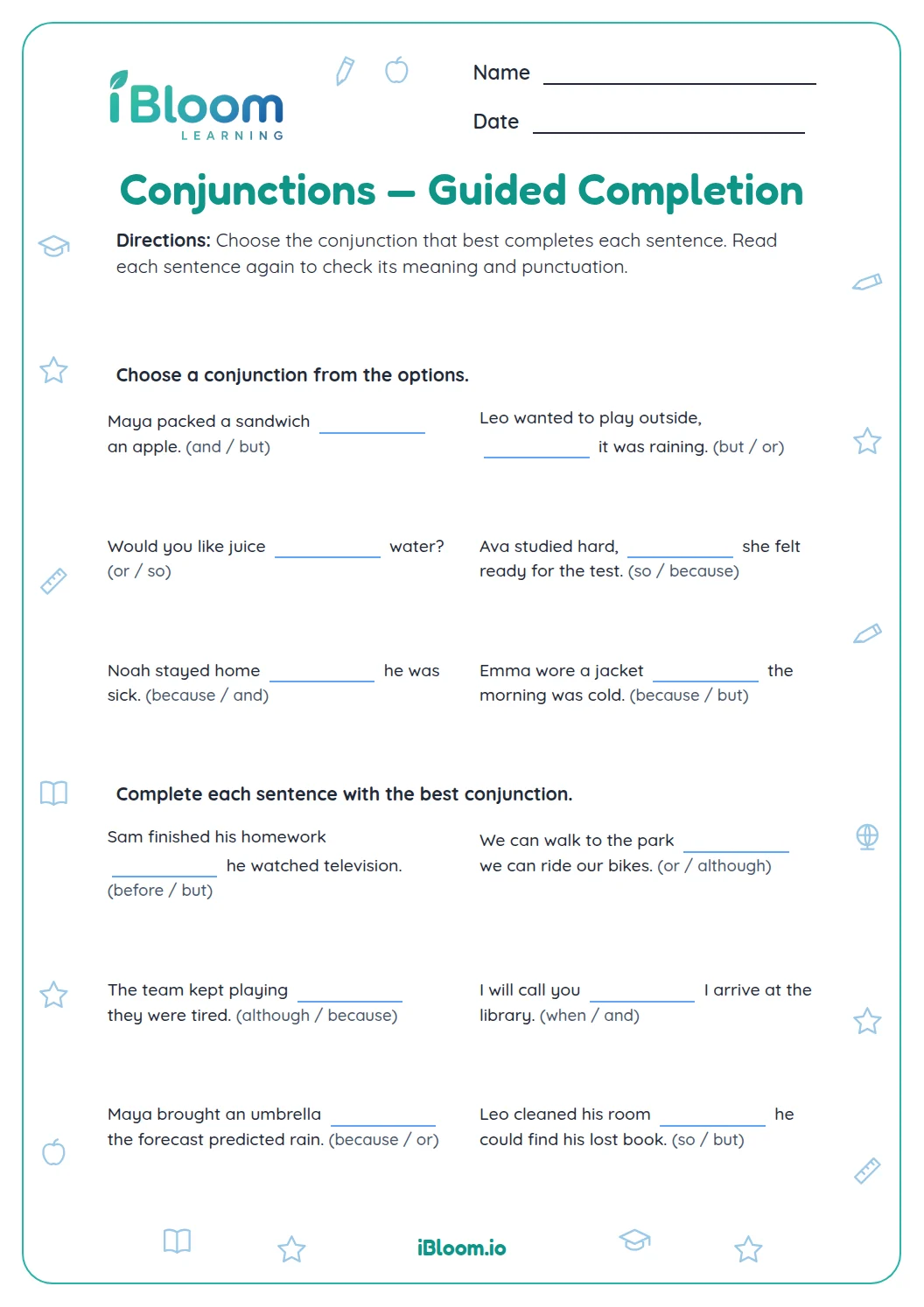
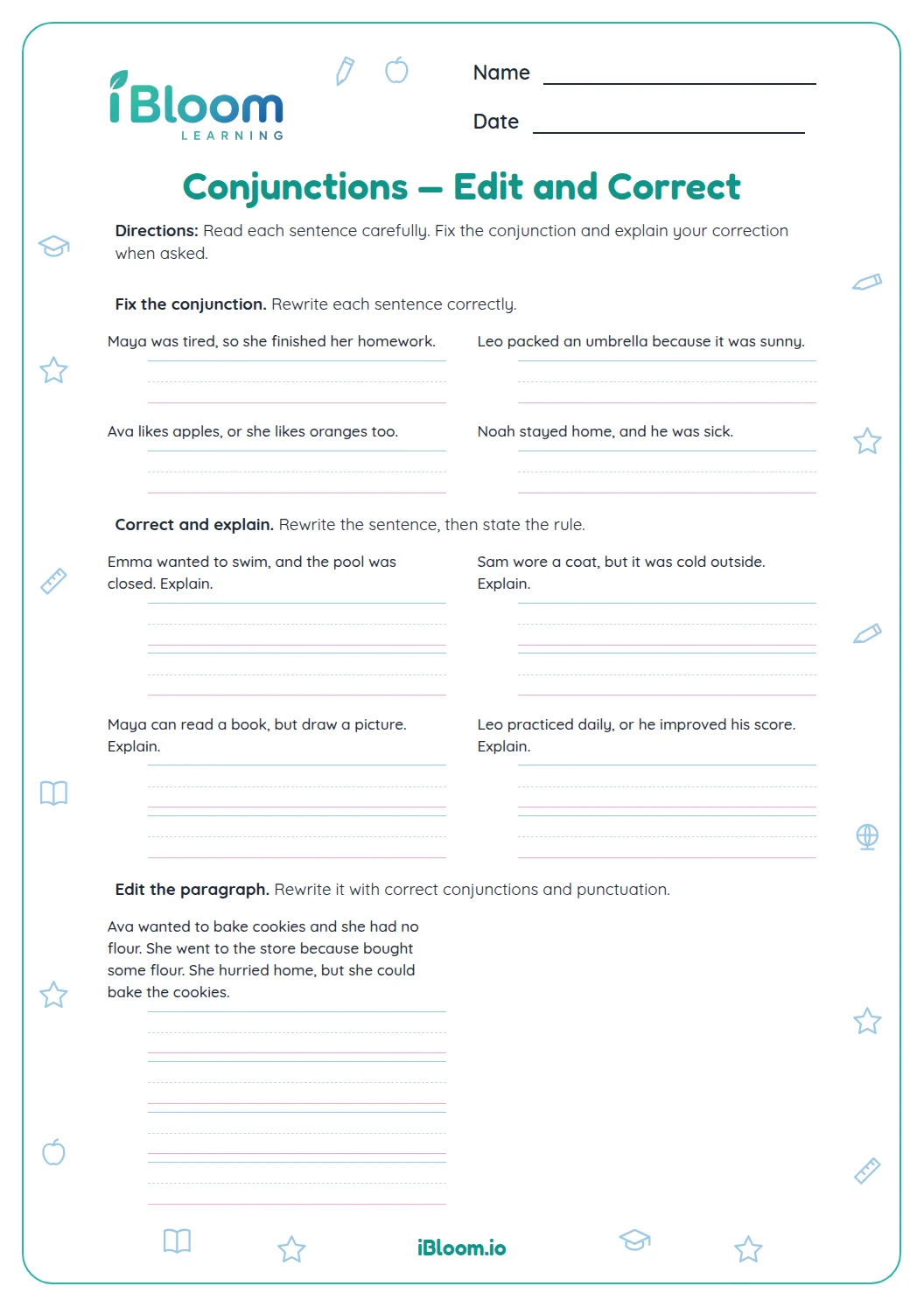
Part A asks students to identify phrases in sentences. Part B asks them to write a phrase that completes a sentence. The answer key includes the selected phrases and sample completions.
- Part A: Questions 1–7 identify phrases and their details.
- Part B: Questions 8–14 complete sentences with original phrases.
- Answer key: identification answers and sample phrases.
How to use this worksheet
- 1Read the complete sentence.
- 2Find the preposition and the noun or pronoun that follows it.
- 3Decide what detail the phrase gives.
- 4For a completion item, choose a preposition that fits the requested detail.
- 5Read the completed sentence aloud and check the key.
Common mix-ups and quick fixes
The mistake
Choosing only the preposition as the phrase.
The fix
Include the preposition and its object, such as “under the chair.”
The mistake
Writing a phrase that does not fit the requested detail.
The fix
Check whether the sentence asks for where, when, or another detail.
The mistake
Forgetting that a phrase needs an object.
The fix
Add the noun or pronoun that completes the relationship.
Curriculum alignment
The questions identify prepositions and prepositional phrases, then apply them in sentence completions.
Explain how prepositions work in phrases and in particular sentences.
On this sheet: Students identify prepositions and phrases, explain their sentence function, and write examples.
Show the official wordingHide the official wording
Explain the function of conjunctions, prepositions, and interjections in general and their function in particular sentences.
What to practice next
Make more practice
Further reading
Questions parents and teachers ask
What is a prepositional phrase?
A prepositional phrase starts with a preposition and includes its object. In “under the chair,” under shows a relationship and chair is the object. The phrase can add information about where or when something happens. Students can underline the preposition and its object to see the phrase as one unit.
What does Part A ask students to do?
Part A has seven questions that ask students to identify prepositional phrases in sentences. Some ask what the phrase tells, such as where a book is or when a team practiced. The first part uses sentence context to show what information each phrase adds.
What does Part B ask students to do?
Part B has seven sentence-completion questions. Students write a phrase that fits the requested detail, such as a place or time. The answer key provides sample phrases; other correct phrases can also work. Students may write different phrases when they fit the requested detail and sentence.
How can a student find the whole phrase?
Look for a preposition, then include its object and any words that describe the object. For example, “beside the old door” is the whole phrase, not just beside, because the phrase includes the words that complete the relationship. A phrase can include describing words before its object, such as “under the old chair.”
Does every prepositional phrase tell where?
No. A prepositional phrase can tell where or when, and it may add other details. The worksheet includes examples for location and time as well as phrases that explain a source or describe a topic. Try asking whether the phrase answers where, when, or another useful question about the sentence.
Is an answer key included?
Yes. The separate two-page key gives the correct phrase for each identification question and sample answers for the sentence completions. Since students can write different accurate phrases, read each completion in the full sentence when checking. The key offers sample completions, while the full sentence helps judge other accurate answers.