
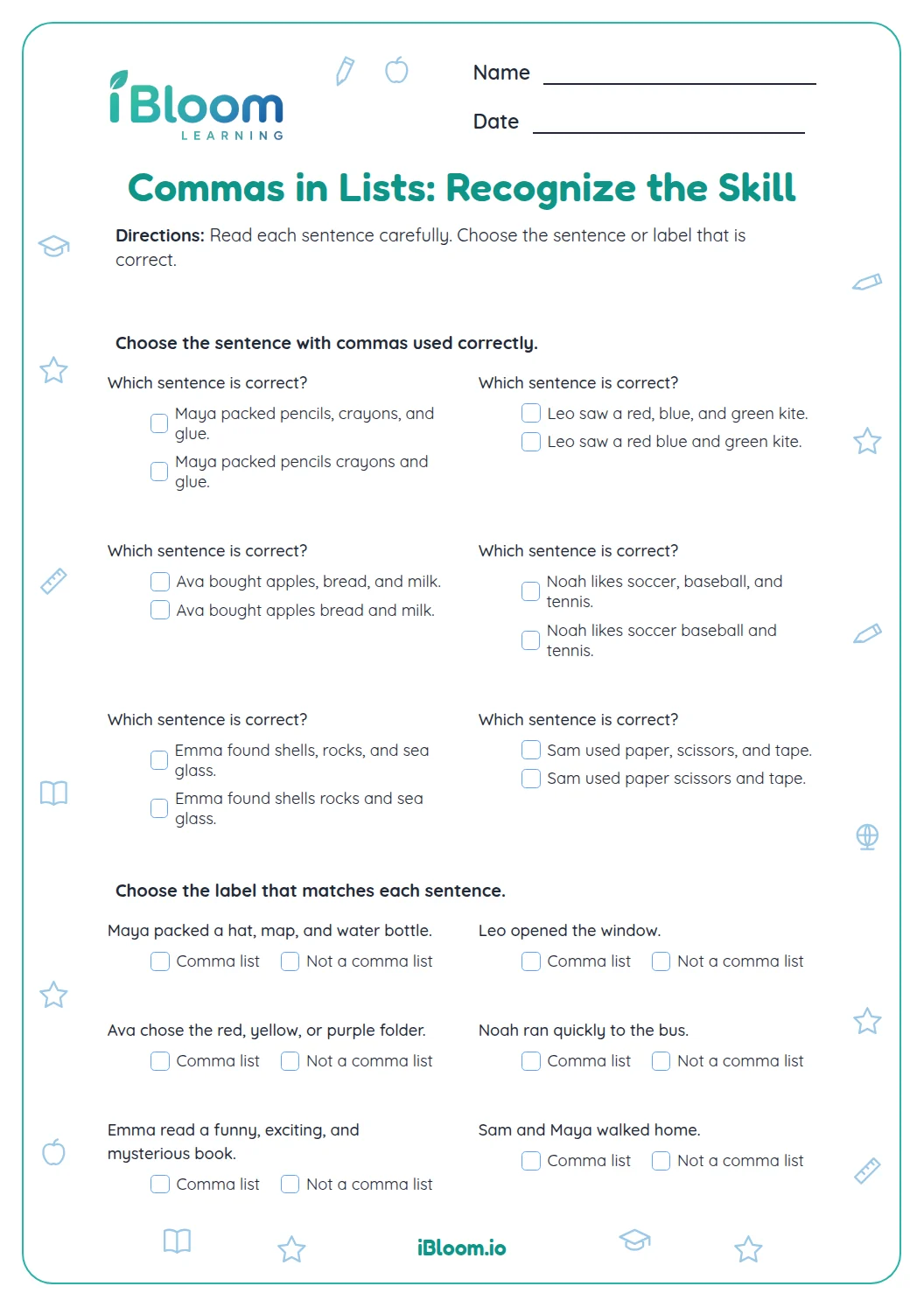


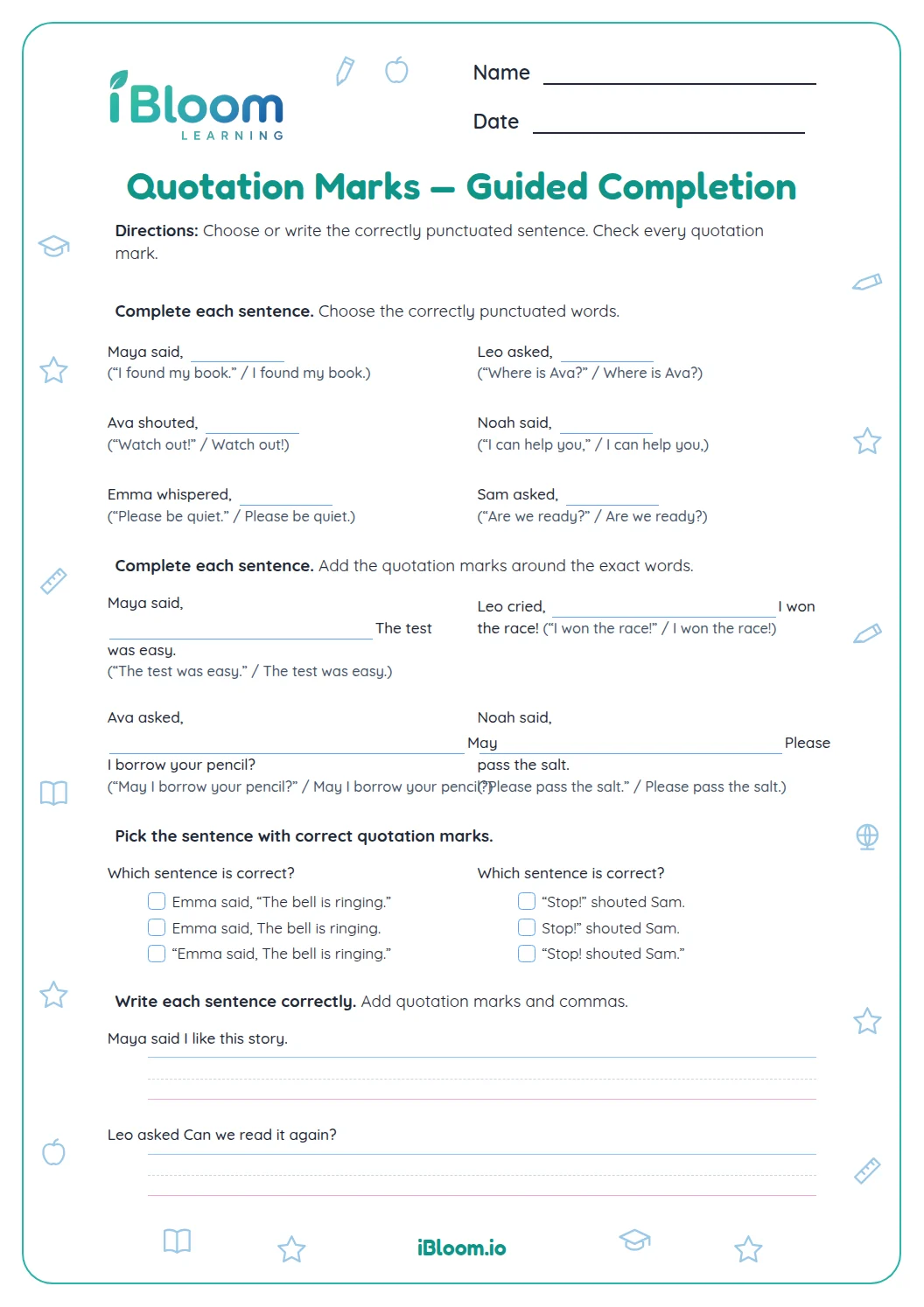
About this worksheet
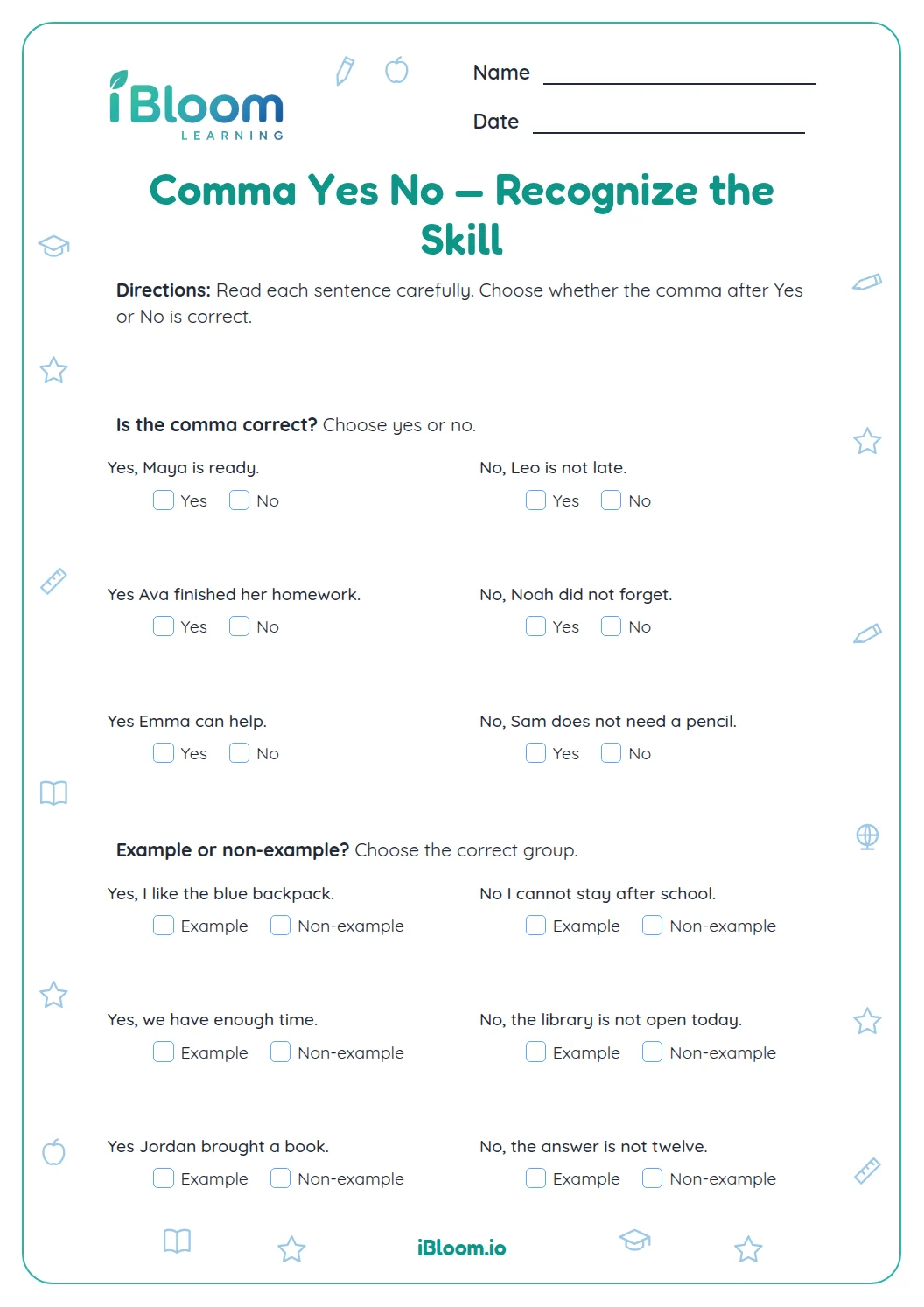
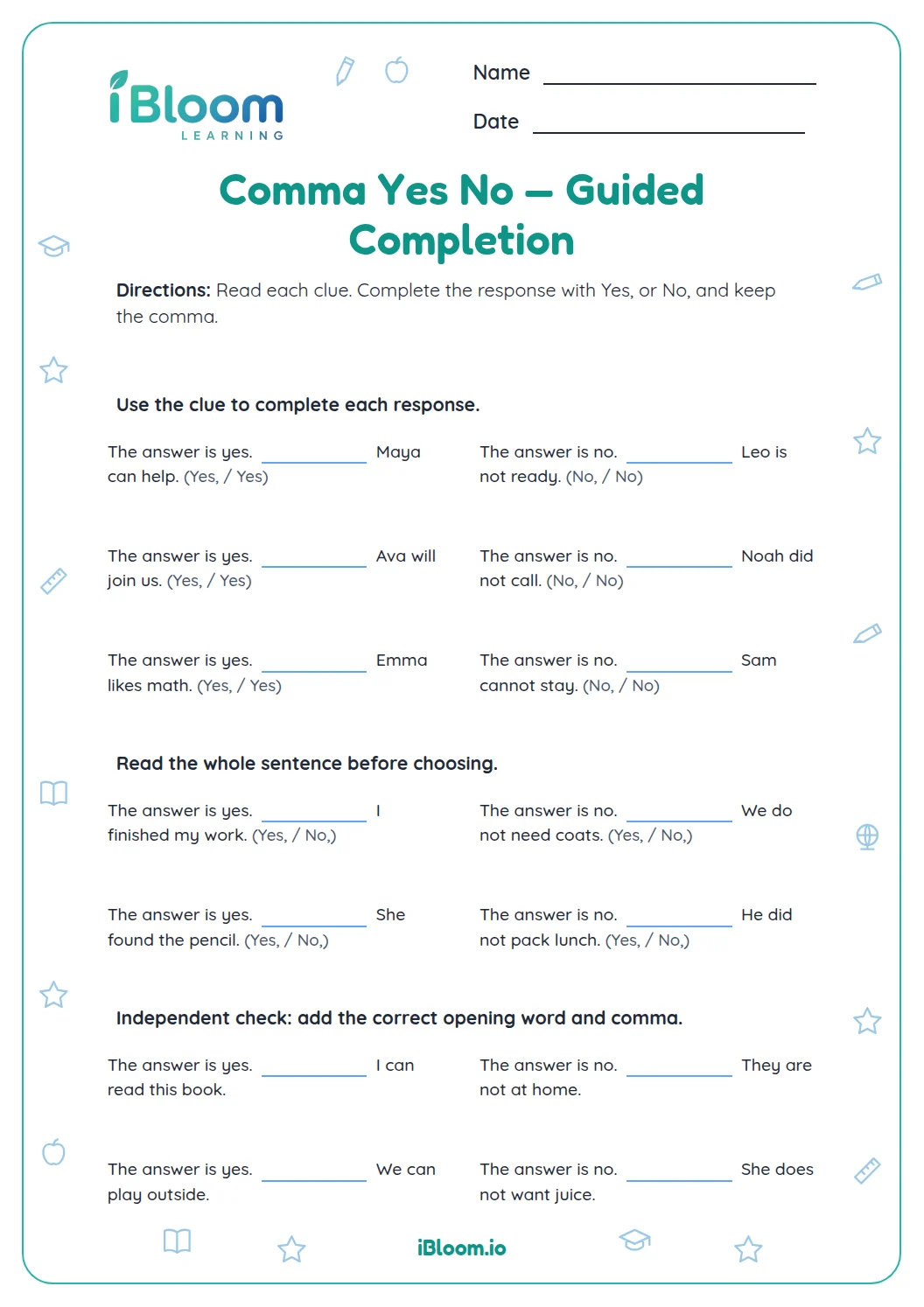
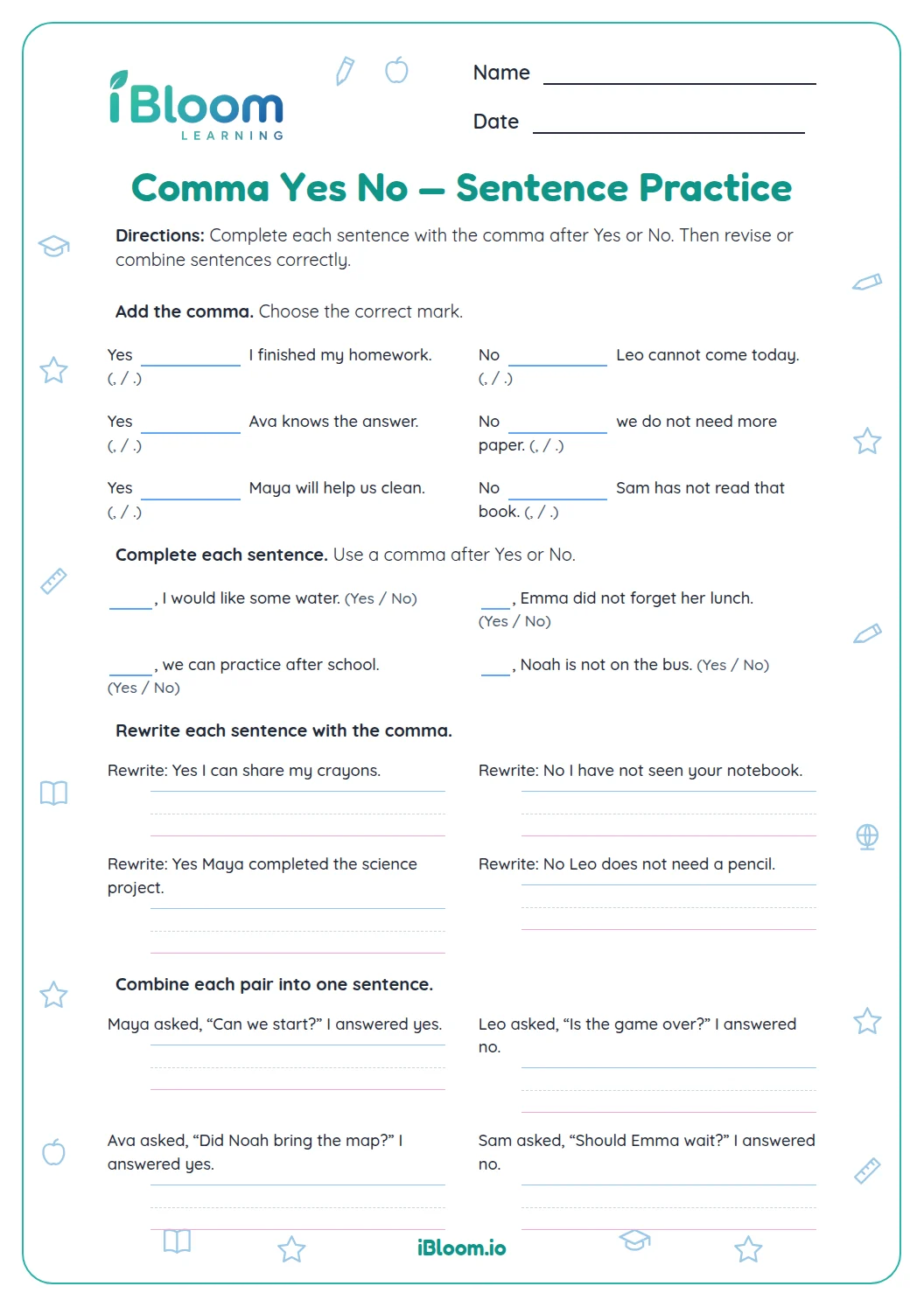
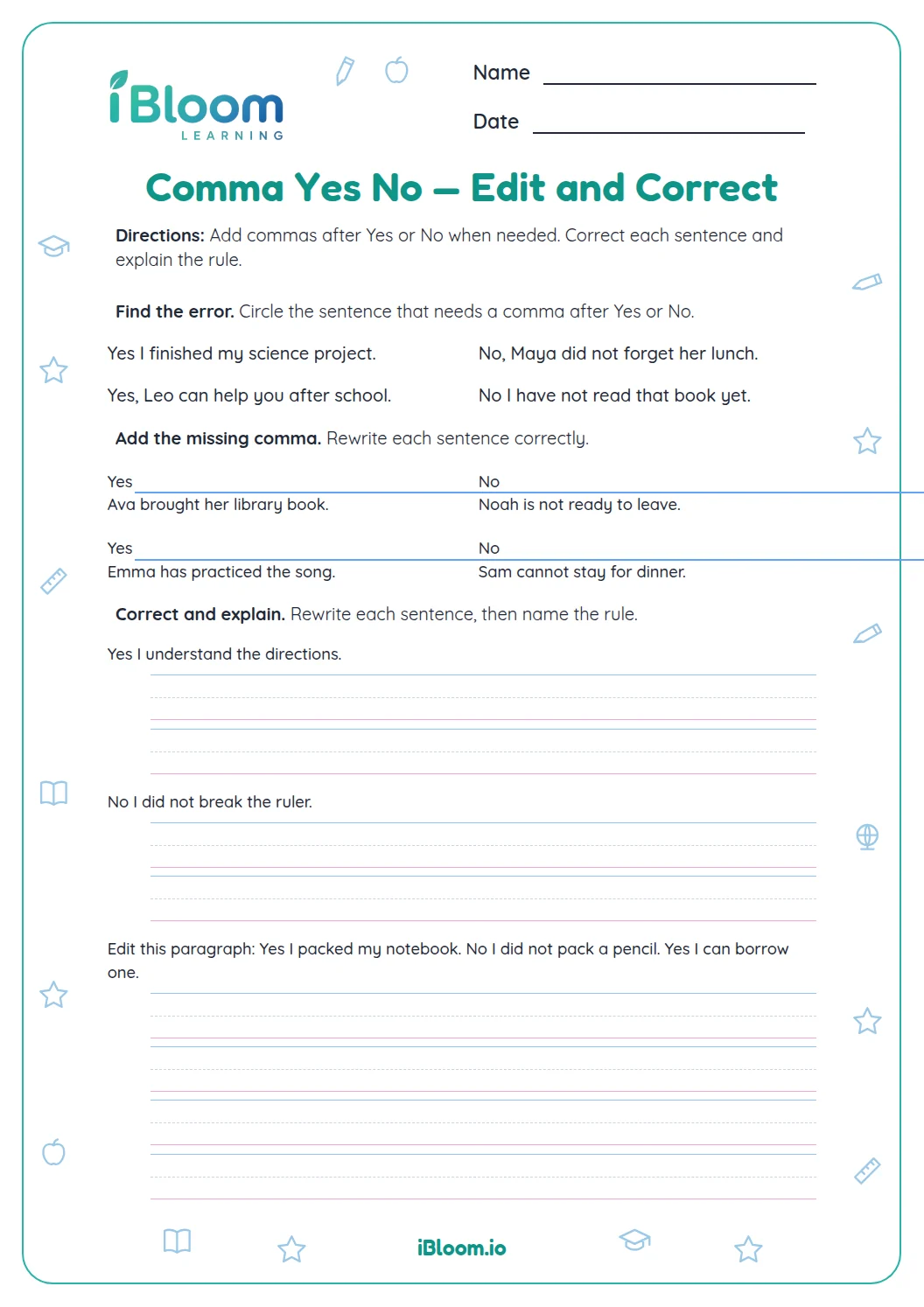
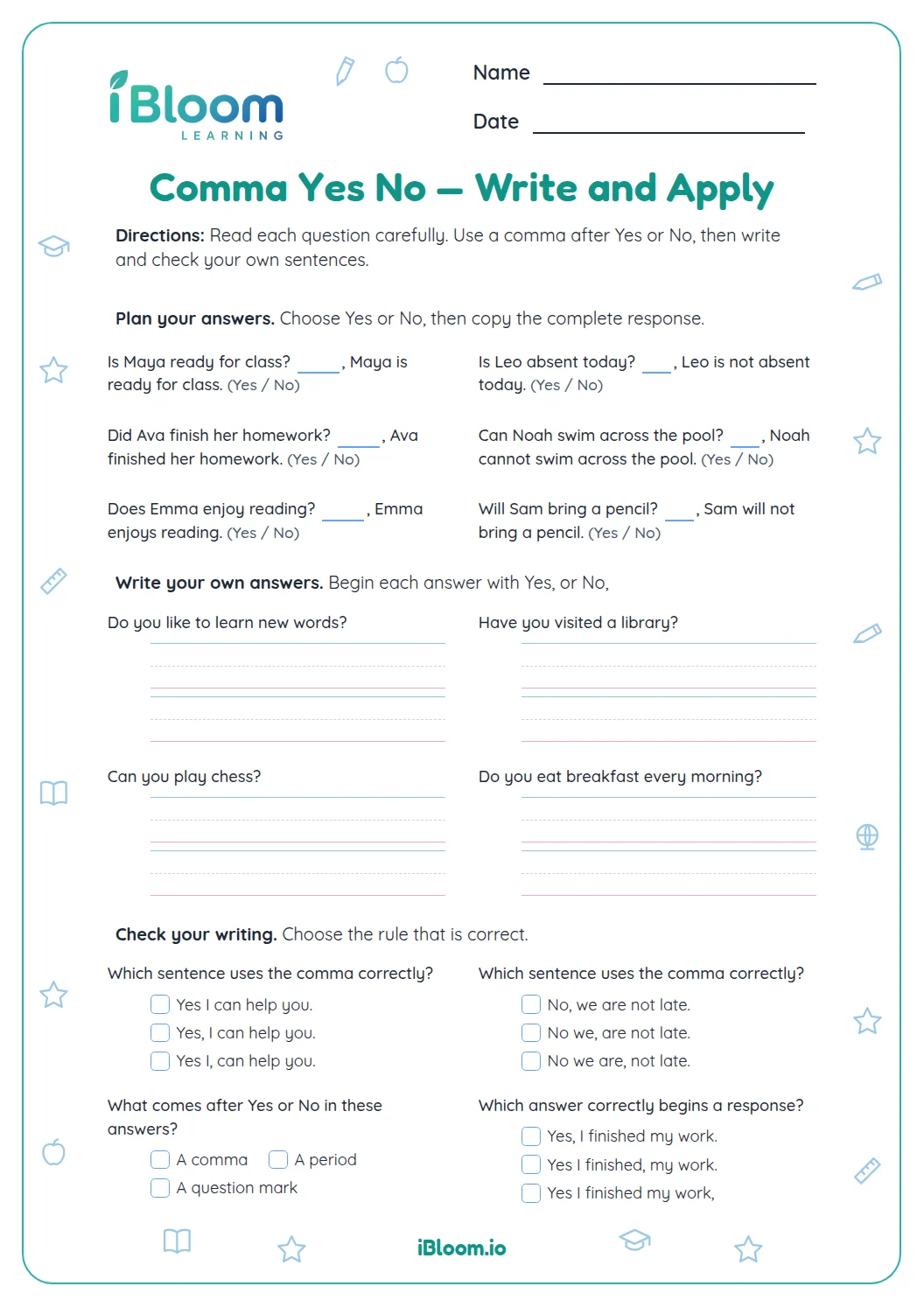
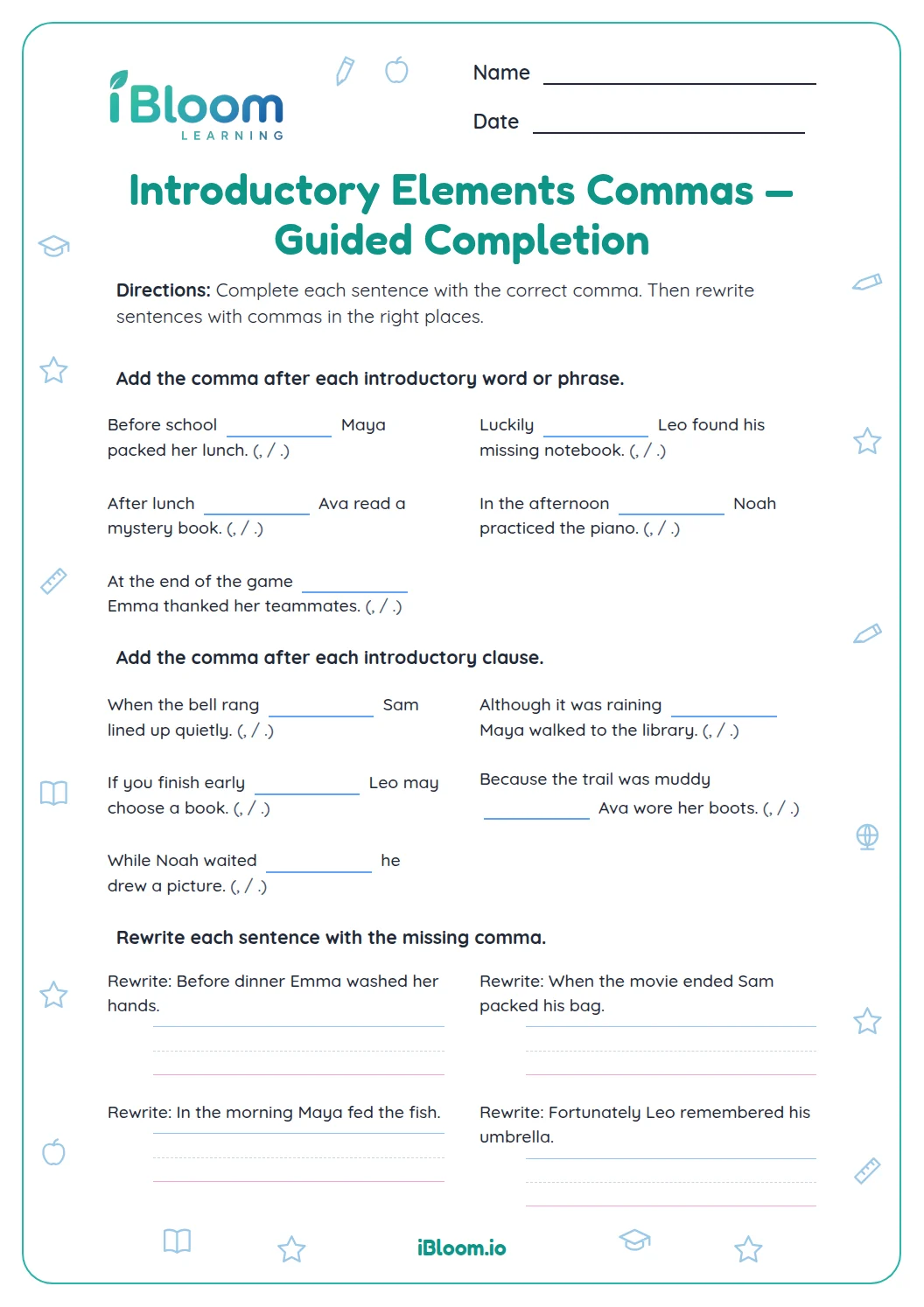
This Grade 5 comma worksheet gives students 16 opportunities to review punctuation in context. Part A asks whether commas are correct in introductory phrases, lists, direct address, and compound sentences. Part B asks students to add commas to complete sentences. The answer key gives each judgment and a corrected model sentence.
Aligned to L.5.2
How do you check whether a comma belongs?
Read the whole sentence first. Look for a reason for each comma: an opening phrase or clause, items in a series, a name spoken to, or two complete thoughts joined by and, but, or so.
Part A includes both correct and incorrect examples, so students must connect each comma to its job.
- 1Question 1: “After the rain stopped, we went outside.” → Yes; the opening clause is followed by a comma.
How do you revise a sentence with missing commas?
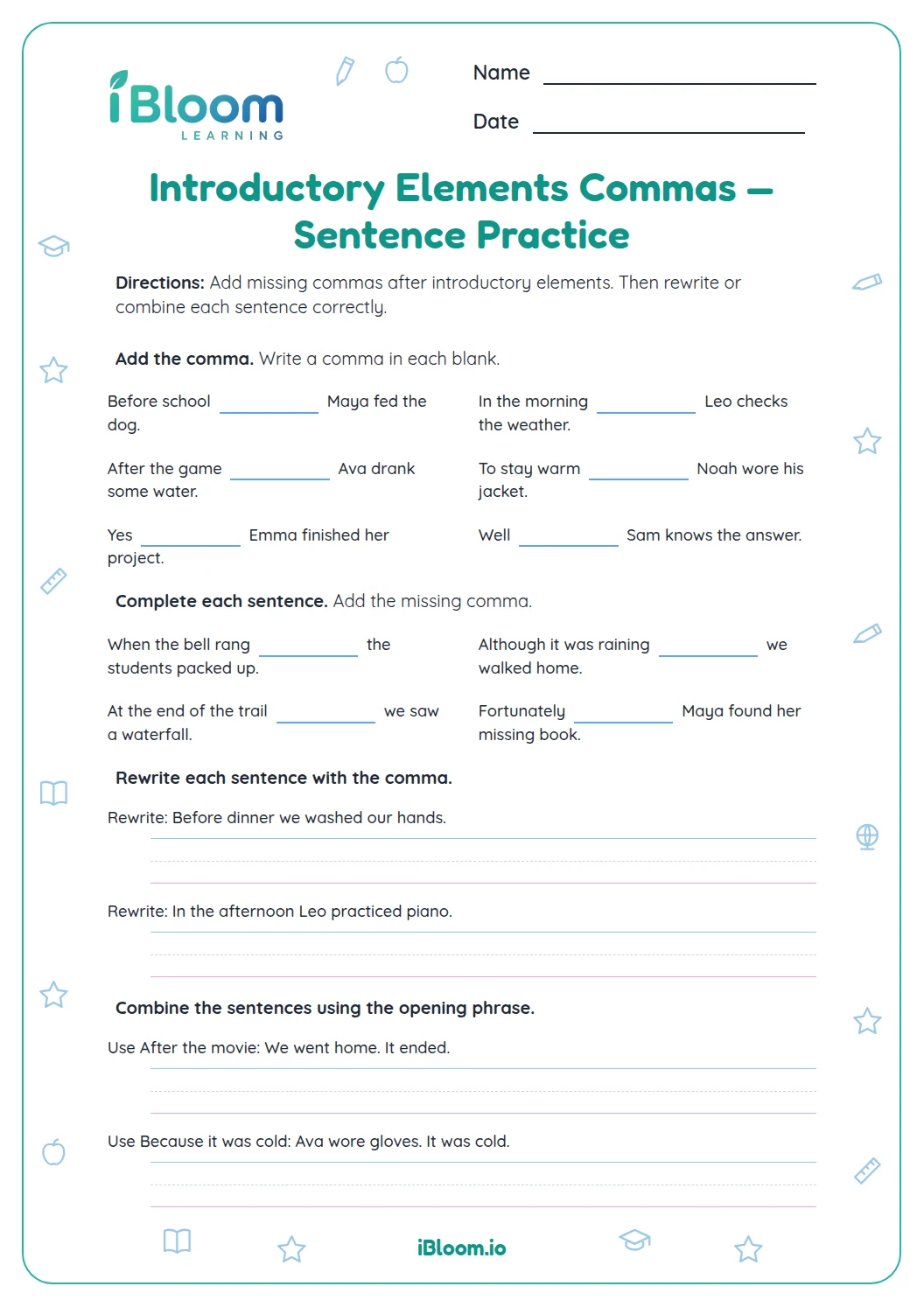
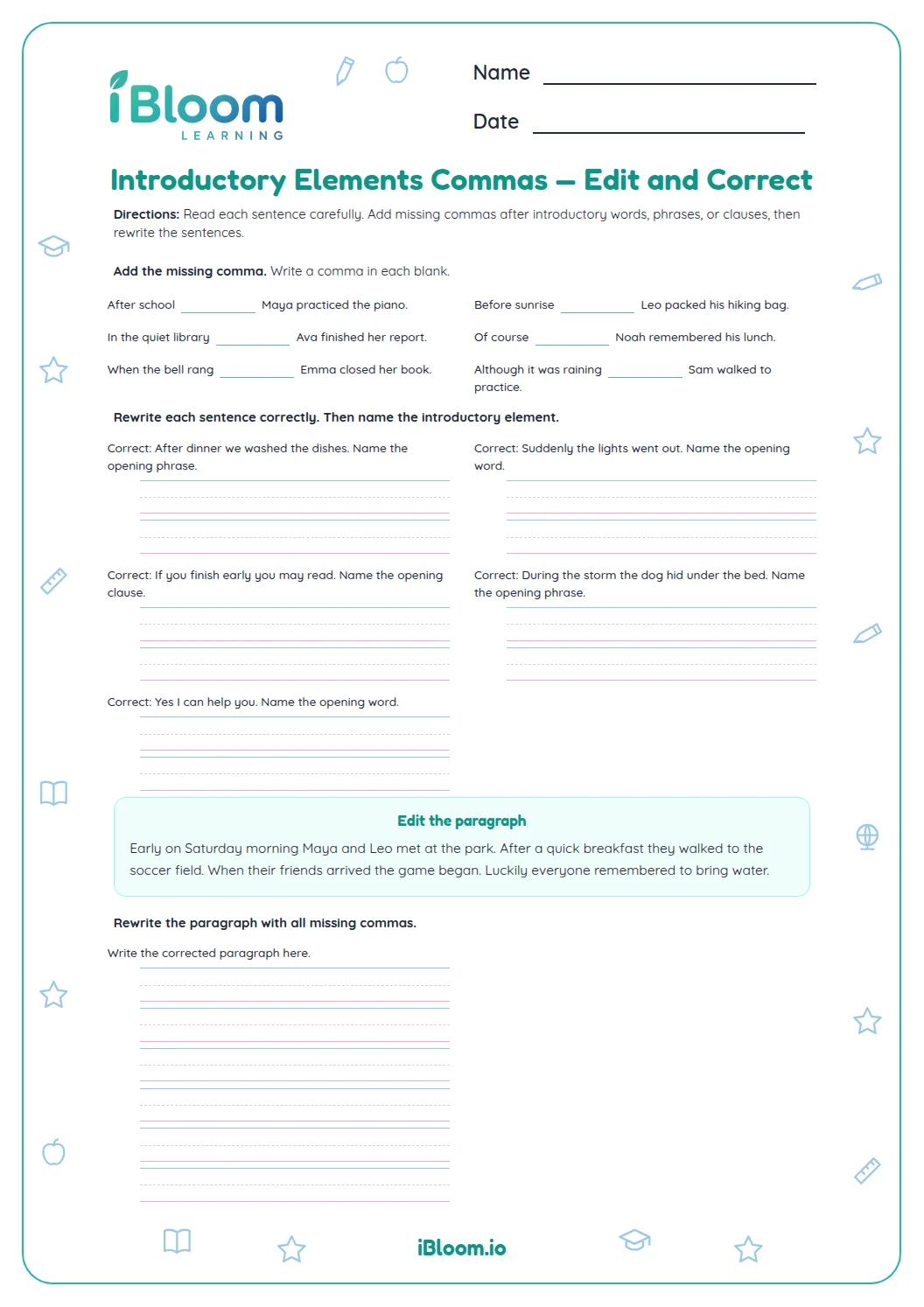
Read the sentence, identify the phrase, series, direct address, or compound sentence, then add punctuation where the structure calls for it. Part B practices these same comma patterns.
- 1Question 9: “When the bell rang we lined up.” → “When the bell rang, we lined up.”
How can students check their comma choices?
After editing, read the sentence again. Check that every comma has a reason and that no comma separates a subject from its verb. The answer key provides a complete model for comparison.
How to use this worksheet
- 1Read the direction for Part A and decide whether each comma has a clear job.
- 2For every No answer, name the comma pattern that needs a fix.
- 3In Part B, rewrite the complete sentence rather than listing only the comma location.
- 4Read each edited sentence aloud to check its meaning and punctuation.
- 5Compare with the answer key and explain one correction.
Common mistakes and quick fixes
The mistake
Adding a comma wherever a speaker pauses.
The fix
Check sentence structure: a pause alone does not require a comma.
The mistake
Leaving out the comma after an opening clause.
The fix
Read the introductory words together, then place the comma before the main clause.
The mistake
Putting a comma before a conjunction when the words after it are not a complete thought.
The fix
Check that both sides can stand as complete sentences before using that pattern.
Common Core alignment
This punctuation practice supports Grade 5 conventions work through sentence editing and review.
Use Grade 5 conventions when editing sentences for punctuation.
On this sheet: The questions ask students to judge and revise comma use in complete sentences.
Show the official wordingHide the official wording
Demonstrate command of the conventions of standard English capitalization, punctuation, and spelling when writing.
What to practice next
Make more practice
Further reading
Questions parents and teachers ask
What comma skills does this page practice?
The 16 items practice commas after introductory elements, between items in a series, with direct address, and before a coordinating conjunction joining two complete thoughts. Part A uses yes-or-no judgments; Part B asks students to revise sentences. The key provides the judgments and corrected sentences.
How many questions are on the worksheet?
There are 16 questions in two parts: eight comma checks and eight sentence edits. Students decide whether the punctuation is correct, then rewrite complete sentences with missing commas. The answer key gives a Yes or No for each check and a corrected model for each edit.
Why does Part A include sentences that are already correct?
The yes-or-no items include both correct and incorrect sentences. That asks students to recognize when a comma has a job and when a comma is missing or misplaced. The key identifies the correct judgment so students can review the punctuation pattern.
Should students include the period when rewriting?
Yes. Part B asks students to rewrite the complete sentence, including its ending punctuation. Keeping the whole sentence makes it easier to see how the comma fits its meaning and structure, and the answer key models the complete corrected sentence.
What does the answer key show?
The key gives Yes or No for the eight comma checks and a corrected sentence for each of the eight edits. Students can compare comma placement and punctuation in context, then review the rule that applies to a missed item.