

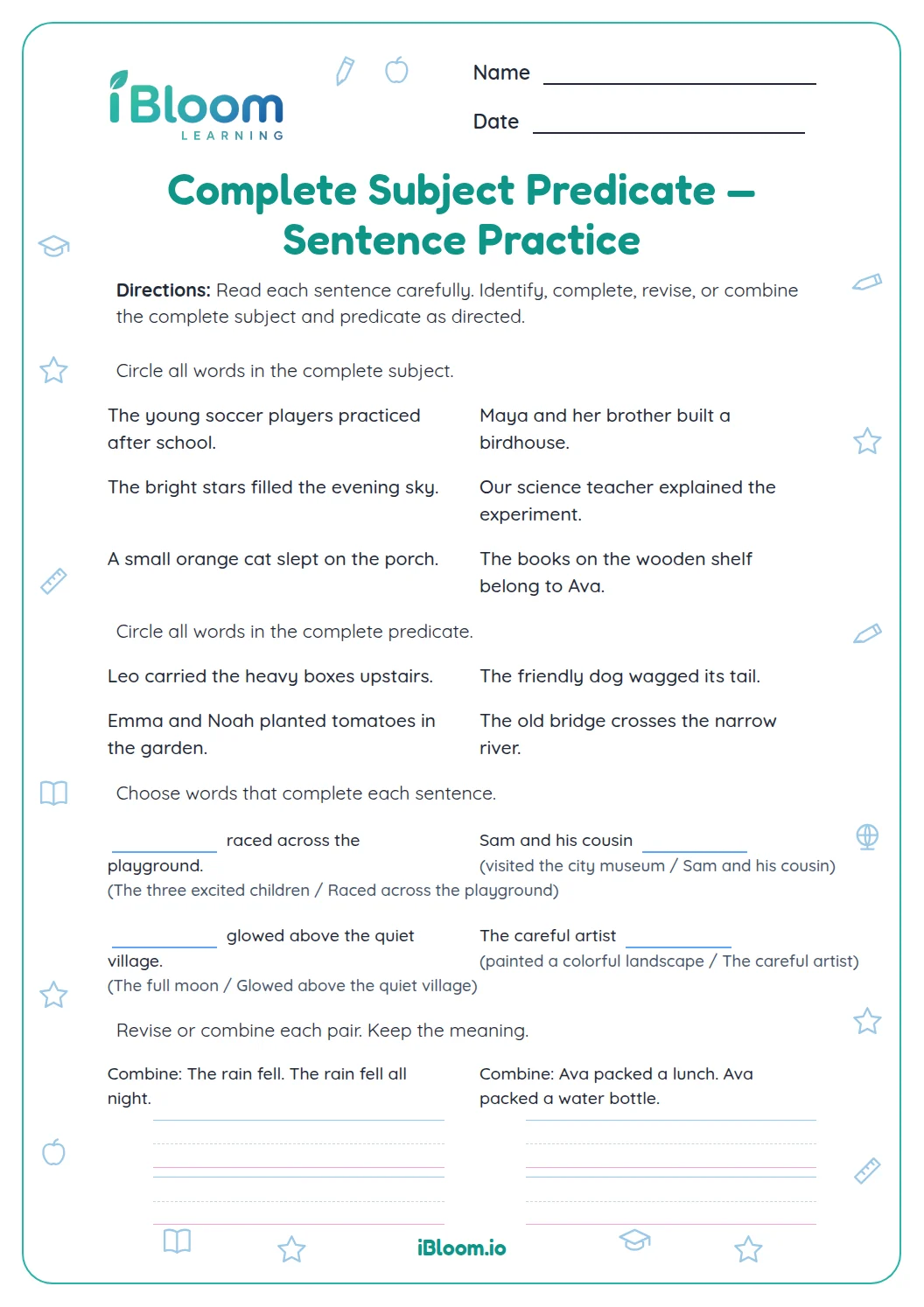

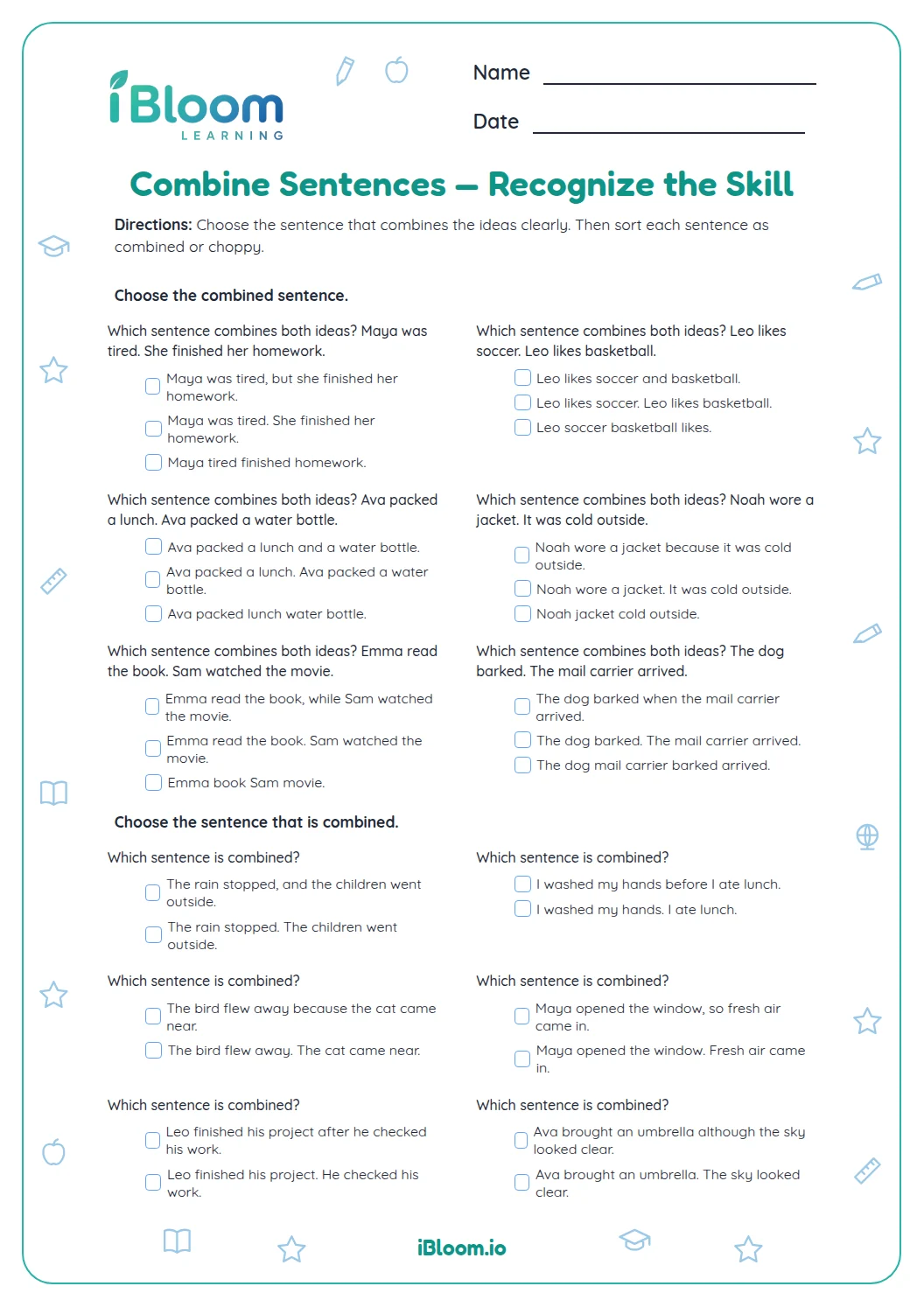
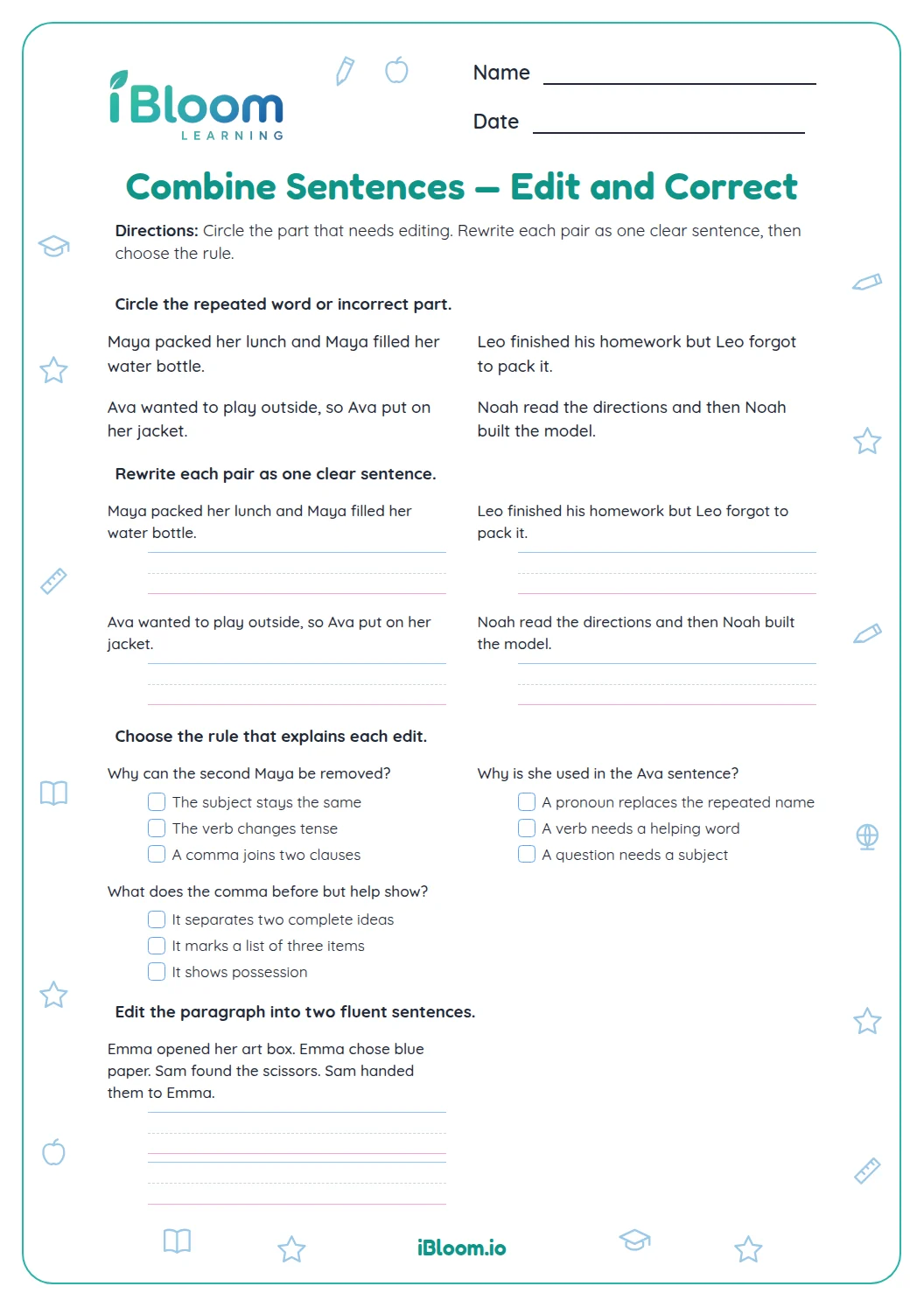
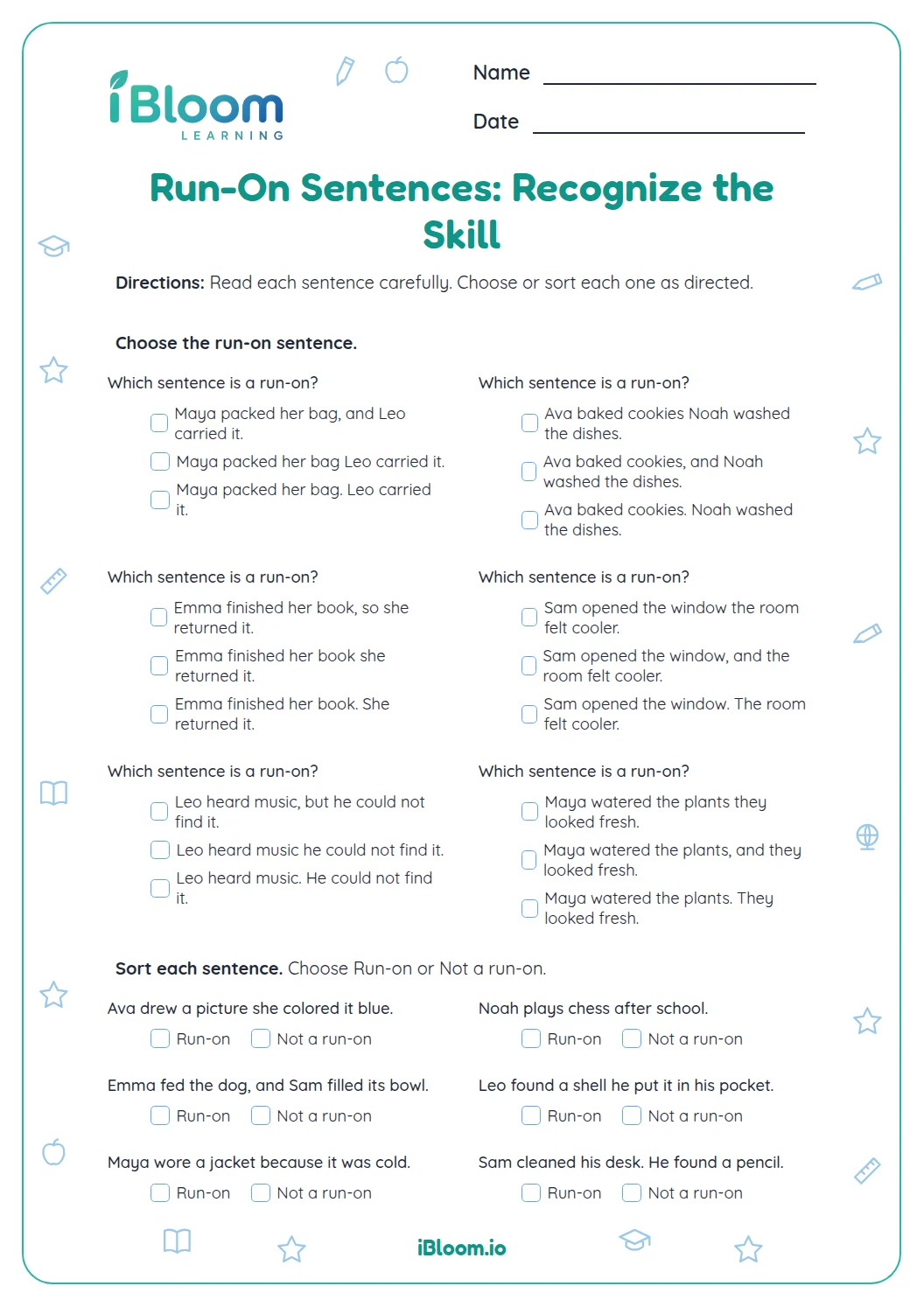
About this worksheet
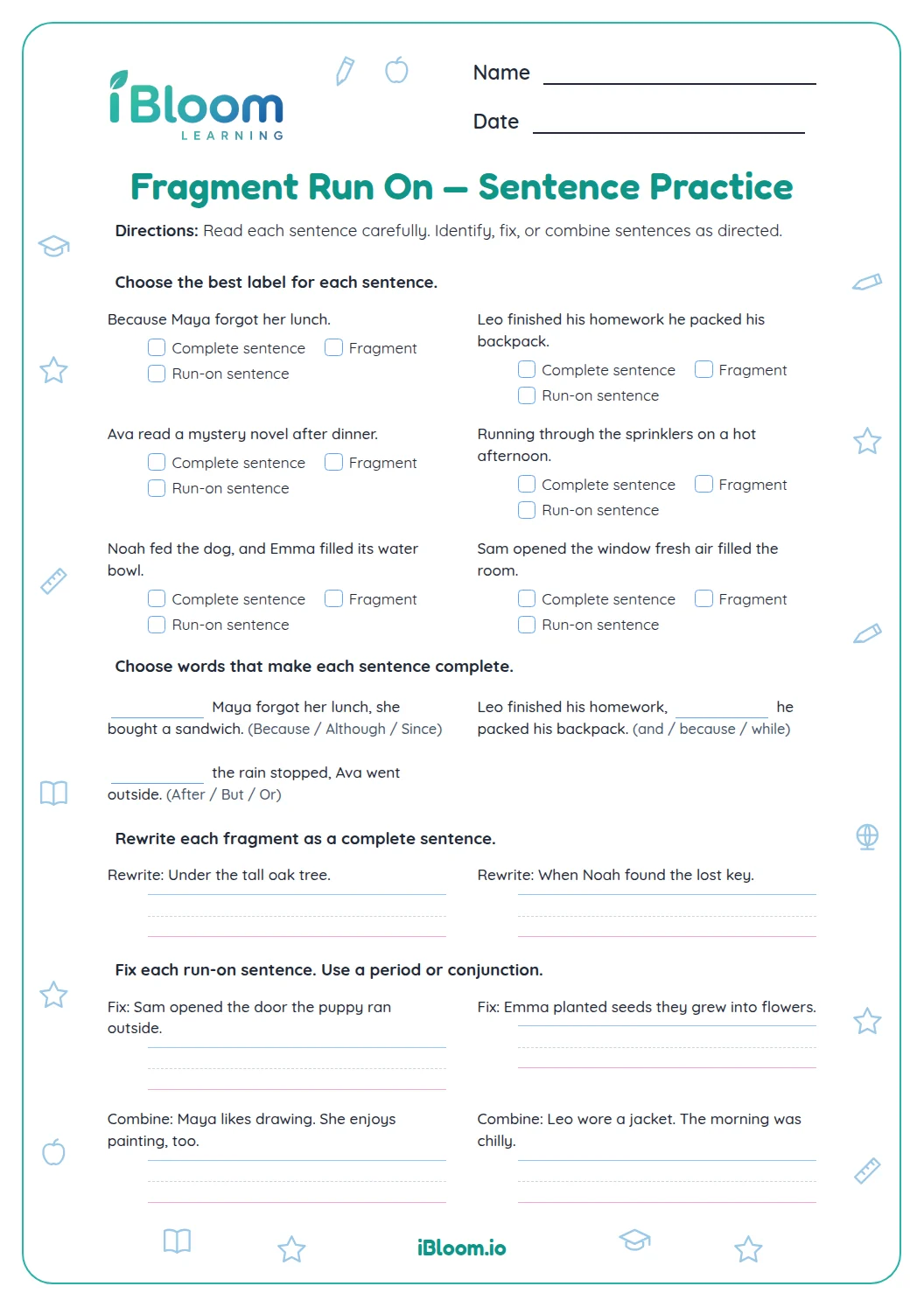
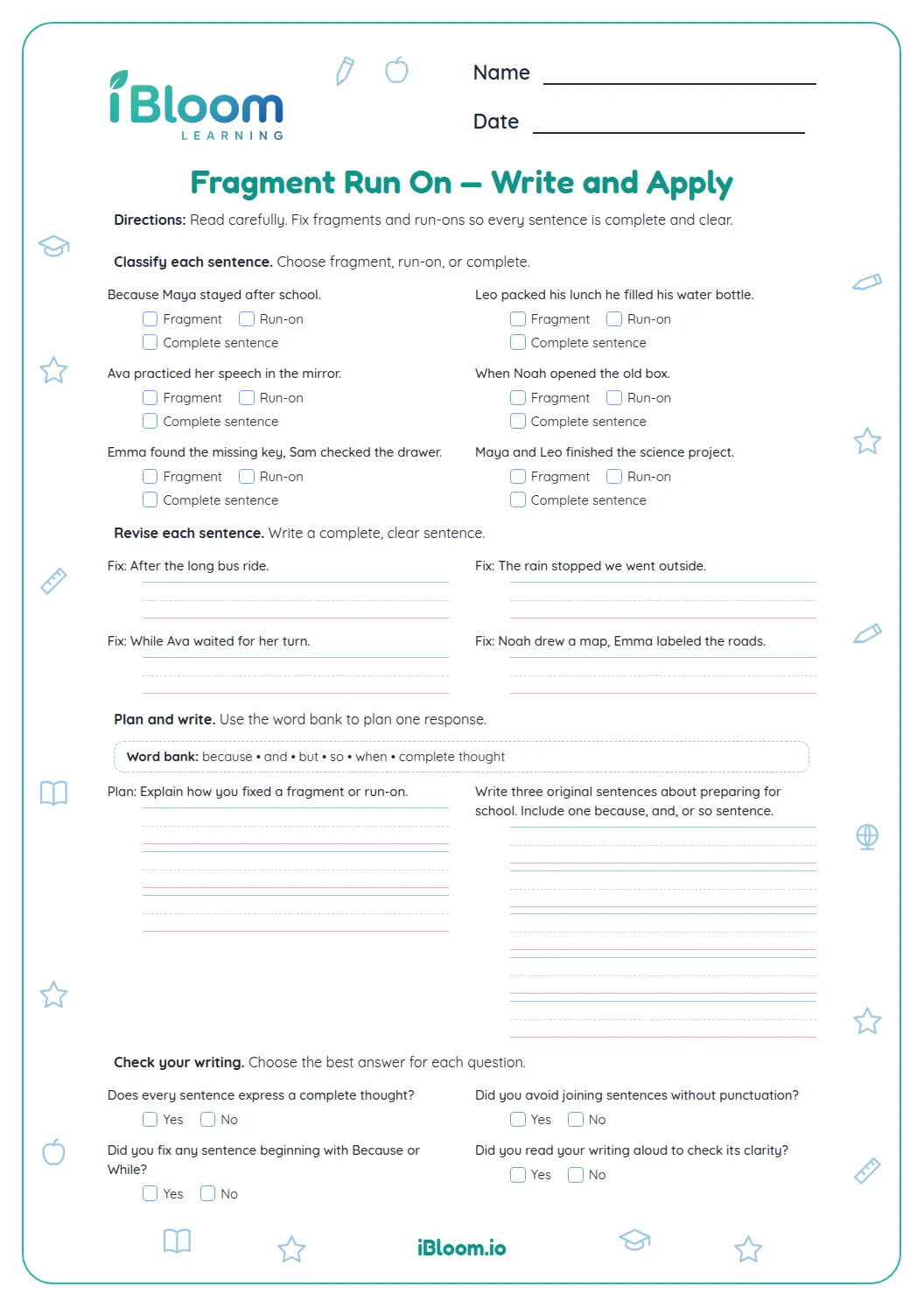
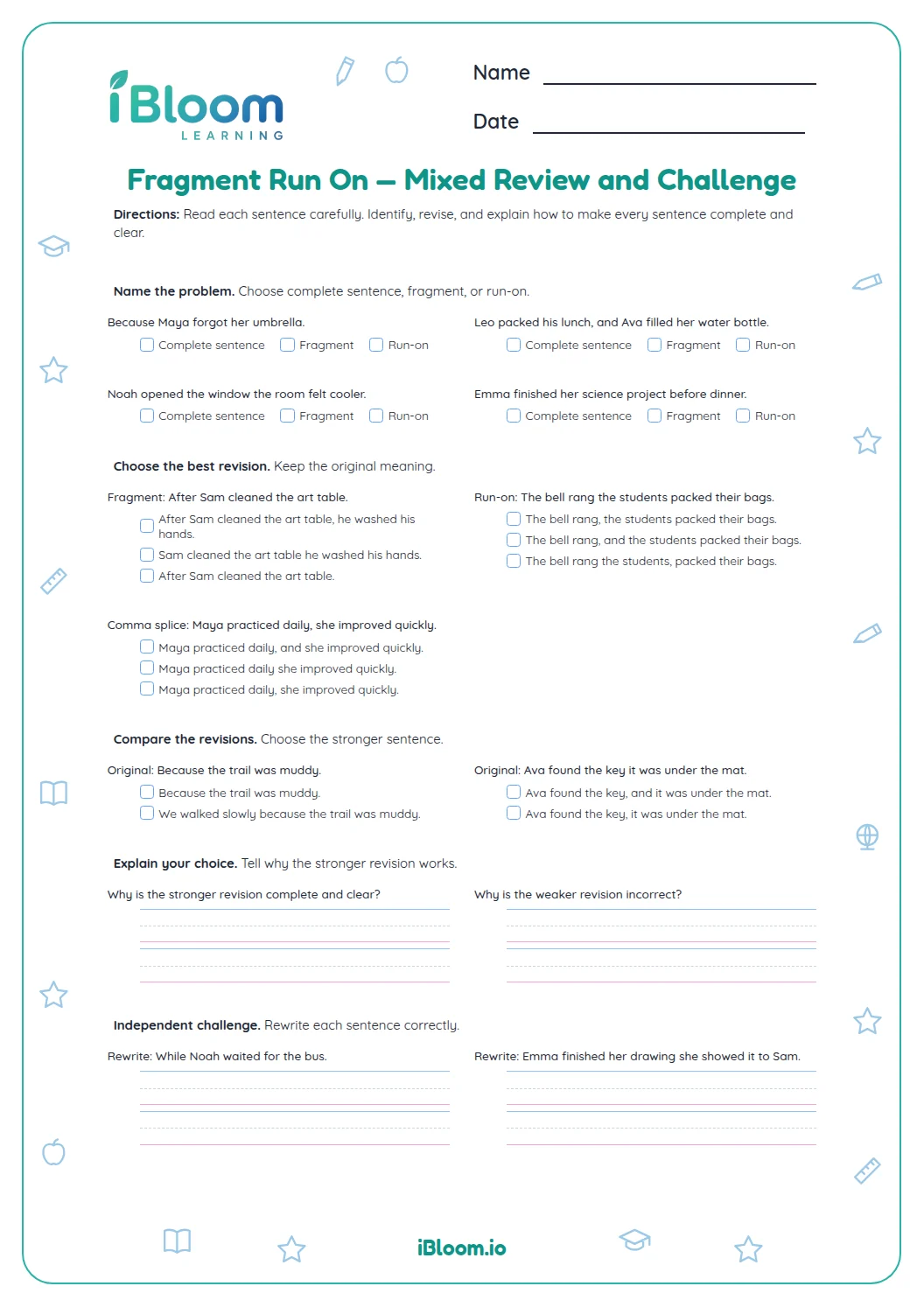
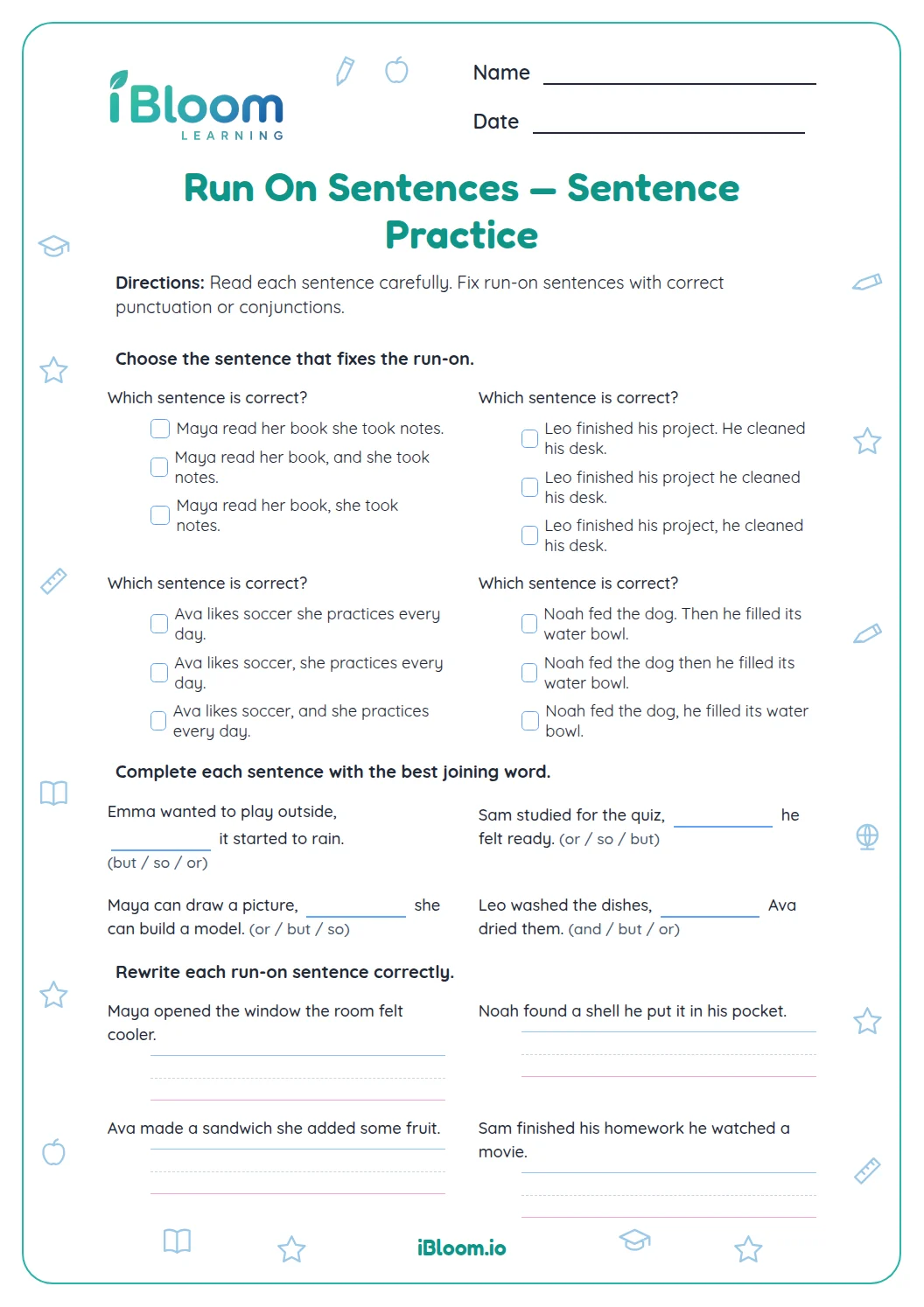
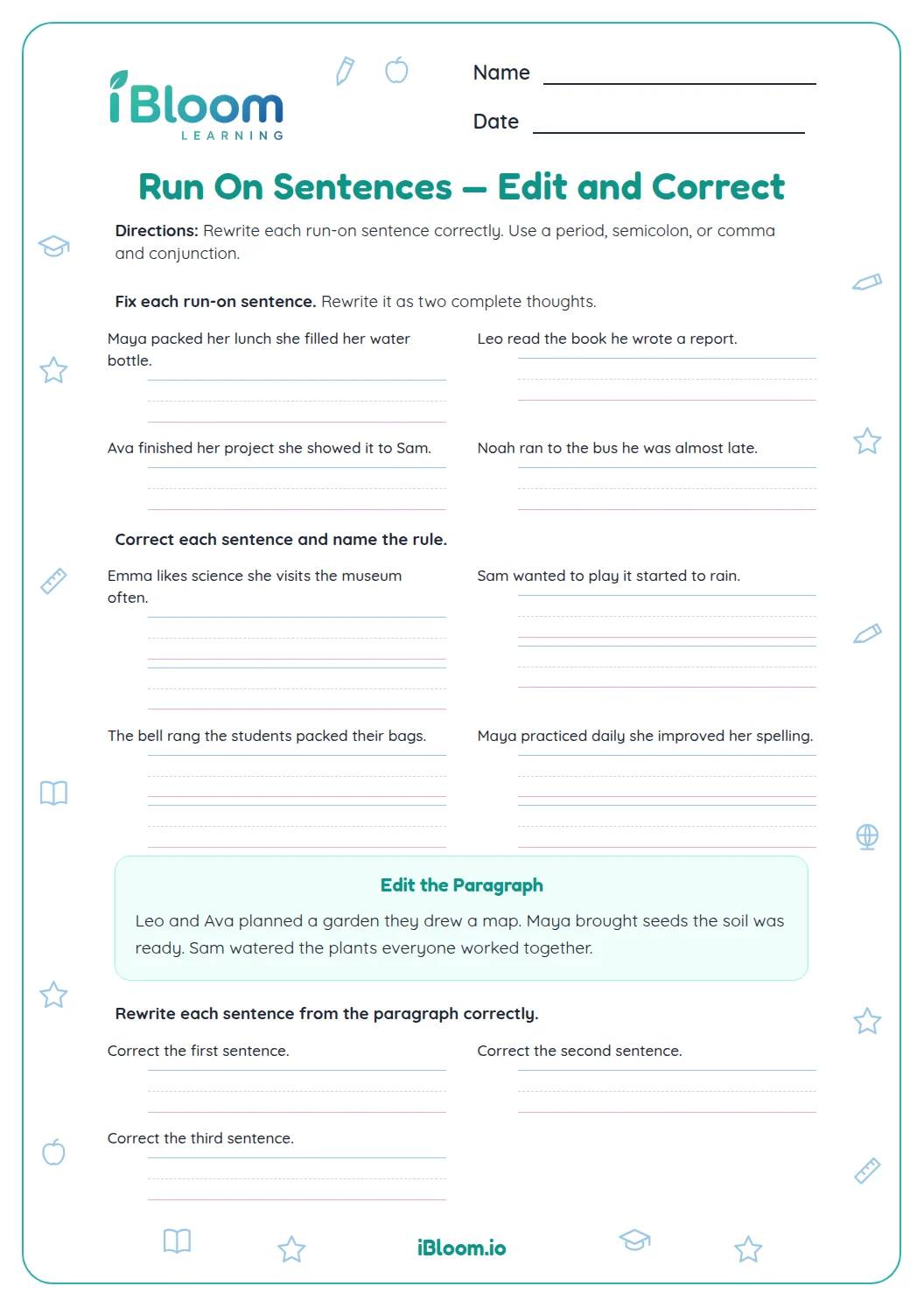
This Grade 5 grammar worksheet gives students 15 short items for recognizing sentence fragments and run-ons. Part A asks readers to distinguish complete sentences from ideas missing a subject or complete thought, and from two sentences joined without punctuation. Part B asks them to choose a clear correction. The answer key gives the label or corrected sentence for every item.
Aligned to L.5.1
What does the worksheet ask students to do?
Part A has 12 sentences to classify as complete, a fragment, or a run-on. Part B has three choices for repairing a sentence so the full thought reads clearly.
- Check for a subject and a complete thought.
- Look for two complete thoughts without a joining mark.
- Choose a correction that is grammatical and keeps the meaning.
How can you recognize a fragment or run-on?
A fragment may begin with because, when, after or while and leave the reader waiting for the rest of the thought. A run-on places two complete thoughts together without punctuation or a coordinating conjunction.
- 1“Because the path was muddy.” → fragment (the dependent clause needs a complete thought)
- 2“The hikers reached the ridge they rested beneath a pine tree.” → run-on (two complete thoughts need a join)
How do you choose a good correction?
Keep both ideas and join them with a period, semicolon, or comma plus a coordinating conjunction. A comma by itself cannot join two complete sentences. Part B asks for a complete, correctly joined choice.
How to use this worksheet
- 1Read the three labels before starting Part A.
- 2For each sentence, ask whether it has a subject and complete thought.
- 3If there are two complete thoughts, check how they are joined.
- 4In Part B, compare each option for meaning and punctuation.
- 5Use the answer key to explain one choice aloud.
Common mistakes and quick fixes
The mistake
Calling every short sentence a fragment.
The fix
Check whether it expresses a complete thought; length alone does not decide.
The mistake
Calling a dependent clause complete because it has a subject and verb.
The fix
Words such as because or while can make the clause depend on another thought.
The mistake
Joining two sentences with only a comma.
The fix
Use a period, semicolon, or comma with a coordinating conjunction.
Common Core alignment
These standards describe the language and number skills practiced on this page.
Use standard English grammar when writing complete sentences.
On this sheet: Students identify fragments and run-ons and choose complete sentence corrections.
Show the official wordingHide the official wording
Demonstrate command of the conventions of standard English grammar and usage when writing or speaking.
What to practice next
Make more practice
Further reading
Questions parents and teachers ask
How many questions are on the page?
There are 15 questions across the worksheet pages plus its key page. The first 12 ask students to label a sentence as complete, a fragment, or a run-on. The last three ask students to choose a corrected sentence, and a separate answer key lists each response.
What is a sentence fragment?
A fragment is a word group that does not express a complete thought on its own. “Because the path was muddy” leaves the reader waiting to learn what happened. The worksheet includes similar dependent clauses so students can recognize why a sentence needs another idea.
What is a run-on sentence?
A run-on joins two or more complete thoughts without the punctuation or conjunction needed between them. “The hikers reached the ridge they rested beneath a pine tree” contains two thoughts pushed together. Students practice spotting that boundary and selecting a clear repair.
Can a short sentence be complete?
Yes. A short sentence can have a subject, a verb and a complete thought. Students should check meaning and sentence structure instead of counting words. The worksheet includes short complete examples beside dependent clauses that remain fragments, such as one beginning with “When.”
How can a run-on be fixed?
A writer can separate the thoughts with a period or join them with a semicolon or a comma and a coordinating conjunction. The correction should preserve the intended meaning. Part B has students compare alternatives and choose a complete, correctly joined sentence.