


About this worksheet
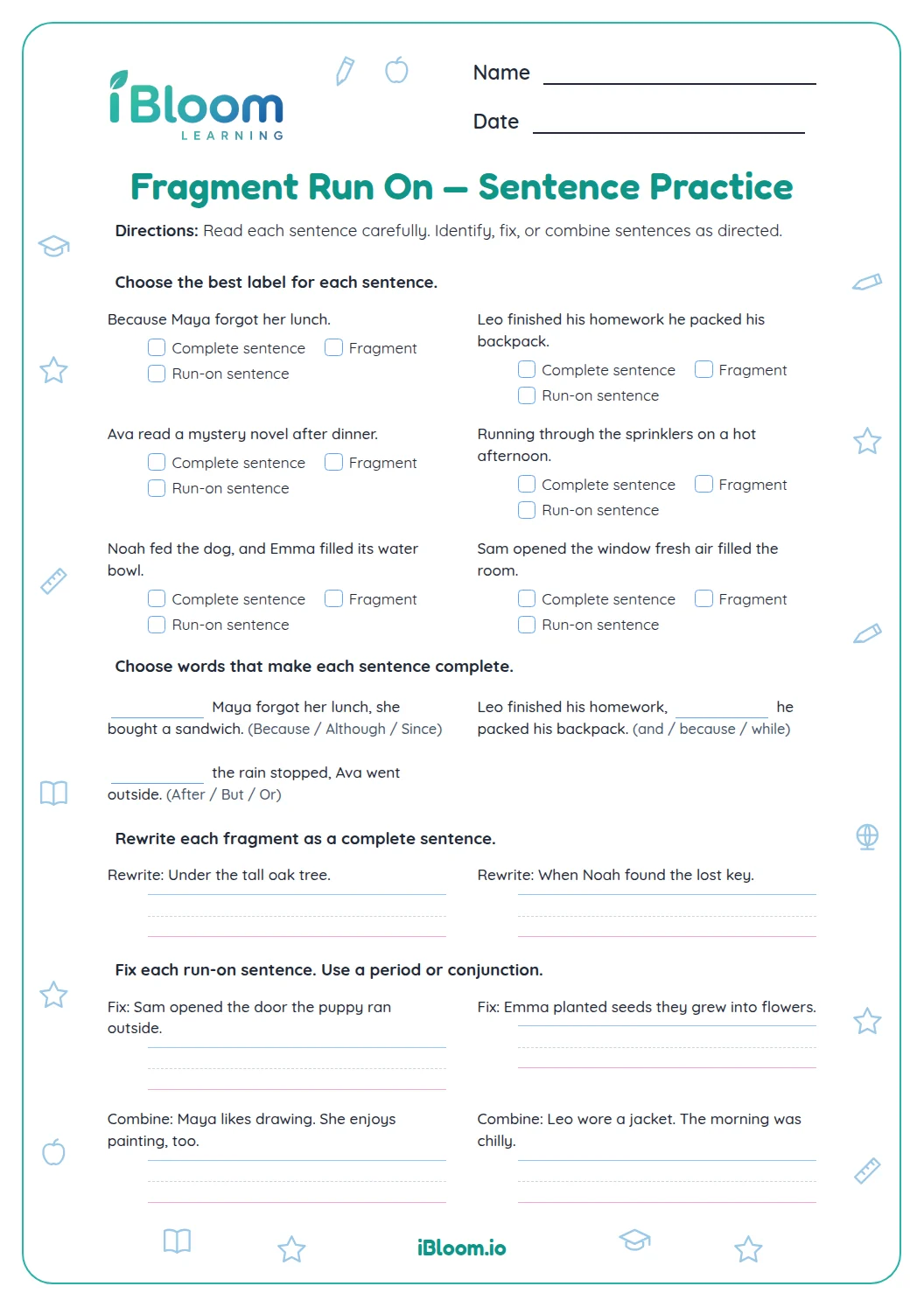
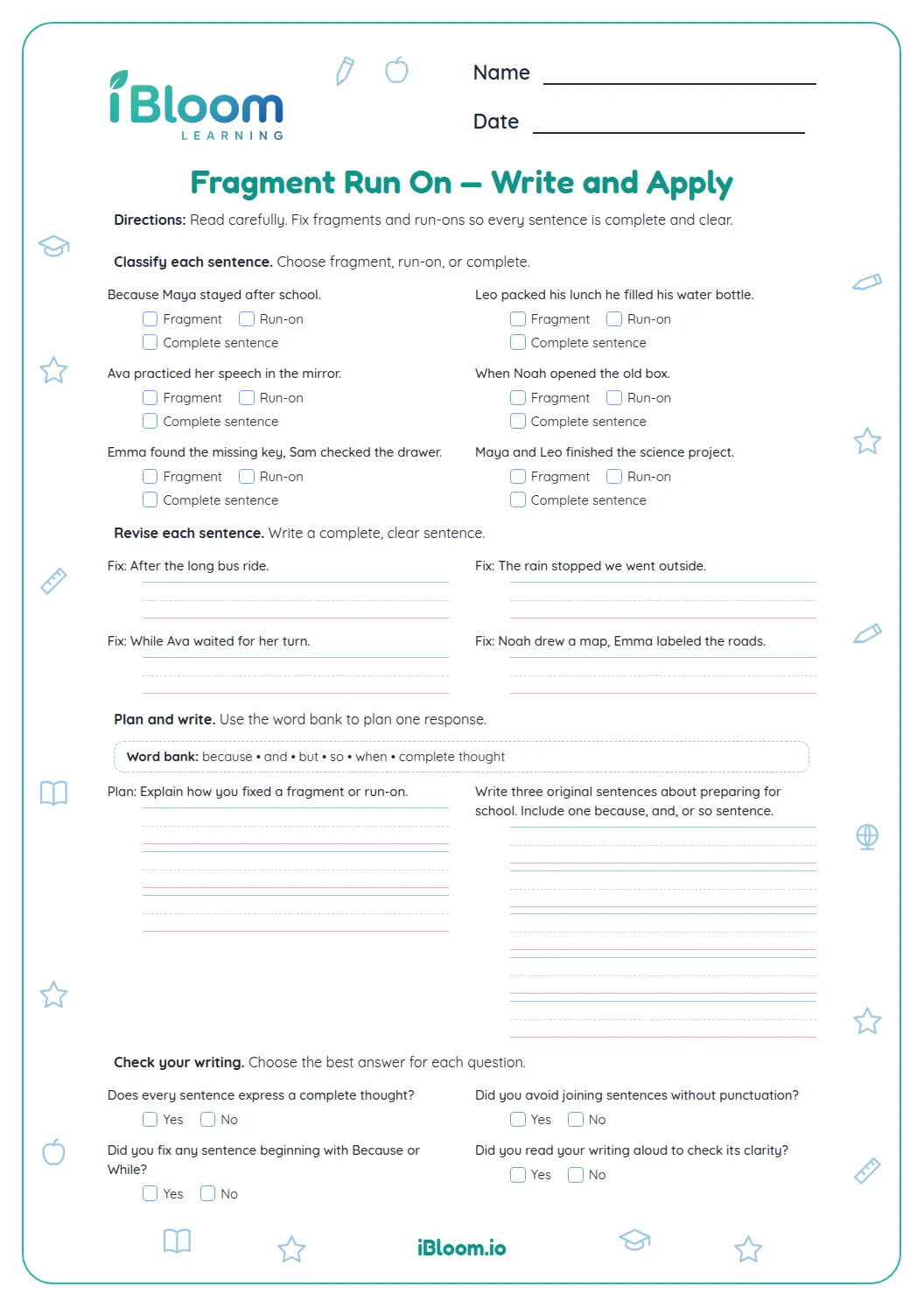
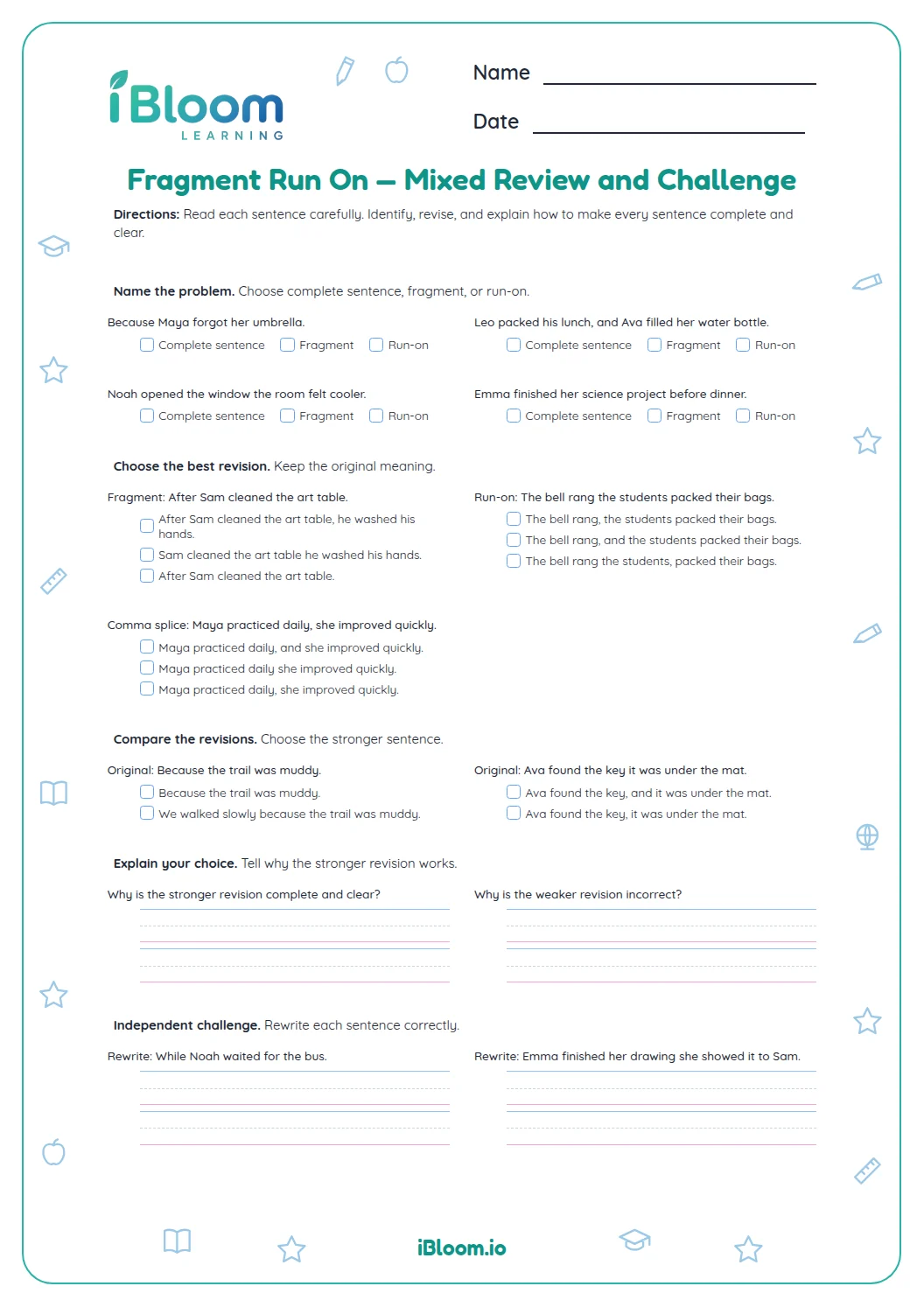
This Grade 5 printable gives students guided practice with fragments and run-on sentences. Early questions ask learners to recognize complete thoughts and faulty sentence boundaries; later questions ask them to revise a run-on or finish a fragment. The answer key includes model revisions. The work supports the grammar conventions in CCSS L.5.1.
Aligned to L.5.1
How can you recognize a complete sentence?
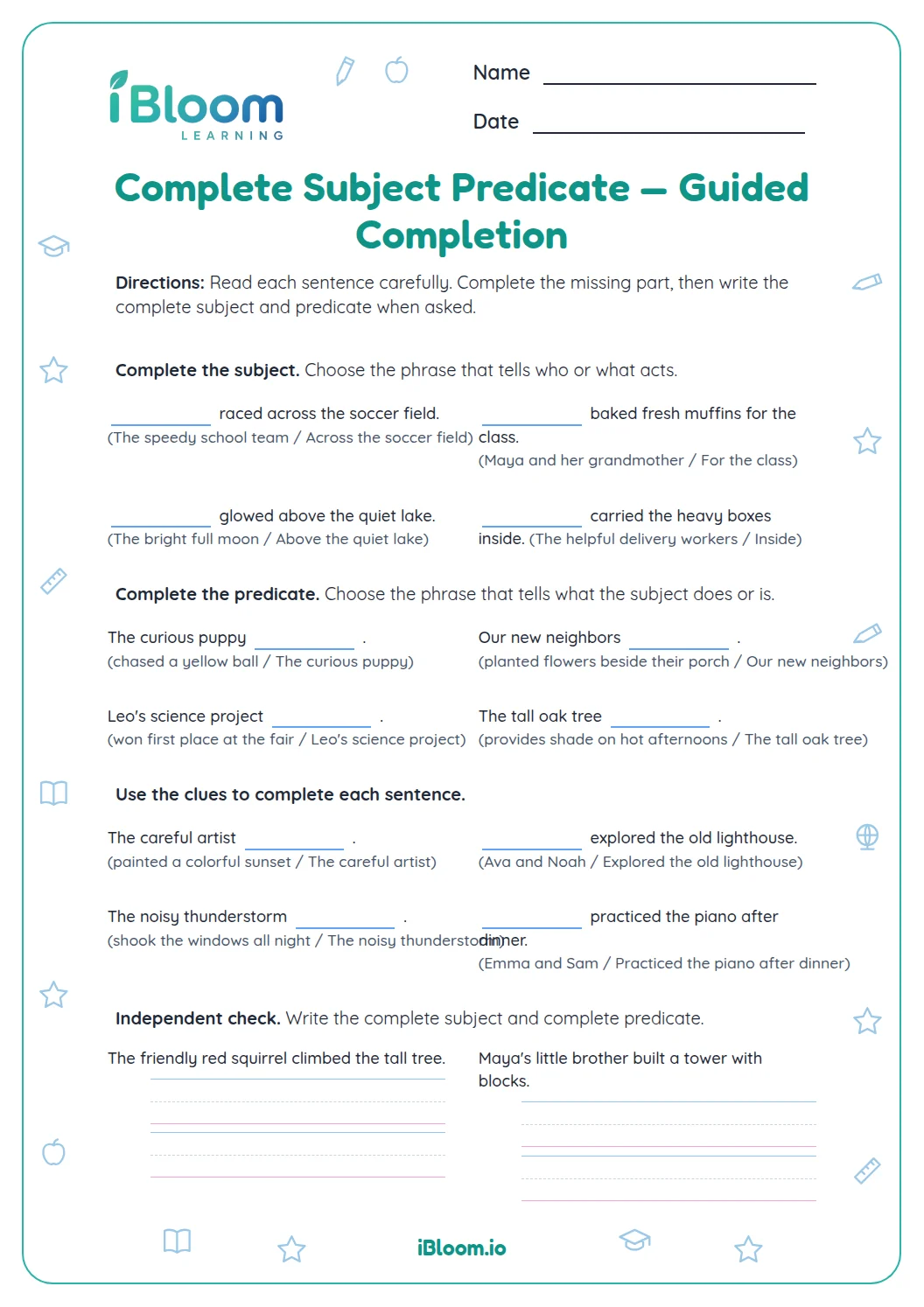
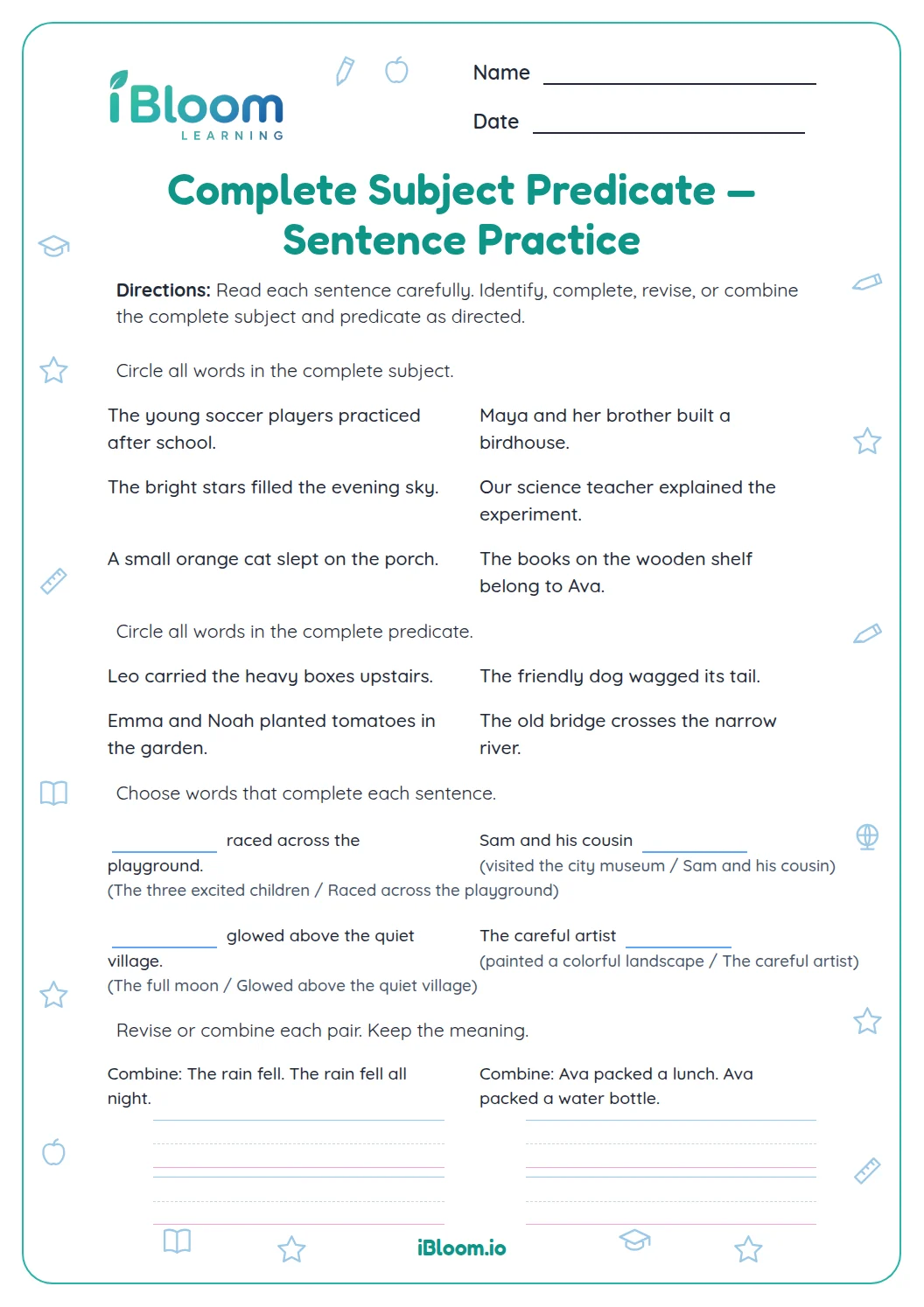
A complete sentence has a subject and a predicate and expresses a full thought. A dependent opening such as “After the game ended” needs a main idea to finish it.
- 1“After the hikers packed.” leaves the reader waiting, so it is a fragment.
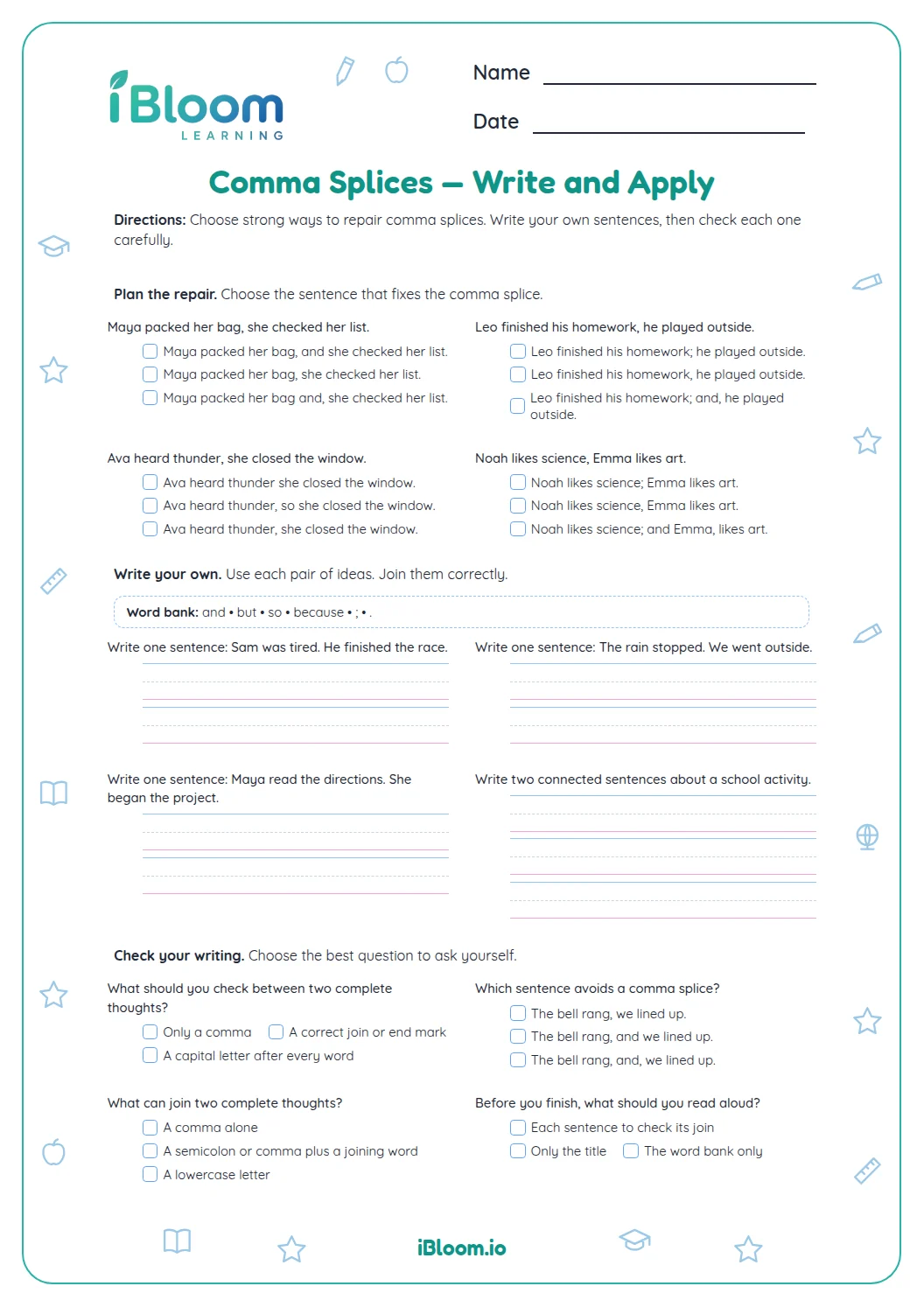
How can you repair a run-on?
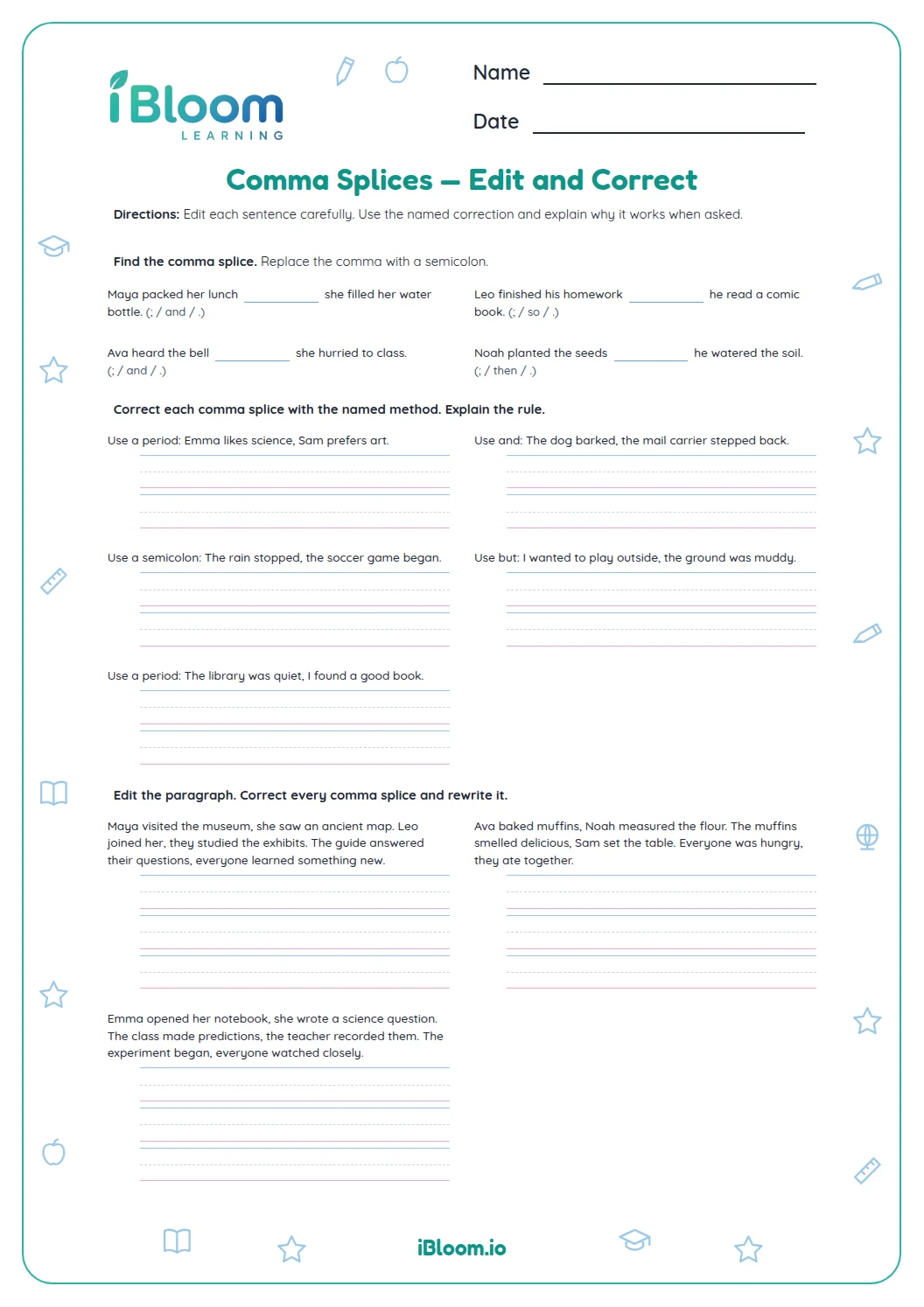
Separate the thoughts with a period, or connect them with a comma and a joining word such as and, but or so.
What should a revision keep?
Keep the original meaning while making the sentence complete and easy to read.
How to use this worksheet
- 1Read the whole group of words once.
- 2Find the subject and verb in each possible thought.
- 3Check whether every dependent opening has a main clause.
- 4Add a period or a correct conjunction between complete thoughts.
- 5Reread the revision aloud.
Common mistakes and quick fixes
The mistake
Treating an opening clause as a full sentence.
The fix
Add the main idea it depends on.
The mistake
Joining two sentences with only a comma.
The fix
Add a conjunction or use a period.
The mistake
Adding punctuation without checking meaning.
The fix
Reread to confirm the thoughts connect.
Students apply standard English grammar and usage when completing and repairing sentences.
Recognize complete sentences and correct sentence-boundary errors.
On this sheet:
Show the official wordingHide the official wording
Demonstrate command of the conventions of standard English grammar and usage when writing or speaking.
What to practice next
Make more practice
Further reading
Questions parents and teachers ask
How many questions are included?
There are 14 questions on the sheet. Students first identify complete sentences, fragments and run-ons, then revise examples by adding a missing idea or correcting the boundary between two complete thoughts. The answer key includes sample wording for open responses.
What is a sentence fragment?
A fragment is a group of words that does not express a complete thought as written. It may begin with a word such as because, while or after and leave the reader waiting for the rest. Add an independent clause to complete the meaning.
What makes a run-on?
A run-on joins two complete thoughts without the punctuation or conjunction needed between them. A reader can spot it by finding two subjects and verbs that could each stand as sentences. A period or a comma with a joining word can repair it.
Can students use different corrections than the key?
Yes. Some written responses have more than one correct revision. The key gives a sample; accept another response if it creates a complete sentence and correctly separates or joins the thoughts. The multiple-choice questions have one intended answer, with other choices serving as distractors.
How should we practice the written corrections?
Have the student read the original aloud and pause where one complete thought ends. Then choose a period or a joining word and reread the revision. Listening for the boundary can help students hear when a fragment still leaves the reader waiting.