



About this worksheet
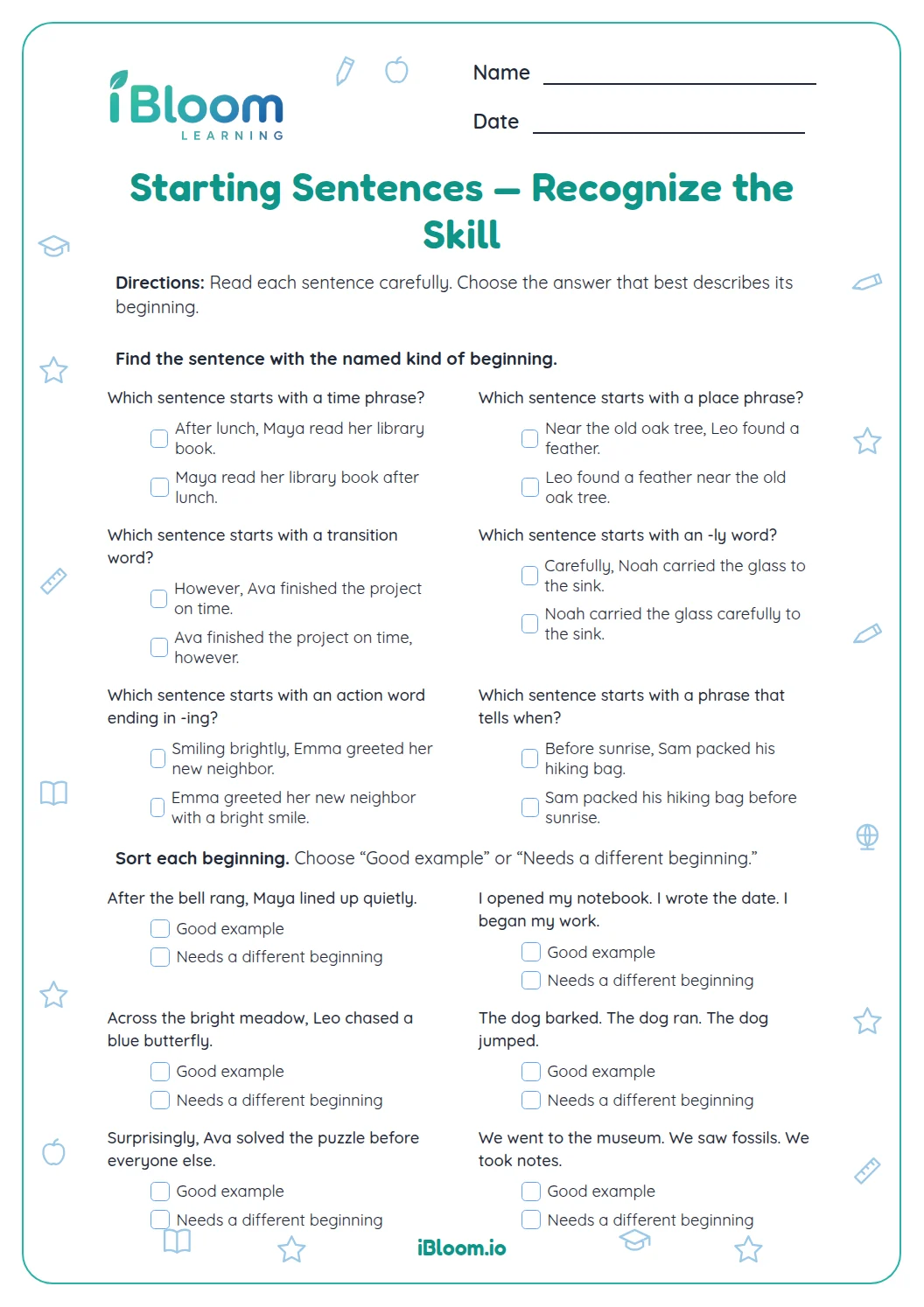
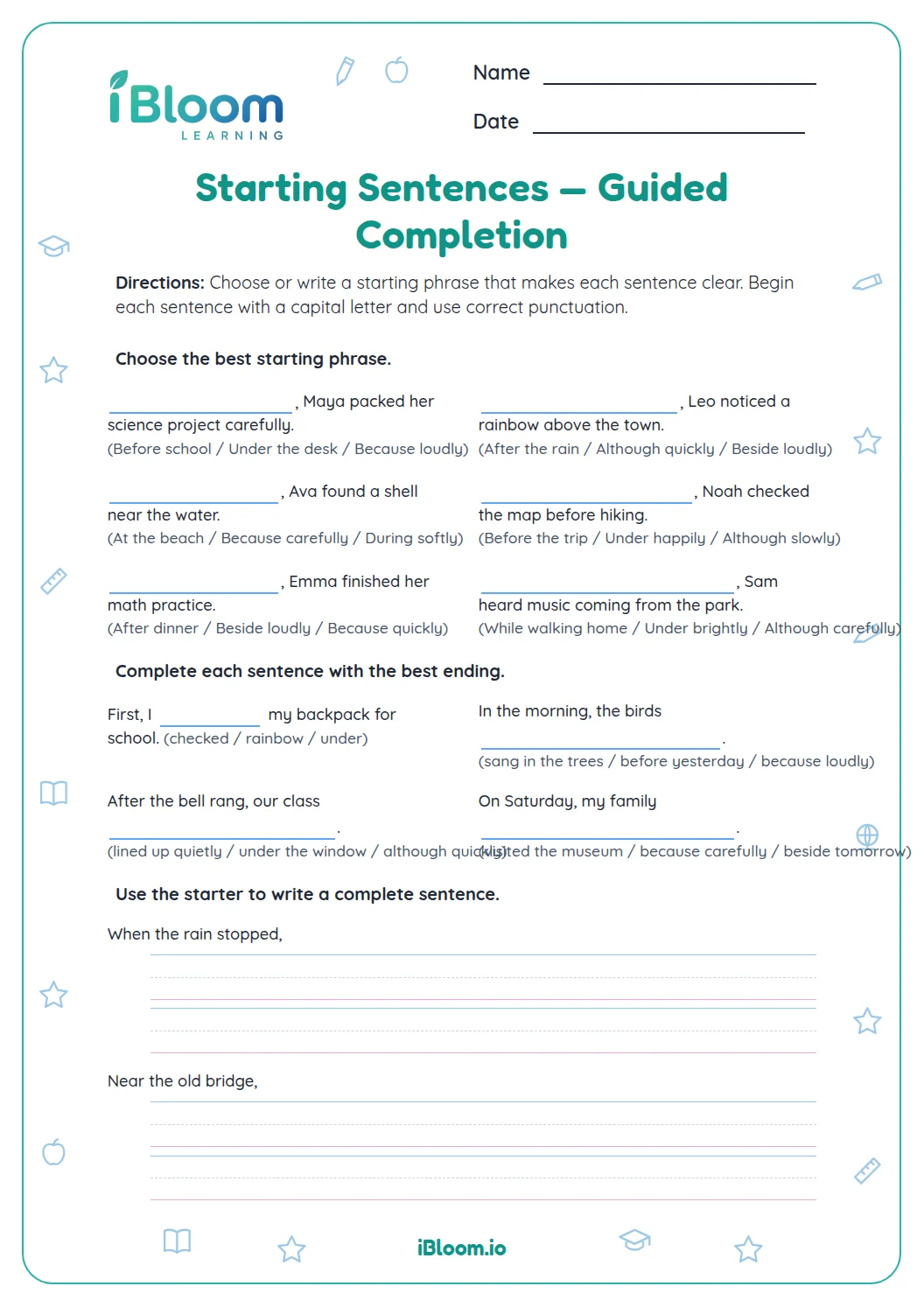
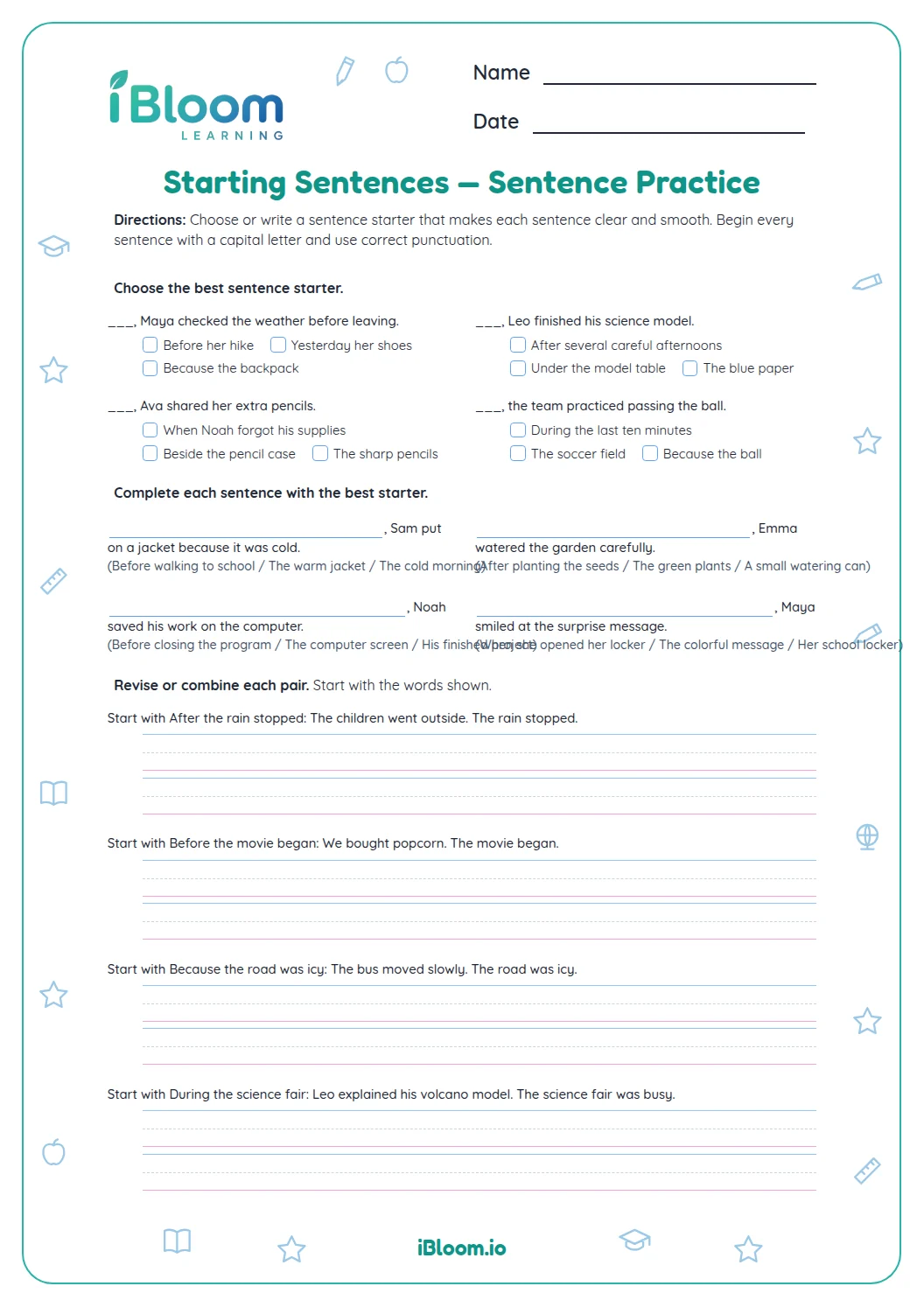
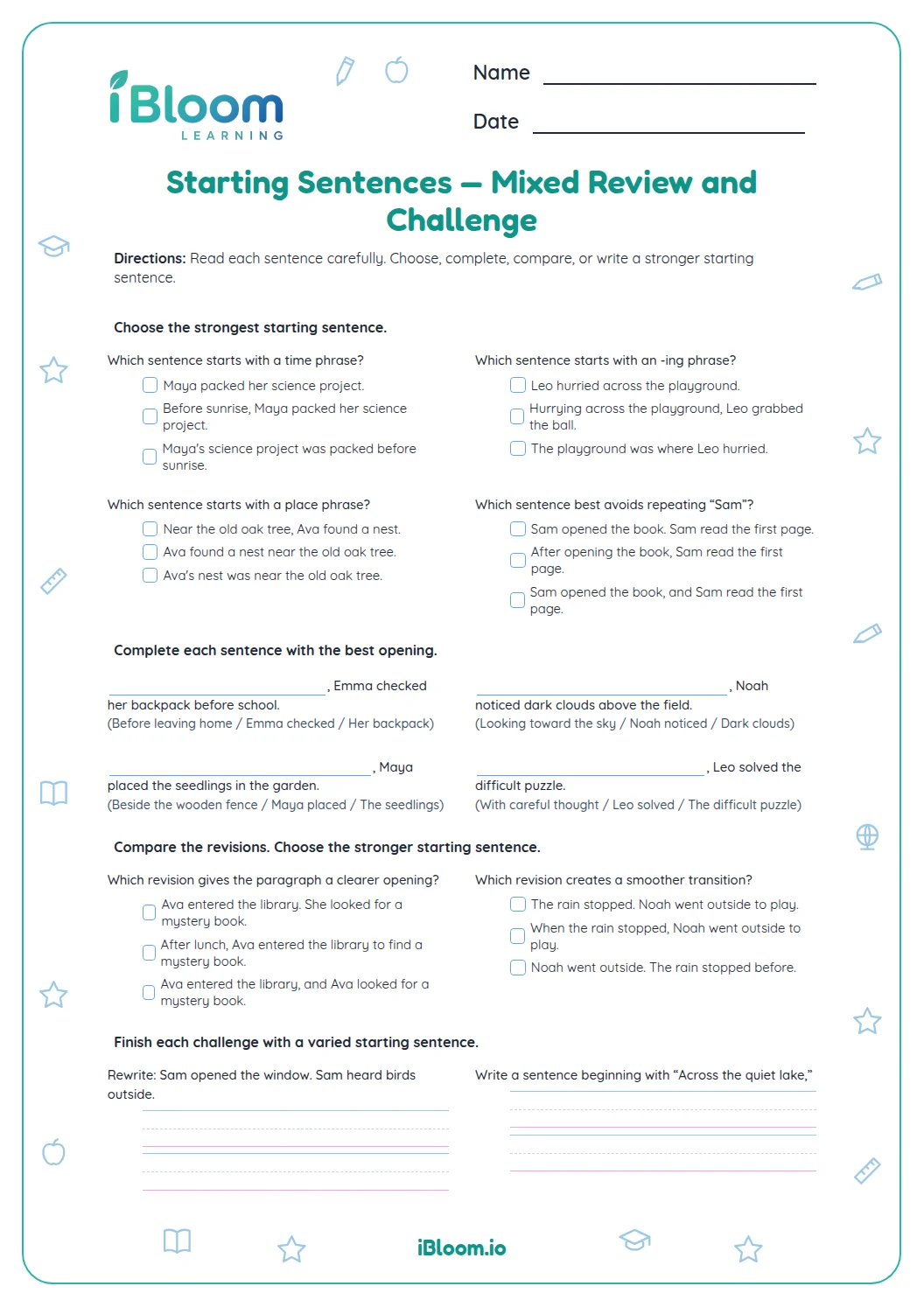
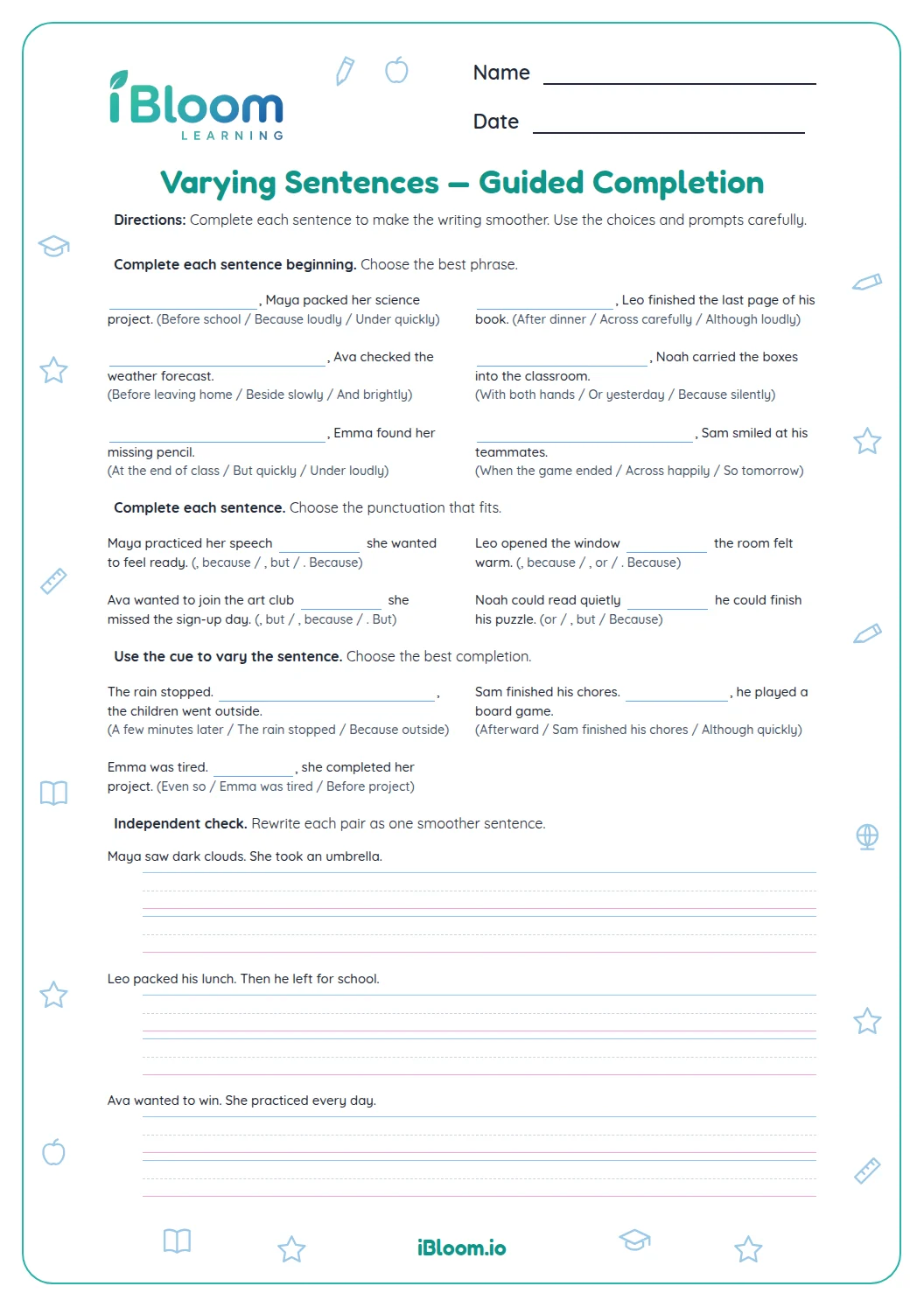
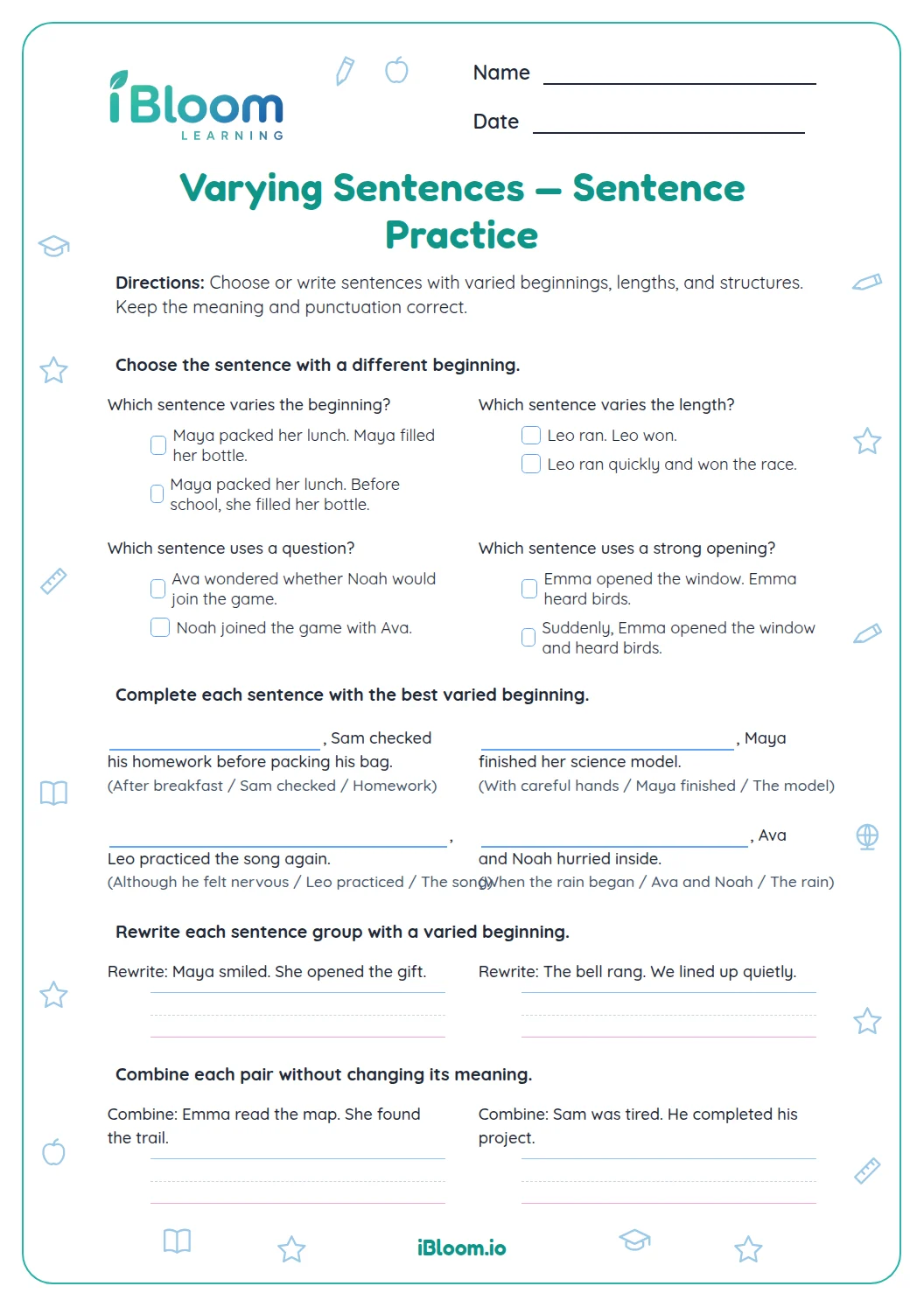
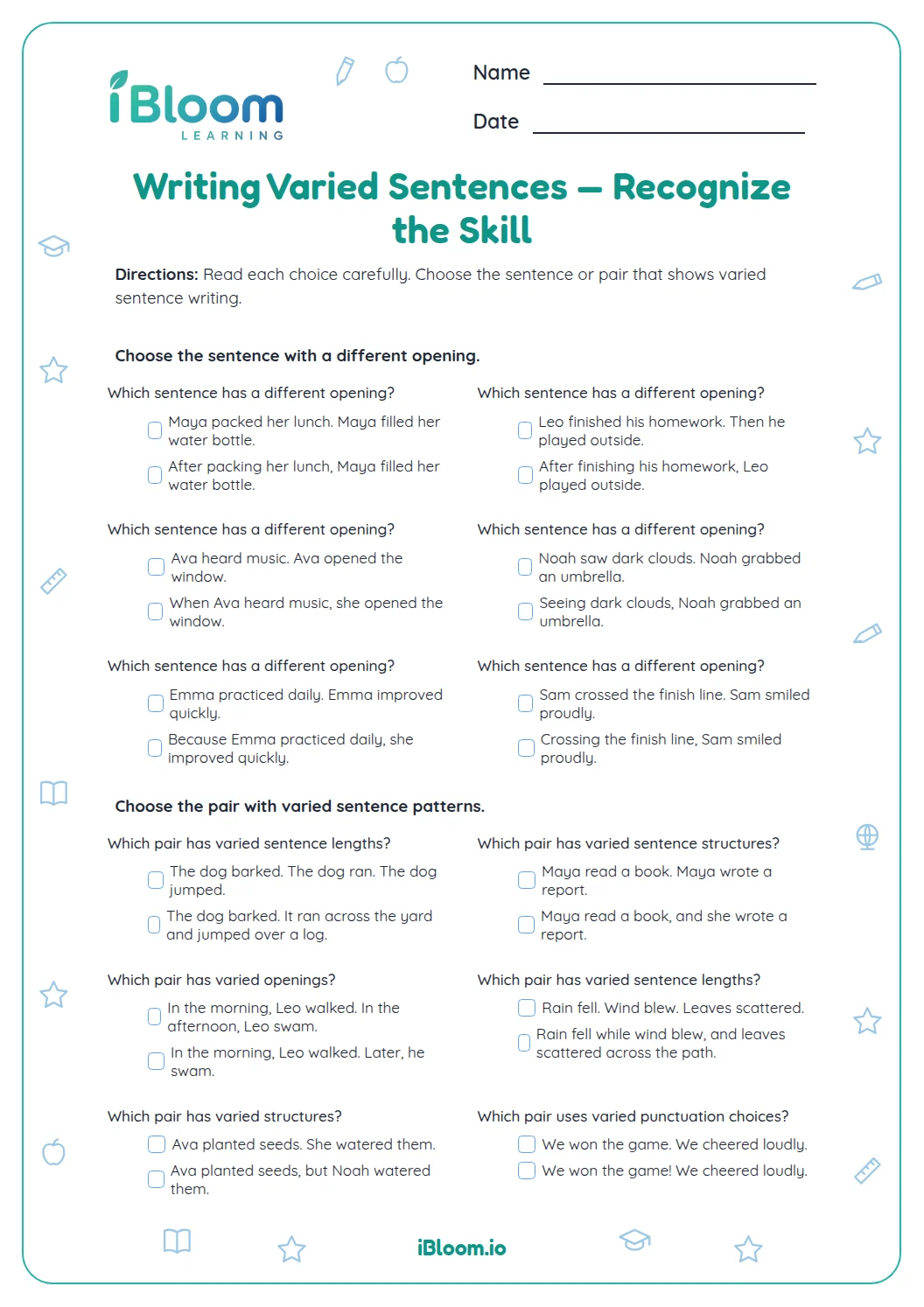
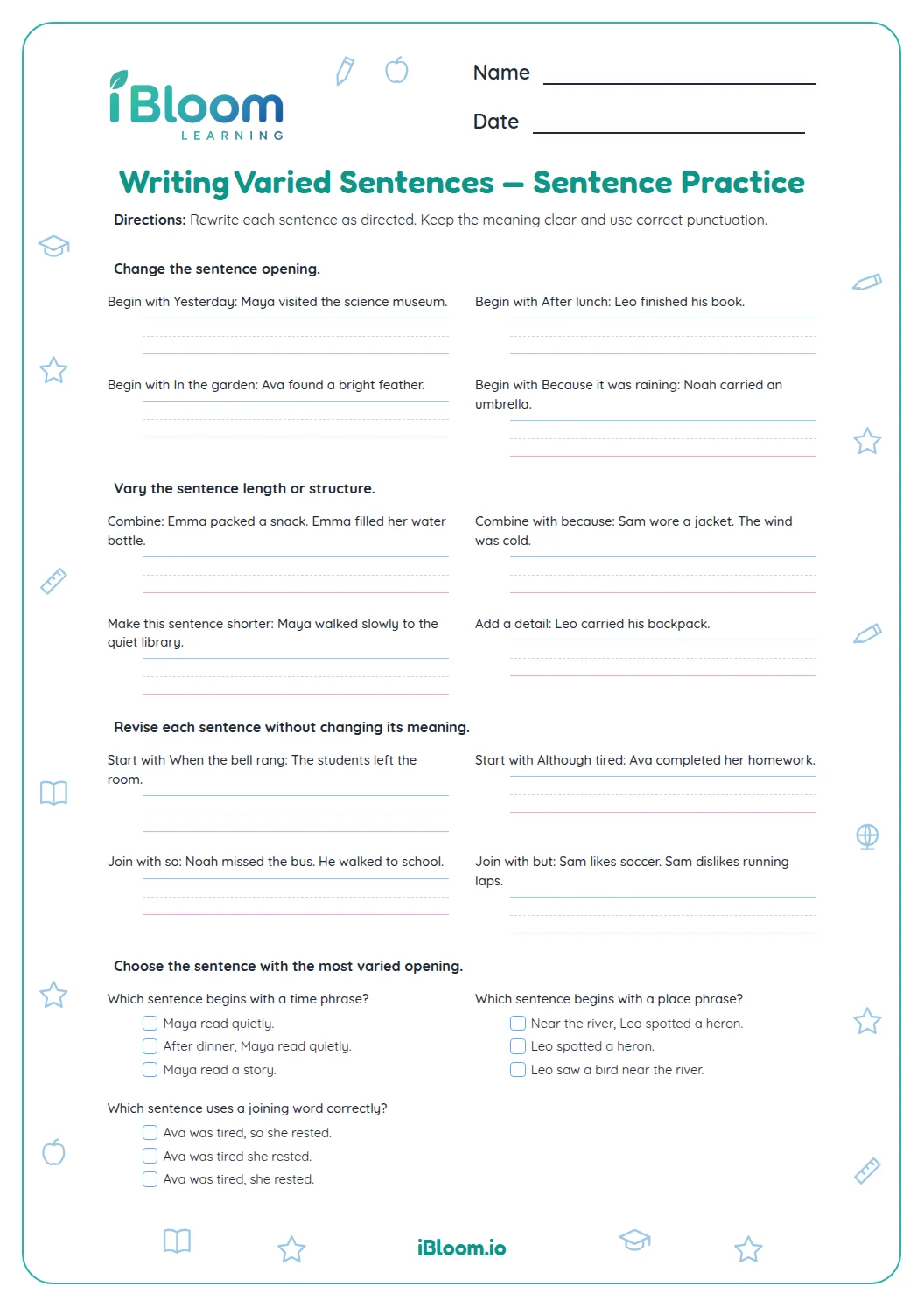
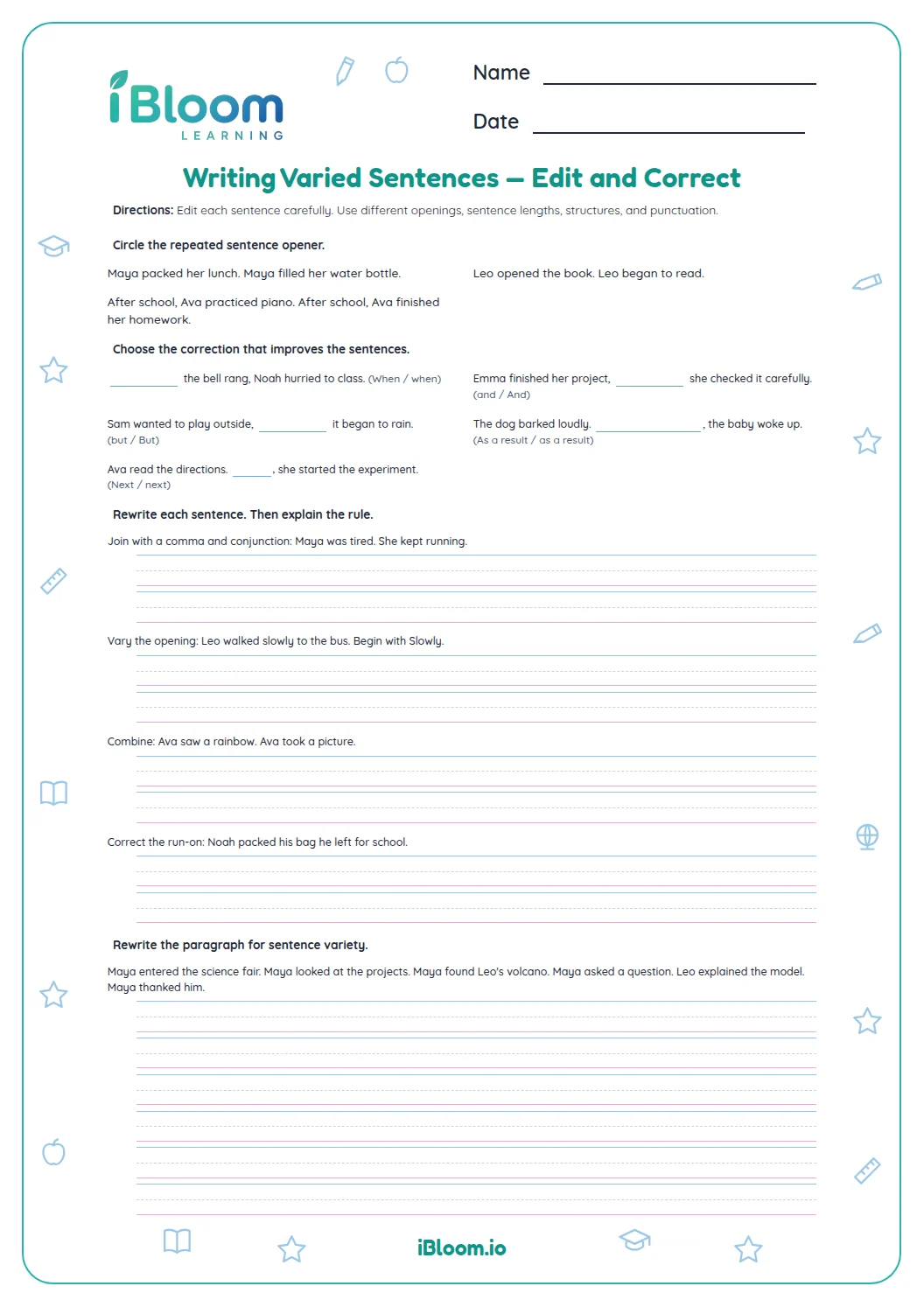
This free Grade 5 worksheet helps students start sentences in varied ways and punctuate an introductory element with a comma. The 14 questions ask students to choose time, place, and -ly openings; complete Because, Although, When, and Early in the morning clauses; correct comma placement; and identify opening phrases. The page supports Common Core L.5.3a and L.5.2b. A separate answer key lists the correct choices for each item.
Aligned to L.5.3a and L.5.2b
What can a sentence opening tell the reader?
An opening can tell when or where an event happens, or how someone acts. The choices in Part A ask students to match the opening to the sentence that follows. A time or place phrase should fit the event, and an -ly word should describe the action.
Where does the comma go after an opening clause?
When a sentence begins with an introductory clause or phrase, put a comma before the main clause. Read the sentence aloud and pause at the end of the opening.
- 1Opening: “Because the path was wet”
- 2Main clause: “we walked slowly”
- 3Correct sentence: “Because the path was wet, we walked slowly.”
How can students finish an opening clause?
A beginning such as “Although Leo felt nervous” needs a complete main clause to finish its idea. Choose a clause with a subject and verb that makes sense with the opening, then check that the comma separates the two parts.
How to use this worksheet
- 1Name the clue in each opening task: time, place, or how.
- 2Read both halves of a sentence to see whether the clause is complete.
- 3For an introductory clause, put the comma at its end.
- 4For the sentence completion items, choose a main clause with a subject and verb that fits the opening.
- 5Use the answer key to review how the opening and main clause fit together.
Common sentence-opening mistakes and quick fixes
The mistake
Choosing an opening that does not match the event or action.
The fix
Read the full sentence with each choice and check that its meaning is logical.
The mistake
Leaving out the comma after an introductory clause.
The fix
Mark where the opening ends and place the comma before the main clause.
The mistake
Writing a dependent clause as if it were a complete sentence.
The fix
After Because, Although, or When, add a main clause with a subject and verb.
Common Core alignment
These Grade 5 language standards connect sentence variety with punctuation after introductory elements.
Expand, combine, and reduce sentences to support meaning and style.
On this sheet: Students vary sentence beginnings and complete clauses to make sentences clear.
Show the official wordingHide the official wording
Expand, combine, and reduce sentences for meaning, reader/listener interest, and style.
Use a comma to separate an introductory element from the rest of the sentence.
On this sheet: Students add or recognize commas after introductory phrases and clauses.
Show the official wordingHide the official wording
Use a comma to separate an introductory element from the rest of the sentence.
What to practice next
Make more practice
Further reading
Questions parents and teachers ask
What is an introductory element?
An introductory element comes before the main clause and gives information such as when, where, or why something happens. “Because the path was wet” is the opening in question 9. The main clause tells what happened next: “we walked slowly.”
Why is there a comma in “Because the path was wet, we walked slowly”?
The comma marks the end of the introductory clause, “Because the path was wet,” and separates it from the main clause. The main clause can stand on its own. Students can find the opening first, then place the comma before the complete main idea.
Can an opening be one word?
Yes. An -ly word such as “Quietly” can start a sentence and tell how someone acts. A longer phrase can also begin a sentence, such as “After dinner.” This worksheet asks students to recognize both short and longer openings.
What makes a good answer to question 13?
A good answer is a complete, sensible sentence that starts with “Early in the morning,” and has a comma after that opening. The key gives one model sentence, but another clear sentence can also be correct if it follows the prompt.
How should students complete an Although clause?
An opening that begins with “Although” needs a main clause that finishes the thought and contrasts with the opening. In question 14, “Although the rain continued” is followed by “we finished the game.” Check for a subject and verb in the main clause.