
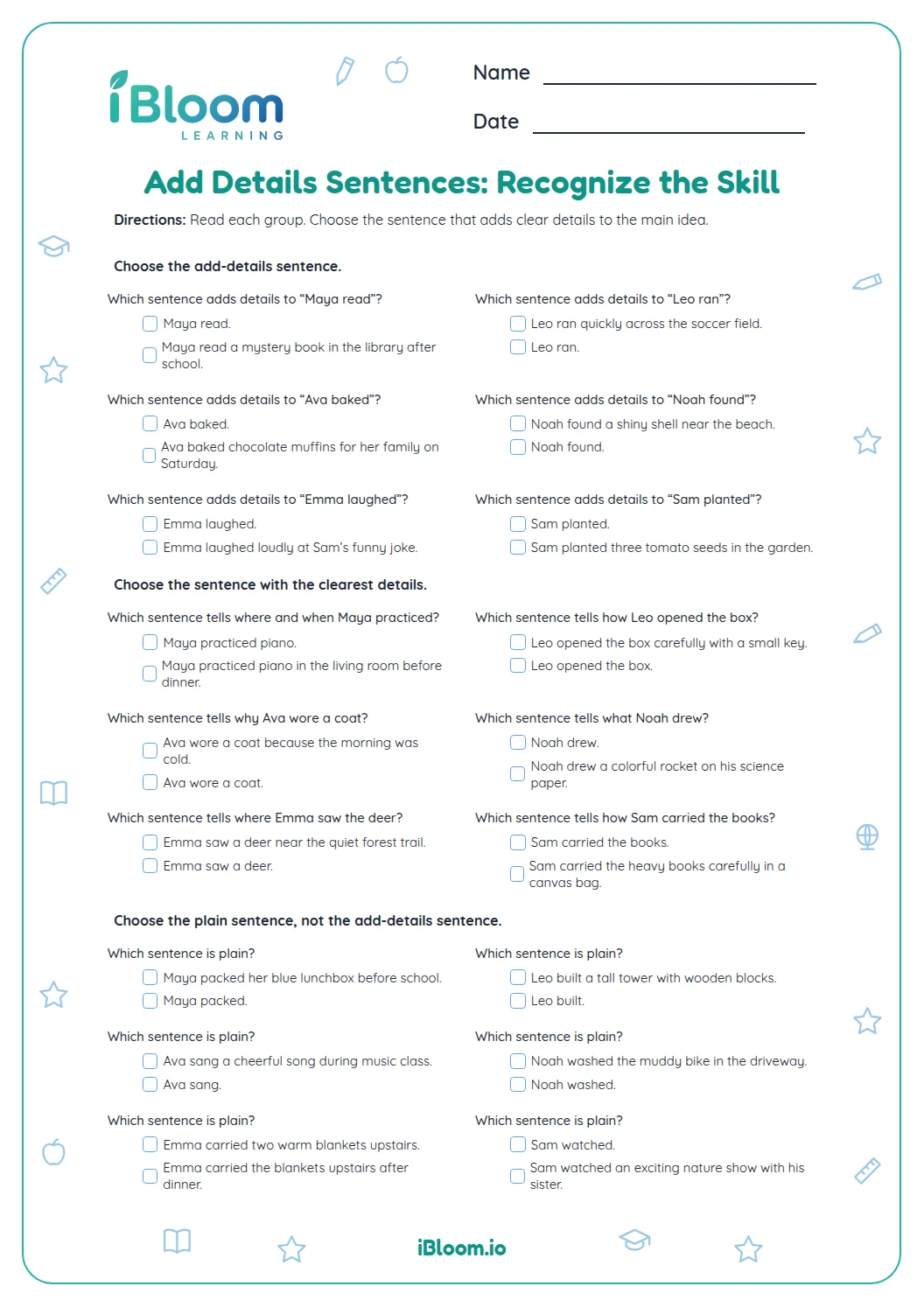
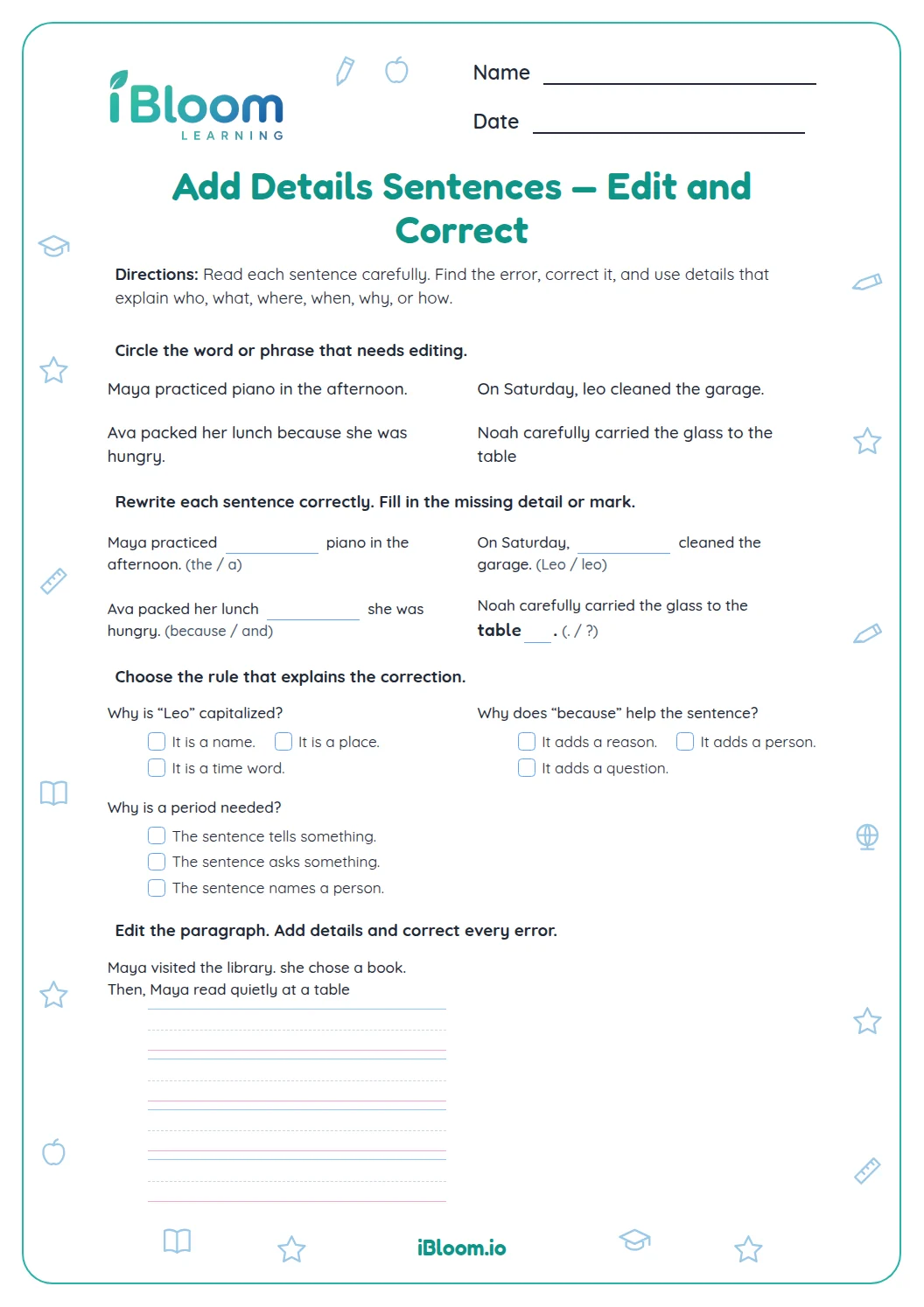
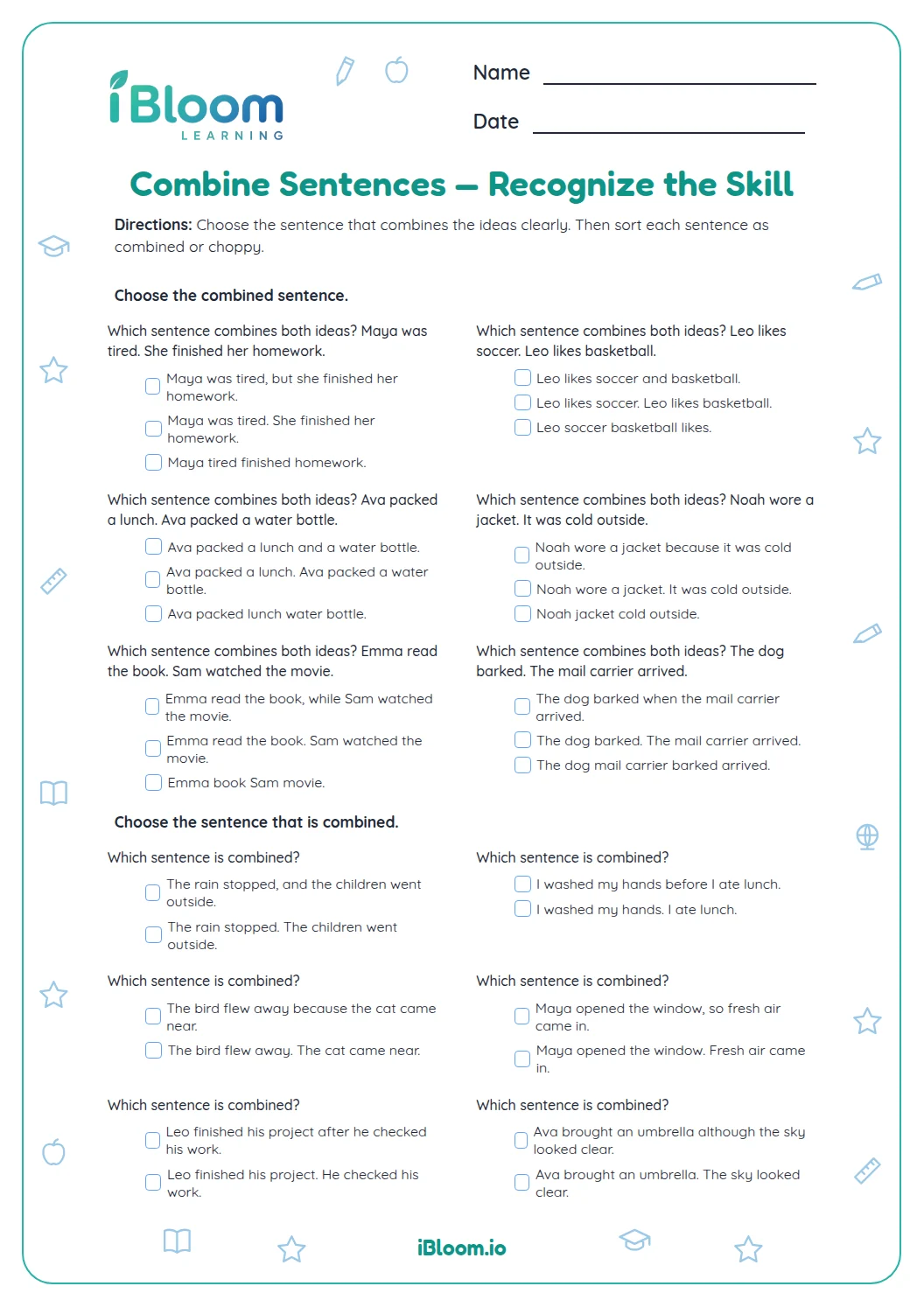
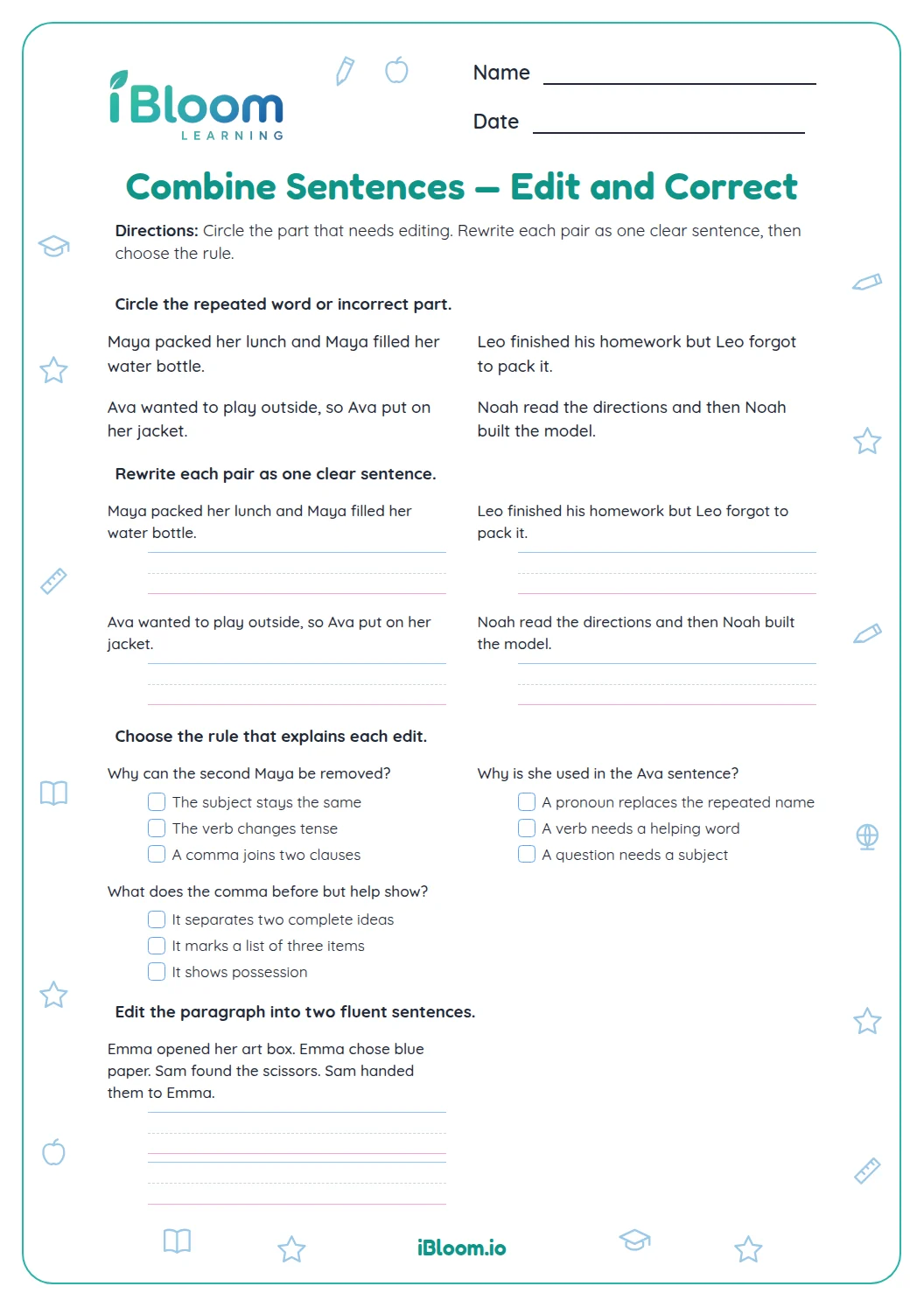


About this worksheet
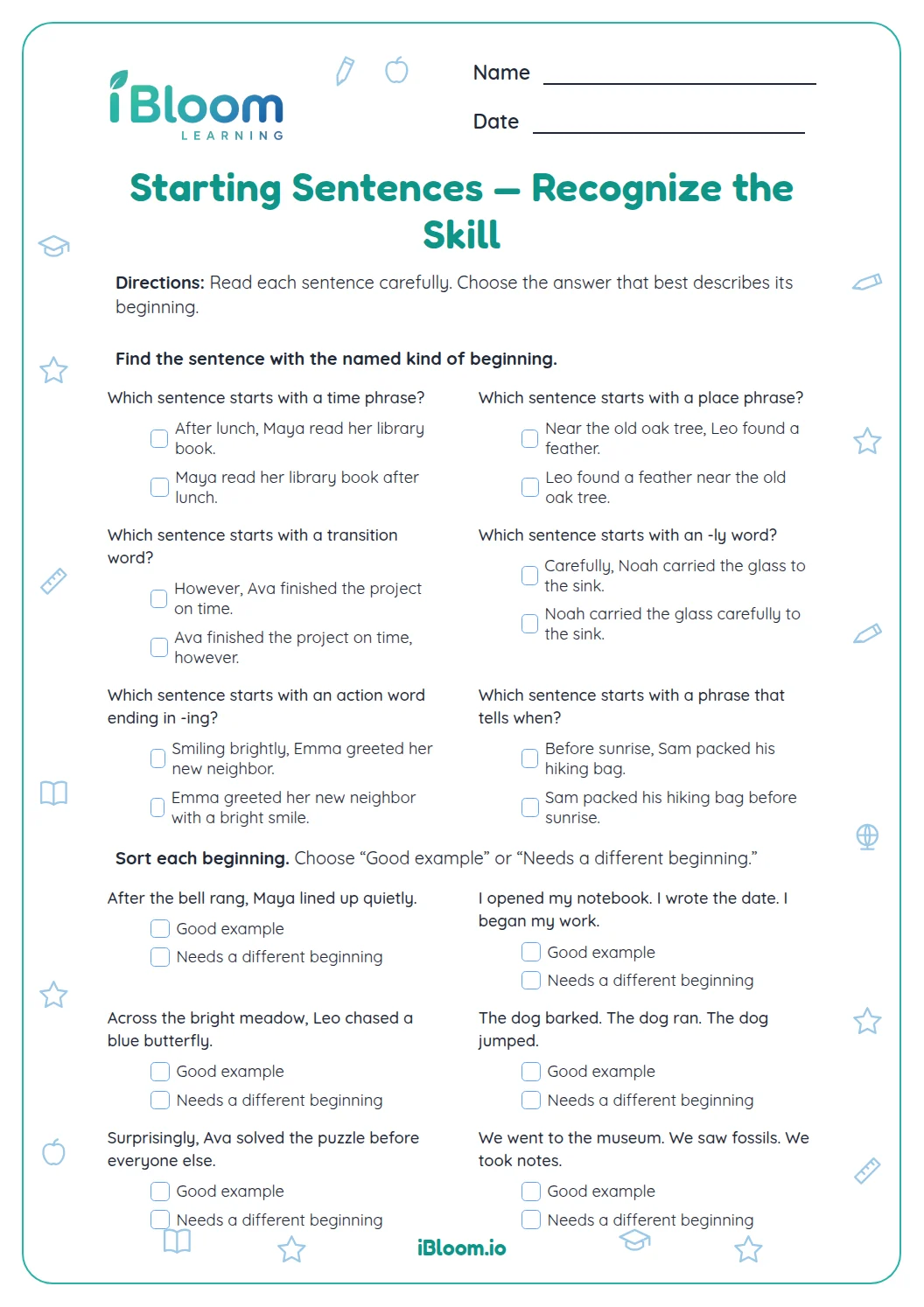
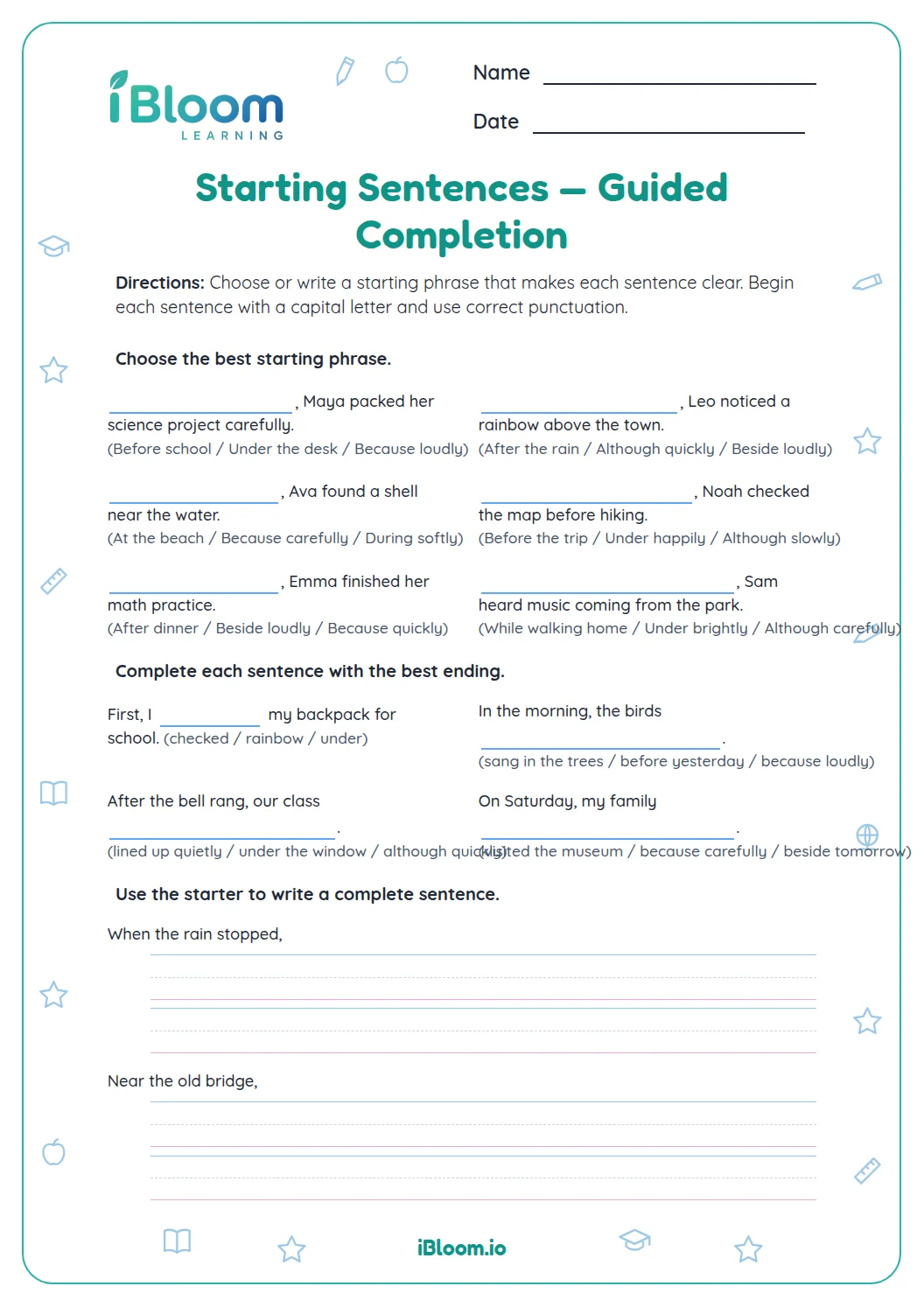
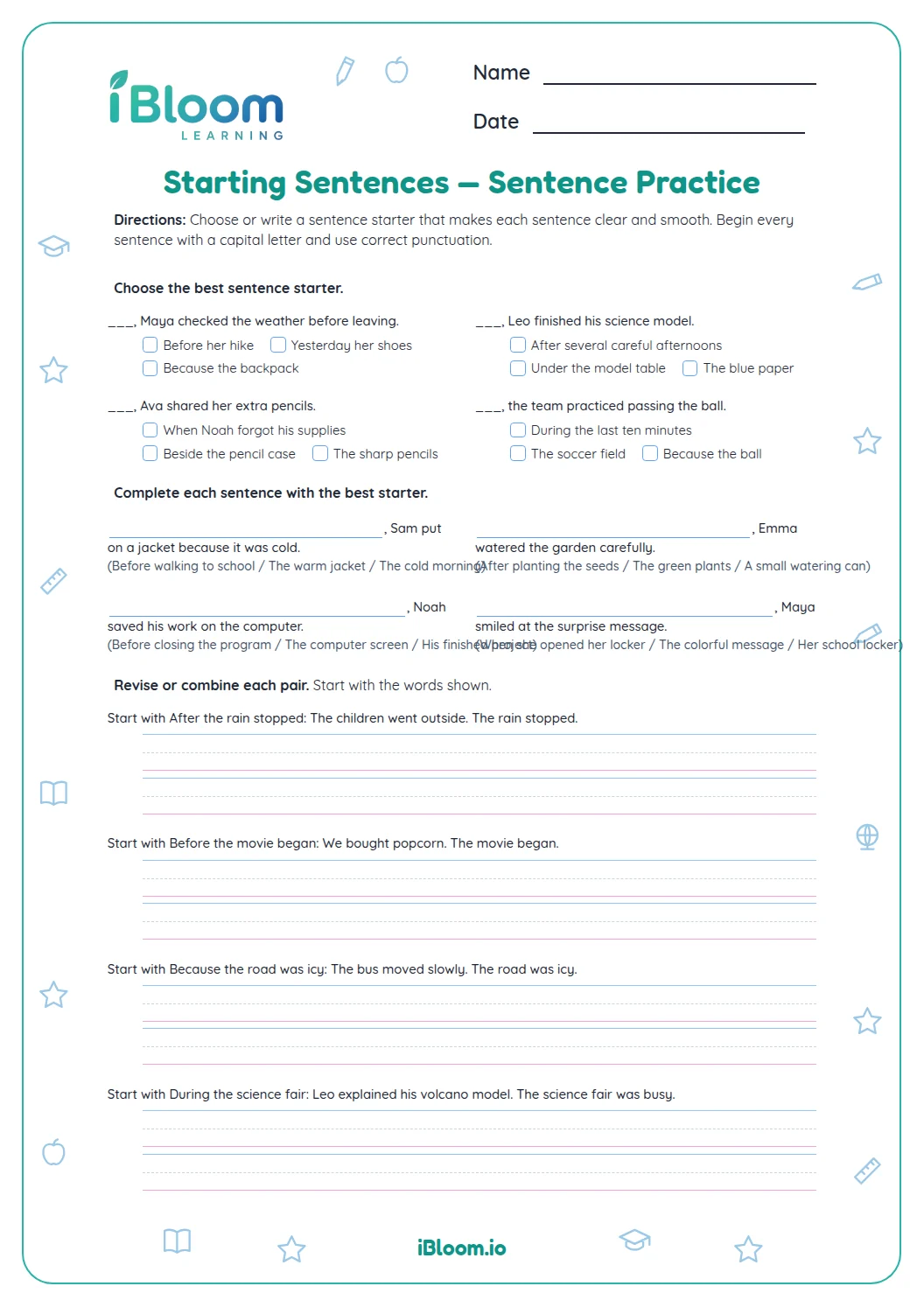
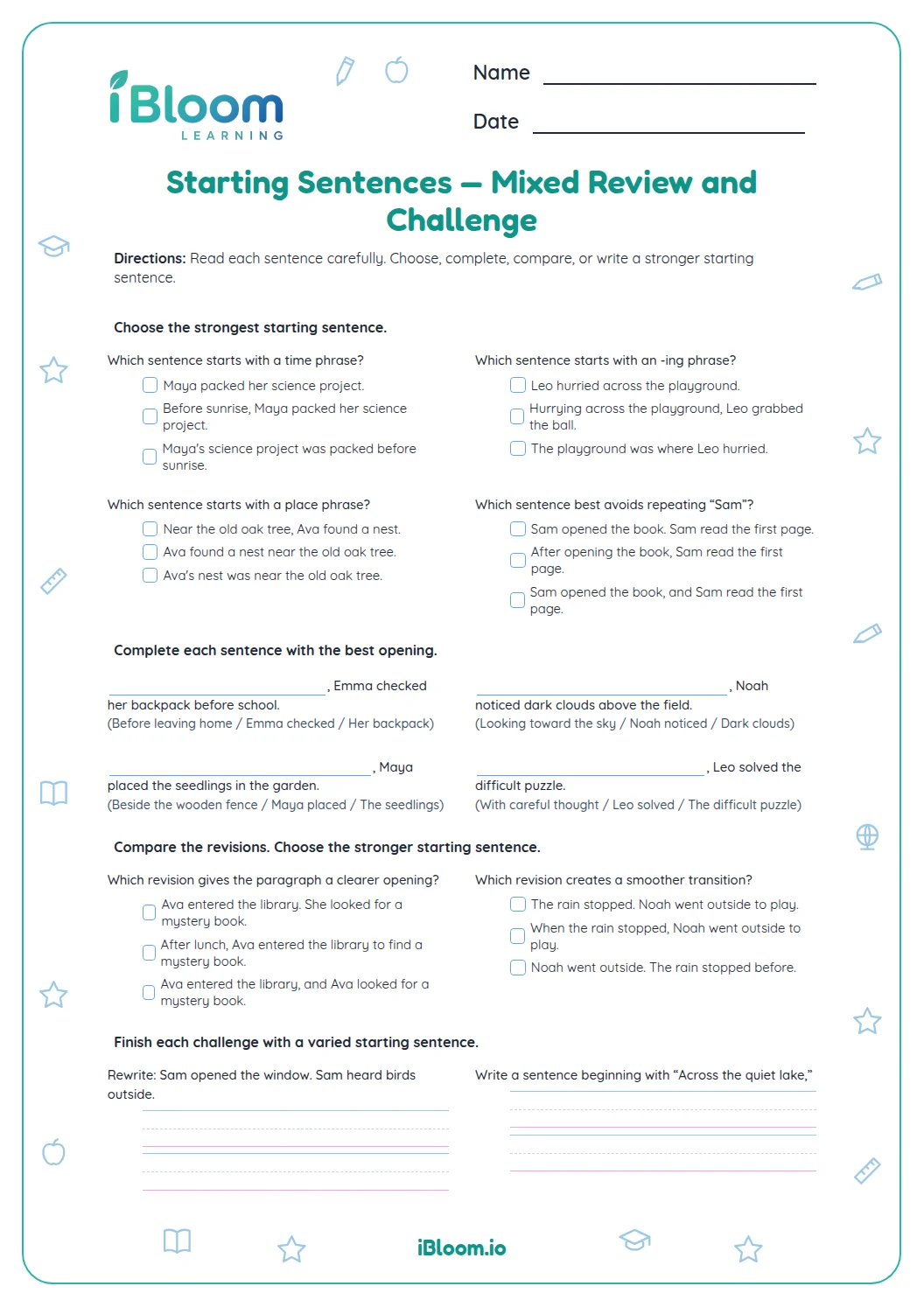
This Grade 5 editing worksheet asks students to find and correct errors at the beginnings of sentences. They identify words that need capitals, choose correctly edited sentences, and rewrite sentence openings while preserving needed punctuation. Fourteen questions build from spotting an error to correcting a full sentence. A separate answer key is included. The practice aligns with CCSS W.5.5.
Aligned to W.5.5
Which word needs a capital letter?
Begin a sentence with a capital letter. Names also begin with capitals, even when they appear later in the sentence. Part A asks students to find the first word that needs correction.
- 1maya packed her lunch before school.
- 2Capitalize the first word: Maya.
How can you check a corrected beginning?
Read the whole sentence, not just its first word. Check that the opening is capitalized and that a comma remains after an introductory phrase when the sentence calls for one.
What should a corrected sentence keep?
A rewrite should preserve the original meaning while fixing the opening. Capitalize the first word, retain a name’s capital letter, and keep punctuation that separates an introductory phrase.
How to use the worksheet
- 1Read each sentence from its first word.
- 2Circle a lowercase word that begins a sentence.
- 3For a choice, check both capitalization and punctuation.
- 4Rewrite the whole sentence with its original meaning.
- 5Reread to check names and commas as well as the first word.
Common editing slips
The mistake
Capitalizing the first word but not a person’s name.
The fix
Check every proper name in the sentence.
The mistake
Removing the comma after an introductory phrase.
The fix
Keep the comma when the opening phrase needs a pause.
The mistake
Rewriting only the first word.
The fix
Copy the complete sentence so the corrected version is clear.
Common Core alignment
Students revise and edit sentences to strengthen narrative writing.
Strengthen writing by planning, revising, editing, rewriting, or trying a new approach.
On this sheet: Strengthen writing by planning, revising, editing, rewriting, or trying a new approach.
Show the official wordingHide the official wording
With guidance and support from peers and adults, develop and strengthen writing as needed by planning, revising, editing, rewriting, or trying a new approach.
What to practice next
Make more practice
Further reading
Questions parents and teachers ask
What does this worksheet teach students to edit?
Students correct sentence beginnings by capitalizing the first word and names, checking punctuation after introductory phrases, and rewriting the whole sentence. The questions move from spotting an opening error to selecting or writing a corrected sentence. Names later in a sentence also need capitals, as Maya and Ava do here.
How many questions are included?
There are 14 questions in three parts. Students circle opening words that need capitals, choose correctly edited sentences, and rewrite five complete sentences with corrected beginnings. Each choice checks both the opening capital and punctuation in the sentence.
Why does a sentence begin with a capital letter?
A capital letter marks where a sentence begins and helps readers see its structure. Names also use capital letters. The worksheet gives students practice checking both sentence openings and names. A rewrite should correct the opening while keeping the sentence’s original idea.
Should students keep commas when rewriting?
Yes, when the original sentence has a comma after an introductory phrase, the rewrite should keep it. Students should check the whole opening so they correct capitalization without dropping needed punctuation. The examples include names, introductory phrases, and complete sentence openings.
Is an answer key included?
Yes. The answer key shows which word to circle, the correct multiple-choice sentence, and a complete corrected version for each rewrite prompt. Students can compare capitalization and punctuation in the key. It also confirms each full corrected sentence.