




About this worksheet
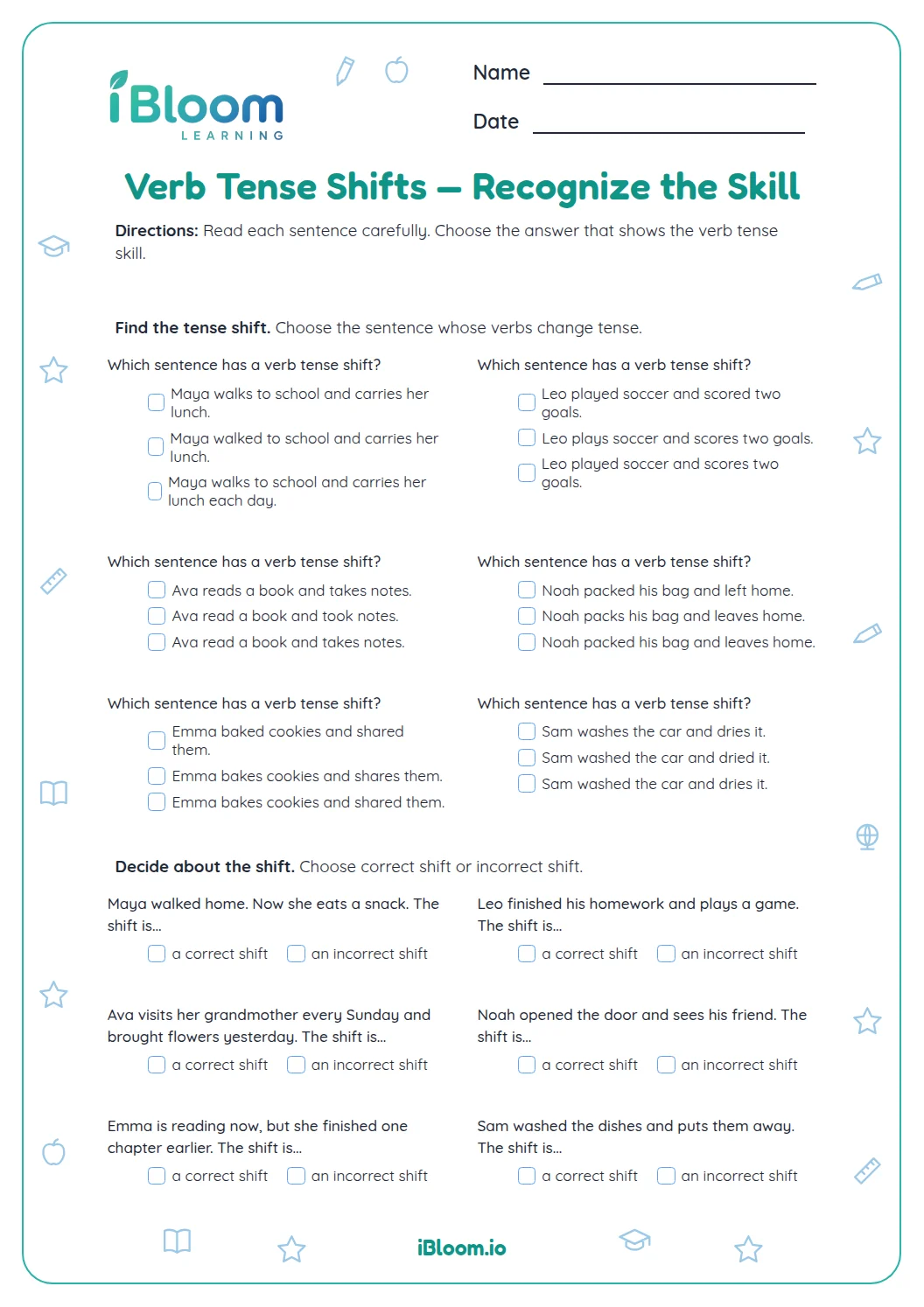
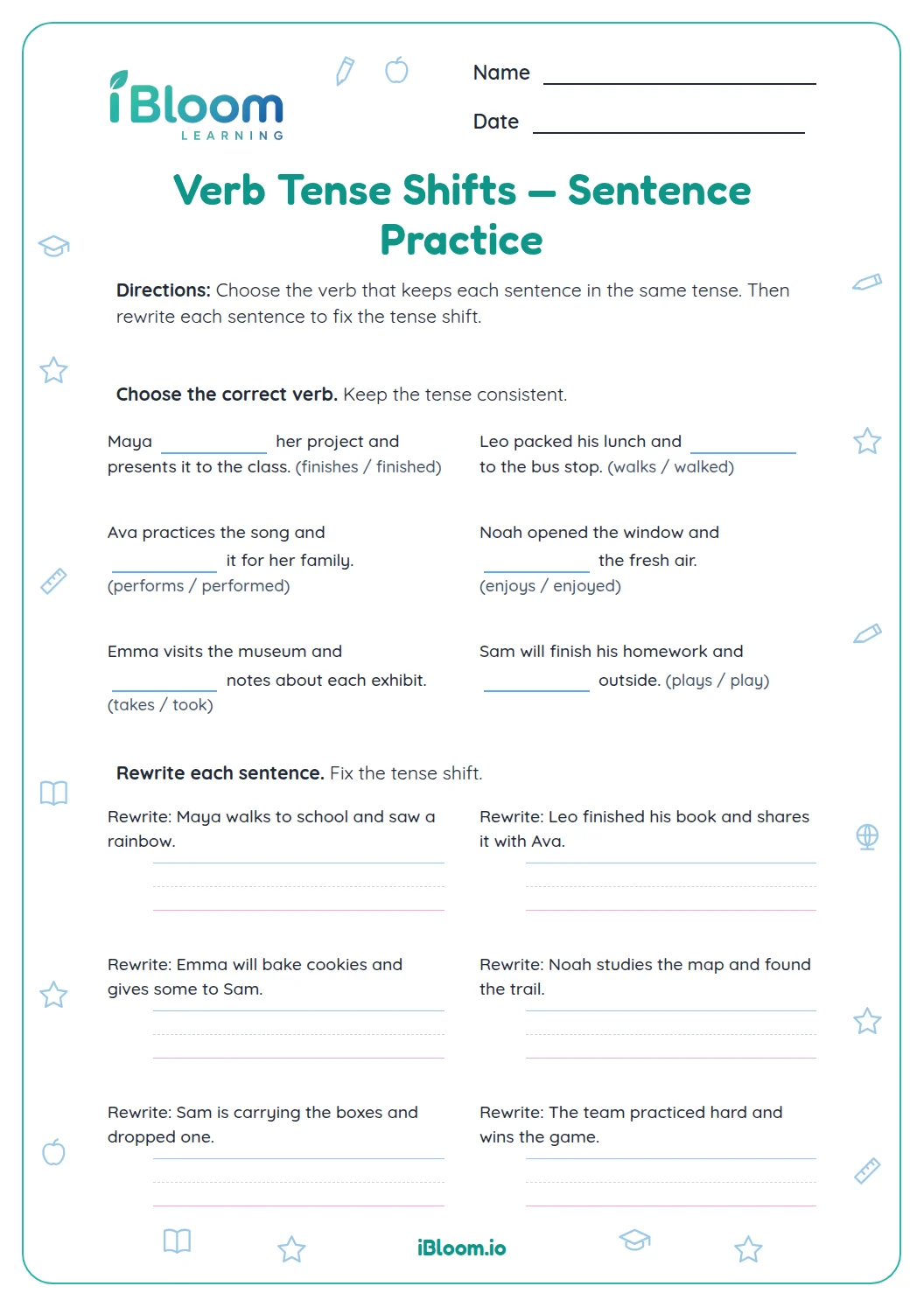
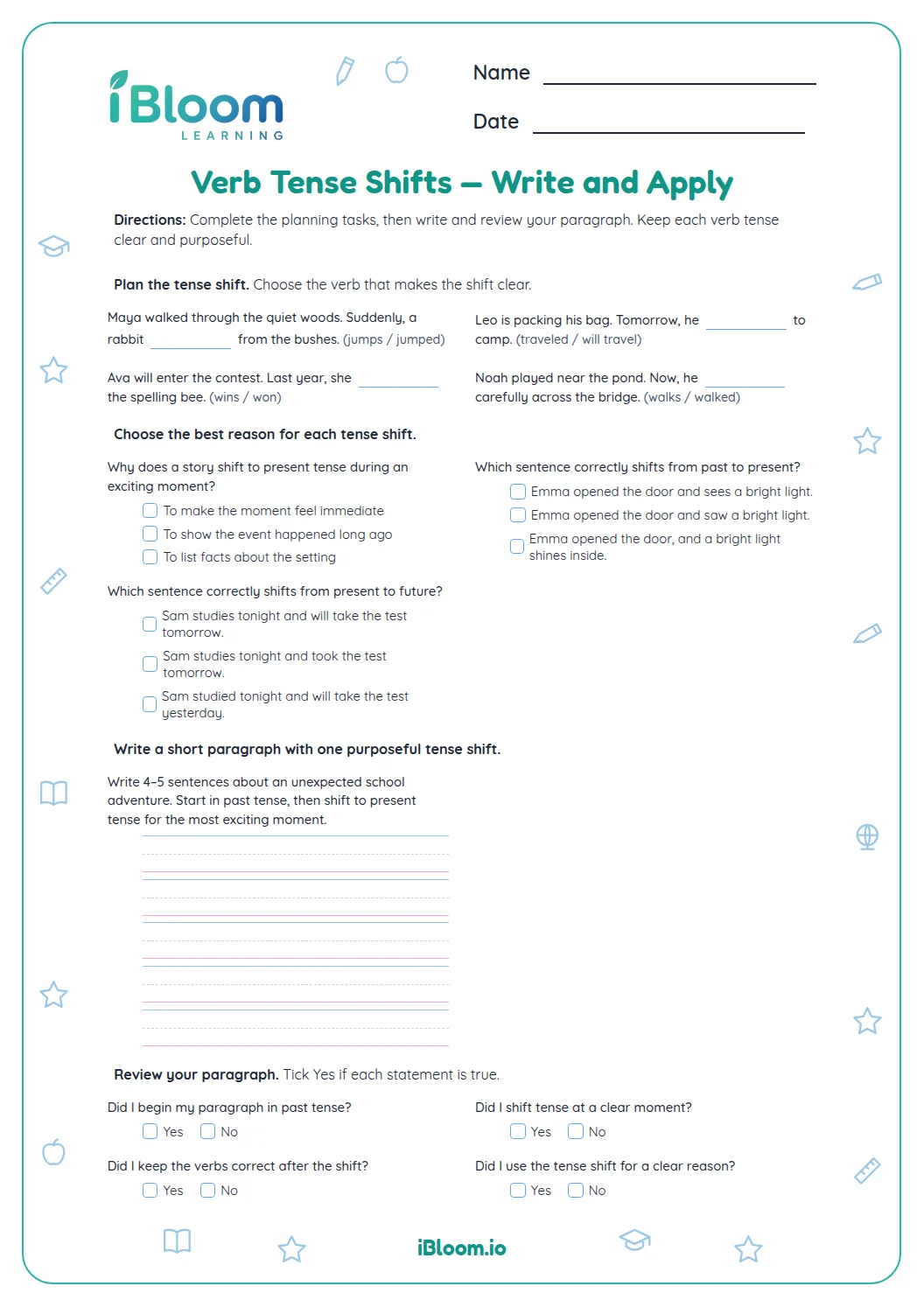
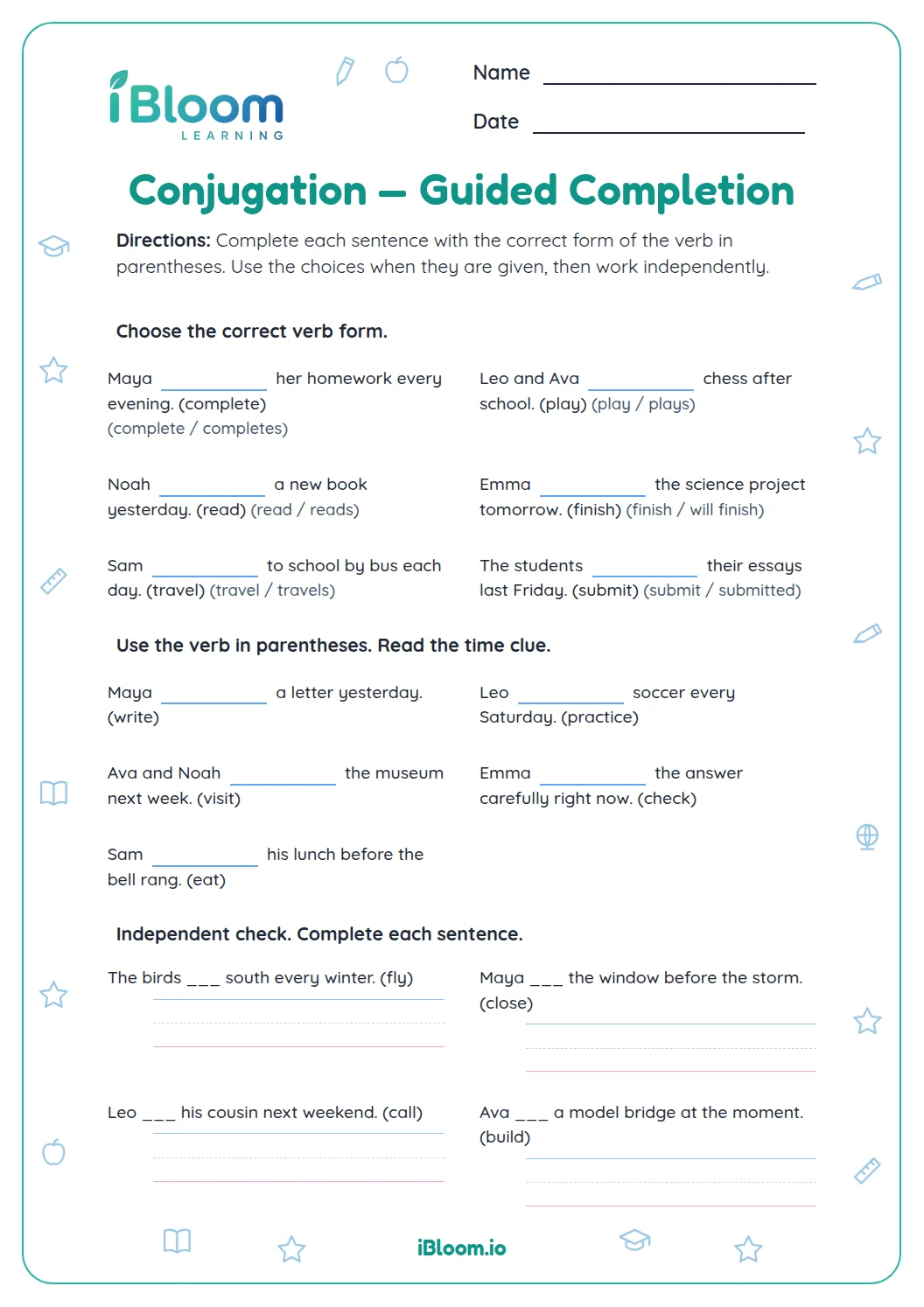
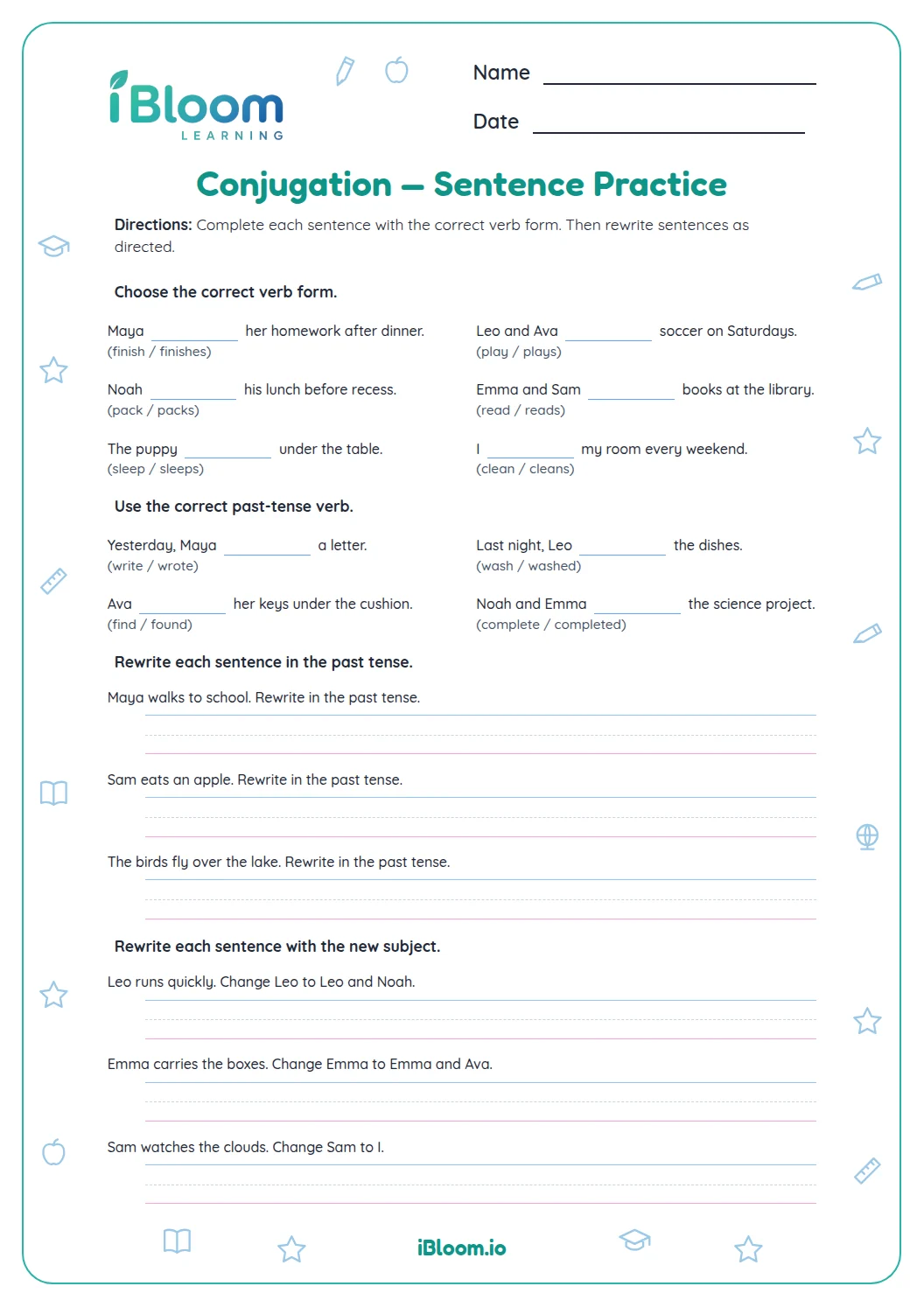
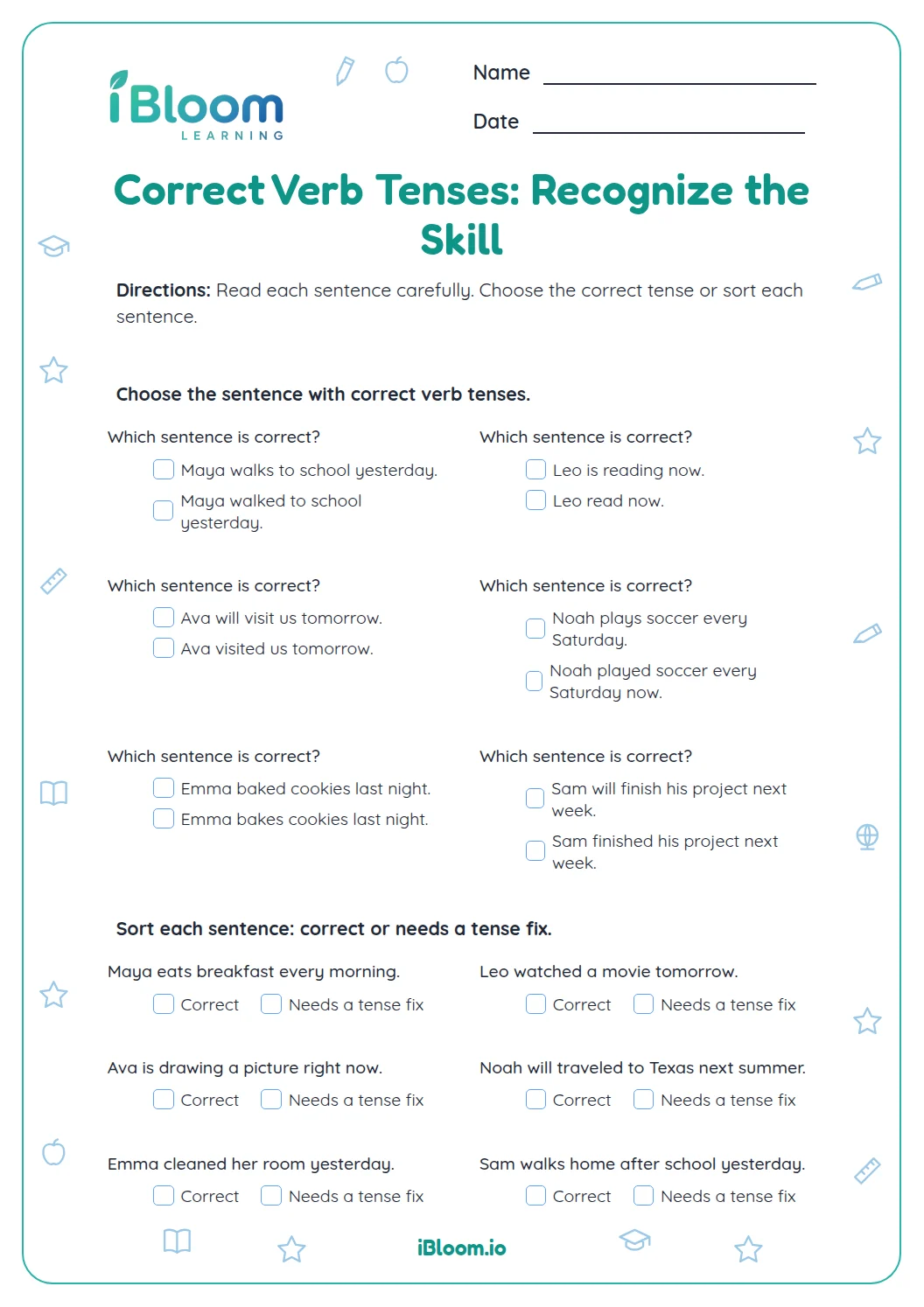
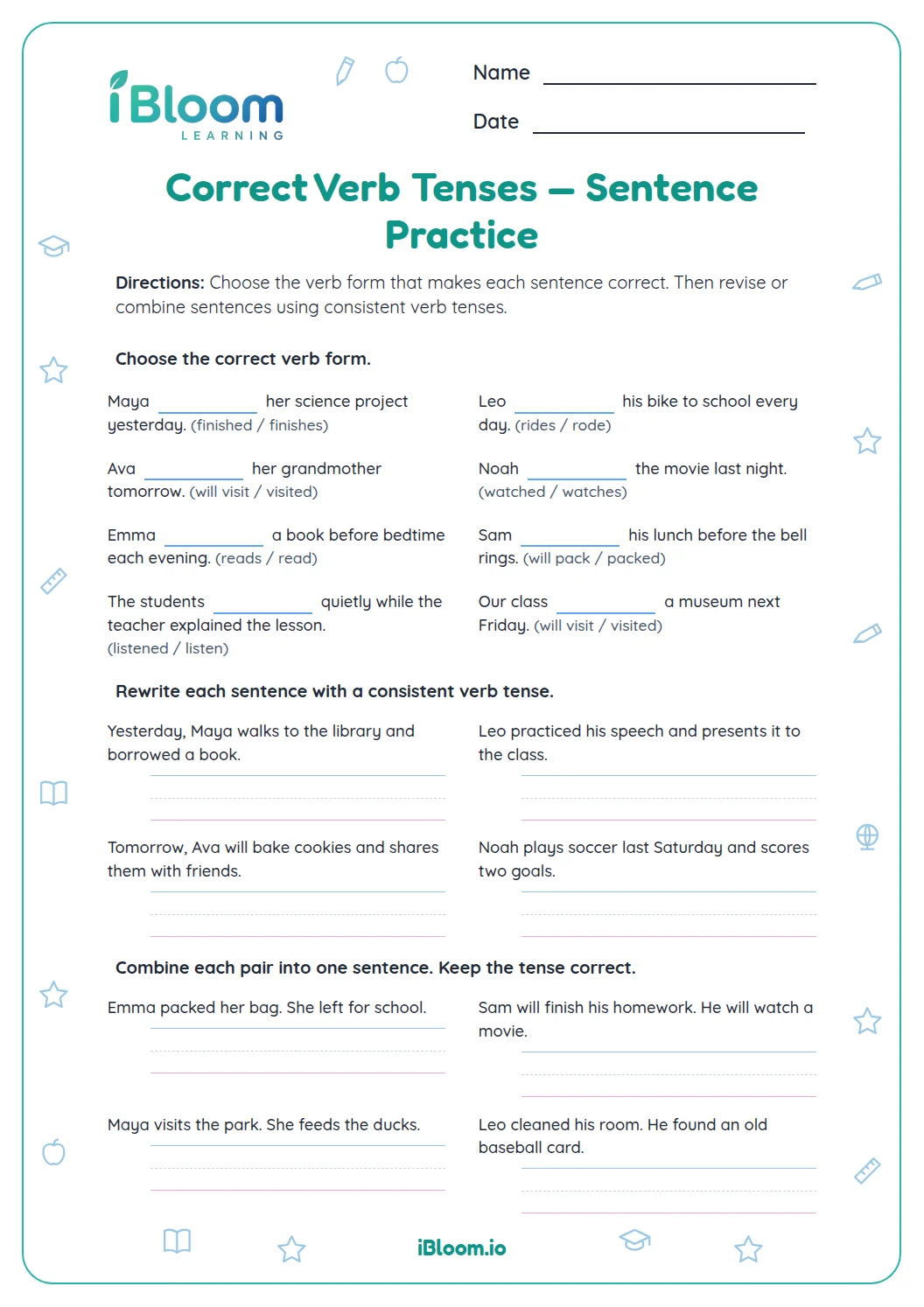
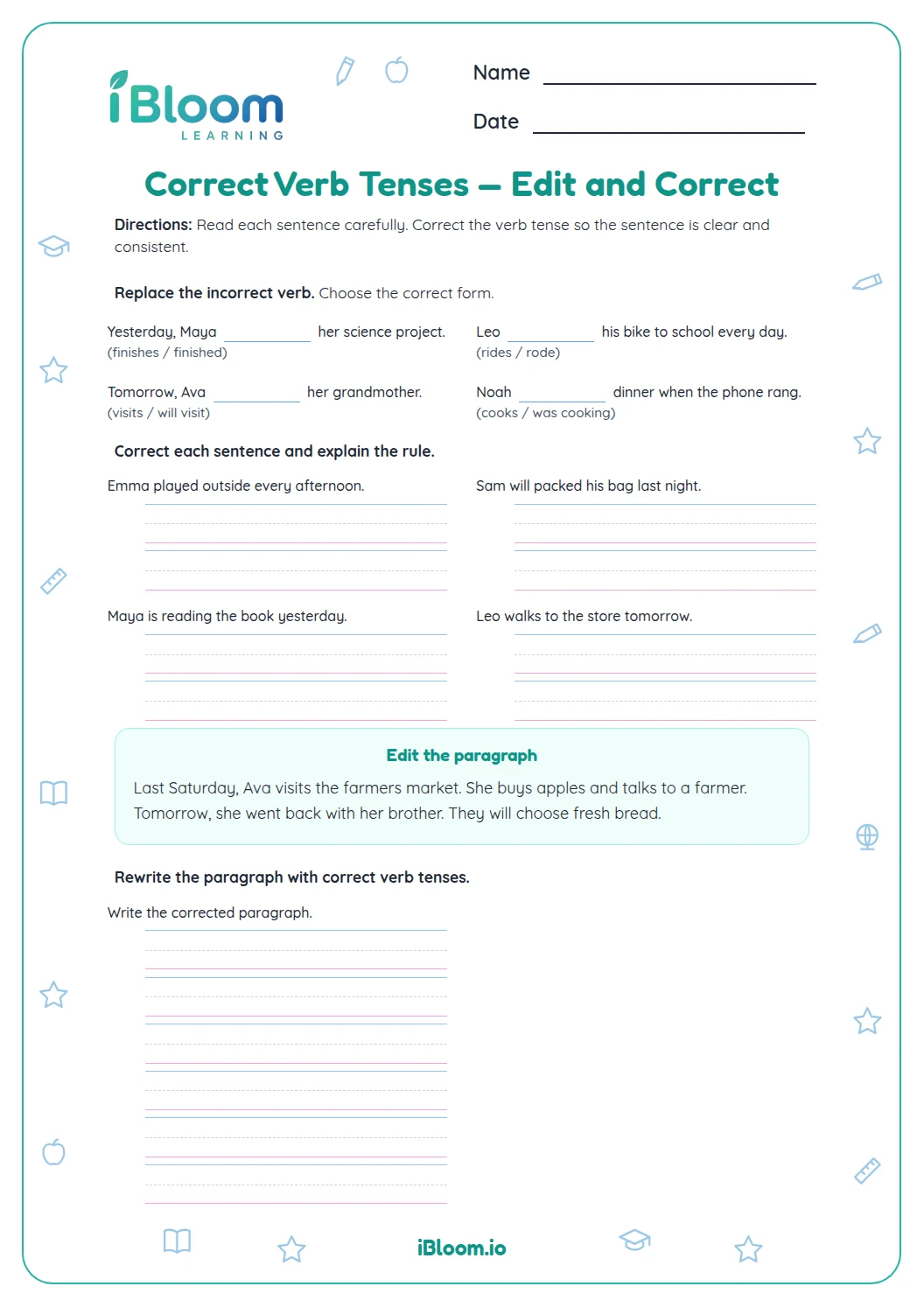
This free printable Grade 5 worksheet helps students recognize and correct inappropriate shifts in verb tense, the focus of Common Core L.5.1d. Twelve questions move from choosing a correction to deciding whether a change in time is justified. Part A has four multiple-choice corrections. Part B has six KEEP-or-fix items, including two sentences whose tense changes match a change in time. Part C asks students to rewrite two short accounts in the past tense. A separate answer key lets families and teachers check each verb against the time clue rather than treating every tense change as an error.
Aligned to L.5.1d
What makes a tense shift inappropriate?
A tense shift is inappropriate when it changes the time without a reason. In question 1, both actions happened last night, so opened and read belong together. Reads would move the second action into the present without a time change.
Students use the printed time words and the already-correct verb as evidence. They change only the capitalized verb or verb phrase in Parts A and B.
Why do some answers say KEEP?
Questions 8 and 10 describe actions at different times. One contrasts yesterday’s walk with a usual bus ride; the other contrasts a past painting lesson with a present habit. The verb changes help communicate that difference.
- 1Yesterday I walked home, but I usually RIDE the bus.
- 2Walked describes yesterday; ride describes the usual routine.
- 3Answer: KEEP. The time changes, so the tense can change.
How do the final rewrites test the skill?
Students rewrite both sentences in each account. In question 11, visit, sketches and take become visited, sketched and took. In question 12, finds, washes and carries become found, washed and carried.
Before checking the key, ask students to underline every verb in their rewrite. Have them explain why each verb matches the account’s opening time phrase.
How to use this worksheet
- 1Underline the time clue in question 1 before looking at the choices.
- 2Complete Part A by choosing a replacement for each capitalized verb.
- 3For Part B, write KEEP when the tense fits or write the corrected verb phrase.
- 4Discuss why yesterday and usually allow different tenses in question 8.
- 5Rewrite both sentences in each Part C account and check all verbs against the key.
Mistakes to notice and fix
The mistake
Changing every present-tense verb to past tense.
The fix
Check whether the sentence moves from a past event to a present routine.
The mistake
Writing carryed in question 5.
The fix
Carry becomes carried: change the y to i before adding ed.
The mistake
Changing only visit in the museum account.
The fix
Check all three action verbs: visit, sketches and take must become visited, sketched and took.
Common Core alignment
Recognize and correct tense changes that do not match the time clues.
On this sheet: Students correct eight marked shifts, retain two justified shifts and rewrite two accounts in the past tense.
Show the official wordingHide the official wording
Recognize and correct inappropriate shifts in verb tense.*
What to practice next
Make more practice
Further reading
Questions parents and teachers ask
What does KEEP mean in Part B?
KEEP means the capitalized verb already fits the time of its action. Write KEEP instead of changing the verb. Questions 8 and 10 deliberately move from a past event to a usual or present action, so the change in tense helps the reader understand when each action happens.
Why is read the answer to question 1?
Read is the past-tense form needed for last night. It has the same spelling as present-tense read but is pronounced like red in this sentence. The first verb, opened, also describes last night, so both verbs belong in the past when the sentence is corrected.
Are all the sentences supposed to use past tense?
No, each sentence follows its own time clues. Some describe past events; others describe daily routines or tomorrow’s plans. Two items deliberately compare different times. Students need to read the whole sentence before deciding whether to change the capitalized verb or leave it as it is.
How much should students rewrite in Part C?
Students should rewrite both sentences in each of the two accounts. Each account has three verbs to change to the past tense, using its opening time clue. Copying the whole account lets students read the corrected version smoothly and check all the actions together before consulting the key.
How can I check an answer without giving it away?
Ask the student to point to the time clue and name when each action happens. Then ask whether the capitalized verb matches that time. For a KEEP answer, ask what changed between the actions. The separate answer key gives the exact corrections for checking after the student explains the reasoning.