



About this worksheet
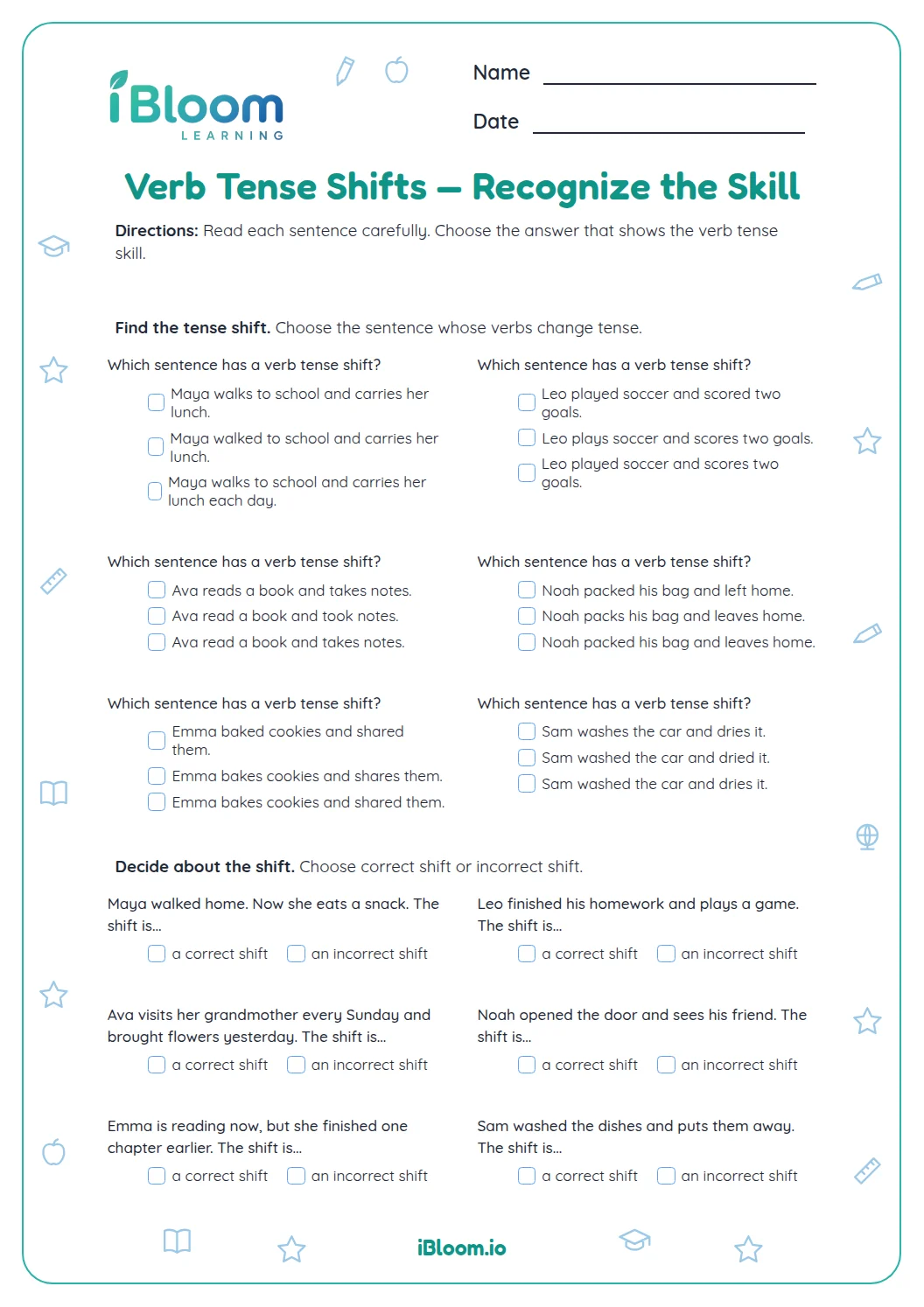
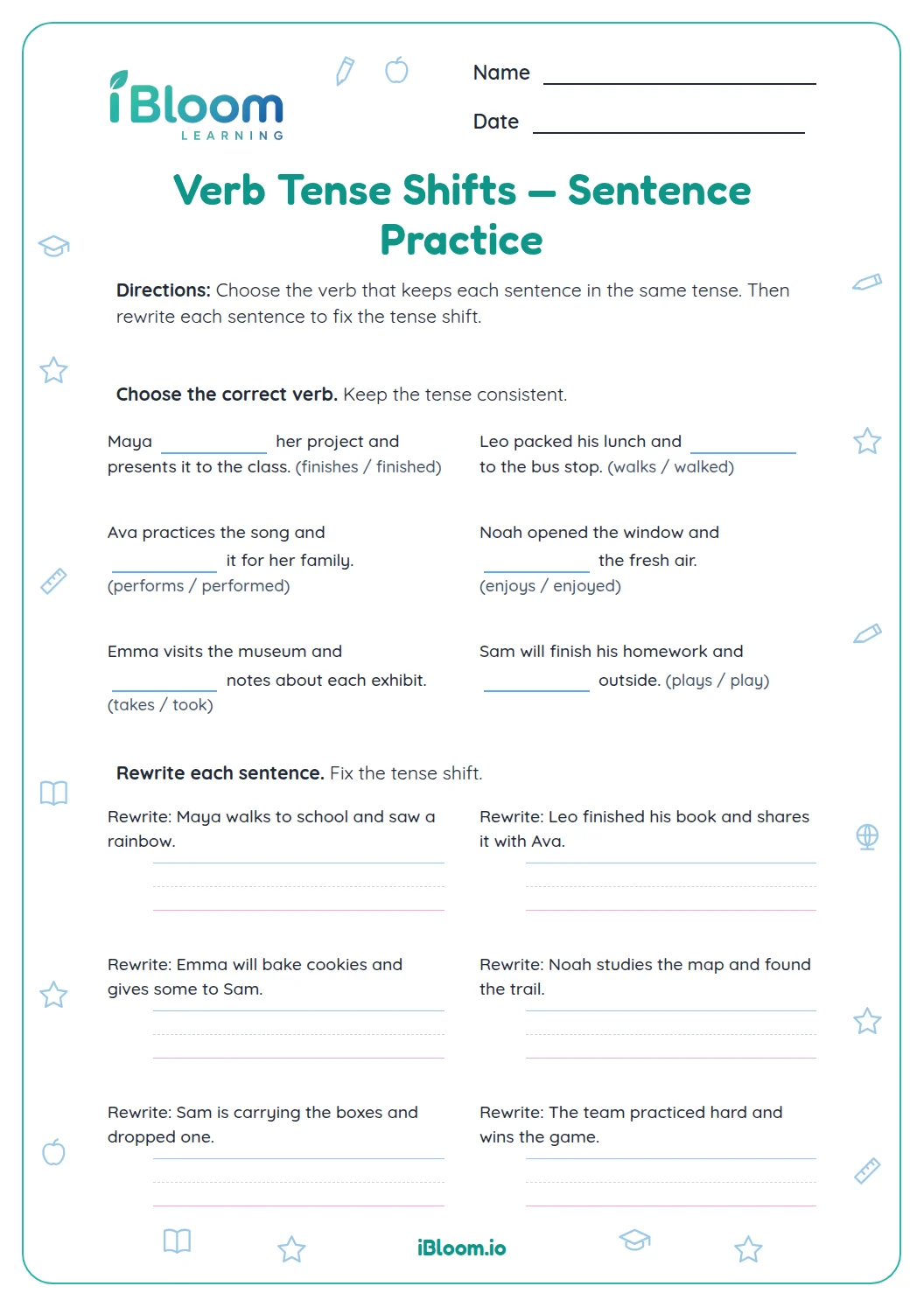
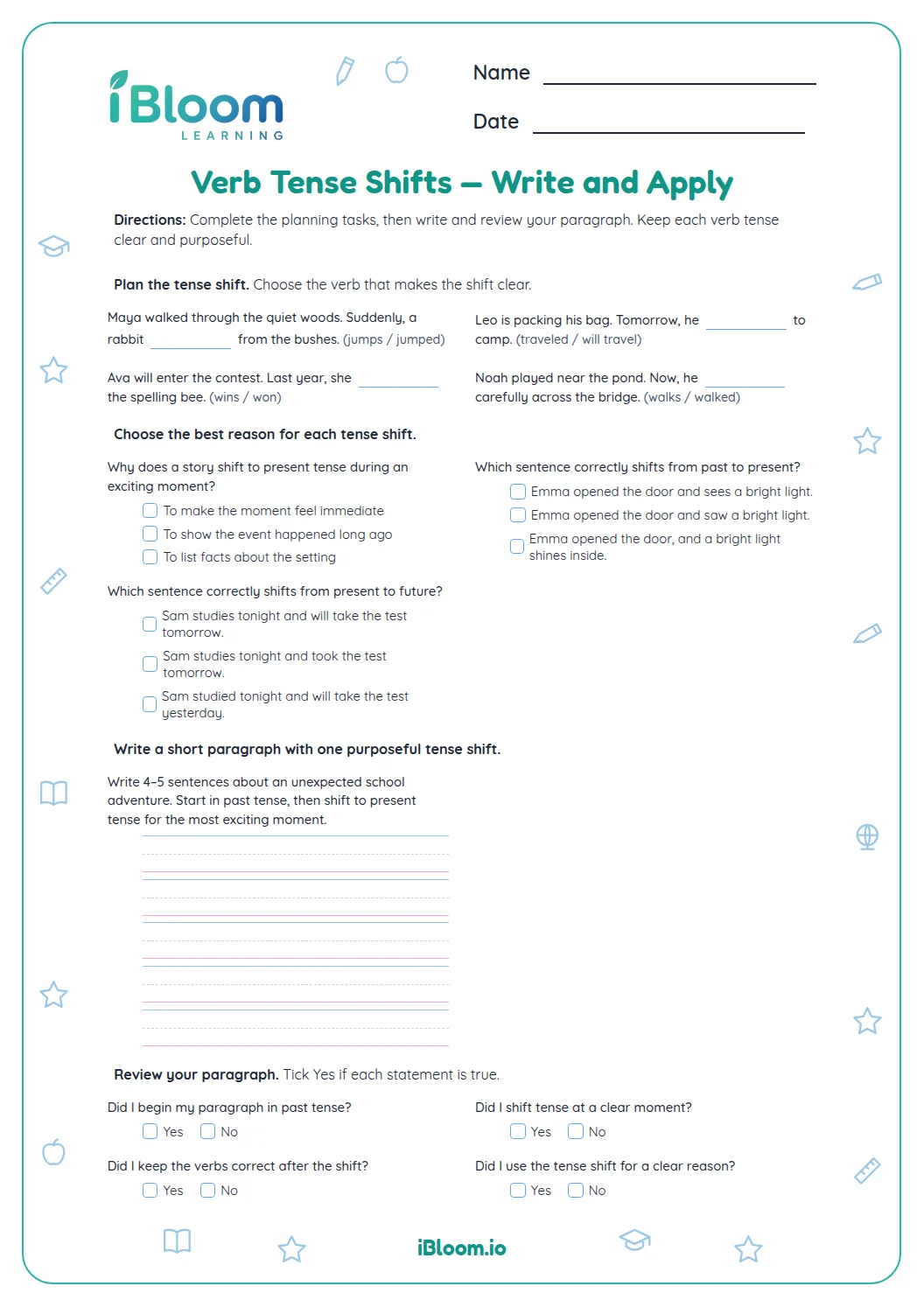
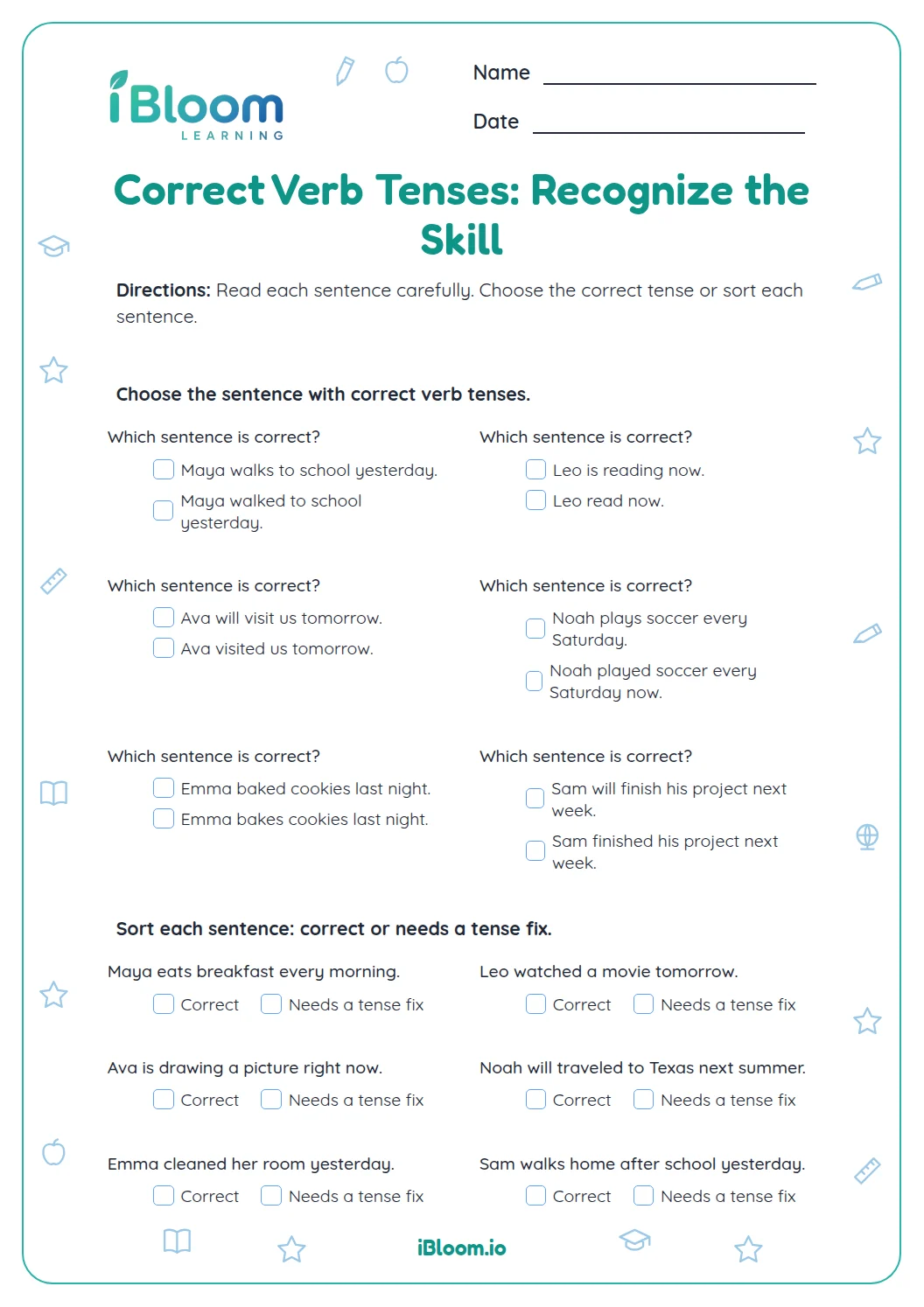
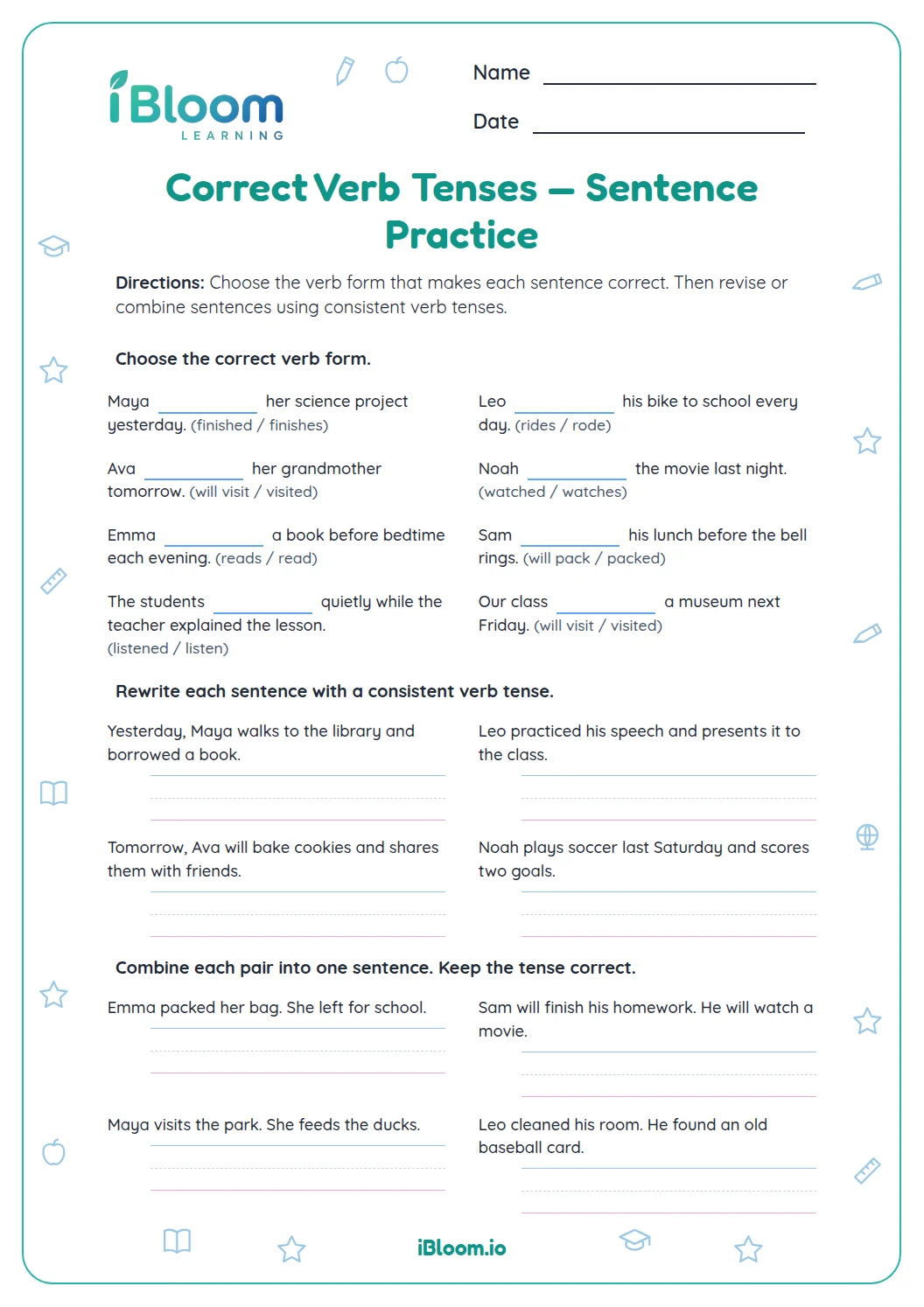
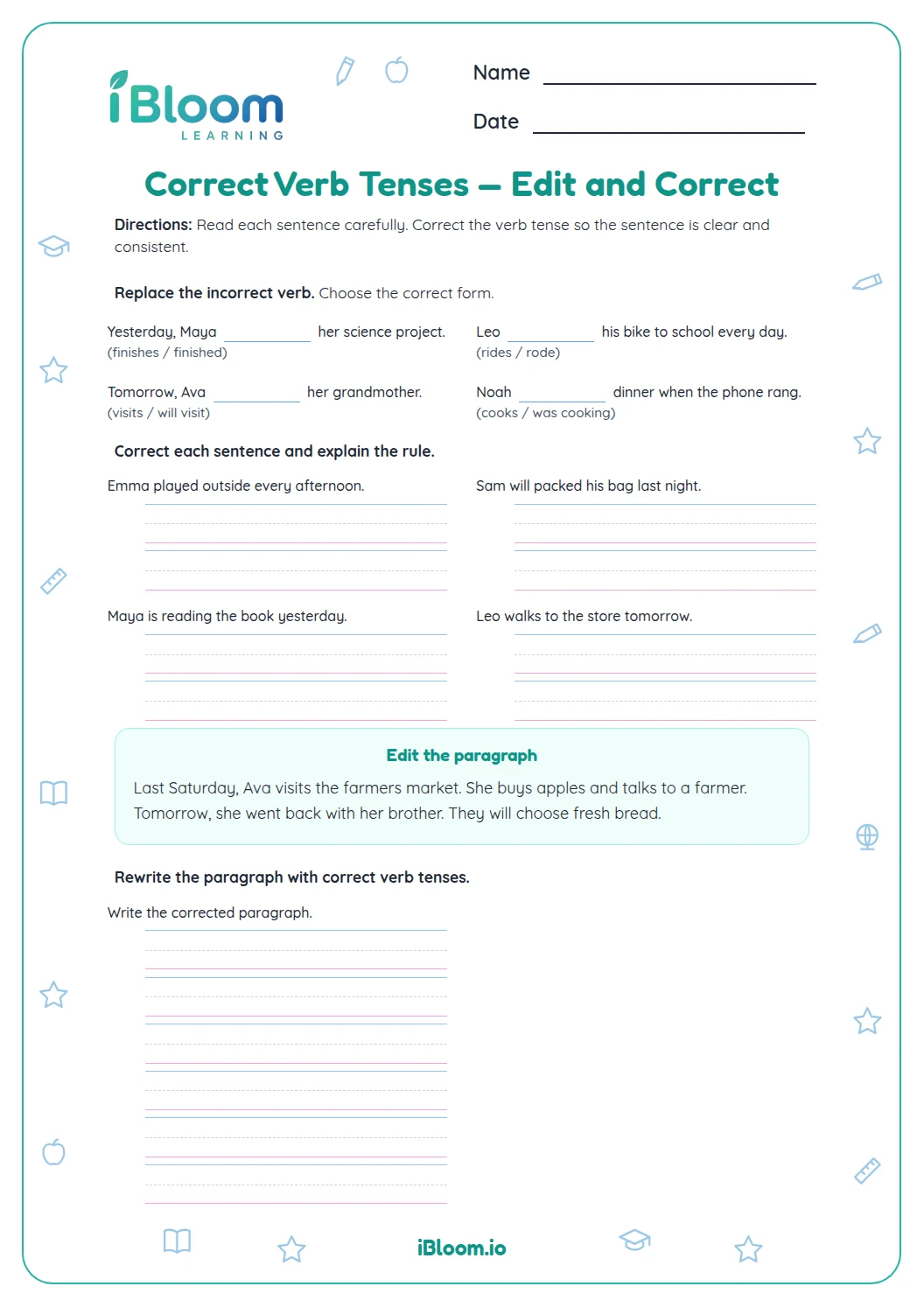
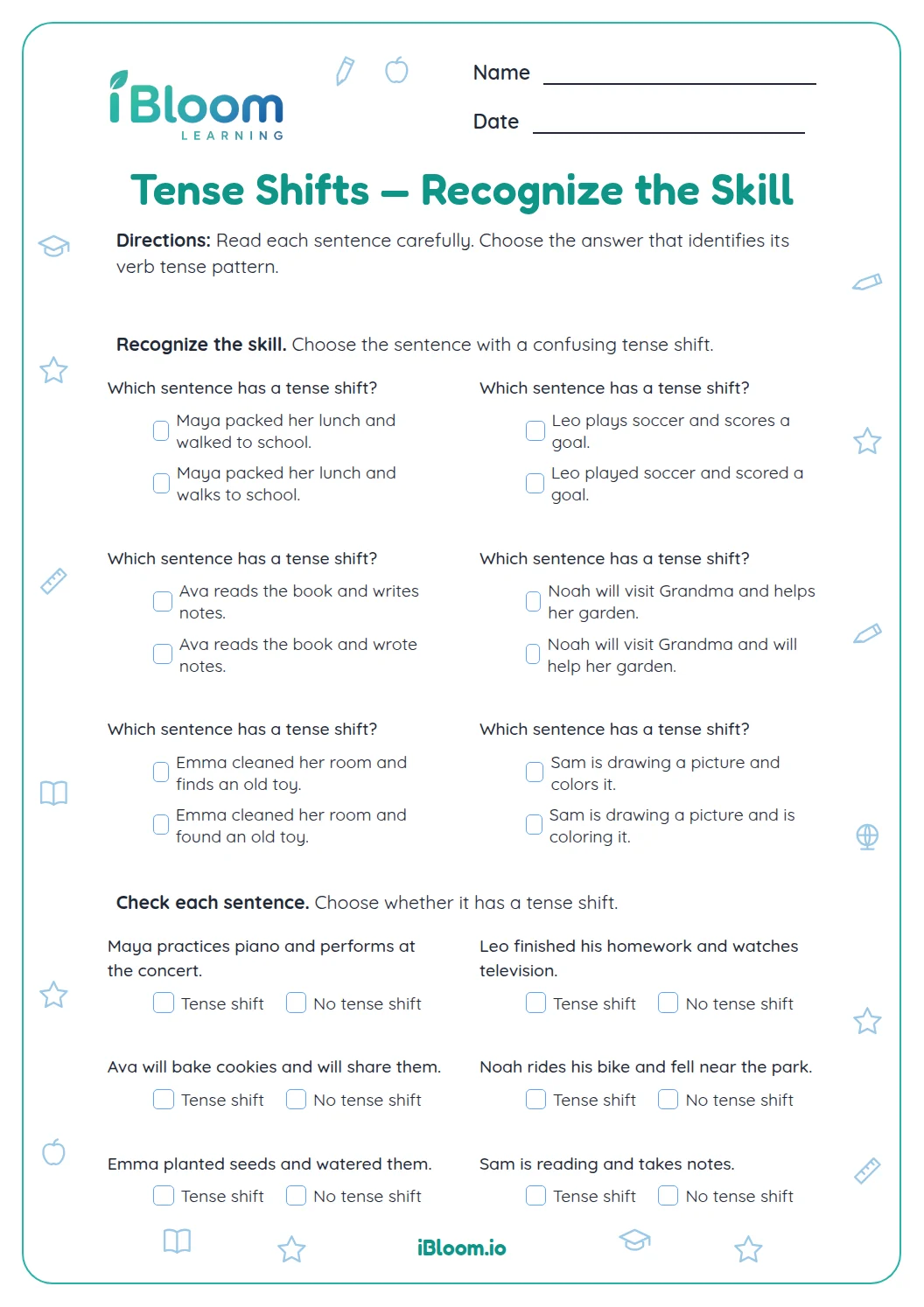
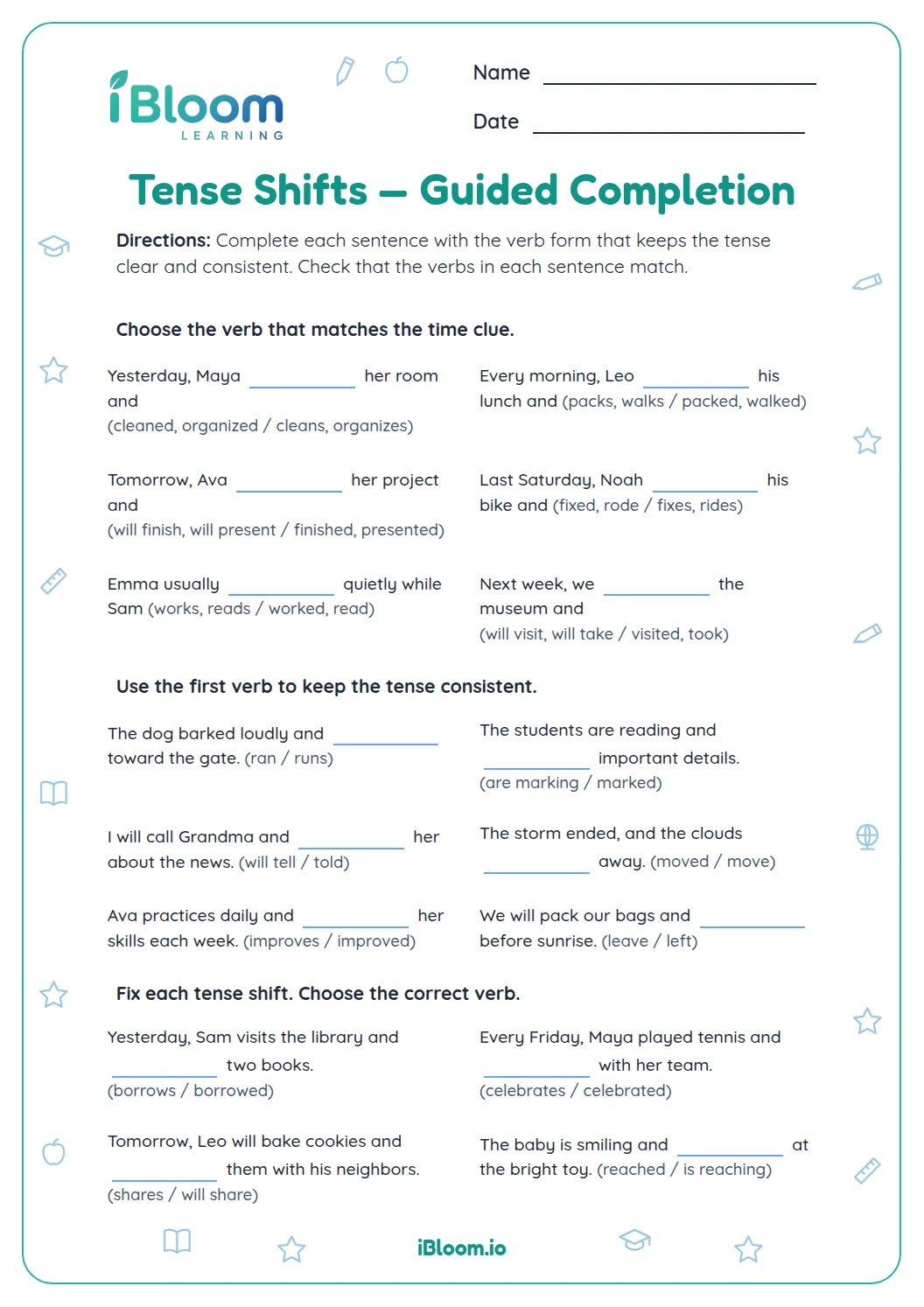
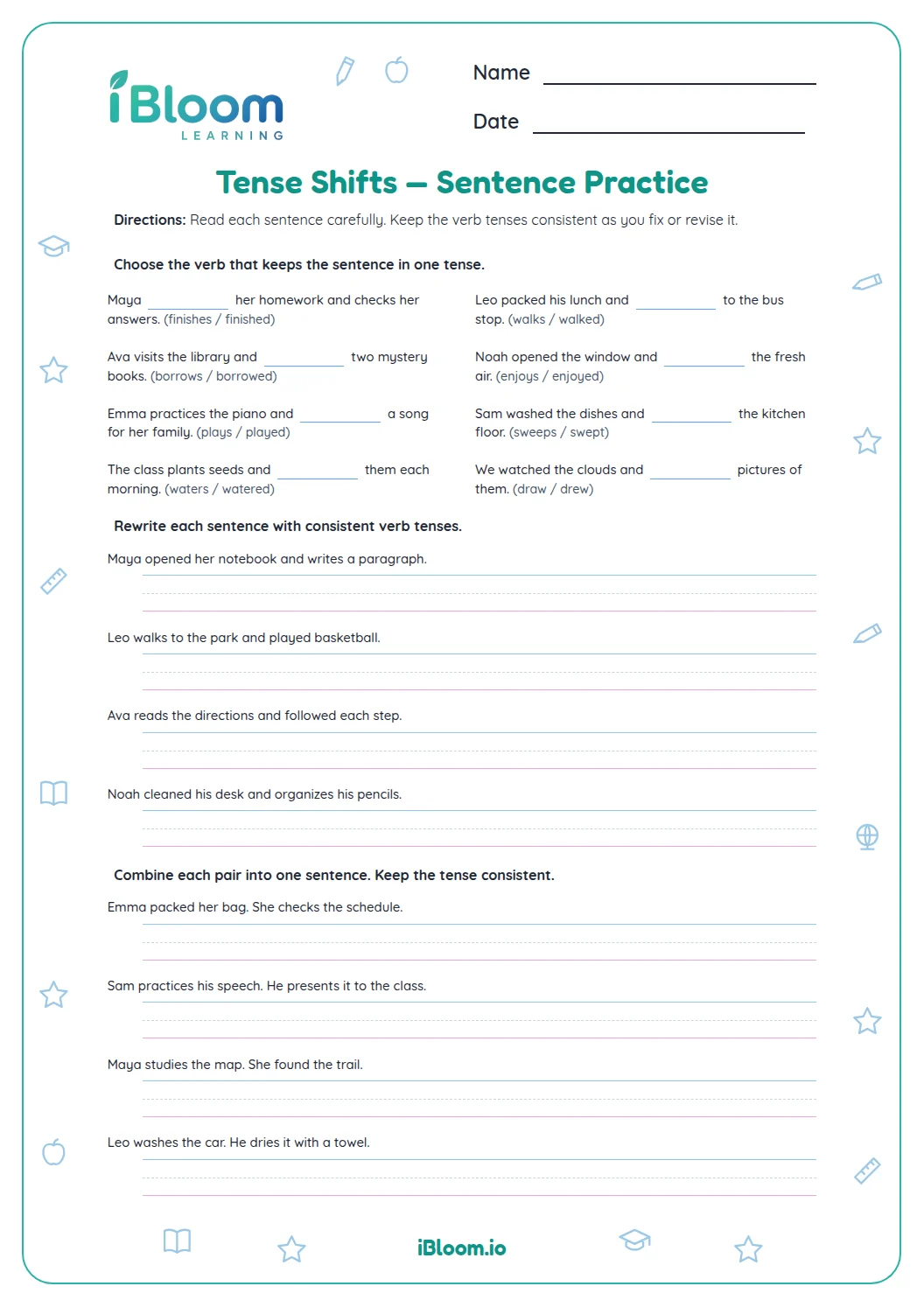
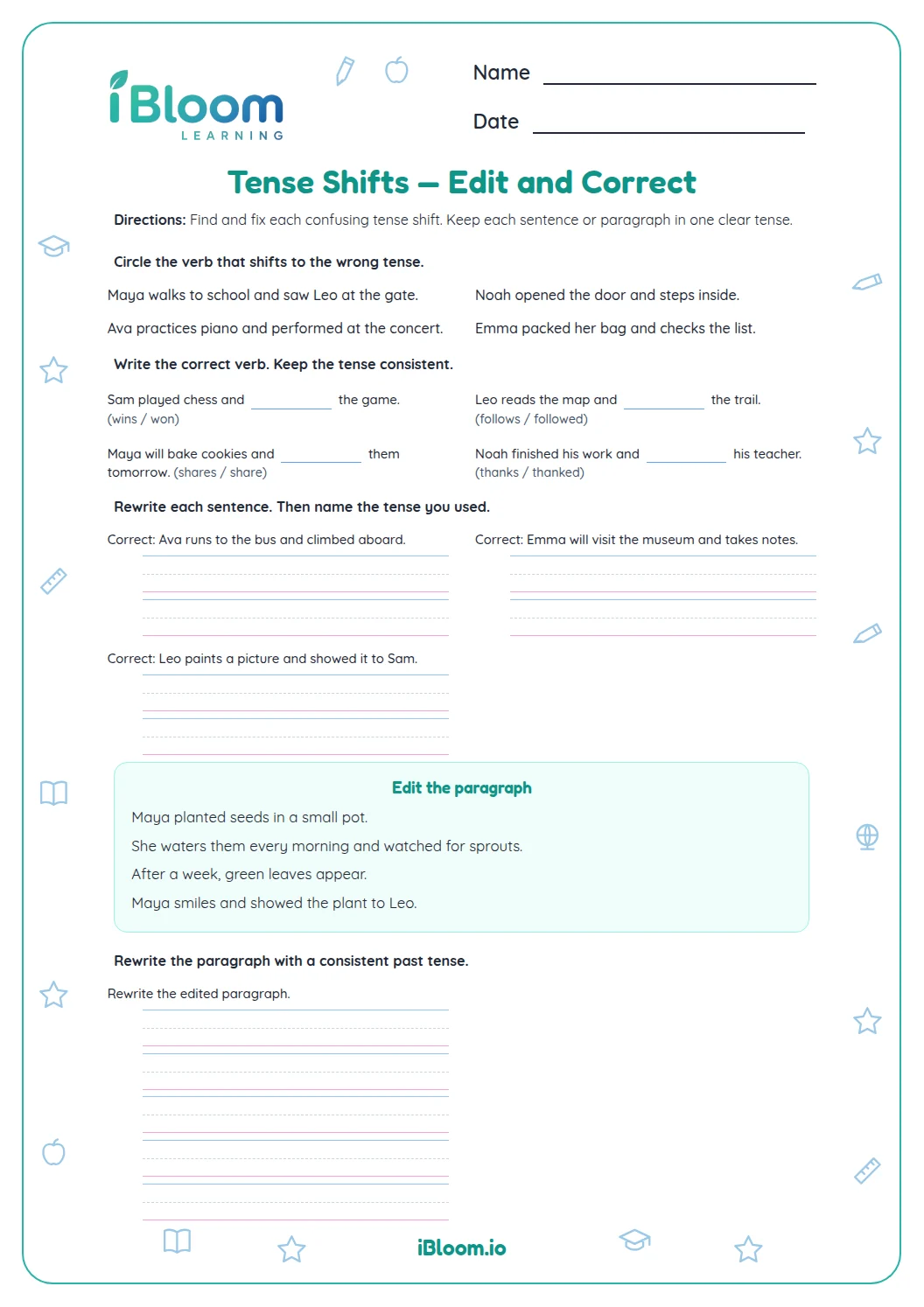
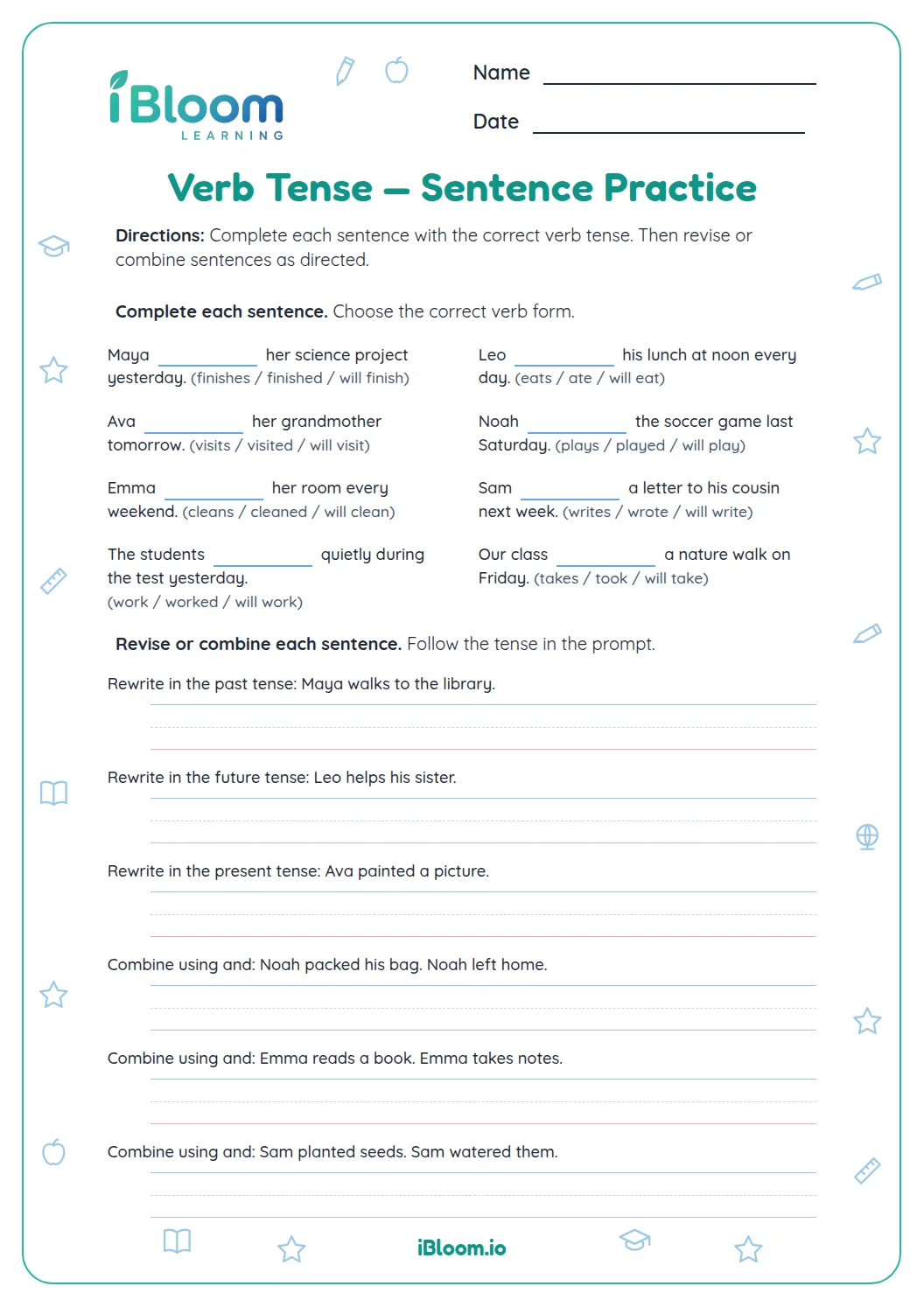
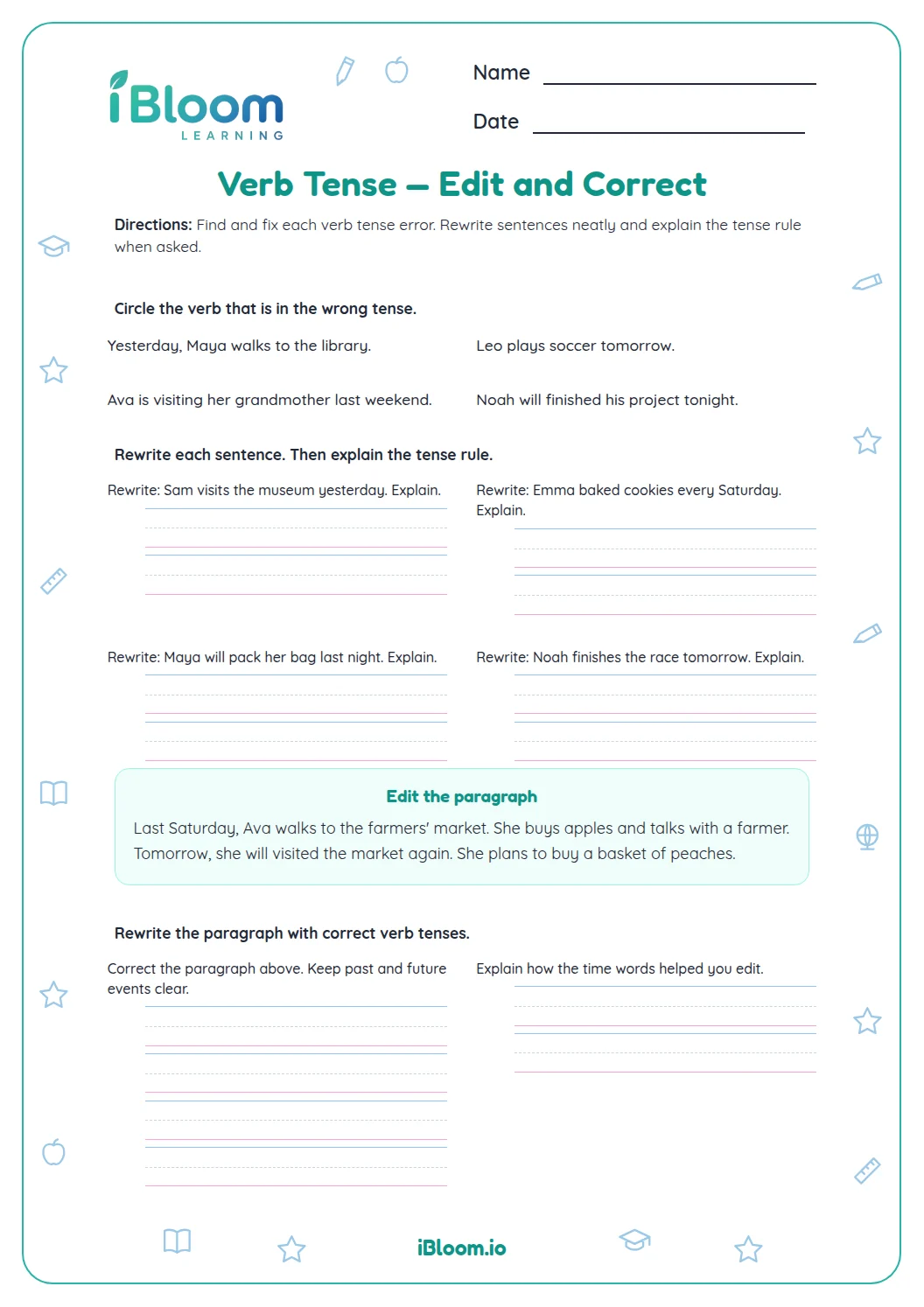
This free printable Grade 5 grammar worksheet helps students recognize and correct inappropriate verb tense shifts. Fourteen questions move from choosing a tense that matches a time clue to repairing inconsistent sentences and choosing verbs for two final sentences. It practices Common Core L.5.1d. A separate answer key includes the revised verb forms and sample corrected sentences.
Aligned to L.5.1d
What is a verb tense shift?
A tense shift happens when verbs move between past, present, and future without a reason. A sentence about yesterday usually keeps its actions in the past; a sentence about tomorrow keeps its actions in the future. A time word often makes the intended timeline clear.
Some sentences correctly change tense when the time changes. This practice focuses on sentences where the actions belong to one time frame.
How do you keep both verbs in the same timeline?
Part A asks you to choose a verb that fits a time clue. Part B asks you to replace one verb that shifts away from the sentence’s timeline. Part C asks students to choose verbs that complete two full sentences.
- 1Yesterday, Nia packed her lunch and ___ to school.
- 2Yesterday places both actions in the past.
- 3Change walks to walked.
- 4Corrected sentence: Yesterday, Nia packed her lunch and walked to school.
What should a final tense check include?
Read the full sentence after making a change. Check the time clue, then check every verb that describes an action in that time frame. In a sentence with two actions, both verbs should match the intended timeline unless the meaning signals a real change in time.
How to use this worksheet
- 1Underline the time clue, such as yesterday, each day, or tomorrow.
- 2Find each verb that tells what someone does or did.
- 3Decide whether the sentence is about the past, present, or future.
- 4Choose or write a verb that matches that time.
- 5Read the whole sentence aloud to check that the timeline stays clear.
- 6Use the key to compare the revised verbs and explain the time clue.
Common mistakes and quick fixes
The mistake
Changing every verb to past tense even when the sentence says tomorrow.
The fix
Let the time word control the tense; tomorrow usually signals future action.
The mistake
Fixing the first verb but overlooking the second action.
The fix
Circle every action verb before changing one.
The mistake
Using a past form after will, as in will walked.
The fix
After will, use the plain verb form: will walk, will plant, will bring.
Common Core alignment
The practice asks students to notice and repair verb tense changes that make a sentence timeline inconsistent.
Keep verb tense consistent and correct shifts that disrupt the timeline.
On this sheet: Students identify and correct inappropriate shifts in short sentences.
Show the official wordingHide the official wording
Recognize and correct inappropriate shifts in verb tense.
What to practice next
Make more practice
Further reading
Questions parents and teachers ask
What is a verb tense shift?
A verb tense shift is a change in verb time that does not fit the sentence’s timeline. In “Yesterday, Nia packed her lunch and walks to school,” packed is past but walks is present. This worksheet asks students to spot that mismatch and revise the verb.
How do time words help with verb tense?
Time words such as yesterday, every afternoon, and tomorrow provide clues about when the actions happen. Students underline the clue, identify the verbs, and check whether the forms match. Questions 1–6 offer choices, while the next section asks students to repair a shift.
What does Part C ask students to write?
The last two questions ask students to choose verbs in complete sentences. They apply the same time-clue routine from the earlier choice and fill-in sections. The answer key gives the correct verb for each item. Students can use the time clue to explain why the verb fits the timeline.
Can a sentence ever change verb tense correctly?
Yes. A sentence can change tense when it clearly moves from one time to another. This page concentrates on examples where the sentence stays in one time frame, so an unexplained change makes the events harder to follow.
What is a common tense mistake with will?
A frequent error is putting a past-tense verb after will, as in “will walked.” Use the plain verb after will: “will walk.” In Part B, students also check that a future sentence does not switch to a past form midway.
How long does this mixed review take?
Allow about 20 minutes for the 14 questions. The first section uses verb choices, the second repairs a single verb, and the last two check verb choices in complete sentences. A student can explain each answer by pointing to the sentence’s time clue.