





About this worksheet
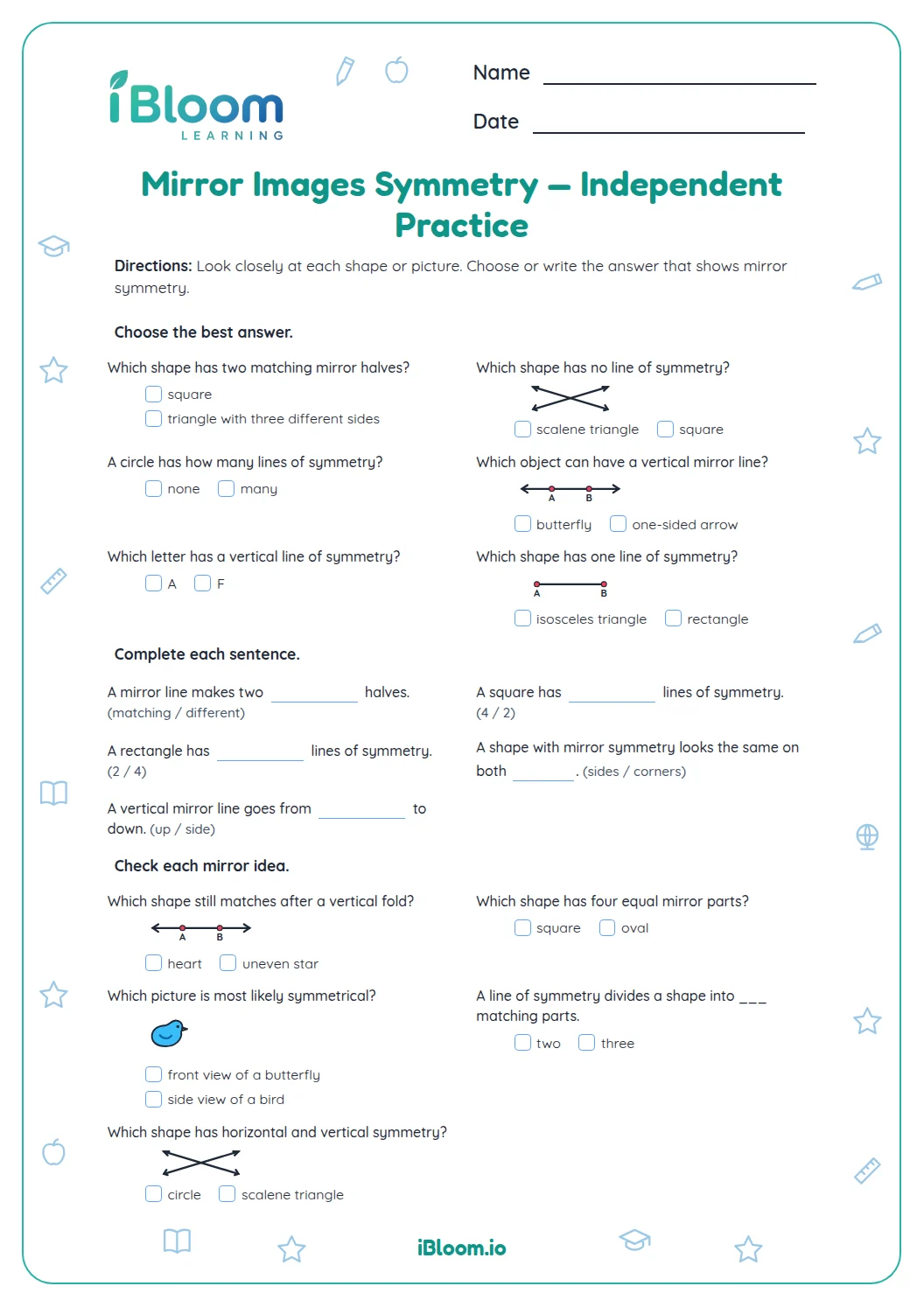
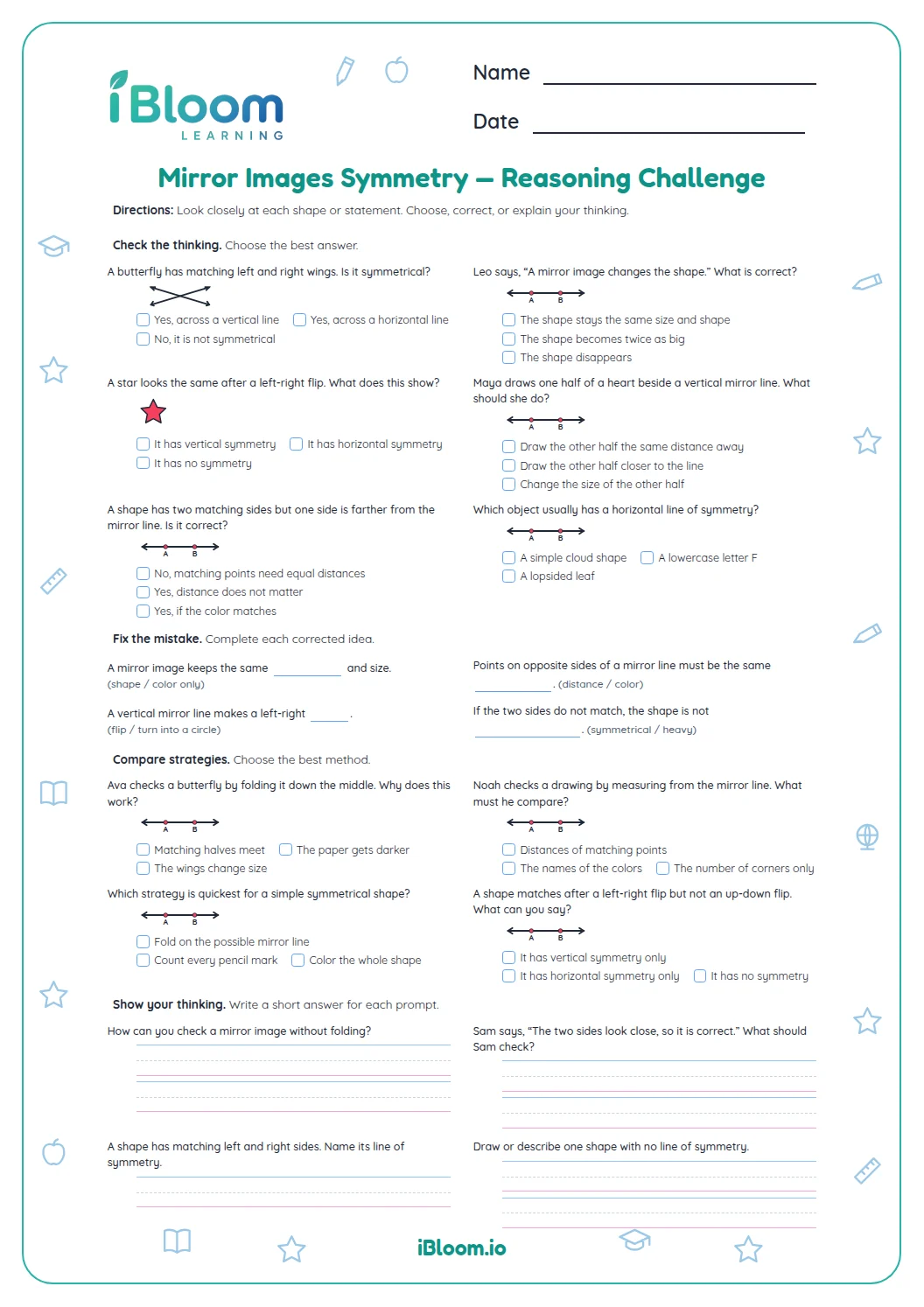
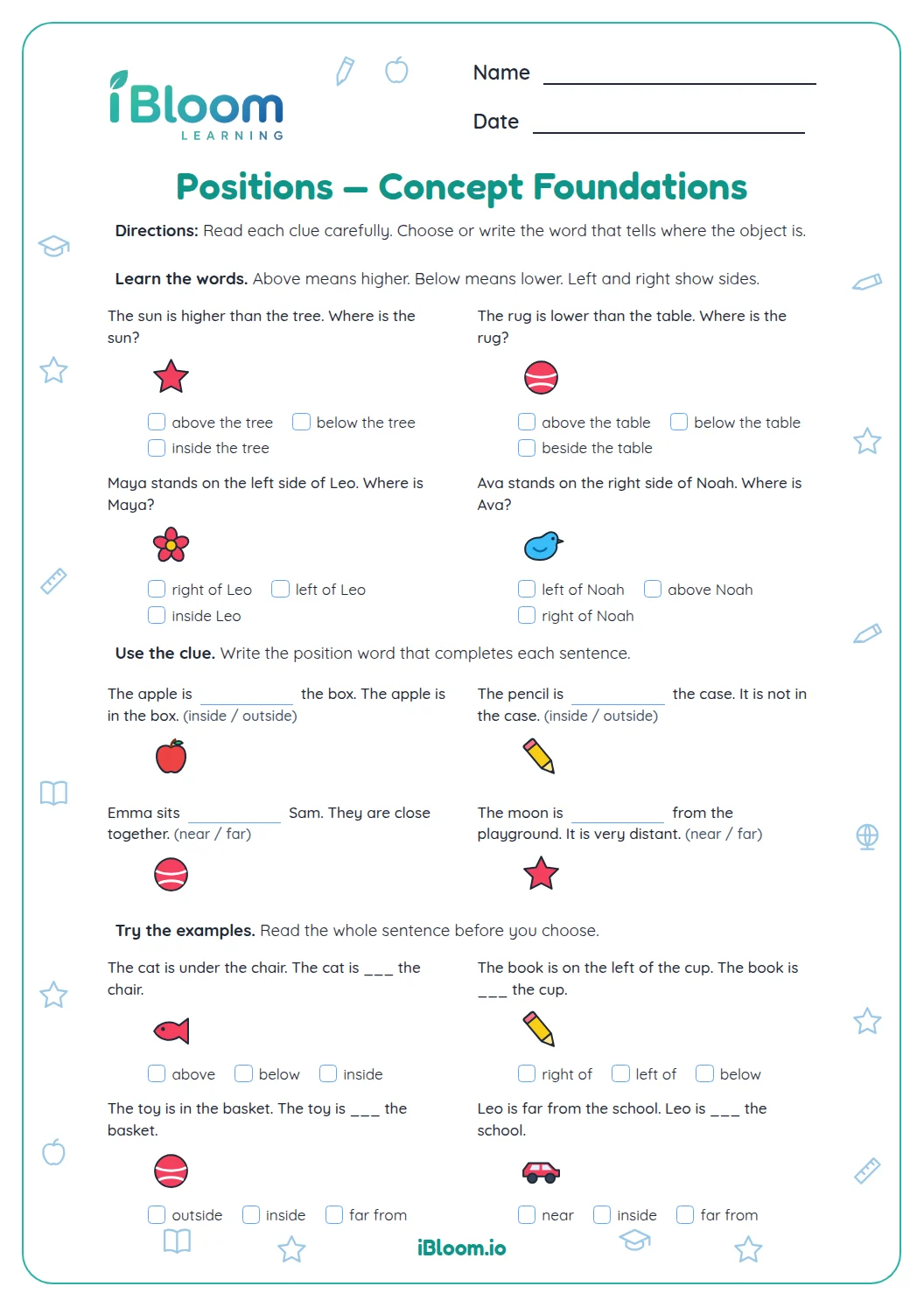
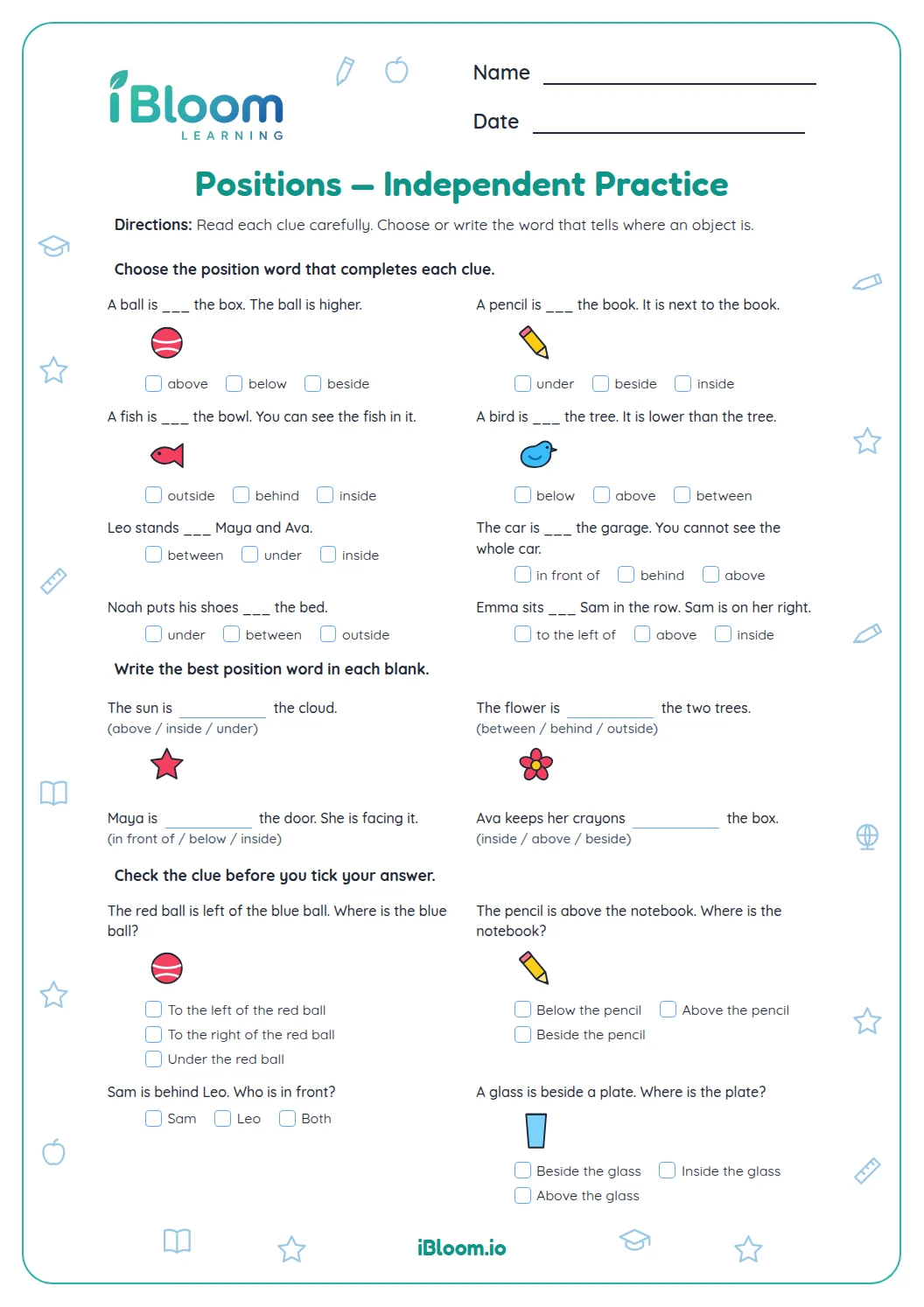
This Grade 1 worksheet introduces mirror symmetry through familiar shape drawings. Students decide whether a shape can be split into two matching halves, practicing the line-symmetry idea in CCSS 4.G.A.3. They then apply the same idea to more shapes. The new sheet replaces the original mirror-line diagrams with shape-based examples from the available worksheet template; a separate answer key is included.
Aligned to 4.G.A.3
What makes a shape mirror-symmetric?
A shape has line symmetry when a fold along a line makes its two sides match. The line can be vertical, horizontal, or slanted, depending on the shape.
- 1A square can fold into matching halves.
- 2Answer: Yes
Which shapes will students study?
The questions use familiar shapes such as squares, rectangles, circles, ovals, and triangles. Students look at each drawing and choose whether a matching fold is possible.
How can a child test an answer?
Imagine folding the shape along a line. Both sides should have the same size and outline, with each point the same distance from the fold. A fold that leaves unmatched parts is not a line of symmetry.
How to use this worksheet
- 1Name the shape in the drawing.
- 2Imagine a line that could divide it into two sides.
- 3Check whether the sides would match when folded.
- 4Choose yes or no for the question.
- 5Use the key to review each answer.
Common slips and quick fixes
The mistake
Thinking any line through a shape makes mirror halves.
The fix
Check whether both sides would match after folding.
The mistake
Assuming a shape must be split vertically.
The fix
A matching fold can be horizontal, vertical, or slanted.
The mistake
Confusing two equal areas with mirror halves.
The fix
The sides must match in shape and size, not just area.
Curriculum alignment
Students identify drawn shapes that can fold into matching parts.
Identify line-symmetric shapes by checking whether a fold makes matching parts.
On this sheet: Students identify drawn line-symmetric figures using the fold-and-match idea.
Show the official wordingHide the official wording
Recognize a line of symmetry for a two-dimensional figure as a line across the figure such that the figure can be folded along the line into matching parts. Identify line-symmetric figures and draw lines of symmetry.
What to practice next
Make more practice
Further reading
Questions parents and teachers ask
What is a line of symmetry?
It is a line that divides a shape into matching mirror halves. If the shape could fold along that line and the two sides fit, the fold is a line of symmetry. Ask the child to describe how the matching sides would line up.
Do children need to draw a mirror line on this worksheet?
No. The new template sheet uses individual shape drawings and yes-or-no choices. Children decide whether a matching fold is possible; the old mirror-line diagrams were replaced because the template cannot draw those diagrams. Ask the child to describe how the matching sides would line up.
Which shapes are included?
The questions use familiar shapes including squares, rectangles, circles, ovals, and triangles. The child studies each drawing and applies the same fold-and-match test. The key can be kept separate until the child has tried all the shapes. Ask the child to describe how the matching sides would line up.
How many questions are there?
There are 15 questions across two parts. Each has a drawn shape and asks the learner to decide whether it can be divided into matching mirror halves. Ask the child to describe how the matching sides would line up.
How can an adult help without giving the answer?
Ask the child to imagine folding the shape and compare the two sides. Invite them to look for points or edges that would not line up, then use the answer key after they choose. Ask the child to describe how the matching sides would line up.