


About this worksheet
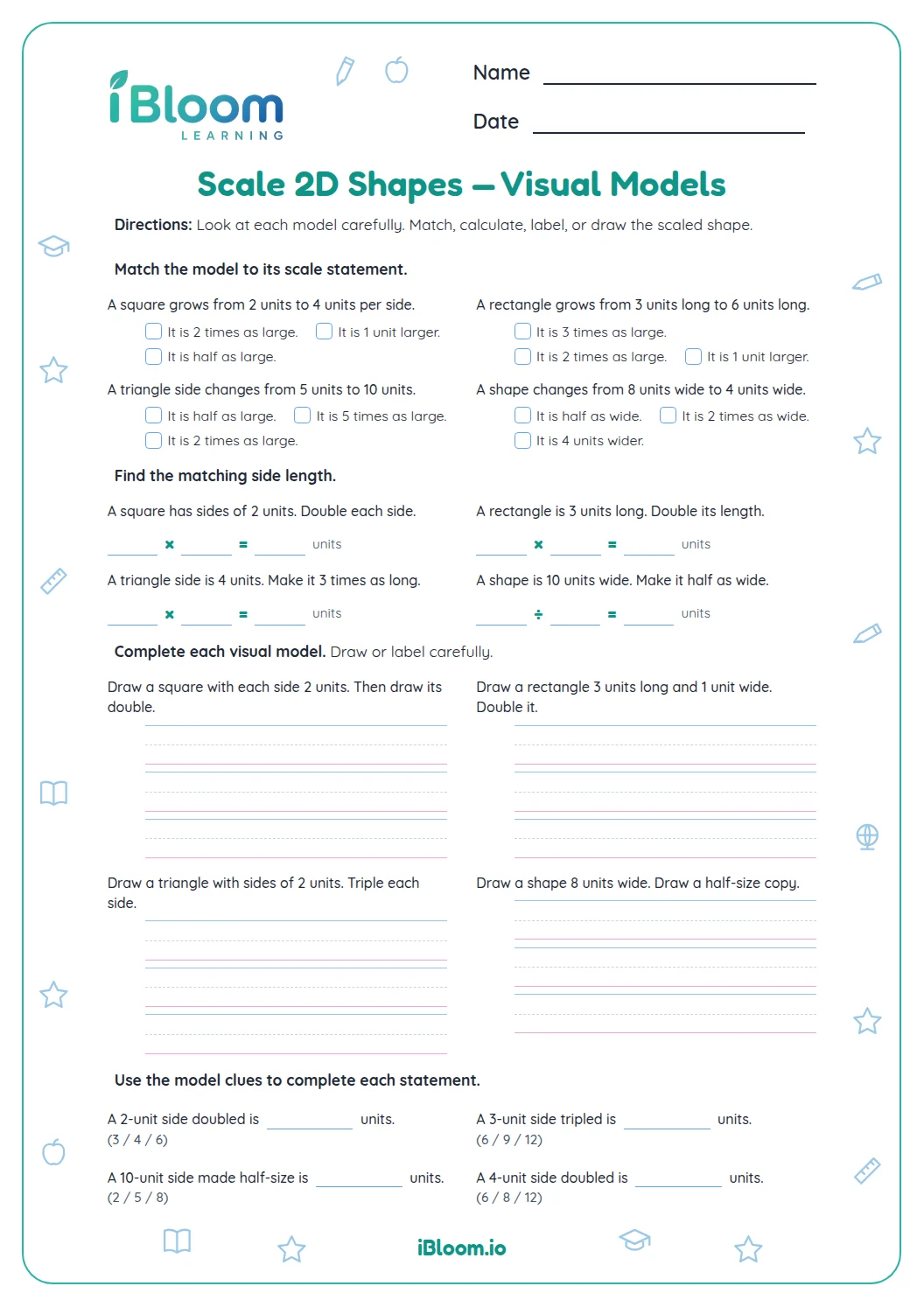
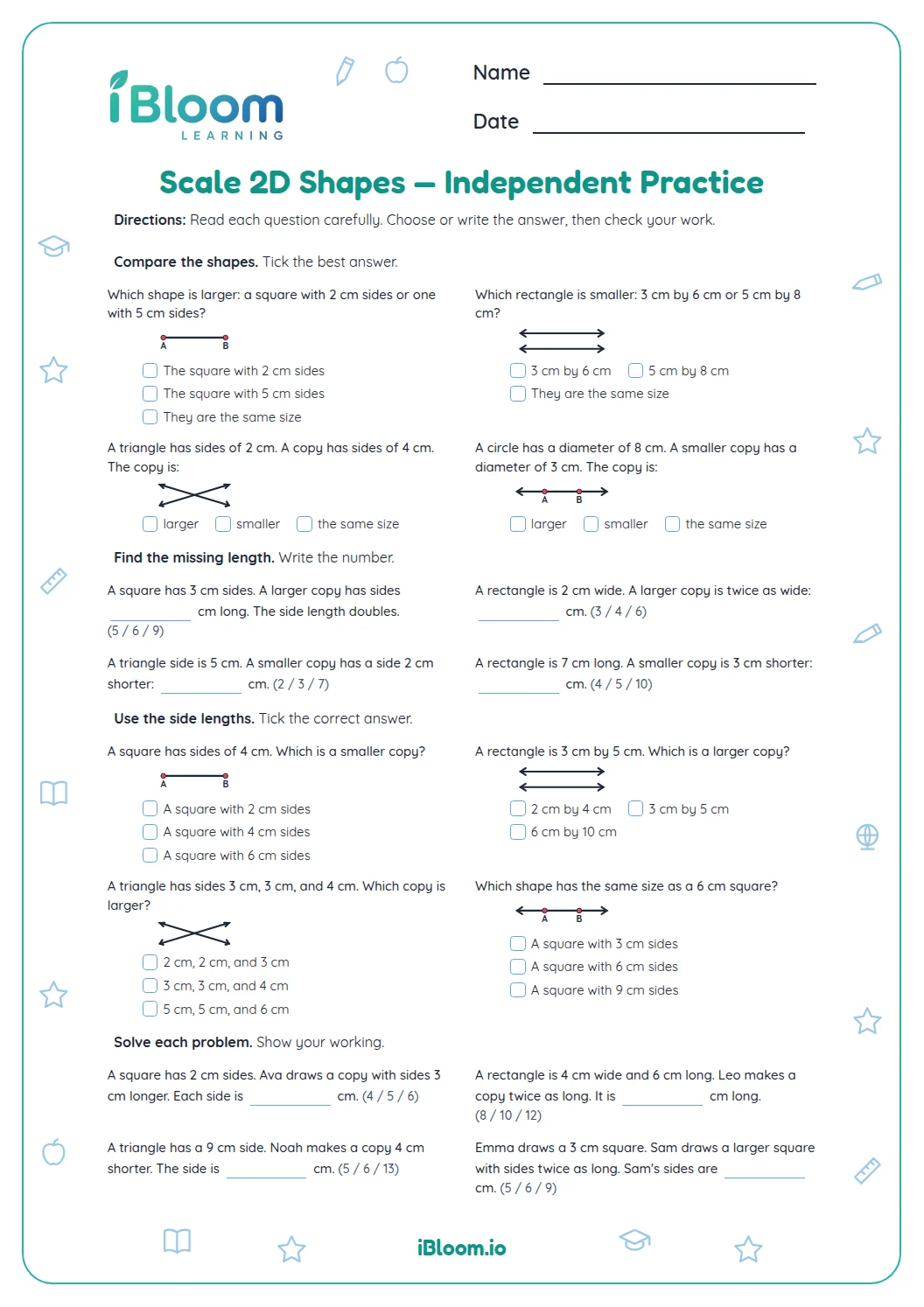
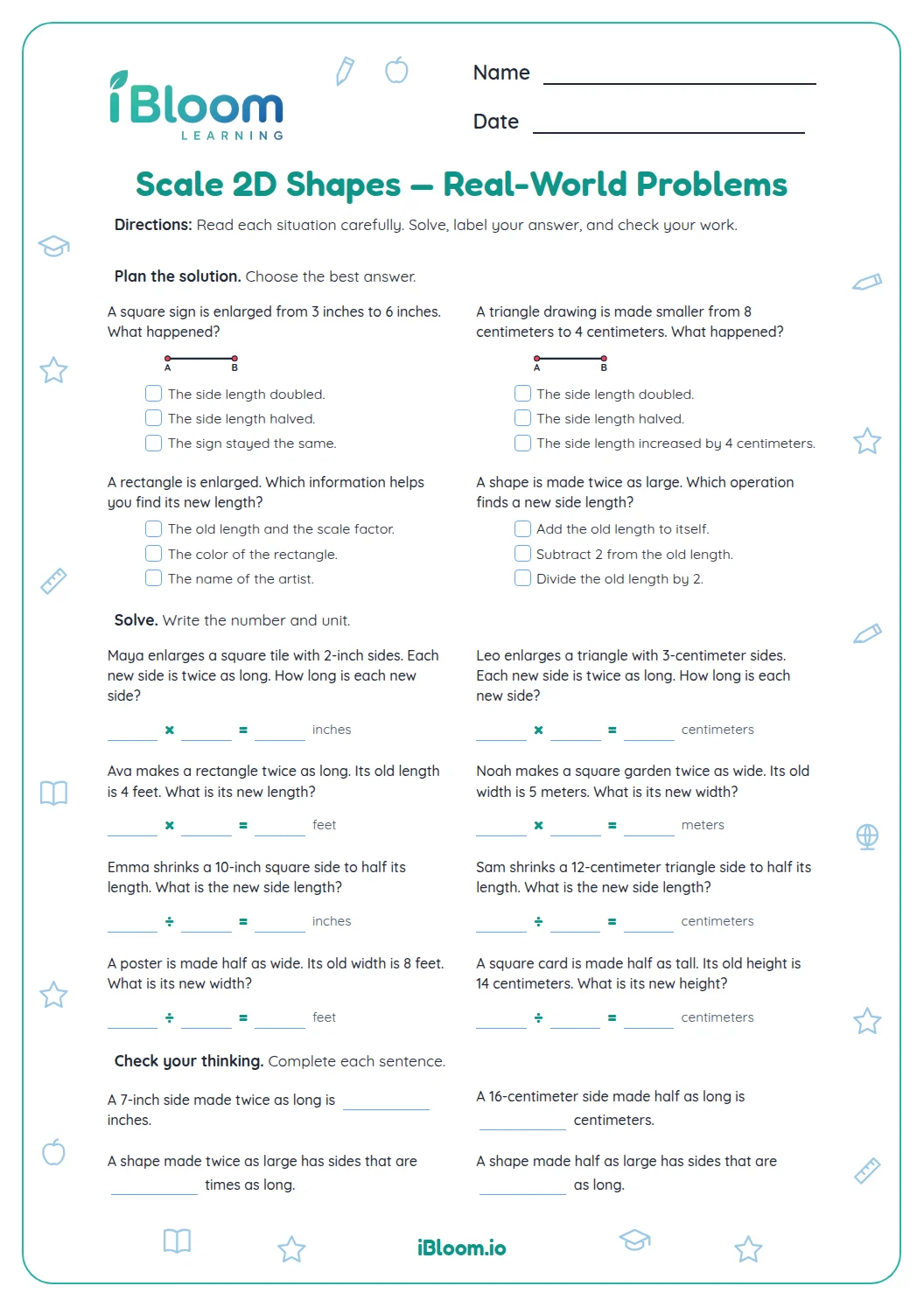
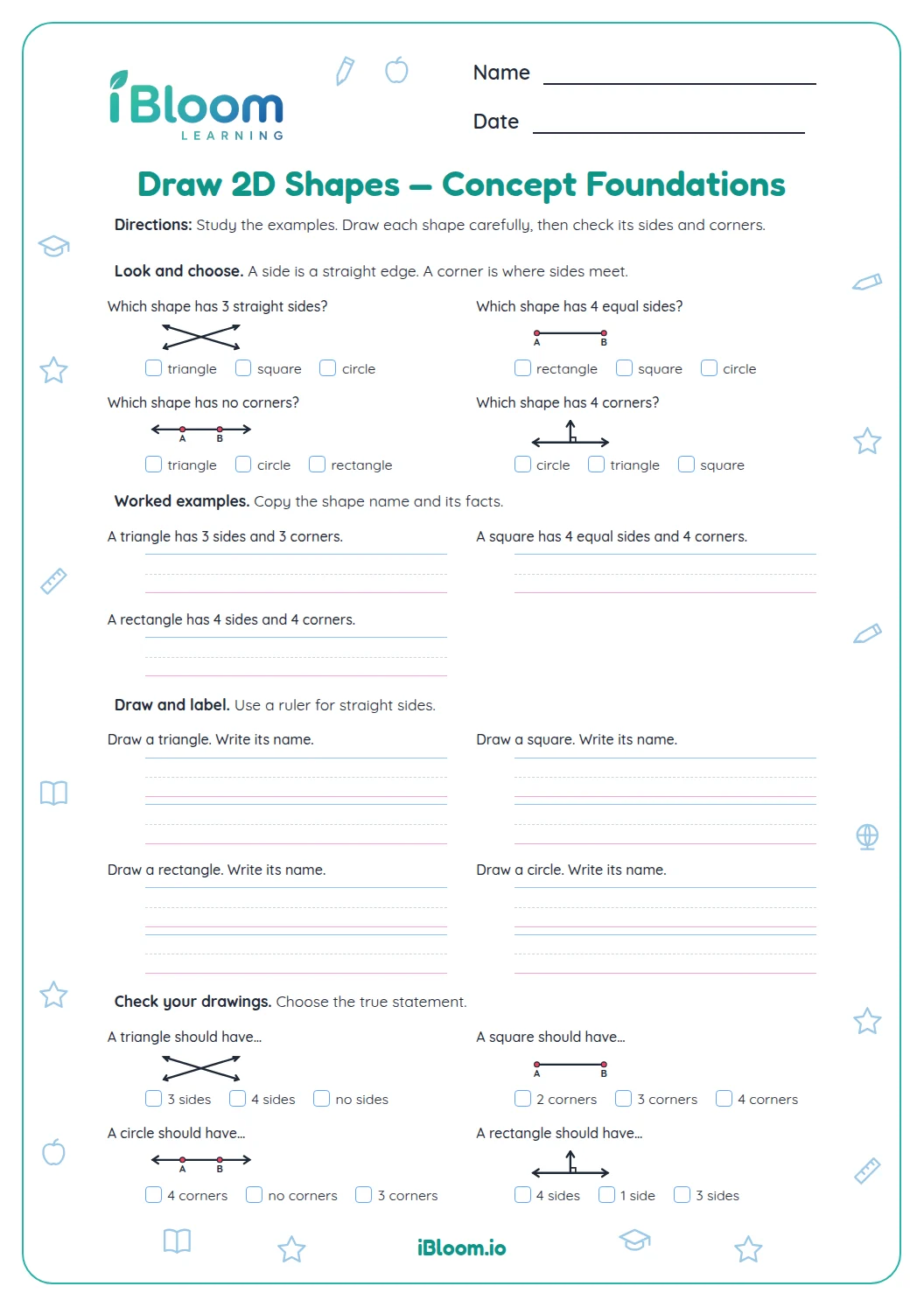
This Grade 1 geometry worksheet helps children compare two-dimensional shapes at different sizes. Students look at pictured pairs, count sides and corners, choose a useful check, explain a shape feature, and draw same-kind shapes at different sizes. The activities focus on defining features such as side count while overall size changes. The answer key gives short responses and drawing criteria.
Aligned to 1.G.A.1
Which shape features stay the same?
A scaled shape is larger or smaller, but its kind stays the same. A triangle still has three sides; a rectangle still has four corners.
Question 3 shows two triangles in different sizes and asks for the number of sides. Both triangles have 3 sides.
- 1A triangle is made smaller. How many sides does it still have? → 3
How can a drawing show scaling?
Draw the same kind of shape twice, changing only the size. A small square and a larger square make the change easy to see; both need four equal sides.
How to use this worksheet
- 1Compare the shape kinds before comparing their sizes.
- 2Count sides or corners to check a defining feature.
- 3Choose the feature that stays even when the outline is larger or smaller.
- 4For drawing questions, make two examples of the same shape at different sizes.
Common slips and helpful fixes
The mistake
Thinking a larger square gains sides.
The fix
Count the outline: it still has four sides.
The mistake
Using color as proof that two shapes match.
The fix
Compare defining features such as side and corner count.
The mistake
Drawing two different shape kinds for a scaling pair.
The fix
Keep the kind the same and change only the size.
Common Core alignment
The questions focus on describing and comparing two-dimensional shapes.
Describe defining shape features that remain as size changes.
On this sheet: Children identify side and corner counts that remain when a shape is drawn larger or smaller.
Show the official wordingHide the official wording
Distinguish between defining attributes (e.g., triangles are closed and three-sided) versus non-defining attributes (e.g., color, orientation, overall size); build and draw shapes to possess defining attributes.
What to practice next
Make more practice
Further reading
Questions parents and teachers ask
What does scaling a shape mean here?
Scaling means making a shape larger or smaller while keeping its kind and defining features. The worksheet shows pairs of shapes so children can compare what changed in size with what stayed the same, such as a triangle’s three sides.
Do children need to calculate?
No calculations are needed. Children compare the pictured shapes, count sides or corners, and draw same-kind shapes at different sizes. They can point to a feature in each shape to explain how they know the shape kind stayed the same.
How many questions are on the pages?
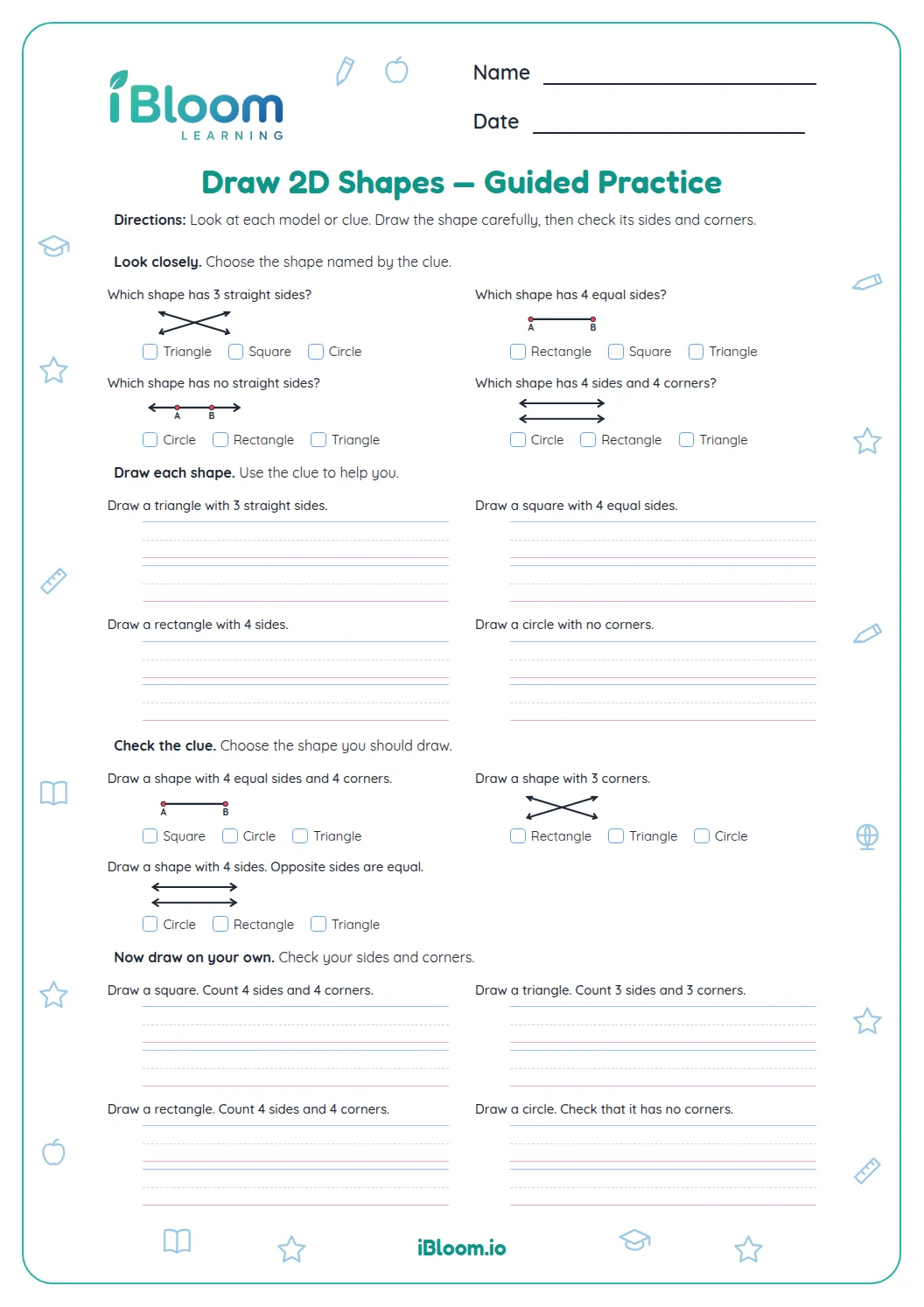
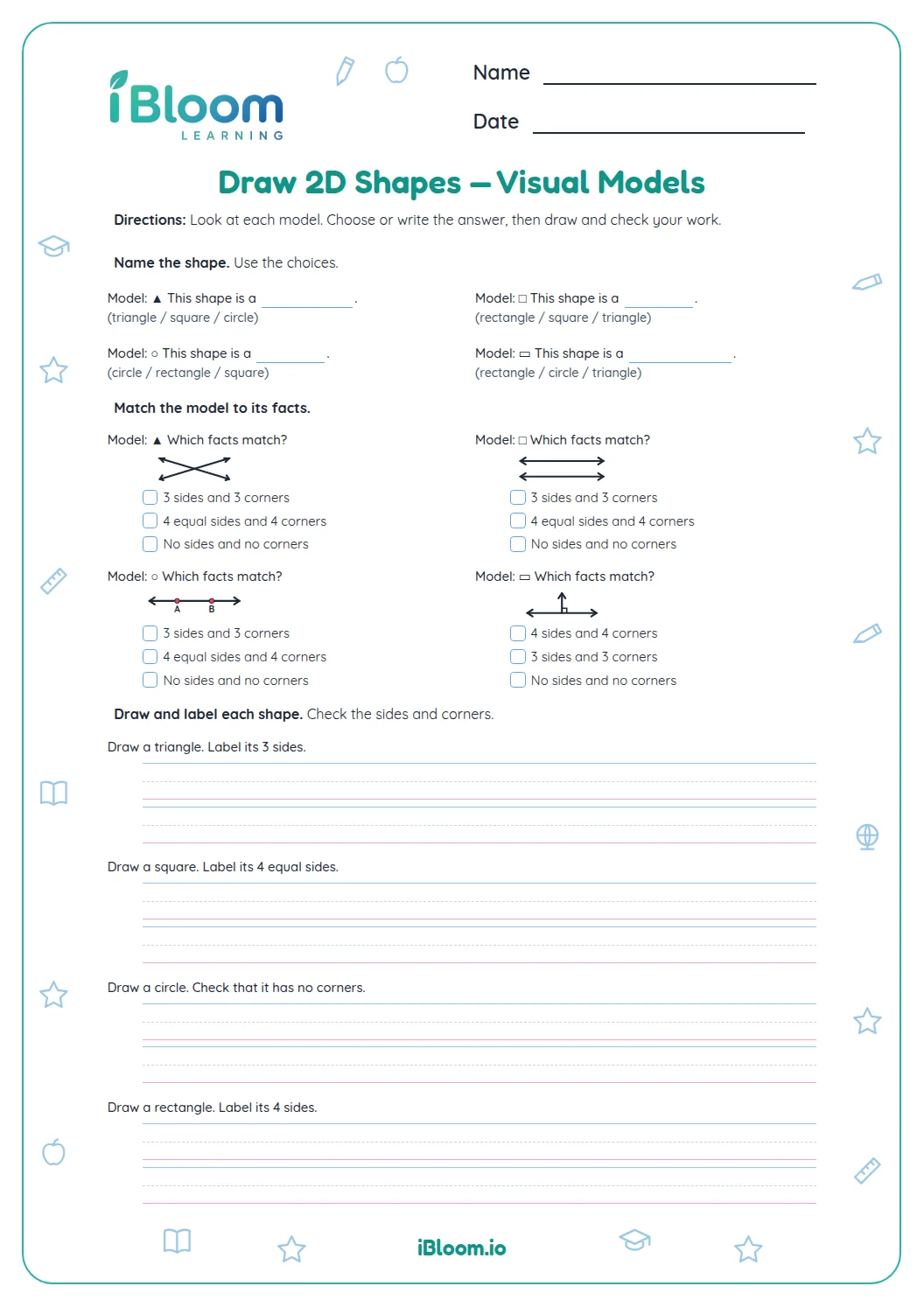
There are 16 questions across five worksheet pages, plus a five-page answer key. Practice includes pictured shape comparisons, short responses, two explanations and two drawing prompts about same-kind shapes. The final drawings show size changing while shape features remain.
What should the drawing answers show?
Each drawing should show two shapes of the same kind at noticeably different sizes. For example, both squares need four equal sides, with one smaller than the other. The size changes while their defining features remain the same.
Which shapes appear?
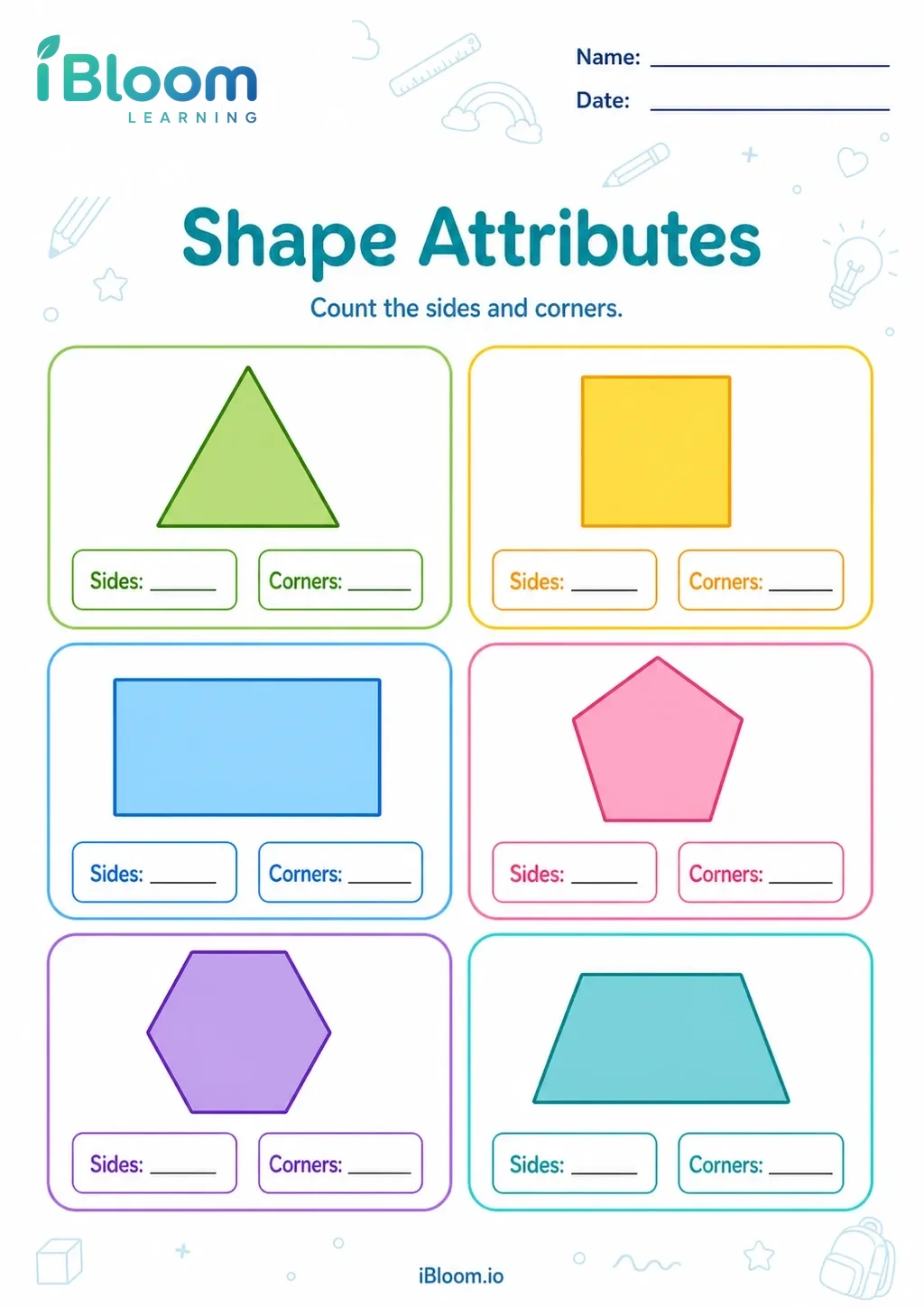
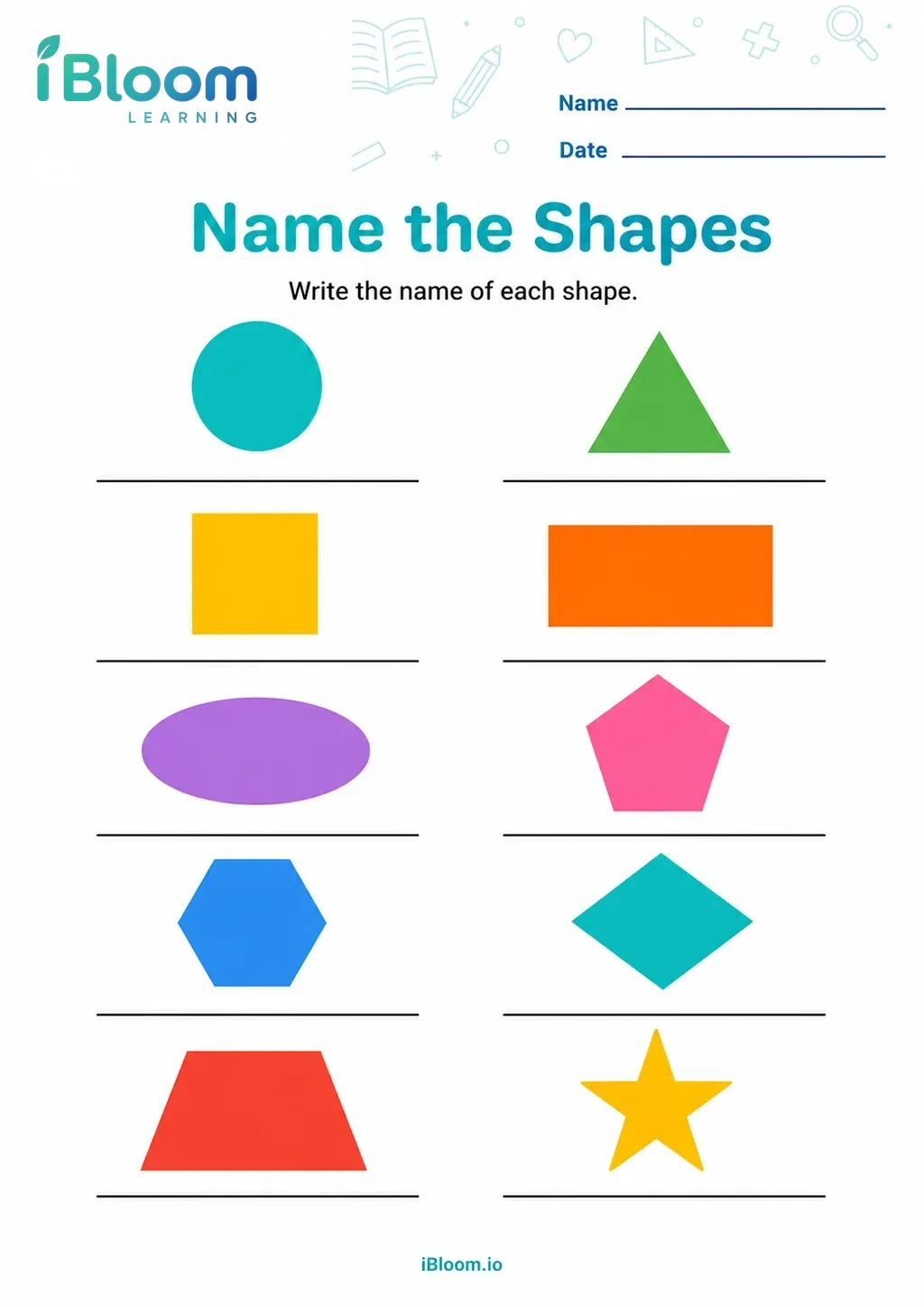
Students work with squares, rectangles, triangles and circles. They compare side and corner counts where those features apply, and notice that a circle remains round when its size changes. Drawings make the pairs easy to inspect and compare.