





About this worksheet
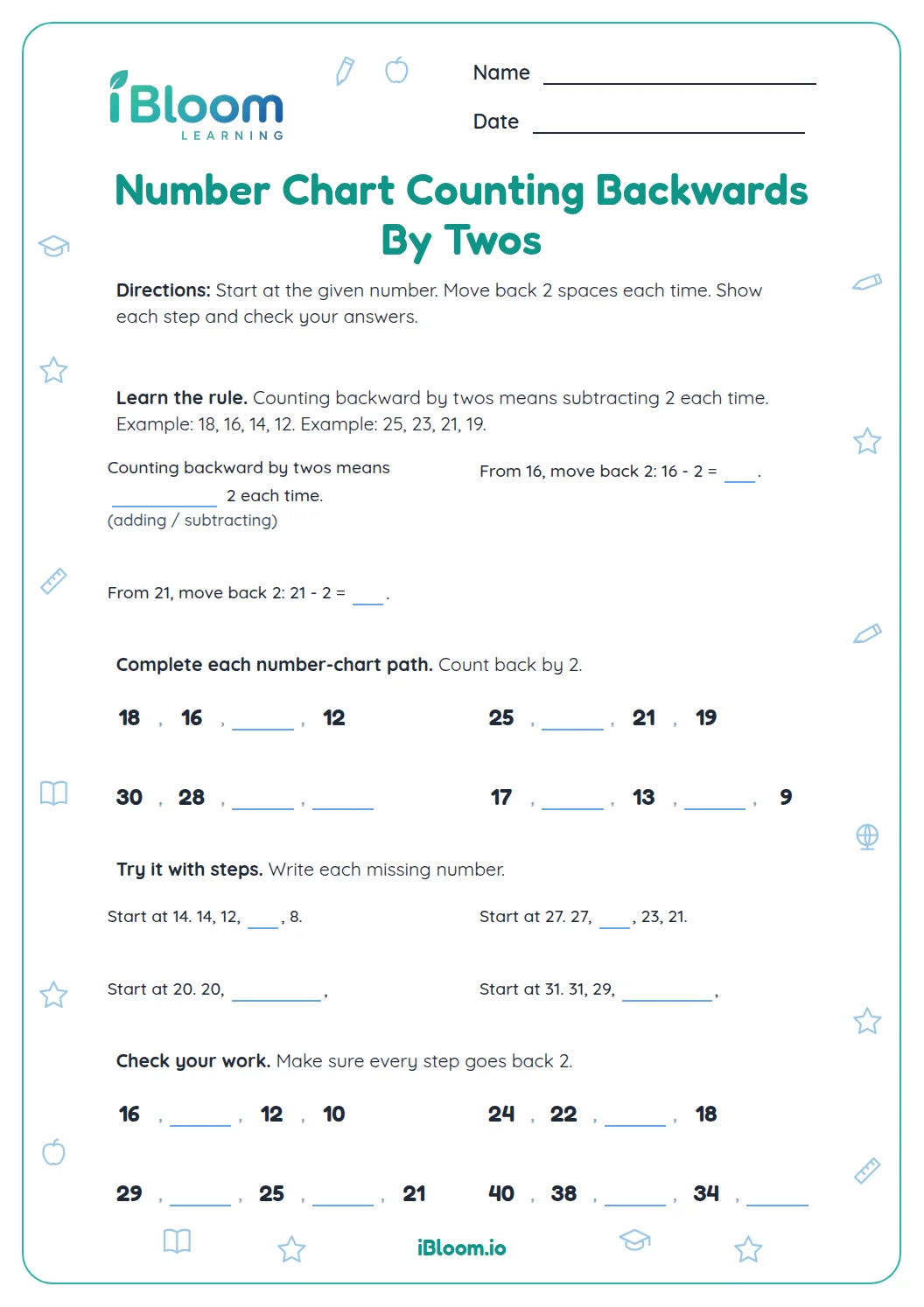
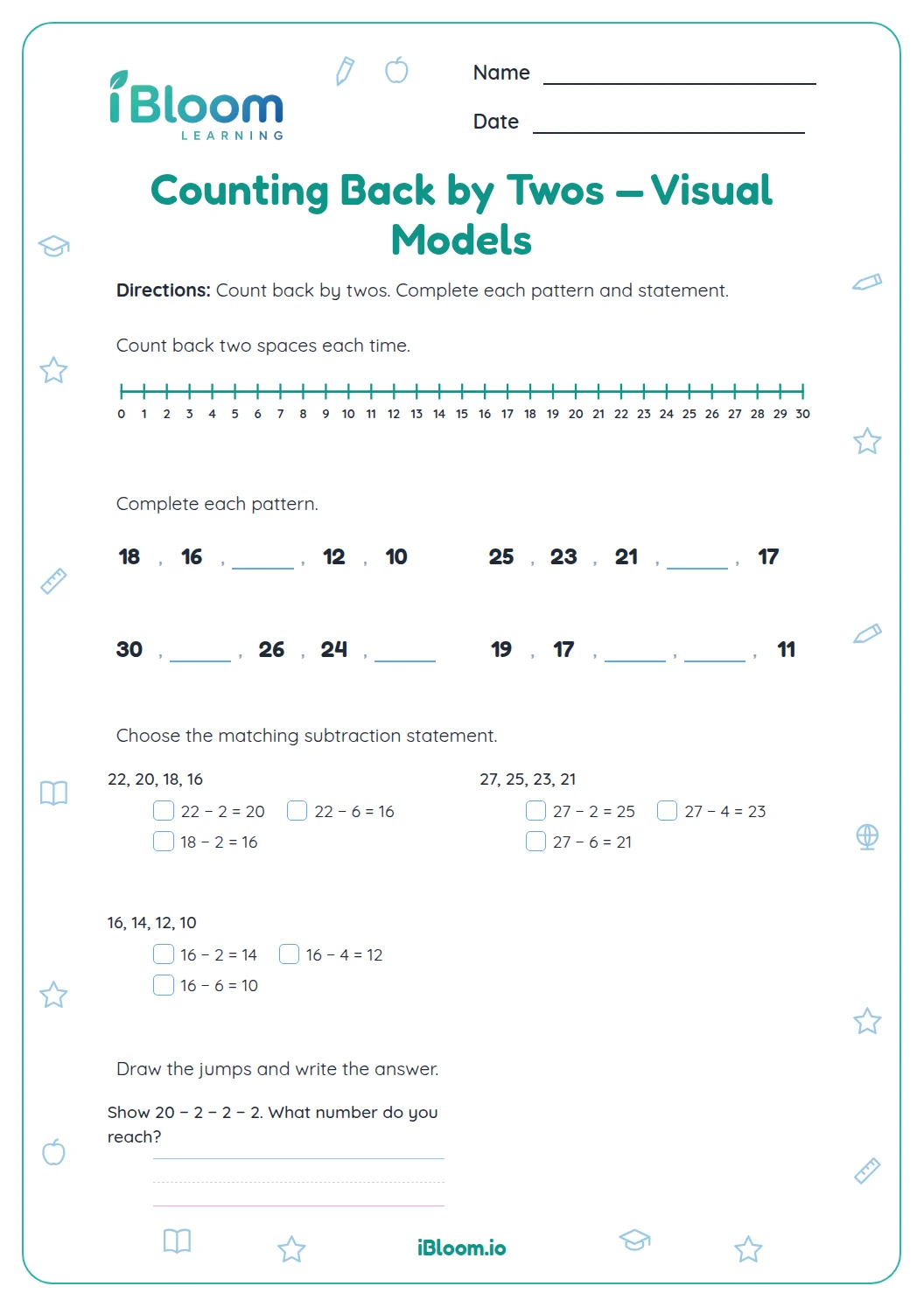
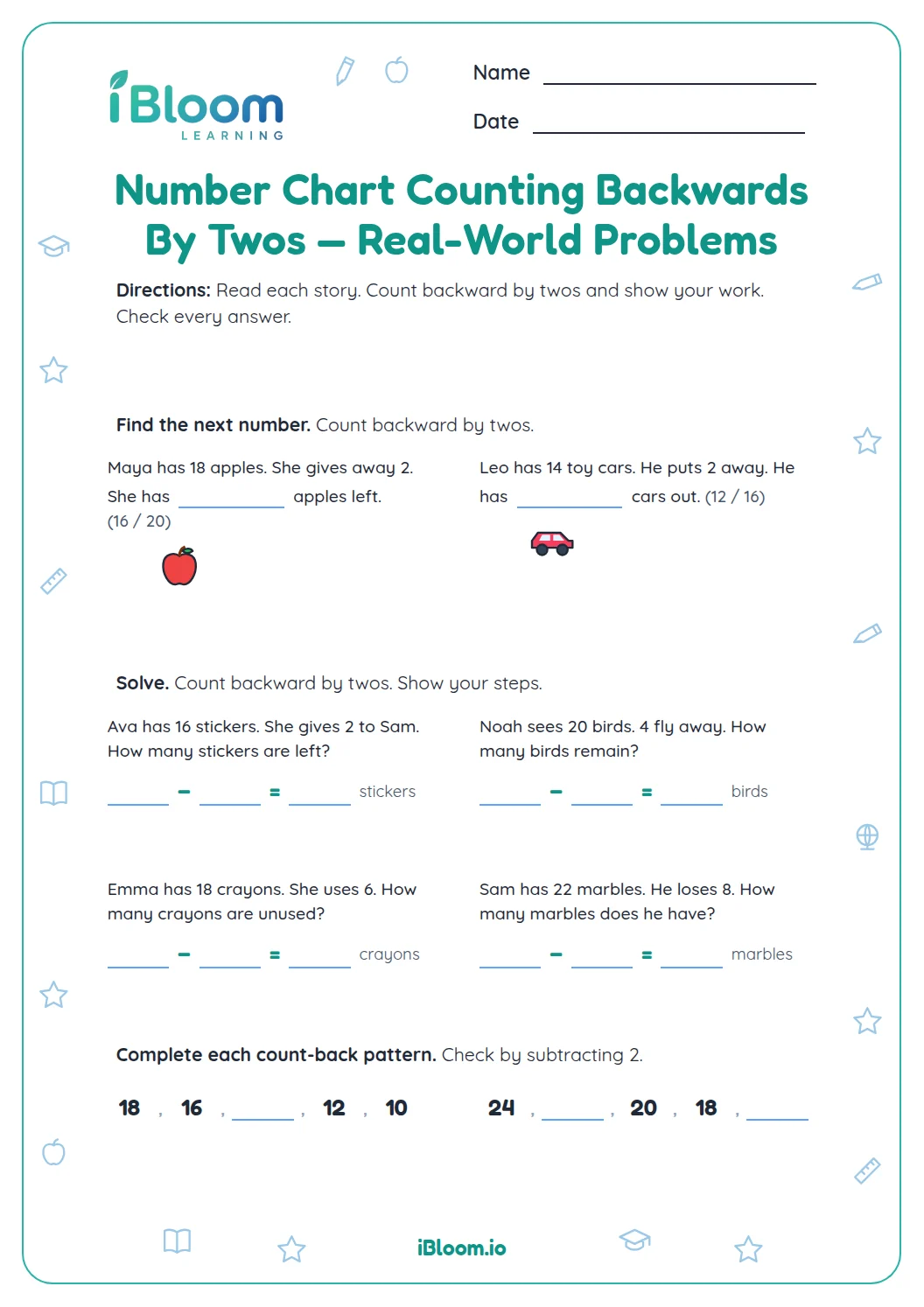
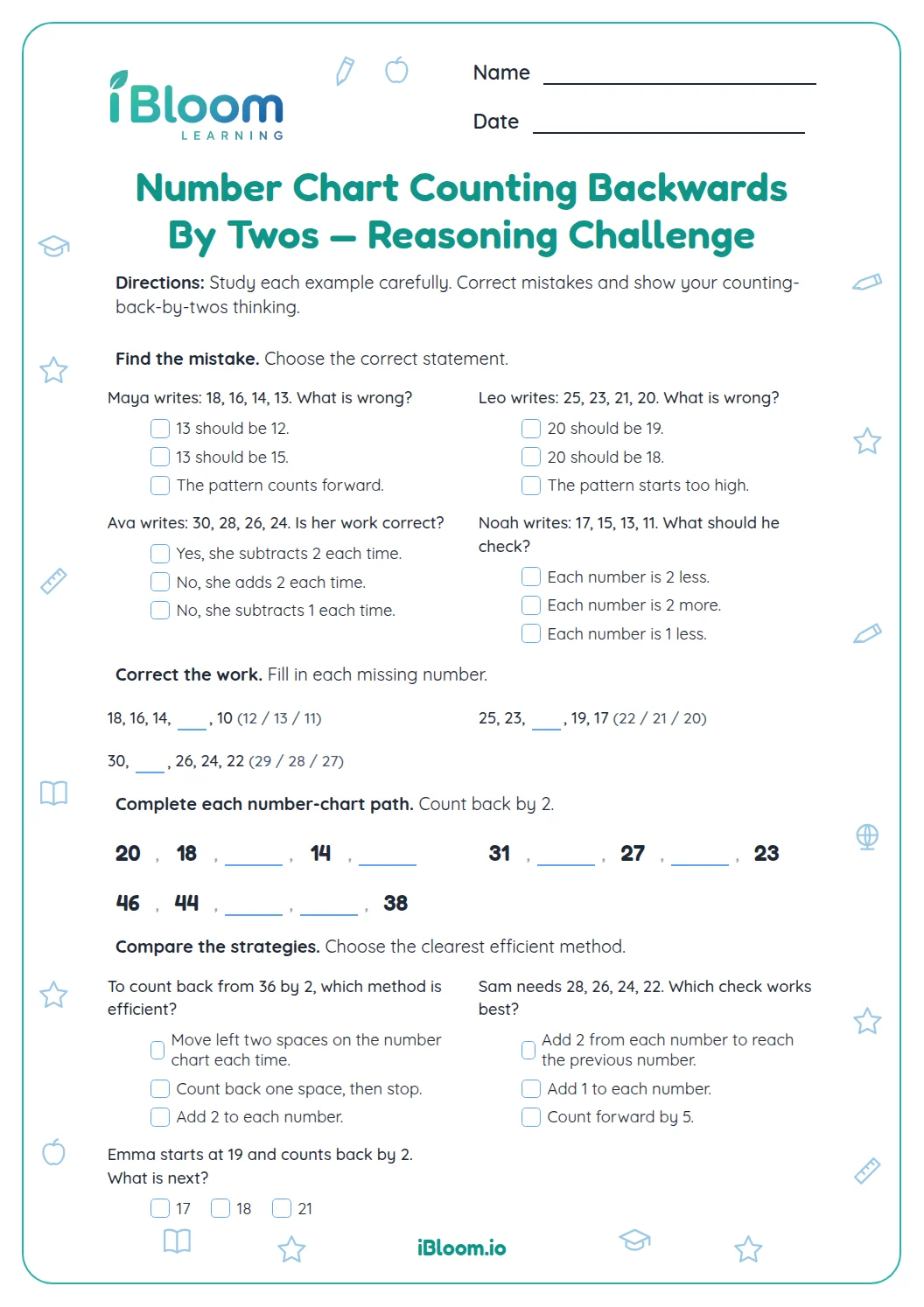
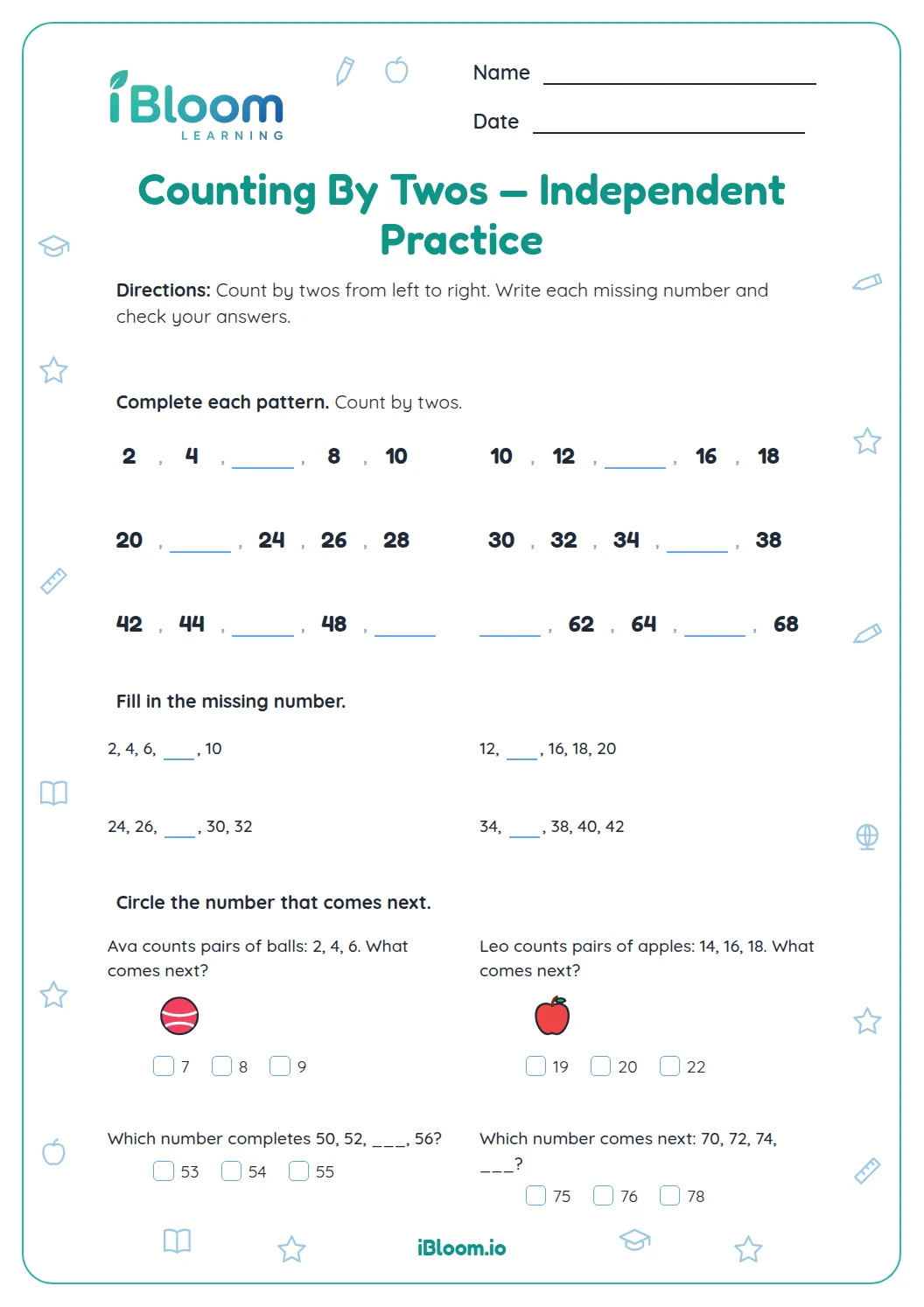
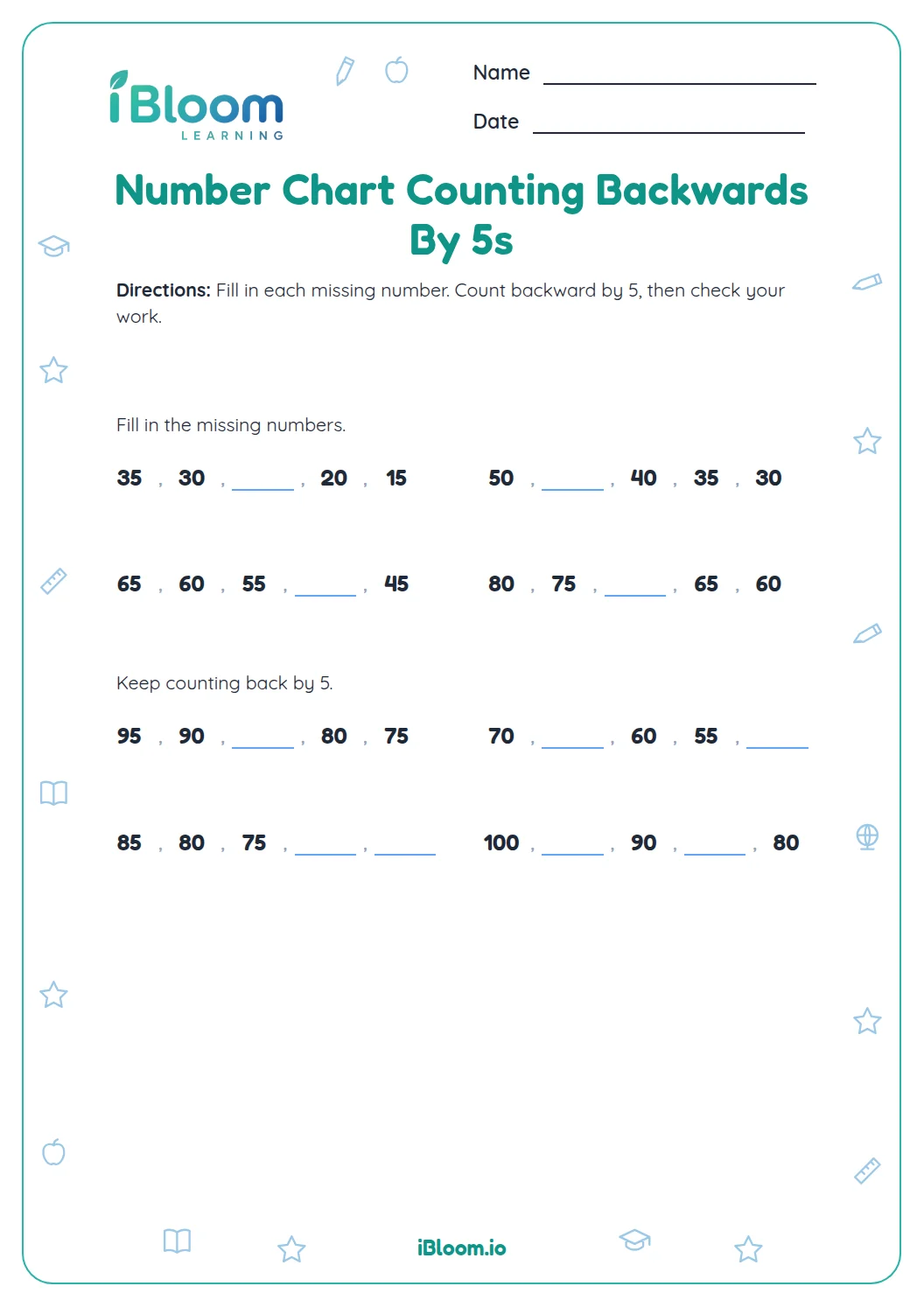
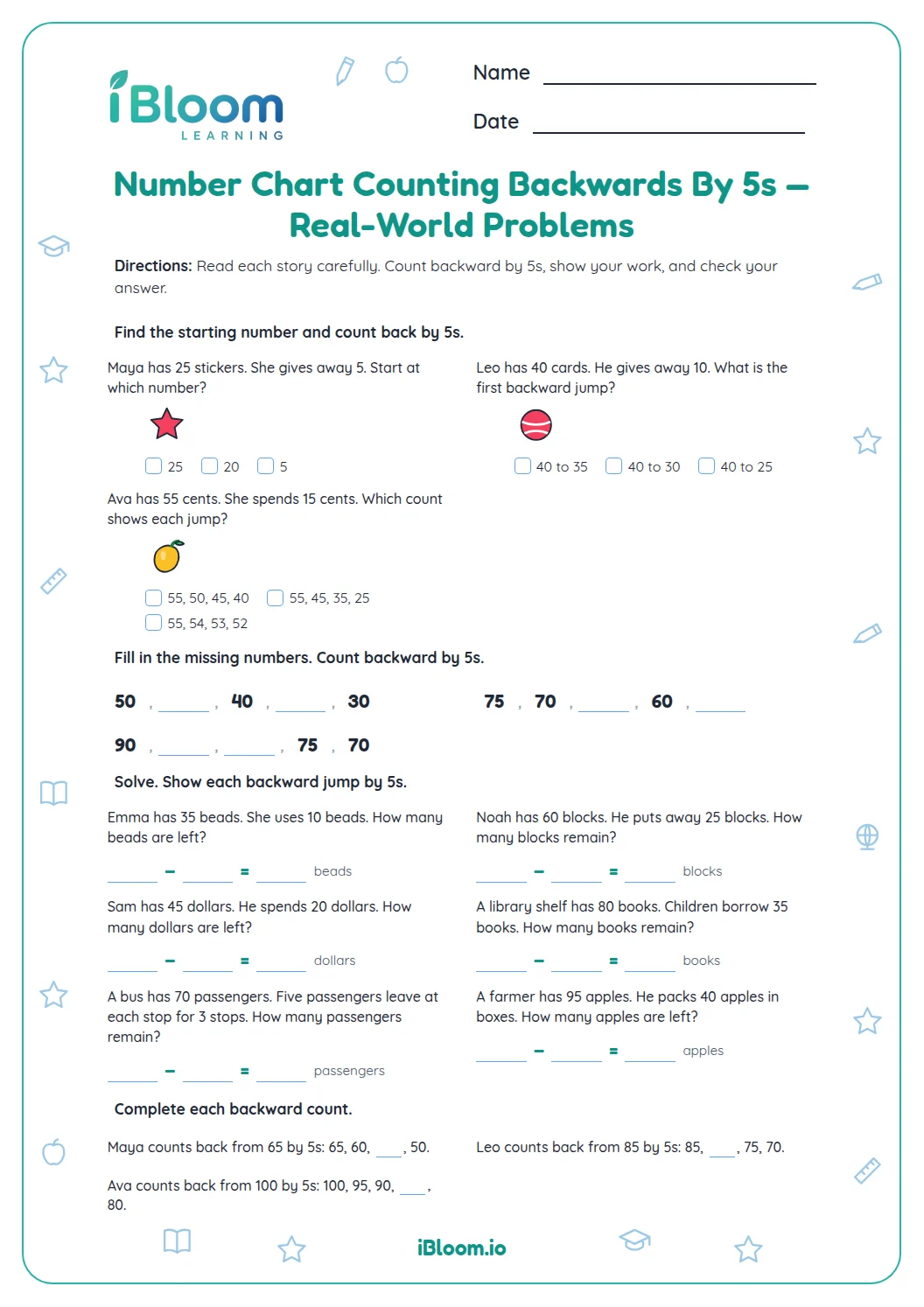
This Grade 1 worksheet practices counting backward by twos, as in the old sheet’s descending sequences and optional number line. Students move two numbers lower at each step and write two missing entries in every row. The 18 sequences use different even-number starting points, including starts above 80. A 0–30 number line is available as a visual reminder for the step size. A separate key gives both missing numbers in order.
How do you count backward by twos?
Start with the number given and subtract two at each step. For example, 18, 16, 14, 12, 10. The ones digit stays the same when moving between even numbers, while the tens digit may change.
How does the number line help?
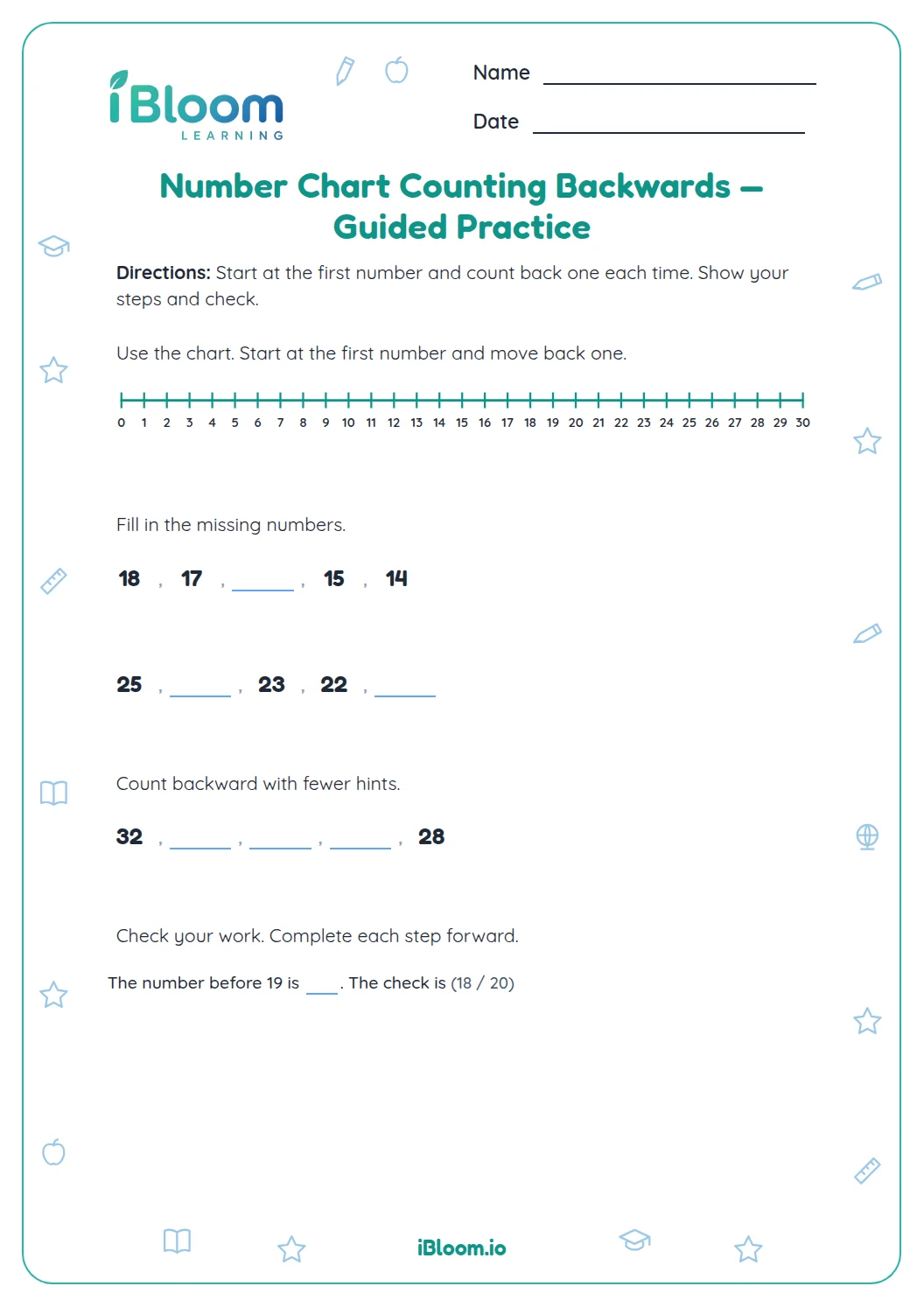
The number line marks jumps of two from 0 to 30, making the step size visible. Part A begins with sequences in that range. Part B uses larger starting numbers and asks students to keep the same two-step pattern.
How can students check each row?
Compare each neighboring number: the next one should be two less. Read across the full row to check both blanks, then compare the answers with the key.
How to use this worksheet
- 1Look at the starting number.
- 2Move two numbers lower each time.
- 3Use the number line to review the step size when helpful.
- 4Write both missing numbers in order.
- 5Check that every neighboring pair differs by two.
Check the work
The mistake
Moving back one number at a time.
The fix
Say the two-number jump aloud: 18, 16, 14.
The mistake
Writing the blanks in reverse order.
The fix
Read the row from left to right and record each answer as you reach it.
The mistake
Changing to a step of ten at a new decade.
The fix
Keep subtracting two across the decade, such as 42, 40, 38.
What to practice next
Make more practice
Questions parents and teachers ask
What does counting backward by twos mean?
Subtract two at each step as the numbers get smaller. A count might begin 18, 16, 14, 12, 10. Every number stays even when the starting number is even, and each pair of neighbors differs by two. Students can say each jump aloud to keep the step size consistent.
What is the number line for?
The printed number line runs from 0 to 30 with marks every two numbers. Students can use it to see the step size and move left by two. The later rows start above 30, so the number line reminds them of the pattern rather than displaying every answer.
How many blanks are in each question?
Each of the 18 sequences has two missing numbers. Write the answers in order from left to right, making each number two less than the one before it. The separate answer key lists both entries in that same order. This keeps both answers in the right order.
How can I check a count by twos?
Subtract two from each number and compare it with the next entry. For example, 26, 24, 22, 20, 18 decreases by two each time. Check both blanks so that the pattern continues across the whole row. Read across the whole row after filling both spaces to confirm the pattern.
Are the starts all the same?
No. The 18 rows begin at varied even numbers from 16 through 100. This gives practice continuing the same backward step from several starting points, including numbers that are not just multiples of ten. Some starts are familiar multiples of ten, while others use different even numbers.