



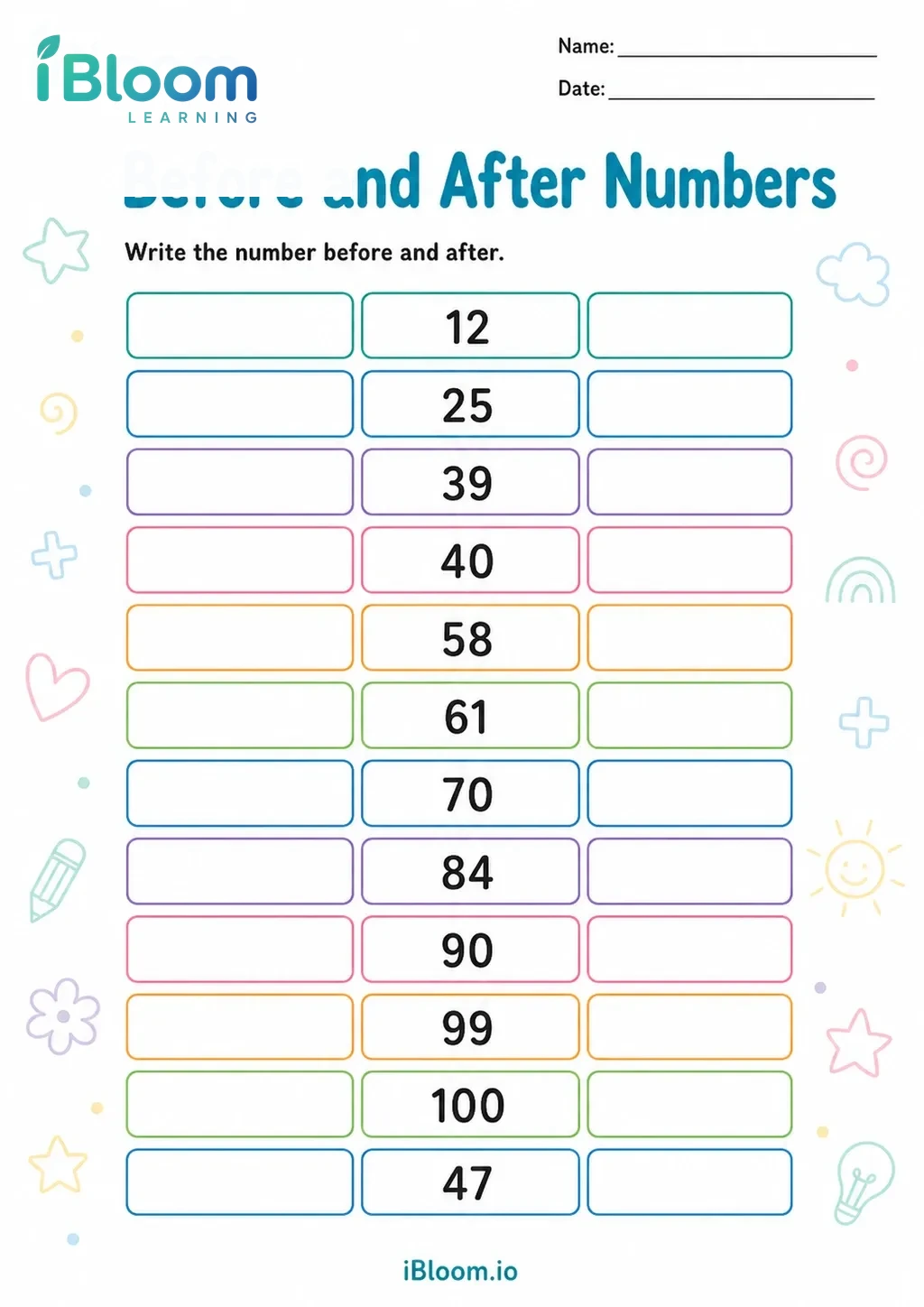
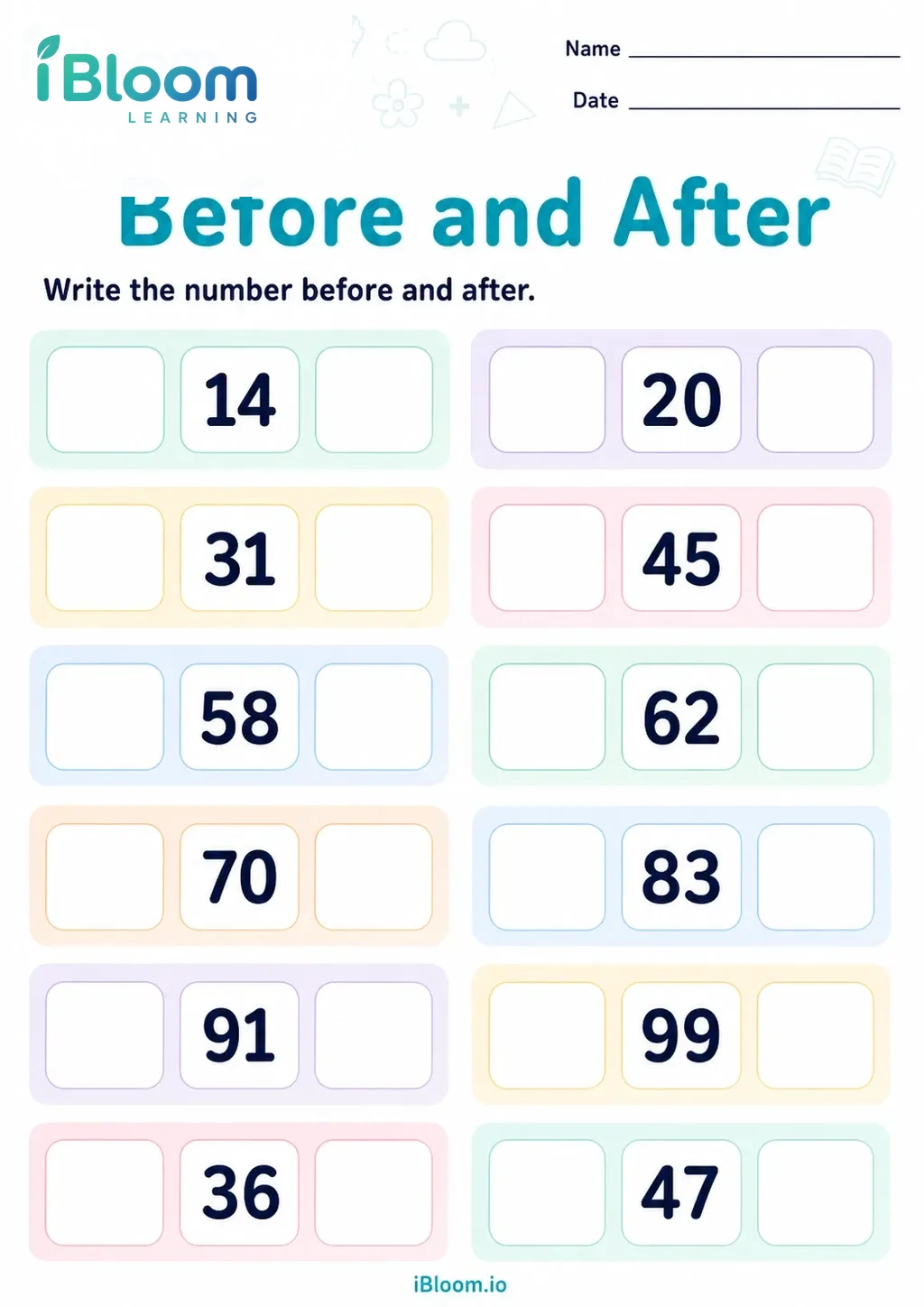
About this worksheet
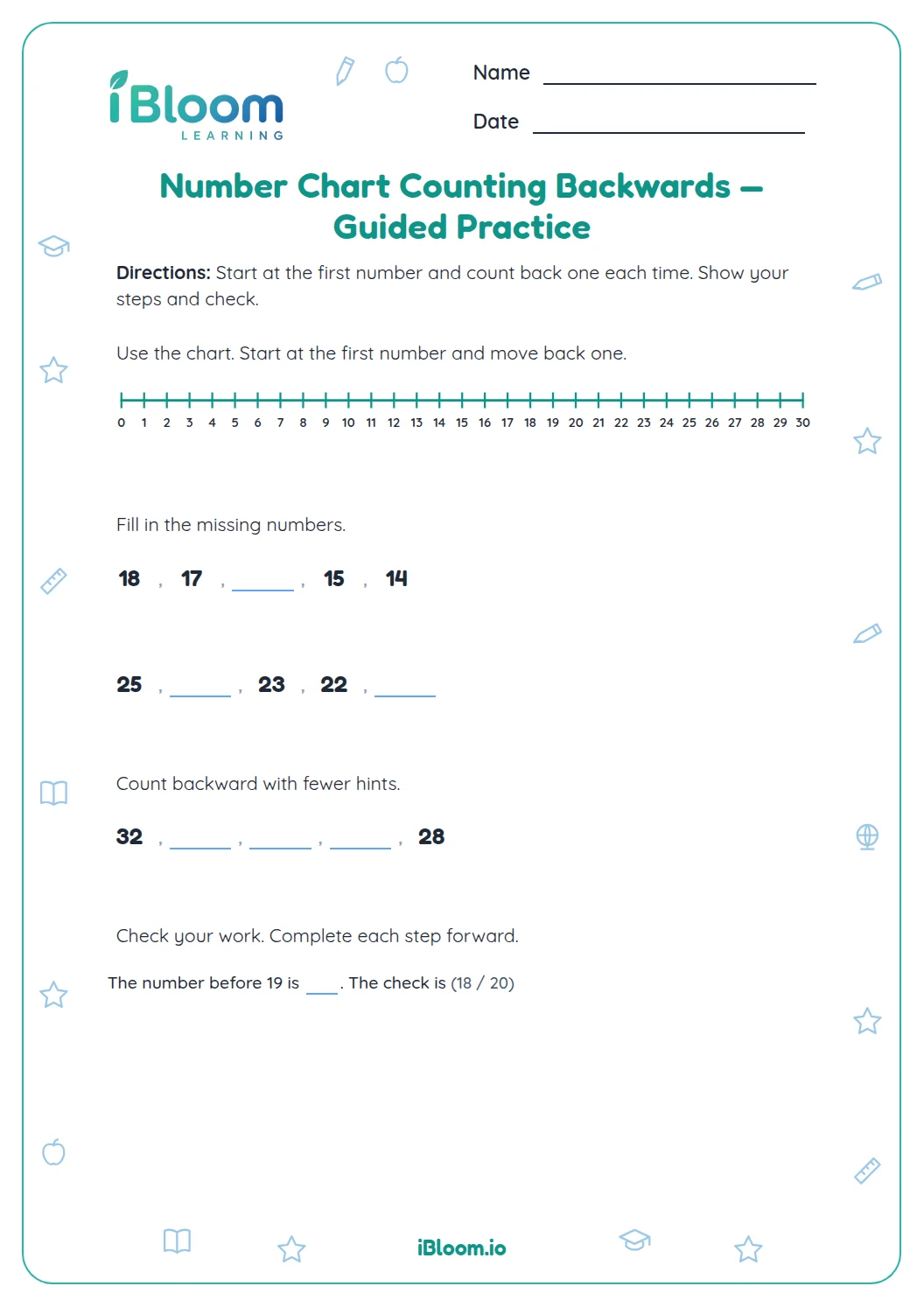
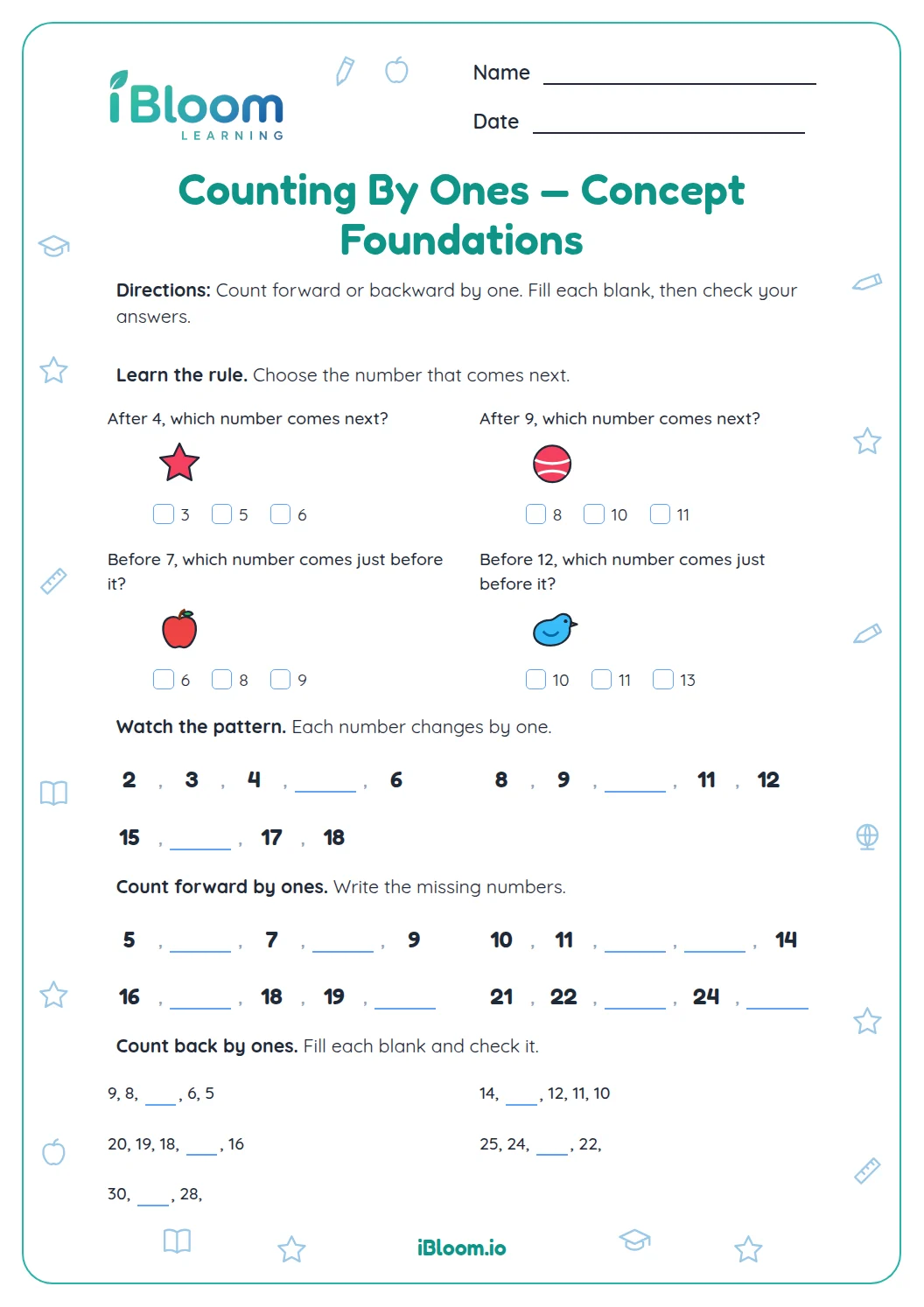
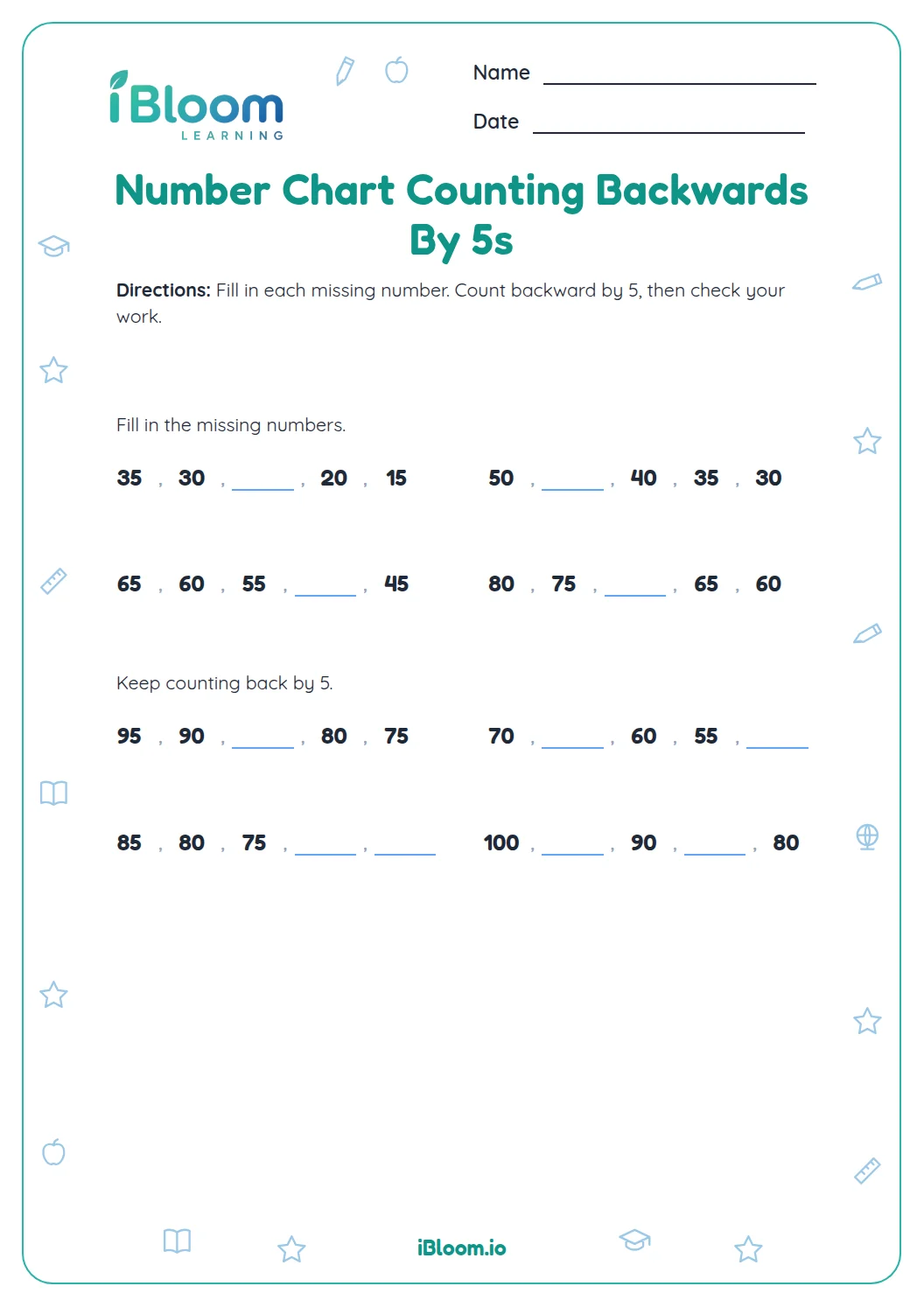
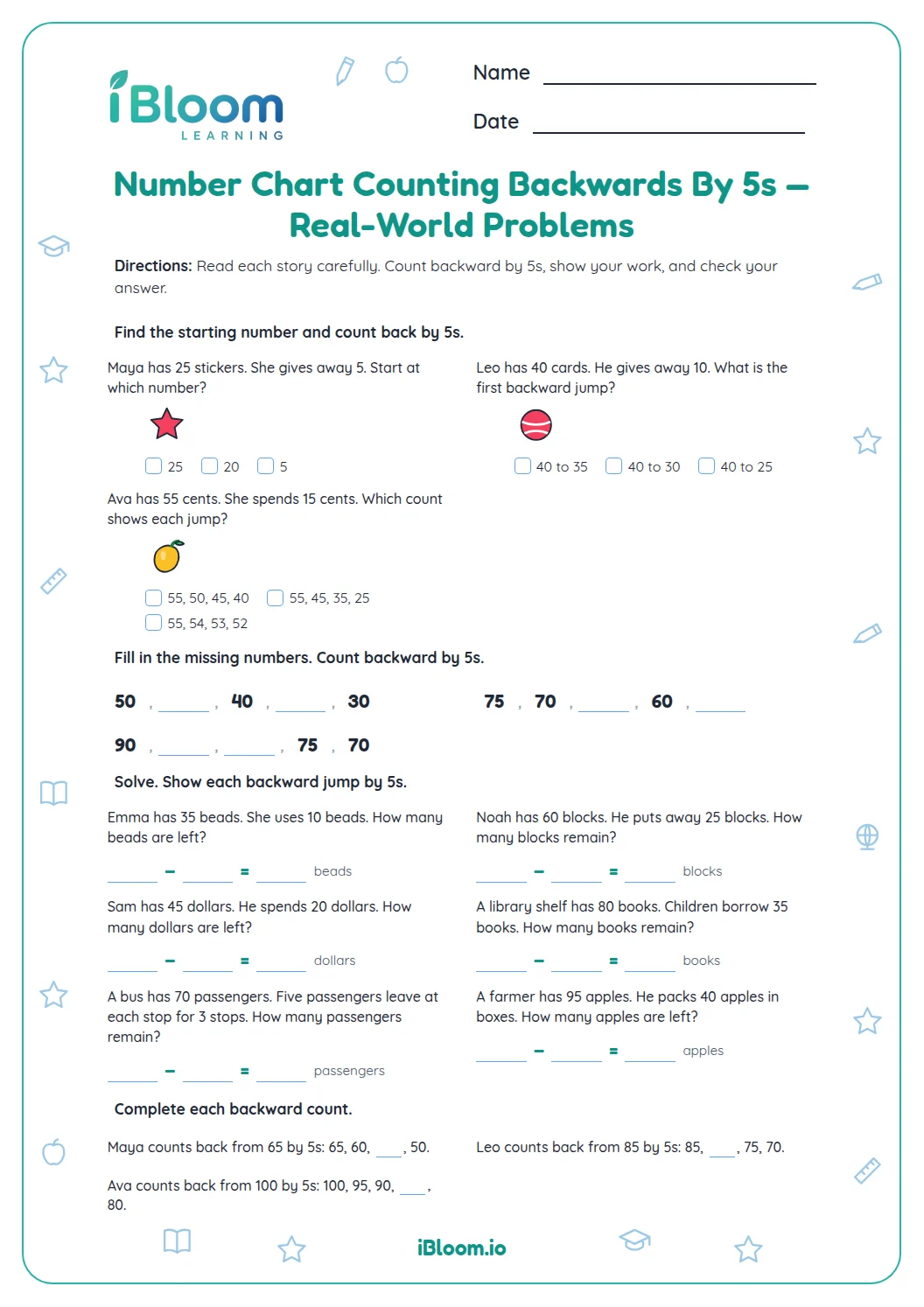
This Grade 1 worksheet practices the source sheet’s counting-backward-by-one skill. Each of the 18 rows gives a short descending count and one blank; students write the number that belongs there. Starting numbers vary within 100 so children practice continuing the sequence rather than repeating a single list. The answer key is on a separate page. The exercises focus on reading and extending a number sequence one step at a time.
What does counting backward by one mean?
Each number in a count backward by one is one less than the number before it. From 18, count 17, 16, 15. Say the numbers in order and notice that the tens digit changes when you move from 20 to 19.
What will students write?
Each question is a five-number sequence with one blank. The 18 starting points range from the teens to 99. Students supply the missing number and keep the count moving down by one.
How can a child check a count?
Read the sequence aloud from left to right. Compare neighbors: each number should be one less than the one before it. Pay close attention when crossing a decade, such as 30, 29, 28.
How to use this worksheet
- 1Read each row from left to right.
- 2Say the numbers aloud as you count down.
- 3Write the number that keeps the count moving by one.
- 4Check neighboring numbers for a difference of one.
- 5Review the rows with the separate answer key.
Check the work
The mistake
Counting up instead of down.
The fix
Say the next smaller number before writing.
The mistake
Skipping a number at a new ten.
The fix
Practice the transition aloud, such as 40, 39, 38.
The mistake
Changing both digits when only one changes.
The fix
Compare one step at a time and check the difference is one.
What to practice next
Make more practice
Questions parents and teachers ask
What does “backward by one” mean?
Move to the number immediately before the one you have. Each step subtracts one: 18, 17, 16, 15. This worksheet uses one blank in each short sequence so a student can practice noticing and continuing that pattern. This gives students a simple way to fill and check each descending sequence.
What numbers are used on this Grade 1 sheet?
The rows begin at different numbers from 18 up to 99 and stay within 100. Each row contains five numbers, with one missing entry. The task is always to count down by one, including when the tens digit changes. This step-by-step check is useful before answering the full row.
How do I count back across a ten?
After a number ending in zero, the next number is the previous ten minus one. For example, after 30 comes 29, then 28. Read both digits carefully so you do not keep the tens digit the same by mistake. Pause at the tens changes for careful checking.
How many questions are included?
There are 18 five-number sequences, each with one missing number. They are arranged in two parts on the worksheet, and a separate answer key shows the number that completes each row. The two parts organize the rows, and each answer is printed in the separate key.
Should students use a number chart?
A number chart can help a learner locate a number and move to the one immediately before it. With practice, students can say the sequence aloud and write the missing number without a chart. The worksheet itself uses number sequences rather than a printed chart.