



About this worksheet
This Grade 1 printable helps children count backward to solve take-away stories, continue number sequences and find missing numbers. The 20 questions move from story problems to backward counts and subtraction sentences, with an answer key for checking. The stories use numbers within 20 and connect counting back with taking away.
Aligned to 1.OA.A.1
What does this counting backward worksheet practice?
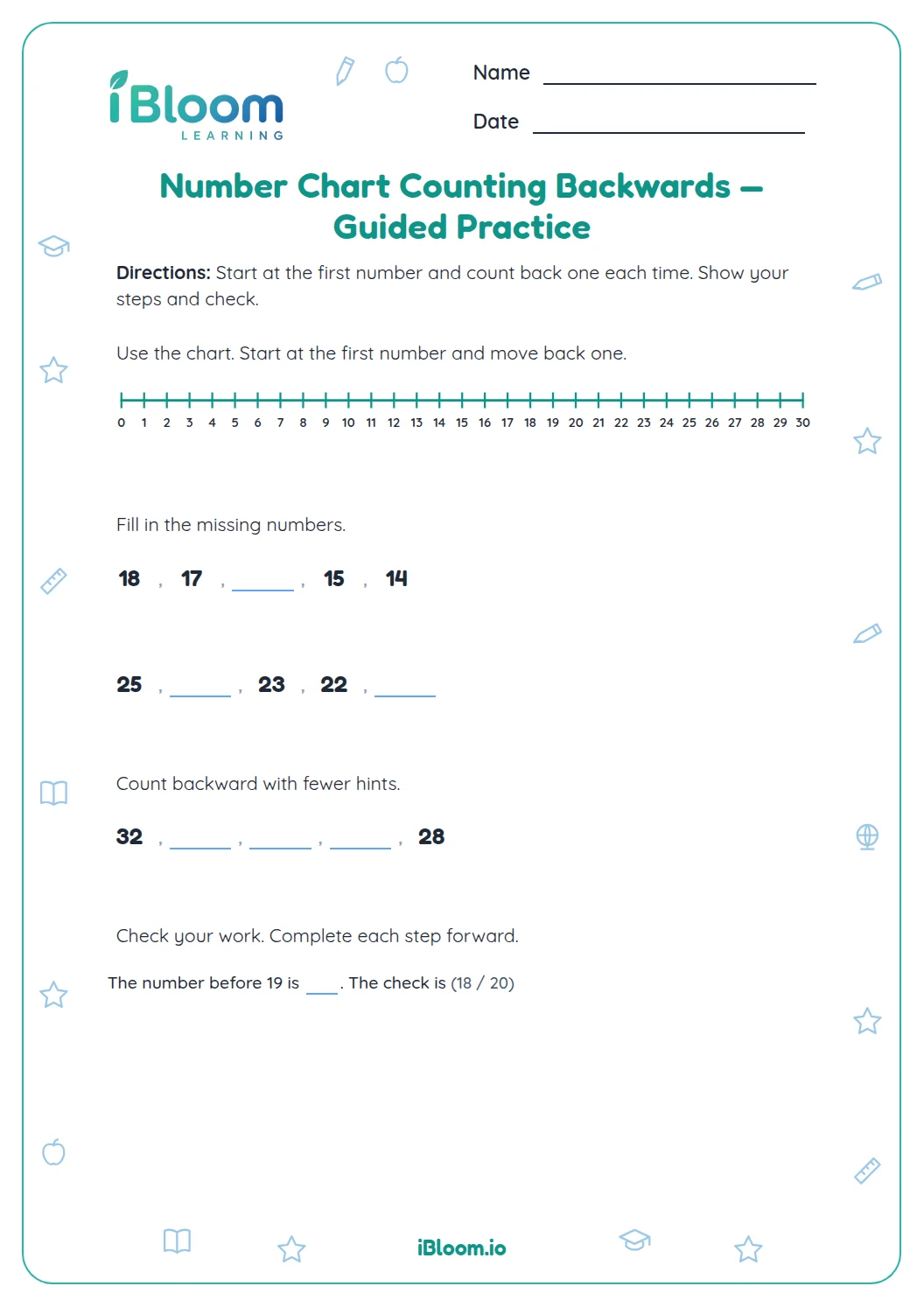
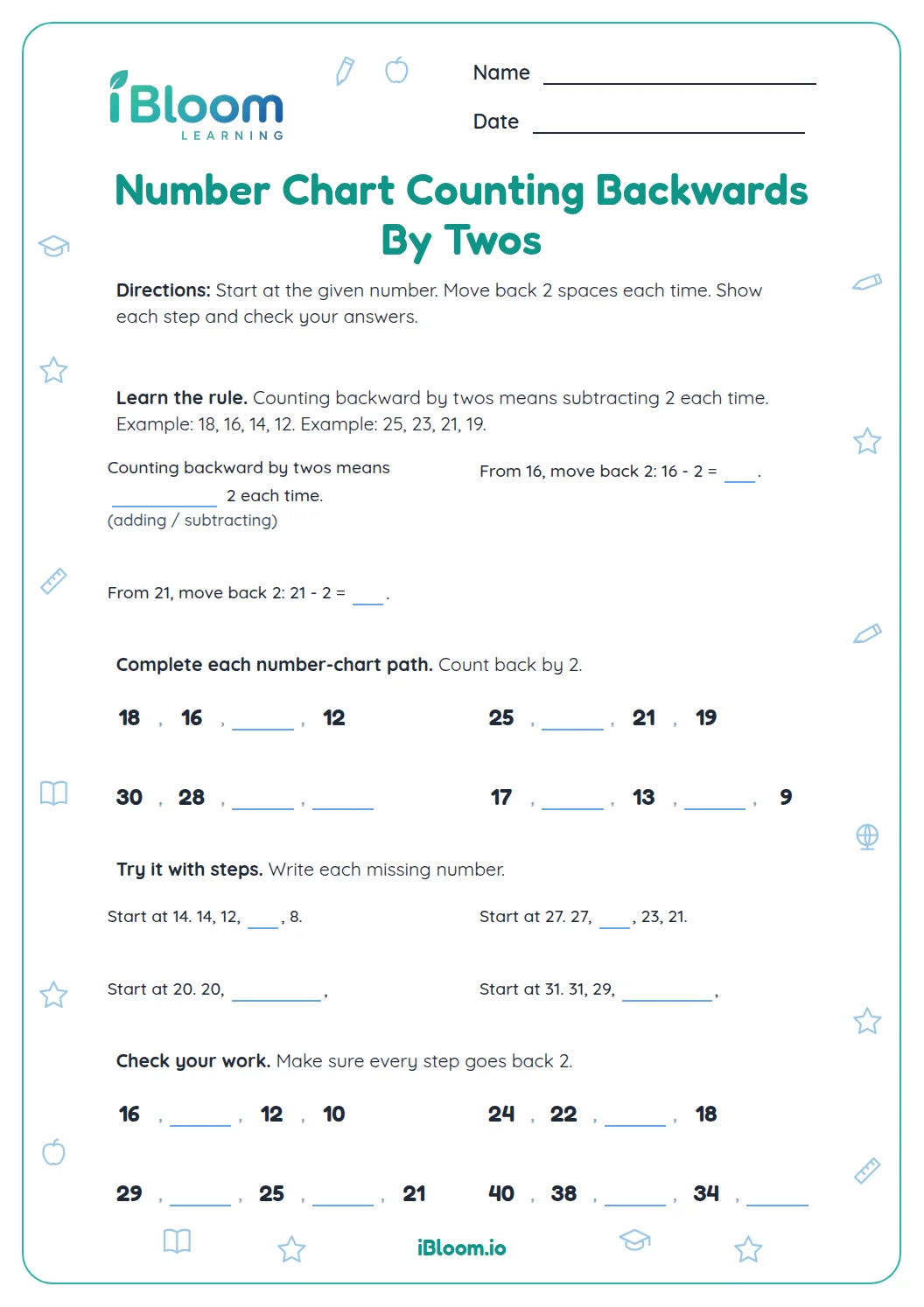
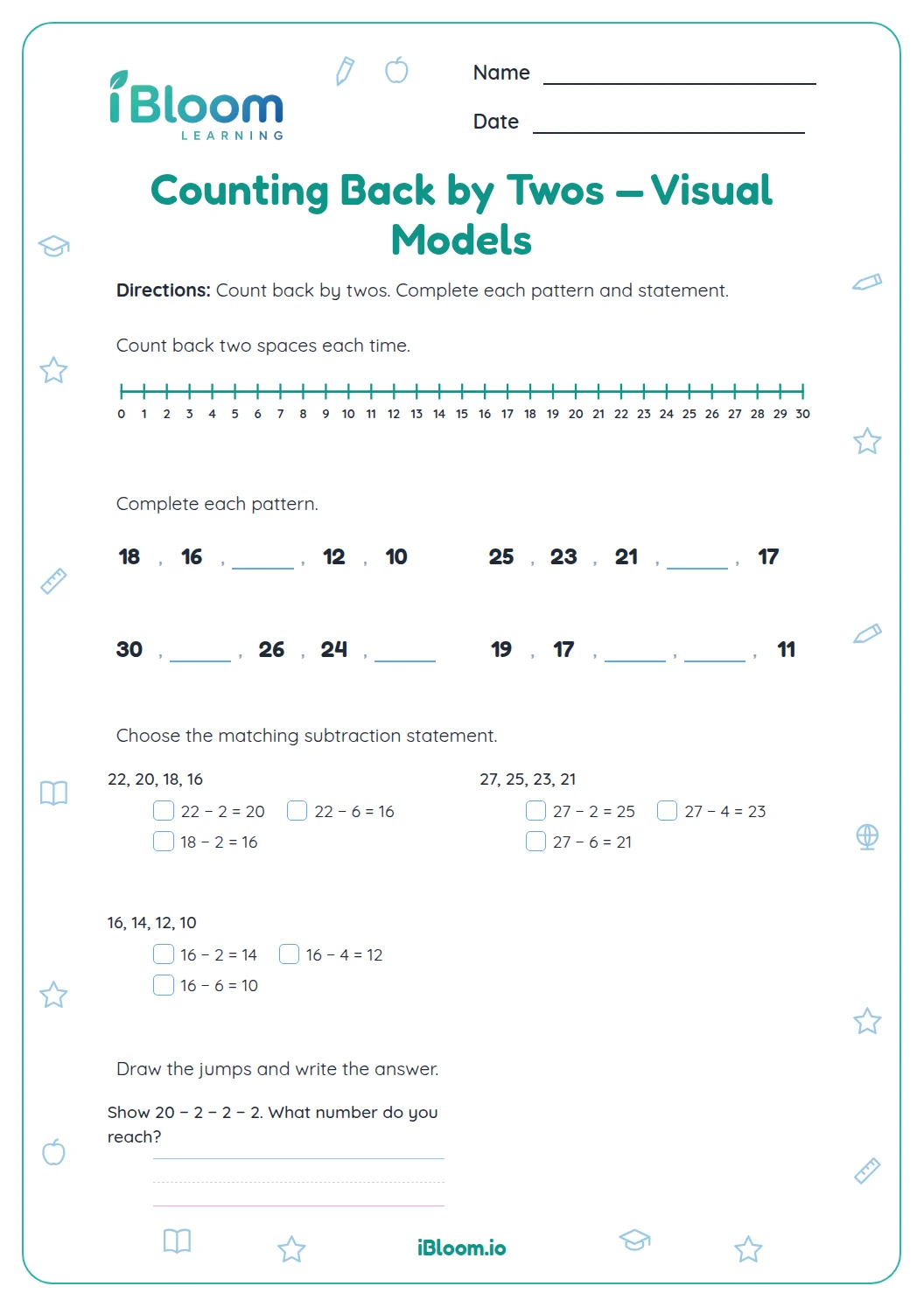
This printable moves from take-away stories to backward counts and missing subtraction numbers. Children can say each backward step before writing the result.
The answer key includes the numerical results for checking all 20 questions.
How can a child work through counting backward?
Start at the number named in the story or sequence. For each step backward, say the next smaller number, then record the landing number or missing value.
- 118 children waiting − 5 children entering = 13 still waiting.
- 2Count back five steps from 18: 17, 16, 15, 14, 13.
How can an adult help without giving the answer?
Ask the child where the backward count starts and how many steps to take. For a missing subtraction number, invite them to count back and then check the equation.
How to use this worksheet
- 1Read each story aloud and underline the amount that goes away.
- 2Count backward from the starting number one step at a time.
- 3Write the number left at the end of a story.
- 4In Part B, keep the order of the count going backward.
- 5Use Part C to connect backward counting with a missing subtraction number.
- 6Check each answer with the separate key.
Counting-back mistakes and quick fixes
The mistake
Counting the starting number as the first step back.
The fix
For 18 minus 5, say 17 as step one; 18 is where the count starts.
The mistake
Counting forward in a sequence that is going backward.
The fix
Compare each pair: the next number must be one or two less, as the direction says.
The mistake
Writing the number taken away instead of the number left.
The fix
Ask, “How many are still there?” and check the result is smaller than the starting amount.
Common Core alignment
This worksheet uses subtraction stories and counting strategies described in the Grade 1 operations standard.
Solve take-away story problems by counting back or writing a subtraction equation.
On this sheet: Parts A and C use take-from situations and unknown positions; Part B practices the counting-back strategy.
Show the official wordingHide the official wording
Use addition and subtraction within 20 to solve word problems involving situations of adding to, taking from, putting together, taking apart, and comparing, with unknowns in all positions, e.g., by using objects, drawings, and equations with a symbol for the unknown number to represent the problem.
What to practice next
Make more practice
Further reading
Questions parents and teachers ask
What does “count backward” mean?
Start at a number and say the numbers that come before it. To count back four from 16, say 15, 14, 13, 12; the last number is the result. This page uses that strategy in stories and number sequences.
How many questions are on the printable?
There are 20 questions in three parts: eight take-away stories, eight backward counts and four missing-number subtraction sentences. The stories use settings such as a library, bus, game and basket. Children can use the number sequence to check each story result.
What should my child do when a story says some objects leave?
Begin with the amount in the story and count back by the number that leaves. In the bus question, 20 riders start aboard and 7 get off, so counting back seven steps gives 13 riders still aboard. Say each step aloud to keep the starting amount from being counted as a step.
Why does a number sentence have a blank before the subtraction sign?
The blank stands for the starting amount. In “___ − 4 = 11,” think of a number that is four more than 11, then check by counting back four. The answer is 15. You can also test it by adding 11 and 4 to get 15.
Can children use a number chart?
Yes. A number chart can help a child move to the previous number for each backward step. Encourage the child to say each number while moving, then write only the final answer in the space. For a count by twos, move up two numbers each time.
What is a good next activity?
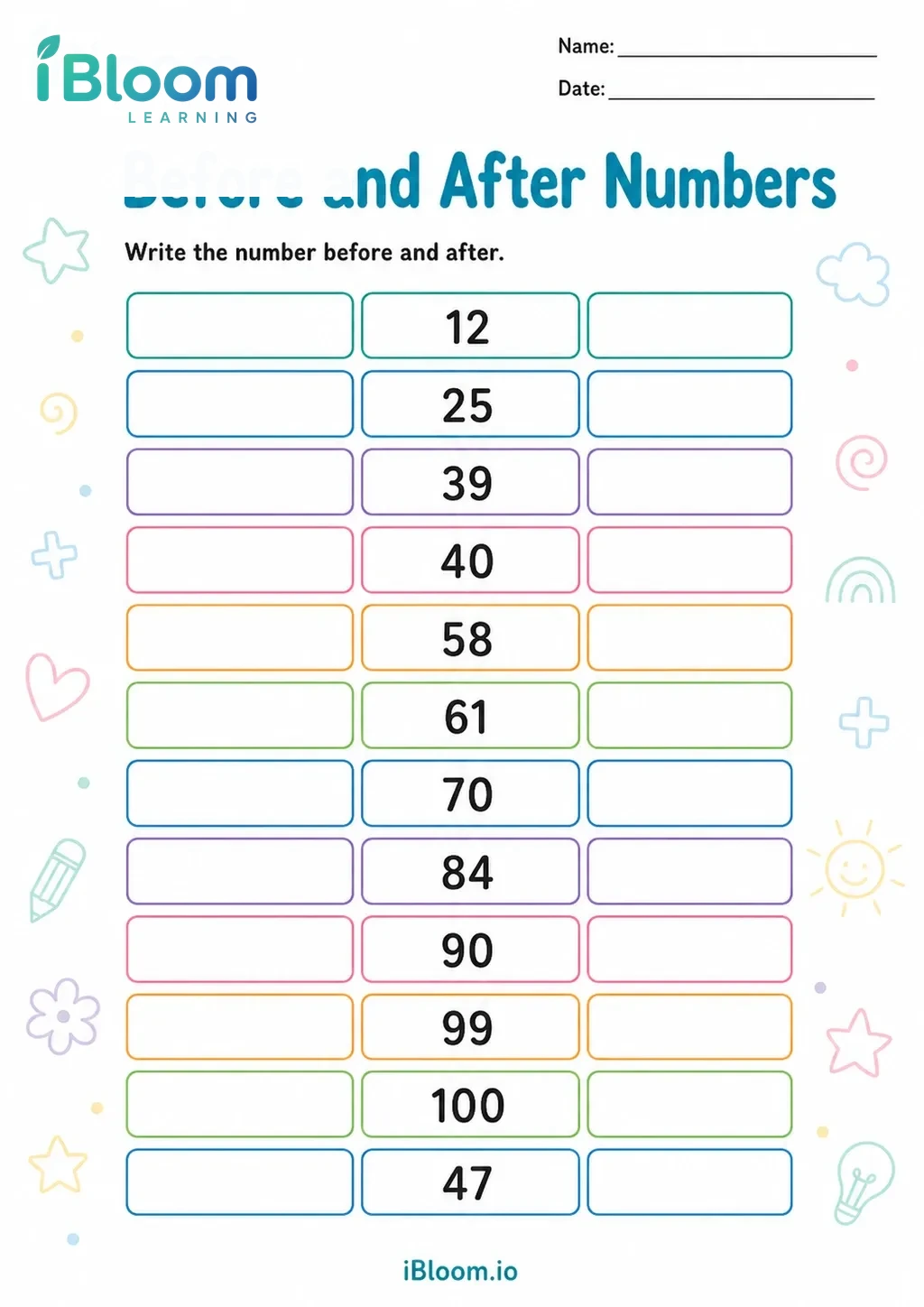
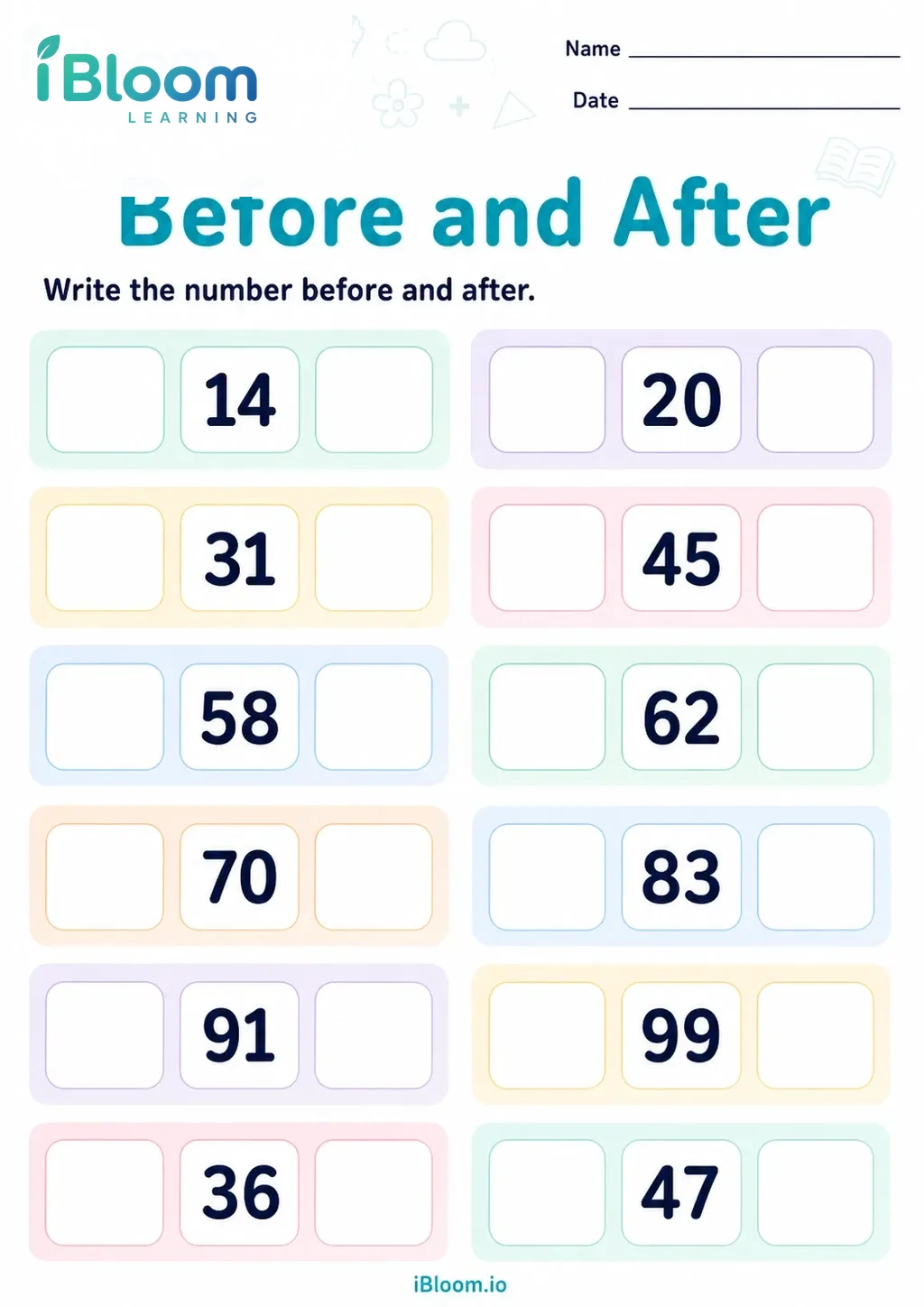
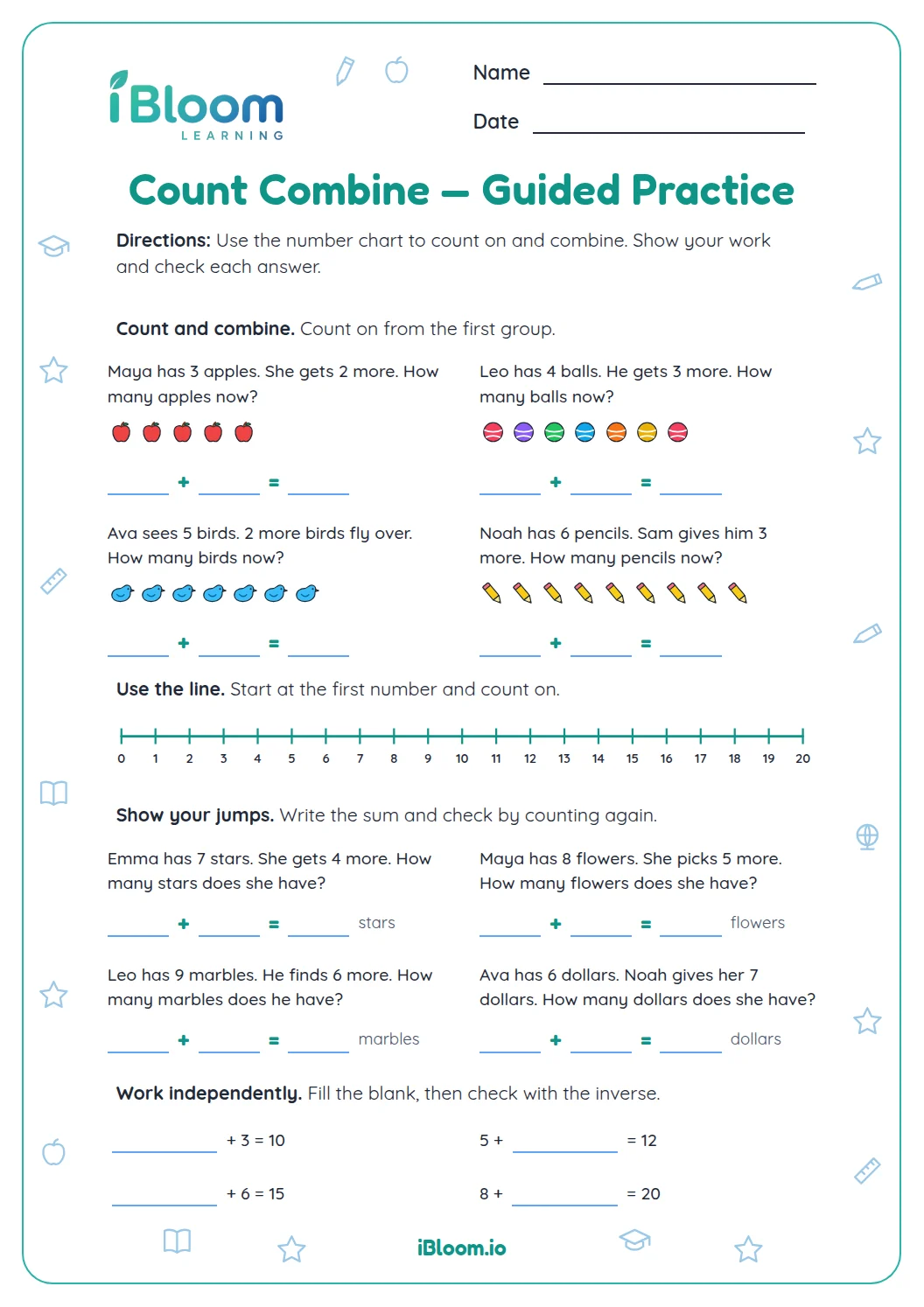
Try counting before and after to make nearby numbers automatic, then practice backward counts by twos. The linked sibling pages follow those steps and keep the focus on number order, so children can build confidence before solving more take-away stories.