



About this worksheet
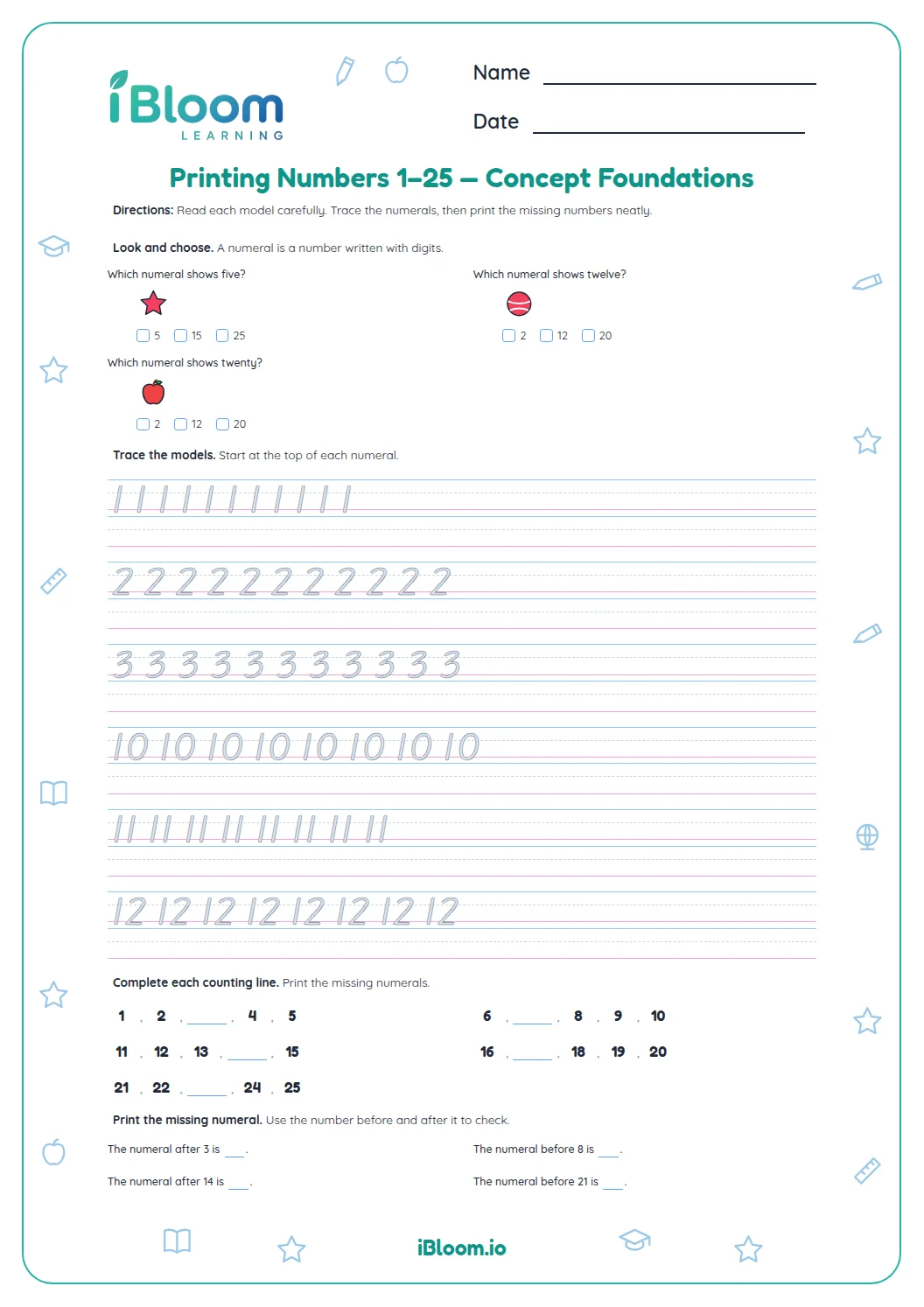
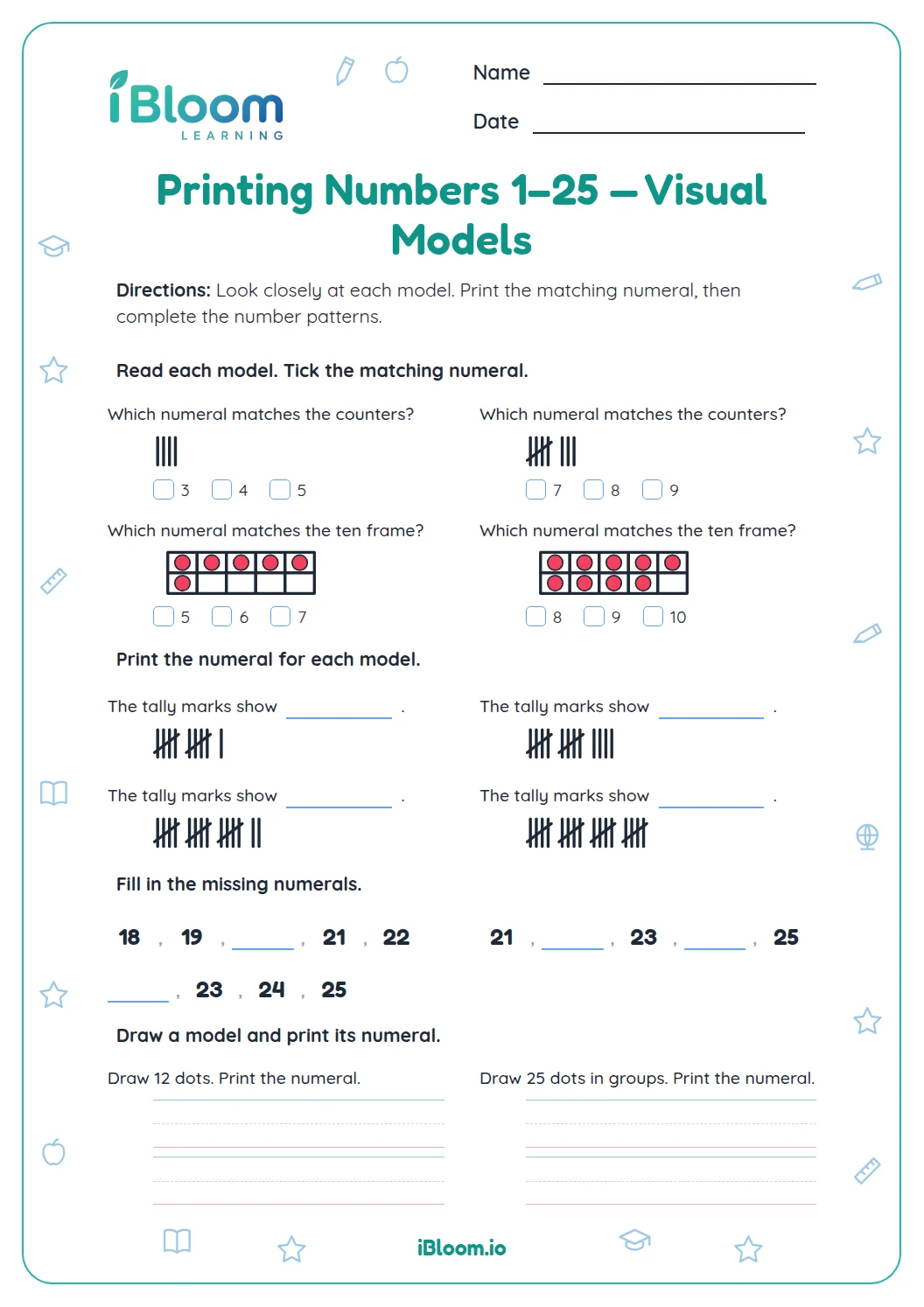
This free printable Grade 1 worksheet practices writing and reasoning with numerals from 1 to 25. Children fill gaps in number paths, find a number just before or after another, and check short counting mistakes. The last questions ask them to choose a correct count and order numerals from least to greatest. It has 16 questions across four parts and a separate answer key. The number paths move through the full 1–25 range, while the later items use the same count-by-ones ideas to check understanding.
How do the number paths work?
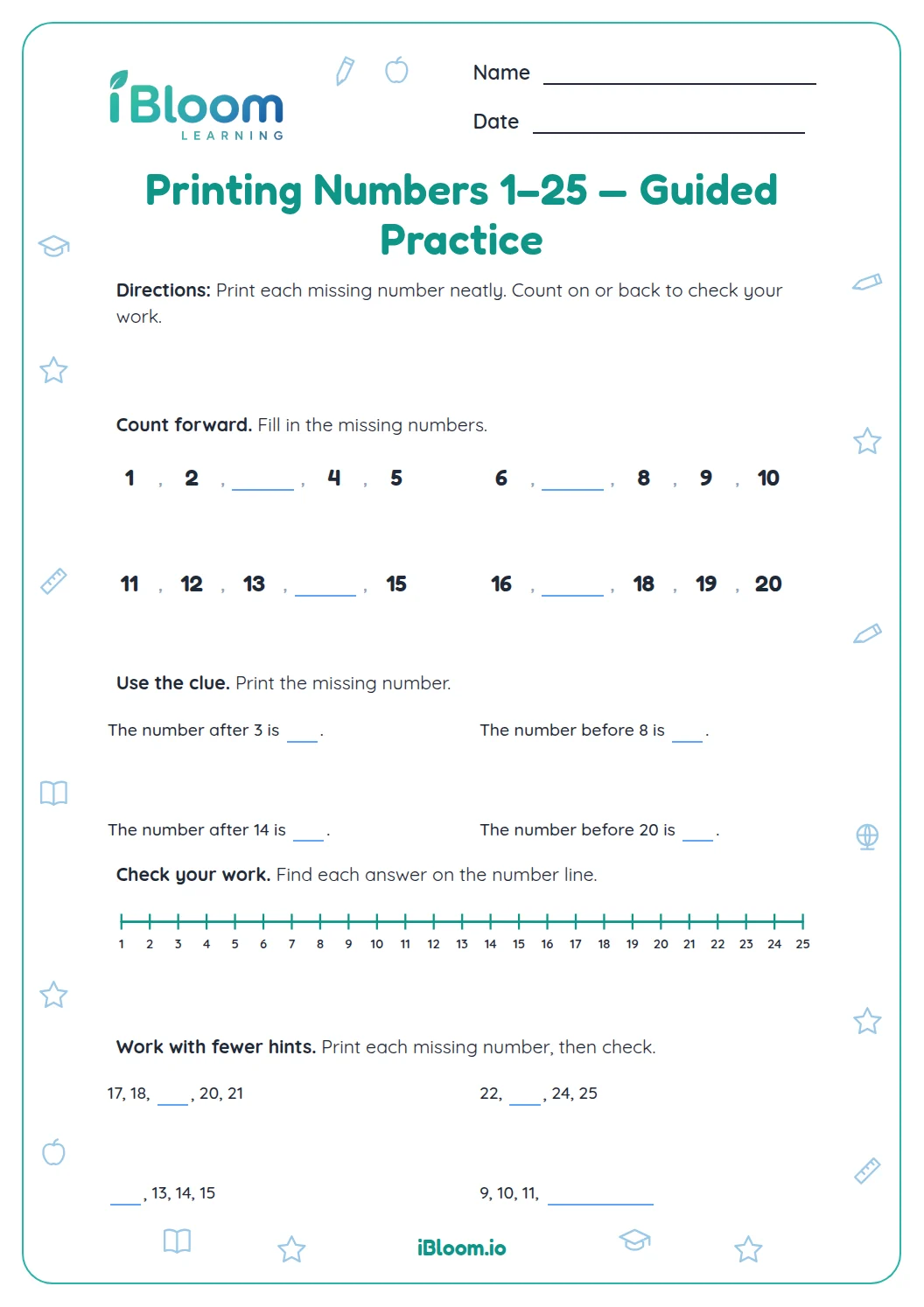
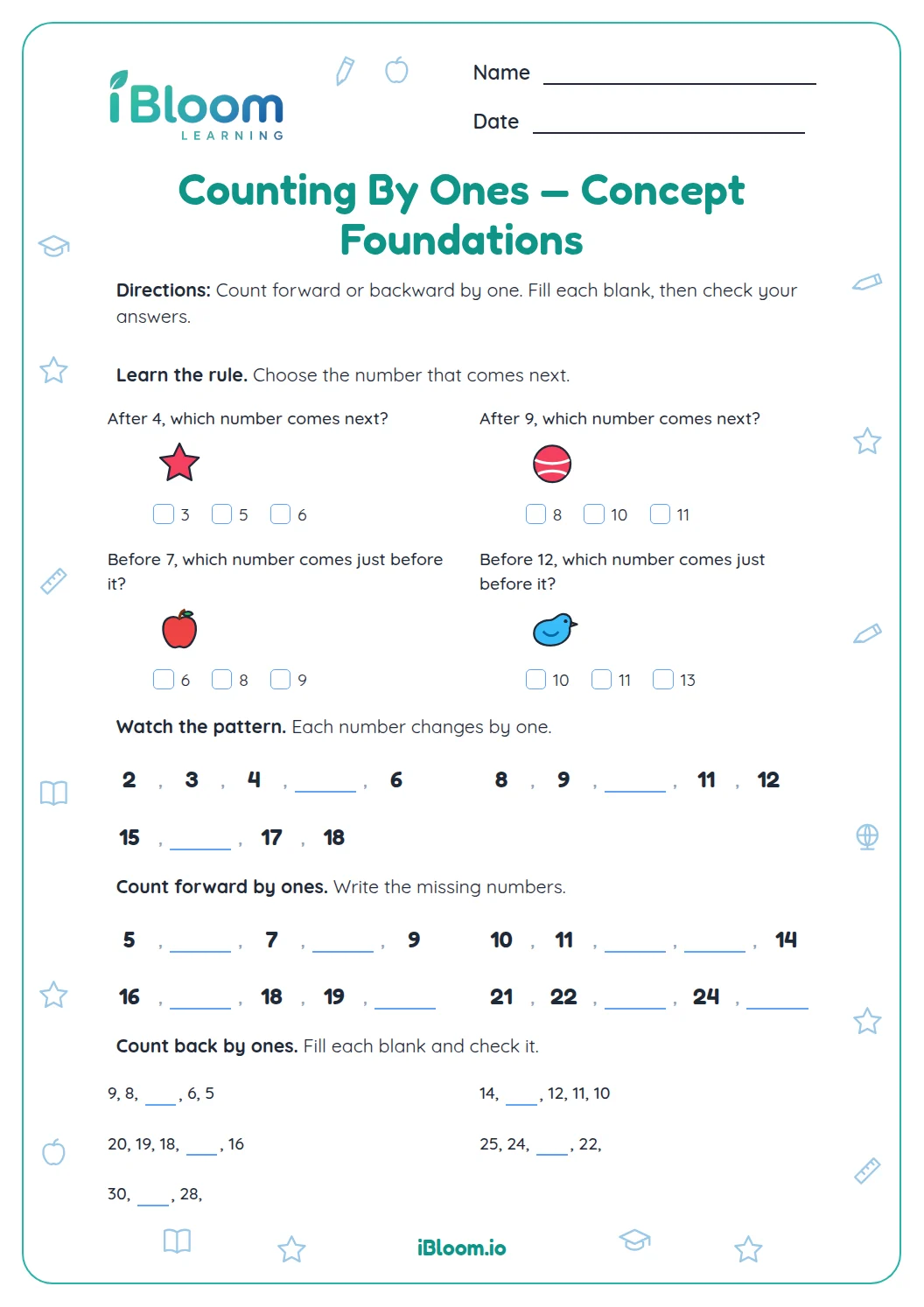
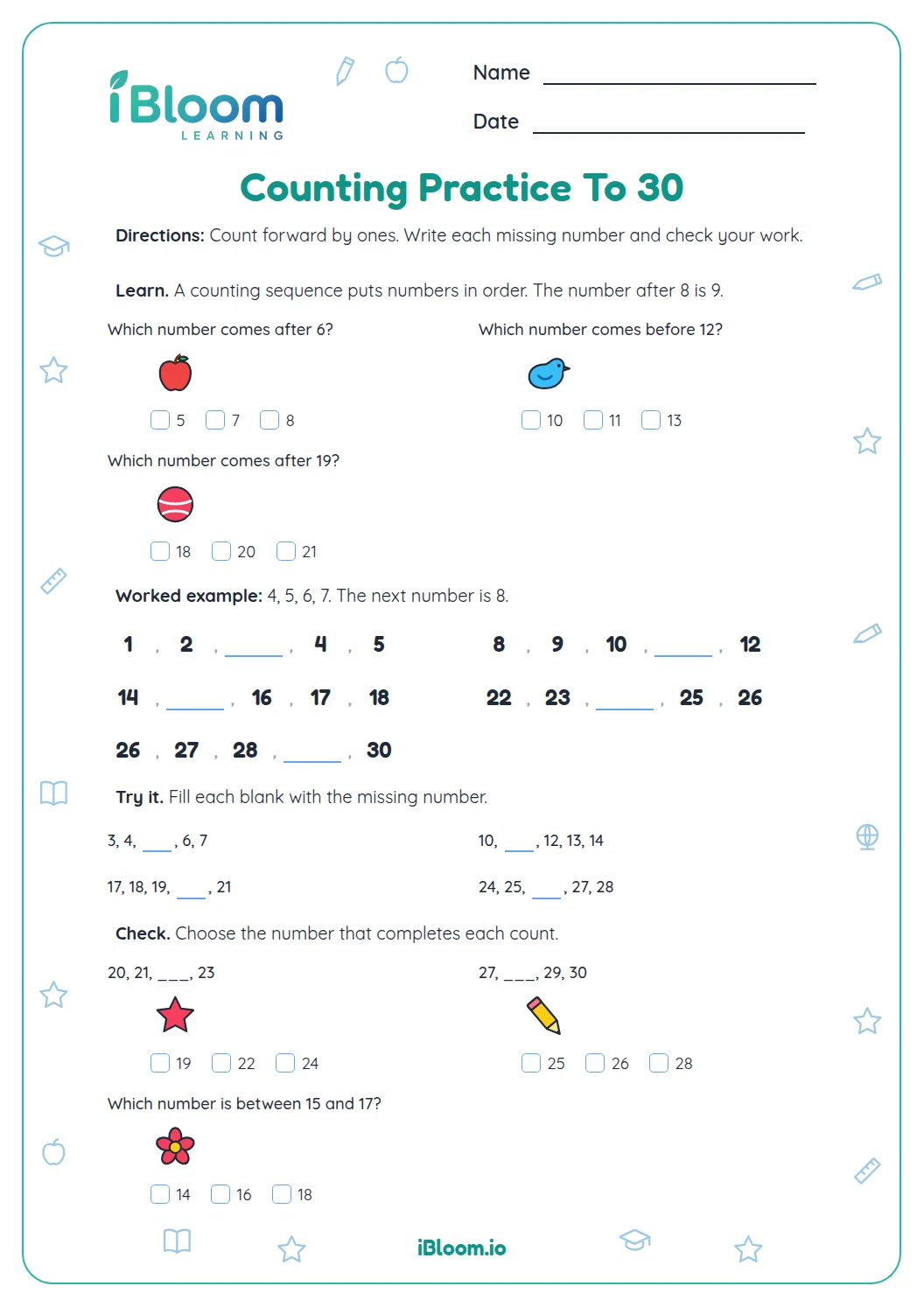
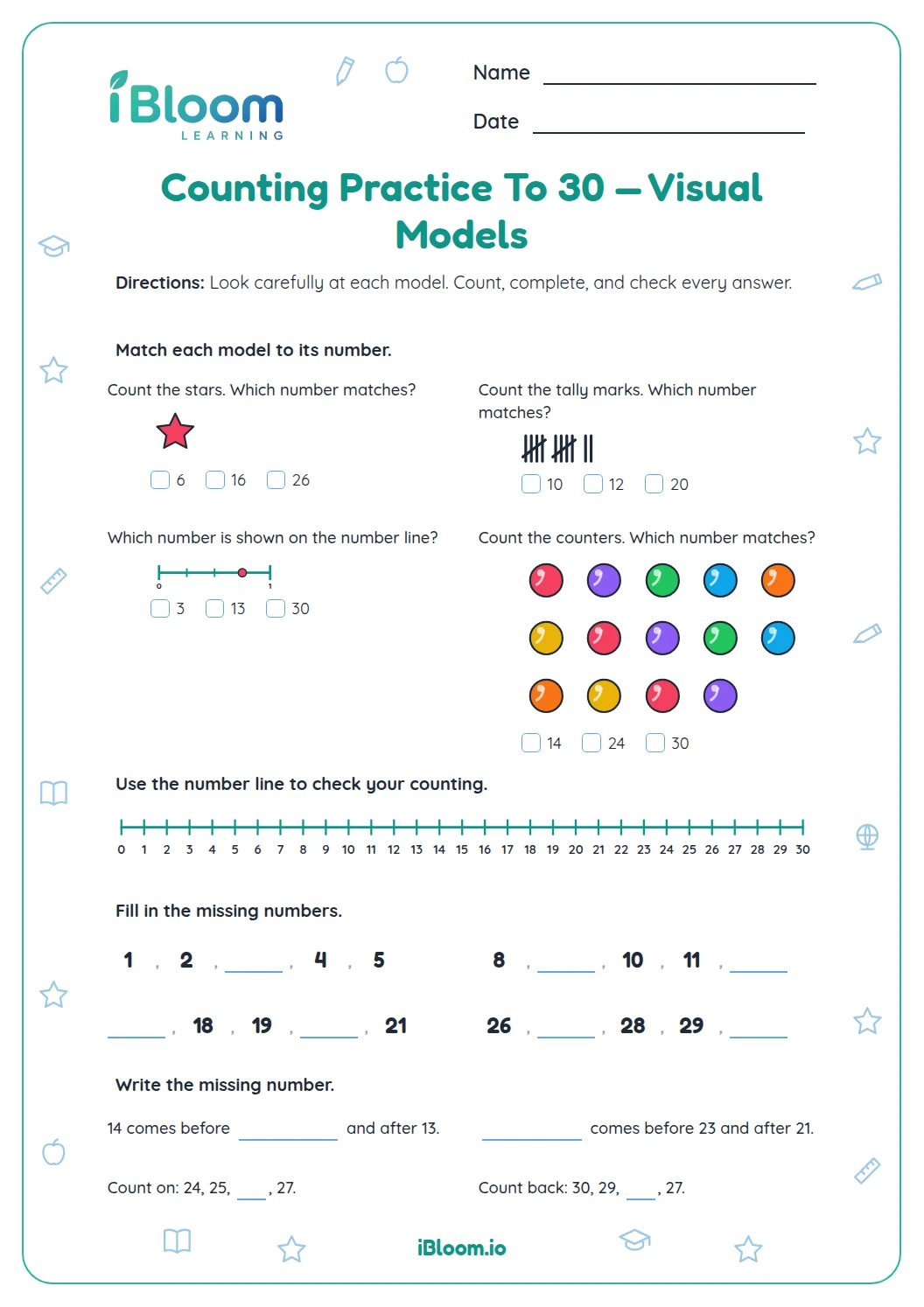
Part A asks children to write a missing numeral in each count from 1 through 25. Every path moves forward by one, so readers can check the number before and after the gap.
- 11, 2, ___, 4, 5
- 2The count goes up by one: 1, 2, 3, 4, 5. Write 3.
How can a child find a number before or after?
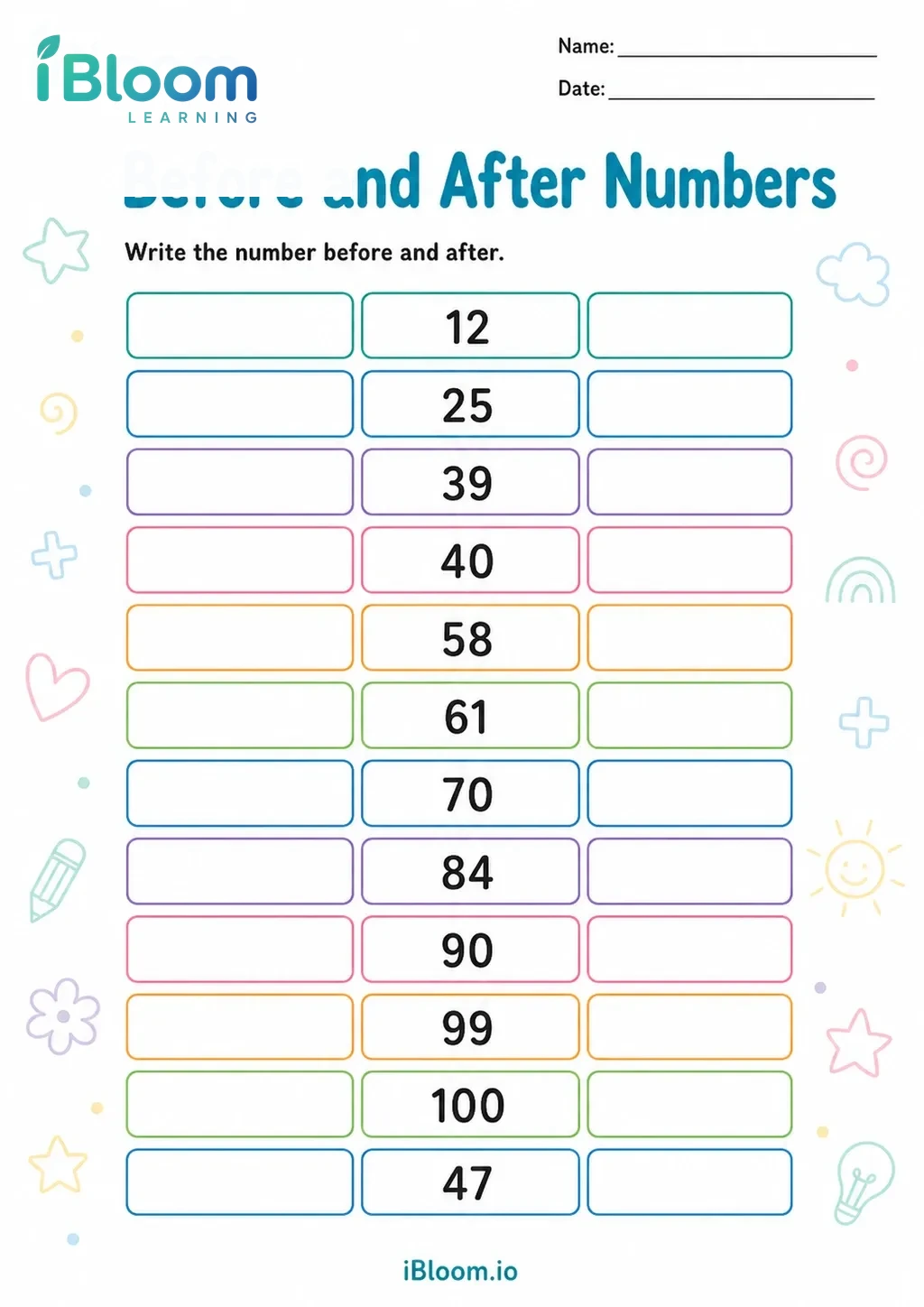
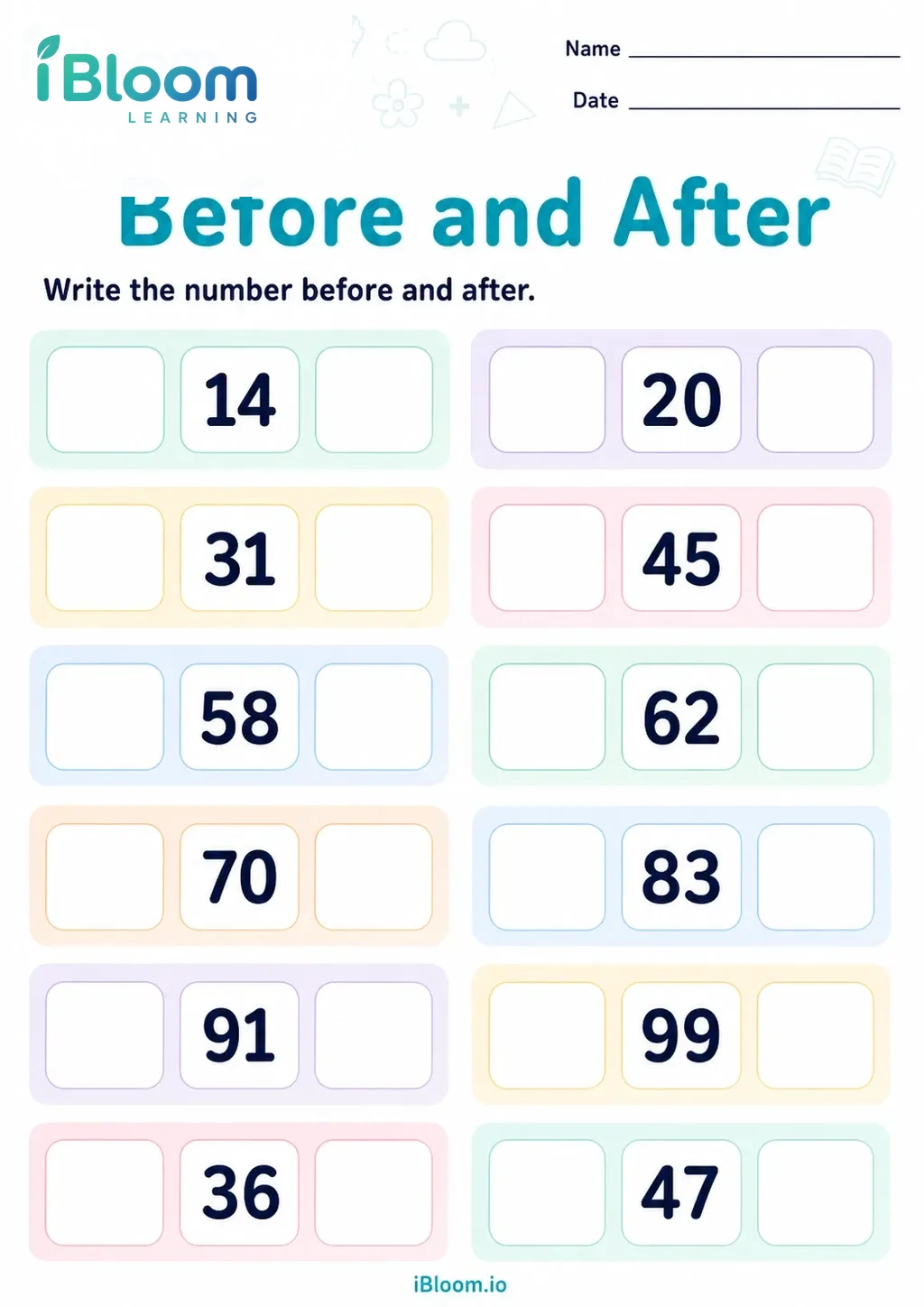
Part B names a number and asks for its neighbor or the number between two neighbors. Say the count aloud in order, then write the numeral that fits. For example, 18, 19, 20 shows that 19 is between 18 and 20.
What counting ideas do the last parts check?
Part C asks children to spot a counting error or select the count that stays in order. Part D compares numerals and puts a list from least to greatest. Read each numeral carefully before choosing.
How should we use the answer key?
Check one part after it is complete. For a missed item, count from the nearest number the child knows and say the full sequence aloud before trying again.
How to use the worksheet
- 1Read the direction at the start of each part.
- 2Say a number path aloud while looking for its gap.
- 3Write one numeral in each blank.
- 4Compare each choice with the count from 1 to 25.
- 5Check one part at a time with the answer key.
Counting slips to check
The mistake
Skipping a number while counting forward.
The fix
Say the full path slowly, touching each numeral once.
The mistake
Writing a numeral that looks like the number word, such as 19 for nine.
The fix
Read the numeral aloud and check that it names the intended number.
The mistake
Putting a larger number first when ordering least to greatest.
The fix
Start with the smallest numeral and move forward through the count.
What to practice next
Make more practice
Questions parents and teachers ask
How many questions are on this number worksheet?
There are 16 questions in four parts. Children complete five number paths, find four neighboring numbers, answer four counting questions, and finish with three comparison or ordering items. A separate answer key gives the expected response for every question. The page can be done in order.
Does the worksheet include every number from 1 to 25?
The five paths together count through 1–25 in order, with a missing numeral in each path. Later questions revisit selected numbers to practice before, after, and ordering ideas. Children write numerals in the gaps rather than copying a full chart.
What does the answer key include?
The key lists the correct missing numerals and the right choices for the reasoning questions. Have the child complete one part before checking it. If an answer differs, count aloud from the nearest number and compare the written sequence with the key.
How can I help if my child skips a number?
Start with a short path the child can say confidently, then point to each written numeral while counting. Ask what comes next and have the child write that numeral. The worksheet uses counts that move up by one, so there is no new skip-counting rule to remember.
How long should this worksheet take?
Plan for about 15 minutes, with extra time if your child wants to say each path aloud. The worksheet has 16 short items and the answer key is separate. A calm pace makes it easier to notice a skipped or reversed number.