






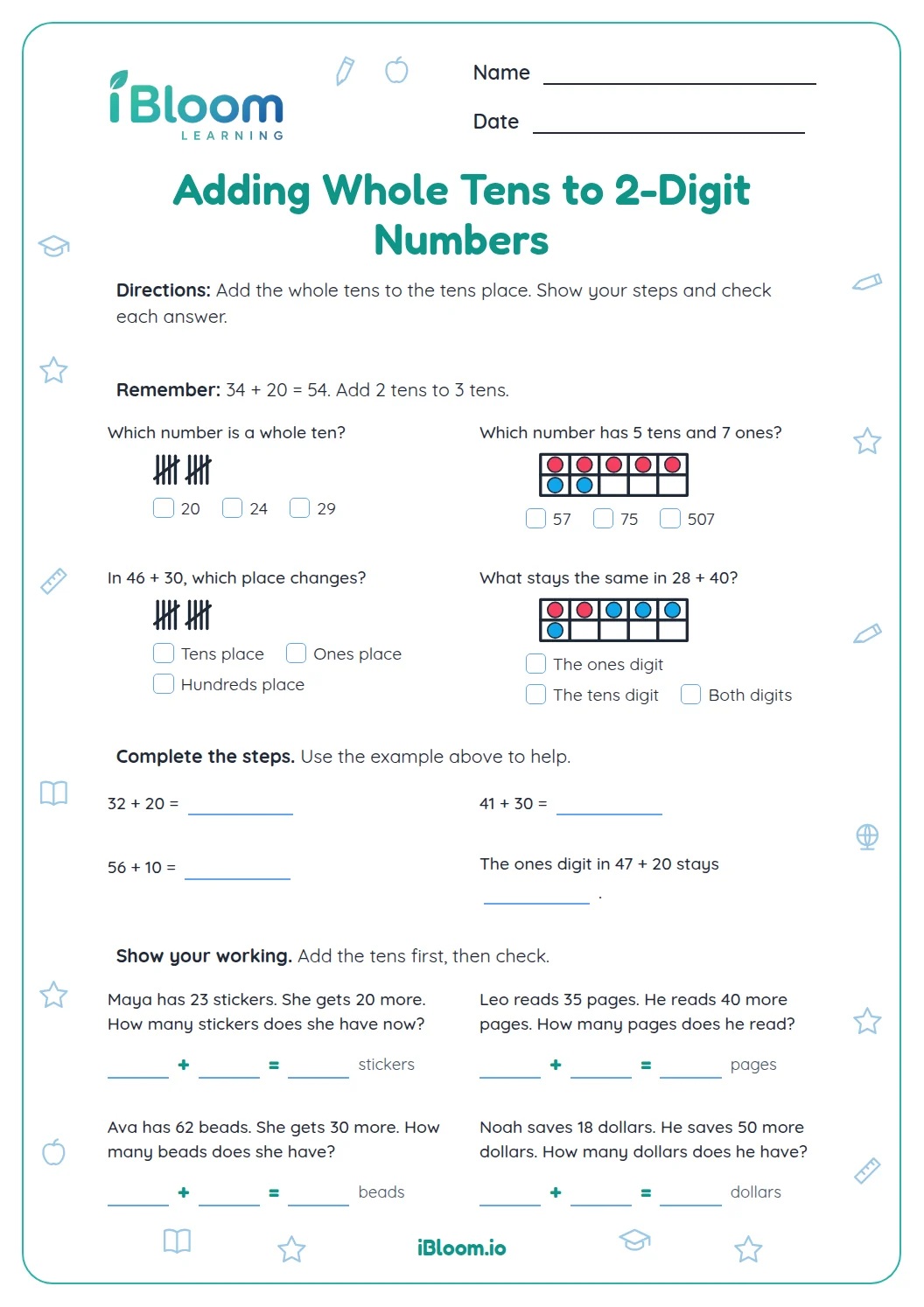
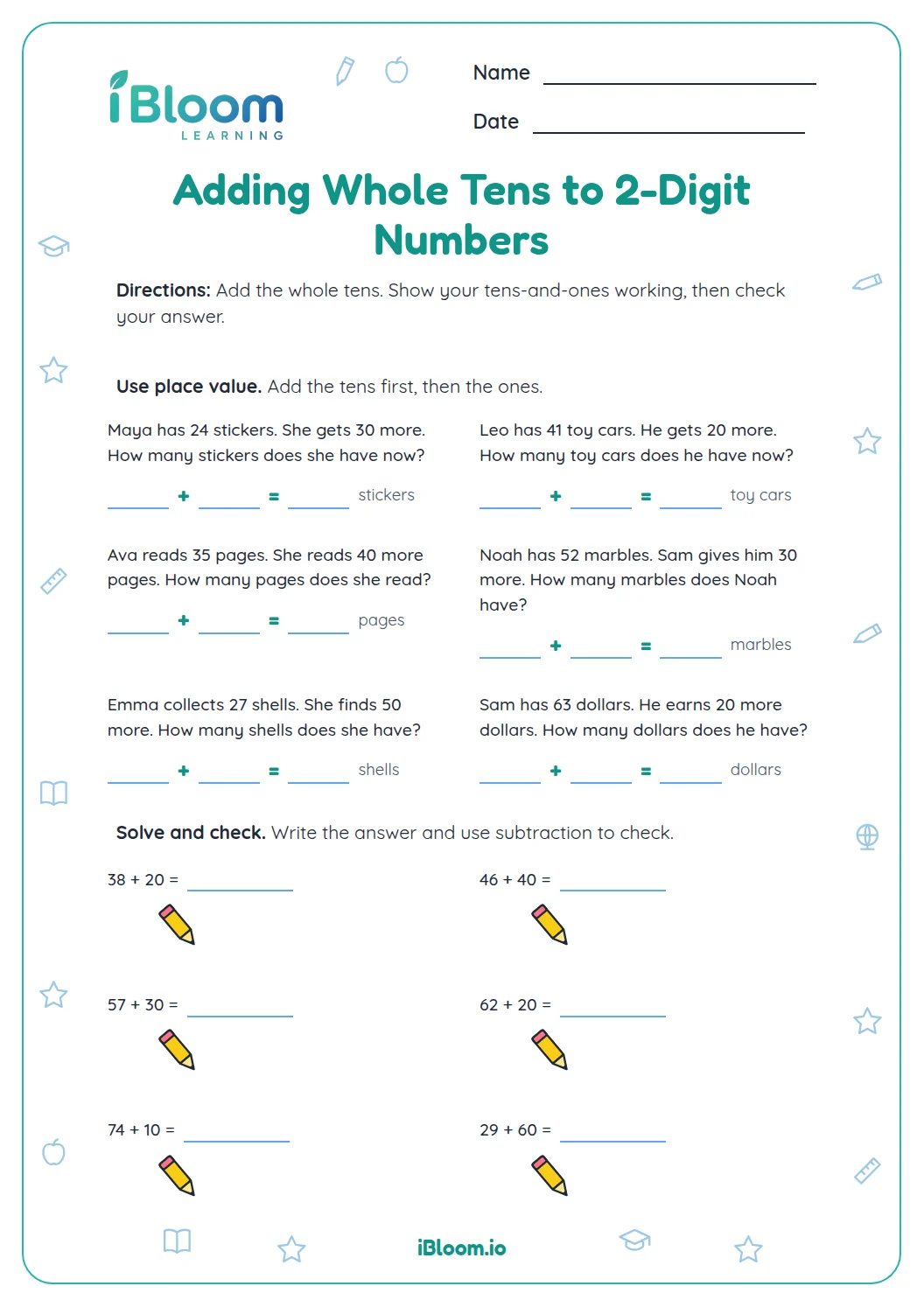
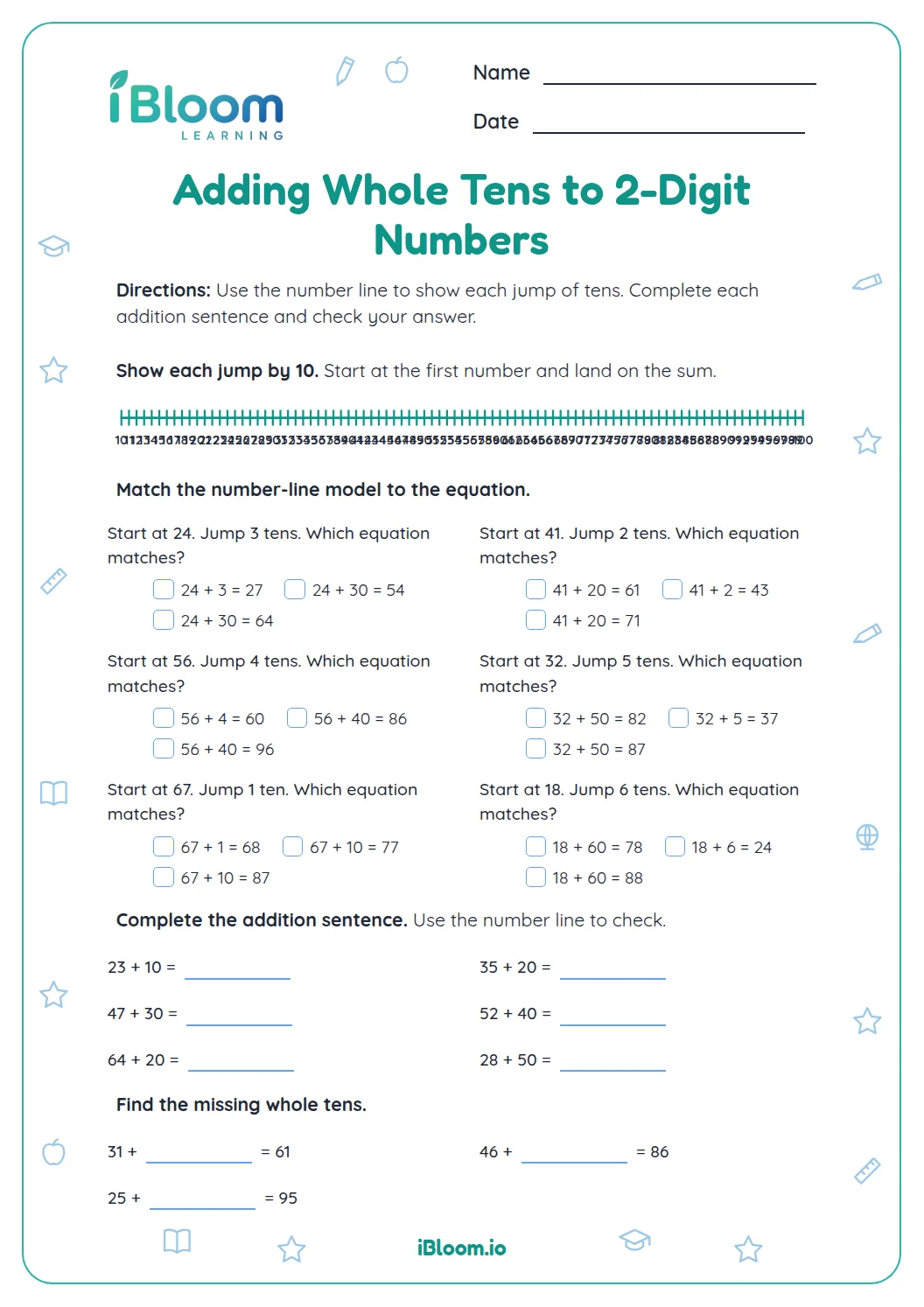
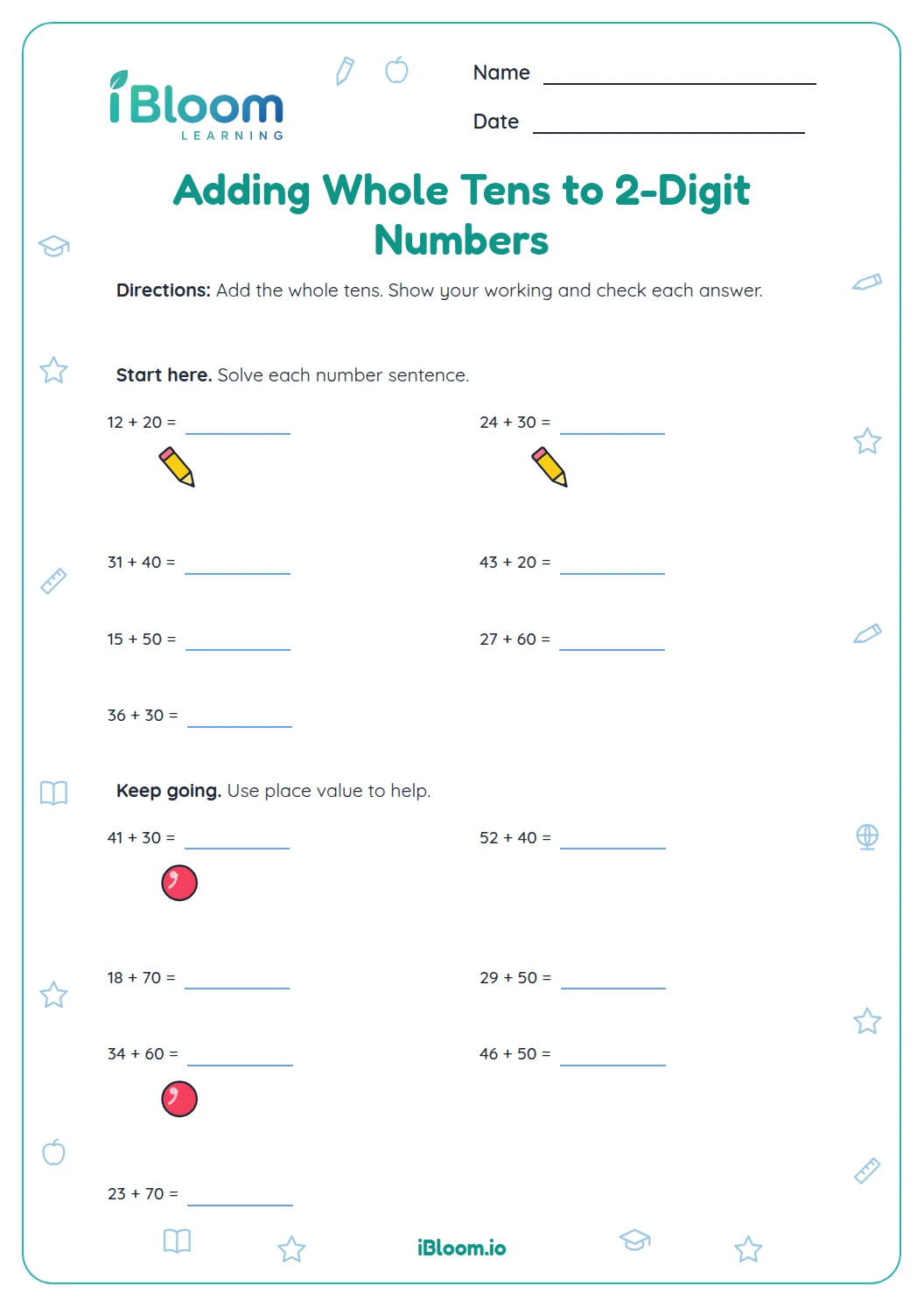
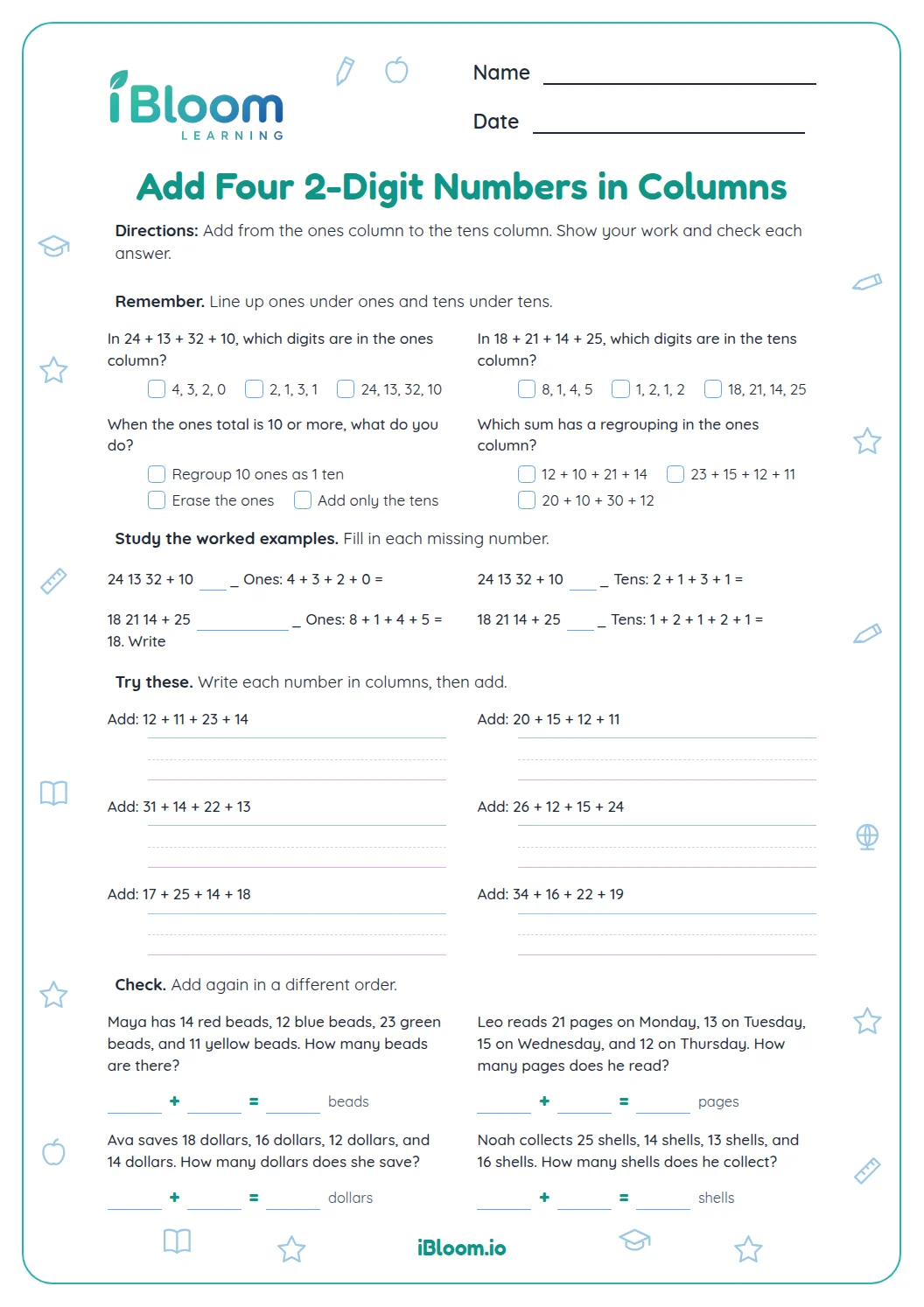
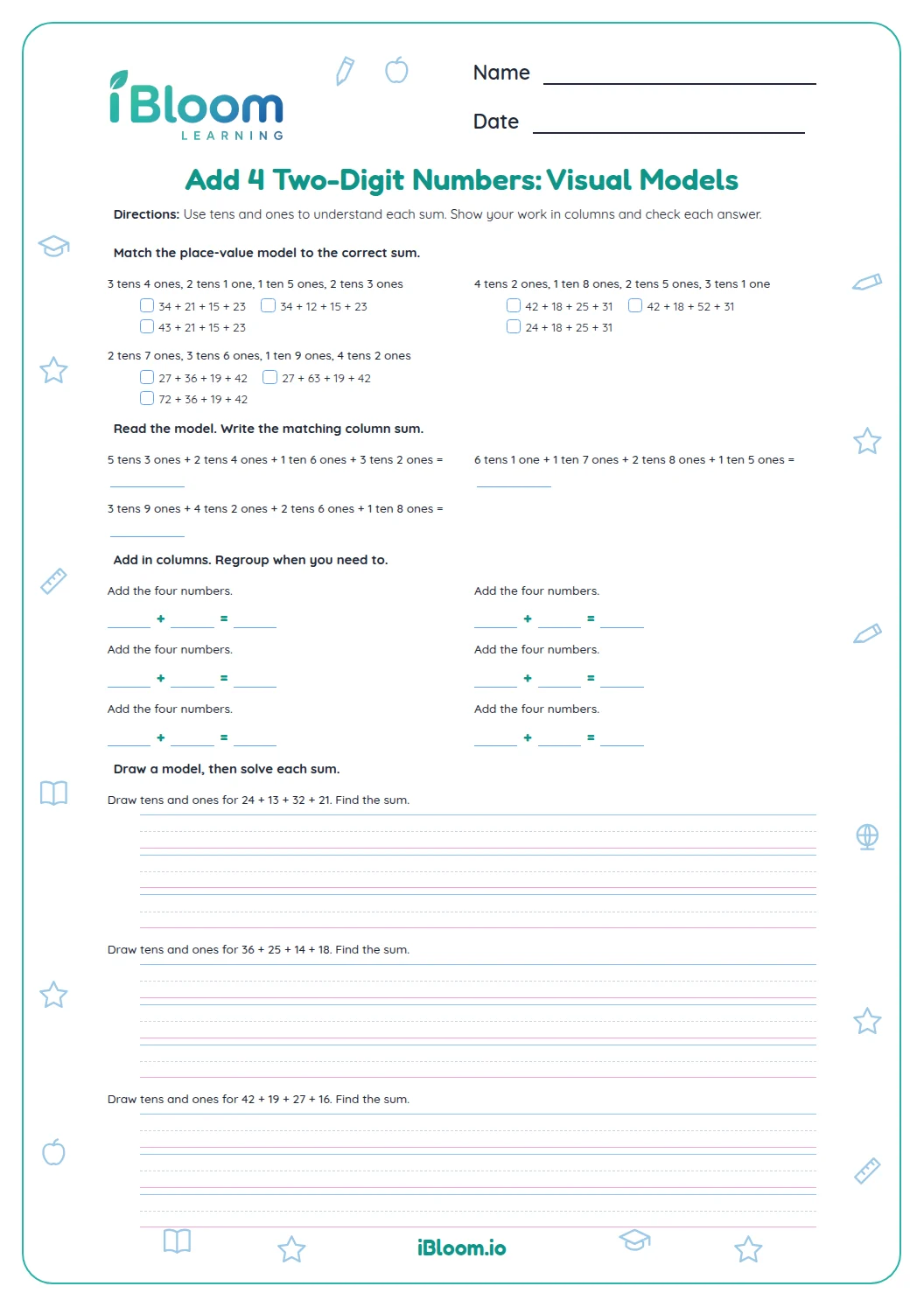
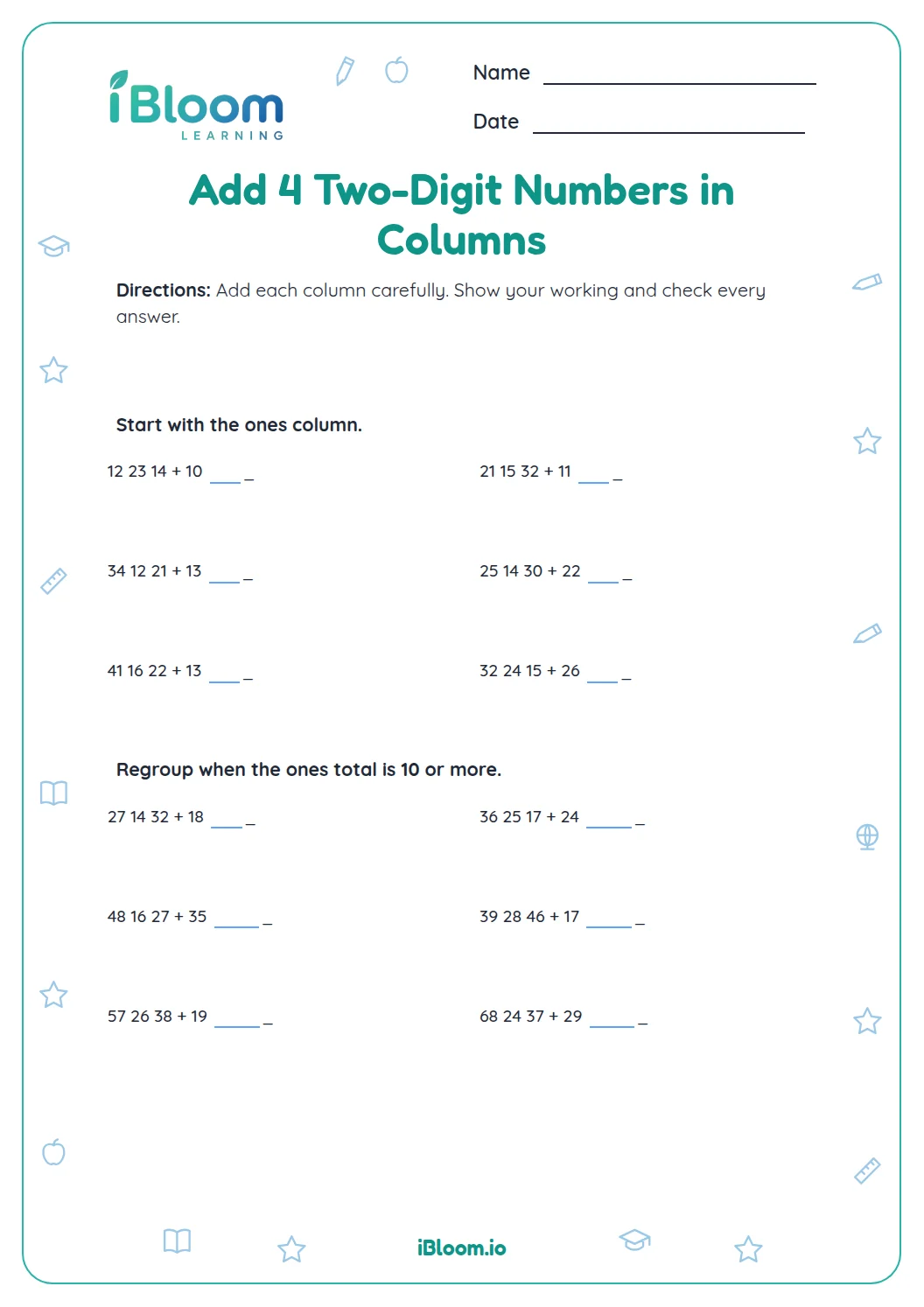
About this worksheet
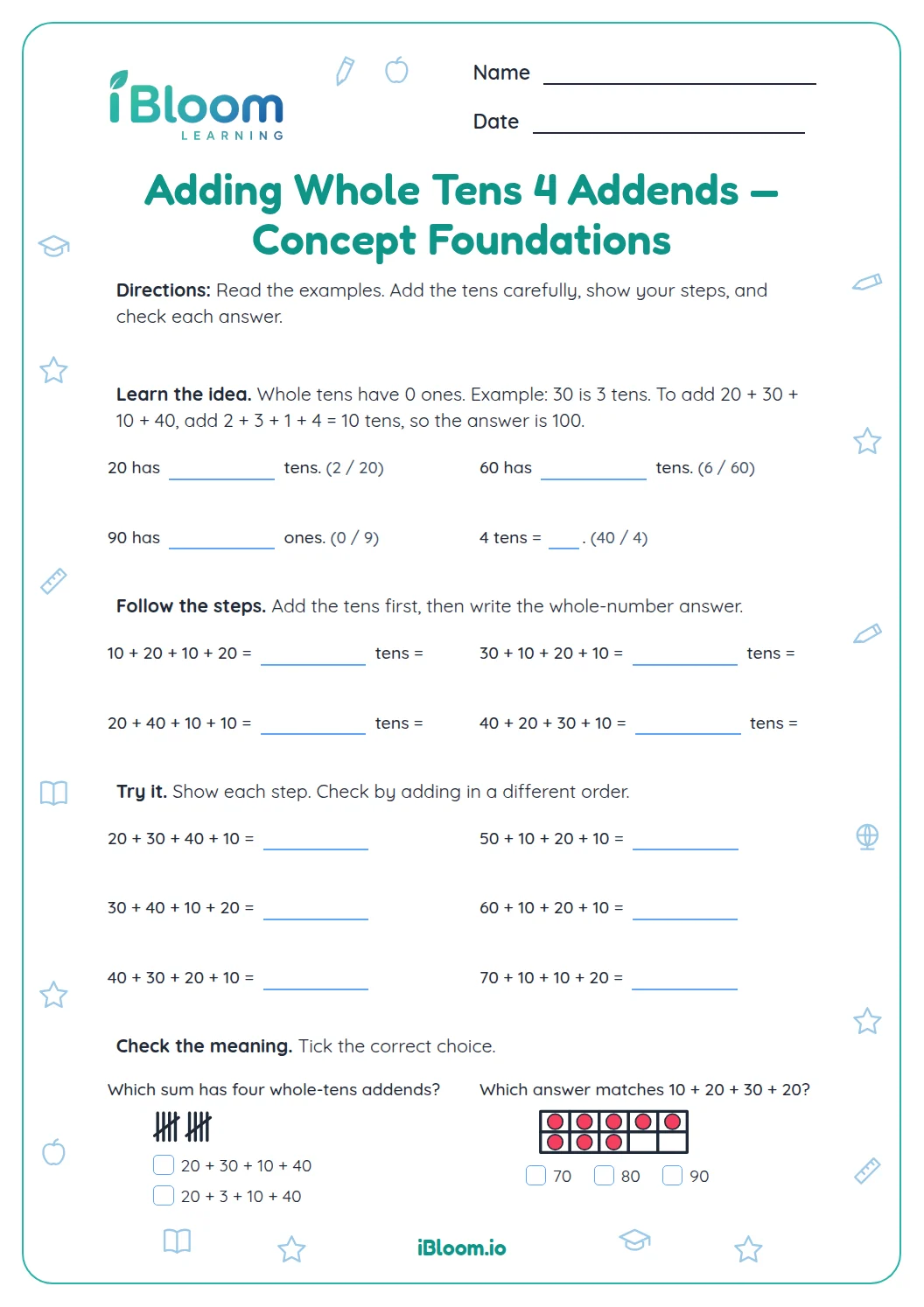
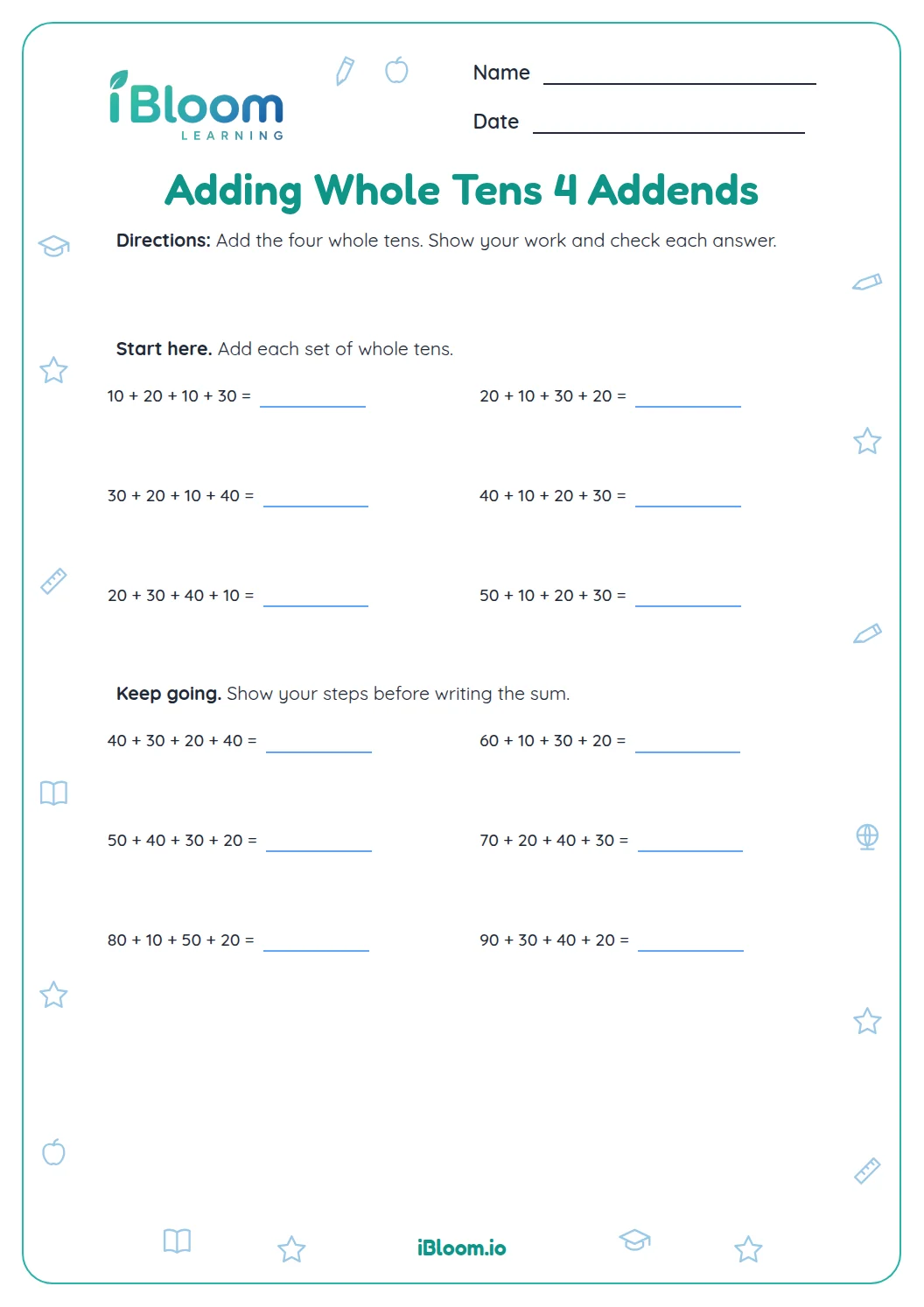
This Grade 2 printable helps children add four whole tens and explain why a grouping works. They solve four-addend equations, compare ways to pair tens, spot a missed addend, and find missing values. The answer key gives each result and strategy choice. The questions practice adding up to four two-digit numbers using place-value strategies.
Aligned to 2.NBT.B.6
How can children group four tens?
Pair addends that make an easy subtotal, then add the remaining tens. For example, 20 + 30 = 50 and 50 + 10 = 60; together the groups total 110. The same addends can be grouped another way without changing the total.
- 120 + 50 + 30 + 10
- 220 + 30 = 50
- 350 + 10 = 60
- 450 + 60 = 110
How can a child check a four-addend sum?
Track all four addends as you make two pairs. If the answer is one ten too small, check whether one of the tens was left out. A different grouping should give the same total.
What does the worksheet include?
The 14 questions include seven addition equations and seven choices about grouping or checking a sum. Children first add and find missing tens, then reason about the same strategy.
How to use this worksheet at home or in class
- 1Read all four addends before calculating.
- 2Pair tens that make a friendly subtotal.
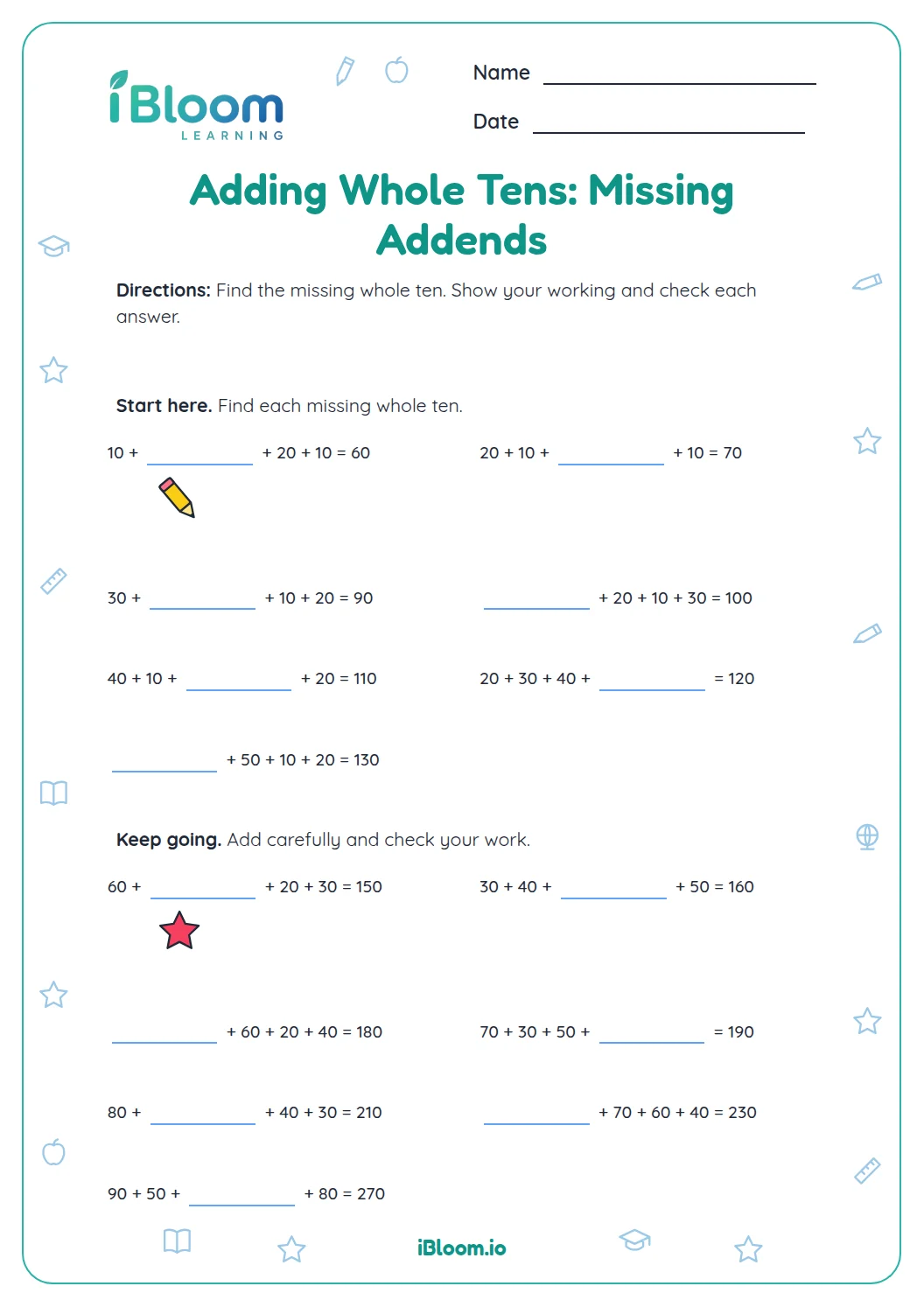
- 3For a blank, add the known values and find what is needed.
- 4Check that each of the four addends was used once.
- 5Try a second grouping to confirm the total.
Common mistakes and quick fixes
The mistake
Leaving out one addend.
The fix
Point to each of the four tens as it joins a pair.
The mistake
Thinking a new grouping changes the total.
The fix
Add both pair totals and compare them with the original addends.
The mistake
Stopping at the known subtotal in a blank equation.
The fix
Compare that subtotal with the stated total to find the missing ten.
These Common Core standards describe the skills practiced on this worksheet.
Add up to four two-digit numbers using place-value strategies.
On this sheet: Each question adds four two-digit whole tens or finds one missing whole ten.
Show the official wordingHide the official wording
Add up to four two-digit numbers using strategies based on place value and properties of operations.
What to practice next
Make more practice
Further reading
Questions parents and teachers ask
How can a child add four whole tens?
Pair addends that make an easy subtotal, then combine the two groups. In 80 + 20 + 30 + 10, 80 + 20 makes 100 and 30 + 10 makes 40. The total is 140, and adding in another order is a useful check.
Why group tens before adding?
Grouping can make the arithmetic easier to follow. In 20 + 50 + 30 + 10, children can add 20 + 30 and 50 + 10 first, then combine 50 and 60. The answer stays the same when the addends are paired a different way.
How do you solve a missing-addend question?
Add the known addends, then find how much is needed to reach the total. For 50 + ___ + 10 + 20 = 130, the known values total 80, so 50 is missing. Add all four values to check the equation.
What does the answer key include?
The separate key gives the totals, missing tens, and correct grouping or error-check choice for all 14 questions. A child can revisit any missed sum by pairing the tens another way and checking that each addend was used in the equation.
How long does the worksheet take?
Plan for about 20 minutes. Children can solve the addition equations first, then move to the grouping and error-check questions. Use the answer key to check each result and talk through any sum that leaves out an addend or needs another grouping.