





About this worksheet
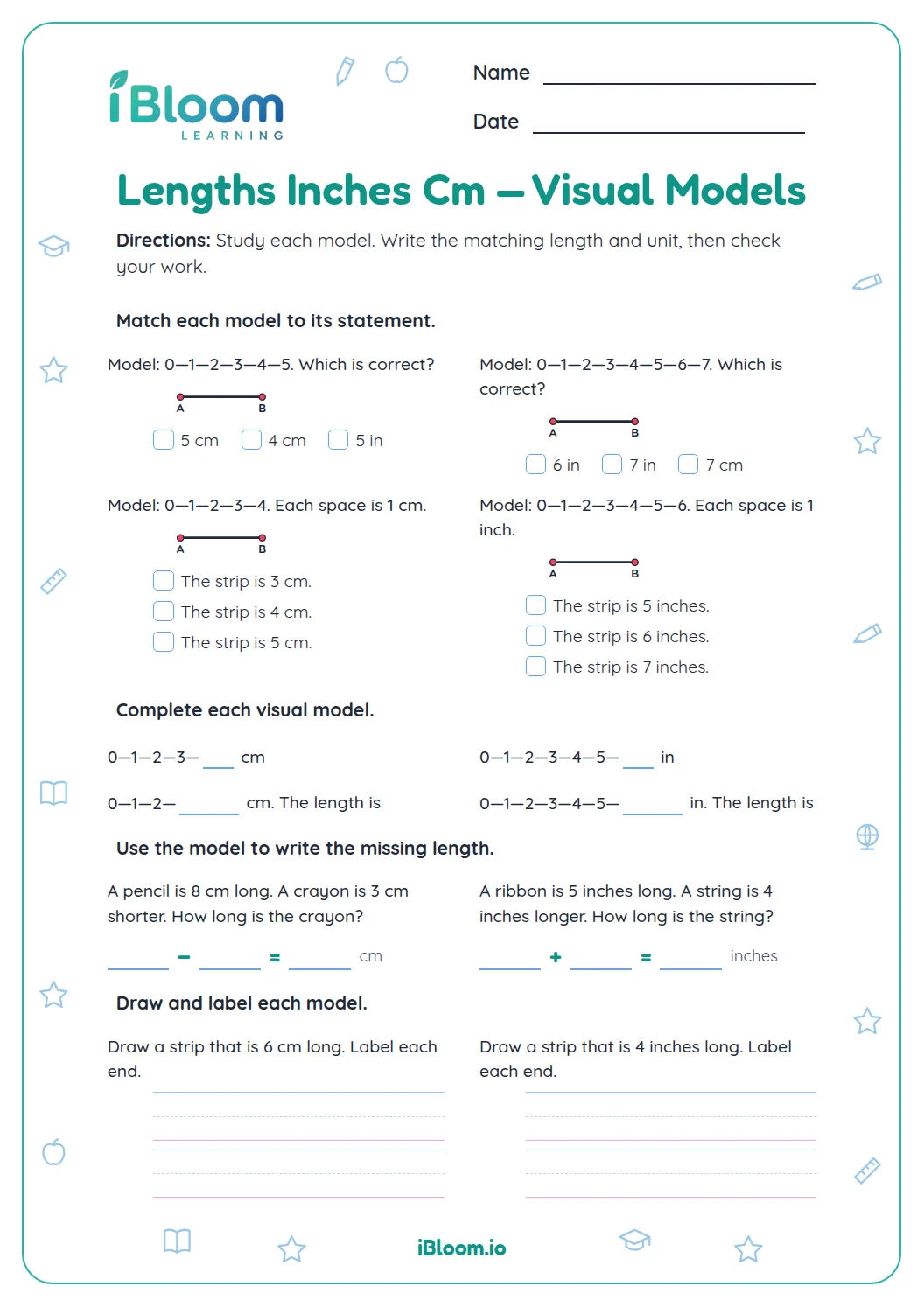
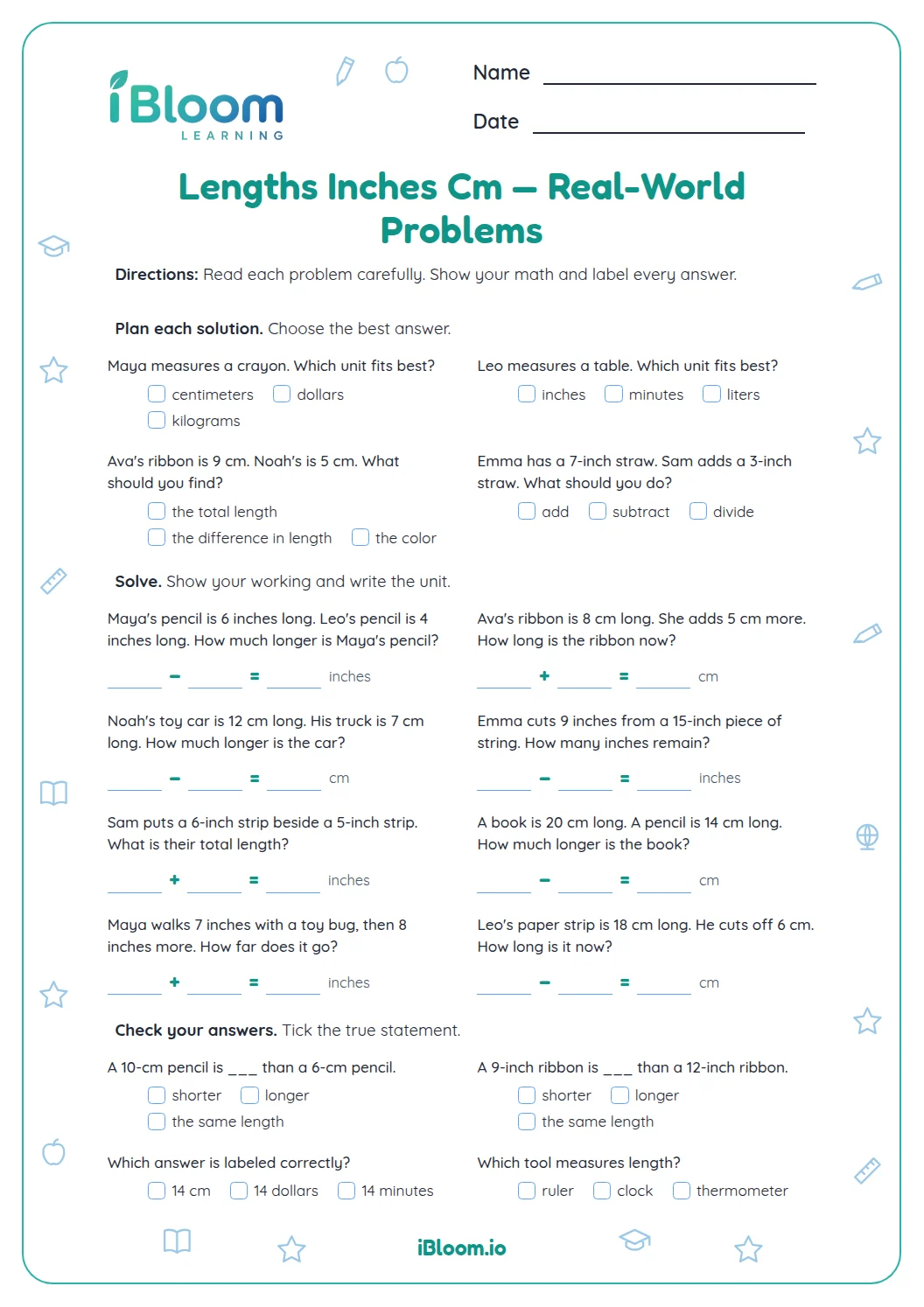
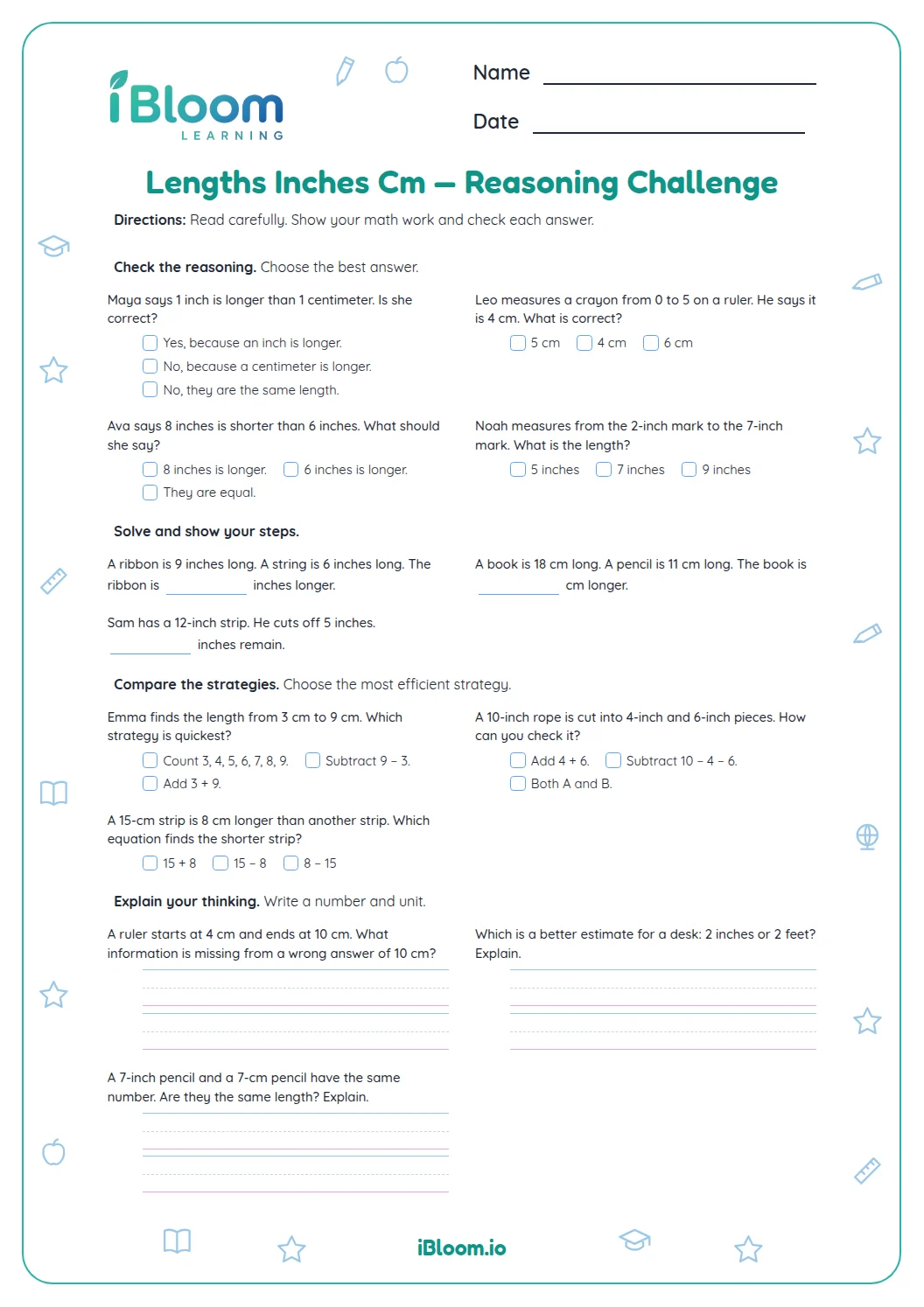
This printable Grade 2 worksheet gives children practice reading inch and centimeter rulers, comparing lengths in the same unit, and solving short length stories. Six ruler drawings build reading practice, four comparisons ask which length is greater or the same, and six stories use addition or subtraction. The answer key gives each measurement with its unit.
How do you choose inches or centimeters?
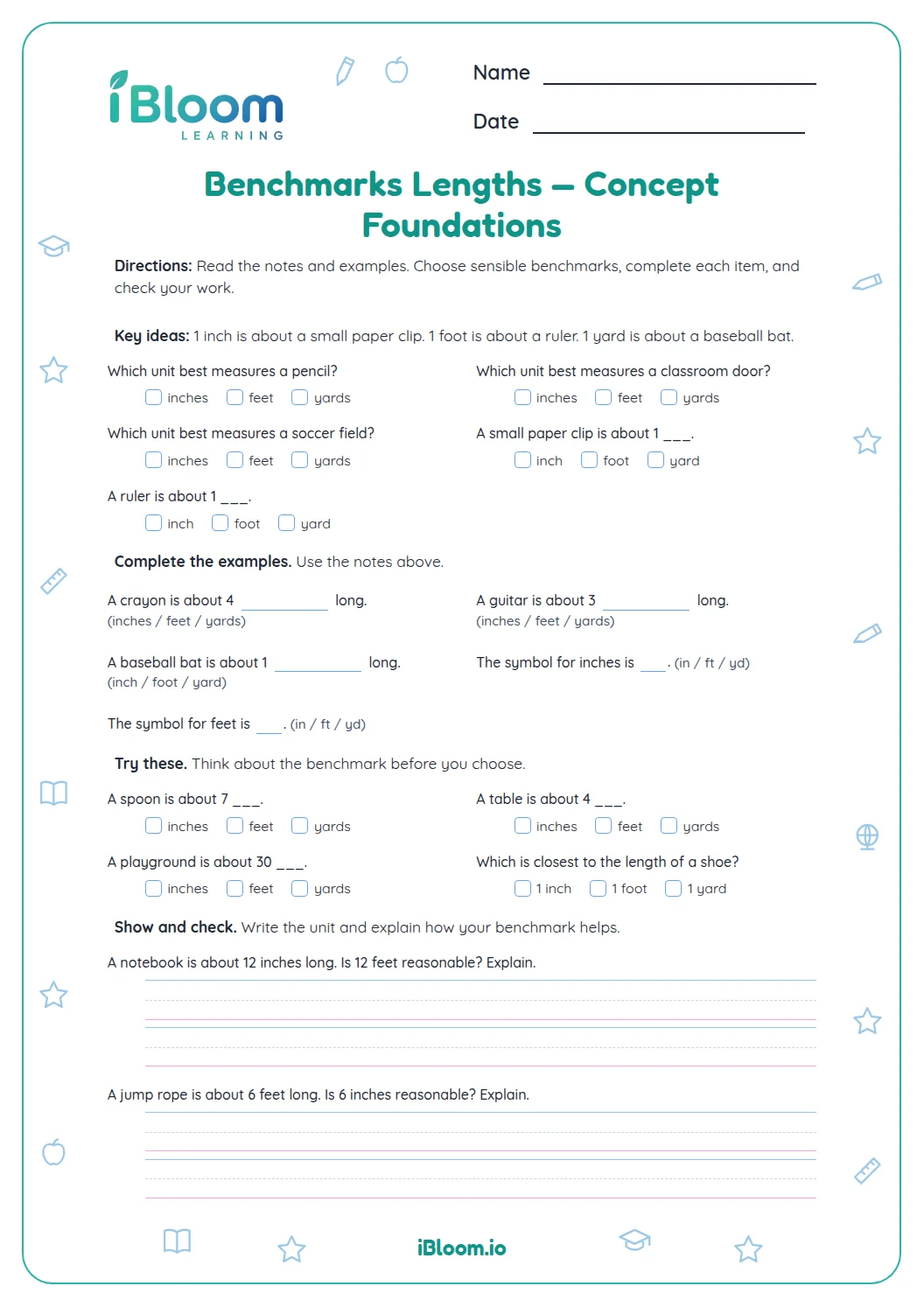
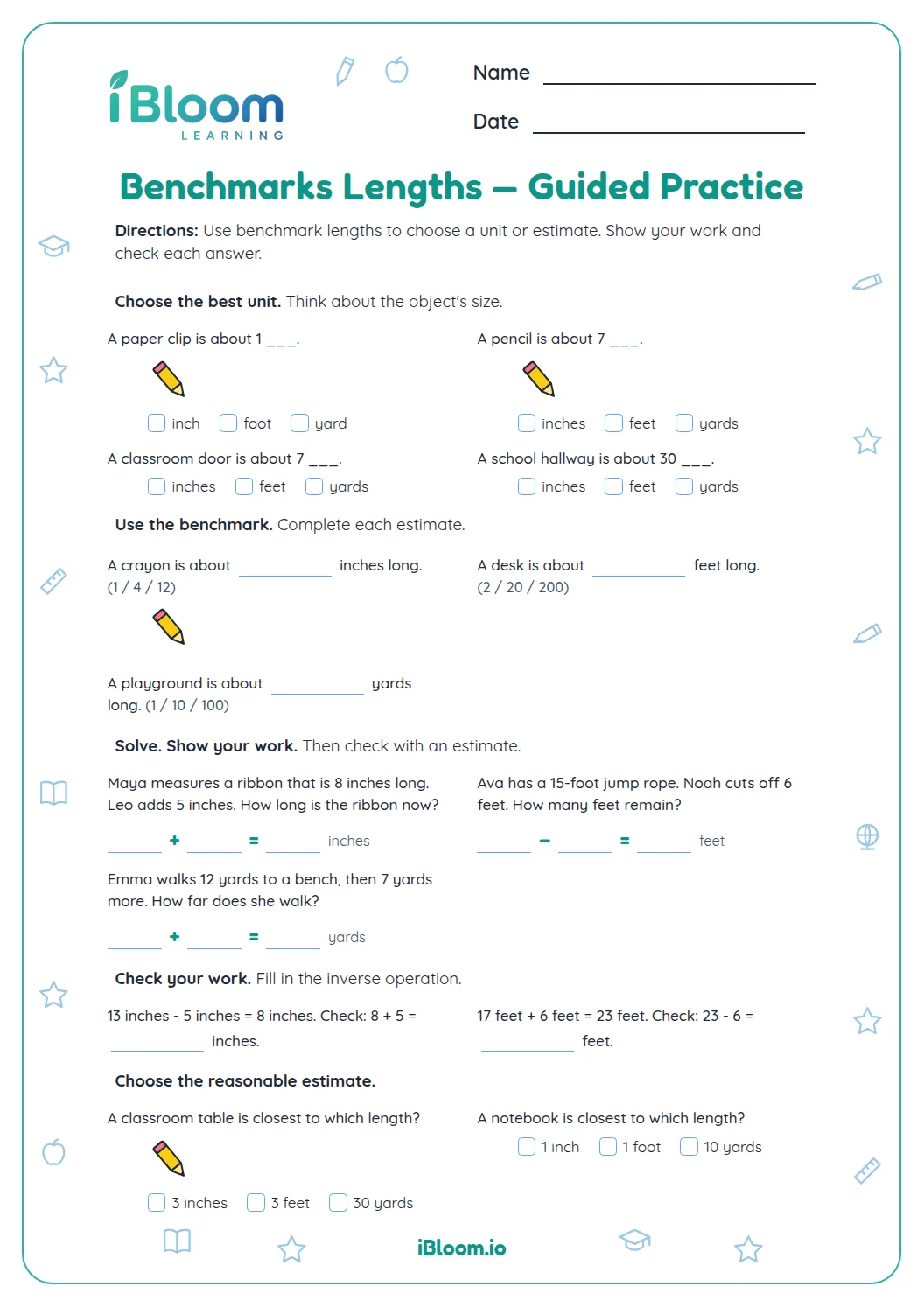
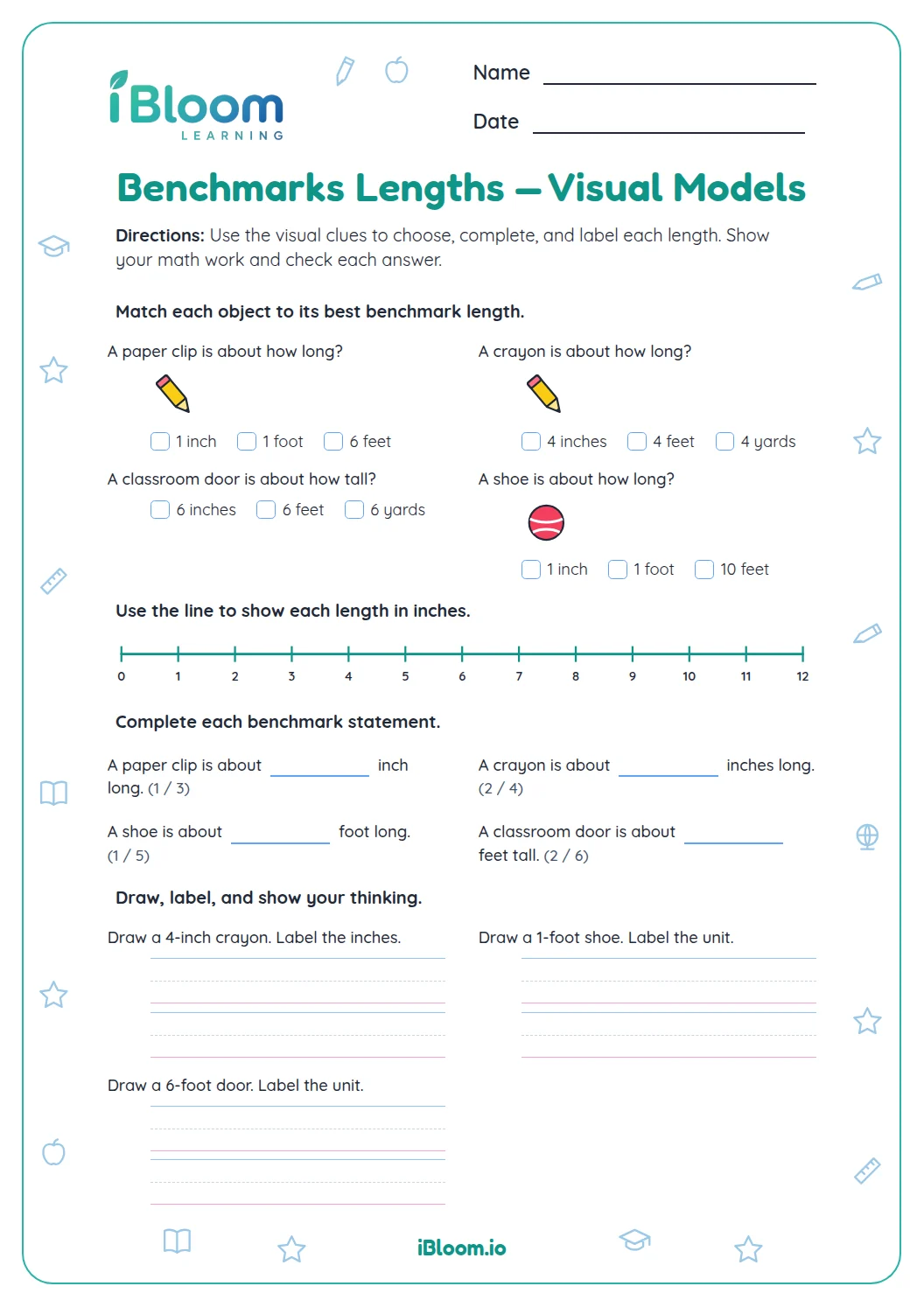
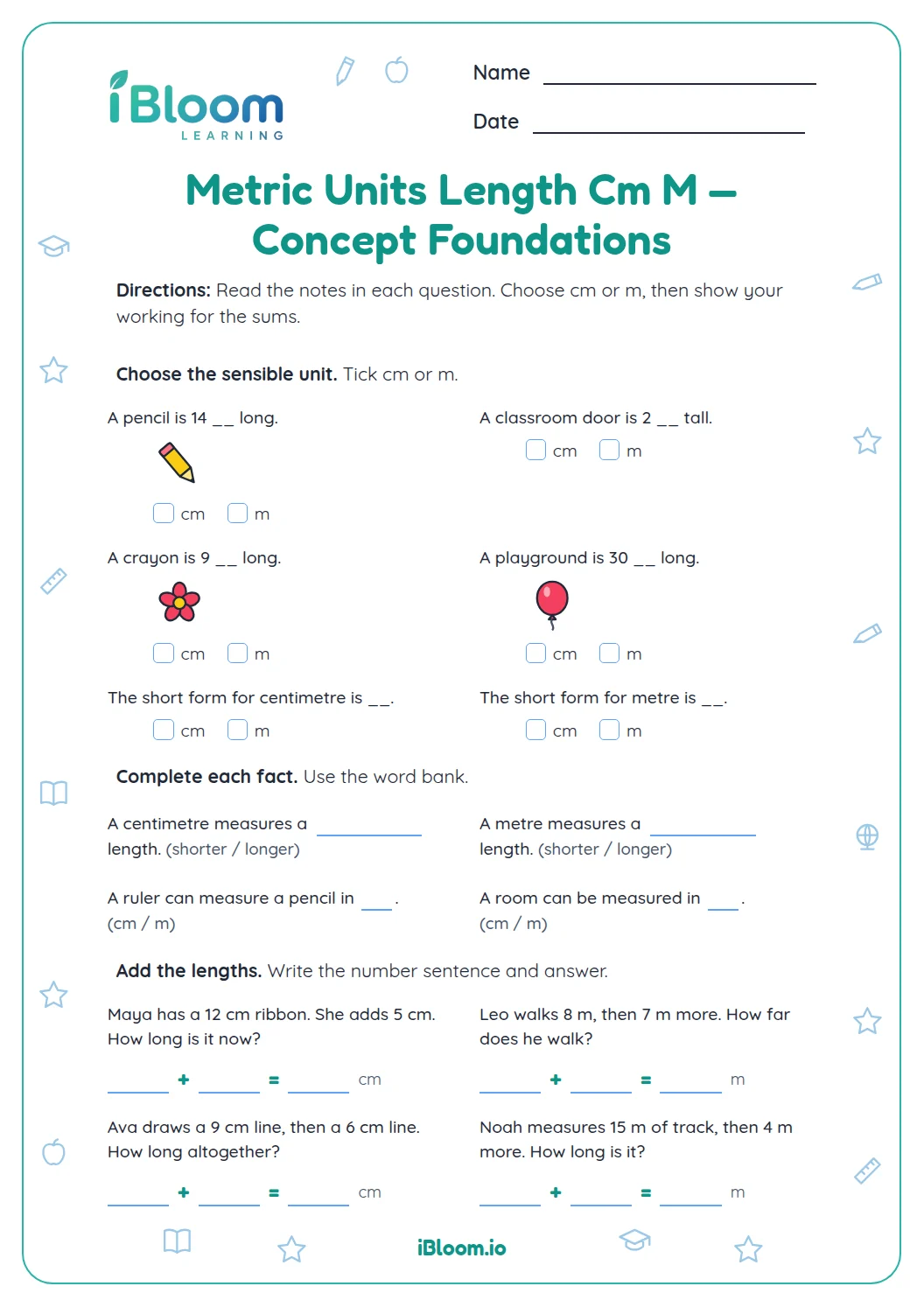
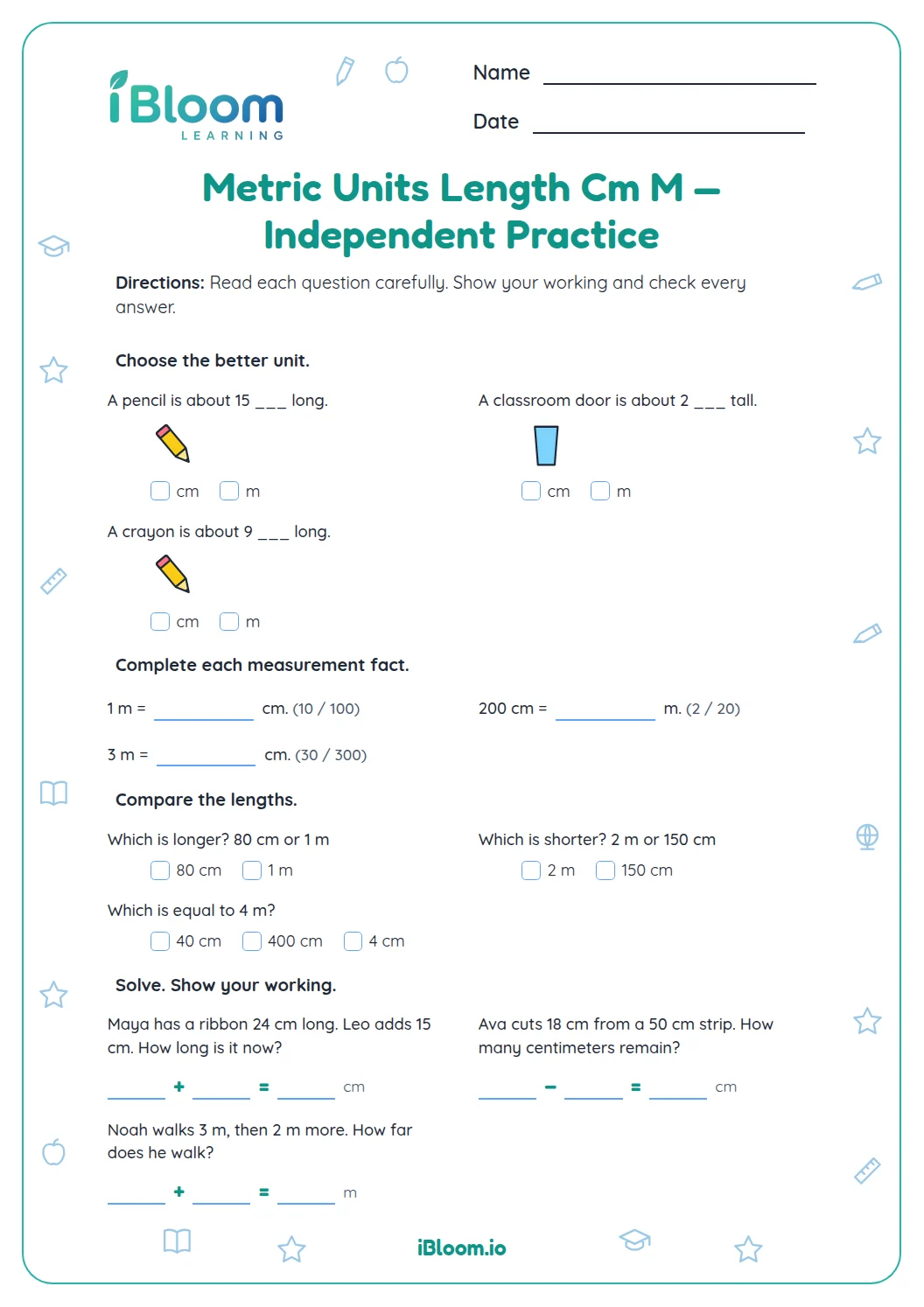
Think about the object’s size and choose the unit that gives a sensible measurement. A paper clip is small and is measured in centimeters; a crayon or book can be estimated in inches.
- 1A paper clip is small, so centimeters are a sensible unit.
How can you compare two lengths?
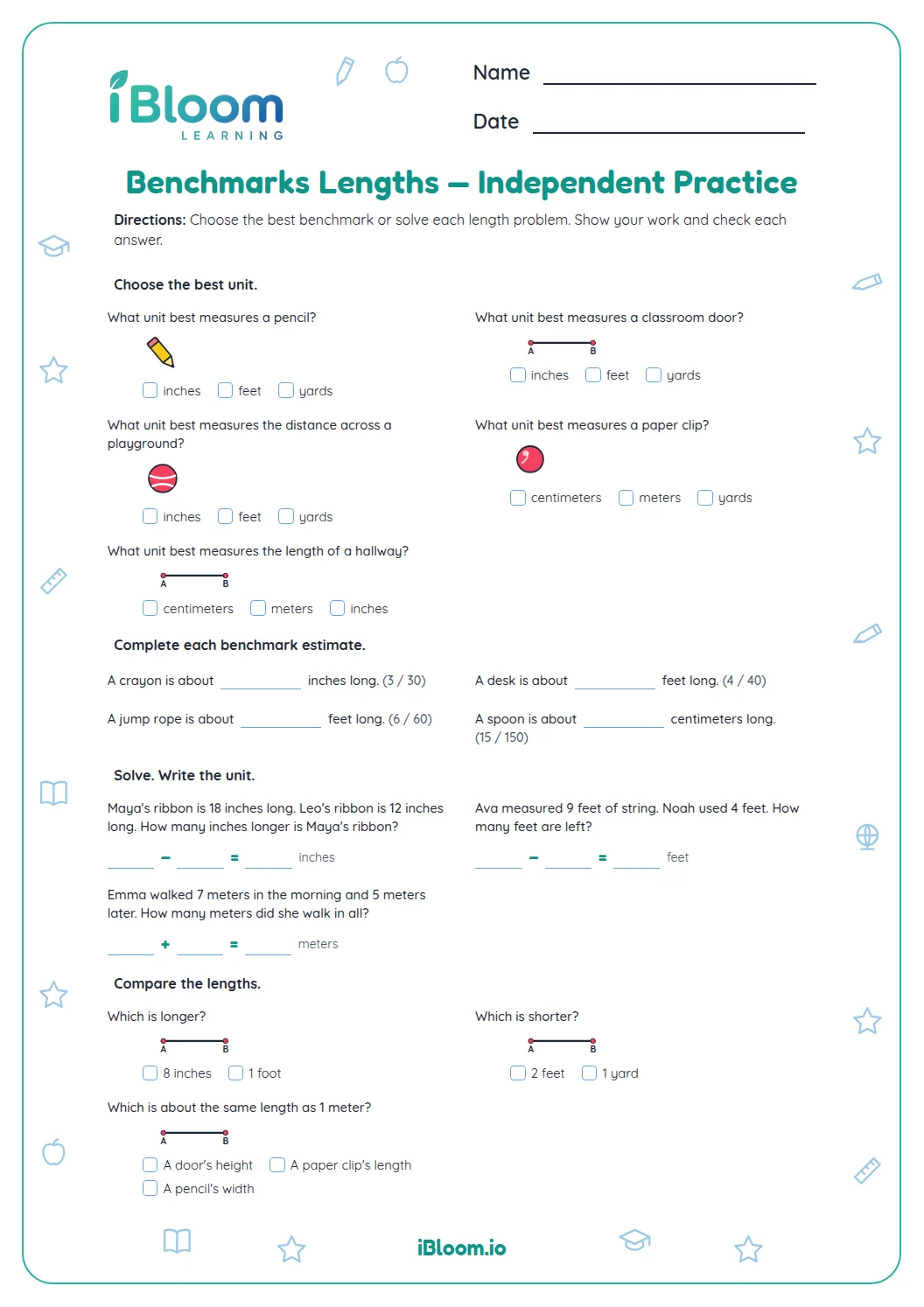
Compare measurements in the same unit. The greater number is the longer length. If the numbers are equal, the objects are the same length.
- 18 inches is greater than 5 inches, so 8 inches is longer.
How do you solve a length story?
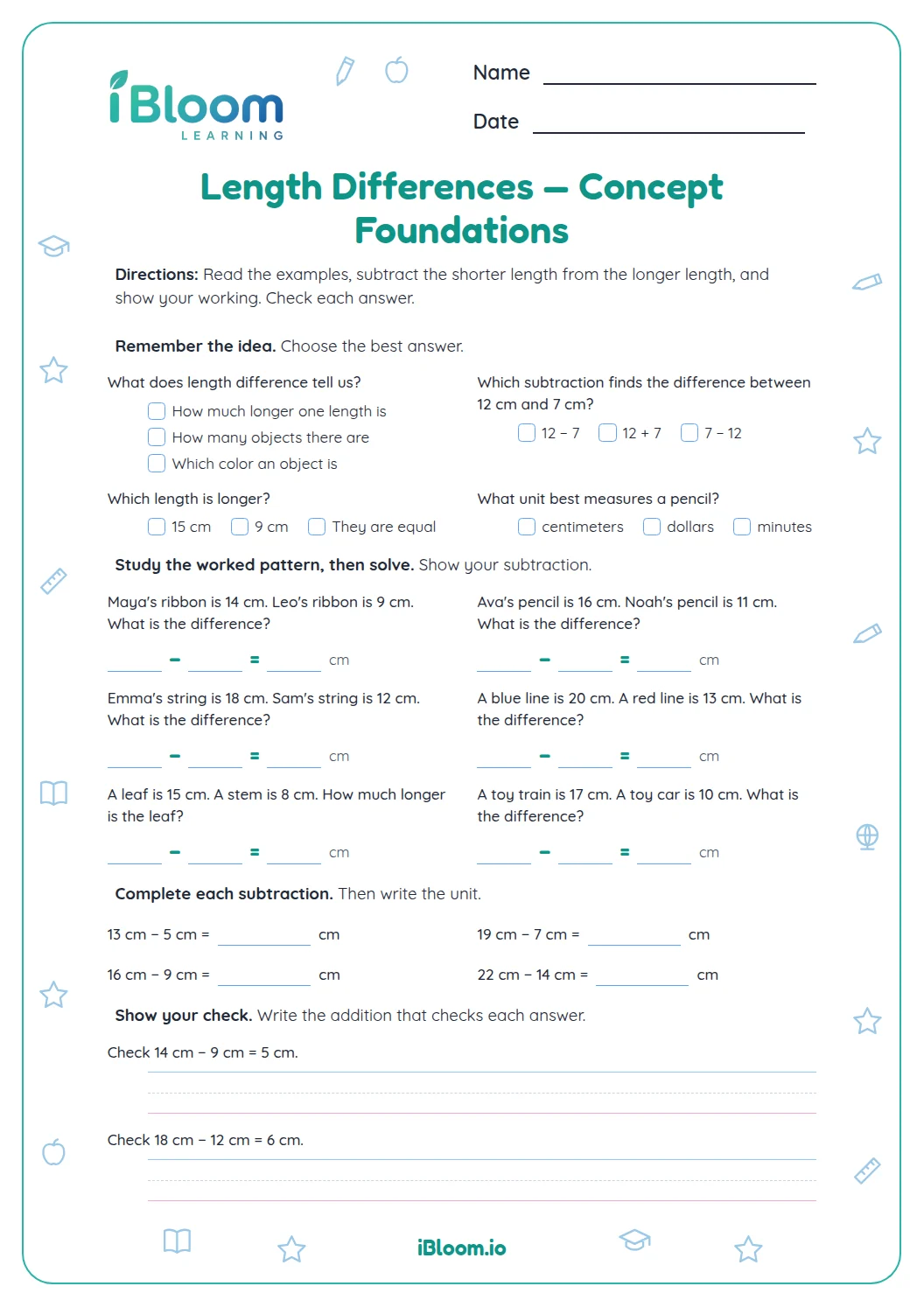
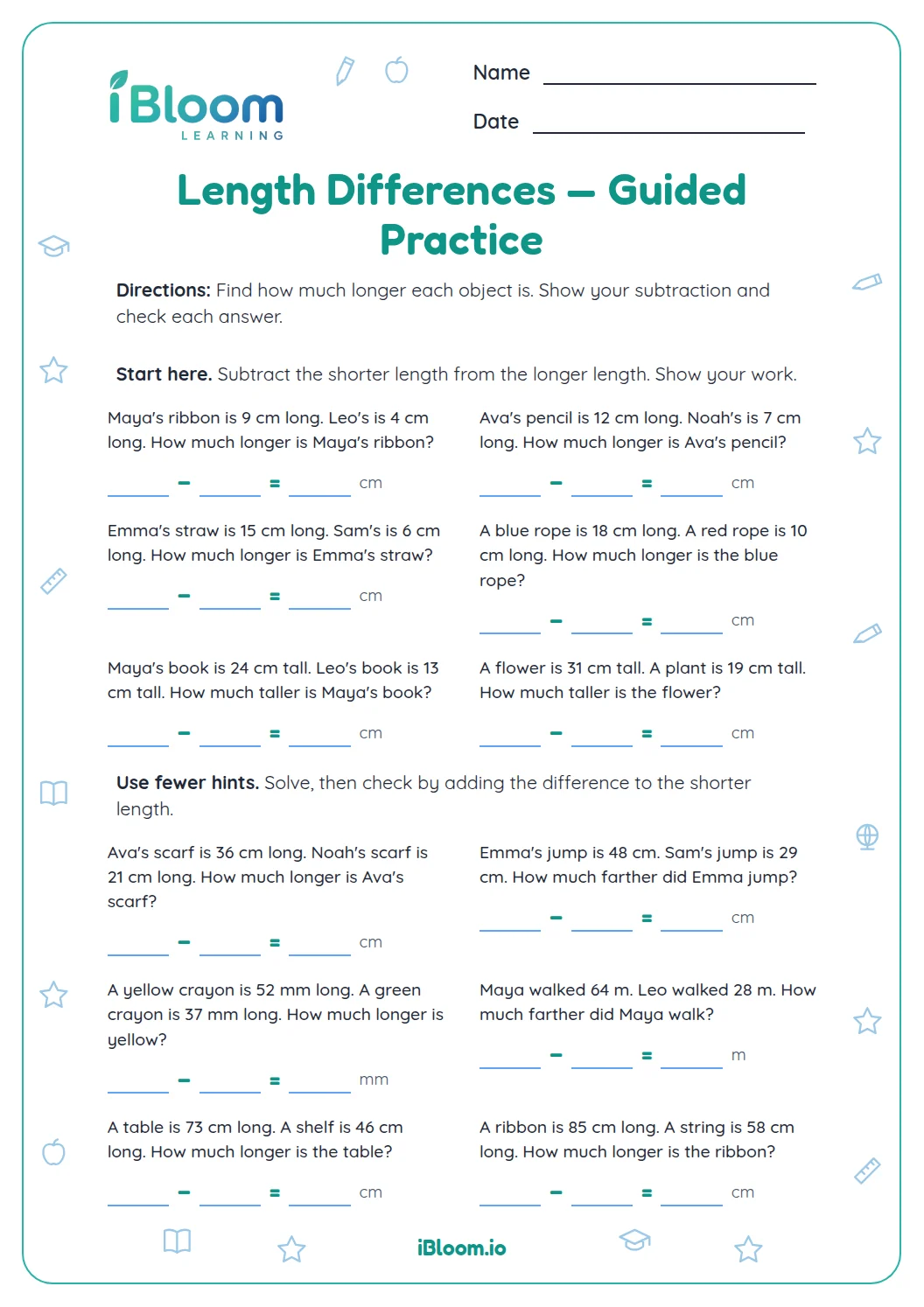
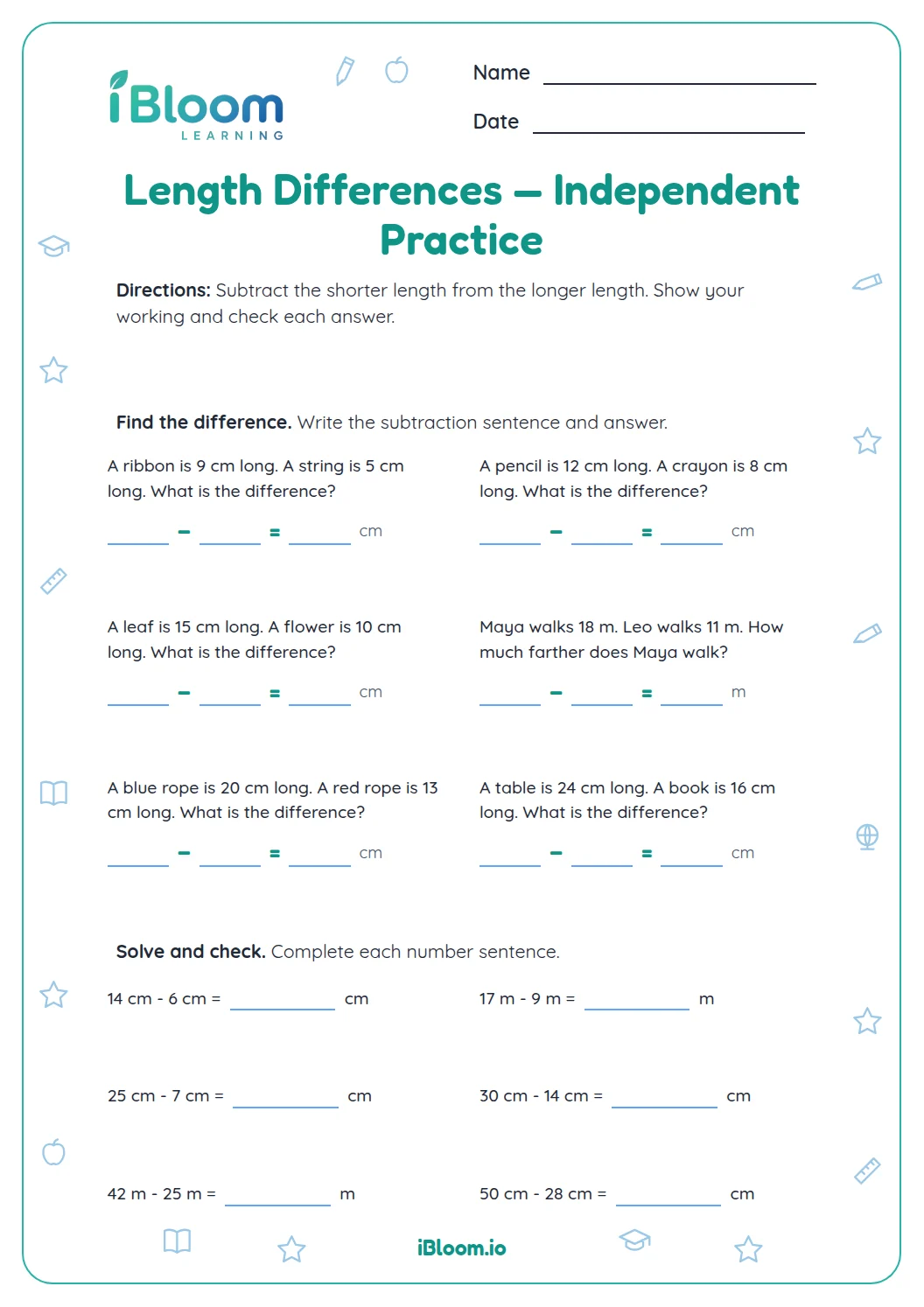
Subtract to find how much longer one length is. Add when the story asks for a combined length. Keep the unit with the answer.
- 17 inches − 5 inches = 2 inches. The ribbon is 2 inches longer.
How to use this worksheet
- 1Picture the object and choose the unit that gives a sensible size.
- 2Write both the number and the unit for every ruler question.
- 3In a comparison, subtract the shorter length from the longer one.
- 4Add lengths when the story asks for a combined total.
- 5Check that your answer uses the unit given in its story.
Common mistakes and quick fixes
The mistake
Subtracting the longer length from the shorter one
The fix
Put the greater measurement first, then subtract.
The mistake
Adding when a story asks how much longer
The fix
Difference questions ask for subtraction, not the combined total.
The mistake
Leaving off inches or centimeters
The fix
Copy the unit into the answer so the measurement is clear.
What to practice next
Make more practice
Questions parents and teachers ask
What does this worksheet practice?
Think about the object’s size and which unit gives a reasonable measurement. A paper clip is only a few centimeters long, while a crayon is several inches long. The first six questions ask children to choose between inches and centimeters.
How should my child choose a unit?
Think about the object’s size and which unit gives a reasonable measurement. A paper clip is only a few centimeters long, while a crayon is several inches long. The first six questions ask children to choose between inches and centimeters.
When should a child add or subtract lengths?
Add when the story asks for a combined length, such as two pieces together. Subtract when it asks how much longer one object is or how much remains after a piece is removed. The words in each story tell which relationship to find.
Why are inches and centimeters both on the page?
The page provides practice reading each unit on its own ruler. Children should not convert between the units here; instead, they read the marked scale and keep the same unit in each story. This helps connect the number to the correct measuring scale.
What is the answer to the first unit question?
A paper clip is about 3 centimeters long. Centimeters make sense for a small object like a paper clip; inches would be too large a unit for this estimate. The answer key marks cm as the sensible choice for the paper clip.