

About this worksheet
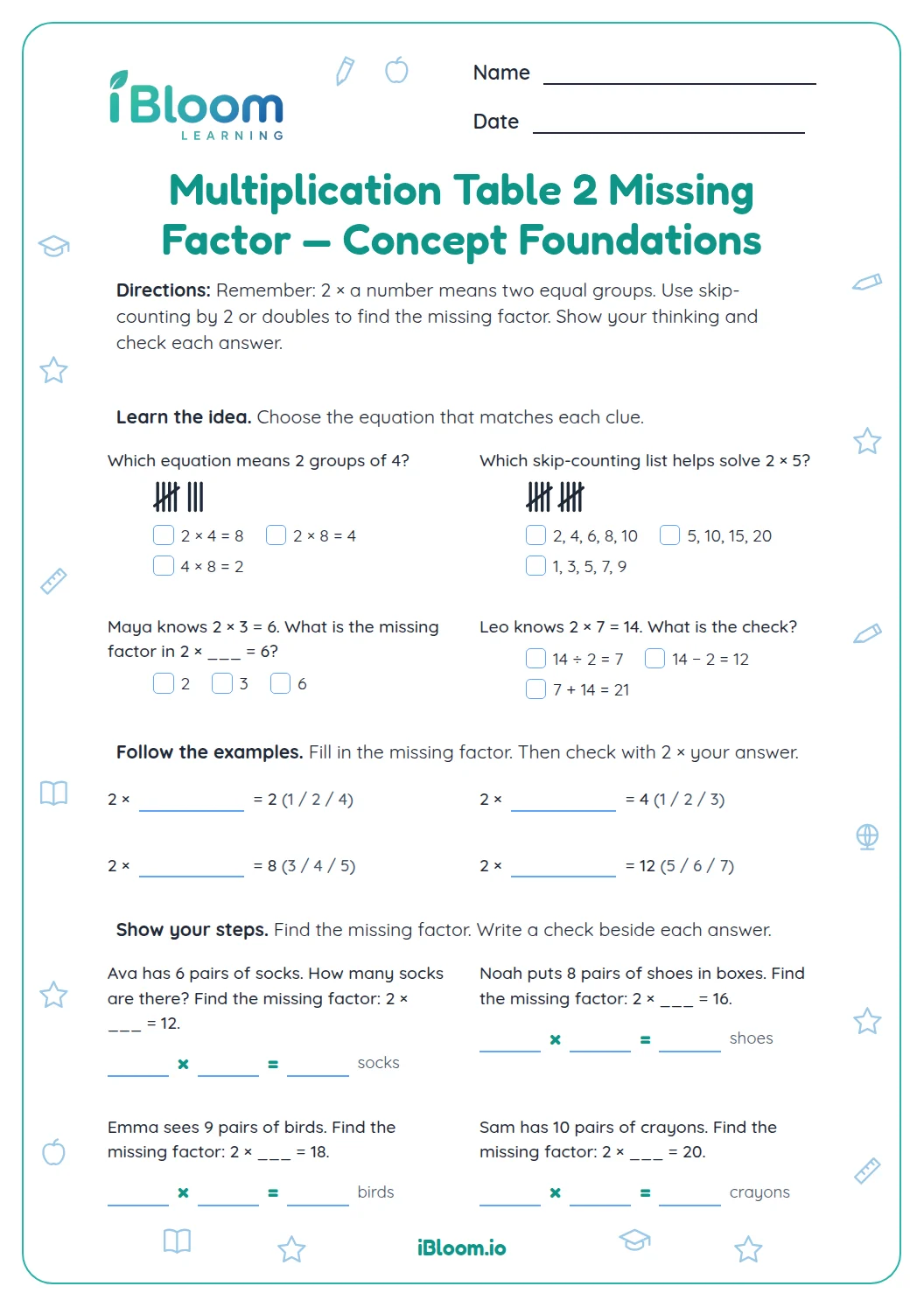
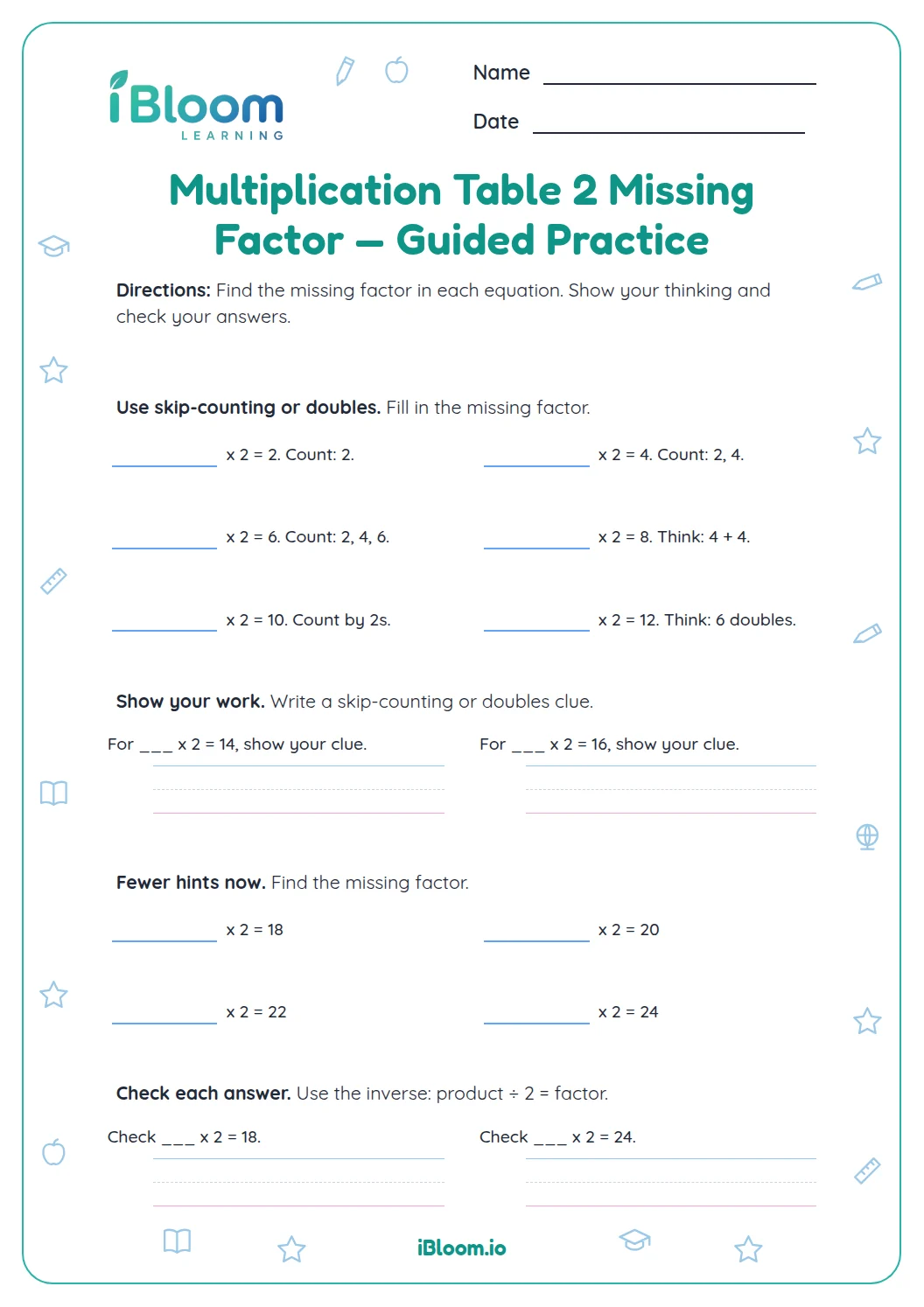
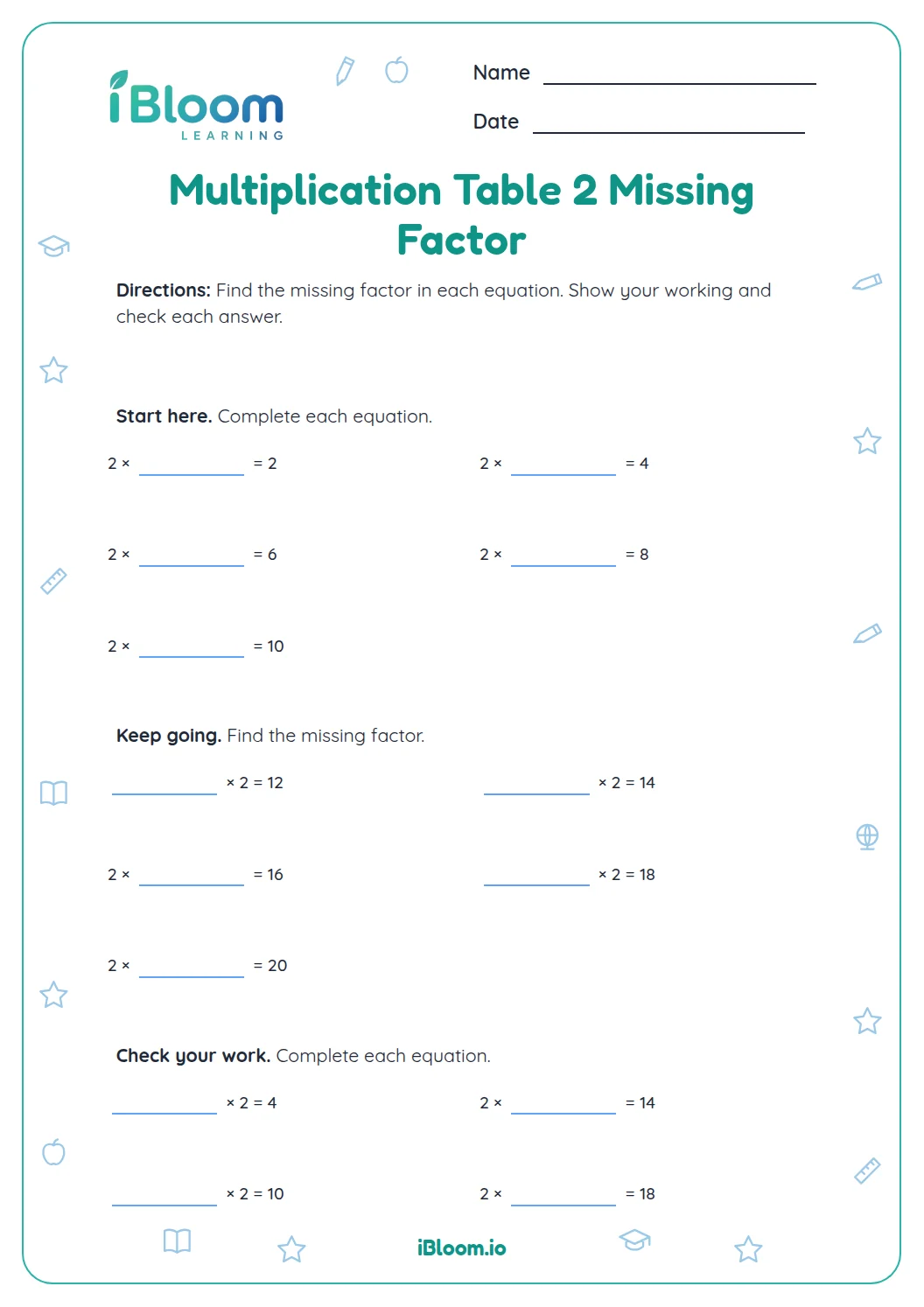
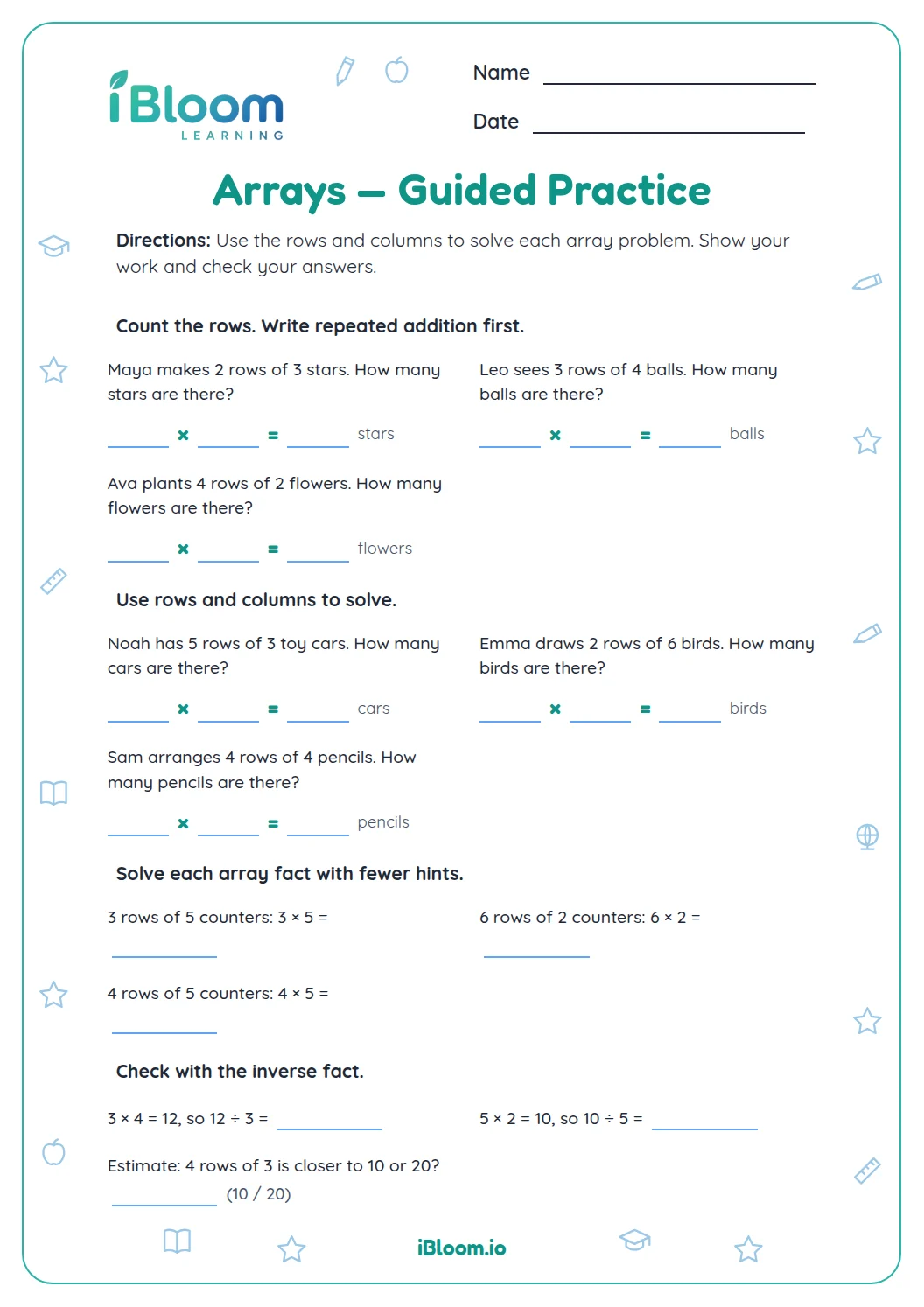
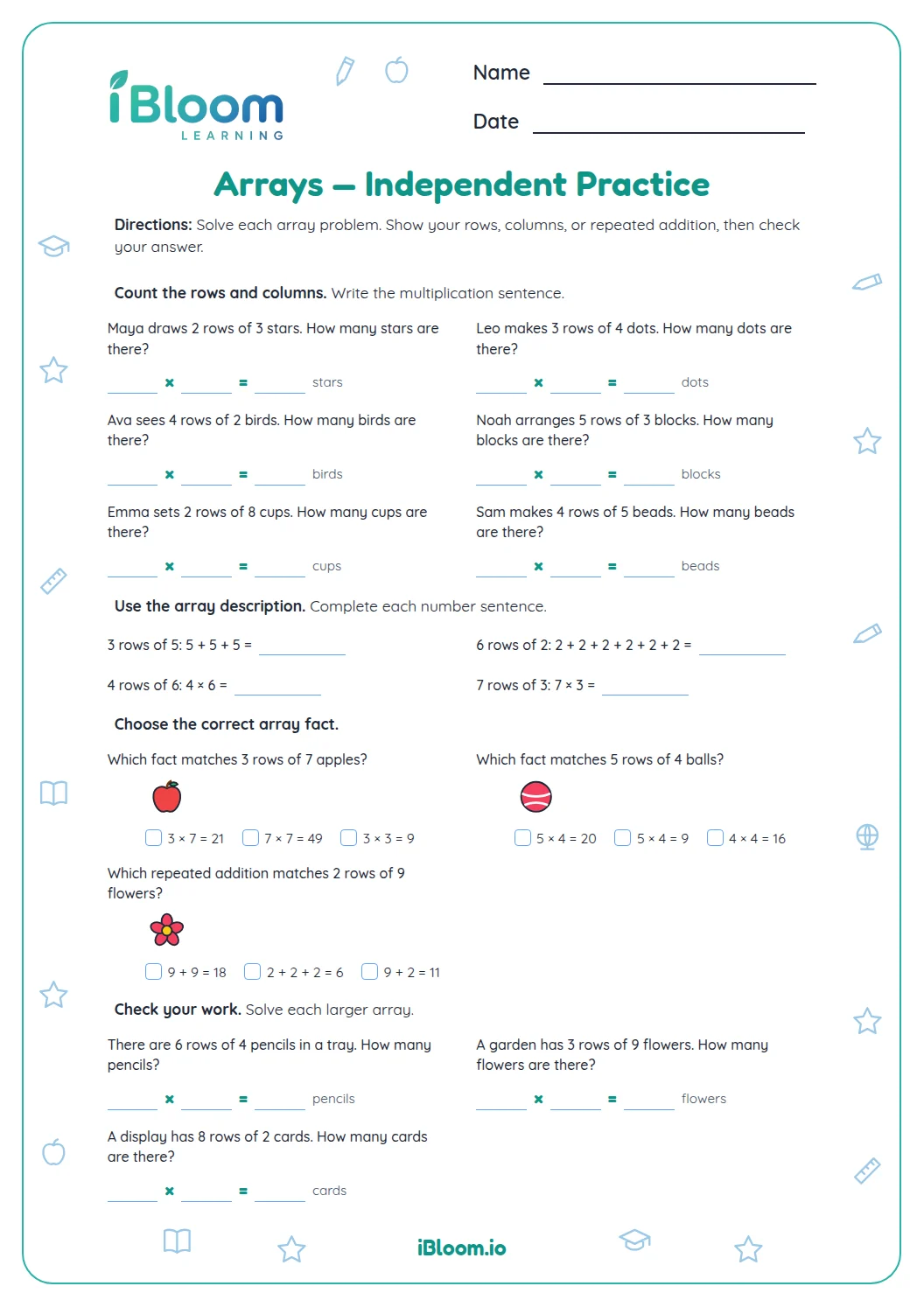
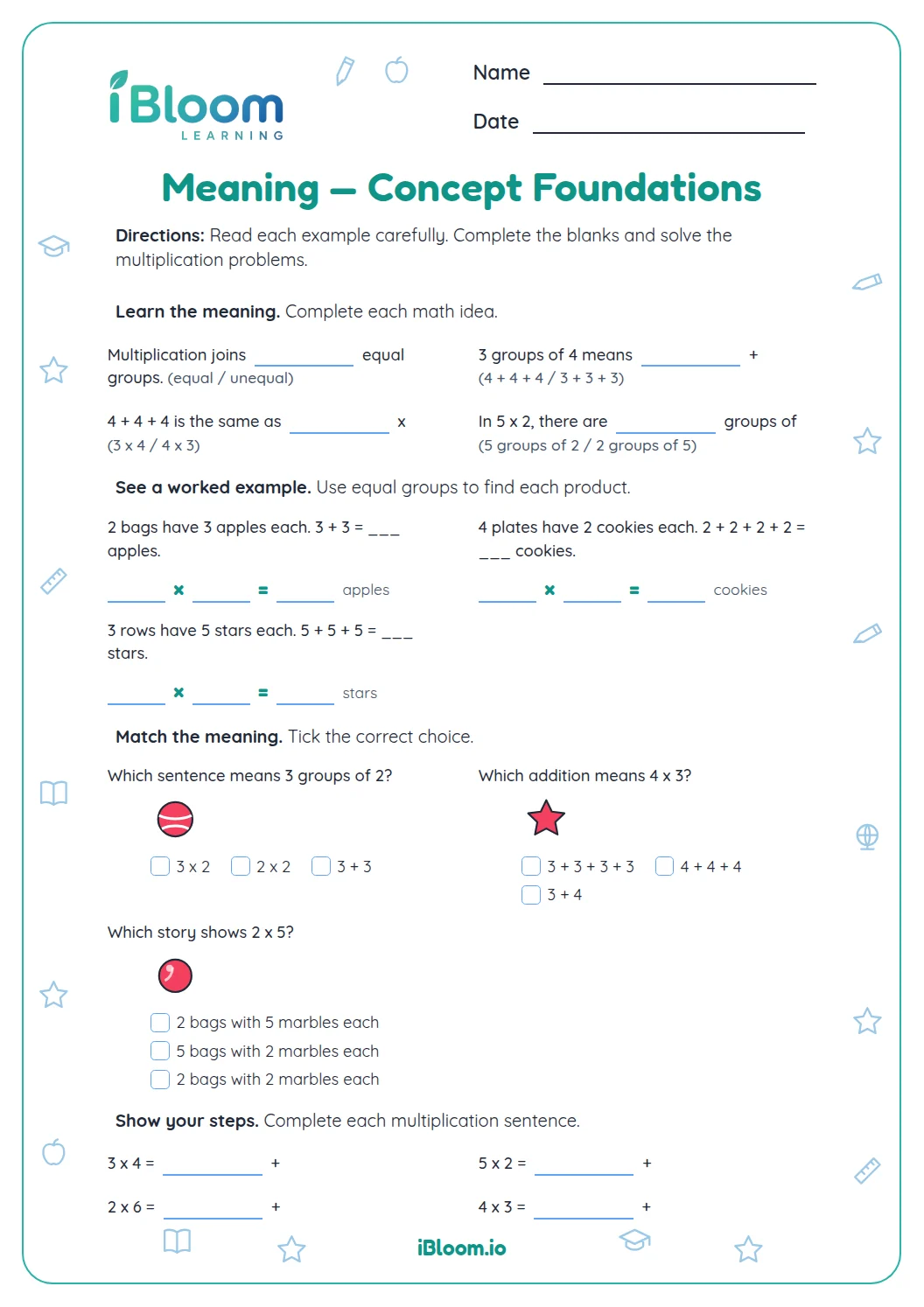
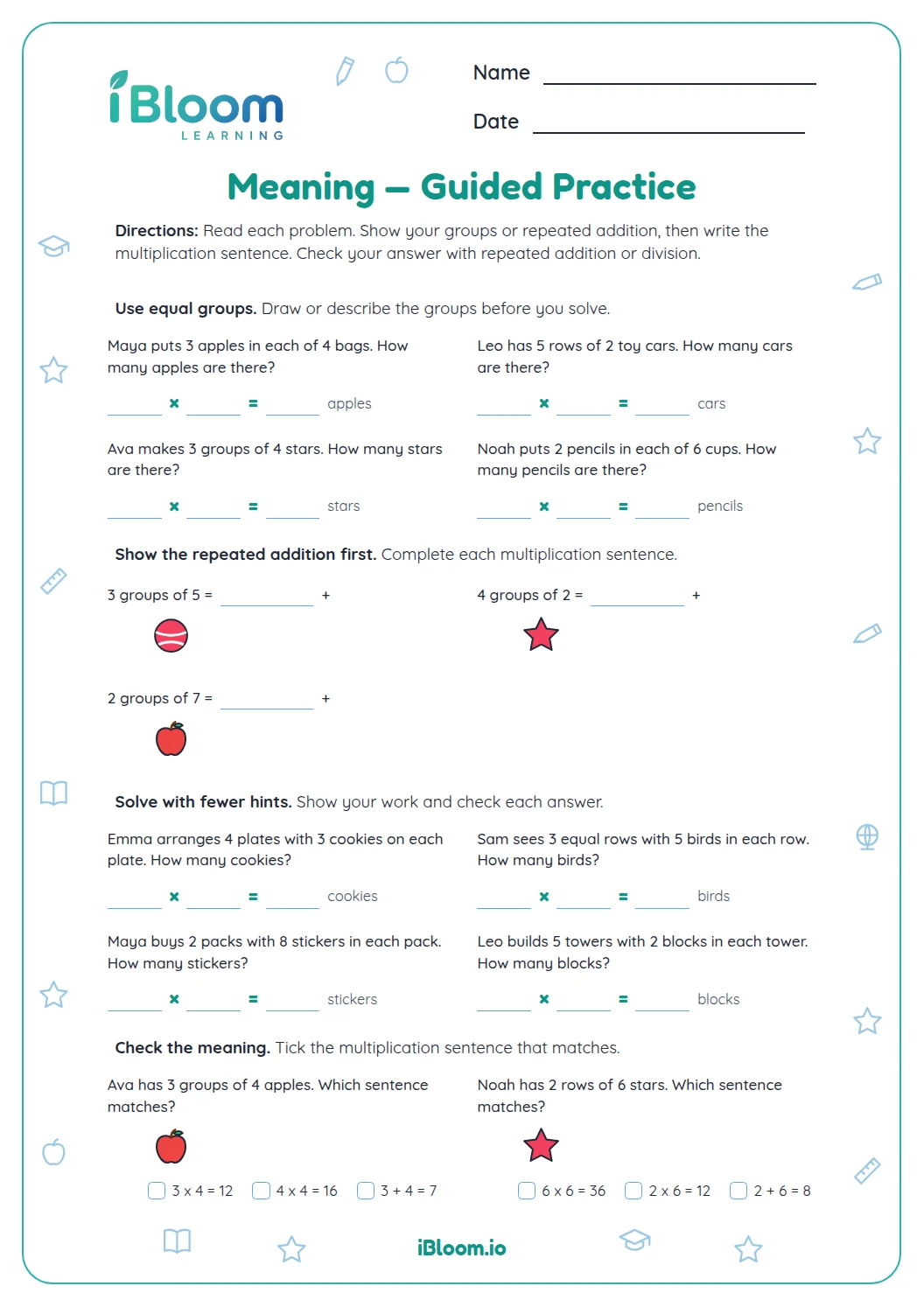
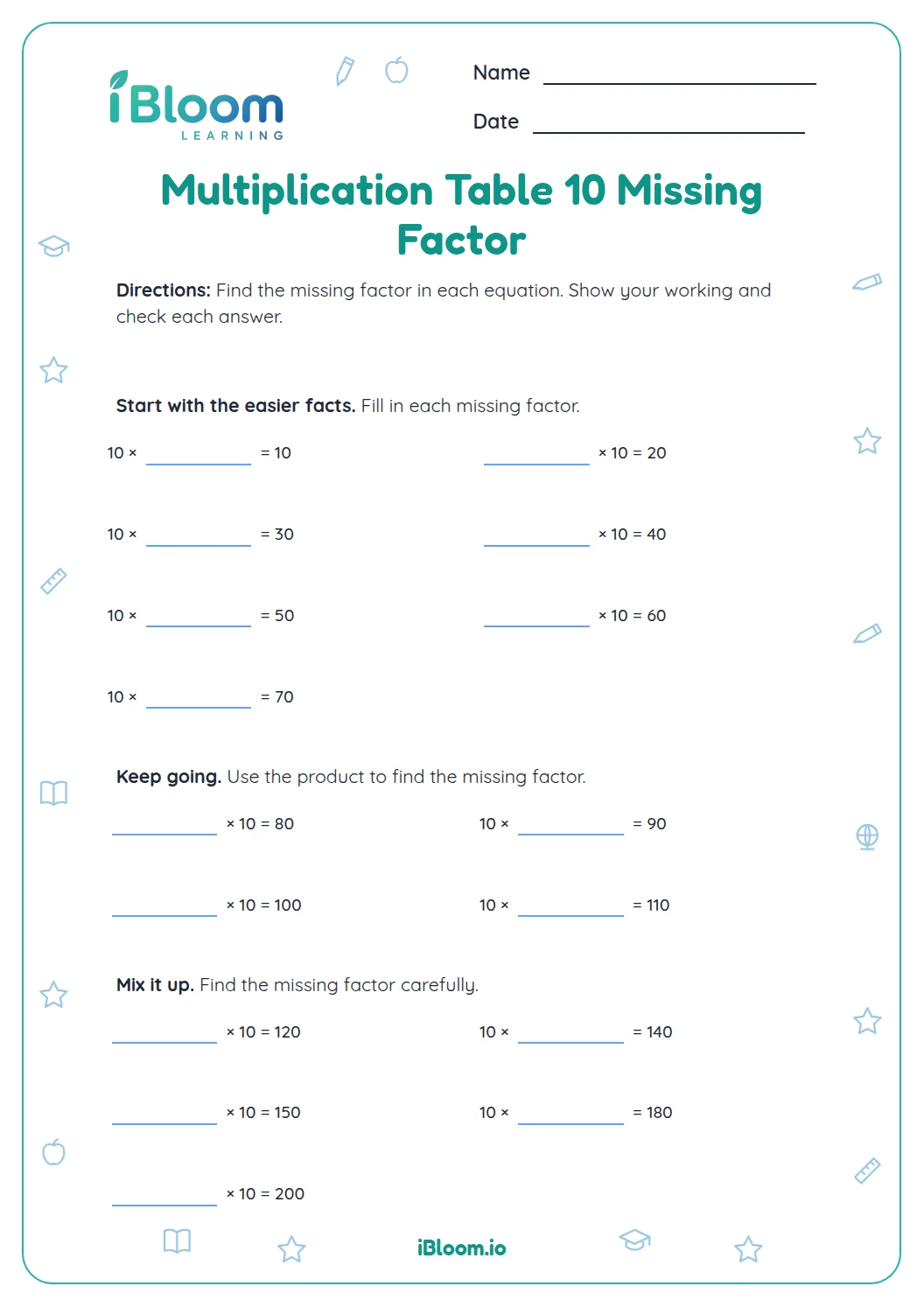
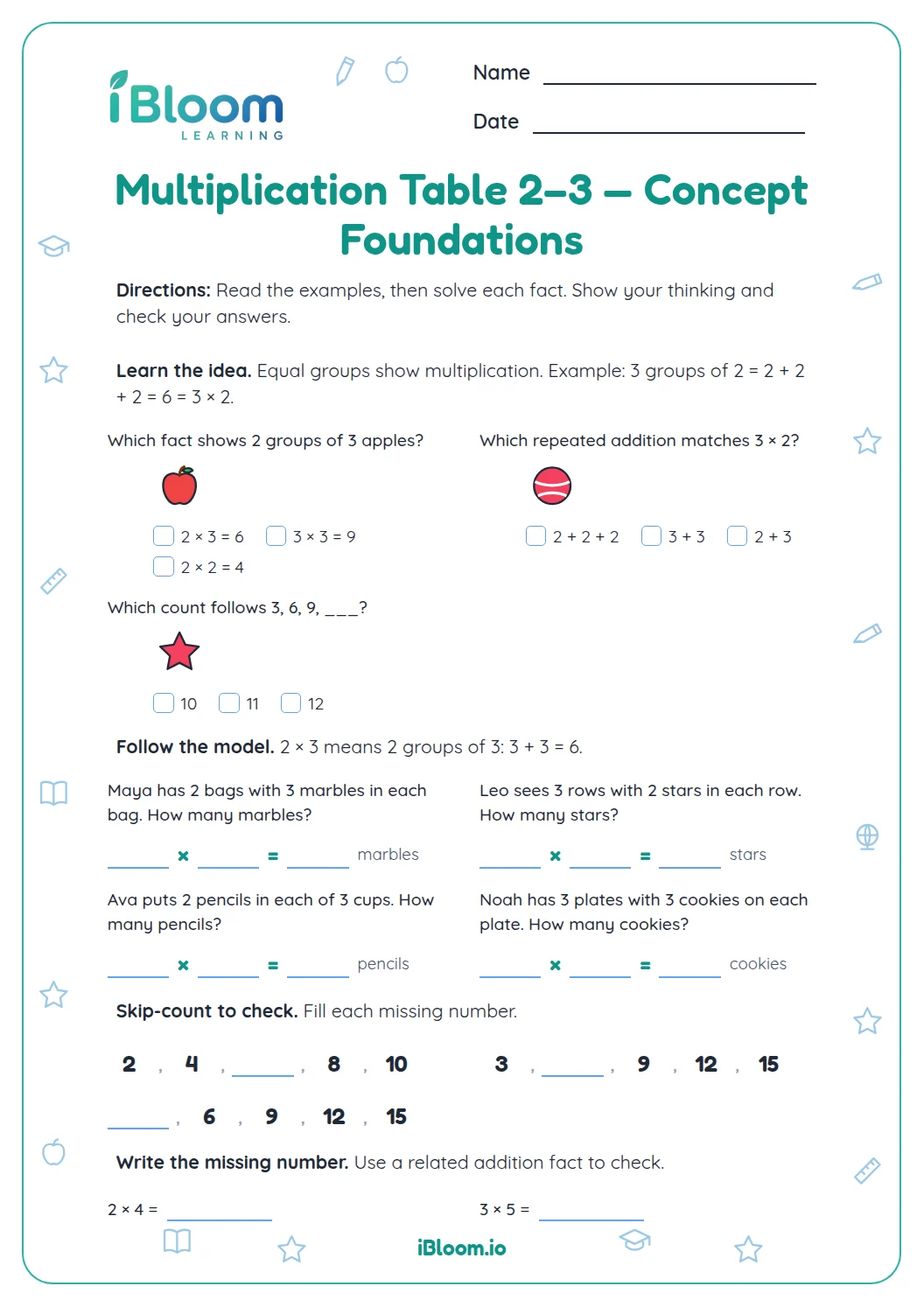
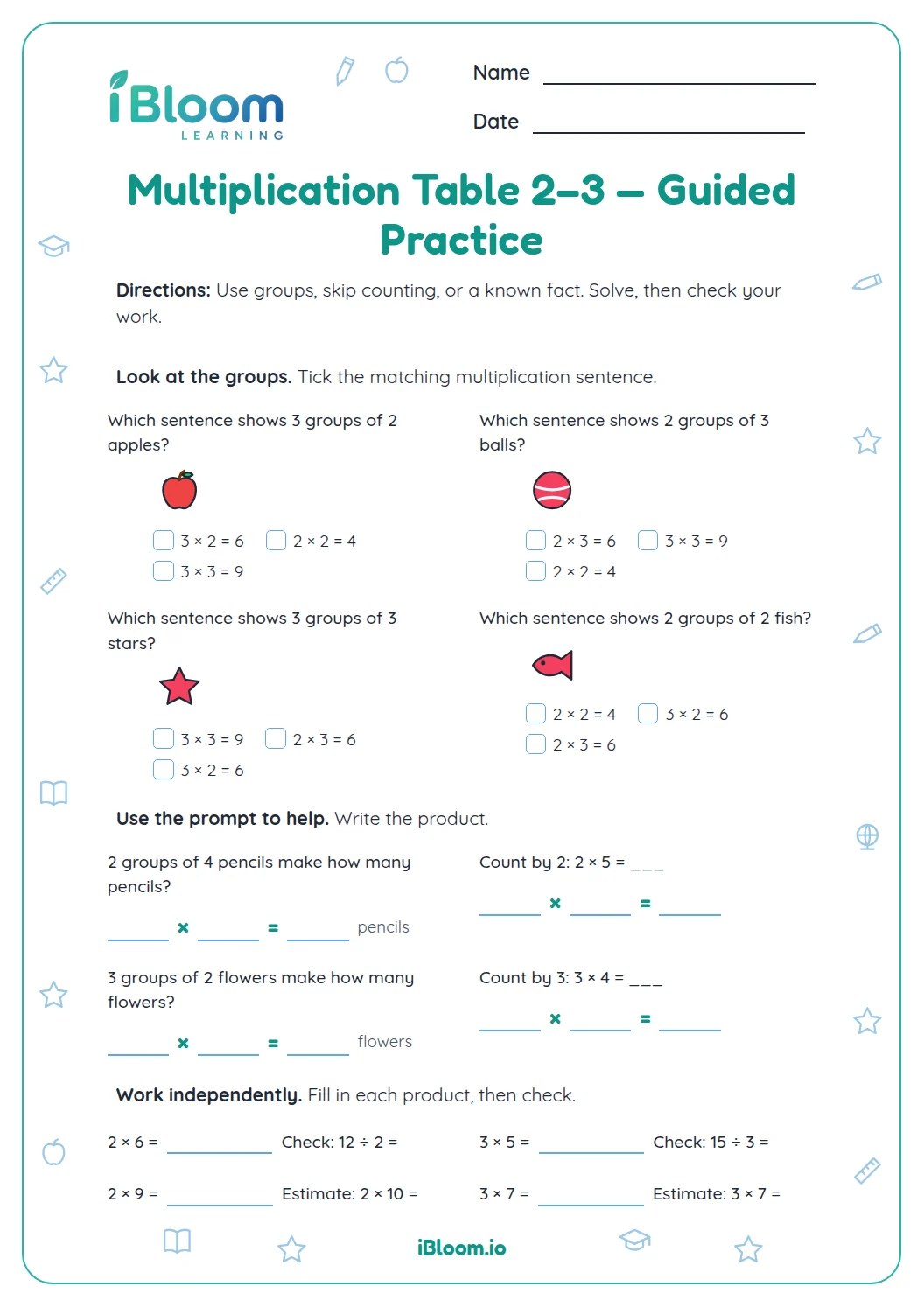
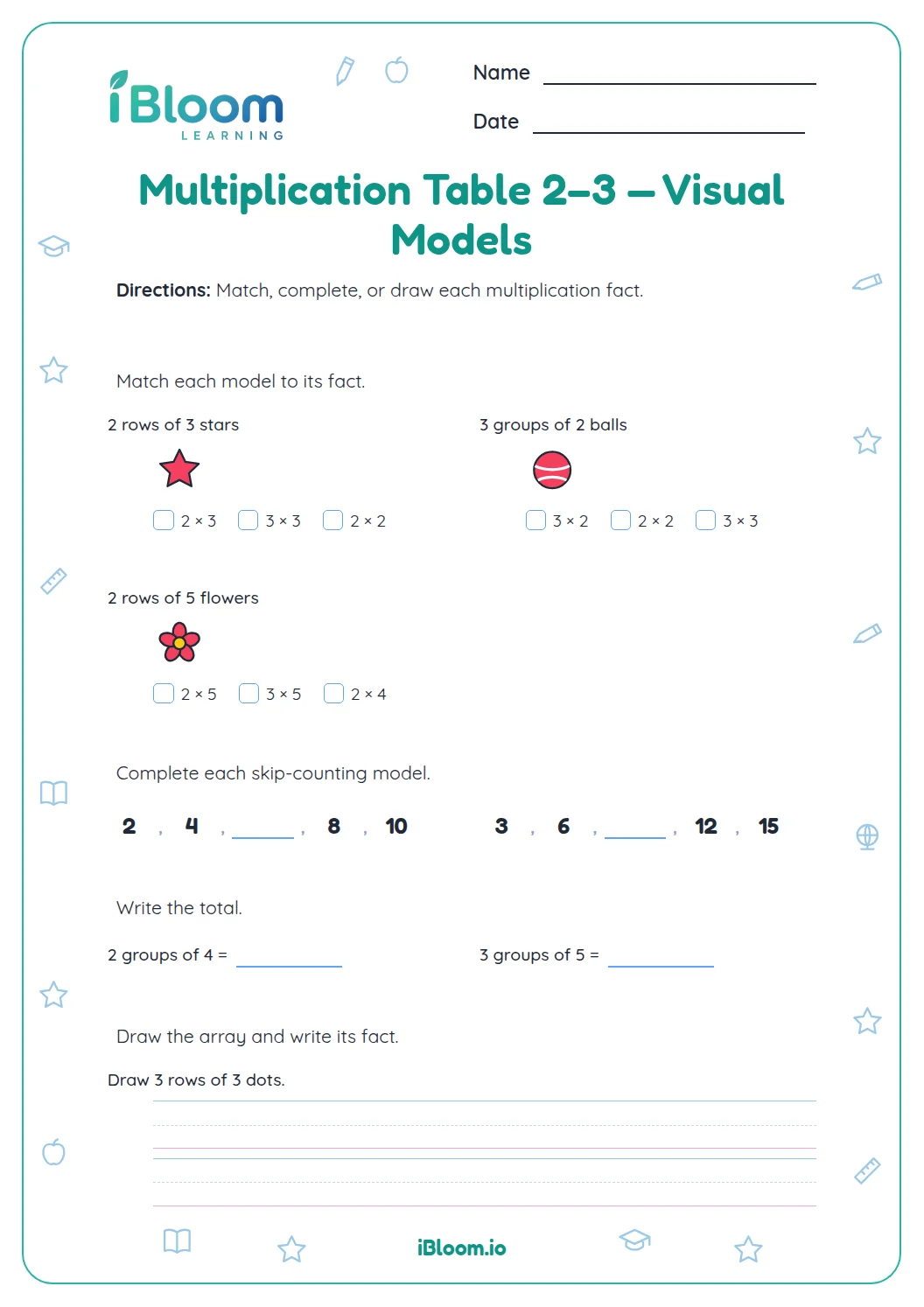
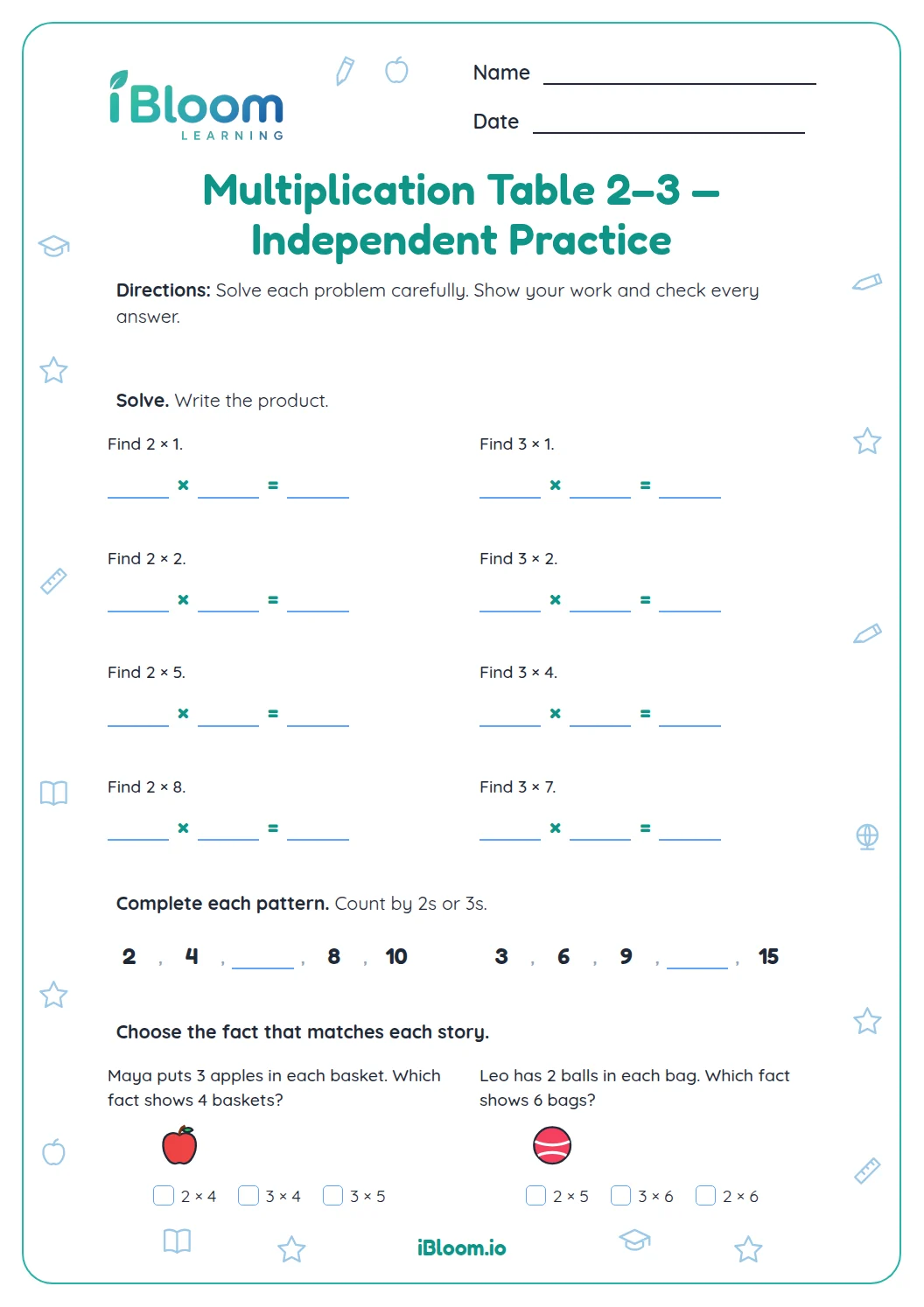
This Grade 2 worksheet builds missing-factor fluency for the 2s table. Children find how many groups of 2 make a given total, then explain equal groups, use doubles to check, and apply the facts to pairs. It has 14 questions on three worksheet pages and a separate three-page answer key. The practice connects to CCSS 2.OA.B.2 through repeated addition within 20.
Aligned to 2.OA.B.2
How does the first part show equal groups?
Part A uses missing-factor equations with totals from 2 through 14. Part B asks children to check a fact with doubles and apply the 2s table to groups, totals of 20 and 22, and a pairs situation.
How can doubles check a multiplication fact?
Part B connects facts such as 6 × 2 = 12 with 6 + 6 = 12. Repeated addition helps children check multiplication, while questions near the end extend the missing factor to 10 and 11.
How do the facts work in a real situation?
The final item uses pairs of socks. If each pair has 2 socks, dividing 16 socks into pairs gives 8 pairs.
How to use this worksheet
- 1Count the groups of two in the total.
- 2Write the missing factor in the blank.
- 3For a check, add that factor to itself.
- 4For a pairs story, identify how many objects belong in each pair.
- 5Use the answer key after completing both pages.
Mistakes to watch for
The mistake
Using the total as the missing factor.
The fix
Count how many groups of two make the total.
The mistake
Adding 2 to the factor instead of doubling it.
The fix
Use equal groups: 2 × 7 is seven groups of two.
The mistake
Reversing the meaning of pairs.
The fix
Check that each pair contains exactly two objects.
Fluency with small facts supports finding equal groups of two.
On this sheet: Students reason about equal groups and use small totals to find the number of pairs.
Show the official wordingHide the official wording
Fluently add and subtract within 20 using mental strategies. By end of Grade 2, know from memory all sums of two one-digit numbers.
What to practice next
Make more practice
Further reading
Questions parents and teachers ask
What does the missing factor tell me?
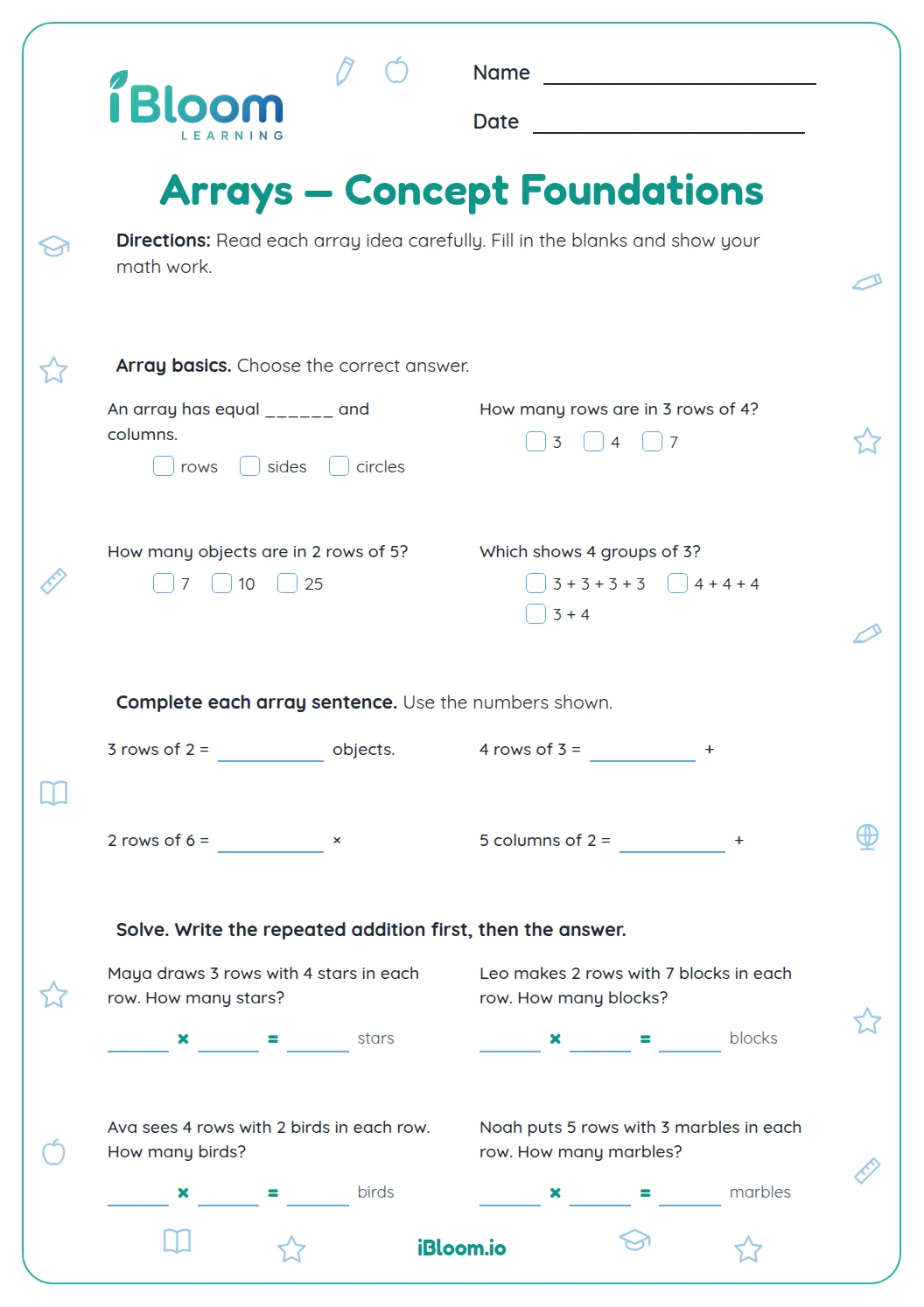
It tells how many equal groups of two make the total. For example, 2 × ___ = 14 asks how many groups of two make 14. Count by twos or use 7 + 7 = 14. The array models three groups of two apples.
Why does the worksheet use doubles?
Multiplying by 2 is the same as adding a number to itself. The worksheet connects facts such as 6 × 2 = 12 with 6 + 6 = 12, giving children a way to check a missing factor. Try the key only after finishing.
How many questions and pages are included?
There are 14 questions across three worksheet pages and three answer-key pages. Part A completes missing-factor facts; Part B asks children to explain or apply them. The questions include factors from 1 through 12 and a pairs problem.
Is this an introduction to multiplication?
This page is most useful after children have seen equal groups or multiplication facts. It focuses on missing factors in the 2s table and uses repeated addition as a check. Children also solve a pairs story about socks.
What materials are needed?
A printed copy and pencil are enough. Children write missing factors in blanks and use response areas for reasoning items. The separate answer key can be used after attempting the worksheet and checking each fact together with an adult.